EU-CIEMBLY: First project workshop takes place in Madrid

By Dr Anastasia Karatzia

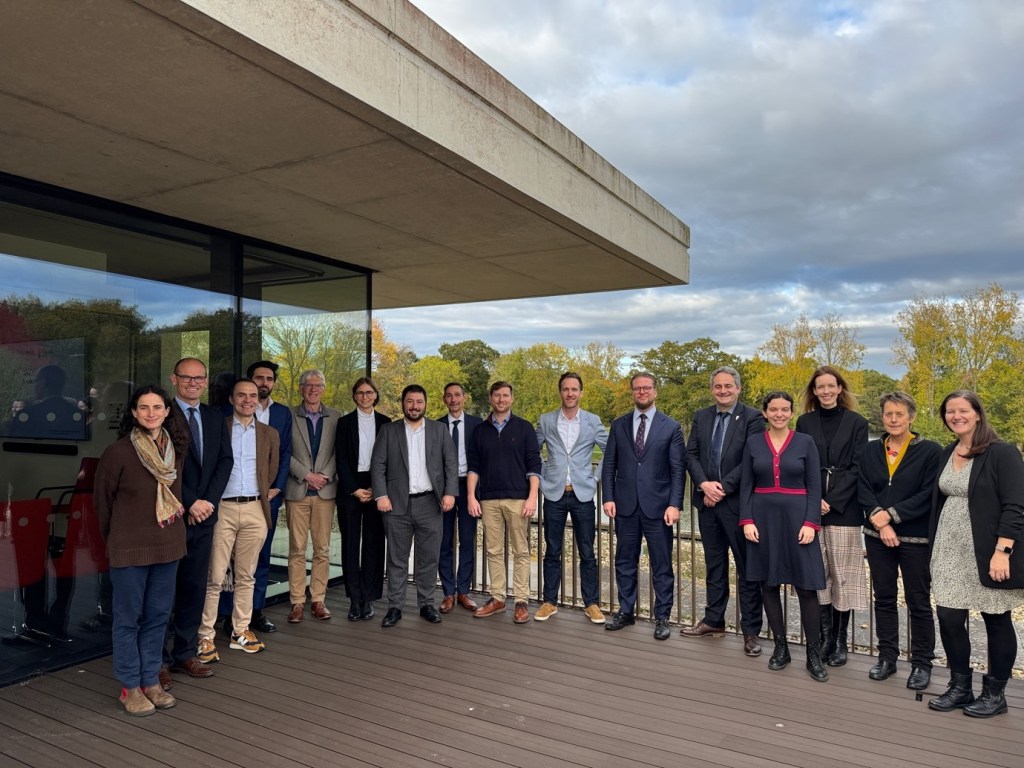
Photo from the workshop, credit: Dr Anastasia Karatzia

The EU-CIEMBLY project organized an internal staff training workshop from November 4th to 6th at the Universidad Complutense de Madrid, Spain. The primary goal of the workshop was to advance and harmonize the partners’ understanding of the theoretical and analytical framework, essential for designing and implementing an inclusive and intersectional European Citizens’ Assembly (CA). The event aimed to equip the project team with both normative tools and empirical insights essential for creating an inclusive deliberative process throughout the project. Dr Anastasia Karatzia, Dr Niall O’Connor, and Dr. Sam Woodward represented at the workshop the University of Essex team, which also includes Dr. Rebecca Warren and Prof. Ileana Steccolini from Essex Business School.

The workshop’s agenda included various presentations and structured discussions designed to engage participants deeply with key project objectives. The first segment of the event provided an introduction to intersectionality, a conceptual framework that examines the interconnected nature of social categories such as gender, nationality, ability, age and more, and how they combine to affect individuals’ experiences of inequality and exclusion. Participants engaged with this concept to explore how intersectional equality, inclusion, and deliberation could be effectively applied in the design and implementation of a CA.
Credit: Dr Anastasia Karatzia

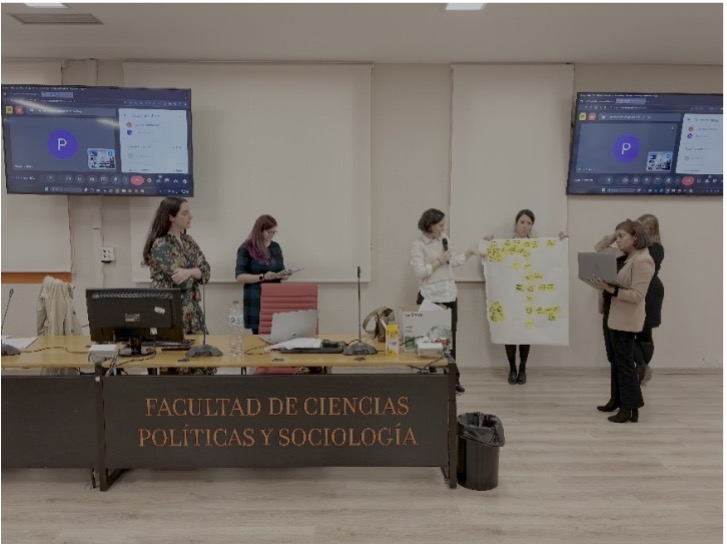
Following this, the participants explored the three key components of a CA which are governance and organization, sampling and recruitment, and deliberation and facilitation. Break-out group discussions were featured, where participants were divided into smaller groups to brainstorm ways to enhance intersectional equality and inclusion across the various stages of the CA. Facilitators documented the insights shared during these discussions and later presented the findings to the broader group for collective reflection.

On the second day of the workshop, four theoretical models for an intersectional CA were discussed in detail, with the understanding that these could evolve based on ongoing feedback and the evolving needs of the project. The workshop concluded with discussions on the development of the glossary with complicated terms along with a presentation of the project’s language policy to guarantee that all materials and discussions are accessible and inclusive. 

A few words about the project:

The EU-CIEMBLY project started on January 1, 2024, with the main goal of creating an innovative and inclusive EU CA that addresses issues of intersectionality, inclusiveness, and equality in European Union political life. The project seeks to improve the landscape of participatory and deliberative democratic mechanisms firstly by providing an analytical framework and prototype for establishing the Assembly at the European Union level, with potential for adaptation at national and local levels of European Union Member States. The project draws on an academic and theoretical understanding of intersectionality, equality, and power relations. Furthermore, EU-CIEMBLY emphasizes open research practices, including open access, optimal research data management, early open sharing, and the involvement of knowledge actors.

The project will develop several activities, with one of its biggest milestones being the three upcoming pilot CAs: a local pilot, a national pilot, and a transnational pilot involving citizens from up to six countries across diverse regions of the European Union. EU-CIEMBLY has a duration of four years and is funded by the European Union under the Horizon Europe research and innovation program. The consortium consists of eleven partner organizations, bringing a wide range of expertise and knowledge related to the project’s scope and objectives.

The project deliverables so far:

Since the project’s launch, the team has produced:

  1. Extensive Literature Review: An in-depth literature review in the form of a bibliographic map was conducted to develop the analytical framework for the EU Citizens’ Assembly.
  2. The Analytical and Normative Framework of the project, which clearly integrates intersectionality into the inclusivity, equality, and deliberation dimensions of Citizens’ Assemblies. 
  3. An exploration of several Theoretical Models for Inclusive Citizens’ Assemblies: The Theoretical Models for an Intersectional and Inclusive Citizens’ Assembly were developed and reviewed during the session in Madrid.

For further information, you may visit the project’s website at www.eu-ciembly.eu and its social networks on Facebook , Instagram and Twitter. For more information on the University of Essex involvement in the project please visit https://www.essex.ac.uk/research-projects/eu-ciembly

Our project embraces multilingualism! Should an accurate translation for specific sections of this Press Release, please contact us at eu-ciembly@ij.uc.pt

This project has received funding from the European Union’s Horizon Europe research and innovation program under grant agreement number 101132694. This press release reflects only the author’s view. The Commission is not responsible for its content or any use that may be made of the information it contains.

Essex Law School contributes to new Jaywick art exhibit exploring mothers’ trauma

By Dr Samantha Davey

Credit: Dr Samantha Davey

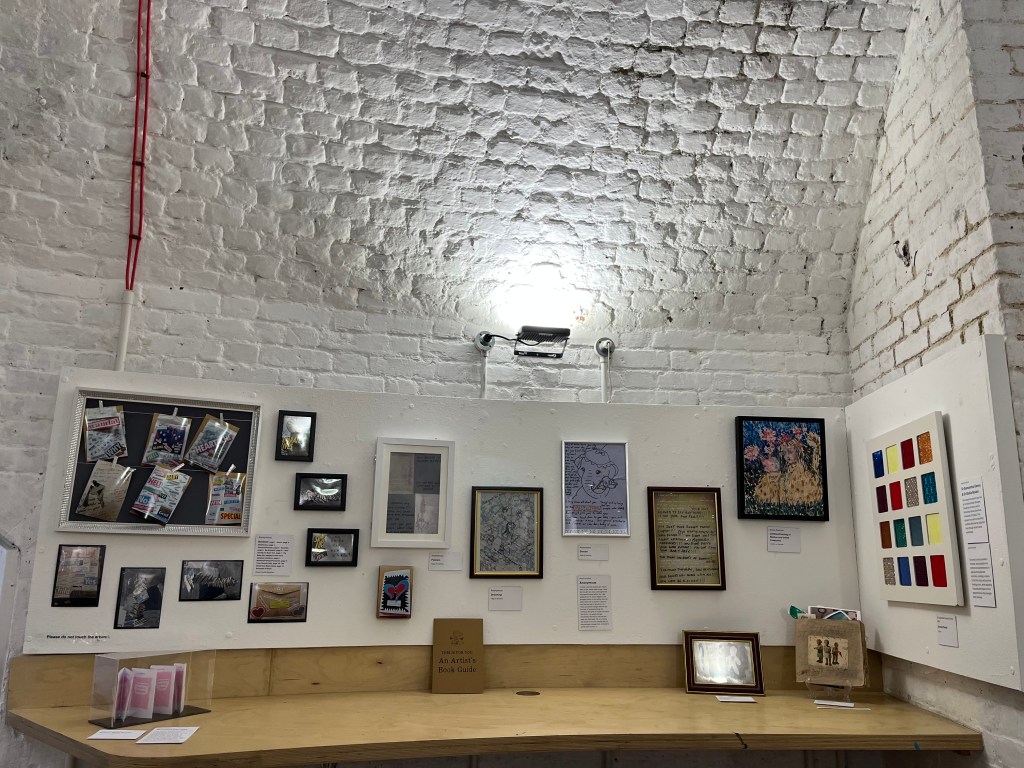
Following on from the success of last year’s Expressions of Trauma Exhibition led by Essex Healthwatch and held at The Minories, Colchester, the Essex Law School is contributing towards another exhibition, this time at the Martello Tower, Jaywick. The 2025 Expressions of Trauma provides those who missed last year’s Exhibition an opportunity to see the exhibits again – along with some new exhibits. 

This thought-provoking Exhibition features diverse exhibits exploring trauma narratives. There is a dedicated installation which is based on the research of Dr Samantha Davey (University of Essex) and Dr Stella Bolaki  (University of Kent), who ran a series of artist’s books workshops for mothers, which was funded by both institutions. This research highlights the experiences of mothers who have lost children through adoption, providing a powerful outlet for emotional expression. By sharing their stories through artist’s books, pictures and poetry, this exhibit encourages public awareness and empathy for mothers who suffer grief and loss, in the aftermath of adoption. 

Credit: Dr Samantha Davey

Dr Davey and Dr Bolaki would like to thank Healthwatch Essex and their research champions Chloe Sparrow, Amanda Swan and Diana Defries for their participation and ongoing support with this project and the exhibitions. There are more exhibitions planned so please do keep an eye on our blog page, the Essex communications page (you can see our press release here).  

For further information about this Exhibition please contact the organiser, Sharon Westfield de Cortez, Healthwatch Essex at Sharon.westfield-de-cortez@healthwatchessex.org.uk . If you are a mother who has experienced loss through adoption and would like to know more, or to participate in future exhibitions running later this year, please contact Dr Samantha Davey at smdave@essex.ac.uk.

Elevate Your Academic Journey: SENSS, CHASE, and Essex Law School

 By Essex Law School, written by Professor Joel Colón-Ríos

If you are an aspiring legal scholar seeking advanced training in law within a dynamic research environment that encourages innovation and interdisciplinary exploration, a Doctoral Training Partnership at Essex Law School could be your gateway to an exciting academic journey. 

Essex Campus in the winter, Credit: University of Essex.

What are SENSS and CHASE? 

The South and East Network for Social Sciences (SENSS), an ESRC-funded Doctoral Training Partnership (DTP), is dedicated to fostering innovative and inclusive social science research training and collaboration. Among the eight distinguished institutions comprising SENSS, the University of Essex plays a pivotal role as the coordinating institution. 

The Consortium for Humanities and the Arts South-East England (CHASE) is an AHRC-funded Doctoral Training Partnership, providing funding and training opportunities to the next generation of world-leading arts and humanities scholars. Essex is one of the 8 world-leading institutions that comprise the membership of the CHASE DTP. 

SENSS and CHASE provide fully funded doctoral studentships, mentorship from global experts, and advanced subject-specific and research methods training. These opportunities empower researchers to extend their social scientific skills beyond academia. 

Here at the Essex Law School and Human Rights Centre, aspiring PhD students can apply for SENSS and CHASE studentships, unlocking comprehensive support and collaborative excellence in their academic journey. 

Why choose the Essex Law School? 

Choosing where to pursue your doctoral training is a significant decision. At the Essex Law School, we have meticulously crafted an environment that champions excellence and fuels innovation. Here is why you should join us: 

We are a research powerhouse. Our Law School has been ranked 3rd in the UK for research power in law according to the Times Higher Education research power measure (REF2021). Law at Essex is also ranked 47th in the THE World University Rankings, which show the strongest universities across the globe for key subjects (and 9th for UK Universities). This speaks volumes about the calibre of research conducted within our School. Our academic staff collaborates globally, working with the United Nations, the European Union, governments, and non-governmental organisations. 

We believe in the power of interdisciplinary research. Our dynamic research clusters foster collaboration across diverse backgrounds, creating a vibrant intellectual space for innovative and stimulating legal exploration. 

With expertise spanning diverse legal disciplines, our academics are the driving force behind the Law School’s excellence. Our faculty boasts exceptional scholars, providing intellectual leadership in key areas, including Human Rights Law, led by Professor Carla Ferstman who is Director of the Human Rights Centre; International & Comparative Law led by Professor Yseult Marique, an associate member of the International Academy of Comparative Law; Private and Business Law, led by Professor Christopher Willett who also spearheads the Law, Business and Technology Interdisciplinary Hub; as well as Public Law & Sociolegal Studies, led by Professor Joel I Colón-Ríos, who is also a member of the Constitutional and Administrative Justice Initiative (CAJI). Our academic leads are ready to guide you and link you with the ideal academic mentors. 

Our research student community is central to our success. These talented colleagues explore a broad range of exciting topics under expert supervision, forming a vibrant tapestry of ideas. 

We asked Boudicca Hawke about her experience as a CHASE-funded doctoral student at Essex Law School. 

“CHASE is a great DTP to be a part of. It is a quite a competitive funding source, but the application process itself is accessible. Especially at Essex, there’s a tremendous amount of support throughout the entire process, which really helps. There are a few rounds of revision you’ll need to go through, so it does require consistent work, but really, it’s wonderful to have guidance and support at every step so you can end with the best proposal possible. 

I chose to apply primarily because of the holistic way CHASE supports affiliated doctoral researchers and encourage interdisciplinary research. Beyond the funding, CHASE also hosts annual conferences and year-round research network meetings where you can collaborate closely with other doctoral researchers who share interests but come from different universities and backgrounds. CHASE also has an incredible placement scheme, where you can get hands-on experience throughout the PhD process which is quite valuable.” 

Boudicca, who is working on the status of fighters in non-international armed conflict, also shared some insights about the preparation of a research proposal: “Try to be as clear in the proposal as possible. Many of the reviewers won’t be experts in your field, so communicating the issue at-hand and value of your work in an easily digestible way is key. It can also be quite helpful to make sure you highlight relevant work experience and show why you are well-suited to do your specific project. If you don’t get it the first time around, don’t be afraid to re-apply!’’ 

We also talked to Matteo Bassetti, one of our SENSS-funded doctoral students. For Matteo, whose work focuses on the rights of trans people, and the underestimation of harm inflicted by States through institutional pathologisation frameworks, told us that SENSS “has contributed in many ways to my PhD experience, and has allowed me to take part to training that I would have otherwise been unable to attend. I am hoping to go on an Overseas Institutional Visit in the next term to broaden my network and horizon. However, if I have to be honest, I am still looking for more ways to use the opportunities offered by SENSS in the best way.” 

He also gave us some tips about the application process: “Start ahead of time. SENSS is looking not only at the quality of the individual applicant’s proposal, but also at the match between student and supervisors. Treat your application as a collaboration between you and your supervisors, where you need to do the heavy lifting. Be prepared to modify your dream proposal to make it fit better with the selection criteria.” 

Where can you find out more? 

Explore the opportunities offered by the SENSS and CHASE scholarships at the Essex Law School on our informative webpages. Discover eligibility criteria, application processes, and the outstanding benefits that await you by accessing the downloadable documents provided below. 

For inquiries about legal research and the SENSS and CHASE schemes, please contact Professor Joel I Colón-Ríos, our Postgraduate Research Director.  

Specific questions about academic disciplines? You can also reach out directly to our dedicated Academic Leads (mentioned above) who can put you in touch with suitable supervisors. 

Embark on your journey to become a world-leading scholar in law. Do not miss the chance to benefit from these funding opportunities at the Essex Law School, where innovation, excellence, and transformation define the doctoral experience. 

Meet the book author: Conceptualising Arbitrary Detention: Power, Punishment and Control

By Professor Carla Ferstman

Professor Carla Ferstman

This post was first published on the blog of the Journal of Law and Society: https://journaloflawandsociety.co.uk/blog/meet-the-book-author-conceptualising-arbitrary-detention-power-punishment-and-control/

Conceptualising Arbitrary Detention: Power, Punishment and Control was published by Bristol University Press in May 2024.

What is the book about?

The book is about arbitrary detention, but it is also a reflection on the shifting meaning of arbitrariness as a concept. I consider how forms of marginalisation and other arbitrary factors influence who will be detained, when, for how long and in what conditions. Policies of securitisation, regimes of exception, and criminalisation have exacerbated these arbitrary distinctions given their propensity to target “otherness,” even though there is nothing exceptional about “otherness.” How these policies are applied, and their impact on individuals and communities, depends on the underlying political values and goals at stake, which differ between countries and over time.

The book also explores how arbitrary detention has become normalised. It is used purposively by governments to foster divisions and to enforce hostility against socially marginalised groups who I classify in this book as: the “unseen” (those marginalised on account of their destitution and/or extreme social needs); the “reviled and resented” (the recipients of racist, xenophobic and discriminatory attacks); and the “undeserving” (refugees and other migrants).  When arbitrary detention is normalised, it becomes impossible for courts to only countenance detention that is exceptional – the logic no longer works. So, this conundrum is analysed from different angles and factual contexts.

Why did I write it?

The idea for the book crept up on me in a non-linear way. It was always the book I wanted to write but it took some internal prodding and mental gymnastics for me to figure out how to articulate the urgency that I was feeling about the subject matter in a way that made sense on the page. So, framing the ideas, and the ideas within the ideas took time. In many ways the book is a homage to all the survivors of arbitrary detention I have been privileged to know and support, and to all the courageous human rights defenders, lawyers and psychologists who continue to work in this space.

How did I go about doing this research?

The methodology question is never straight-forward and the sociolegal purists may want to turn away now!

My ideas about the subject matter stem from about two decades of legal practice and advocacy working with victims of torture and seeing up close the suffering people undergo while in detention. So, there was a significant evidence base from where I derived my thinking, but it was quite diffuse, deeply personal and of course, subjective.

The purpose it served in the research process was mainly to guide me with the crucial task of figuring out what themes I needed to foreground. A good example of this is the decision I took to delve into the relationship between arbitrariness and torture. I claim that the disorientation, despair, uncertainty, lack of agency that arbitrariness produces (also considering the extensive psychological literature) is so harmful psychologically that it can rise to the level of torture (all other elements of torture being present). My decision to tackle this theme stems from years of speaking with clients about how arbitrariness in and of itself, made them feel. It also helped me to work out where I wanted to situate my thinking critically on the side of key debates. An example of this is how I critically examined the caselaw on socially excluded and marginalised groups and began to confront the failure of some courts to confront the phenomenon of industrial-scale arbitrary detention.

Then, I would say there are different layers to the book, and some of these layers are more pronounced or prominent, depending on the chapter. There is a layer which is in the classic style of human rights rapportage; going through reams of testimonials and reports to locate patterns and derive meanings and using individual narratives to give context. Another layer is the analysis of how regional and international courts have addressed the phenomenon of arbitrary detention. So, there is a deep doctrinal analysis of the caselaw and how certain findings came to be. But, because much of the caselaw lacks an obvious internal coherence I also use a variety of critical legal theories, social theory, and political philosophy to help me with the task of making sense of what has little obvious internal logic.

I enjoyed the process of pulling the text together; here’s to hoping readers will find it just as enjoyable to read!

Global Roundtables on International Protection of Refugees: Exploring Laws on Climate-Induced Displacement and Refugee Travel Documents with Essex Law School and the UNHCR

 By Professor Geoff Gilbert 

Participants from at the UNHCR-Essex Roundtable on travel documents for refugees, asylum seekers and stateless persons, October 2024 , Credit: Professor Geoff Gilbert

On 22 and 23 October, 17 people from a diverse set of organisations and backgrounds came together from all over the world on campus to discuss travel documents for forcibly displaced and stateless persons in need of international protection. On 23 October, over 60 people attended two online roundtables covering Africa, Europe, the Americas and Asia to consider a toolkit advisory on refugees and asylum seekers affected by climate-induced events or disasters. Professor Geoff Gilbert from Essex Law School hosted both events.  

First for the roundtable on climate-Induced displacement, Essex Law School & Human Rights Centre for a year has been working with the Kaldor Centre for International Refugee Law, UNSW, and the Center for Gender & Refugee Studies (CGRS), University of California College of the Laws, San Francisco, to draft a toolkit for practitioners, decision- and policy-makers on international protection in the context of climate induced events and disasters; it became part of a joint pledge to the 2023 Global Refugee Forum.  

Being forced to move across an international border as a consequence of a climate-induced or other disaster does not in and of itself qualify one as a refugee under the 1951 Convention relating to the Status of Refugees. However, as UNHCR made clear in 2020 in its Legal considerations regarding claims for international protection made in the context of the adverse effects of climate change and disasters, a person displaced in the context of climate induced or other disaster may also qualify under the 1951 Convention if they meet the criteria set out in Article 1A.2. Drought can often lead to conflicts between farmers and herders over access to water or a government may adversely discriminate against a minority ethnic group on its territory post-disaster. Equally, those who are already refugees or asylum seekers may be affected by disasters, too.  

In 2023, CGRS had produced a practice advisory for US lawyers bringing refugee status determination claims in US courts that prompted ELS-HRC and Kaldor to consult on a global equivalent dealing with international and regional refugee and human rights law. On 23 October that Practical Toolkit on ‘International Protection Principles for People Displaced Across Borders in the Context of Climate Change and Disasters’ was considered by over 60 expert academics (including Professor Karen Hulme), lawyers, judges, UNHCR staff and persons with lived experience of forced displacement from across the world. Those discussions will allow the authors, Professor Jane McAdam, Professor Kate Jastram, Dr Felipe Navarro, Dr Tamara Wood, and Professor Geoff Gilbert, to finalize this draft and disseminate it through UNHCR’s REFWorld and other specialist platforms in the next few weeks. 

Turning to the other Roundtable held on campus at the University of Essex Law School, the organisations involved included UNHCR, the International Civil Aviation Organization (ICAO), the International Organization for Migration, the EU Commission, and Frontex, as well as private sector actors, think tanks and persons with lived experience of forced displacement. The meeting also benefited greatly from the attendance of four Essex colleagues, Professor Ahmed Shaheed, former Special Rapporteur on the Human Rights Situation in Iran and on Freedom of Religion and Belief, Professor Paul Hunt, former member of the Committee on Economic, Social and Cultural Rights and Special Rapporteur on the Right to the Highest Attainable Standard of Health, Dr Matthew Gillett, Chair of the Working Group on Arbitrary Detention and a member of the Platform of Independent Experts on Refugee Rights (PIERR), and Dr Judith Bueno de Mesquita, adviser to the World Health Organisation. This roundtable discussed travel documents for persons in need of international protection, that is refugees, asylum seekers, internally displaced persons and stateless persons. 

At the end of 2023, there were 117.3m people within UNHCR’s mandate, 75% in low- or middle-income countries, and there were only 158,500 resettlement places across the world. Some would have managed to bring travel documents with them as they fled, but many are without. As such, they are trapped in the country where they are receiving protection. Even if they are in a state party to the 1951 Convention relating to the Status of Refugees or the 1954 Convention relating to the Status of Stateless Persons, then while Article 28 of both Conventions provide that the country of asylum shall provide a Convention Travel Document, it is only to refugees or stateless persons who are lawfully staying in the territory, a term that is undefined.  

As such, refugees and stateless persons not meeting the threshold, such as asylum seekers and those who have applied for refugee status but where the state has yet to make a decision granting leave to remain, for example, and any person in need of international protection in a non-Contracting state, has no opportunity to obtain a travel document; even Article 28 Convention Travel Documents might only last one to two years and they are difficult to renew outside the country of asylum. Thus, a more generic travel document more widely available to forcibly displaced and stateless persons would facilitate them achieving autonomy in finding a durable and sustainable solution. In part, this fits with the additional solution provided for through Complementary Pathways in paragraphs 85-100 of the Global Compact on Refugees, 2018 (GCR). Traditionally, the durable and sustainable solutions were only resettlement in a third country, local integration in the country of asylum and voluntary repatriation; complementary pathways might involve opportunities to take up employment opportunities or access education in a third country. 

The roundtable considered all the technical requirements for travel documents as set out in Annex 9, Facilitation, to the Chicago Convention on Civil Aviation 1944, administered by ICAO. As such, whatever the form of the travel document for persons in need of international protection, given that it will be machine readable, it should be accepted by all carriers. What cannot be guaranteed is that it will be accepted by the country of destination – that is always, even in the case of national passports, a matter of choice by the state having regard to the trustworthiness of the document.  

In this regard, though, it was suggested that one proposal to take forward is whether the right to leave and return from one’s country of nationality under Article 12 International Covenant on Civil and Political Rights and the right to legal recognition before the law under Article 16 thereof might generally grant everyone the right to a travel document, or at least in combination with the right to access the highest attainable standard of health (Article 12 International Covenant on Economic, Social and Cultural Rights), the right to access employment opportunities (Article 6 ICESCR) or education opportunities (Article 13 ICESCR), as well as the implicit guarantee of family reunification (Article 17 ICCPR). While that may require strategic litigation and engagement with governments to highlight their commitments under the international covenants and the GCR, it shows that ensuring autonomy for refugees and stateless persons and upholding their international human rights could facilitate the acquisition of travel documents. 

The two global roundtables facilitated by Essex Law School marked a significant step towards addressing the complex needs of forcibly displaced and stateless individuals, including those impacted by climate change. Bringing together global scholars, practitioners, and experts from diverse sectors, the discussions highlighted the urgency of accessible travel documents for refugees and comprehensive international protections. These insights will inform final revisions to the toolkit and strengthen advocacy for policies that support autonomy and uphold human rights for those seeking refuge across borders.  

Alcohol labelling and warnings: how progress at the Codex Alimentarius Commission can help States overcome challenges at the World Trade Organization

By Nikhil Gokani, Lecturer in Law, Essex Law School, University of Essex

In this post, Nikhil Gokani writes about the work he is involved in on developing international standards, which can help countries navigate challenges under the rules of the World Trade Organization. Nikhil works on food and alcohol labelling regulation in the UK, EU and globally. He is chair of the Alcohol Labelling and Health Warning International Expert Group at the European Alcohol Policy Alliance (Eurocare). He is also a member of the Technical Advisory Group on Alcohol Labelling at WHO.

Alcohol-related harm and consumer protection

Consuming alcohol is a causal factor in more than 200 diseases, injuries and other health conditions. Alcohol consumption affects other people, such as family, friends, colleagues and strangers. Globally, about 3 million deaths each year result from the use of alcohol. Beyond health, there are significant social and economic burdens.

Consumers do not have sufficient knowledge about the content and effects of alcoholic beverages. Most consumers are unaware of the energy and nutrition values (such as amount of carbohydrates) and ingredients. Few consumers are aware of the health risks, such as alcohol causing at least seven cancers.

Alcohol labelling and global progress

Alcohol labelling is an important source of information for consumers. Labelling is unique in providing information at both the point of purchase and consumption. Labelling improves knowledge. It is an effective measure to help ensure consumers are well-informed and not misled. Increasing evidence also shows that health information can empower consumers to make healthier consumption decisions, including drinking less.

Unfortunately, few countries in the world require that consumers are given essential facts on labelling, such as ingredients lists and nutrition declarations. Even fewer countries require beverages to be labelled with information warning consumers about the hazards of drinking alcohol.

The most recent success was in Ireland where new rules will require alcohol packaging to display warnings that “Drinking alcohol causes liver disease”, “There is a direct link between alcohol and fatal cancers” and a pictogram showing that alcohol can harm the unborn child if drunk during pregnancy. Countries like Ireland, unfortunately, face international legal challenges, particularly under international trade law.

International trade law and international standards

International trade law can constrain the regulatory autonomy of States. Significant to alcohol labelling is the World Trade Organization (WTO) Agreement on Technical Barriers to Trade (TBT Agreement). Most significantly, Article 2.2 of the TBT Agreement states that technical regulations, including rules on alcohol labelling, shall not create “unnecessary obstacles to international trade”. Technical regulations shall not be “more trade-restrictive than necessary to fulfil a legitimate objective”. Preventing alcohol-related harm is indeed a legitimate objective. However, many States trying to introduce better alcohol labelling rules have been challenged because other States have argued that labelling rules go beyond what is more trade-restrictive than “necessary”.

When a WTO State’s rule about alcohol labelling is challenged, international standards can either help or hinder them.

On the one hand, Article 2.4 of the TBT Agreement states that where “relevant international standards exist” States “shall use them…as a basis for their technical regulations” except when this would be ineffective or inappropriate Therefore, where international standards are not aligned with public health interests, they can make it harder for States to introduce effective national rules.

On the one hand, Article 2.5 of the TBT Agreement provides a powerful defence mechanism. It states that, when a technical regulation is “in accordance with relevant international standards”, there is a rebuttable presumption that the national rule does not create an unnecessary obstacle to international trade. Simply stated, where the State complies with a relevant international standard, they have a potentially strong defence for their labelling rules. Therefore, good international standards can be very powerful to help countries defend their national labelling policies.

Codex Alimentarius

An international standard is one which is made by a recognised body and compliance is voluntary. For alcohol labelling, there is indeed an international standard: the Codex Alimentarius is a collection of standards, guidelines and codes adopted by the Codex Alimentarius Commission.

Where alcohol labelling is in compliance with relevant Codex standards, States could use this as a defence under WTO rules. This underlines the importance of having good Codex standards that support effective national rules on alcohol labelling.

Significant progress has been made at the Codex Alimentarius Commission. Alcohol labelling was discussed at four Sessions of the Codex Committee on Food Labelling (CCFL). The Report of the 46th Session of CCFL noted “there was common ground on which to proceed with the work” but little further progress has since been made in recent years. At that Session, the Committee agreed that Russia, European Union and India with assistance from WHO and Eurocare would prepare a discussion paper for consideration at the next meeting. In fact, this was the first time this Committee included an NGO in the preparation of a discussion paper, which is a testament to the global leadership by Eurocare in this field.  Unfortunately, however, no discussion paper was submitted by Russia. Therefore, WHO and Eurocare each submitted their own discussion paper to keep the matter moving forward. The WHO representative spoke objectively and convincingly at the 47th meeting of CCFL. These efforts led to alcohol labelling remaining on the Codex agenda – something which several States, no doubt under the influence of the powerful alcohol industry, had resisted.

The Codex Alimentarius Commission has now started a new consultation process. It issued a Circular Letter which asks State members and Observers to comment on how work on developing alcohol standards should proceed.

For this consultation process to work best for public health and consumer protection, we need everyone to contact their governments (emails here) to demand effective progress at Codex. Please join us in these efforts!