From the University of Essex to the United Nations: Evidence about social security, healthcare, and protection and assistance to the family in the UK

By Dr Koldo Casla

Dr Koldo Casla, project lead of Human Rights Local, has submitted evidence to the UN Committee on Economic, Social and Cultural Rights for their inquiry into the state of socio-economic rights in the UK. Socio-economic rights include, among others, the right to housing, food, education, social security, health, access to work and good working conditions, all of which are recognised in the 1966 International Covenant on Economic, Social and Cultural Rights (ICESCR).

Launched in 2020, Human Rights Local is a project of Essex Human Rights Centre to make human rights locally relevant in the UK.

Every few years, the 170+ states that have ratified ICESCR ought to report to the UN Committee on Economic, Social and Cultural Rights (CESCR) on the policies they are implementing to respect, protect and fulfil socio-economic rights. For the UK, the last review was completed in 2016. The current one began in 2022 and will end with a UN report, known as ‘concluding observations’, that will probably be published around mid-2025. This report will be based on information provided by the UK government and devolved administrations, as well as evidence from three National Human Rights Institutions (the Equality and Human Rights Commission, the Scottish Human Rights Commission and the Northern Ireland Human Rights Commission), and evidence from NGOs and academics. On 13-14 February, the UN Committee will meet with civil society groups and NHRIs in Geneva, and it will also hold a ‘constructive dialogue’ with UK government representatives.

As part of Human Rights Local, Dr Koldo Casla has provided support to community groups and people with lived experience of poverty so they could provide their own evidence to the UN and their recommendations to bring about the necessary changes to improve their lives. This is part of GRIPP (Growing Rights Instead of Poverty Partnership), of which Essex Human Rights Centre is a founding member.

In addition, Dr Casla has also conducted research for Amnesty International about the extent to which the UK’s social security system (Article 9 ICESCR) meets international standards in relation to the right to social security. The study will be published later this year, but beforehand Amnesty International will rely on the evidence and the recommendations in their advocacy with the UN Committee on Economic, Social and Cultural Rights.

Dr Casla has also co-authored two submissions for the UN Committee. One of them identifies a series of concerns about the level of enjoyment of the right to health (Article 12 ICESCR) among Gypsy, Roma and Travelling communities in the East of England. It is based on qualitative evidence in the form of testimonies gathered in 37 peer-to-peer interviews conducted by four partner organisations – COMPAS, GATE Essex, Oblique Arts, and One Voice 4 Travellers – between June and August 2023. The evidence was part of the project “Building a community of practice to identify strengths, barriers and prioritise solutions to the right of access to healthcare for Travelling Communities”, led by colleagues in the School of Health and Social Care, and funded by the National Institute for Health and Care Research, between February 2023 and August 2024. The qualitative evidence compiled in the document is the unreserved confirmation that the UN’s concerns persist in relation to stigma, prejudice, discrimination, lack of informational accessibility and lack of cultural acceptability of healthcare for Gypsy, Roma and Traveller communities. This is reflected in the lack of cultural awareness in availability of suitable health professionals, lack of non-English language provision, problems of trust due to lack of cultural competence, lack of understanding of issues around literacy, and ongoing social exclusion, particularly digital exclusion.

The second submission goes hand in hand with the anti-poverty human rights NGO ATD Fourth World. It examines the impact of child protection services on families in poverty. Creating a social security system that guarantees the essentials in life, regulating for-profit children’s homes, and extending peer-parent support are among a list of recommendations to preserve the right to protection and assistance to the family (Article 10 ICESCR) for households living in poverty. 

As argued by Dr Casla and Lyle Barker in a paper published in the Journal of Human Rights Practice in 2024, lived experience brings both epistemic and instrumental value to human rights research. In relation to the former value, in a peer-led process, people with lived experience of poverty do not simply provide evidence, data and information. Instead, they rank their concerns, frame their grievances in their own terms and decide about their priorities and the research methodology. This approach intends to address the epistemic injustice that silences people in poverty and dismisses their knowledge. In relation to the second value, the instrumental one, lived experience can help detect the real impact of the distinguishing features of specific human rights. For example, in relation to child protection services, a peer-led and participatory action research with families showed that one of the instrumental values of putting lived experience first is that it can reveal the true nature, prevalence and damage of povertyism – the negative stereotyping of people in poverty – on people in poverty.

For more information lease contact Dr Koldo Casla @ Koldo.casla@essex.ac.uk

Elevate Your Academic Journey: SENSS, CHASE, and Essex Law School

 By Essex Law School, written by Professor Joel Colón-Ríos

If you are an aspiring legal scholar seeking advanced training in law within a dynamic research environment that encourages innovation and interdisciplinary exploration, a Doctoral Training Partnership at Essex Law School could be your gateway to an exciting academic journey. 

Essex Campus in the winter, Credit: University of Essex.

What are SENSS and CHASE? 

The South and East Network for Social Sciences (SENSS), an ESRC-funded Doctoral Training Partnership (DTP), is dedicated to fostering innovative and inclusive social science research training and collaboration. Among the eight distinguished institutions comprising SENSS, the University of Essex plays a pivotal role as the coordinating institution. 

The Consortium for Humanities and the Arts South-East England (CHASE) is an AHRC-funded Doctoral Training Partnership, providing funding and training opportunities to the next generation of world-leading arts and humanities scholars. Essex is one of the 8 world-leading institutions that comprise the membership of the CHASE DTP. 

SENSS and CHASE provide fully funded doctoral studentships, mentorship from global experts, and advanced subject-specific and research methods training. These opportunities empower researchers to extend their social scientific skills beyond academia. 

Here at the Essex Law School and Human Rights Centre, aspiring PhD students can apply for SENSS and CHASE studentships, unlocking comprehensive support and collaborative excellence in their academic journey. 

Why choose the Essex Law School? 

Choosing where to pursue your doctoral training is a significant decision. At the Essex Law School, we have meticulously crafted an environment that champions excellence and fuels innovation. Here is why you should join us: 

We are a research powerhouse. Our Law School has been ranked 3rd in the UK for research power in law according to the Times Higher Education research power measure (REF2021). Law at Essex is also ranked 47th in the THE World University Rankings, which show the strongest universities across the globe for key subjects (and 9th for UK Universities). This speaks volumes about the calibre of research conducted within our School. Our academic staff collaborates globally, working with the United Nations, the European Union, governments, and non-governmental organisations. 

We believe in the power of interdisciplinary research. Our dynamic research clusters foster collaboration across diverse backgrounds, creating a vibrant intellectual space for innovative and stimulating legal exploration. 

With expertise spanning diverse legal disciplines, our academics are the driving force behind the Law School’s excellence. Our faculty boasts exceptional scholars, providing intellectual leadership in key areas, including Human Rights Law, led by Professor Carla Ferstman who is Director of the Human Rights Centre; International & Comparative Law led by Professor Yseult Marique, an associate member of the International Academy of Comparative Law; Private and Business Law, led by Professor Christopher Willett who also spearheads the Law, Business and Technology Interdisciplinary Hub; as well as Public Law & Sociolegal Studies, led by Professor Joel I Colón-Ríos, who is also a member of the Constitutional and Administrative Justice Initiative (CAJI). Our academic leads are ready to guide you and link you with the ideal academic mentors. 

Our research student community is central to our success. These talented colleagues explore a broad range of exciting topics under expert supervision, forming a vibrant tapestry of ideas. 

We asked Boudicca Hawke about her experience as a CHASE-funded doctoral student at Essex Law School. 

“CHASE is a great DTP to be a part of. It is a quite a competitive funding source, but the application process itself is accessible. Especially at Essex, there’s a tremendous amount of support throughout the entire process, which really helps. There are a few rounds of revision you’ll need to go through, so it does require consistent work, but really, it’s wonderful to have guidance and support at every step so you can end with the best proposal possible. 

I chose to apply primarily because of the holistic way CHASE supports affiliated doctoral researchers and encourage interdisciplinary research. Beyond the funding, CHASE also hosts annual conferences and year-round research network meetings where you can collaborate closely with other doctoral researchers who share interests but come from different universities and backgrounds. CHASE also has an incredible placement scheme, where you can get hands-on experience throughout the PhD process which is quite valuable.” 

Boudicca, who is working on the status of fighters in non-international armed conflict, also shared some insights about the preparation of a research proposal: “Try to be as clear in the proposal as possible. Many of the reviewers won’t be experts in your field, so communicating the issue at-hand and value of your work in an easily digestible way is key. It can also be quite helpful to make sure you highlight relevant work experience and show why you are well-suited to do your specific project. If you don’t get it the first time around, don’t be afraid to re-apply!’’ 

We also talked to Matteo Bassetti, one of our SENSS-funded doctoral students. For Matteo, whose work focuses on the rights of trans people, and the underestimation of harm inflicted by States through institutional pathologisation frameworks, told us that SENSS “has contributed in many ways to my PhD experience, and has allowed me to take part to training that I would have otherwise been unable to attend. I am hoping to go on an Overseas Institutional Visit in the next term to broaden my network and horizon. However, if I have to be honest, I am still looking for more ways to use the opportunities offered by SENSS in the best way.” 

He also gave us some tips about the application process: “Start ahead of time. SENSS is looking not only at the quality of the individual applicant’s proposal, but also at the match between student and supervisors. Treat your application as a collaboration between you and your supervisors, where you need to do the heavy lifting. Be prepared to modify your dream proposal to make it fit better with the selection criteria.” 

Where can you find out more? 

Explore the opportunities offered by the SENSS and CHASE scholarships at the Essex Law School on our informative webpages. Discover eligibility criteria, application processes, and the outstanding benefits that await you by accessing the downloadable documents provided below. 

For inquiries about legal research and the SENSS and CHASE schemes, please contact Professor Joel I Colón-Ríos, our Postgraduate Research Director.  

Specific questions about academic disciplines? You can also reach out directly to our dedicated Academic Leads (mentioned above) who can put you in touch with suitable supervisors. 

Embark on your journey to become a world-leading scholar in law. Do not miss the chance to benefit from these funding opportunities at the Essex Law School, where innovation, excellence, and transformation define the doctoral experience. 

Meet the book author: Conceptualising Arbitrary Detention: Power, Punishment and Control

By Professor Carla Ferstman

Professor Carla Ferstman

This post was first published on the blog of the Journal of Law and Society: https://journaloflawandsociety.co.uk/blog/meet-the-book-author-conceptualising-arbitrary-detention-power-punishment-and-control/

Conceptualising Arbitrary Detention: Power, Punishment and Control was published by Bristol University Press in May 2024.

What is the book about?

The book is about arbitrary detention, but it is also a reflection on the shifting meaning of arbitrariness as a concept. I consider how forms of marginalisation and other arbitrary factors influence who will be detained, when, for how long and in what conditions. Policies of securitisation, regimes of exception, and criminalisation have exacerbated these arbitrary distinctions given their propensity to target “otherness,” even though there is nothing exceptional about “otherness.” How these policies are applied, and their impact on individuals and communities, depends on the underlying political values and goals at stake, which differ between countries and over time.

The book also explores how arbitrary detention has become normalised. It is used purposively by governments to foster divisions and to enforce hostility against socially marginalised groups who I classify in this book as: the “unseen” (those marginalised on account of their destitution and/or extreme social needs); the “reviled and resented” (the recipients of racist, xenophobic and discriminatory attacks); and the “undeserving” (refugees and other migrants).  When arbitrary detention is normalised, it becomes impossible for courts to only countenance detention that is exceptional – the logic no longer works. So, this conundrum is analysed from different angles and factual contexts.

Why did I write it?

The idea for the book crept up on me in a non-linear way. It was always the book I wanted to write but it took some internal prodding and mental gymnastics for me to figure out how to articulate the urgency that I was feeling about the subject matter in a way that made sense on the page. So, framing the ideas, and the ideas within the ideas took time. In many ways the book is a homage to all the survivors of arbitrary detention I have been privileged to know and support, and to all the courageous human rights defenders, lawyers and psychologists who continue to work in this space.

How did I go about doing this research?

The methodology question is never straight-forward and the sociolegal purists may want to turn away now!

My ideas about the subject matter stem from about two decades of legal practice and advocacy working with victims of torture and seeing up close the suffering people undergo while in detention. So, there was a significant evidence base from where I derived my thinking, but it was quite diffuse, deeply personal and of course, subjective.

The purpose it served in the research process was mainly to guide me with the crucial task of figuring out what themes I needed to foreground. A good example of this is the decision I took to delve into the relationship between arbitrariness and torture. I claim that the disorientation, despair, uncertainty, lack of agency that arbitrariness produces (also considering the extensive psychological literature) is so harmful psychologically that it can rise to the level of torture (all other elements of torture being present). My decision to tackle this theme stems from years of speaking with clients about how arbitrariness in and of itself, made them feel. It also helped me to work out where I wanted to situate my thinking critically on the side of key debates. An example of this is how I critically examined the caselaw on socially excluded and marginalised groups and began to confront the failure of some courts to confront the phenomenon of industrial-scale arbitrary detention.

Then, I would say there are different layers to the book, and some of these layers are more pronounced or prominent, depending on the chapter. There is a layer which is in the classic style of human rights rapportage; going through reams of testimonials and reports to locate patterns and derive meanings and using individual narratives to give context. Another layer is the analysis of how regional and international courts have addressed the phenomenon of arbitrary detention. So, there is a deep doctrinal analysis of the caselaw and how certain findings came to be. But, because much of the caselaw lacks an obvious internal coherence I also use a variety of critical legal theories, social theory, and political philosophy to help me with the task of making sense of what has little obvious internal logic.

I enjoyed the process of pulling the text together; here’s to hoping readers will find it just as enjoyable to read!

Prohibited Force: A Symposium on Rethinking the Prohibition of ‘Use of Force’ in International Law

By Essex Law Research Team

Credit: Dr Erin Pobjie

In Prohibited Force: The Meaning of ‘Use of Force’ in International Law (Cambridge University Press, 2024), Dr. Erin Pobjie addresses the ambiguities surrounding the prohibition of ‘use of force’ under article 2(4) of the UN Charter, a foundational rule of international law designed to prevent war and maintain international peace and security. Article 2(4) prohibits States from using force against each other, except in cases of self-defence or UN Security Council authorisation, yet its interpretation is often unclear in complex, real-world situations. Recognizing these challenges, Dr Pobjie introduces her ‘type theory’ framework, which suggests that determining a prohibited use of force should involve a set of contextual requirements and a flexible set of ‘non-essential’ elements – including physical force, effects, gravity, and hostile or coercive intent – that are weighed together, rather than applied rigidly. With this framework, Pobjie brings analytical depth to ambiguous cases, refining our understanding of this cornerstone of international law. Adil Haque describes Prohibited Force as ‘an extraordinary book’ with a ‘striking and rare’ combination of theoretical sophistication and empirical rigour. 

Opinio Juris, a leading blog on international law, recently hosted a symposium to engage critically with Prohibited Force. The discussion opened with Dr Alonso Gurmendi’s introduction, followed by Professor Claus Kreß, who highlighted the book’s potential to strengthen the international legal order. Professor Adil Haque explored its implications for self-determination units, while Ambassador Tomohiro Mikanagi considered its relevance to cases of territorial acquisition. Professor Andrew Clapham underscored the framework’s real-world impact, noting that its insights could affect thousands of lives by shaping legal responses to blockades impacting food and humanitarian supplies in conflict zones like Yemen and Gaza. Professor James Green reflected on the strengths and potential limitations of type theory when applied to complex, borderline cases, and Professor Alejandro Chehtman highlighted the need to balance analytical sophistication with accessibility in practical settings. In her response, Dr Pobjie engaged with each contributor’s insights and critiques, underscoring her framework’s potential to foster richer discourse on the prohibition of force and its role in advancing international peace and security. 

The full symposium can be read here: Symposium on Erin Pobjie’s Prohibited Force: The Meaning of ‘Use of Force’ in International Law – Introduction – Opinio Juris  

Prohibited Force is available open access for all readers thanks to the University of Essex’s Open Access Fund: https://doi.org/10.1017/9781009022897  

Global Roundtables on International Protection of Refugees: Exploring Laws on Climate-Induced Displacement and Refugee Travel Documents with Essex Law School and the UNHCR

 By Professor Geoff Gilbert 

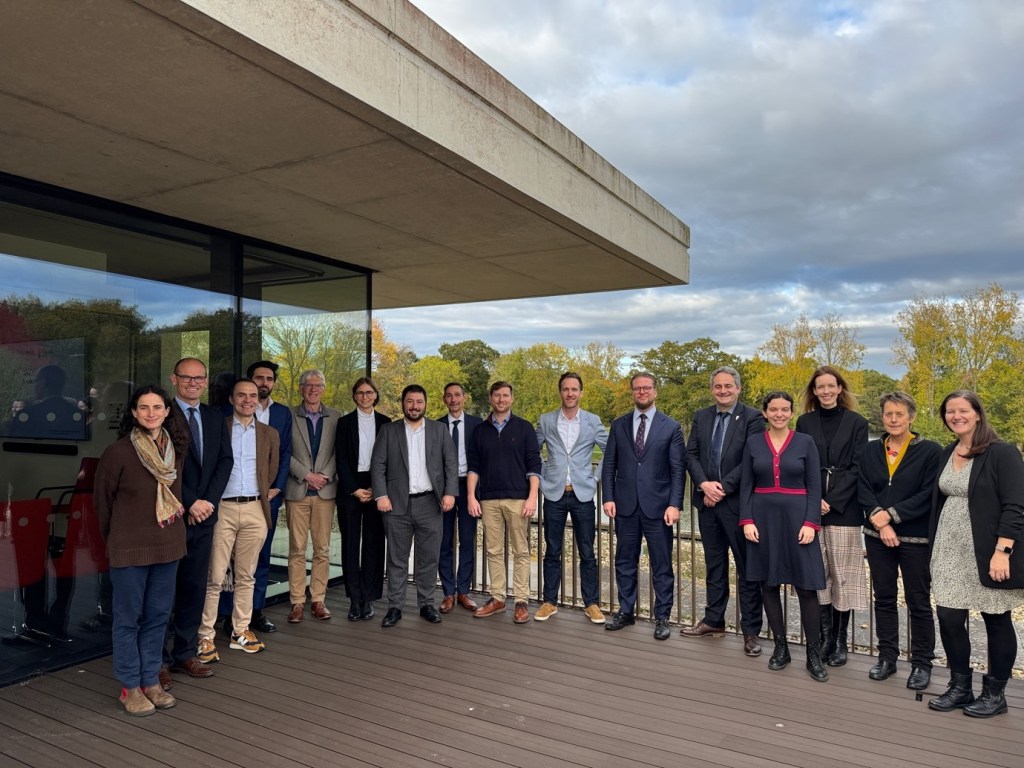
Participants from at the UNHCR-Essex Roundtable on travel documents for refugees, asylum seekers and stateless persons, October 2024 , Credit: Professor Geoff Gilbert

On 22 and 23 October, 17 people from a diverse set of organisations and backgrounds came together from all over the world on campus to discuss travel documents for forcibly displaced and stateless persons in need of international protection. On 23 October, over 60 people attended two online roundtables covering Africa, Europe, the Americas and Asia to consider a toolkit advisory on refugees and asylum seekers affected by climate-induced events or disasters. Professor Geoff Gilbert from Essex Law School hosted both events.  

First for the roundtable on climate-Induced displacement, Essex Law School & Human Rights Centre for a year has been working with the Kaldor Centre for International Refugee Law, UNSW, and the Center for Gender & Refugee Studies (CGRS), University of California College of the Laws, San Francisco, to draft a toolkit for practitioners, decision- and policy-makers on international protection in the context of climate induced events and disasters; it became part of a joint pledge to the 2023 Global Refugee Forum.  

Being forced to move across an international border as a consequence of a climate-induced or other disaster does not in and of itself qualify one as a refugee under the 1951 Convention relating to the Status of Refugees. However, as UNHCR made clear in 2020 in its Legal considerations regarding claims for international protection made in the context of the adverse effects of climate change and disasters, a person displaced in the context of climate induced or other disaster may also qualify under the 1951 Convention if they meet the criteria set out in Article 1A.2. Drought can often lead to conflicts between farmers and herders over access to water or a government may adversely discriminate against a minority ethnic group on its territory post-disaster. Equally, those who are already refugees or asylum seekers may be affected by disasters, too.  

In 2023, CGRS had produced a practice advisory for US lawyers bringing refugee status determination claims in US courts that prompted ELS-HRC and Kaldor to consult on a global equivalent dealing with international and regional refugee and human rights law. On 23 October that Practical Toolkit on ‘International Protection Principles for People Displaced Across Borders in the Context of Climate Change and Disasters’ was considered by over 60 expert academics (including Professor Karen Hulme), lawyers, judges, UNHCR staff and persons with lived experience of forced displacement from across the world. Those discussions will allow the authors, Professor Jane McAdam, Professor Kate Jastram, Dr Felipe Navarro, Dr Tamara Wood, and Professor Geoff Gilbert, to finalize this draft and disseminate it through UNHCR’s REFWorld and other specialist platforms in the next few weeks. 

Turning to the other Roundtable held on campus at the University of Essex Law School, the organisations involved included UNHCR, the International Civil Aviation Organization (ICAO), the International Organization for Migration, the EU Commission, and Frontex, as well as private sector actors, think tanks and persons with lived experience of forced displacement. The meeting also benefited greatly from the attendance of four Essex colleagues, Professor Ahmed Shaheed, former Special Rapporteur on the Human Rights Situation in Iran and on Freedom of Religion and Belief, Professor Paul Hunt, former member of the Committee on Economic, Social and Cultural Rights and Special Rapporteur on the Right to the Highest Attainable Standard of Health, Dr Matthew Gillett, Chair of the Working Group on Arbitrary Detention and a member of the Platform of Independent Experts on Refugee Rights (PIERR), and Dr Judith Bueno de Mesquita, adviser to the World Health Organisation. This roundtable discussed travel documents for persons in need of international protection, that is refugees, asylum seekers, internally displaced persons and stateless persons. 

At the end of 2023, there were 117.3m people within UNHCR’s mandate, 75% in low- or middle-income countries, and there were only 158,500 resettlement places across the world. Some would have managed to bring travel documents with them as they fled, but many are without. As such, they are trapped in the country where they are receiving protection. Even if they are in a state party to the 1951 Convention relating to the Status of Refugees or the 1954 Convention relating to the Status of Stateless Persons, then while Article 28 of both Conventions provide that the country of asylum shall provide a Convention Travel Document, it is only to refugees or stateless persons who are lawfully staying in the territory, a term that is undefined.  

As such, refugees and stateless persons not meeting the threshold, such as asylum seekers and those who have applied for refugee status but where the state has yet to make a decision granting leave to remain, for example, and any person in need of international protection in a non-Contracting state, has no opportunity to obtain a travel document; even Article 28 Convention Travel Documents might only last one to two years and they are difficult to renew outside the country of asylum. Thus, a more generic travel document more widely available to forcibly displaced and stateless persons would facilitate them achieving autonomy in finding a durable and sustainable solution. In part, this fits with the additional solution provided for through Complementary Pathways in paragraphs 85-100 of the Global Compact on Refugees, 2018 (GCR). Traditionally, the durable and sustainable solutions were only resettlement in a third country, local integration in the country of asylum and voluntary repatriation; complementary pathways might involve opportunities to take up employment opportunities or access education in a third country. 

The roundtable considered all the technical requirements for travel documents as set out in Annex 9, Facilitation, to the Chicago Convention on Civil Aviation 1944, administered by ICAO. As such, whatever the form of the travel document for persons in need of international protection, given that it will be machine readable, it should be accepted by all carriers. What cannot be guaranteed is that it will be accepted by the country of destination – that is always, even in the case of national passports, a matter of choice by the state having regard to the trustworthiness of the document.  

In this regard, though, it was suggested that one proposal to take forward is whether the right to leave and return from one’s country of nationality under Article 12 International Covenant on Civil and Political Rights and the right to legal recognition before the law under Article 16 thereof might generally grant everyone the right to a travel document, or at least in combination with the right to access the highest attainable standard of health (Article 12 International Covenant on Economic, Social and Cultural Rights), the right to access employment opportunities (Article 6 ICESCR) or education opportunities (Article 13 ICESCR), as well as the implicit guarantee of family reunification (Article 17 ICCPR). While that may require strategic litigation and engagement with governments to highlight their commitments under the international covenants and the GCR, it shows that ensuring autonomy for refugees and stateless persons and upholding their international human rights could facilitate the acquisition of travel documents. 

The two global roundtables facilitated by Essex Law School marked a significant step towards addressing the complex needs of forcibly displaced and stateless individuals, including those impacted by climate change. Bringing together global scholars, practitioners, and experts from diverse sectors, the discussions highlighted the urgency of accessible travel documents for refugees and comprehensive international protections. These insights will inform final revisions to the toolkit and strengthen advocacy for policies that support autonomy and uphold human rights for those seeking refuge across borders.  

Prohibited Force: The Meaning of ‘Use of Force’ in International Law 

By Dr Erin Pobjie, Lecturer at Essex Law School

Dr Erin Pobjie has just published Prohibited Force: The Meaning of ‘Use of Force’ in International Law (CUP, 2024). Dr Pobjie made use of the University’s dedicated open access (OA) fund to ensure that her book is freely available to students, scholars, and readers everywhere. You can download your copy here.  

Dr Pobjie has kindly answered some questions about her work, her choice to go open access and future projects. 

Congratulations on the publication of your new book! How does it feel to have it published and freely available? 

Thank you! The book is the culmination of a long process, starting with my PhD at the University of Cologne and continuing through my post-doc at the Max Planck Institute in Heidelberg and then as a new lecturer at Essex University. There were many highs and lows over that period and I learnt so much along the way, so it feels emotional and very satisfying to see it finally out.  

You chose to make use of the University’s open access fund. Why is open access important to you and how do you think it will benefit your work?  

I believe in the principles of open science so it was important to me to publish my book OA. Publishing OA allows me to share my ideas more broadly and without financial barriers, so that my book can hopefully contribute to scholarship, policy and practice on this important topic. Having poured so much into the project, I’m happy that it’s freely available open access thanks to the University’s OA fund. 

How did you find the open access process?  

It was fairly straight forward once the funding became available. The Open Access team at the University liaised with my editor at Cambridge University Press and were very helpful and responsive in supporting me throughout the process.   

What advice about open access, or publishing in general, would you offer to colleagues? 

My advice would be to seek feedback early and often, to be proactive throughout the publication process and to advocate for the ideas in your book so that they can contribute to the conversation. These are things I would try to do better next time. It continues to be a learning process now that I’m in the next phase of post-publication, so it’s been very helpful to speak to other colleagues who have recently published books for advice. 

Now, about your book, which feels incredibly timely: how did the idea come up and could you explain the key ideas of the book? 

The seed for the idea was planted during my LLM at Essex, where I was inspired by the module ‘International Law of Armed Conflict’ taught by Professor Noam Lubell. The first class was about jus ad bellum – the prohibition of the use of force between States. I was captivated by the topic and thought it could be a way to contribute to a cause I feel passionate about (the prevention of war) by exploring and clarifying fundamental legal concepts. Noam introduced me to my future doctoral supervisor, Professor Claus Kreß at the University of Cologne, who encouraged me to focus on the meaning of prohibited force.  

The prohibition of the use of force between States is a cornerstone of the modern international legal system and key to international peace and security, but its meaning is unclear. This is especially problematic for uses of force in newer domains like cyber and outer space, or that use emerging technologies. My book therefore seeks to clarify the meaning of prohibited force and proposes a definitional framework that can be applied in practice to identify illegal uses of force. To do this, I analyse the sources of the prohibition (article 2(4) of the UN Charter and customary international law) and their relationship, identify the elements of a prohibited use of force and set out a framework to define a prohibited use of force.  

In a nutshell, my argument is that a ‘use of force’ under article 2(4) of the UN Charter describes a type rather than a concept. This means that rather than consisting of a checklist of necessary and sufficient elements (a concept), it consists of a basket of elements which must be weighed and balanced to determine whether the threshold of the definition is met (a type). According to this framework, not all elements must be present for an act to constitute prohibited force if they are compensated by other elements. For example, a hostile or coercive intent may turn a forcible act into a use of force even if other elements are relatively weak, such as a low gravity or if the harm is only potential but unrealised. The final part of my book applies this framework to illustrative case studies, including the use of force in outer space. 

What’s next for you? Do you have new projects lined up? 

I was recently appointed as co-Rapporteur of the International Law Association’s Committee on the Use of Force, a committee of global experts on the law on the use of force to draft a new report to bring normative clarity to the area of ‘military assistance upon request’ (a.k.a. intervention by invitation). The Committee has a mandate until 2026 to produce the report, so together with my co-Rapporteur Professor James Green I am taking the lead in carrying out the work of the Committee and drafting our report on this topic, with conclusions and commentaries to provide guidance for States. 

I’m also excited to have the opportunity to apply the framework I developed in my book to outer space security at the United Nations. I’m currently undertaking a residential fellowship at the United Nations Institute for Disarmament Research in Geneva in their Space Security Programme, where I’m producing a policy report on the use of force in outer space. Humans globally depend on the preservation of safe, secure and sustainable uses of outer space, including for communications, global navigation systems (which underpin banking, financial markets and energy grids), disaster emergency response and humanitarian relief, food production and climate science. These are all placed at risk by military uses of outer space. The policy report will raise awareness of legal restraints on space threats under international law, which must be considered when negotiating and developing new norms for the prevention of an arms race in outer space.  

I’m enjoying the mix of doctrinal research and policy engagement and am grateful to have the opportunity to further develop and apply the ideas from my book following its publication. 

Prohibited Force: The Meaning of ‘Use of Force’ in International Law is available online and open access through Cambridge University Press. In case you would also like to purchase a hardcopy of the book, you can use the code POBJIE23 on the publisher’s website for a 20% discount until 31 December 2024. DOI: https://doi.org/10.1017/9781009022897.

Do you want to publish your work Open Access? Just complete this brief form and the Open Access team will soon be in touch. More information about making your research available open access can be found on the Open Access Publishing webpage, and you can also get in touch with the OA team via oapublish@essex.ac.uk.