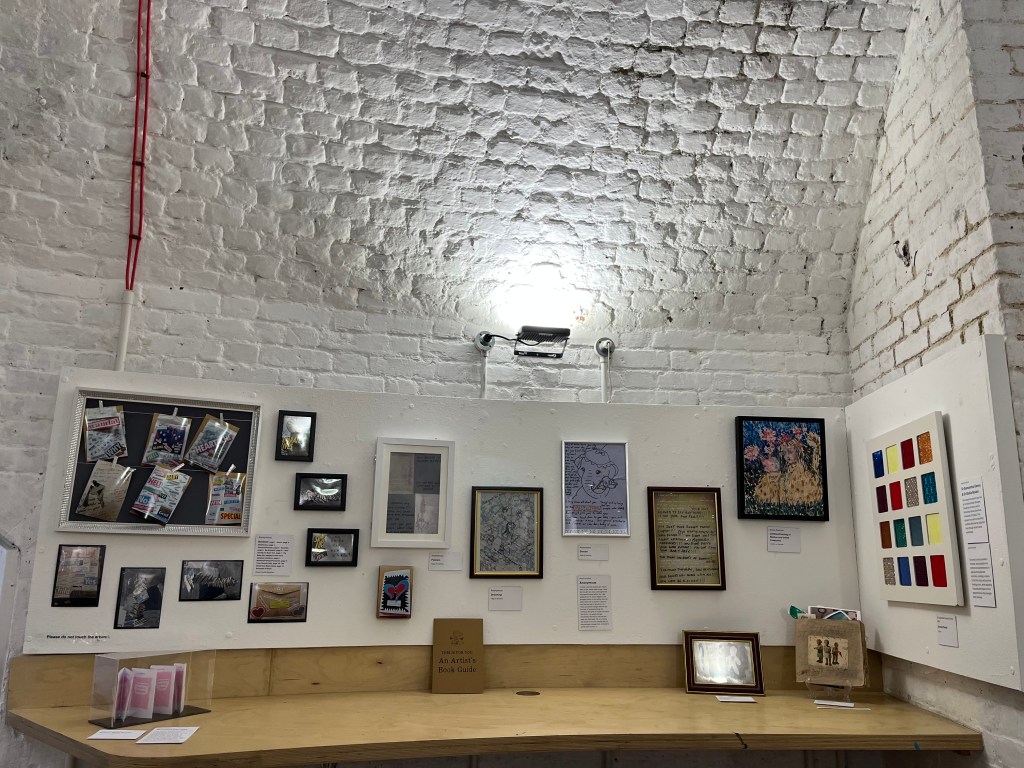
Following on from the success of last year’s Expressions of Trauma Exhibition led by Essex Healthwatch and held at The Minories, Colchester, the Essex Law School is contributing towards another exhibition, this time at the Martello Tower, Jaywick. The 2025 Expressions of Trauma provides those who missed last year’s Exhibition an opportunity to see the exhibits again – along with some new exhibits.
This thought-provoking Exhibition features diverse exhibits exploring trauma narratives. There is a dedicated installation which is based on the research of Dr Samantha Davey (University of Essex) and Dr Stella Bolaki (University of Kent), who ran a series of artist’s books workshops for mothers, which was funded by both institutions. This research highlights the experiences of mothers who have lost children through adoption, providing a powerful outlet for emotional expression. By sharing their stories through artist’s books, pictures and poetry, this exhibit encourages public awareness and empathy for mothers who suffer grief and loss, in the aftermath of adoption.
Credit: Dr Samantha Davey
Dr Davey and Dr Bolaki would like to thank Healthwatch Essex and their research champions Chloe Sparrow, Amanda Swan and Diana Defries for their participation and ongoing support with this project and the exhibitions. There are more exhibitions planned so please do keep an eye on our blog page, the Essex communications page (you can see our press release here).
For further information about this Exhibition please contact the organiser, Sharon Westfield de Cortez, Healthwatch Essex at Sharon.westfield-de-cortez@healthwatchessex.org.uk . If you are a mother who has experienced loss through adoption and would like to know more, or to participate in future exhibitions running later this year, please contact Dr Samantha Davey at smdave@essex.ac.uk.
Dr Koldo Casla, project lead of Human Rights Local, has submitted evidence to the UN Committee on Economic, Social and Cultural Rights for their inquiry into the state of socio-economic rights in the UK. Socio-economic rights include, among others, the right to housing, food, education, social security, health, access to work and good working conditions, all of which are recognised in the 1966 International Covenant on Economic, Social and Cultural Rights (ICESCR).
Launched in 2020, Human Rights Local is a project of Essex Human Rights Centre to make human rights locally relevant in the UK.
Every few years, the 170+ states that have ratified ICESCR ought to report to the UN Committee on Economic, Social and Cultural Rights (CESCR) on the policies they are implementing to respect, protect and fulfil socio-economic rights. For the UK, the last review was completed in 2016. The current one began in 2022 and will end with a UN report, known as ‘concluding observations’, that will probably be published around mid-2025. This report will be based on information provided by the UK government and devolved administrations, as well as evidence from three National Human Rights Institutions (the Equality and Human Rights Commission, the Scottish Human Rights Commission and the Northern Ireland Human Rights Commission), and evidence from NGOs and academics. On 13-14 February, the UN Committee will meet with civil society groups and NHRIs in Geneva, and it will also hold a ‘constructive dialogue’ with UK government representatives.
As part of Human Rights Local, Dr Koldo Casla has provided support to community groups and people with lived experience of poverty so they could provide their own evidence to the UN and their recommendations to bring about the necessary changes to improve their lives. This is part of GRIPP (Growing Rights Instead of Poverty Partnership), of which Essex Human Rights Centre is a founding member.
In addition, Dr Casla has also conducted research for Amnesty International about the extent to which the UK’s social security system (Article 9 ICESCR) meets international standards in relation to the right to social security. The study will be published later this year, but beforehand Amnesty International will rely on the evidence and the recommendations in their advocacy with the UN Committee on Economic, Social and Cultural Rights.
Dr Casla has also co-authored two submissions for the UN Committee. One of them identifies a series of concerns about the level of enjoyment of the right to health (Article 12 ICESCR) among Gypsy, Roma and Travelling communities in the East of England. It is based on qualitative evidence in the form of testimonies gathered in 37 peer-to-peer interviews conducted by four partner organisations – COMPAS, GATE Essex, Oblique Arts, and One Voice 4 Travellers – between June and August 2023. The evidence was part of the project “Building a community of practice to identify strengths, barriers and prioritise solutions to the right of access to healthcare for Travelling Communities”, led by colleagues in the School of Health and Social Care, and funded by the National Institute for Health and Care Research, between February 2023 and August 2024. The qualitative evidence compiled in the document is the unreserved confirmation that the UN’s concerns persist in relation to stigma, prejudice, discrimination, lack of informational accessibility and lack of cultural acceptability of healthcare for Gypsy, Roma and Traveller communities. This is reflected in the lack of cultural awareness in availability of suitable health professionals, lack of non-English language provision, problems of trust due to lack of cultural competence, lack of understanding of issues around literacy, and ongoing social exclusion, particularly digital exclusion.
The second submission goes hand in hand with the anti-poverty human rights NGO ATD Fourth World. It examines the impact of child protection services on families in poverty. Creating a social security system that guarantees the essentials in life, regulating for-profit children’s homes, and extending peer-parent support are among a list of recommendations to preserve the right to protection and assistance to the family (Article 10 ICESCR) for households living in poverty.
As argued by Dr Casla and Lyle Barker in a paper published in the Journal of Human Rights Practice in 2024, lived experience brings both epistemic and instrumental value to human rights research. In relation to the former value, in a peer-led process, people with lived experience of poverty do not simply provide evidence, data and information. Instead, they rank their concerns, frame their grievances in their own terms and decide about their priorities and the research methodology. This approach intends to address the epistemic injustice that silences people in poverty and dismisses their knowledge. In relation to the second value, the instrumental one, lived experience can help detect the real impact of the distinguishing features of specific human rights. For example, in relation to child protection services, a peer-led and participatory action research with families showed that one of the instrumental values of putting lived experience first is that it can reveal the true nature, prevalence and damage of povertyism – the negative stereotyping of people in poverty – on people in poverty.
The book is about arbitrary detention, but it is also a reflection on the shifting meaning of arbitrariness as a concept. I consider how forms of marginalisation and other arbitrary factors influence who will be detained, when, for how long and in what conditions. Policies of securitisation, regimes of exception, and criminalisation have exacerbated these arbitrary distinctions given their propensity to target “otherness,” even though there is nothing exceptional about “otherness.” How these policies are applied, and their impact on individuals and communities, depends on the underlying political values and goals at stake, which differ between countries and over time.
The book also explores how arbitrary detention has become normalised. It is used purposively by governments to foster divisions and to enforce hostility against socially marginalised groups who I classify in this book as: the “unseen” (those marginalised on account of their destitution and/or extreme social needs); the “reviled and resented” (the recipients of racist, xenophobic and discriminatory attacks); and the “undeserving” (refugees and other migrants). When arbitrary detention is normalised, it becomes impossible for courts to only countenance detention that is exceptional – the logic no longer works. So, this conundrum is analysed from different angles and factual contexts.
Why did I write it?
The idea for the book crept up on me in a non-linear way. It was always the book I wanted to write but it took some internal prodding and mental gymnastics for me to figure out how to articulate the urgency that I was feeling about the subject matter in a way that made sense on the page. So, framing the ideas, and the ideas within the ideas took time. In many ways the book is a homage to all the survivors of arbitrary detention I have been privileged to know and support, and to all the courageous human rights defenders, lawyers and psychologists who continue to work in this space.
How did I go about doing this research?
The methodology question is never straight-forward and the sociolegal purists may want to turn away now!
My ideas about the subject matter stem from about two decades of legal practice and advocacy working with victims of torture and seeing up close the suffering people undergo while in detention. So, there was a significant evidence base from where I derived my thinking, but it was quite diffuse, deeply personal and of course, subjective.
The purpose it served in the research process was mainly to guide me with the crucial task of figuring out what themes I needed to foreground. A good example of this is the decision I took to delve into the relationship between arbitrariness and torture. I claim that the disorientation, despair, uncertainty, lack of agency that arbitrariness produces (also considering the extensive psychological literature) is so harmful psychologically that it can rise to the level of torture (all other elements of torture being present). My decision to tackle this theme stems from years of speaking with clients about how arbitrariness in and of itself, made them feel. It also helped me to work out where I wanted to situate my thinking critically on the side of key debates. An example of this is how I critically examined the caselaw on socially excluded and marginalised groups and began to confront the failure of some courts to confront the phenomenon of industrial-scale arbitrary detention.
Then, I would say there are different layers to the book, and some of these layers are more pronounced or prominent, depending on the chapter. There is a layer which is in the classic style of human rights rapportage; going through reams of testimonials and reports to locate patterns and derive meanings and using individual narratives to give context. Another layer is the analysis of how regional and international courts have addressed the phenomenon of arbitrary detention. So, there is a deep doctrinal analysis of the caselaw and how certain findings came to be. But, because much of the caselaw lacks an obvious internal coherence I also use a variety of critical legal theories, social theory, and political philosophy to help me with the task of making sense of what has little obvious internal logic.
I enjoyed the process of pulling the text together; here’s to hoping readers will find it just as enjoyable to read!
In Prohibited Force: The Meaning of ‘Use of Force’ in International Law (Cambridge University Press, 2024), Dr. Erin Pobjie addresses the ambiguities surrounding the prohibition of ‘use of force’ under article 2(4) of the UN Charter, a foundational rule of international law designed to prevent war and maintain international peace and security. Article 2(4) prohibits States from using force against each other, except in cases of self-defence or UN Security Council authorisation, yet its interpretation is often unclear in complex, real-world situations. Recognizing these challenges, Dr Pobjie introduces her ‘type theory’ framework, which suggests that determining a prohibited use of force should involve a set of contextual requirements and a flexible set of ‘non-essential’ elements – including physical force, effects, gravity, and hostile or coercive intent – that are weighed together, rather than applied rigidly. With this framework, Pobjie brings analytical depth to ambiguous cases, refining our understanding of this cornerstone of international law. Adil Haque describes Prohibited Force as ‘an extraordinary book’ with a ‘striking and rare’ combination of theoretical sophistication and empirical rigour.
Opinio Juris, a leading blog on international law, recently hosted a symposium to engage critically with Prohibited Force. The discussion opened with Dr Alonso Gurmendi’s introduction, followed by Professor Claus Kreß, who highlighted the book’s potential to strengthen the international legal order. Professor Adil Haque explored its implications for self-determination units, while Ambassador Tomohiro Mikanagi considered its relevance to cases of territorial acquisition. Professor Andrew Clapham underscored the framework’s real-world impact, noting that its insights could affect thousands of lives by shaping legal responses to blockades impacting food and humanitarian supplies in conflict zones like Yemen and Gaza. Professor James Green reflected on the strengths and potential limitations of type theory when applied to complex, borderline cases, and Professor Alejandro Chehtman highlighted the need to balance analytical sophistication with accessibility in practical settings. In her response, Dr Pobjie engaged with each contributor’s insights and critiques, underscoring her framework’s potential to foster richer discourse on the prohibition of force and its role in advancing international peace and security.
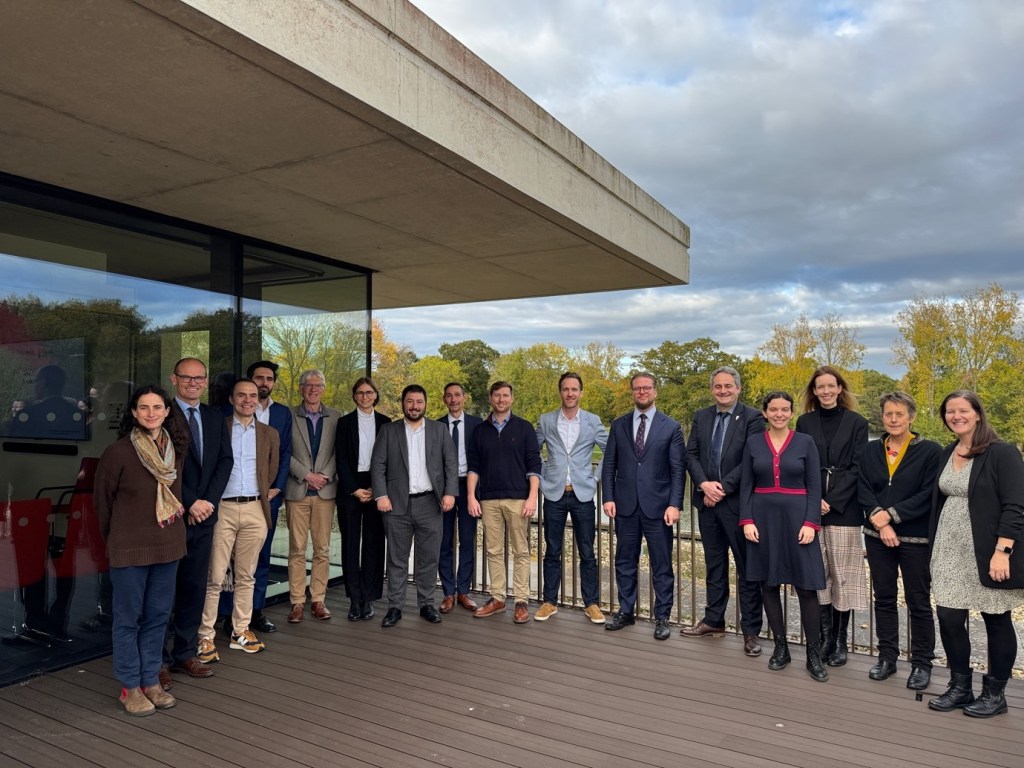
Participants from at the UNHCR-Essex Roundtable on travel documents for refugees, asylum seekers and stateless persons, October 2024 , Credit: Professor Geoff Gilbert
On 22 and 23 October, 17 people from a diverse set of organisations and backgrounds came together from all over the world on campus to discuss travel documents for forcibly displaced and stateless persons in need of international protection. On 23 October, over 60 people attended two online roundtables covering Africa, Europe, the Americas and Asia to consider a toolkit advisory on refugees and asylum seekers affected by climate-induced events or disasters. Professor Geoff Gilbert from Essex Law School hosted both events.
First for the roundtable on climate-Induced displacement, Essex Law School & Human Rights Centre for a year has been working with the Kaldor Centre for International Refugee Law, UNSW, and the Center for Gender & Refugee Studies (CGRS), University of California College of the Laws, San Francisco, to draft a toolkit for practitioners, decision- and policy-makers on international protection in the context of climate induced events and disasters; it became part of a joint pledge to the 2023 Global Refugee Forum.
Being forced to move across an international border as a consequence of a climate-induced or other disaster does not in and of itself qualify one as a refugee under the 1951 Convention relating to the Status of Refugees. However, as UNHCR made clear in 2020 in its Legal considerations regarding claims for international protection made in the context of the adverse effects of climate change and disasters, a person displaced in the context of climate induced or other disaster may also qualify under the 1951 Convention if they meet the criteria set out in Article 1A.2. Drought can often lead to conflicts between farmers and herders over access to water or a government may adversely discriminate against a minority ethnic group on its territory post-disaster. Equally, those who are already refugees or asylum seekers may be affected by disasters, too.
In 2023, CGRS had produced a practice advisory for US lawyers bringing refugee status determination claims in US courts that prompted ELS-HRC and Kaldor to consult on a global equivalent dealing with international and regional refugee and human rights law. On 23 October that Practical Toolkit on ‘International Protection Principles for People Displaced Across Borders in the Context of Climate Change and Disasters’ was considered by over 60 expert academics (including Professor Karen Hulme), lawyers, judges, UNHCR staff and persons with lived experience of forced displacement from across the world. Those discussions will allow the authors, Professor Jane McAdam, Professor Kate Jastram, Dr Felipe Navarro, Dr Tamara Wood, and Professor Geoff Gilbert, to finalize this draft and disseminate it through UNHCR’s REFWorld and other specialist platforms in the next few weeks.
Turning to the other Roundtable held on campus at the University of Essex Law School, the organisations involved included UNHCR, the International Civil Aviation Organization (ICAO), the International Organization for Migration, the EU Commission, and Frontex, as well as private sector actors, think tanks and persons with lived experience of forced displacement. The meeting also benefited greatly from the attendance of four Essex colleagues, Professor Ahmed Shaheed, former Special Rapporteur on the Human Rights Situation in Iran and on Freedom of Religion and Belief, Professor Paul Hunt, former member of the Committee on Economic, Social and Cultural Rights and Special Rapporteur on the Right to the Highest Attainable Standard of Health, Dr Matthew Gillett, Chair of the Working Group on Arbitrary Detention and a member of the Platform of Independent Experts on Refugee Rights (PIERR), and Dr Judith Bueno de Mesquita, adviser to the World Health Organisation. This roundtable discussed travel documents for persons in need of international protection, that is refugees, asylum seekers, internally displaced persons and stateless persons.
At the end of 2023, there were 117.3m people within UNHCR’s mandate, 75% in low- or middle-income countries, and there were only 158,500 resettlement places across the world. Some would have managed to bring travel documents with them as they fled, but many are without. As such, they are trapped in the country where they are receiving protection. Even if they are in a state party to the 1951 Convention relating to the Status of Refugees or the 1954 Convention relating to the Status of Stateless Persons, then while Article 28 of both Conventions provide that the country of asylum shall provide a Convention Travel Document, it is only to refugees or stateless persons who are lawfully staying in the territory, a term that is undefined.
As such, refugees and stateless persons not meeting the threshold, such as asylum seekers and those who have applied for refugee status but where the state has yet to make a decision granting leave to remain, for example, and any person in need of international protection in a non-Contracting state, has no opportunity to obtain a travel document; even Article 28 Convention Travel Documents might only last one to two years and they are difficult to renew outside the country of asylum. Thus, a more generic travel document more widely available to forcibly displaced and stateless persons would facilitate them achieving autonomy in finding a durable and sustainable solution. In part, this fits with the additional solution provided for through Complementary Pathways in paragraphs 85-100 of the Global Compact on Refugees, 2018 (GCR). Traditionally, the durable and sustainable solutions were only resettlement in a third country, local integration in the country of asylum and voluntary repatriation; complementary pathways might involve opportunities to take up employment opportunities or access education in a third country.
The roundtable considered all the technical requirements for travel documents as set out in Annex 9, Facilitation, to the Chicago Convention on Civil Aviation 1944, administered by ICAO. As such, whatever the form of the travel document for persons in need of international protection, given that it will be machine readable, it should be accepted by all carriers. What cannot be guaranteed is that it will be accepted by the country of destination – that is always, even in the case of national passports, a matter of choice by the state having regard to the trustworthiness of the document.
In this regard, though, it was suggested that one proposal to take forward is whether the right to leave and return from one’s country of nationality under Article 12 International Covenant on Civil and Political Rights and the right to legal recognition before the law under Article 16 thereof might generally grant everyone the right to a travel document, or at least in combination with the right to access the highest attainable standard of health (Article 12 International Covenant on Economic, Social and Cultural Rights), the right to access employment opportunities (Article 6 ICESCR) or education opportunities (Article 13 ICESCR), as well as the implicit guarantee of family reunification (Article 17 ICCPR). While that may require strategic litigation and engagement with governments to highlight their commitments under the international covenants and the GCR, it shows that ensuring autonomy for refugees and stateless persons and upholding their international human rights could facilitate the acquisition of travel documents.
The two global roundtables facilitated by Essex Law School marked a significant step towards addressing the complex needs of forcibly displaced and stateless individuals, including those impacted by climate change. Bringing together global scholars, practitioners, and experts from diverse sectors, the discussions highlighted the urgency of accessible travel documents for refugees and comprehensive international protections. These insights will inform final revisions to the toolkit and strengthen advocacy for policies that support autonomy and uphold human rights for those seeking refuge across borders.
During the 30-year Northern Ireland conflict, which ended with the 1998 Belfast/Good Friday Agreement, human rights violations were committed by a range of parties, including UK state forces. It has long been suspected that impunity protected this latter category of conflict actors, and that lack of accountability for serious harms, such as torture and killings, demonstrated the state’s disregard for its international human rights obligations and relevant domestic standards.
For the first time, an independent expert body has established that state impunity in the Northern Ireland conflict was indeed widespread, as well as being systemic and systematic.
London launch event for ‘Bitter Legacy: State Impunity in the Northern Ireland Conflict’, May 1st 2024.
Independent examination
Convened by the Norwegian Center for Human Rights, the Independent Panel on State Impunity and the Northern Ireland Conflict was established at the request of two Northern Ireland human rights organisations, the Committee for the Administration of Justice and the Pat Finucane Centre. Against the backdrop of the absence of effective official mechanisms for accountability and truth in relation to the Northern Ireland conflict, the Panel was made up of set out to provide an authoritative record of the extent to which there is evidence of patterns of impunity by the UK Government in relation to human rights violations. The panel was made up of independent international experts, including Essex Law School’s Dr Aoife Duffy. Last month, the report published its finding as a report titled Bitter Legacy: State Impunity in the Northern Ireland Conflict.
Impunity
Impunity is the de facto or de jure impossibility of holding perpetrators accountable for their actions. This means that those responsible for human rights violations are not subject to any inquiries that could lead to their prosecution and sentencing, nor are they compelled to make reparations to their victims.
Combatting impunity is a well-established obligation under human rights law. States are required to ensure truth, justice, reparations, and non-recurrence of abuses.
Good Friday Agreement and its shortcomings
The 1998 Good Friday Agreement, while a monumental step towards peace, did not establish a comprehensive transitional justice mechanism to address past human rights violations. Over the years, the UK has faced criticism for failing to fulfil its obligations under Article 2 of the European Convention on Human Rights, which mandates effective investigations into killings. The criticism extends to other areas where the UK has failed to meet its obligations towards victims.
Persistent impunity and limited progress
Since the Good Friday Agreement, there has been a notable “impunity gap” in Northern Ireland, as highlighted by the UN Special Rapporteur on the promotion of truth, justice, reparation, and guarantees of non-recurrence. Despite isolated efforts through ad-hoc inquiries, inquests, civil actions, and the efforts of civil society groups, much about the human rights abuses during the conflict remains unknown or unacknowledged. This piecemeal approach has led to limited progress towards overall accountability and truth.
Legacy Act
The recently enacted Northern Ireland Troubles (Legacy and Reconciliation) Act 2023 has been widely criticised. Many believe it is designed to limit efforts to achieve truth and justice. The Act has faced opposition from numerous quarters, including international bodies like the Council of Europe and the UN Special Rapporteur, while securing rare consensus among Northern Ireland’s political parties. The Irish Government, political parties in the Republic of Ireland, and opposition parties at Westminster have also voiced strong opposition.
Findings of the Report
Over 200 pages, the report sheds light on the deep-seated issue of state impunity in Northern Ireland and the urgent need for effective mechanisms to address past human rights violations. The Panel based its research on a wide variety of sources, conducting seven site visits to Northern Ireland to gather primary evidence. Panel members met with victims, survivors, family members, legal representatives, NGOs working on relevant issues, and other experts. In addition, the Panel met with representatives of both the British and Irish governments, and several high level individuals involved in legacy work. The Panel also had access to declassified state papers, legal judgments, Police Ombudsman reports, coroner’s inquests, Historical Enquiries Team, and public inquiry reports.
The three areas where security force actions were scrutinised were: direct state killings, torture and ill-treatment, and deaths involving collusion. The Panel concluded that the UK government failed to fulfil its international human rights duties as it “did not conduct fair and effective investigations” and “failed the relatives’ rights to truth, justice and reparation”.
As political debates and litigation surrounding the 2023 Legacy Act continue, the quest for truth and justice remains a critical and unresolved issue for many victims and their families. The hope is that through persistent advocacy and international pressure, meaningful progress can be achieved in combating impunity and ensuring a just and comprehensive resolution to the legacy of the Northern Ireland conflict. Ultimately, the Panel recommended that the UK government repeal the 2023 Legacy Act in its entirety and establish human rights compliant mechanisms that build on earlier commitments negotiated with the Irish government and the major political parties of Northern Ireland in the 2014 Stormont House Agreement.
By Sarah Zarmsky, Assistant Lecturer, Essex Law School
Photo from Unsplash
Historically, international criminal law (ICL) has been mainly concerned with physically violent crimes. Progressively, ICL has begun to recognise the importance of mental forms of suffering (such as for torture and genocide), but this has always been in connection with cases focused on physical harms. Recently, developments such as the proposed addition of the crime of ecocide to the Rome Statute of the International Criminal Court have signalled that ICL may be ready to evolve further and accommodate novel types of harm, including those perpetrated through technology.
To explore the potential of ICL to encompass online harms, or harmful acts perpetrated through online spaces, Sarah Zarmsky, PhD Candidate and Assistant Lecturer with the Law School, recently published her article ‘Is International Criminal Law Ready to Accommodate Online Harm? Challenges and Opportunities’ with the Journal of International Criminal Justice (JICJ). This article stems from part of Sarah’s doctoral research on accountability for digital harms under ICL, which encompasses a broader range of harms inflicted using technology than online harms.
This article aims to answer the understudied question of how technology can serve as the vehicle by which certain international crimes are committed or lead to new offences. It explores how current international criminal law frameworks may be able to accommodate ‘online harms’ to ensure that the law recognises the full scope of harms caused to victims, who currently may not be able to access redress through the international criminal justice system.
Three examples of online harm that have a foreseeable nexus to the perpetration of international crimes are identified, including (a) hate speech and disinformation, (b) sharing footage of crimes via the internet, and (c) online sexual violence. The article analyses these online harms alongside similar harms that have been encompassed by core ICL crimes, including genocide, crimes against humanity, and war crimes, to assess how they might fit into existing definitions of crimes (potentially as an aggravating factor at sentencing or as a new manner of commission), or warrant the creation of an entirely new offence.
The article concludes that the examples of online harm considered in the piece should be able to be accommodated by existing crimes, but this does not mean they should necessarily be treated the same as ‘traditional’ offences.
For example, in the case of the spread of hate speech, this online harm could likely fall under existing definitions of persecution or incitement to genocide, or when footage of crimes is shared online, it could likely amount to an outrage upon personal dignity. Yet, the online component often exacerbates the harm—for instance, posting a video of a crime could be potentially even more humiliating than committing the same crime in a public square, where the footage is not preserved, distributed, and virtually impossible to get rid of.
These elements should be recognised by ICL Chambers in future cases, such as during the gravity assessment of the crimes or at sentencing, to ensure that the full scale of the harm is acknowledged.
Finally, the article emphasises that as technology will only continue to develop and serve as a vehicle for an increasing array of harms, finding ways to account for online harm and bring redress to victims should be an issue at the forefront of ICL.
The article forms part of a forthcoming Special Issue with the JICJ edited by Dr Barrie Sander (Leiden University) and Dr Michelle Burgis-Kasthala (University of Edinburgh) titled ‘Contemporary International Criminal Law After Critique’.
The discussions that will be sparked by this article are relevant to the explorations of engaging with ICL ‘after critique’ presented in the Special Issue, as it is important that ICL be able to recognise and adapt to new forms of harm to avoid the favouring of existing criminal harms that can reinforce traditional assumptions and stereotypes behind the law.
This is a post originally published by the Essex Human Rights Centre Blog on February 12th, 2024.
Mexico Country Visit of the Working Group in September 2023
Spotlight regularly features a significant individual or team from the Human Rights Community to answer questions put by students and colleagues from the University of Essex. This time we feature Dr. Matthew Gillett.
Dr. Gillett was appointed as a United Nations Special Mandate Holder in 2022. Specifically, he is the Expert Member from the Western Europe and Others Group in the Human Rights Council’s Working Group on Arbitrary Detention. In 2023, he was elected Vice-Chair for Communications of the Working Group. In this role, he cooperates with other Special Mandate Holders (typically the Special Rapporteurs on Torture, on Extra-judicial Killings, and on Counterterrorism, plus the Working Groups on Forced Disappearance and on the Elimination of Discrimination against Women and Girls); to issue communications to Governments and other entities (such as corporations) regarding potential human rights violations. As a member of the Working Group on Arbitrary Detention, he deliberates around 80-90 judgments (called opinions) a year and also conducts country visits to scrutinize detention practices around the World.
Previously, Dr. Gillett has around 15 years of experience working in international organisations in The Hague (particularly as a prosecution attorney at the International Criminal Court (“ICC”) and the International Criminal Tribunal for the former Yugoslavia (“ICTY”)). He has conducted investigations in various conflict zones, including for six months as a Human Rights Officer with the United Nations Assistance Mission in Afghanistan (“UNAMA”).
Academically, his work encompasses: International Criminal Law; Human Rights; Terrorism and Counterterrorism; Procedure and Evidence; Open-Source investigations; the Environment; International Humanitarian Law; Mediation (as a qualified mediator); Speech Crimes; and Aggression. His publications have been cited before international and hybrid courts, including in filings and Decisions of the Colombia Special Jurisdiction for Peace (“Pre-Report on Charging Environmental Damage before the Jurisdicción Especial para la Paz”); the International Criminal Court (e.g. “Collective dislocation; crimes of displacement, property depravation and discrimination under international criminal law”, Routledge; “The Call of Justice: Obligations under the Genocide Convention to Cooperate with the International Criminal Court”, CLF) and the Special Tribunal for Lebanon (e.g. “Fast-Track Justice”, JICJ; “The Special Tribunal for Lebanon Swiftly Adopts Its Rules of Procedure and Evidence”, JICJ).
Students’ and colleagues’ questions answered
We are honoured that Dr. Gillett agreed to answer questions put by the human rights students and community at Essex.
Q: What initially drew you towards human rights?
A: Working at the High Court of New Zealand exposed me to various human rights cases, from freedom of expression claims to complaints of ill-treatment in detention. Learning about the substance of human rights, and the effect of international conventions on the application of domestic law was fascinating.
Q: How do you believe the efforts of the Working Group on Arbitrary Detentioncan help address criticisms of the UN’s human rights work?
A: The Working Group on Arbitrary Detention strives for fair conclusions and innovative ways to enhance human rights compliance. One of the important ways we can reduce criticism is through robust fact-finding. We have five expert members, with a range of experiences and backgrounds. Our individual cases are subjected to rigorous review, while also ensuring that we address a high volume each year. We also travel to countries to assess their detention systems and meet with detainees, officials, and NGO representatives, all of which helps us to reach well-grounded findings.
Q: What advice would you offer aspiring human rights workers?
A: Gain field experience early, explore alternative avenues for redress, and follow up on cases to understand their outcomes comprehensively. In more detail: (i) Get field experience at an early stage – it will open your eyes to the situation on the ground and whether you are well suited to that type of work. (ii) Think about your options in any situation, such as new avenues or fora to redress a human rights violation, and don’t simply accept binary choices that are presented to you. (iii) Follow-up on situations you have been involved in – if you assisted a victim with a human rights claim, then get back in contact periodically afterwards to find out how it panned out.
Q: How can we assess the effectiveness of human rights measures such as issuing communications?
A: Tracking responses and subsequent actions by governments is essential. Effective engagement with international bodies like the UN can amplify pressure for change. An obvious case is if the Government or entity in question explicitly changes their conduct as a result of the communication. However, in many cases that won’t happen, at least not instantly. So the first step is keeping a track of communications and responses, the second is assessing to what extent the response engaged with the issues, and the third is considering follow-up measures such as public statements or bringing pressure through international fora like the United Nations Human Rights Council or General Assembly.
Q: Considering the allegations against the US and UK regarding torture in Iraq and Afghanistan, and their reluctance to allow ICC investigation or hold themselves accountable, what message do the actions of powerful states convey regarding accountability for human rights violations?
A: Reluctance to engage with international institutions sends a discouraging message globally, undermining the universality of human rights principles. Just like international human rights law, international criminal law is designed to apply universally. The lack of commitment to institutions like the International Criminal Court by powerful States including Russia, China and the USA sends a dispiriting message to the people of the world – especially given that the crimes listed in the Rome Statute, such as aggression, genocide, crimes against humanity and war crimes are lowest common denominators, which all States should agree to prohibit.
Q: What are your concerns regarding the existing framework of the working group, and how can it be improved?
A: Balancing increasing caseloads with broader advocacy efforts poses challenges. For the future, it would be ideal to have increased resources for the OHCHR team which supports the expert members of the Working Group.
Q: In your role as Vice-Chair for Communications of the Working Group, what strategies do you employ to foster collaboration among Special Mandate Holders and issue effective communications to address potential human rights violations?
A: Collaborating with other Special Mandate Holders is a highlight of the work, but of course can present its own challenges in terms of coordination. Typically, a strategy is to have a lead mandate in charge of a particular communication, and then others to review and sign onto it. We have also started having more regular meetings and exchanges on particular hot-spots which raise issues for multiple mandates, so that we are communicating with each other and exchanging information and views in order to enhance our understanding of the situation.
Q: Having worked as a prosecution attorney at the ICC and the ICTY, how do you draw on your experiences in conflict zones to contribute to the Working Group on Arbitrary Detention?
A: As a former prosecutor, I am used to looking through statements, documents and other sources to reach factual conclusions. Having worked in multiple situations of armed conflict, I am aware of security requirements but also know the importance of seeing situations and speaking to people first-hand to establish events. Additionally, there is considerable overlap between arbitrary detention and the crimes I prosecuted, which helps for legal assessments.
Q: Can you share insights from your academic work and its relevance to human rights advocacy?
A: My research has recently focused on fact-finding. This has spurred me to look at the procedures employed at various human rights bodies, and what types of materials they base their findings on. Legally, the context of armed conflict or terrorism type scenarios helps to understand when there may be different considerations to bear in mind when assessing the application of international human rights law.
Q: Given that your work exposes you to stressful and harrowing experiences and stories, how do you cope with these challenges?
A: When I am interviewing a victim or visiting a crime scene, my focus is usually on forensic details and ensuring an accurate record, as well as the safety of everyone involved. However, I realised after many years of working long hours that you have to look out for your own well-being as well. Now I exercise reasonably often and enjoy catching up with friends and colleagues from around the world when the opportunity arises. I also have two young children to keep me on my toes.
By Dr. Matthew Gillett, Senior Lecturer, Essex Law School, Head of the Digital Verification Unit.
Image via shutterstock
Throughout history, grave crimes have been fueled by incitement and inflammatory rhetoric. From the Holocaust to Rwanda, influential leaders have established the psychological and rhetorical antecedents for mass violence. However, in the digital age, a far wider range of potential inciters have access to platforms with instantaneous global reach. Already this new era has seen online incitement to atrocities in Myanmar, Ukraine, and Sudan. These events demand accountability and, as investigations and prosecutions get underway, inflammatory statements are increasingly becoming a critical form of evidence.
Speech acts, whether oral or written are forensically significant in multiple ways. They can demonstrate criminal intent, they can demonstrate instigation, and they can amount to crimes in and of themselves, such as persecution or direct and public incitement to genocide. The relevance of speech acts was evident in the International Court of Justice’s provisional measures order in the Israel-South Africa genocide case. Statements made online by high-level Israeli officials through Twitter/X and other platforms were key evidentiary items cited by the Court in granting provisional measures. And that relevance will continue to grow in future litigation. Whereas the Court’s provisional order did not require a detailed evidentiary assessment, the statements will be subjected to far more exacting scrutiny during the merits phase. Equally, if genocide is charged at the ICC or other courts, incendiary statements will constitute a central focal point for the litigation. This begs the question of how such statements can be entered into evidence and contextualized in the context of international legal proceedings.
In an article I recently co-authored with Wallace Fan, former student manager at the University of Essex Digital Verification Unit, we explore how online materials can be submitted as evidence before international courts. Published in the Journal of International Criminal Justice in December 2023, the article notes that digital open-source information has become a significant means of proving atrocity crimes charges. It argues that digital materials will typically need to be authenticated and contextualized via expert evidence. Highlighting the challenges that DOSI presents, including the risks of misinterpretation and biases leading to erroneous conclusions, the article proposes a six-factor test to identify digital specialists to serve as expert witnesses. It also encourages the digital open-source community to utilize transparent, accessible and replicable methodologies when conducting online investigations. On a complementary track, I am working with PhD candidate Vanessa Topp on a new version of The Hartford Guidelines on Speech Crimes in International Criminal Law, which I co-authored with Professor Richard Wilson of the University of Connecticut in 2017. The new guidelines will address international speech crimes on social media platforms, disinformation, and other linked topics arising in the digital age. Building on the analyses in those publications, a key facet of the research is to examine how to analyse and tender online speech acts as evidence. For these purposes, it is clear that expert evidence will be required from a range of specialists. Forensic questions include the authenticity of the statement (excluding deepfakes and identifying alterations to the item), attributing it to the suspect, preserving the native files, measuring the reach of the statement, identifying the influence of the statement maker, and, perhaps most significantly, interpreting the statement’s contents in light of its sociological, temporal and cultural context. Underlying conceptual questions include how to categorize online materials as evidence, how digital materials can shift the truth-discerning moment outside of the courtroom, and how the democratization of access to technology tests the distinction between experts and laypersons for legal purposes. As court proceedings heat up, providing conceptual clarity on these issues will help facilitate the submission, contextualization and interpretation of online materials which may constitute or instigate atrocity crimes including genocide and persecution.
This legal analysis of the Rwanda Treaty and Bill and the UK’s legal obligations towards victims of modern slavery and human trafficking (MSHT) has been conducted by Dr Marija Jovanovic from the University of Essex. She is the author of State Responsibility for ‘Modern Slavery’ in Human Rights Law (Oxford University Press, 2023).
The analysis has been commissioned by the Modern Slavery and Human Rights Policy and Evidence Centre (Modern Slavery PEC), which in turn is funded and supported by the UK Arts and Humanities Research Council (AHRC).
The Modern Slavery PEC has actively supported the production of this legal analysis. However, the views expressed in this document are those of the author. The author is grateful to James Robottom, Barrister at Matrix, for detailed comments on a draft of this analysis.
Executive Summary
This report analyses the provisions of the UK – Rwanda Treaty 2023 and the Safety of Rwanda (Asylum and Immigration) Bill in light of the UK’s international obligations towards victims of modern slavery and human trafficking (MSHT) contained in Article 4 of the European Convention on Human Rights 1950 (ECHR) (prohibition of slavery and forced labour) and the Council of Europe Convention on Action Against Trafficking in Human Beings 2005 (ECAT).
It is important to specify that this analysis focuses solely on the requirements under the ECAT and Article 4 ECHR and does not consider the conditions under which International Refugee Law would permit removing people seeking asylum to a third country when the issue of modern slavery and human trafficking was not at stake. Unlike international treaties designed to protect victims of modern slavery and human trafficking, International Refugee Law does not impose an express obligation on States not to remove individuals before their refugee status is determined, nor the obligation to investigate, prosecute, and punish individual perpetrators. Drafted half a century later, the anti-trafficking instruments are much more explicit, concrete, and demanding when it comes to protection requirements.
Accordingly, this analysis emphasises the need to distinguish between obligations arising from international anti-trafficking instruments (the majority of which have been integrated in the ECHR) and those established under International Refugee Law, and emphasises the need for decoupling the issue of modern slavery and human trafficking from migration control.
Section 1 of the analysis focuses on the international law obligation to identify and protect every victim of modern slavery and human trafficking. Article 13 of the Rwanda Treaty expressly envisages the UK not completing the victim identification process in relation to individuals who are deemed to have arrived in the UK illegally. This is a breach of an explicit international obligation to identify and assist every victim of modern slavery and human trafficking, including those who entered or are present illegally, contained in both Article 4 ECHR and Article 10 ECAT.
Section 2 of the analysis explains international law obligations pertaining to the removal of victims of modern slavery and human trafficking. It finds that by providing for removal to Rwanda of suspected victims of modern slavery or human trafficking (individuals who there are reasonable grounds to believe are victims of modern slavery or human trafficking), Article 13 of the Rwanda Treaty and the Safety of Rwanda Bill contravene the express international obligation in Article 10(2) ECAT not to remove such individuals (including to third countries) until the identification process is complete. Removing confirmed victims of modern slavery or human trafficking to Rwanda without an assessment of the risk of re-trafficking they may face, also gives rise to the risk of breaches of Article 4 ECHR by analogy with Article 16 of ECAT. The latter sets out conditions under which an identified victim of modern slavery and human trafficking can be returned to the country of their nationality/permanent residence, which is permitted only after conducting an assessment of the impact of such return on ‘the rights, safety and dignity of that person’, including the risk of re-trafficking. While the ECAT does not expressly govern the removal of identified victims to third countries, by analogy the same conditions ought to apply in such cases.
Section 3 of the analysis discusses the operational duty to protect victims of modern slavery or human trafficking contained in Article 4 ECHR, which includes the protection of those at risk of being subject to modern slavery or human trafficking and prevent re-trafficking. This obligation requires states to consider the risk of re-trafficking when making decisions to remove a suspected or confirmed victim of modern slavery and human trafficking from their territory to a third country. The Rwanda Treaty and the Human Rights Memorandum accompanying the Safety of Rwanda Bill fail to acknowledge the risk of violating this obligation and the need to instruct decision-makers to assess the risk of re-trafficking of presumed or confirmed victims of modern slavery or human trafficking.
Section 4 of the analysis considers the international law obligation to prosecute and punish the perpetrators of modern slavery and human trafficking. It finds that in addition to the obligation to identify every victim of modern slavery and human trafficking, the removal of individuals with a reasonable grounds decision envisaged by Article 13 of the Rwanda Treaty risks breaching a duty to investigate and punish the perpetrators of this crime contained in Article 4 ECHR and Article 27 ECAT. Victims of modern slavery and human trafficking are often the only witnesses of this crime and without their assistance the perpetrators are likely to remain at large.
Overall, removing to Rwanda individuals with a positive reasonable grounds decision (suspected victims), as envisaged by Article 13 of the Rwanda Treaty, will automatically and in all cases put the UK in breach of Article 4 ECHR as well as Article 10 ECAT. In addition, removing identified victims of modern slavery and human trafficking without conducting an individualised assessment of the risk of re-trafficking would breach the operational duty under Article 4 ECHR. Lastly, removing suspected or confirmed victims of modern slavery and human trafficking risks interfering with an obligation to investigate and prosecute the perpetrators of modern slavery and human trafficking contained in Article 4 ECHR and Article 27 ECAT.
Importantly, the conclusions in relation to the incompatibility of the Rwanda Treaty and Bill with the UK’s obligations under Article 4 ECHR and ECAT are not restricted to Rwanda alone, but would apply to removing individuals to third countries without specific safeguards prescribed by these international instruments.
Finally, the conclusion notes that while the present analysis found the provisions of both the Treaty and the Bill incompatible with protective obligations enshrined in Article 4 ECHR and ECAT, the Rwanda Bill prevents victims of modern slavery and human trafficking from raising those incompatibilities before UK courts. Clause 3 of the Rwanda Bill provides for disapplication of sections 2 and 3 of the Human Rights Act 1998 (HRA), which would enable domestic courts to interpret this legislation in line with the ECHR in relation to Rwanda claims. Furthermore, clauses 1 (4) and (6) of the Rwanda Bill specify that its validity is unaffected by international law, including the ECHR and ECAT and clause 2(5) provides that the conclusive deeming of Rwanda as a ‘safe country’ applies notwithstanding any interpretation of international law.







 Essex Law Research Blog