Sarah Zarmsky, PhD Candidate and Assistant Lecturer at the Human Rights Centre, is a recipient of the 2023-2024 Modern Law Review Scholarship for her PhD thesis ‘Accountability for Digital Harm Under International Criminal Law’, supervised by Professor Carla Ferstman (University of Essex) and Dr Daragh Murray (Queen Mary University of London).
Sarah was awarded the Mike Redmayne Scholarship, instituted in memory of past MLR Committee Member Professor Mike Redmayne, which is presented to the best applicant in the fields of Criminal Law and the Law of Evidence (and related fields).
Modern Law Review Scholarships are prestigious awards provided to doctoral researchers in the United Kingdom and are funded by the Modern Law Review. Sarah is the first candidate from the University of Essex to receive the scholarship!
The research visibility team talked to Sarah about her success and took the opportunity to find out more about her plans:
This is an impressive achievement. How does it feel to bring this award to the University of Essex for the first time?
Thank you! It feels great, I’m very proud of it and to be part of such an impressive group of recipients. It’s very rewarding to have your research, that you invest so much hard work in, be recognised by others, especially by a journal as reputable as the Modern Law Review.
Could you tell us a bit more about your research? What gaps or shortcomings have you identified when it comes to addressing digital harm in the context of international criminal law?
My research examines how digital harm with relevance to the perpetration of international crimes may or may not be accommodated within existing international criminal law frameworks. Where criminalization may not be appropriate or feasible, it identifies possible alternatives for obtaining justice for victims of digital harms, such as through corporate criminal liability or regulatory frameworks.
I think the main takeaway so far is that the law has not yet ‘caught up’ with new ways of inflicting harm through technology, and depending on the type of harm, international criminalisation may or may not be the answer. There are some digital harms where we can see a clear link to existing international crimes, such as online hate speech and incitement to genocide, or sharing footage of crimes as an outrage upon personal dignity. It will be harder to accommodate more ‘novel’ types of harms, such as algorithmic harms or digital mass surveillance with ICL as it stands, so I am entering the stage of my research where I explore complementary strategies for achieving justice for victims of those harms.
In a single sentence, how would you summarise the importance of your research when describing it to an undergraduate student?
New technologies are important for advancing accountability for international crimes, but they also create new ways to perpetrate existing crimes or entirely new crimes, so this research is important in laying the foundation for future discussions as to how international criminal law can best accommodate digital harms.
With the evolving nature of digital threats and the global nature of the internet, how can international cooperation and collaboration be fostered to ensure effective accountability mechanisms for digital harm? Are there any notable examples or initiatives you could share that illustrate promising efforts in this area?
This is a complex question, but to answer it briefly, I would stress that as an international community, we need to be recognizing how harmful new technologies can be if used maliciously and that these harms are grave enough to be international crimes. I think sometimes the technology aspect can be roped in with other more ‘traditional’ offences and not treated as crimes on their own, which can result in less tailored justice for victims.
There are some promising developments in domestic war crimes trials, such as in The Netherlands, Germany, and Sweden, where individuals have been convicted and sentenced for war crimes for sharing degrading footage of executions on social media. I think these are positive developments because they serve the expressive function of recognizing how humiliating and degrading it can be to share footage of people in their most vulnerable states, and send a message that this is a serious crime.
This has not yet happened at an international criminal court or tribunal, but with the rise of open-source evidence initiatives at the ICC for example, I think it could definitely be a possibility going forward.
Do you anticipate your research will influence policy and if so, how?
I hope that my research can provide guidance for how ICL lawmakers and practitioners can ensure that the law keeps up with the times to fully address new ways of inflicting harm through technological means. My goal is to bring these issues to light and hopefully spark discussions within the ICL community about how we can account for digital harms moving forward.
Which direction do you see your research going in the future and why?
I’m now entering the third year of my PhD, during which I plan to apply my research thus far to one or two case examples and be able to highlight how the theory might work in practice, which I think will be really valuable. After the PhD, I would like to continue in this realm of ICL, human rights, and new technologies, perhaps delving deeper into one of the specific digital harms with a nexus to international criminal law that I have identified in the thesis.
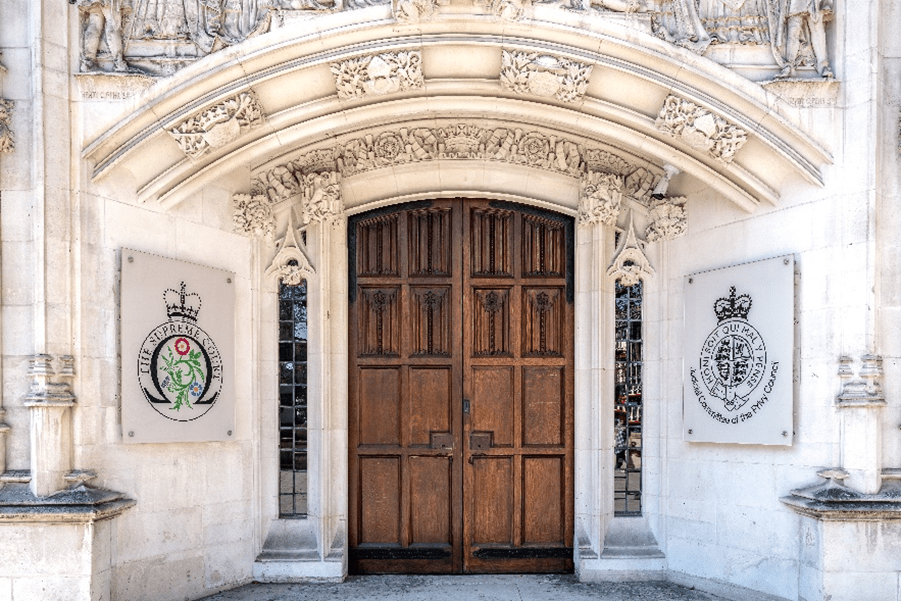
Image via Shutterstock: The entrance to The Supreme Court, Parliament Square, London
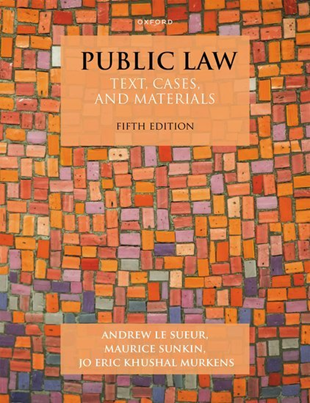
Public Law: Text, Cases, and Materials, the definitive guide to understanding the practical workings of UK Public Law, has just released its eagerly awaited 5th edition. Authored by renowned legal scholars Prof. Andrew Le Sueur, Prof. Maurice Sunkin KC (Hon), and Prof. Jo Eric Khushal Murkens, this latest edition brings to life the key institutions, legal principles, and conventions that underpin Public Law in the UK.
Recognising the need for an accessible and comprehensive resource, the authors have meticulously curated extracts from key sources, providing clear explanations and insightful critiques to facilitate a deeper understanding of this legal field. By examining case law and its political context, this book encourages students to explore the core issues in public law with a critical mindset.
The 5th edition of Public Law: Text, Cases and Materials is now available by OUP
One of the standout features of Public Law: Text, Cases, and Materials is the inclusion of clear commentary and analysis, expertly complemented by a diverse range of extracts from various sources. By incorporating academic writing, reports from parliamentary committees, and key judicial decisions, students are provided with an enriching array of information. This enables them to develop vital analytical skills, essential for success in the field.
This latest edition offers important additions and updates to enhance the learning experience. Notable highlights include reorganisation of the book’s structure, incorporating a new chapter on devolution. Additionally, the coverage of judicial review has been significantly expanded to reflect the growing political and constitutional significance of this area.
Readers will also benefit from the inclusion of the latest developments, such as the withdrawn Bill of Rights Bill (2022), the Independent Review Human Rights Act Review (2021), the United Kingdom Internal Market Act (2020), the Scottish Continuity Bill Reference and the Protocol on Northern Ireland/Ireland and more.
Public Law: Text, Cases, and Materials aims to bridge the gap between theory and practice, providing an indispensable resource for law students, practitioners, and anyone interested in understanding the complex landscape of public law. With its clear commentary, engaging analysis, and thought-provoking learning features, this edition empowers readers to explore and interpret legal concepts with confidence.
The authors’ collective expertise and experience bring unparalleled value to the latest edition of Public Law: Text, Cases, and Materials. The research visibility team had the chance to speak with Professor Sunkin, who delves deeper into the latest updates and insights featured in this highly anticipated publication:
In light of recent legal developments in the UK, could you identify one or two key updates you have made to the new edition of the book? How do these changes reflect the evolving landscape of public law?
“This has been a fast-moving area of law especially in the post-Brexit era. But, Brexit has been only part of the picture. Since the previous edition debates around devolution, and around the place of judicial review and human rights in our system have intensified. In this edition, we have been able to consider the importance of these and other developments to provide an updated account of UK public law.”
Can you identify one or two seminal cases or legislative developments that have had a significant impact on our understanding and interpretation of public law since the previous edition of your textbook? How have these cases shaped the field?
“We have always sought to use case studies to help readers understand the interplay between law and government. In this edition we have, for example, included a case study on the Windrush scandal that highlights some of the worst elements of administrative injustice within the UK system. Important cases on the power of government, including to seek to prorogue Parliament, also give valuable insights into how judges seek to ensure that the executive respects the rule of law.“
Public law is deeply intertwined with democratic governance and the exercise of state power. Could you elaborate on any new chapters or expanded sections in the latest edition that explore the relationship between public law and democratic institutions? How do these additions enhance the readers’ understanding of the complex interplay between law and democratic processes?
“We hope that the additional space devoted to judicial review, along with the revised and updated chapters on administrative justice and human rights will help readers understand how law and democratic governance are deeply intertwined.”
To learn more about the contents of the latest edition of Public Law: Text, Cases, and Materials, please visit the publisher’s website here.
In the vast and interconnected realm of the digital age, our lives have become intrinsically linked to the virtual world. From online banking to social media interactions, our personal and professional activities have found a new home in cyberspace. However, as we embrace the convenience and opportunities offered by the digital revolution, we must also acknowledge the shadows of cyber threats that pose a constant risk to our security.
We live in an era where sophisticated hackers and malicious actors continuously exploit vulnerabilities, seeking to breach our defences and gain unauthorized access to our sensitive information. We have all heard of viruses, ransomwares, phishing attacks, scams… but it’s not always easy to keep on top of best cybersecurity practices in our daily, busy, lives.
Who has never delayed updating their operating systems (OS) for a few days because of the sheer inconvenience of having to stop working and using the digital device for a solid 20 mins?
And what about these annoying passwords? Who never got frustrated when not remembering an obscure combination of letters, numbers and special characters in no logical order? Even the author who recommended this form of password management back in 2003 has regretted his initial advice!
And, how about the apparently preposterous advice of not re-using passwords when one has to remember about 70 to 100 passwords?
The consequences of a successful cyber-attack can be devastating, leading to financial losses, identity theft, and irreparable damage to our digital lives. So, what is a good starting point for good cybersecurity practices? None is, on its own, fail-proof. It’s their combination that will often delay the attacker who, discouraged, will turn towards easier targets/victims. It’s also about minimising the impact our mistakes may have.
Start with an audit of your practices, so that you know where to begin. The easiest is to answer the questionnaire on the UK National Cybersecurity Centre (NCSC) website: its Cyber Action Plan. It is a truly 1 or 2 min questionnaire; the questions may seem basic but they cut at the heart of the top best practices we can put in place. And follow their detailed advice on what you need to do, advice based on your answers.
Pay particular attention to your passwords. The question to ask oneself is always: if somebody has access to this password, what can they retrieve and find out? Will the password give them access to my bank account? Or to a work account? Or to social media? Or to the three of them?
You can notably check here whether the password has been compromised: or whether the same has happened to your email address here.
You may want to consider a password manager but be aware: your password manager tends to store your data online, so your password data is not immune to hacking, as it happened to the leading company of LastPass in 2022, which won’t be the last.
So, the question is: do you really need this password to be stored online?
For example, if you only do your tax return from home, do you need to save online your password and ID number for HMRC? Because you know that whoever has your HMRC details may well be able to access lots of government services and impersonate you. And ID theft is no fun!
For iPhone users, disable access to the control centre when your phone is locked; otherwise, even with your screen locked, you are giving control of your phone. To do so, go to your Settings, then Face ID (or Touch ID) and passcode, then scroll down to ‘allow access when locked’ (under the voice dial feature) and disable ‘control centre’, ‘accessories’, ‘wallet’.
We all make mistakes; we are humans after all! But the cost of weak cybersecurity practices is ID theft and lost data, for ourselves and for those we correspond with. So, do not delay your NCSC security audit and follow it up! By adopting some proactive strategies, we can take decisive steps towards protecting ourselves and preserving the sanctity of our digital identities.
Best Interests is a BBC drama exploring the turmoil of decision-making about healthcare for a critically unwell child. Marnie is a 13-year-old girl who was born with a life-limiting form of muscular dystrophy. The crux of the four-part drama is about how to treat Marnie when her condition deteriorates, having been otherwise cared for at home for most of her life.
Marnie is admitted to hospital due to a chest infection, and subsequently deteriorates, needing resuscitation and ventilation. Several days after her admission she suffers a cardiac arrest and is resuscitated with CPR, but remains unconscious and on a ventilator.
The central legal question that emerges is what healthcare is in Marnie’s best interests, hence the show’s title. Her mother, father, sister and the various treating healthcare professionals all appear to have differing perspectives on what should happen to Marnie; they cannot agree on what is in her best interests. Is further treatment and ventilation causing her harm and prolonging her suffering, or is this episode similar to previous crises, from which she has pulled through to enjoy life again?
While unusual, these high-conflict disagreements do sometimes occur between healthcare professionals, patients and family members, and the show is careful to provide a nuanced and interesting portrayal of the ethical and emotional issues at stake for all those involved.
In this post, we provide some reflections on this portrayal from the perspective of researchers currently looking into these issues (see also our previous post here). We draw out some of the key themes that struck us as pertinent, look at how conflict in these cases can occur, and consider the potential of mediation as a way of helping to resolve them.
Depicting the causes of conflict
A key theme of the show is the way disagreements between families and Health Care Professionals (HCPs) develop and can become entrenched. In episode 1, for example, we see a member of the hospital team invite the parents to a meeting with the senior doctor in charge of Marnie’s case. ‘Invited’ is probably what was intended, but it was received by the parents as, in effect, a summons to meet with the doctor at a specific time and place of her choosing, not theirs, with no indication given of what was to be discussed. That alone can feel disempowering to parents, even ones as accustomed to the ways of the hospital as Marnie’s parents had become, and the sense of dread they felt was palpable.
At the meeting, a palliative care doctor is casually introduced, without apparently any prior discussion having taken place of the possibility of palliative care for Marnie. The depiction of this meeting – a discussion entirely dominated by the medical team’s timing, interests and perspectives – highlights how breakdowns in trust can occur.
Episode 1 also powerfully alluded to the role of resources in these cases, which can be the elephant in the room. The doctor says to the parents, in relation to further treatment for Marnie, that ‘we have to question the cost of that’. This is followed by a statement to clarify that she meant the costs ‘to Marnie’. The parents think that costs of ongoing treatment might be a factor in the healthcare professionals’ approach, whereas the doctor means cost in quality of life for Marnie. This was an issue that was revisited during the trial in episode 4, with the barrister for Marnie’s mother cross-examining the treating clinician on her role in rationing paediatric intensive care beds during the pandemic.
Importantly, the show also provided life and character to Marnie; she is shown playing with her older sister, laughing and dancing, and enjoying a ‘normal’ family life. The realities of family life, in contrast with the hospital settings, were a stark reminder of how HCPs and parents approach the issue from fundamentally different standpoints. A parent will remember their child full of life and getting joy out of everyday experiences, despite their suffering. HCPs, however, will more often only see the child when something has gone wrong, when suffering is more apparent to them than joy or pleasure.
There is another element that contributes to this divide in perspectives. Written by Jack Thorne, whose previous TV dramas include the story of disability rights activists Barbara Lisicki and Alan Holdsworth, Best Interests is also a critique of the ways in which society devalues the lives of disabled people. The show captures how a perception of bias (ableism) feeds into concerns about decisions made by HCPs about issues like continued treatment and resuscitation of disabled patients. Are non-disabled HCPs using ableist measures when assessing the quality of life of a disabled patient?
Furthermore, the drama captures the cumulative anger felt by many parents of disabled children who feel they have had to fight to get the support and health care and even adaptive technology and wheelchairs their children are entitled to. It is important to recognise that the show highlights the impact of this experience on the response of the parents, in particular Marnie’s mother, Nicci. HCPs would be better positioned to anticipate, and respond appropriately to, the response of Marnie’s mother if they truly understand the background of parents fighting for their child to be valued.
Despite characterising Marnie with such life, the most salient missing feature of the show, which may have been intentional by the writers, was the absence of Marnie’s own views about how she should be treated. A court-appointed guardian spoke with individual members of the family and attended the hearing, but if he gave evidence in court, this was not portrayed in the programme. We don’t know what Marnie’s views are on continuing treatment, if her threshold of tolerance is higher or lower than those of her parents, if her assessment of what makes life meaningful reflects theirs. This is often a criticism of medical and legal processes, that they fail to engage with the people most affected by the decisions. While Marnie’s views were not ascertainable during her acute stay in hospital, her views could have been recorded at an earlier stage, while she was still able to communicate effectively. If decision-making in this area is to be improved, a starting point must be to identify early on, and have at the centre of the decision-making process, what the patient herself would have wanted.
Resolution options
Although viewers are aware from the start that the case proceeded to court (the initial scene shows the family outside the court), the drama depicts other approaches to resolving the disagreement. A Clinical Ethics Committee (CEC) meeting is depicted in episode 2. There was no parental involvement in this, which is common practice but also a common criticism. The CEC meeting also revealed some degree of conflict between two of the HCPs caring for Marnie.
Mediation was also highlighted in episode 2 as a potential option for resolving the disagreement. This is often suggested in these cases due to the problems with litigation, something evident in episode 4 with the adversarial nature of court brought to the fore. However, the way mediation was introduced unfortunately reflected many misconceptions.
First, it was initiated by the treating clinician, so it is perhaps understandable that the family had reservations about its use. The mediator meets with Marnie’s parents at home and describes mediation as a way to challenge how people are thinking, but Nicci interprets that as ‘making me ok with your decision’. Mediation is sometimes seen by parents as a mechanism for persuading them of the hospital’s views. Making mediation genuinely an option that parents are aware of and can initiate might help alleviate some of these concerns about bias and power. However, misperceptions about mediation stem from other life experiences and are harder to counter. For example, Nicci also has experience of a workplace mediation (which she also refers to as arbitration) which was unsatisfactory, leading her to distrust mediation in the context of Marnie’s treatment.
Our research on mediation (discussed further below) will hopefully shed some light on how mediation might be used in these cases to good effect.
Conflict, mediation and the way forward
It is not possible to remove all conflict from life. People will reasonably disagree about what should be done in any given situation, none more so than life-or-death cases concerning children. But is it possible to reach some form of joint understanding, or even agreement, between people when so much is at stake? How can one consider shifting on questions of professional ethics (for the doctors) and on prematurely ending a child’s life (for the parents)? The association of mediation with compromise and ‘splitting the difference’, as it is so often portrayed in commercial disputes, is inappropriate in these healthcare conflicts.
The show is accurate in flagging up mediation as an option; it is also accurate in depicting its rejection by parents. Mediation has been proposed as a better way forward to resolve these difficult conflicts – it is one element of improvements set out in the proposed Charlie’s Law [i] after the Charlie Gard case – but our understanding is that it has rarely been attempted in the cases that ultimately end up in court.
In a recent literature review produced for the Nuffield Council on Bioethics, mediation is allocated a short section – perhaps reflecting the lack of evidence on its use in these contexts. That review suggests that mediation may be appropriate in some contexts involving ‘moderate’ conflict; that used early on in such circumstances, it can promote inclusion and identify mutual interests. One concern highlighted, which is reflected in Marnie’s mother’s reaction in Best Interests, is that parents have unequal power because in cases involving a hospital view that further treatment is futile, ultimately courts will always decide for the health professionals. Mediation then is seen by parents as merely an earlier opportunity to uphold the hospital’s view, but by way of persuasion rather than judicial determination.
Indeed, mediation is a very different approach to exploring conflict than the adjudication used by courts. Mediation is a non-judicial form of dispute resolution that is voluntary, flexible, informal, confidential and party-led. Any agreements – or indeed a decision not to agree – is made jointly by the parties, not by the mediator. It prioritises communication and understanding rather than the assessment of hard evidence. A particular benefit of mediation is that it can help to improve communication by bringing people together, and in this way facilitating better understanding of issues and perspectives and enabling all individuals to feel heard as participants, something which parents sometimes think is not done effectively in healthcare.
There are other potential benefits of mediation – for example, it tends to be less costly than court proceedings and can be quicker. It can also be tailored to individual needs – for example, it can take place over multiple days, over the phone/online and in various locations, and it can use specialist expertise to facilitate the participation, direct or indirect, of the patient where possible. It can generate creative solutions through collaboration, and it can result in de-escalating conflict even where disagreement remains. Mediation can also be valuable in reaching an agreement on arrangements for withdrawing treatment following a court order, to help with decisions on the issues faced by the family in Best Interests.
Despite the promises made for mediation, we do not have a strong evidence base for its use in these cases, and further research is underway to consider what potential benefits and risks it might have.
We have been researching the use of mediation as an alternative way to resolve medical treatment disputes. This research will consider whether there are any therapeutic, or healing, benefits of using mediation to resolve disputes that arise from health and care contexts, as well as considering the ways in which mediation could become more therapeutic as an intervention. We look at cases involving children (similar to those discussed in Best Interests) as well as cases involving adults under the Mental Capacity Act 2005. As part of this research, the team will be observing medical mediations, as well as interviewing and surveying mediation participants.
The study is now recruiting participants for this exciting research project, and we would like to hear from mediators, healthcare professionals, patients and family members who have been involved in mediations of medical treatment disputes. We hope that by gathering more evidence about the role of mediation, its potential benefits can be made available to those who, like Marnie and her family, find themselves in these challenging situations in the future.
If you would like to take part or want to know more about our research, please contact Dr Jaime Lindsey, Principal Investigator of this ESRC-funded research at j.lindsey@reading.ac.uk and on Twitter @meddisputes or Margaret Doyle at mdoyle@essex.ac.uk.
[i] An initiative of the family of Charlie Gard, a baby who died after a high-profile court case to resolve a disagreement about withdrawing life support. See here for more.
The book analyses the crucial role grandparents play as caregivers and spotlights through academic and practitioner contributions their relative absence within the English and Welsh legal frameworks.
The book is the first of its kind, as there is no edited collection exploring the legal and practical relationships between grandparents and grandchildren.
The book goes, however, beyond family law and draws on a wider range of legal and socio-cultural contexts to enhance our understanding of the role of grandparents in the law. It particularly explores issues of rights and relationships between grandparents, their families, and the law, including how the protection of grandparents’ rights can be balanced with parental rights and children’s welfare.
What happened at the event?
The book launch was a momentous occasion, brimming with scholarly enthusiasm and intellectual curiosity. Esteemed professionals gathered to celebrate the culmination of years of research and dedication.
The co-editors, Dr. Davey and Dr. Lindsey, took centre stage at the start, sharing insights into the book’s significance and offering a glimpse into the novel ideas contained within its pages.
An engaging and spirited debate (chaired by Professor Karen Hulme) ensued, fuelling the exchange of knowledge and fostering new collaborations. Professor Maurice Sunkin (Co-Director of the Essex Constitutional and Administrative Justice Initiative) contributed as an internal speaker, while Professor Felicity Kaganas (Brunel University) and Charlotte Knappett (partner at Fisher, Jones and Greenwood, a local solicitor’s firm) joined as external speakers – all praising the book.
Notably, Prof. Sunkin drew attention to inter-generational issues and how different events globally have affected the importance of grandparent/grandchild relationships.
Charlotte Knappett spoke about her experiences of working with grandparents as kinship carers seeking SGOs, etc.
Prof. Kaganas, an eminent expert in the fields of family and child law, discussed the issue of whether there should be a presumption in favour of grandparent contact. She agreed with most of the authors that there should not be such an emphasis.
Several of the contributing authors attended the event too: Sneha Shrestha, a barrister, as well as Essex Law School academics Dr. Laure Sauve, Dr. Sahar Maranlou and Liz Fisher-Frank. Professor Joan Hunt (School of Law & Politics, Cardiff University) as well as Jo Harwood (Essex Law School) and Dr Charlotte Bendall (Birmingham Law School) joined virtually.
Academic scholars, researchers, and practitioners gathered for the launch of the edited collection (pictured from left to right: Dr. Laure Sauve, Sneha Shrestha, Dr. Samantha Davey and Dr. Jaime Lindsey (co-editors), Charlotte Knappett, Liz Fisher-Frank and Dr. Sahar Maranlou.
Overall, the event fostered spirited discussions, highlighting the significance of this edited collection and its power to shape our understanding of the critical role grandparents play in our legal system. The book found its place on our Law School’s shelves, destined to shape academic discourse and inspire future generations in their pursuit of knowledge.
What’s next?
Building on their work on mediation within one of the collection chapters, Dr. Charlotte Bendall and Dr. Samantha Davey have been awarded a Research Activities Fund from the Society of Legal Scholars to pursue this research further.
The award will support a joint project undertaken by Dr. Davey and Dr. Bendall (Birmingham Law School), who worked together one of the chapters in the collection, focusing on mediation as a potential method of alternative dispute resolution for disempowered groups, affected by family fragmentation, such as grandparents.
The research grant will enable the co-authors to conduct empirical research on this matter. They are currently working with several non-governmental organisations, mediators, and legal practitioners with an interest in this area.
Dr. Davey has been working with Dr. Bendall and Dr. Rehana Parveen more generally on supporting families. To find out more about their work and collaborative network, see the Family Law Reform Now initiative here.
By Dr Koldo Casla, Lecturer at the Essex Law School and Director of the Human Rights Centre Clinic, University of Essex
In the last year, I spoke with academics, practitioners, and representatives of human rights NGOs about the right to property. These conversations originated from my ongoing research on the relationship between the right to property and socioeconomic rights, which resulted in an article recently published by Human Rights Quarterly, as well as a longer-term project.
I show how international human rights bodies that deal with socioeconomic rights, both in the UN and at the regional systems, have largely bypassed the issue of property. I believe that this is a missed opportunity. The right to property can be reformulated as a right that should be interpreted in accordance with all other human rights in international law—in other words, not as an exclusivist, absolutist, and individualist right, as libertarians would desire, but as a right with an inherent social function.
Most of the people and organizations I encountered in this journey were intrigued by the proposition, and a good number of them were sympathetic. Others, however, resisted the move, arguing that property should not be put in the same category with the other values and entitlements that we hold dear, such as nondiscrimination or access to health, as it sustains colonial and neoliberal inequalities.
My response in defense of a new social right to property contains five points.
First, property and private property are not synonymous. It is important to distinguish between communal and private property—in the former case nobody has the right to exclude anyone else from accessing the resource in question.
Back in 1990, the UN General Assembly adopted without vote Resolution 45/98 on the “respect for the right of everyone to own property alone as well as in association with others and its contribution to the economic and social development of Member States.” The resolution recognized that there are many forms of property, private property, but also “communal, social and state forms.”
Regional case law in the Americas has shown how property can go beyond private property. In Awas Tingni v. Nicaragua (2001), the Inter-American Court recalled that, in the drafting process of the American Convention on Human Rights, it was purposefully decided to leave the word “private” out of article 21, a point the court used to extend the application of this provision to other forms of communal and collective property rights of indigenous and tribal groups. In that case, and others that followed, the Inter-American Court connected the right to property with the economic survival, spiritual life, and cultural identity of Indigenous peoples.
Second, many groups have historically been discriminated against and prevented from accessing property. This includes ethnic and national minorities, Indigenous communities, colonized people, women, and people with disabilities. The recognition of property was a progressive achievement for many who were and are denied the opportunity to be more autonomous and have greater control over their lives. Despite not recognizing property as a right as such, the two key treaties from 1966, the International Covenant on Civil and Political Rights and the International Covenant on Economic, Social and Cultural Rights, mention property as one of the prohibited grounds of discrimination, as do the other core human rights instruments dealing with groups deserving of special protection: ethnic minorities, women, children, people with disabilities and migrants.
The third point is this: property is not a euphemism for the accumulation of capital and is not necessarily property over the means of production. The distinction between property over personal items and economically productive property was of primary importance in the 1936 Soviet Constitution (articles 6–10).
The right to property is—or can be—the right to the protection of items that are of value to humans. This protection need not be absolute. A useful starting point to strike the right balance between (private) property and other legitimate interests in human rights may be article 23 of the 1948 American Declaration of the Rights and Duties of Man, which provides protection as a matter of human rights only to the level of private property that “meets the essential needs of decent living and helps to maintain the dignity of the individual and of the home.”
Fourth, in a market economy, satisfying economic and social rights requires property, including economically productive property, and a fair tax system. The social function of property changes the role of taxes from a potentially but moderately acceptable form of interference—article 1, Protocol 1 of ECHR—to an indispensable tool to ensure economic, social, and cultural rights. States’ duty to fulfill these rights ought to be seen as one of the most important objectives that may justify limiting the right to property as a matter of public interest.
The fifth argument in favor of a social right to property is worth pointing out even at the risk of stating the obvious. The right to housing is not the right to be given a house. The right to social security is not the right to be given an income irrespective of personal circumstances. Socioeconomic rights declare certain standards of adequate material well-being, identify duty bearers, and affirm the principle that those standards should improve over time (progressive realization). Everyone is entitled to those standards, and public authorities must implement policies accordingly. For some, the state will need to provide tailored programs, for instance, in the form of social benefits or social housing. But, for others, their own private resources will be the means by which they satisfy their right to an adequate standard of living, even though they may still rely on universal services like public education and public healthcare.
Three decades ago, the then Commission on Human Rights issued the last UN report to date on the right to property, written by Luis Valencia Rodríguez. The world has changed remarkably since then. The human rights sector is also more mature, with a now vibrant community of activists working on economic and social rights who can rely on literature from UN treaty bodies and special procedures, as well as case law from national and international courts that did not exist in the early 1990s.
Human rights bodies, academics, and practitioners should feel confident in addressing the meaning of property and its coexistence with other human rights.
In the middle of a cost-of-living and food crisis, and in the aftermath of an appalling pandemic, it is now more urgent than ever to redefine the contours of property and its social function in light of economic and social rights.
This piece was first published on the Open Global Rights platform and is reproduced on the ELR Blog with thanks. The original piece can be accessed here.
On 31 May 2023, the very best of Essex research was recognised at the Celebrating Excellence in Research and Impact Awards 2023 ceremony held at the Colchester campus. The annual awards highlighted how the work conducted at Essex is having a positive impact on people’s lives across the globe.
This year, a total of 27 awards were presented to research champions, impactful projects, and technical teams at a beautiful event. The Essex Law School attracted four awards in four different categories:
Professor Geoff Gilbert won the award for Research Champion for the Faculty of Arts and Humanities for his work on the protection of forcibly displaced persons in situations of acute crisis like Ukraine and Yemen.
The award for Outstanding Early Career Researcher went to Dr. Antonio Coco for his work on promoting a more secure cyberspace for all.
Dr. Andrea Fejős won the award for Best Research Impact by an Early Career Researcher for her work on improving consumer law within the European Union.
The Essex Law School has previously scooped The Conversation award twice both in 2020 and 2021!
The winners with the awards at the 2023 ceremony (from left to right: Dr. Sahar Maranlou, Prof. Geoff Gilbert and Dr. Andrea Fejős)
Professor Ahmed Shaheed was nominated for an award in the Outstanding Mid-Career Researcher category (Faculty of Arts and Humanities) for his exceptional work in promoting human rights internationally.
The awards are open to all academics, researchers, and doctoral students each year and signal the University’s commitment to world-class research that makes a difference.
Aerial view of Favela da Rocinha, Rio de Janeiro (image via Shutterstock)
Dr. Claiton Fyock is a Lecturer in Law at the University of Essex. He researches International Economic Law and Development from critical methodologies. He teaches Trade, Investment, Human Rights and Environment; Jurisprudence; and Human Rights. Claiton recently concluded his PhD thesis ‘International Investment Law as Development: The Ideological Constraint of the Grand Bargain.’ and is interviewed for the ELR Blog about the originality of his research, his PhD journey and his future plans.
In two sentences, what is your thesis?
My thesis examines how the narrative of the ‘grand bargain’ found in International Investment Law (IIL) constrains the legal and political economic agency of developing states participating in the regime.
The grand bargain posits that, in ceding a portion of their regulatory sovereignty to IIL, developing states signal to foreign investors that they are committed to the legal protections offered by the regime, which is presumed to benefit developing states by encouraging further Foreign Direct Investment (FDI) to enter their borders.
How did your research emerge?
I came to this research out of a deep skepticism about the project of international economic law prompted by engagement with Marxist theory and Third World Approaches to International Law. I was and remain very interested in how international law helps entrench and reproduce the current exigencies of inter- and intranational wealth inequality and environmental degradation – exigencies that are particularly felt in the Global South.
My intuition was that international law’s role in the reproduction of human and environmental exploitation was perhaps most readily apparent in its involvement at the sites of economic production (sites increasingly located in the Global South). IIL seemed to be the most obvious point of departure for this reason, and the more I researched the topic, the more IIL’s constraint on developing states’ legal and political economic agency became apparent.
How would you describe your argument and methodology?
The thesis questions the rationale of the grand bargain by developing a theory of ideology critique I label the ‘ideological process’. This method attempts to account for how developing states are simultaneously constrained by both the conceptual and practical elements of IIL.
My thesis argues that, through the practice of international arbitration, treaty-making and scholarly engagement, IIL’s features embody and entrench the hegemonic, specifically capitalist concepts put forth by the regime’s more powerful actors.
Consequently, the capitalist iterations of features such as development’s role in the definition of investment, sovereignty in cases of indirect expropriation and consent in investor-state contractual disputes circumscribe the plurality of these same concepts.
By accepting the narrowly capitalist iteration of these concepts in their participation in IIL, developing states accept a circumscribed agency in configuring their own political economic and legal policies.
What is your contribution to research in your subject area?
My contribution to the subject area is two-fold:
First, I provide an original approach to ideology critique and international law. While ideology critique is a long-standing Marxist approach to legal analysis, previous uses of the method have either been preoccupied with a fixed definition of ideology or overly focused on power’s discursive role in entrenching ideological practices.
My approach is to treat ideology as a dynamic process which accounts for both the relationship between practice and concept and the impact hierarchical power relations have on the relationship between practice and concept. By approaching ideology this way, I am able to demonstrate how the operation of IIL reifies and entrenches particularly capitalist iterations of some of IIL’s most fundamental concepts – development, sovereignty and consent.
My hope is that this method would be applicable across various areas of international law and provide scholars a new way of apprehending ideology in legal practice.
Second, my thesis places IIL’s justification for itself (the grand bargain) within the context of global concerns about wealth inequality and environmental harm while not relying on competing legal norms or criticisms of neoliberalism. While there have been many effective criticisms offered against the regime from disciplines such as human rights (several fine examples originate from here at the University of Essex), my research attempts to locate IIL’s inherent deficiencies at the level of the capitalist political economy.
I take an explicitly radical approach which contends that the problems identified with IIL are intrinsic to its explicitly capitalist operation – it will only ever reproduce capitalist practices and concepts; practices that will only ever facilitate the accumulation of capital for a transnational capitalist class. Accordingly, efforts at its reform are misplaced; IIL’s problems are intrinsic to the structure of the regime itself. Implicit in my argument is that nothing short of abandonment will rectify IIL’s harms.
However, this need not be of concern for states or practitioners of international law. There is not a fixed necessity for any one of IIL’s practices or conceptual formulations. Rather, effort should be focused on how international law can meet the needs of communities and the environment in ways alternative to the capitalist political economy.
Has your view of your research topic changed during the research?
I wouldn’t say that my view of IIL has changed. It has certainly, obviously become much more nuanced, but I believe my original intuition about IIL’s role in the previously mentioned problems of wealth inequality and environmental degradation has remained.
What has changed over the course of my research is my understanding of the pliability of international law and its scholarly discourse. Early in my research I had a tendency of viewing IIL as a fixed thing. Over the course of the PhD, I was constantly reminded how swiftly things can change in a regime such as IIL – for example, the discourse about sustainability has exploded in the scholarship over the last 5 years.
What would you advise someone who is about to embark on a PhD journey in your field?
I have a hard time thinking that there is any kind of universal advice for embarking on a PhD in international law. One thing I’m happy I did consistently throughout the process was read outside the field of law, particularly theory. I do think legal research can become very insular. I very much believe that there is a lot to be gained from venturing outside of this silo and embracing multidisciplinary approaches.
In doing so, we’re better able to identify potential alternatives to legal practices that might bring about the kind of progressive changes I believe are needed with issues such as wealth inequality or environmental degradation.
Now that you submitted your thesis, how do you plan to move forward in terms of your research?
While writing my thesis I had the opportunity to publish a side piece on international economic law and degrowth and some polemics on climate litigation and corporate actors. I plan to continue to investigate the nexus between international economic law, development and the environment with some upcoming articles.
After the publication of these works, I hope to revisit and transform my thesis into a monograph and look forward to submitting the book proposals after some time off from it.
The House of Lords is currently debating at Committee Stage the Online Safety Bill, a landmark piece of legislation which introduces a new set of internet laws to protect children and adults from online harms.
The Bill will establish a regulatory framework for certain online services. These include user-to-user services, such as Instagram, Twitter and Facebook, and search services, such as Google.
The UK government’s stated aim in introducing the Bill is “to make Britain the best place in the world to set up and run a digital business, while simultaneously ensuring that Britain is the safest place in the world to be online”.
The BIll will place duties of care on both regulated user-to-user service providers and regulated search service providers. The regulated service providers would have duties relating to, among other things: (a) illegal content; (b) protecting children; (c) user empowerment; (d) content of democratic importance, news publisher content and journalistic content; (e) freedom of expression and privacy; and (f) fraudulent advertising.
The Bill also does two other distinct but interconnected things. It introduces age-verification requirements in relation to pornography providers (which are not user-to-user); as well as new criminal offences, e.g., encouraging self-harm and epilepsy trolling.
This makes it a long, wide-ranging and complex Bill.
Moreover, the Bill will place more responsibility on technology giants to keep their users safe. It will give Ofcom, the UK’s communications regulator, the power to levy fines against non-compliant providers, and would make senior managers liable to imprisonment for not complying with a direction to provide Ofcom with information.
But what impact is the BIll expected to have? What concerns are there about the implementation of this new regime?
Prof. Lorna Woods (Professor of Internet Law, University of Essex), who devised the systems-based approach to online regulation that has been adopted by the Government and whose work is widely regarded as laying the groundwork for the UK’s Online Safety Bill, was recently interviewed on this new regulatory approach.
Photo by Austin Distel via Unsplash
On 11 May 2023, Prof. Woods stepped inside BBC Radio 4’s Briefing Room to be interviewed by David Aaronovitch. She talked about what is actually in the Bill, how the new internet laws are intended to work and what potential weaknesses still remain. The programme can be accessed here.
Prof. Woods also joined Conan D’Arcy of the Global Counsel tech policy team to talk about the UK tech regulation, discuss recent criticisms of the Online Safety Bill, as well as the regulation of generative AI tools like ChatGPT. You can listen to the podcast here (published on 17 May 2023).
On 16 February 2023, the press regulator IMPRESS launched its new Standards Code, with key changes including guidance on AI and emerging technologies, stricter measures on tackling misinformation, stronger safeguarding guidelines, and a lower discrimination threshold.
Background
IMPRESS is the only British press regulator to have sought formal approval from the Press Recognition Panel (PRP). The Panel was established in the aftermath of the phone-hacking scandal to ensure that any future press regulator meets certain standards in compliance with the Leveson report recommendations. IMPRESS is distinct from the Independent Press Standards Organisation (IPSO), Britain’s other press regulator which enforces the Editors’ Code of Practice but does not comply with the majority of the Leveson report’s independence requirements. IPSO regulates some of the more established UK press (e.g., the Mail newspapers, the News UK titles and their respective websites), whereas publishers regulated by IMPRESS tend to be newer and more digitally focused (e.g., Bellingcat, Gal-dem and The Canary). IMPRESS is viewed by some media campaigners (e.g., Hacked Off) as “the most popular” complaints-handling body in the country. Its membership has risen from just 26 publishers in 2017 to 113 today.
The IMPRESS Code was first published in 2017 with the aim of guiding media professionals and protecting the public from unethical news-gathering activity. It applies to all forms of news delivery, including print publications, news websites and social media, and to any individual or organisation gathering information and publishing news-related content. As the media landscape has rapidly evolved in the last few years, changes were introduced in February 2023 to help build trust and improve accountability in the industry, while covering a more diverse range of digital news creators (including publishers, editors, journalists, citizen journalists, reporters, bloggers, photojournalists, freelancers, and content creators) and their practices.
Some key changes
A major change concerned the issue of inaccurate content and was propelled by the challenges faced in distinguishing true information from misinformation and disinformation, including that generated by AI. To help journalists and publishers ensure that their material is supported by verifiable and legitimate sources, the Code and its associated Guidance on Clause 1 (Accuracy) and Clause 10 (Transparency) provide advice on fact checking and source verification, particularly within an online context. Specifically, the Code now requires publishers to exercise human editorial oversight to ensure the accuracy of any AI generated content, clearly label such content, and take reasonable steps to limit the potential spread of false information (deliberately or accidentally) by verifying the story with other sources and checking the information against other reliable sources.
Changes were also introduced in relation to the coverage of news stories involving children. They all acknowledge children’s media literacy, autonomy, and protections that are necessary to develop them as people. The revised Code defines a child as anyone under the age of 18 and places an obligation on publishers to “reasonably consider” requests from children to remain anonymous during news-gathering and publication (Clause 3.3), as well as requests from those under 18 when the article was published to anonymise that news content in the present day (Clause 3.4). This is a welcome recognition of the proposition that individuals should not be adversely affected later in life because stories that concern them as children remain widely available online. Importantly, under the new Code, an appropriate adult cannot veto a child’s refusal or revocation of consent (paragraph 3.1.2 of the Guidance to the Code).
Because of the internet and social media, publishers must also take extra care not to identify children indirectly through “jig-saw identification”, i.e., the ability to work out someone’s identity by piecing together different bits of information supplied by several features of the story or across articles or news outlets (the same can apply to adults, e.g., in cases where victims of sexual offences enjoy anonymity by law). The Code (Clause 3.2) requires publishers to consider using techniques or practices that remove identifying data (e.g., the area of a city where they live, their parents’ occupations or other unusual details that could lead to a child’s identification). This practice also helps publishers comply with minimum use requirements under data protection law.
Another significant change concerns the provisions on discrimination under Clause 4. The previous version of the Code stated that publishers would be found in breach if they incited hatred “against any group … [on any] characteristic that makes that group vulnerable to discrimination”. This reflected the legal standard under UK law, but it was not adequately enforced, particularly online. The revised Code holds publishers to stricter standards. Clause 4.3 reads: “Publishers must not encourage hatred or abuse against any group” based on those characteristics (emphasis added). The new wording lowers the threshold for what IMPRESS regards as discriminatory coverage and takes into account its potential effect not just on the communities, but on the society as a whole. This change, according to IMPRESS’ Deputy Chief Executive Lexie Kirkconnell-Kawana: “accounts for prejudice that could be more insidious and be more cumulative or more thematic, and not a direct call to action or violence against a group of people – because that’s an incredibly high threshold, and it’s not often how news is carried. You don’t see headlines saying […] ‘Take up arms against x group’.”
Clause 7 on privacy highlights that, when determining the privacy status of the information, publishers must give “due consideration to online privacy settings” (Clause 7.2(b)). Public interest justifications may, however, apply. The provision challenges the widely held misconception that information found or posted online is automatically made public or free to use. The Guidance to the Code acknowledges that an individual’s expectation of privacy may be weaker where no privacy settings are in place but clarifies that the absence of privacy settings will not necessarily prevent a breach of this Clause. It does not automatically mean that an individual consents to publishers or journalists publishing their content, which may reach an entirely different – or even wider – audience than the audience usually viewing the content on that individual’s account (paragraphs 7.1.4 and 7.2.6 of the Guidance to the Code).
Editorial responsibility and accountability with an outlook to the future
The new Code is the outcome of an intensive two-year review process, which involved consultation with academics, journalists, members of the public and industry stakeholders. Richard Ayre, Chair of IMPRESS, stated: “With more news, more sources, more publishers, more opinions than ever before, the opportunities for journalism are limitless. But nothing’s easier for a journalist to lose than public trust. This new Code sets the highest ethical standards for IMPRESS publishers, large and small, and whatever their point of view, so the public can confidently engage with the news of today, and tomorrow.”
This article was first published on the IRIS Merlin legal database. The original piece can be viewed here.










 Essex Law Research Blog