A new research project has been funded by the British Academy which will explore the voice of the child in private family law cases concerning allegations of child sexual abuse (‘CSA’). The aim is to draw on first-hand insights into the experience of children who had disclosed CSA during or in relation to private family court proceedings.
The project fills a gap by aiming to directly hear the voice of the child in family proceedings through narrative interviews. It will contribute to the evidence base regarding experiences of, and reform to, the family courts.
This project draws upon a workshop held at the University of Essex School of Law in March 2021 with ESRC Impact Acceleration Account funding, which explored the voice of the child in private family law cases concerning allegations of CSA. This workshop highlighted the need for further research to obtain first-hand accounts of children’s experiences of the family court – accounts that are notably absent from the existing evidence base.
This research into the family courts is important now, at a time when there have been several concerns raised about the family courts’ response to domestic and sexual abuse allegations in private law cases. For example, a recent report by the University of Manchester, in conjunction with SHERA Research Group, found that women suffered ‘serious health problems … as a result … of biased family court proceedings.’ Relatedly, the Ministry of Justice in their published report ‘Assessing Risk of Harm to Children and Parents in Private Law Children Cases’ highlighted that ‘the voices of children experiencing domestic abuse and child sexual abuse are not sufficiently heard by the family courts’ (MoJ, 40). The Ministry of Justice report further noted that there are many reasons why victim-survivors of sexual abuse might have negative experiences. These may include the lack of resources, the way that the court works in a ‘silo’, lacking coordination with other organisations, and the adversarial approach of the court system which focuses on investigation rather than supporting survivors.
We know from evidence in other areas that victim-survivors of sexual abuse often recount sentiments of being silenced, misunderstood, or negatively judged, and often feel a sense of re-traumatisation from their courtroom experiences (Rape Crisis, 2023). The adversarial layout of court proceedings can sometimes exacerbate negative experiences, despite it being possible to make adjustments within the court system, such as allowing victims to give evidence through video links or behind screens.
The 2021 workshop, referred to above, demonstrated a need for research to facilitate the direct voice of child victim-survivors and to explore whether there is a need for reform in the law or court processes, shifting towards a child-centred approach to hearing the voice of the child where CSA allegations are raised in family courts.
Given the absence of evidence from children who have experienced family court processes, this research aims to record, through narrative interviews, the voices of those who experienced the family court as children and give them an opportunity to tell their stories directly through the research.
Contact details
If you would like to know more about this planned research or would like to be kept informed as the research progresses, please contact the Project Lead, Dr Jaime Lindsey at j.lindsey@reading.ac.uk or Co-Investigator Dr Samantha Davey at smdave@essex.ac.uk.
Essex legal expert Lorna Woods has earned special recognition in the House of Lords thanks to her research and work supporting the landmark Online Safety Bill. The Bill successfully passed through Parliament and is now enshrined into law, having received Royal Assent on Wednesday 26 October 2023. The Act makes social media companies keep the internet safe for children and give adults more choice over what they see online.
Professor Woods has helped influence the bill after famously writing some of its founding principles on the back of a sandwich packet with the help of William Perrin, of the charity Carnegie UK, several years ago.
Professor Woods has continued to work with Carnegie throughout the last few years and provided expert advice to backbenchers and members of the House of Lords.
She was personally thanked following the final debate in the Lords by Lord Stevenson for her work on the bill.
Lord Clement-Jones added: “I pay my own tribute to Carnegie UK, especially Will Perrin, Maeve Walsh and Professor Lorna Woods, for having the vision five years ago as to what was possible around the construction of a duty of care and for being by our side throughout the creation of this bill.”
Professor Woods has become a high-profile commentator on the bill throughout its passage on Parliament, and recently recounted the “surreal moment “it was approved by the Lords in an interview with the BBC Online.
In a separate interview with Wired, Professor Woods responded to criticisms of the bill by insisting it would help protect the human rights of children being exploited and abused online.
She was also quoted in the New York Times’ own coverage of the Bill, and has also appeared on BBC Radio Five Live.
Professor Woods said: “The Bill is significant as it marks a move from self-regulation – where service providers decide what is safe design and whether to enforce their community standards – to regulation under which services are accountable for those choices.”
This story was first published on the University of Essex’s news webpages and is reproduced on the ELR Blog with permission and thanks. The story was edited to reflect the fact that the Bill received Royal Assent.
Dr. Gillett and his team during an Inspection of a detention facility
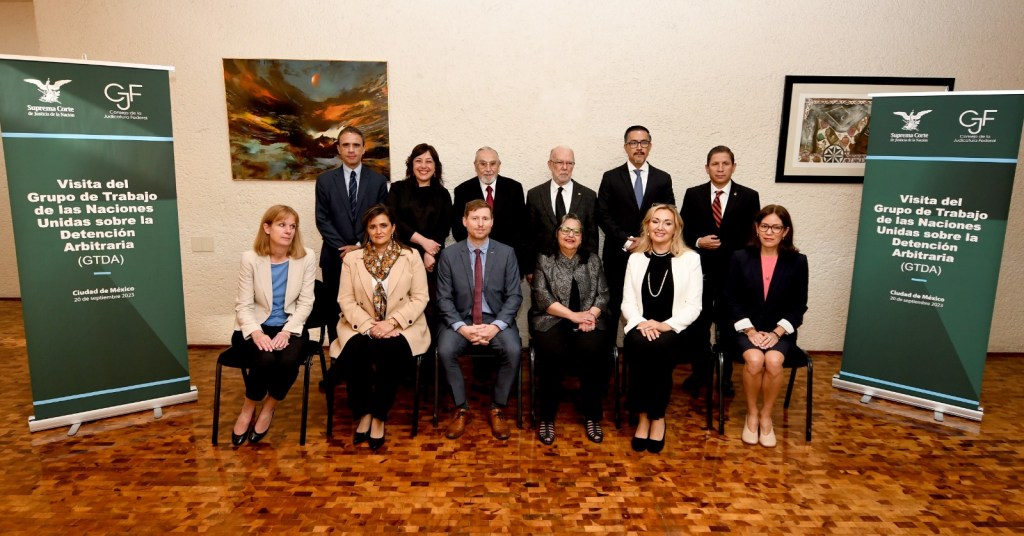
Dr. Matthew Gillett, the Vice-Chair of UN Working Group on Arbitrary Detention and Essex Law School academic, spearheaded a high level delegation on a recent mission to Mexico. His team visited multiple sites across Mexico City, Nuevo León, and Chiapas over 11 days.
Their mission included interviews with detainees and assessments of police stations, migration detention centres, sanctuaries of vulnerable children, mental health institutions and the very corridors of prosecutors’ offices. The delegation also met with significant figures, including President Norma Lucía Piña Hernández of the Supreme Court, and offered key recommendations to the Mexican government.
Meeting the president and members of the Supreme Court of Mexico
The Essex Law School Research Visibility Team had the opportunity to interview Dr. Gillett about his recent trip, the different layers of the UN project and their impact:
Dr. Gillett, what inspired or motivated you to focus on arbitrary detentions, and how did the idea to visit Mexico specifically come about?
Having worked in criminal justice for 20 years, I have increasingly seen that the moment of detention is a critical point in the application of the law. If the State power to detain is misused, then it can violate a person’s right to liberty and can also lead to other violations including enforced disappearance, torture, and even extra-judicial killings. I’ve worked on detention related matters in New Zealand, Afghanistan, Mongolia and several other countries.
But this latest mission to Mexico came about through the United Nations Working Group on Arbitrary Detention, of which I am the Vice-Chair. We considered Mexico an important country to assess, because of its large and diverse population, and its major issues with migrant-related detention at the moment.
Were there any moments or encounters during your trip that deeply impacted or surprised you?
There were many moments during the mission to Mexico that were deeply affecting. Seeing detainees with open wounds, sometimes sleeping on concrete floors in over-crowded cells, was shocking. But also learning of the challenges that Mexico faces, including the hundreds of thousands of migrants passing through its territory, brought home the complexity of the situation.
While observing the situation in Mexico, what progress stood out to you, and conversely, what challenges deeply concerned you?
Mexico’s progress in terms of placing human rights at the centre of its constitution and establishing a National Registry of Detentions were important steps forward. Prison officials were largely professional and not using violence against detainees in a systematic way from what we discerned.
However, significant challenges remain, particularly in terms of the use of violence by security forces conducting arrests out on the streets, and the imposition of mandatory pre-trial detention, as well as shortages in staff and resources at prisons which lead to many detainees being kept in their cells the vast majority of the time without access to proper sunlight and fresh air.
What are the key recommendations you’d like to emphasise from the UN Working Group, and how have the responses from the Mexican authorities and international community felt to you?
We would strongly recommend increasing the scope of the National Registry of Detentions to cover all deprivations of liberty, including administrative detentions of migrants for example. We would also emphasise the need to remove mandatory pre-trial detention and ensure that individualised assessments are carried out to verify that persons detained before trial are either a flight risk, or risk of tampering with evidence or serious re-offending. The Working Group and the Inter-American Court of Human Rights have both called for this change in their judgments.
During the visit, we sensed an openness on the part of the Mexican authorities to take up our recommendations. At the same time, we urged them not to wait for our full report, which we will deliver to the United Nations Human Rights Council in September 2024, to start implementing changes.
On a personal note, how has this trip impacted your views on human rights and arbitrary detention globally? What message would you want to convey to international readers regarding the situation in Mexico and the efforts of the UN Working Group?
There are two points which I take away from the Mexico mission.
One is the importance of investigating at multiple levels in order to get a holistic view of the situation. We spoke to over 170 detainees, as well as officials at the federal, state and local levels, and many NGO and civil society actors. The communications are critical to understand the depth and breadth of human rights challenges, but also to provide focused recommendations which are feasible and impactful.
The second is that the wheels of justice must speed up! People should not be left for years, languishing in detention, before they have a trial. It’s a global problem that requires a concerted effort on the part of governments and the judiciary. They must ensure that everyone charged with a crime enjoys their right to trial without undue delay.
Despite being rarely used, the Infanticide Act of England and Wales has generated much attention, scrutiny, and debate. This unique and contentious legislation, passed a century ago and re-enacted in 1938, has shaped the way society views and responds to a deeply complex issue – infanticide.
Now, in a milestone year marking a century of its existence, a thought-provoking book, “100 Years of the Infanticide Act: Legacy, Impact, and Future Directions,” edited by Dr. Karen Brennan (Associate Professor in Criminal Law and Evidence at the University of Essex) and Dr. Emma Milne (Associate Professor in Criminal Law and Criminal Justice at Durham University), offers a comprehensive analysis of this law and its far-reaching implications.
“100 Years of the Infanticide Act” presents the first-ever comprehensive and detailed analysis of this historic legislation, shedding light on its historical context, contemporary application, and its enduring influence.
The book explores critical themes surrounding the legislation, from its practical implications in England and Wales to the ways it has been portrayed in the British media. It examines the justifications for, and criticisms of, the special mitigation afforded to women who kill their biological infants within the first year of life.
Many countries around the world drew on the 1922/1938 models of infanticide law and enacted similar legislation. In addition to its focus on England and Wales, the book extends its scope to international jurisdictions, such as Australia, Ireland, Sweden and the United States of America.
The Research Visibility Team had the privilege of interviewing Dr. Karen Brennan, one of the co-editors of the book and we are excited to share our exclusive insights into her book and how it reverberates around the globe. We found out more about her inspiration behind this collection, what struck her most while working on the project and some of key takeaways readers can expect from this significant publication.
Can you share with us the inspiration and motivation behind the book on the Infanticide Act and its impact in England and Wales? What drove you (and your co-editor) to explore this unique and controversial legislation?
The Infanticide Act 1922 was the first statute to specifically create an offence/defence of “infanticide” in the common law world. Prior to its enactment, women who killed their babies were subject to the law on murder which carried a mandatory death penalty. However, sympathy for infanticidal women – due to the circumstances in which they committed the offence – resulted in widespread reluctance to subject them to the capital penalty.
The infanticide statute was enacted to address the problems that arose from this by formalising popular feelings of mercy towards women who killed their newborn babies. The law was re-enacted in 1938 and extended to cover victims up to the age of 12 months. The basis on which mercy was granted was that the balance of the mother’s mind had been disturbed by reason of the effect of giving birth or the effect of lactation consequent upon birth. Although infanticide is punishable by life imprisonment, women convicted of this crime are rarely imprisoned.
I have been researching the topic of infanticide laws for over 20 years now and it still continues to fascinate me! A century on from the enactment of the first infanticide statute, there is much to reflect on – especially given the significantly changed social and legal landscape. The infanticide law is unique – it creates both an offence/defence, and it is the only sex-specific homicide offence/defence in our criminal law.
When it was first introduced, the infanticide law, which pre-dated the enactment of the partial defence of diminished responsibility in this jurisdiction, sought to do something that had never before been done by parliament. It created an exception to the law on murder by allowing for lenient treatment of a specific category of killer – the biological mother of an infant.
Academic scholarship over the last few decades has produced much criticism of the law. For example, the medical basis of the law has been challenged; feminists criticise the law for being paternalistic and bio-determinist; and the law is also critiqued for undermining the right to life of infants. One of the core issues in the law today is whether it is appropriate to provide for mercy for the biological mother of the victim, but not other parents. It is often suggested that the defence of diminished responsibility would be the more appropriate way to show leniency in cases where mothers kill their infants today.
Since the crime is thankfully not common, the Infanticide Act is rarely used. However, some recent cases reported in the media indicate that the law isn’t being used in situations where the facts would traditionally have fit the typical infanticide scenario and where the infanticide statute would in the past have been employed. This raises questions about the meaning of the law and whether it has value today in cases where women kill their babies.
Both Emma Milne (who co-edited the book) and I have come at this subject from a particular perspective – drawing on socio-historical and feminist approaches – and we favour retention of this law. We argue in one of our chapters that the unique hardships that women experience as a consequence of pregnancy/childbirth and mothering justify the Infanticide Act 1938.
One of the purposes of the book, however, was to bring together different voices and perspectives on this law – including from scholars who do not agree/agree fully with our position! We wanted to stimulate discussion and generate new insights into this law from other scholars who have written about this law in the past, and also to bring newer voices into the debate.
We also wanted to include an international dimension by including research from other jurisdictions which have similar infanticide statutes (e.g., in Australia) and those which do not (e.g., the USA).
As the book delves into the history, impact, and legacy of the Infanticide Act, could you tell us about any surprising findings or moments during your research or writing process that particularly stood out to you? Did this project change your perspective on the subject matter and if so, how?
One of the things that struck me working on this project was the fact that the Infanticide Act continues to generate debate, and that there is still so much more academic work to be done! I was also struck by how views on this law are very much informed by the approach taken to the issue – for example, those who look at the history, or at the social context of this crime, often have different views of this law compared to scholars who come at it from a doctrinal or theoretical perspective.
This project didn’t change my perspective on infanticide. I have always strongly supported this law (despite recognising its flaws!) because it can provide justice for very vulnerable women who kill their babies at times of intense mental/emotional anguish or mental ill-health.
However, I did realise through working on this project that much more work needs to be done in terms of exploring the meaning of the law as it stands today and the sorts of cases where it should be used.
Linked to this, I also realised that there is a need to explore how we can continue to justify the Infanticide Act’s existence in the 21st century – given how much has changed in law and society over the last 100 years.
The 1938 Act covers two quite different kinds of infanticide, neonaticide (the killing of a baby within 24 hours of birth) and the killing of older babies. I have no doubt that we need this law to cover situations where women kill their babies at birth following a concealed pregnancy. This sort of case would struggle to fit within the requirements of diminished responsibility and without the infanticide statute women who kill their babies at birth (women who are incredibly vulnerable but who are usually not mentally ill) face the prospect of a murder conviction and life sentence.
My involvement in this edited collection, however, did prompt me to think about whether we do need a special law to cover the killing of older babies by women who are mentally unwell, especially when the diminished responsibility law is available. My inclination based on my previous research is that we do need the Infanticide Act for this category of infanticide too, despite the availability of diminished responsibility.
However, more research is needed around exploring why this is so, and especially what contemporary justifications could be put forward for retaining this sex-specific law – particularly on the issue of whether it is appropriate to have a law that applies only to the biological mother. This is our next planned project!
The book features insights from leading experts in the field and touches on infanticide laws around the world. Could you tell us a bit more about the global implications of the Infanticide Act and how you see the future of such legislation evolving in different jurisdictions? What are some of the key takeaways readers can expect from your book in this regard?
Several jurisdictions introduced infanticide statutes based on the 1922/1938 Acts – Canada, a number of Australian jurisdictions, the Republic of Ireland, Hong Kong, to name but a few. Law commissions in several jurisdictions have considered infanticide laws in recent decades, with some suggesting it be abolished, while others have sought to amend the law to address criticisms of it.
Legislatures in some jurisdictions have amended the law to address concerns with it – for example, with regard to ensuring the medical basis reflects contemporary medical understandings of mental illness after birth (such as in Victoria, Australia, and in the Republic of Ireland). Western Australia recently abolished its infanticide law.
There is no special infanticide law in the USA, and many scholars have written on this issue and the problems that arise from the lack of special legislation to deal with these unique cases – but also the difficulty of framing and justifying different treatment of this offender. Often the Infanticide Act 1938 is drawn on in these discussions as an example of a better way to respond to this crime.
I think one of the key takeaways from the book is the fact that there is still so much about this law that we have yet to understand, and, related to this, how little this law has been tested in the courts in England and Wales.
We need more awareness of and discussion on this law – the fact that it is so rarely used means that many law students and legal practitioners know very little about it, and this may lead to assumptions and misunderstandings about the law.
So, more needs to be done in terms of academic research, but also to engage with legal practitioners to share our findings and hopefully have an impact on how the law is used and interpreted.
As society evolves and legal systems adapt, the future of infanticide laws remains a subject of debate and contemplation. This book provides a platform for scholars, practitioners, and policymakers to explore the possibilities for reform and development in the context of infanticide legislation.
The legacy, impact, and future directions of the Infanticide Act continue to evolve, and this book will undoubtedly be a touchstone for those seeking clarity and insight into a legal landscape fraught with complexity. For a more in-depth exploration of this topic, “100 Years of the Infanticide Act” is available now, providing a thought-provoking journey through a century of legal history and societal change.
On 27-28 March 2023, we organized a “Dragon’s Den” themed event to highlight the incredibly impactful work being done at Essex Law School and to solicit feedback, encouragement, and ideas about how to take colleagues’ work to the next level.
Our “Dragons” included leading external experts from different policy domains relevant to colleagues’ research, including David Ciliberti (EU Commission, DG Just – Consumer Policy), Ben Hayes (AWO agency), Fiona Rutherford (JUSTICE), Nick Wortley (Competition and Markets Authority); and Steven Malby (Foreign, Commonwealth and Development Office) and Mark Fuller (Showrunner Comms).
They, as well as members of Essex’s Research Impact team, were tasked with reviewing colleagues’ impact pitches and providing strategic, constructive advice about new angles, synergies, and other tactics to enhance ongoing impact and the potential for future impact.
Our “Dragons” included leading external experts from different policy domains.
The “Dragon’s Den” event coincides with the growing recognition of the importance of impactful research outside of academia, which is now fully incorporated into the Research Excellence Framework. The Research Excellence Framework (REF) has defined impact as ‘an effect on, change or benefit to the economy, society, culture, public policy or services, health, the environment or quality of life, beyond academia’. The Essex Law School had a very strong result on impact at the last REF assessment exercise in 2021, with 71.4% of its impact case studies achieving a 4* (top) ranking. We are looking forward to an even stronger result for 2028.
A snapshot of the brilliant minds that converged at Essex Law School’s “Dragon’s Den” event: impactful research, insightful advice, and future collaborations in one frame.
Twenty-seven colleagues with research already generating impact, or with strong impact plans, presenting their work to the “Dragons” and fellow colleagues during the two-day event. These colleagues, some with many decades’ experience and others much mewer in their research careers, “pitched” research in a vast array of subject areas including, food and alcohol labeling, legal aid cuts, business and human rights, consumer law, corporate social responsibility, migration, refugees and trafficking in persons, environmental law, the law of armed conflict, anti-racist approaches to end-of-life, cyber law and cybersecurity, transitional justice, detention and hostage-taking, abortion rights, adoption and family law, social rights and more.
The “Dragons” selected two case studies, one from each day, as showing the most promise: Dr Francis Rees’ work on Exploitative Practices of Child Digital Labour on Social Media Platforms and Professor Noam Lubell’s work on Cumulative Civilian Harm in War. Well done to both!
Connections were forged, knowledge was shared, and ideas ignited during our “Dragon’s Den” event. Together, we shape the future of impactful research.
We are excited to see how all colleagues take their work forward and continue to innovate both in the United Kingdom, regionally, and globally. Watch this space!
Are you an aspiring legal scholar with a hunger for advanced training in law and a thirst for a vibrant research environment that fosters innovation and interdisciplinary exploration?
If the answer is a resounding ‘yes,’ then the CHASE Doctoral Training Partnership at Essex Law School could be your ticket to an exciting and transformative journey in the world of academia.
What is CHASE?
The Consortium for Humanities and the Arts South-East England (CHASE) is not just any doctoral training partnership; it is an AHRC-funded initiative that is carving out a path for the next generation of world-leading arts and humanities scholars.
Comprising nine prestigious institutions engaged in collaborative research activities, including an AHRC doctoral training partnership, CHASE is a gateway to an intellectually stimulating and supportive academic community. And we are proud to announce that the University of Essex is one of the esteemed members of this exceptional consortium.
Here at the Essex Law School and Human Rights Centre, our students and applicants to our PhD programme are eligible to apply for CHASE studentships and take advantage of the unparalleled training opportunities offered by this partnership.
CHASE is dedicated to supporting discipline-based projects, but what sets it apart is its specialisation in interdisciplinary research and emerging fields of study and creative practice. If you are looking to pioneer new methodologies, CHASE provides a great platform for your academic aspirations.
Moreover, CHASE does not just stop at academic prowess; it extends its reach to powerful partnerships with leading organizations in the creative and public sectors. This collaboration is a goldmine of opportunities for future CHASE scholars, providing a network of connections that few other programmes can match.
Why choose the Essex Law School?
The choice of where to embark on your doctoral training is not one to be taken lightly. At the Essex Law School, we have worked hard to create an environment that nurtures excellence, fosters innovation, and empowers our students to become leaders in their chosen fields.
Here is why you should consider joining us:
We are a research powerhouse. Our Law School has been ranked 3rd in the UK for research power in law according to the Times Higher Education research power measure (REF2021). This speaks volumes about the calibre of research conducted within our institution. Our academic staff collaborates with the United Nations, governments, human rights organizations, and corporations worldwide.
We believe that the best research happens at the intersection of various disciplines. This is why we encourage innovative and interdisciplinary approaches to legal research. Our research clusters bring together colleagues from different backgrounds to work on collaborative projects, creating a stimulating and diverse intellectual environment.
Our academics are the heart and soul of the Essex Law School. They bring a wealth of expertise across a wide range of legal disciplines. We are proud to have some remarkable scholars in the field, with particular strengths in areas of intellectual leadership, including Human Rights Law, led by Dr. Andrew Fagan who is Director of the Human Rights Centre; International & Comparative Law led by Professor Yseult Marique, an associate member of the International Academy of Comparative Law; Private and Business Law, led by Professor Christopher Willett who also spearheads the Law, Business and Technology Interdisciplinary Hub; as well as Public Law & Sociolegal Studies, led by Professor Theodore Konstadinides, who is also a founder member of the Constitutional and Administrative Justice Initiative (CAJI).
Our academic leads are more than willing to provide guidance and connect you with the right members of our academic staff.
Our thriving community of research students is at the heart of our success. These talented individuals investigate a broad range of exciting topics under the supervision of our academics, creating a rich tapestry of ideas and insights.
Image via Shutterstock
Where can you find out more?
Are you intrigued to explore what the CHASE Doctoral Training Partnership at the Essex Law School can offer you? Join us for an information session on the CHASE student-led studentship scheme on 18 October 2023, from 12:30-1:30 pm (UK Time), via Zoom. This is the perfect opportunity to learn more about eligibility, application processes, and the incredible benefits that await you.
For further details, eligibility criteria, and application procedures, please visit our web pages here. For questions relating to legal research and the CHASE scheme, please contact our Postgraduate Research Director, Dr. Anil Yilmaz Vastardis. If you have other specific questions about academic disciplines, do not hesitate to reach out to our academic leads (mentioned above) who are here to guide and inspire you on your academic journey.
Your journey to becoming a world-leading scholar in the field of law begins here. Do not miss this chance to be part of the CHASE Doctoral Training Partnership at Essex Law School, where innovation, excellence, and transformation are the name of the game. Your future awaits – seize it with both hands!
In the ever-evolving landscape of family law, the Supporting Families conference, held in September 2023, stands as a beacon of hope and progress. This remarkable event, held under the aegis of the Family Law Reform Now network project, has been nothing short of a resounding success. Spearheaded by the visionary duo of Dr. Charlotte Bendall and Dr. Rehana Parveen at the University of Birmingham, this conference is a testament to the power of collective determination and expertise.
The Supporting Families conference was not just another gathering of legal minds. It is a dedicated platform, aimed at addressing the intricate challenges entwined within the public law system, particularly in the context of legal proceedings involving families. Its core objective is clear: to initiate conversations, explore possibilities, and pave the way for much-needed policy reform, strengthening the support structures for families entangled in these intricate legal proceedings.
Discussion Panel led by Dr Rehana Parveen
This momentous event is the brainchild of a passionate team: Dr. Samantha Davey, a Lecturer in Law at the University of Essex; Celeste Greenwood, a Barrister-at-Law at Exchange Chambers; Omolade Adedapo and Anna Rickards from PAUSE; and Bessy Eigbefoh, a Solicitor at Francis Solicitors. Together, they have orchestrated an assembly of experts and professionals, bringing diversity and dynamism to the discussion table.
The Supporting Families conference was designed to cast a piercing spotlight on the deficiencies of the public law system, with a specific focus on care and adoption cases. It boldly underlined the urgency of implementing legal and policy reforms to fortify the foundation of support for these embattled families.
This conference was about tangible action. Attendees were in for a treat, as they benefited from the opportunity to learn from a constellation of practitioners and academics who have dedicated their careers to unraveling the complexities of these cases. Their shared experiences illuminated the path toward change, guiding our collective vision towards more humane, empathetic, and effective legal proceedings.
As we look back on the Supporting Families conference, we celebrate not just its resounding success, but also the unwavering determination of those who organised and participated in this transformative event.
The PAUSE team
The conference stood out like a vibrant thread, weaving a narrative of change, empowerment, and justice. It was a milestone in the journey of transforming the lives of families and a shining example of what can be achieved when dedicated minds come together to effect change.
Looking ahead, the legacy of the Supporting Families conference continues to flourish, with the promise of an even brighter future. The event in Birmingham was a prelude to the next chapter in Dr. Davey’s journey toward reform. Through the support of the SLS research activities fund, further work will now commence With Dr. Charlotte Bendall on the benefits of mediation for grandparents, recognising the invaluable role they play in the lives of children.
Additionally, a partnership with Dr. Jaime Lindsey from the University of Reading, fueled by a grant from the British Academy, is set to unveil critical insights into the experiences of child survivors of sexual abuse within the Family Court. A seminar series is set to start, with Dr. Lindsey delivering a seminar on November 9th at the University of Essex. If you are interested in attending, please contact Dr. Samantha Davey at smdave@essex.ac.uk.
The Supporting Families conference was just the beginning, and it has ignited a beacon of hope that will continue to illuminate the path to a more compassionate, just, and inclusive family law system.
The conference programme and speaker details can be downloaded here:
Get ready to embark on an exciting journey with the Essex Law School, as we proudly introduce the new Business Law Clinic (BLC) that opened its doors in the 2023-24 academic year.
The BLC provides an opportunity for our undergraduate and postgraduate students to gain new knowledge in various specialised areas of Business Law that are not covered in the standard teaching curriculum and/or are observed from a new angle in a practical setting.
It also creates new opportunities to enhance the practice-readiness and employability of our Business Law-oriented students by providing them with transferrable skills such as teamwork, business communication, empathy, and many more highly sought-after skills by employers.
The BLC proudly stands as a vital cornerstone for both the local and University communities, dedicated to offering expert guidance, enriching education, and cutting-edge research across different areas of Business Law.
Our unwavering commitment echoes the esteemed tradition of social justice upheld by the Essex Law School and the Essex Law Clinic, as we passionately champion social justice through the lens of Business Law.
Social justice is understood as equality, and activities aim to alleviate inequality in various settings by:
(a) providing access to justice to those individuals who are disadvantaged in society, e.g., because they cannot afford legal advice and/or do not know how to access it themselves;
(b) enabling those groups of individuals without strong social networks to gain essential skills, including money management, and provide the knowledge and expertise needed to boost their employability for a brighter future;
(c) supporting organisations that serve the public good, such as local authorities, not-for-profit organisations serving the community, or for-profit organisations that are either means-tested or pledge to fund the work of the BLC.
Supervised research-based projects
In 2023-24, the BLC starts with supervised research-based work in four projects:
Tackling Corporate Plastics Waste (offered to UG students only): this project covers corporate and environmental law aiming to find ways to encourage businesses to reduce their use of single-use plastic in Colchester and beyond and thus benefit the local community.
Tax Project (offered to UG students only): this provides a unique opportunity for students to engage with tax law and create the first edition of the BLC’s Student Tax Guide.
LawTech Journal Lab (offered to UG students only): this focuses on how technology enhances legal services and the administration of justice and aims to benefit the Essex Law School’s student community via newsletters on recent developments in this area.
Trade Marks and Branding (offered to PGT students only): this project is designed to immerse students in the realm of trade mark protection, instilling them with the strategic acumen essential for sculpting the brand identities of fledgling startups and thriving enterprises. Their mission: to disseminate this newfound expertise far and wide, empowering the public with the keys to branding success.
The BLC now accepts applications.
If you would like to become part of the BLC family, apply now by completing the form via this link.
Applications close on 23 October 2023 at 9am.
If you require more information, please get in touch with the BLC Director, Dr. Andrea Fejős at this email address: afejos@essex.ac.uk.
Nutri-Score label as published by Santé Publique France
In its Farm to Fork Strategy, published nearly 3 years ago in May 2020, the European Commission committed to ‘propose harmonised mandatory front-of-pack nutrition labelling’ (‘FoPNL’) to ‘empower consumers to make informed, healthy and sustainable food choices’ by the fourth quarter of 2022. This commitment was repeated in Europe’s Beating Cancer Plan in February 2021. The deadline has now passed and the promised proposals do not seem forthcoming. This is all the more disappointing considering there is strong support for the implementation of an EU-wide harmonized FoPNL scheme, as demonstrated by the results of the EU consultation on ‘Food labelling—revision of rules on information provided to consumers’ published in December 2021.
Such support is not surprising considering the significant advantages that the adoption of a harmonised FoPNL scheme has for consumers, traders, Member States and the EU alike.
From the perspective of consumers, an effectively designed FoPNL scheme helps inform them of the nutritional composition of food. Informing consumers lies at the heart of the EU’s consumer protection strategies and reflects its long-held view that regulating food labelling empowers consumers to make healthier choices whilst promoting the objectives of market integration. At present, the EU only mandates a small table of nutrition information on the back of food packaging. This is often hard to see and difficult to understand, whereas effectively designed FoPNL can provide easy-to-see and easy-to-understand information on the front of food packaging thus supporting healthier food choices.
From the perspective of traders, harmonized FoPNL will create a level playing field by reducing regulatory fragmentation, which will also increase legal certainty and lower labelling costs. There are currently 7 national FoPNL schemes recommended across 15 EU Member States. Further industry-led schemes are used, although they have not been officially endorsed by any Member State. While some manufacturers have adopted FoPNL, many have not, and others are using multiple different schemes.
From the perspective of Member States, a mandatory, EU-wide FoPNL scheme will contribute to improving diets and health outcomes. Current EU rules prohibit the adoption of FoPNL schemes which are interpretive, and do not facilitate the adoption of FoPNL schemes which are easy to use. They also prevent Member States from making FoPNL mandatory.
From the perspective of the EU itself, a harmonized FoPNL scheme will promote the proper functioning of the internal market in line with the EU’s mandate to ensure a high level of health and consumer protection in all its policies. Moreover, it will facilitate the compliance of all its Member States with the commitments that they have made at international level to promote healthier food environments.
The choice of any single scheme must be guided by evidence. The Commission’s Joint Research Centre reviews, published in 2020 and 2022, identify what makes FoPNL effective:
colour-coded labels draw consumer attention through increased salience, are preferred by consumers, are associated with increased understanding and encourage healthier food purchases;
simple labels require less attention to process and are preferred and more easily understood by consumers; and
consumers prefer and better understand consistent and simple reference quantities.
Growing rates of obesity and other diet-related diseases increase the urgency for the EU to act. We, therefore, call on the Commission to propose legislation requiring food to be labelled with Nutri-Score on a mandatory basis across the EU, as it has committed to do.
This post was originally published as an invited editorial in the European Journal of Public Health in June 2023. It is available here.
Nikhil Gokani is an expert in the regulation of front-of-pack nutrition labelling in the EU and globally. Please click here for his profile and contact details.
As of Tuesday 1 August 2023, the Essex Law Research Blog will be on a short hiatus.
We will be publishing intermittently over the next couple of months but the full normal service will not resume until October, when we will return to share more research ideas and news from our School.
We send all our readers our best wishes for a refreshing summer!














 Essex Law Research Blog