As of Tuesday 26th March 2024, the Essex Law Research Blog will be on a short hiatus for the next four weeks.
We will publish intermittently over the next weeks and will return to regular full service on 23rd April 2024 to share more research ideas and news from the Essex Law School.
Consuming alcohol is a causal factor in more than 200 diseases, injuries and other health conditions. Alcohol consumption affects other people, such as family, friends, colleagues and strangers. Globally, about 3 million deaths each year result from the use of alcohol. Beyond health, there are significant social and economic burdens.
Consumers do not have sufficient knowledge about the content and effects of alcoholic beverages. Most consumers are unaware of the energy and nutrition values (such as amount of carbohydrates) and ingredients. Few consumers are aware of the health risks, such as alcohol causing at least seven cancers.
Alcohol labelling and global progress
Alcohol labelling is an important source of information for consumers. Labelling is unique in providing information at both the point of purchase and consumption. Labelling improves knowledge. It is an effective measure to help ensure consumers are well-informed and not misled. Increasing evidence also shows that health information can empower consumers to make healthier consumption decisions, including drinking less.
Unfortunately, few countries in the world require that consumers are given essential facts on labelling, such as ingredients lists and nutrition declarations. Even fewer countries require beverages to be labelled with information warning consumers about the hazards of drinking alcohol.
The most recent success was in Ireland where new rules will require alcohol packaging to display warnings that “Drinking alcohol causes liver disease”, “There is a direct link between alcohol and fatal cancers” and a pictogram showing that alcohol can harm the unborn child if drunk during pregnancy. Countries like Ireland, unfortunately, face international legal challenges, particularly under international trade law.
International trade law and international standards
International trade law can constrain the regulatory autonomy of States. Significant to alcohol labelling is the World Trade Organization (WTO) Agreement on Technical Barriers to Trade (TBT Agreement). Most significantly, Article 2.2 of the TBT Agreement states that technical regulations, including rules on alcohol labelling, shall not create “unnecessary obstacles to international trade”. Technical regulations shall not be “more trade-restrictive than necessary to fulfil a legitimate objective”. Preventing alcohol-related harm is indeed a legitimate objective. However, many States trying to introduce better alcohol labelling rules have been challenged because other States have argued that labelling rules go beyond what is more trade-restrictive than “necessary”.
When a WTO State’s rule about alcohol labelling is challenged, international standards can either help or hinder them.
On the one hand, Article 2.4 of the TBT Agreement states that where “relevant international standards exist” States “shall use them…as a basis for their technical regulations” except when this would be ineffective or inappropriate Therefore, where international standards are not aligned with public health interests, they can make it harder for States to introduce effective national rules.
On the one hand, Article 2.5 of the TBT Agreement provides a powerful defence mechanism. It states that, when a technical regulation is “in accordance with relevant international standards”, there is a rebuttable presumption that the national rule does not create an unnecessary obstacle to international trade. Simply stated, where the State complies with a relevant international standard, they have a potentially strong defence for their labelling rules. Therefore, good international standards can be very powerful to help countries defend their national labelling policies.
Codex Alimentarius
An international standard is one which is made by a recognised body and compliance is voluntary. For alcohol labelling, there is indeed an international standard: the Codex Alimentarius is a collection of standards, guidelines and codes adopted by the Codex Alimentarius Commission.
Where alcohol labelling is in compliance with relevant Codex standards, States could use this as a defence under WTO rules. This underlines the importance of having good Codex standards that support effective national rules on alcohol labelling.
Significant progress has been made at the Codex Alimentarius Commission. Alcohol labelling was discussed at four Sessions of the Codex Committee on Food Labelling (CCFL). The Report of the 46th Session of CCFL noted “there was common ground on which to proceed with the work” but little further progress has since been made in recent years. At that Session, the Committee agreed that Russia, European Union and India with assistance from WHO and Eurocare would prepare a discussion paper for consideration at the next meeting. In fact, this was the first time this Committee included an NGO in the preparation of a discussion paper, which is a testament to the global leadership by Eurocare in this field. Unfortunately, however, no discussion paper was submitted by Russia. Therefore, WHO and Eurocare each submitted their own discussion paper to keep the matter moving forward. The WHO representative spoke objectively and convincingly at the 47th meeting of CCFL. These efforts led to alcohol labelling remaining on the Codex agenda – something which several States, no doubt under the influence of the powerful alcohol industry, had resisted.
The Codex Alimentarius Commission has now started a new consultation process. It issued a Circular Letter which asks State members and Observers to comment on how work on developing alcohol standards should proceed.
For this consultation process to work best for public health and consumer protection, we need everyone to contact their governments (emails here) to demand effective progress at Codex. Please join us in these efforts!
Influencer marketing has emerged as a formidable force in the realm of advertising, wielding substantial power to sway consumer behaviour and shape brand perceptions. Leveraging the credibility and reach of social media personalities, brands can effectively tap into niche audiences and foster authentic connections.
Despite its undeniable impact, there remains a notable lack of comprehensive research and regulatory oversight surrounding influencer marketing practices. As the landscape continues to evolve rapidly, it becomes increasingly imperative for regulators to delve deeper into this field in order to safeguard followers’ interests and maintain the integrity of digital advertising ecosystems in which influencers operate.
My new research looks at the rapidly evolving landscape of influencer marketing and its profound effects on the dynamics between social media users, advertisers, and brands. In my new article, I demonstrate that influencers have transcended the dichotomy of self-publishers vs traditional advertisers, shaping distinct career trajectories.
With the burgeoning influencer industry in mind, I critically examine the regulatory landscape, particularly the responsiveness of the Advertising Standards Authority (ASA) and the Competition and Markets Authority (CMA) to influencers’ professionalisation.
Despite the industry’s growth, regulatory gaps persist, leaving consumers vulnerable to lightly-overseen influencers. I caution that regulators rely on antiquated tools, allowing newcomers in the industry to fly beneath their radar.
For instance, the established advertising rule to make clear that ads are ads predominantly applies to those influencers who have forged brand partnerships. However, I argue that early career influencers who may not monetise their content, still wield significant influence. They have a remarkable knack of cultivating genuine connections that bestow hidden promotional content with an unmatched aura of trustworthiness.
I conclude that, from a regulatory standpoint, we are not seeing influencers’ increasing professionalisation. I advocate for a transformative shift in regulatory perspective to encompass influencers throughout their career journey, challenging the prevailing notion that only high-reach influencers warrant scrutiny.
Therefore, I emphasise the need for a recalibrated regulatory threshold that accounts for emerging influencers, endorsing a more comprehensive definition and a holistic approach that recognises the multifaceted nature of IM practices.
My article, published in the Journal of Computer, Media and Telecommunications Law (Vol. 29, Issue 1, pp. 8-21) urges regulators to adapt to the nuanced and evolving nature of influencer marketing to ensure a more robust oversight and integrity in this emerging profession.
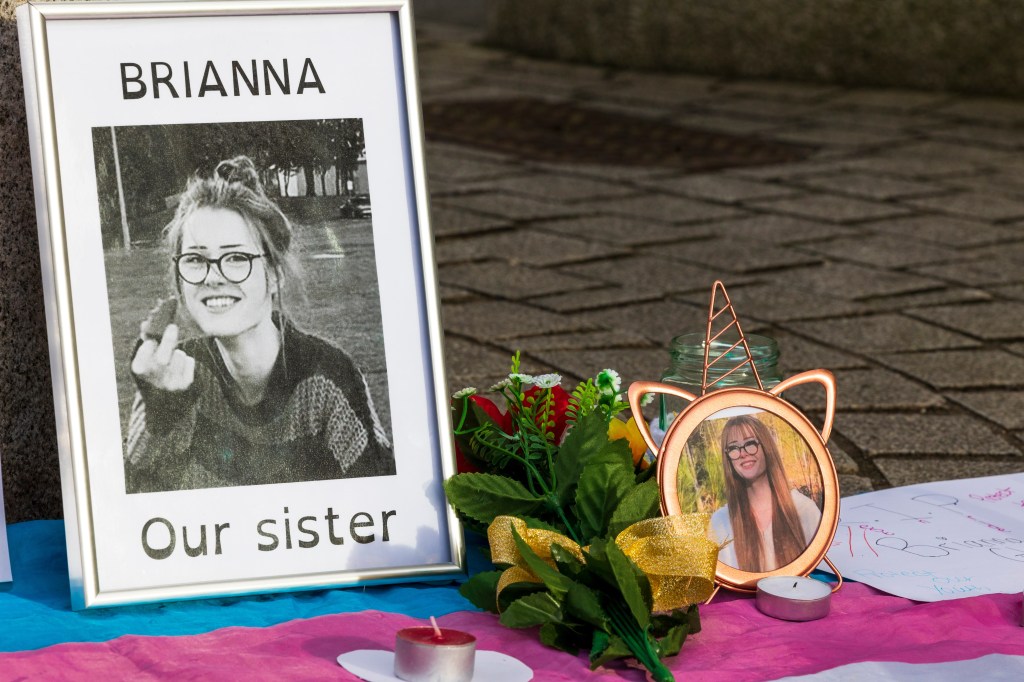
The death of 16-year-old Brianna Ghey at Culcheth Linear Park in February 2023 sent shockwaves across the United Kingdom. On 20 December 2023, Scarlett Jenkinson and Eddie Ratcliffe were found guilty of Brianna’s murder, subsequently receiving life imprisonment sentences on 2 February 2024.
From the brutality of the crime to the debate over whether the perpetrators’ names should have been published and the speculation about the potential influence of violent media on their actions as to whether their acts had been influenced by violent media, this case is reminiscent of James Bulger’s murder over three decades ago. A notable difference, however, is that the victim in this case was a transgender girl.
Brianna’s murder against the backdrop of the trans rights debate
Official figures reveal a concerning surge in police-recorded transphobic hate crimes in England and Wales in recent years (11% up from the year before in 2022/23 and a staggering 186% rise over the last five years). The latest Home Office report acknowledges that comments made by politicians and incendiary media discussions on trans issues might have contributed to this trend. In the current socio-political climate, where the polarisation between trans and women’s rights groups over gender self-identification can reach ‘toxic’ levels, there is a serious risk that victims like Brianna Ghey will – as the domestic abuse commissioner Nicole Jacobs warned – be ‘denied their dignity’.
Recognising the role transphobia has played in this violent crime is vital to tackling that risk. Yet, The Times were quick to ‘deadname’ Brianna, i.e. report the news of her murder using the victim’s pre-transition (male) name, triggering a strong backlash by trans advocates. Similarly, BBC News and Sky News also faced criticisms for initially failing to mention the victim was trans. Meanwhile, Fair Play for Women, a gender-critical campaign group which views sex as immutable, argued that the victim’s transgender identity was not relevant to stories about her murder and should have been omitted from them. Notably, Cheshire police did not consider the murder to have been motivated by hatred against Brianna’s transgender identity. DCS Mike Evans explained that Jenkinson and Ratcliffe had previously discussed killing other children, suggesting that, had they not been able to kill Brianna, they would have found another victim.
Why did Brianna’s murderers not remain anonymous?
Due to the defendants’ age, restrictions were in place throughout the trial to prevent the publication of any information likely to reveal the identities of the two perpetrators as the defendants in these proceedings. However, some controversy arose when the decision was made to publicly name the two teenagers at their sentencing. Mrs Justice Yip took the unusual step to revoke anonymity orders shielding the assailants’ identities, following an application by press representatives.
As there has been some misunderstanding around this issue, it is worth explaining how the anonymity orders worked in Brianna’s case. It will be recalled that the two perpetrators were tried before the Manchester Crown court, which is an adult criminal court – not a youth court (of note, a young person charged with murder cannot be tried or sentenced by a youth court because of the seriousness of the charge). While there is no automatic ban on identifying individuals under 18 as being concerned in the proceedings of adult criminal courts, section 45 of the Youth Justice and Criminal Evidence Act 1999 empowers criminal courts to grant anonymity to a juvenile defendant, victim or witness in adult criminal proceedings while they remain under the age of 18. This power is not available to youth courts. The intention of Parliament in enacting this provision was to widen the scope of protection available to under-18s.
Section 45 allows an adult criminal court to impose a discretionary reporting restriction. If the court so wishes, it can choose to impose no restrictions at all. The law draws, therefore, a distinction between young people appearing in youth courts, who are automatically entitled to anonymity, and those appearing in adult criminal courts, who must seek a discretionary reporting restriction.
This is critical. It means that in a youth court, there must be a good reason for lifting the anonymity order which applies by default, whereas under section 45 of the 1999 Act, there must be a good reason for imposing – or continuing with the imposition of – the anonymity order. So, in the case of section 45, there is a strong presumption in favour of open justice, placing the burden of justifying reporting restrictions on the party seeking to derogate from this fundamental principle.
The defendants in Brianna Ghey’s case, both 16 at the time of their conviction, would lose the anonymity protection upon reaching adulthood in 2025 by operation of the law. In the meantime, however, a court may consider lifting or relaxing restrictions in two circumstances: either when the court is satisfied that doing so is ‘necessary in the interests of justice’ (section 45(4)); or when it is satisfied that the reporting restriction unduly limits the coverage of the proceedings and it is ‘in the public interest’ to remove or modify the restriction (section 45(5)). A list of factors to be considered in an assessment of where the public interest lies in such situations is provided in section 52 of the Act.
No judge takes such decisions lightly. As the Court of Appeal has previously emphasised, judges are tasked with meticulously weighing the competing public interest factors at play on the particular circumstances before them. So, neither the open justice principle nor a young person’s best interests automatically dictate the conclusion in a given case. Pre-conviction and during the trial, a defendant’s welfare is likely to take precedence over the public interest in disclosure. However, post-conviction and sentencing, factors such as the offenders’ age and the severity of the crime acquire particular relevance in determining whether publication is warranted.
As Mrs Justice Yip observed in Brianna’s case, ‘the shock generated by [her] murder and the circumstances of it has spread well beyond the local community, across the nation and indeed internationally. The public will naturally wish to know the identities of the young people responsible as they seek to understand how children could do something so dreadful. Continuing restrictions inhibits full and informed debate and restricts the full reporting’ of an ‘exceptional’ case.
But the lifting of the discretionary reporting restrictions under section 45 was driven not only by the sustained public interest in knowing the identity of Brianna’s murderers, but also because of the likelihood of continued media attention regardless of the timing of disclosure as well as the defendants’ extended custody and rehabilitation process into adulthood. While acknowledging the distress to the defendants’ families, Mrs Justice Yip underlined that the powers under section 45 were not designed for convicted defendants’ family members, and the risk of harassment to the defendants’ families was deemed likely regardless of the timing of identification. It was the combination of all these considerations that favoured publication.
Sentencing in Brianna’s murder as a catalyst for confronting transphobia
Brianna’s murderers were named the day they were sentenced for her murder. Even though Cheshire police had dismissed transphobia as a motivating factor, Mrs Justice Yip expressly recognised in her sentencing remarks that the crime had been, at least partly, driven by hostility towards Brianna’s trans identity. Distinguishing between the young offenders’ motivations, the judge determined that Jenkinson was primarily seeking to act out her ‘sadistic’ fantasies and had a ‘deep desire to kill’ while Ratcliffe was, in part, driven by transphobic sentiments. This hostility towards trans people had, according to the judge, been ‘undoubtedly displayed’ in the dehumanising language Ratcliffe used in the WhatsApp messages he had sent to Jenkinson, in which he described Brianna as a ‘femboy thing’ or ‘it’, revealing that he wanted to ‘see if it will scream like a man or a girl’.
Such messages make for a harrowing read and it is easy or even convenient for our society to brush off the transphobia reflected in them as merely the hateful words of one ‘bad apple’. The truth is, however, that Brianna Ghey’s murder has shed light on a harsh reality: abuse often becomes a distressing aspect of vulnerable trans individuals’ lives, even if this does not always escalate to extreme violence. The Conservative Government’s and the UK mainstream media’s trans-othering rhetoric has been repeatedly criticised by several international human rights organisations. Indicatively, the Council of Europe’s Commissioner for Human Rights, Dunja Mijatović, warned of the risks deriving from an ‘increasingly toxic’ anti-trans political and media discourse built upon ‘deeply discriminatory stereotypes […] based on ideas of predatory determinism.’ This ‘culture war’ against trans people has also been cited by the International Lesbian, Gay, Bisexual, Trans and Intersex Association as one of the reasons behind the UK’s continuous drop in its annual rankings for LGBT rights across Europe.
During PM Questions on 7 February 2024, Rishi Sunak faced a backlash after his remark about Labour leader Keir Starmer’s purported difficulty in ‘defining a woman’ while Brianna’s mother was in the public gallery during the exchange. Trans allies, including Brianna’s father Peter Spooner, expressed ‘shock’ and ‘disgust’ towards the PM’s ‘degrading comments’, calling for an apology which Sunak has refused to offer. Amid the increasing tensions between the two main political parties, it is vital that trans people’s lives are not reduced to a bargaining chip in their bid to win the upcoming general election. Despite the tragic circumstances surrounding Brianna’s murder, her story has the potential to catalyse a wider and more constructive dialogue on the consequences of ‘othering’ an already marginalised community. There are undoubtedly valuable lessons to be gleaned from this landmark case. The pertinent question remains: are our leaders prepared to heed them?
Dr Erin Pobjie has just published Prohibited Force: The Meaning of ‘Use of Force’ in International Law (CUP, 2024). Dr Pobjie made use of the University’s dedicated open access (OA) fund to ensure that her book is freely available to students, scholars, and readers everywhere. You can download your copy here.
Dr Pobjie has kindly answered some questions about her work, her choice to go open access and future projects.
Congratulations on the publication of your new book! How does it feel to have it published and freely available?
Thank you! The book is the culmination of a long process, starting with my PhD at the University of Cologne and continuing through my post-doc at the Max Planck Institute in Heidelberg and then as a new lecturer at Essex University. There were many highs and lows over that period and I learnt so much along the way, so it feels emotional and very satisfying to see it finally out.
You chose to make use of the University’s open access fund. Why is open access important to you and how do you think it will benefit your work?
I believe in the principles of open science so it was important to me to publish my book OA. Publishing OA allows me to share my ideas more broadly and without financial barriers, so that my book can hopefully contribute to scholarship, policy and practice on this important topic. Having poured so much into the project, I’m happy that it’s freely available open access thanks to the University’s OA fund.
How did you find the open access process?
It was fairly straight forward once the funding became available. The Open Access team at the University liaised with my editor at Cambridge University Press and were very helpful and responsive in supporting me throughout the process.
What advice about open access, or publishing in general, would you offer to colleagues?
My advice would be to seek feedback early and often, to be proactive throughout the publication process and to advocate for the ideas in your book so that they can contribute to the conversation. These are things I would try to do better next time. It continues to be a learning process now that I’m in the next phase of post-publication, so it’s been very helpful to speak to other colleagues who have recently published books for advice.
Now, about your book, which feels incredibly timely: how did the idea come up and could you explain the key ideas of the book?
The seed for the idea was planted during my LLM at Essex, where I was inspired by the module ‘International Law of Armed Conflict’ taught by Professor Noam Lubell. The first class was about jus ad bellum – the prohibition of the use of force between States. I was captivated by the topic and thought it could be a way to contribute to a cause I feel passionate about (the prevention of war) by exploring and clarifying fundamental legal concepts. Noam introduced me to my future doctoral supervisor, Professor Claus Kreß at the University of Cologne, who encouraged me to focus on the meaning of prohibited force.
The prohibition of the use of force between States is a cornerstone of the modern international legal system and key to international peace and security, but its meaning is unclear. This is especially problematic for uses of force in newer domains like cyber and outer space, or that use emerging technologies. My book therefore seeks to clarify the meaning of prohibited force and proposes a definitional framework that can be applied in practice to identify illegal uses of force. To do this, I analyse the sources of the prohibition (article 2(4) of the UN Charter and customary international law) and their relationship, identify the elements of a prohibited use of force and set out a framework to define a prohibited use of force.
In a nutshell, my argument is that a ‘use of force’ under article 2(4) of the UN Charter describes a type rather than a concept. This means that rather than consisting of a checklist of necessary and sufficient elements (a concept), it consists of a basket of elements which must be weighed and balanced to determine whether the threshold of the definition is met (a type). According to this framework, not all elements must be present for an act to constitute prohibited force if they are compensated by other elements. For example, a hostile or coercive intent may turn a forcible act into a use of force even if other elements are relatively weak, such as a low gravity or if the harm is only potential but unrealised. The final part of my book applies this framework to illustrative case studies, including the use of force in outer space.
What’s next for you? Do you have new projects lined up?
I was recently appointed as co-Rapporteur of the International Law Association’s Committee on the Use of Force, a committee of global experts on the law on the use of force to draft a new report to bring normative clarity to the area of ‘military assistance upon request’ (a.k.a. intervention by invitation). The Committee has a mandate until 2026 to produce the report, so together with my co-Rapporteur Professor James Green I am taking the lead in carrying out the work of the Committee and drafting our report on this topic, with conclusions and commentaries to provide guidance for States.
I’m also excited to have the opportunity to apply the framework I developed in my book to outer space security at the United Nations. I’m currently undertaking a residential fellowship at the United Nations Institute for Disarmament Research in Geneva in their Space Security Programme, where I’m producing a policy report on the use of force in outer space. Humans globally depend on the preservation of safe, secure and sustainable uses of outer space, including for communications, global navigation systems (which underpin banking, financial markets and energy grids), disaster emergency response and humanitarian relief, food production and climate science. These are all placed at risk by military uses of outer space. The policy report will raise awareness of legal restraints on space threats under international law, which must be considered when negotiating and developing new norms for the prevention of an arms race in outer space.
I’m enjoying the mix of doctrinal research and policy engagement and am grateful to have the opportunity to further develop and apply the ideas from my book following its publication.
Prohibited Force: The Meaning of ‘Use of Force’ in International Law is available online and open access through Cambridge University Press. In case you would also like to purchase a hardcopy of the book, you can use the code POBJIE23 on the publisher’s website for a 20% discount until 31 December 2024. DOI: https://doi.org/10.1017/9781009022897.
Do you want to publish your work Open Access? Just complete this brief form and the Open Access team will soon be in touch. More information about making your research available open access can be found on the Open Access Publishing webpage, and you can also get in touch with the OA team via oapublish@essex.ac.uk.
This is a post originally published by the Essex Human Rights Centre Blog on February 12th, 2024.
Mexico Country Visit of the Working Group in September 2023
Spotlight regularly features a significant individual or team from the Human Rights Community to answer questions put by students and colleagues from the University of Essex. This time we feature Dr. Matthew Gillett.
Dr. Gillett was appointed as a United Nations Special Mandate Holder in 2022. Specifically, he is the Expert Member from the Western Europe and Others Group in the Human Rights Council’s Working Group on Arbitrary Detention. In 2023, he was elected Vice-Chair for Communications of the Working Group. In this role, he cooperates with other Special Mandate Holders (typically the Special Rapporteurs on Torture, on Extra-judicial Killings, and on Counterterrorism, plus the Working Groups on Forced Disappearance and on the Elimination of Discrimination against Women and Girls); to issue communications to Governments and other entities (such as corporations) regarding potential human rights violations. As a member of the Working Group on Arbitrary Detention, he deliberates around 80-90 judgments (called opinions) a year and also conducts country visits to scrutinize detention practices around the World.
Previously, Dr. Gillett has around 15 years of experience working in international organisations in The Hague (particularly as a prosecution attorney at the International Criminal Court (“ICC”) and the International Criminal Tribunal for the former Yugoslavia (“ICTY”)). He has conducted investigations in various conflict zones, including for six months as a Human Rights Officer with the United Nations Assistance Mission in Afghanistan (“UNAMA”).
Academically, his work encompasses: International Criminal Law; Human Rights; Terrorism and Counterterrorism; Procedure and Evidence; Open-Source investigations; the Environment; International Humanitarian Law; Mediation (as a qualified mediator); Speech Crimes; and Aggression. His publications have been cited before international and hybrid courts, including in filings and Decisions of the Colombia Special Jurisdiction for Peace (“Pre-Report on Charging Environmental Damage before the Jurisdicción Especial para la Paz”); the International Criminal Court (e.g. “Collective dislocation; crimes of displacement, property depravation and discrimination under international criminal law”, Routledge; “The Call of Justice: Obligations under the Genocide Convention to Cooperate with the International Criminal Court”, CLF) and the Special Tribunal for Lebanon (e.g. “Fast-Track Justice”, JICJ; “The Special Tribunal for Lebanon Swiftly Adopts Its Rules of Procedure and Evidence”, JICJ).
Students’ and colleagues’ questions answered
We are honoured that Dr. Gillett agreed to answer questions put by the human rights students and community at Essex.
Q: What initially drew you towards human rights?
A: Working at the High Court of New Zealand exposed me to various human rights cases, from freedom of expression claims to complaints of ill-treatment in detention. Learning about the substance of human rights, and the effect of international conventions on the application of domestic law was fascinating.
Q: How do you believe the efforts of the Working Group on Arbitrary Detentioncan help address criticisms of the UN’s human rights work?
A: The Working Group on Arbitrary Detention strives for fair conclusions and innovative ways to enhance human rights compliance. One of the important ways we can reduce criticism is through robust fact-finding. We have five expert members, with a range of experiences and backgrounds. Our individual cases are subjected to rigorous review, while also ensuring that we address a high volume each year. We also travel to countries to assess their detention systems and meet with detainees, officials, and NGO representatives, all of which helps us to reach well-grounded findings.
Q: What advice would you offer aspiring human rights workers?
A: Gain field experience early, explore alternative avenues for redress, and follow up on cases to understand their outcomes comprehensively. In more detail: (i) Get field experience at an early stage – it will open your eyes to the situation on the ground and whether you are well suited to that type of work. (ii) Think about your options in any situation, such as new avenues or fora to redress a human rights violation, and don’t simply accept binary choices that are presented to you. (iii) Follow-up on situations you have been involved in – if you assisted a victim with a human rights claim, then get back in contact periodically afterwards to find out how it panned out.
Q: How can we assess the effectiveness of human rights measures such as issuing communications?
A: Tracking responses and subsequent actions by governments is essential. Effective engagement with international bodies like the UN can amplify pressure for change. An obvious case is if the Government or entity in question explicitly changes their conduct as a result of the communication. However, in many cases that won’t happen, at least not instantly. So the first step is keeping a track of communications and responses, the second is assessing to what extent the response engaged with the issues, and the third is considering follow-up measures such as public statements or bringing pressure through international fora like the United Nations Human Rights Council or General Assembly.
Q: Considering the allegations against the US and UK regarding torture in Iraq and Afghanistan, and their reluctance to allow ICC investigation or hold themselves accountable, what message do the actions of powerful states convey regarding accountability for human rights violations?
A: Reluctance to engage with international institutions sends a discouraging message globally, undermining the universality of human rights principles. Just like international human rights law, international criminal law is designed to apply universally. The lack of commitment to institutions like the International Criminal Court by powerful States including Russia, China and the USA sends a dispiriting message to the people of the world – especially given that the crimes listed in the Rome Statute, such as aggression, genocide, crimes against humanity and war crimes are lowest common denominators, which all States should agree to prohibit.
Q: What are your concerns regarding the existing framework of the working group, and how can it be improved?
A: Balancing increasing caseloads with broader advocacy efforts poses challenges. For the future, it would be ideal to have increased resources for the OHCHR team which supports the expert members of the Working Group.
Q: In your role as Vice-Chair for Communications of the Working Group, what strategies do you employ to foster collaboration among Special Mandate Holders and issue effective communications to address potential human rights violations?
A: Collaborating with other Special Mandate Holders is a highlight of the work, but of course can present its own challenges in terms of coordination. Typically, a strategy is to have a lead mandate in charge of a particular communication, and then others to review and sign onto it. We have also started having more regular meetings and exchanges on particular hot-spots which raise issues for multiple mandates, so that we are communicating with each other and exchanging information and views in order to enhance our understanding of the situation.
Q: Having worked as a prosecution attorney at the ICC and the ICTY, how do you draw on your experiences in conflict zones to contribute to the Working Group on Arbitrary Detention?
A: As a former prosecutor, I am used to looking through statements, documents and other sources to reach factual conclusions. Having worked in multiple situations of armed conflict, I am aware of security requirements but also know the importance of seeing situations and speaking to people first-hand to establish events. Additionally, there is considerable overlap between arbitrary detention and the crimes I prosecuted, which helps for legal assessments.
Q: Can you share insights from your academic work and its relevance to human rights advocacy?
A: My research has recently focused on fact-finding. This has spurred me to look at the procedures employed at various human rights bodies, and what types of materials they base their findings on. Legally, the context of armed conflict or terrorism type scenarios helps to understand when there may be different considerations to bear in mind when assessing the application of international human rights law.
Q: Given that your work exposes you to stressful and harrowing experiences and stories, how do you cope with these challenges?
A: When I am interviewing a victim or visiting a crime scene, my focus is usually on forensic details and ensuring an accurate record, as well as the safety of everyone involved. However, I realised after many years of working long hours that you have to look out for your own well-being as well. Now I exercise reasonably often and enjoy catching up with friends and colleagues from around the world when the opportunity arises. I also have two young children to keep me on my toes.
This week marks the second anniversary of the full-scale Russian invasion, which began on the 24th February 2022, and coincides with the death of Russian opposition leader Alexei Navalny. This war is a terrible tragedy for all Ukrainians and poses a serious challenge to European and global security and stability. However, it is also a disaster for Russians and Russia’s democracy and freedom of expression. In my research article, Russian Bans on ‘Fake News’ about the war in Ukraine: Conditional truth and unconditional loyalty, I explore the role of the Russian judiciary in framing the public debate and public ‘truth’ on the war against Ukraine within Russia. Published in one of the globally leading academic journals in communication studies, International Communication Gazette, the paper presents the analysis of over 500 Russian court decisions against the so-called ‘fake news,’ or ‘lies’ about the invasion.
Although according to public survey polls, most of Russia’s population support Putin’s decisions on Ukraine and the actions of the Russian army in Ukraine, it is not entirely clear whether they support the actual war in Ukraine or the myth about it constructed and amplified by the Russian courts, as can be seen from my article. The paper shows how the courts ‘condition’ the accuracy of any information on matters of public interest, including the war, on the official position of the Russian government. The Russian courts use the so-called fake news law adopted in Russia mainly to counteract COVID-19 to establish a state-run monopoly over the pubic debate within Russia, to amplify state misinformation on the war and to punish dissenting Russians.
Through discourse analysis, I was able to uncover the prevailing narrative surrounding the war. The dominant theme emerged in judicial interpretations of conditional truth. My paper details how courts construct a misleading narrative about an imaginary war, presenting it as a peacekeeping special military operation that causes minimal harm to both Russians and Ukrainians. According to this storyline, Putin leads the operation only to protect ethnic Russians and de-Nazify Ukraine. The courts manipulate international legal standards to make it create an illusion that the operation is fully aligned with them. Additionally, my analysis exposes how Russian courts twist the notion of “national hatred” to label Russian dissenters as haters of Russia and all Russians. The courts weaponise foreign news media outlets and discourage the spread of fake news, warning the public of the dangers it poses.
A historical perspective allowed me to demonstrate that the modern Russian approach is not new and reflects the Marxist-Leninist principles of ‘partyness’, ‘objectivity’, and ‘scientificalness’ that were used in Soviet Communist Russia to guide mass media practitioners. In the article, I explain the meaning of these principles and highlight the significant differences between them and the universal standards for professional journalism. The Soviet concept of ‘objectivity’ implied biased and unconditional loyalty to the Communist Party, whose decisions conditioned the ‘truth’ in the entire USSR. My article also explores how this approach was used in the Soviet era for myth construction and was integrated into laws that were used to restrict ‘anti-Soviet lies’ until the USSR’s collapse.
The paper presents a collection of empirical data on contemporary factual statements, opinions, and posters that oppose the war in Ukraine. Regrettably, these materials have been discredited and deemed ‘harmful lies’ in Russian public discourse. I express my sincere gratitude to my brave young colleagues from the Higher School of Economics in Moscow, who took significant risks to obtain access to the court decisions that became the foundation of my study. These decisions are solely available in Russian and can only be found in legal databases located in Russia. I am also grateful to my former supervisor at Moscow State University’s School of Journalism, Professor Andrei Richter, who is currently a Professor at the Comenius University of Bratislava, and Professor Lorna Woods from Essex Law School for their meticulous review, sagacious guidance, and unwavering support throughout the entire process. Furthermore, I would like to thank my colleagues Professor Geoff Gilbert, Professor Sabine Michalowski, Dr. Tara Van Ho, Dr. Konstantinos Kalliris, Dr. Alexandros Antoniou from Essex Law School and Dr. Ilya Kiriya from the University of Grenoble, without whom this study would not have been possible.
By Dr. Matthew Gillett, Senior Lecturer, Essex Law School, Head of the Digital Verification Unit.
Image via shutterstock
Throughout history, grave crimes have been fueled by incitement and inflammatory rhetoric. From the Holocaust to Rwanda, influential leaders have established the psychological and rhetorical antecedents for mass violence. However, in the digital age, a far wider range of potential inciters have access to platforms with instantaneous global reach. Already this new era has seen online incitement to atrocities in Myanmar, Ukraine, and Sudan. These events demand accountability and, as investigations and prosecutions get underway, inflammatory statements are increasingly becoming a critical form of evidence.
Speech acts, whether oral or written are forensically significant in multiple ways. They can demonstrate criminal intent, they can demonstrate instigation, and they can amount to crimes in and of themselves, such as persecution or direct and public incitement to genocide. The relevance of speech acts was evident in the International Court of Justice’s provisional measures order in the Israel-South Africa genocide case. Statements made online by high-level Israeli officials through Twitter/X and other platforms were key evidentiary items cited by the Court in granting provisional measures. And that relevance will continue to grow in future litigation. Whereas the Court’s provisional order did not require a detailed evidentiary assessment, the statements will be subjected to far more exacting scrutiny during the merits phase. Equally, if genocide is charged at the ICC or other courts, incendiary statements will constitute a central focal point for the litigation. This begs the question of how such statements can be entered into evidence and contextualized in the context of international legal proceedings.
In an article I recently co-authored with Wallace Fan, former student manager at the University of Essex Digital Verification Unit, we explore how online materials can be submitted as evidence before international courts. Published in the Journal of International Criminal Justice in December 2023, the article notes that digital open-source information has become a significant means of proving atrocity crimes charges. It argues that digital materials will typically need to be authenticated and contextualized via expert evidence. Highlighting the challenges that DOSI presents, including the risks of misinterpretation and biases leading to erroneous conclusions, the article proposes a six-factor test to identify digital specialists to serve as expert witnesses. It also encourages the digital open-source community to utilize transparent, accessible and replicable methodologies when conducting online investigations. On a complementary track, I am working with PhD candidate Vanessa Topp on a new version of The Hartford Guidelines on Speech Crimes in International Criminal Law, which I co-authored with Professor Richard Wilson of the University of Connecticut in 2017. The new guidelines will address international speech crimes on social media platforms, disinformation, and other linked topics arising in the digital age. Building on the analyses in those publications, a key facet of the research is to examine how to analyse and tender online speech acts as evidence. For these purposes, it is clear that expert evidence will be required from a range of specialists. Forensic questions include the authenticity of the statement (excluding deepfakes and identifying alterations to the item), attributing it to the suspect, preserving the native files, measuring the reach of the statement, identifying the influence of the statement maker, and, perhaps most significantly, interpreting the statement’s contents in light of its sociological, temporal and cultural context. Underlying conceptual questions include how to categorize online materials as evidence, how digital materials can shift the truth-discerning moment outside of the courtroom, and how the democratization of access to technology tests the distinction between experts and laypersons for legal purposes. As court proceedings heat up, providing conceptual clarity on these issues will help facilitate the submission, contextualization and interpretation of online materials which may constitute or instigate atrocity crimes including genocide and persecution.
This legal analysis of the Rwanda Treaty and Bill and the UK’s legal obligations towards victims of modern slavery and human trafficking (MSHT) has been conducted by Dr Marija Jovanovic from the University of Essex. She is the author of State Responsibility for ‘Modern Slavery’ in Human Rights Law (Oxford University Press, 2023).
The analysis has been commissioned by the Modern Slavery and Human Rights Policy and Evidence Centre (Modern Slavery PEC), which in turn is funded and supported by the UK Arts and Humanities Research Council (AHRC).
The Modern Slavery PEC has actively supported the production of this legal analysis. However, the views expressed in this document are those of the author. The author is grateful to James Robottom, Barrister at Matrix, for detailed comments on a draft of this analysis.
Executive Summary
This report analyses the provisions of the UK – Rwanda Treaty 2023 and the Safety of Rwanda (Asylum and Immigration) Bill in light of the UK’s international obligations towards victims of modern slavery and human trafficking (MSHT) contained in Article 4 of the European Convention on Human Rights 1950 (ECHR) (prohibition of slavery and forced labour) and the Council of Europe Convention on Action Against Trafficking in Human Beings 2005 (ECAT).
It is important to specify that this analysis focuses solely on the requirements under the ECAT and Article 4 ECHR and does not consider the conditions under which International Refugee Law would permit removing people seeking asylum to a third country when the issue of modern slavery and human trafficking was not at stake. Unlike international treaties designed to protect victims of modern slavery and human trafficking, International Refugee Law does not impose an express obligation on States not to remove individuals before their refugee status is determined, nor the obligation to investigate, prosecute, and punish individual perpetrators. Drafted half a century later, the anti-trafficking instruments are much more explicit, concrete, and demanding when it comes to protection requirements.
Accordingly, this analysis emphasises the need to distinguish between obligations arising from international anti-trafficking instruments (the majority of which have been integrated in the ECHR) and those established under International Refugee Law, and emphasises the need for decoupling the issue of modern slavery and human trafficking from migration control.
Section 1 of the analysis focuses on the international law obligation to identify and protect every victim of modern slavery and human trafficking. Article 13 of the Rwanda Treaty expressly envisages the UK not completing the victim identification process in relation to individuals who are deemed to have arrived in the UK illegally. This is a breach of an explicit international obligation to identify and assist every victim of modern slavery and human trafficking, including those who entered or are present illegally, contained in both Article 4 ECHR and Article 10 ECAT.
Section 2 of the analysis explains international law obligations pertaining to the removal of victims of modern slavery and human trafficking. It finds that by providing for removal to Rwanda of suspected victims of modern slavery or human trafficking (individuals who there are reasonable grounds to believe are victims of modern slavery or human trafficking), Article 13 of the Rwanda Treaty and the Safety of Rwanda Bill contravene the express international obligation in Article 10(2) ECAT not to remove such individuals (including to third countries) until the identification process is complete. Removing confirmed victims of modern slavery or human trafficking to Rwanda without an assessment of the risk of re-trafficking they may face, also gives rise to the risk of breaches of Article 4 ECHR by analogy with Article 16 of ECAT. The latter sets out conditions under which an identified victim of modern slavery and human trafficking can be returned to the country of their nationality/permanent residence, which is permitted only after conducting an assessment of the impact of such return on ‘the rights, safety and dignity of that person’, including the risk of re-trafficking. While the ECAT does not expressly govern the removal of identified victims to third countries, by analogy the same conditions ought to apply in such cases.
Section 3 of the analysis discusses the operational duty to protect victims of modern slavery or human trafficking contained in Article 4 ECHR, which includes the protection of those at risk of being subject to modern slavery or human trafficking and prevent re-trafficking. This obligation requires states to consider the risk of re-trafficking when making decisions to remove a suspected or confirmed victim of modern slavery and human trafficking from their territory to a third country. The Rwanda Treaty and the Human Rights Memorandum accompanying the Safety of Rwanda Bill fail to acknowledge the risk of violating this obligation and the need to instruct decision-makers to assess the risk of re-trafficking of presumed or confirmed victims of modern slavery or human trafficking.
Section 4 of the analysis considers the international law obligation to prosecute and punish the perpetrators of modern slavery and human trafficking. It finds that in addition to the obligation to identify every victim of modern slavery and human trafficking, the removal of individuals with a reasonable grounds decision envisaged by Article 13 of the Rwanda Treaty risks breaching a duty to investigate and punish the perpetrators of this crime contained in Article 4 ECHR and Article 27 ECAT. Victims of modern slavery and human trafficking are often the only witnesses of this crime and without their assistance the perpetrators are likely to remain at large.
Overall, removing to Rwanda individuals with a positive reasonable grounds decision (suspected victims), as envisaged by Article 13 of the Rwanda Treaty, will automatically and in all cases put the UK in breach of Article 4 ECHR as well as Article 10 ECAT. In addition, removing identified victims of modern slavery and human trafficking without conducting an individualised assessment of the risk of re-trafficking would breach the operational duty under Article 4 ECHR. Lastly, removing suspected or confirmed victims of modern slavery and human trafficking risks interfering with an obligation to investigate and prosecute the perpetrators of modern slavery and human trafficking contained in Article 4 ECHR and Article 27 ECAT.
Importantly, the conclusions in relation to the incompatibility of the Rwanda Treaty and Bill with the UK’s obligations under Article 4 ECHR and ECAT are not restricted to Rwanda alone, but would apply to removing individuals to third countries without specific safeguards prescribed by these international instruments.
Finally, the conclusion notes that while the present analysis found the provisions of both the Treaty and the Bill incompatible with protective obligations enshrined in Article 4 ECHR and ECAT, the Rwanda Bill prevents victims of modern slavery and human trafficking from raising those incompatibilities before UK courts. Clause 3 of the Rwanda Bill provides for disapplication of sections 2 and 3 of the Human Rights Act 1998 (HRA), which would enable domestic courts to interpret this legislation in line with the ECHR in relation to Rwanda claims. Furthermore, clauses 1 (4) and (6) of the Rwanda Bill specify that its validity is unaffected by international law, including the ECHR and ECAT and clause 2(5) provides that the conclusive deeming of Rwanda as a ‘safe country’ applies notwithstanding any interpretation of international law.
On November 21st, 2023, an insightful presentation titled ‘Governance by Algorithms: from social norms to laws, to numbers and to code’ was delivered by Mr. Zhenbin Zuo, lecturer from Essex Law School, at the prestigious international conference of Computational ‘Law’ on Edge 2023. This conference, organised by the ERC Advanced Grant research project ‘Counting as a Human Being in the Era of Computational Law’ (COHUBICOL) in collaboration with the Journal of Cross-disciplinary Research in Computational Law (CRCL), stands at the forefront of exploring the evolving relationship between law and emerging technologies including AI.
Computational ‘Law’ on Edge 2023 is a world-leading symposium that converges scholars and experts from both domains of law and computer science. It serves as a dynamic platform for cross-disciplinary debate on the cutting-edge issues in the field of computational law, and focusing on the future of law in the age of AI and technological breakthroughs.
Mr Zhenbin Zuo presenting on the ‘layering’ of governance modes as a ‘volcanic’ model.
In his presentation, Mr. Zuo challenged the ‘legal singularity’ or substitution hypothesis , which suggests that AI and computer code might replace traditional legal processes based on texts, hermeneutics and natural language (text-driven law). Contrary to this view, Mr. Zuo proposed a novel ‘scaling and layering’ framework to better understand how code-based algorithms complement rather than supplant modern legal governance both in historical evolution and current practice. In the analysis this novel framework also helps reveal deeper nature/limitations of our current text-based legal systems, and asks how lawyers and/or scientists can improve the functioning of law in the challenges of new technologies like AI.
Mr. Zuo’s analysis reveals a hybrid governance model of our modern world, consisting of social norms, laws, numbers, and computer code, each representing increasing levels of formalization and abstraction. He proposes that computer code, when existing as a governance mode, can only achieve effective and legitimate functions by referring to frames in statistics/numbers and laws, in a similar way that legal governance have to rely on the wider framing effect of social norms-based governance at its sociological and normative core. The detailed argument is two-fold:
Scaling: Historically more formal/abstract governance modes evolved from less formal ones, enhancing the capacity of societies to govern larger territories and populations.
Layering: At any period of time (including current practices), these more formal modes of governance rely on and are influenced by the less formal ones, creating institutional path-dependencies with both positive and negative implications.
A key argument in Mr. Zuo’s presentation is the necessity for lawmakers to recognise the distinct nature and limitations of each governance mode in different spatio-temporal environments. He emphasised the importance of avoiding over-reliance on any single mode, particularly ‘code’ and ‘numbers,’ to prevent potential lock-in effects, ‘concept drifts’ or ‘model decay’, and ‘cold-start’ problems in designing institutions and polices. He briefly discussed the example of Zuboff’s ‘Uncontract’ chapter in Surveillance Capitalism (2018) which warns of Google’s potential to solely rely on smart contract and stop the car engine of e.g. a mother on her drive to see child in hospital; and how tax calculation algorithms need to adapt to new categories of employment such as ‘worker’ after the UK Supreme Court’s decision on Uber BV v Aslam [2021]. He also touched on how this framework can help us better understand China’s Social Credit Systems which adopt automation in courts, governments, train stations, airports and other spaces for debts enforcement, a paper Mr Zuo presented at the previous Computational ‘Law’ on Edge conference in 2022, and forthcoming in the journal CRCL.
Comments and discussions with Dr. Noura Al-Moubayed, Professor Mireille Hildebrandt, and others.
The presentation was well-received, with Dr. Noura Al-Moubayed, Associate Professor in Computer Science from Durham University, providing insightful comments and the audience engaging in a lively Q&A session. Mr. Zuo responded to the various questions, further enriching this cross-disciplinary debate.
For those interested in delving deeper into the nuances of Mr. Zuo’s presentation and the conference, a recording is available here. Additionally, Mr. Zuo welcomes further inquiries and can be contacted at zhenbin.zuo@essex.ac.uk.




 Essex Law Research Blog