Front-of-Pack Nutrition Labelling: Experts Come Together to Discuss National, Regional and Global Challenges for Regulation

Photo by Penn State on Flickr

In this post, Dr Nikhil Gokani (School of Law, University of Essex), an expert on regulating food labelling, writes about a major conference he organised with partner institutions.

On September 9 and 10, 2021, the Health and Medical Humanities Hub at the University of Essex, the Law & Non-Communicable Diseases Unit at the University of Liverpool and the Global Center for Legal Innovation on Food Environments of the O’Neill Institute for National and Global Health Law at Georgetown University jointly held a major online conference on the national, regional, and global regulatory implications of front-of-pack nutrition labelling (FoPNL).

Unhealthy diets are a leading cause of death and a significant factor in the development of non-communicable diseases (NCDs) as they are associated with an increased risk of overweight, obesity, and diet-related NCDs such as diabetes, cardiovascular diseases and cancers. To tackle the growing burden of poor nutrition, the World Health Organization (WHO) recommends that states implement FoPNL as part of a comprehensive approach to healthy diets. FoPNL displays simplified, at-a-glance graphical information on the front of food and beverage packaging. It helps consumers understand the nutritional quality of foods and beverages easily and more quickly, and can lead to healthier purchasing decisions, especially with members of lower socioeconomic groups. Even though the evidence base is still developing on how specific forms of FoPNL can best meet consumer needs, FoPNL is most effective when it is interpretive and makes an evaluative assessment about the nutrition quality of food and beverage products.

Many states have now introduced, or are considering introducing, a variety of voluntary or mandatory FoPNL schemes within their respective jurisdictions. These schemes differ in objectives and, consequentially, in design. In particular, the level of public health protection offered by these different schemes varies, not least as the ease of understanding, and the level of interpretation required by consumers to understand the nutrition composition of the food is different for each scheme. In light of the proliferation of national schemes, discussions are being held at the regional and global levels on the harmonization of FoPNL. At the same time, these developments face strong opposition from powerful food and beverage businesses.

In this context, the conference brought together global actors. It gathered over 250 participants from 39 countries, from Antigua to Vietnam, and provided a discussion forum where academics from various disciplines, international civil society organizations, and government and public health agency representatives discussed a range of overarching issues relevant to the regulation of FoPNL. The conference was organized into six panels.

Panel 1 began the event with a discussion on the importance for states of adopting FoPNL, and in particular interpretive FoPNL. Panellists discussed the rationale for FoPNL and the scientific evidence supporting this intervention, including the role of FoPNL in building healthier food environments and reducing health inequities, as well as the support it has received from the international community. Panellists explored states’ obligation under international human rights law to uphold the right to the enjoyment of the highest attainable standard of health and other related human rights, such as the rights to adequate food, information, and the benefits of scientific progress, through the implementation of FoPNL.

Panel 2 focused on national experiences. In particular, panellists discussed the development, adoption and implementation of legislation mandating warning signs on certain foods and beverages in the Americas – with case studies form Mexico and Uruguay – and government-endorsed schemes in Europe – not least the Nutri-Score which originated in France and UK multiple traffic light labelling. This panel highlighted the importance of gathering evidence and galvanizing public support, in addition to raising key questions concerning the different objectives that different FoPNL schemes pursue, as well as the nutrient profiling models underpinning them.

Panel 3 concluded the first day by looking at how national schemes had been – and could be – contested at the World Trade Organization (WTO) Technical Barriers to Trade (TBT) Committee and, were a formal legal dispute to arise before the WTO Dispute Settlement Body or an international arbitration tribunal, what arguments could be made and how they could be addressed. Ultimately, all panellists agreed that the question was not so much the lawfulness of FoPNL but its implementation. Under this framework, it is indeed possible for states to adopt effective FoPNL schemes, but they will be more equipped to do so well if they are mindful of their obligations under international trade and investment law and if they anticipate potential legal disputes (even if these disputes never do arise). In fact, linking the discussions of Panels 1 and 3 together, while states have some degree of discretion as to how to regulate FoPNL, it is clear that they have an obligation to do so under international human rights law.

One the second day, after discussing national experiences, the focus moved to regional harmonization and global standards. Panel 4 focused on the experience of the European Union (EU) and the anticipated developments following the European Commission’s repeated announcements that it would publish a proposal for an EU-wide FoPNL scheme in 2022. The discussions highlighted the limits of EU law as it currently stands, preventing Member States from mandating FoPNL at national level. After hearing the plans of the European Commission, panellists analysed the imperative for the EU to adopt a regulatory framework introducing an EU-wide, mandatory, interpretive FoPNL scheme, or, at the very least, a framework that does not prevent Member States from adopting mandatory FoPNL at the national level in the absence of enough political will to act effectively at regional level.

Panel 5 focused on the experience in Latin America and the Caribbean, bearing in mind that an increasing number of countries have already regulated or are in the process of regulating FoPNL, and that regional bodies, such as MERCOSUR and CARICOM, are reflecting on common rules. In the case of South America, panellists stressed that trade-related arguments were often used to halt or delay national FoPNL measures, though MERCOSUR empowers countries to take unilateral measures to protect public health. In the case of the Caribbean, panellists emphasized the flaws in CARICOM’s process, including due process concerns related to the food and beverage industry’s disproportionate influence in policy decisions. They also addressed the use of inaccurate trade-related arguments as a barrier for regional progress on FoPNL. In turn, in North America, panellists echoed the above concerns on the use of trade agreements as barriers to achieving health-related goals, inspiring contradictions in policy decisions as a result of political swings that endanger the sustainability of public health policies.

Finally, panellists expanded the discussions from the regional to the global plane. Panel 6 concluded the proceedings with a discussion on the role that Codex Alimentarius standards could play in promoting or hindering effective FoPNL schemes. In particular, panellists discussed what the international community could do to promote better consumer information through the adoption of common standards on FoPNL, not only at a regional but also at a global level. They also reflected on how to ensure that these standards were an effective tool of public health protection, rather than subservient to the food and beverage industry’s interests, and more specifically how the voice of public health could be better heard in this joint commission of the WHO and the UN Food and Agriculture Organization.

Having discussed the national, regional, and global regulatory implications of FoPNL, with a particular focus on the policy debates in the Americas and Europe, this conference made clear that comparisons between different FoPNL schemes should indeed be drawn with caution, paying particular attention to the objectives each of these schemes set out to achieve. The devil lies in the detail, and the law and public health communities need to tread cautiously if they are to resist the opposition from powerful food and beverage industry actors and ensure that FoPNL schemes effectively serve the interest of consumers and the protection of public health.

Nevermind at 30: Why the Nirvana Baby Lawsuit is a Warning for Parents

Photo by Jurian Kersten

Alexandros Antoniou, Lecturer in Media Law, University of Essex

Nirvana’s album Nevermind has reached its 30th anniversary and is under more scrutiny than ever as a result of a lawsuit recently filed by the former cover-star.

Spencer Elden, the underwater baby tempted by a dollar bill on a fishhook, is suing the band and Kurt Cobain’s estate for having “knowingly produced, possessed, and advertised commercial child pornography”. The claim states that the band benefited financially from their participation in his “sexual exploitation”. Elden now seeks a civil remedy of US$150,000 per defendant for the “lifelong damages” he claims to have suffered.

Originally inspired by Cobain’s fascination with waterbirths, it has been said the cover can be interpreted as a comment on the values society imparts to the youth. The same picture is, however, interpreted differently in the lawsuit which attempts to weave in the idea that the image was designed to elicit a sexual response from viewers.

It goes so far as to suggest that Cobain “chose” the image depicting Elden “like a sex worker – grabbing for a dollar bill that is positioned dangling from a fishhook in front of his nude body”.

The legal argument

Under US federal law, a key factor in distinguishing between the artistic cover and illegal explicit content is whether the depiction of the minor constitutes a “lascivious exhibition” of their intimate parts – in other words, a depiction designed to excite sexual stimulation in the viewer. Also, any determination of lasciviousness must be based on the depiction taken as a whole, with its overall content and context in mind.

Elden is likely to face an uphill struggle in persuading a court that the cover is deliberately focused on the baby’s genitals and that the creators intended to elicit a sexual response – as the first thing most people probably notice is the underwater background.

But, even if he was successful on the child pornography ground, the difficult question would arise of whether fans who own or have downloaded the album with its cover art have copies of a child sex image and so have committed a crime. https://www.youtube.com/embed/I0HZqUsVgQA?wmode=transparent&start=0

The lawsuit also suggests that Elden has suffered a “loss of enjoyment of life” and had his privacy violated. But it could be pointed out that Elden has previously acted in ways that continue to cement his connection with the band. He has re-enacted the cover to honour the album’s past anniversaries and attended events to sign album covers.

Although it’s not unusual for people to reconsider the impact of their experiences from early life, the fact that Elden leaned into the public sphere and seemingly relished his involvement with the album may dilute the strength of his claims.

Couldn’t consent

Elden’s parents were reportedly paid US$250 for the photo shoot. Presumably, this was a standard rate for an unknown model rather than taking into account what the image would be used for.

It is uncertain whether this money was passed down to Elden. He has expressed his bitterness about having never directly profited from his involvement in the Nevermind project. As his parents’ deal cannot now be renegotiated, some might dismiss his current lawsuit as an attempt to get compensation for the commercialisation of his image.

At the core of Elden’s lawsuit is the fact that the band’s team got his parent’s consent before photographing him. Though of course being a baby, Elden did not have any choice. And from this perspective, Elden’s case is a useful reminder for parents to think about the types of images they share online.

A warning to ‘sharents’

A lot has changed since the release of Nevermind in September 1991. With the rise of social media sites and photo-sharing networks, the average parent today is said to share over 1,000 images of their child online before their fifth birthday. Compared to the Nirvana baby album cover, images shared online nowadays are even harder to control.

Indeed, a recent study found that 42% of teenagers in 25 countries are troubled by what their parents post about them on social media.

Although some steps have been taken to protect children’s privacy online – such as the introduction of the Children’s Code which applies to digital services that target minors – the law is not clear as to whether a child’s right to privacy is essentially lost when parents share their images online.

The legal avenues currently available do not guarantee protection against parental “over-sharenting” either, meaning that so-called “generation tagged” may have to live with the longevity of their digital footprint – often attached to them without their consent.

Elden has previously addressed the popularity of the iconic cover and he appears conflicted about it. His ambivalence about the image may be valid. The public’s perception of the album and the visceral feelings attached to its success should not discourage a dispassionate and neutral legal assessment of whether the photograph is unlawful.

But the Nirvana baby lawsuit also serves as a timely reminder to parents to think carefully of the digital shadows they may create for their children. Indeed, parents cannot simply have a “nevermind” attitude to what they share online.


This article is republished from The Conversation under a Creative Commons license. Read the original article.

The Essex Law School represents the UK at the 2022 IACL General Congress

Photo by Mikel Parera

Dr Anna – Mari Antoniou, Lecturer in Maritime and Commercial Law, has been appointed as the UK’s special national rapporteur at the International Academy of Comparative Law’s (IACL) General Congress, which will take take place in Asunción, Paraguay in 2022.

Dr Antoniou will be representing the United Kingdom for Trade Finance and her report deals with Topic IV of the Congress: ‘The Effectiveness of International Legal Harmonisation through Soft Law – UCP600’. It discusses the UK’s approach to several trade finance issues, including how courts, arbitral tribunals and financial institutions solve recurring problems in documentary credit contracts.

The report’s most significant contribution is an investigation and analysis of two current problems: first, how the COVID-19 pandemic has affected the industry and supply chains; and second, the way the pandemic has forced the issue of digitisation of trade finance.

It discusses the Law Commission’s Electronic Trade Documents project, which is in the consultation phase, and if the proposed draft Bill is adopted by Parliament, electronic transport documents will become a reality.

Dr Antoniou’s report looks at the issue both from a practical perspective and a legal perspective; international trade is worth £1.153 trillion to the UK so an incredibly significant amount is reflected in this report.

Moreover, the legal issues discussed are an excellent example of how the law needs to be updated to reflect the commercial reality. COVID-19 has highlighted other failings in the trade system, but has also emphasised the need for electronic alternatives for an industry deeply rooted in paper-only transactions.

Dr Antoniou’s preliminary report was submitted on 31 August 2021 with final reports due November 2021.

The Ecology of War and Peace: Marginalising Slow and Structural Violence in International Law

Photo by Sergio Torres

Dr. Eliana Cusato, who is currently appointed as a Marie Skłodowska-Curie postdoctoral fellow at the Amsterdam Center for International Law, authored a new book titled The Ecology of War and Peace: Marginalising Slow and Structural Violence in International Law. Her book was published by Cambridge University Press in September 2021.

The interrelation of ecology and conflict has been the object of extensive study by political scientists and economists. From the contribution of natural resource ‘scarcity’ to violent unrest and possibly armed conflict; to resource ‘abundance’ as an incentive for initiating and prolonging armed struggles; to dysfunctional resource management and environmental degradation as an obstacle to peacebuilding, this literature has exerted a huge influence upon academic discussions and legal/policy developments.

While international law is often invoked as the solution to the socio-environmental challenges faced by conflict-affected countries, its relationship with the ecology of war and peace remains undertheorized. Drawing upon environmental justice perspectives and other theoretical traditions, the book unpacks and problematizes some of the assumptions that underlie the legal field.

Through an analysis of the practice of international courts, the United Nations Security Council, and truth commissions, the book shows how international law silences and even normalizes forms of structural and slow environmental violence (notably, uneven access and distribution of natural resources; less visible forms of violence associated with the environmental aftermath of wars).

This, in turn, jeopardizes the prospects of creating more peaceful societies, while perpetuating deeply rooted inequalities. Ultimately, the book urges us to imagine entirely different legal notions of justice, peace, and security in times of ecological disruption.

By drawing upon extra-legal fields of inquiry (e.g., the literature on environmental security, the political economy of civil wars, the resource curse, and environmental peacebuilding), the book strives to refine extant understandings of how international law conceptualizes and regulates the ‘environment’ before, during, and after armed conflict.

By engaging with some of the international legal order’s most pressing concerns – rising intra-state violence, environmental degradation, resource depletion, and their interaction – the book opens intellectual spaces for rethinking current approaches to the ecological challenges of our hyperconnected world and their adverse impact on the most marginalized peoples. As such, it offers a critical companion work to related titles and, at the same time, pushes the research envelope further and in new directions.

E Cusato, The Ecology of War and Peace: Marginalising Slow and Structural Violence in International Law (CUP 2021)

The book will be of interest to academics and students across different disciplines, primarily international law, but also peace and conflict studies, political theory, and international relations. It will also prove useful as a reference for policymakers and practitioners working at the intersection of environmental issues, human rights, and peace and security within international organisations/tribunals, governmental departments, think thanks, and NGOs.


Dr. Eliana Cusato is currently on academic leave from the Essex Law School.

Grandparent Act or Granny Annex?

Dr. Samantha Davey, Lecturer in Law at the University of Essex, presented a paper titled ‘Grandparent Act or granny “annex”? Waiting for the Government?’ at the Family Law Reform Now conference, hosted by Birmingham Law School in September 2021. The event was organised in collaboration with the Law Commission and conference proposals will be published in a book as part of an initiative to feed into for the Commission’s 14th Programme of Law Reform.

This post offers a brief outline of Dr. Davey’s chapter.

The 21st century has been characterised by systematic social changes to the family unit and legal reforms aimed at regulating and protecting those within it. Many of these shifts in ‘familial landscape’ would have appeared ‘radical’ at the start of the 20th century. Such changes include recognition of and protection from domestic abuse, increasing emphasis on the need to place equal value upon the gender roles of men and women within the context of child welfare, especially in the wake of COVID-19.

Most of this reform has centred around the ‘nuclear’ family, however, rather than the extended family such as grandparents. This is even though grandparents have increasingly had a prominent role in 21st century family life due to longer lifespans, working mothers and as the providers of moral and practical support in single-parent families. Grandparents can thus be viewed either as ‘replacement’ figures for parents or as a valuable form of support for parents and/or children.

There has been conversation, from the academic community, non-governmental organisations and successive governments over the last decade, concerning the role of grandparents in children’s lives. Such discussion includes consideration of whether there is the need for improved protection of the grandchild-grandparent relationship via legislative reform or ‘soft law’ guidance.

Such academic excavation into the array of options has included the consideration of a legal presumption in favour of contact, the removal of a leave requirement and greater ease in obtaining legal funding and financial support (the latter being appropriate where grandparents become carers for children, with or without the explicit support of Children’s Services and/or approval of birth parents).

Dr. Davey’s chapter explores the matter in a more comprehensive manner and considers whether it is time for legal reform to reflect the diversity in family units, specifically the importance of the role of grandparents, via a ‘Grandparent’ Act, substantial reform to the public and private law regimes provided within the Children Act 1989 or an amendment or ‘granny annex’ which reflects greater ‘inclusivity’ of extended family members, namely grandparents.

Dr. Davey proposes that it is time to acknowledge the importance of the role of grandparents (and other kinship carers) and consider the ways in which the grandparent-grandchild relationship, in its myriad of forms, may be best protected via legal reform.

The chapter takes take a ‘holistic’ approach covering both private and public law matters and both procedural and substantive matters, with a focus on the grandparent-grandchild relationship, rather than the rights of grandparents per se.

Greater protection can be provided to grandparents and grandchildren via the development of an ‘inclusive’ legal framework within the Children Act 1989 which modifies the language of ‘decision-making’ (including the welfare checklist) and substantive orders (such as a parental responsibility order).

Chile’s Constitutional Moment is an Opportunity to Enhance Social Rights

To do justice to such an ambitious goal, the Chilean process should not leave anyone behind. This is a historic occasion to make the case for social rights.

A Chilean man casts his vote at the National Stadium in Santiago (Chile) in October 2020. The more than 2,700 voting centers enabled in Chile for the historic constitutional plebiscite where about 14.8 million Chileans decided at the polls that they wanted to replace the current Magna Carta, inherited from the dictatorship of Augusto Pinochet (1973-1990), and which body should draft the new text, a vote that is considered the more important since the return to democracy. EFE/Alberto Valdés

By Dr. Koldo Casla, Lecturer in Law, University of Essex

In October 2019, a series of protests against public transport fare increases in Santiago unveiled serious cracks in Chile’s economic and social model. “It’s not 30 pesos ($0.40), it’s 30 years,” screamed many of the demonstrators, three decades since the end of Pinochet’s dictatorship. While new leaders have been democratically elected in the last three decades, the socio-economic pillars that underpinned the military regime remained intact. Until now.

The popular protests caught the Chilean political and economic establishment off-guard. Only when the government, opposition, and civil society agreed to initiate a process to reform the 1980 constitution did things calm down, and they were able to find a way forward.

A referendum in October 2020, in the midst of the COVID-19 pandemic, confirmed Chileans’ determination to elect a new convention in charge of writing a new constitution for the country. Representatives were elected in May 2021, and the convention began its proceedings in July. It is the first constituent assembly with guaranteed parity between men and women, as well as minimum guaranteed representation for Indigenous people. The president of the constitutional convention is Elisa Loncón, an academic of  Mapuche descent who was born into poverty.

Neoliberalism’s first theatre of operations in the 1970s, Chile now is experiencing a moment of hope and potential transformation. A significant number of the 155 representatives elected to the constitutional convention pledged to support strong social services, greater equality, and labor rights. Chile has the opportunity to take social rights seriously in this exciting new political process.

Pinochet’s regime adopted the 1980 constitution as an attempt to provide a veneer of legitimacy to the dictatorship. Still in force today, and despite multiple reforms, the constitution contains a number of difficult procedural requirements, such as preventive constitutionality control by the constitutional court, or supermajority requirements in both chambers, particularly insurmountable with the anti-proportional electoral system in place until 2018. These authoritarian enclaves made it difficult when not impossible for left-leaning governments to bring about law and policy changes, let alone progressive constitutional amendments.

The 1980 constitution is also the embodiment of the neoliberal model: It prioritizes private property and a market-driven economy, but it does not guarantee education, healthcare and social security for those in need. The constitution only recognizes the freedom to choose between different providers, for example, in relation to health and social security, but it does not ensure a minimum content for these rights; the right to education and the right to a healthy environment are not justiciable, and the right to adequate housing is nowhere to be found.

In 2016, the UN Special Rapporteur on Extreme Poverty and Human Rights concluded that “the formulations used (in the 1980 constitution) do not generally conform to international standards and are not firmly anchored in the language of rights and obligations. The methods of implementation envisaged are relatively open-ended and non-empowering and do not explicitly include judicial action” in relation to social rights.

Under the 1980 constitution, social rights are not a matter of public service; they are instead tradable goods only available to those who can afford them. And affordability is  unevenly distributed as a result of high levels of inequality. Despite economic growth in recent decades, Chile has one of the highest rates of income inequality in the OECD, both in terms of income and wealth distribution, as well as one of the lowest rates of public spending.

Back in 2015, the UN Committee on Economic, Social and Cultural Rights recommended that Chile should “guarantee the comprehensive recognition and necessary legal protection of economic, social and cultural rights” in a new constitution, “while ensuring that the constitutional reform process is conducted in a transparent and participatory manner.”

Besides international human rights obligations, there is a democratic case for social rights in Chile’s constitutional moment. The fairness of a constitution depends on the extent to which human rights, including social rights, are enshrined in it, with proper accountability for public authorities. At the same time, the democratic legitimacy of a constitution depends on the extent to which the opinions of those most affected by it are taken into account. In a democracy, only when participation is open, transparent, and meaningful, do citizens have reasons to see a constitutional settlement as their own, even when they may not necessarily agree with everything it says.

To do justice to such an ambitious goal, the Chilean process should not leave anyone behind. This is a historic occasion to make the case for social rights. A key responsibility is to listen carefully to those most affected by public policies, by authorities’ decisions, and by their omissions.

That is precisely the immense challenge and opportunity Chile is facing at the moment. The Human Rights Centre of the University of Essex (UK), the University of Concepción (Chile) and the Global Initiative for Economic, Social and Cultural Rights (GI-ESCR) have joined forces in this historic moment of hope and civic responsibility to provide evidence and analysis for the constitutional convention. 

The three partners have brought together fifty academics and practitioners, half of them Chilean and the other half from a wide range of countries, including Argentina, Brazil, Canada, Colombia, England, Ireland, Mexico, Scotland, South Africa and the United States. Together, they are the authors of a new book, freely accessible online in Spanish, that looks at different models of recognition of social rights.

In more than thirty chapters, contributions include legal and multidisciplinary studies about the theoretical foundations of human rights, the role of the judiciary and other accountability bodies, the content of rights (social security, work, health, housing, education, water and sanitation, and the right to a healthy environment), the necessary protection for groups at greater risk of harm, disadvantage and discrimination (indigenous people, persons with disabilities, women, children, and older people), and lessons learned from other constitutional processes around the world (particularly, Brazil, Colombia and South Africa). Besides the international and comparative perspectives, the book also examines what the constitutionalization of social rights may mean in Chile’s legal order.

The majority of Chilean people are pushing for a new constitutional framework that could realize all human rights, including social rights, for everyone. The challenge goes beyond the mere architecture of public institutions and the technical legal formulation of rights. This is an opportunity to revisit the foundations on which Chilean society is built, the type of country and the sort of future Chileans deserve.

This piece was first published on the Open Global Rights website and is reproduced here under a Creative Commons licence. The original post can be accessed here.


The University of Essex has issued a press release and a Q&A about the publication. The Human Rights Centre is hosting an online event on Wednesday 20 October 2021 (5pm – 6:30pm) to launch the publication, and you can register here.

The Business Sector and the Rights to Work and Just and Favourable Conditions of Work

Photo © Marcel Crozet/ILO from Flickr

Dr Marija Jovanovic, Lecturer in Law at the University of Essex, published a new chapter titled ‘The Business Sector and the Rights to Work and Just and Favourable Conditions of Work’ in The Cambridge Companion to Business and Human Rights Law.

The collection was edited by Ilias Bantekas (Hamad Bin Khalifa University, Qatar) and Michael Ashley Stein (Harvard Law School, Massachusetts), and was published in September 2021 by Cambridge University Press.

How can businesses operate profitably and sustainably while ensuring that they are applying human rights? I. Bantekas and M. Stein (eds), The Cambridge Companion to Business and Human Rights Law (CUP 2021)

Marija’s chapter explains the role and responsibility of the business sector in securing the rights to work and just and favourable conditions of work by clarifying the origins, legal nature, scope, and enforcement of obligations placed upon corporate actors.

It explores the differences between the role of businesses and that of states in safeguarding these rights and seeks to establish whether any obligations placed upon business actors are owed to individuals employed by their subsidiaries and suppliers outside of their country of domicile.

The chapter reflects on the three modalities of framing obligations of the business sector to secure the rights to work and just and favourable conditions of work in today’s globalised economy. It also considers whether states have – or should have – an international obligation to enact and enforce legislation that enables individuals from other jurisdictions to seek redress for the violations of the two rights by their corporate nationals.

Marija’s contribution and the further twenty-four chapters of the Companion are intended to serve as both a specialist guide to businesses, states, and consumer organisations and civil society at large in their pursuit of business and human rights related actions and policies, as well as a comprehensive textbook for business and human rights modules.

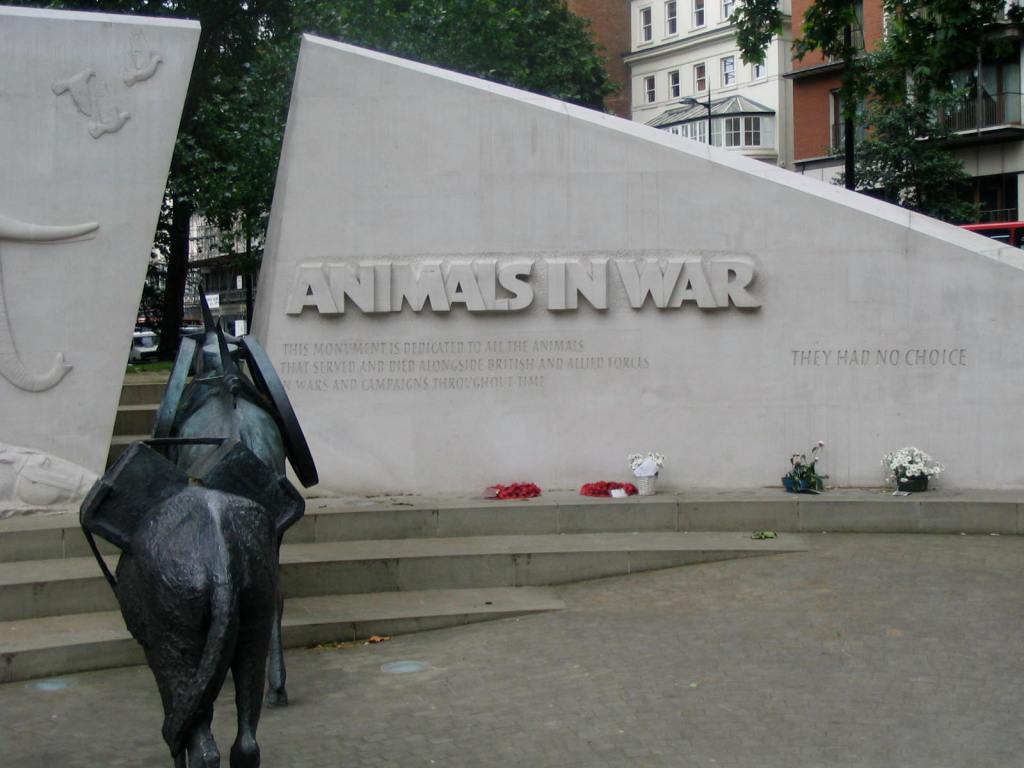
The animal legal turn: could animals qualify as victims before the International Criminal Court?

The Animals in War Memorial in Hyde Park, London (sculptor: David Backhouse)

Dr. Marina Lostal, Senior Lecturer in Law at the University of Essex, published a new article titled ‘De-objectifying Animals: Could they Qualify as Victims before the International Criminal Court?’ in the Journal of International Criminal Justice.

The article notes that the legal framework of the International Criminal Court (ICC) does not contain any provision concerning animals. Yet, animals frequently appear in both trial and reparations proceedings. The lack of animal regulation at the ICC is problematic insofar as there is now a visible animal legal turn whereby their status as mere objects is increasingly being questioned and remedied at the international and domestic levels.

Dr. Lostal’s article wishes to visibilize the ‘animal question’ at the Court by examining whether they could qualify as victims under Rule 85(a) of the Rules of Procedure and Evidence. While the short answer to this outlandish question is an unequivocal ‘no’, the conclusion reached is not the purpose of the article.

The purpose lies in showing that animals cannot qualify as ‘victims’ just because they are not human beings. Yet, they comfortably meet the other two criteria, namely (a) suffering harm, which (b) results from the commission of crimes within the Court’s jurisdiction. In short, animals may not be humans, but they also suffer in connection with core crimes.

The article concludes with the observation that granting animals the same treatment as human beings is no more objectionable as a matter of legal principle than granting them the status of ‘things’. In the author’s view, this calls for a prompt discussion of the regulation of animals within the Court.

Dr. Lostal recently presented her research at the 2021 European Animal Rights Law Conference held on 17 and 18 September in the Woolf Institute on the Westminster College site in Cambridge. The article can be accessed through the publisher’s website here.

Realising the Right to Health

Photo by Marcelo Leal

The right to health, or ‘the right to the enjoyment of the highest attainable standard of physical and mental health’ to give it its full name, is a fundamental human right which extends beyond a right to healthcare to include a range of pre-conditions for a healthy life.

According to the Office of the United Nations High Commissioner for Human Rights (OHCHR), ‘every State has ratified at least one international human rights treaty recognizing the right to health. Moreover, States have committed themselves to protecting this right through international declarations, domestic legislation and policies, and at international conferences.’

Yet evidence from around the world suggests States’ commitments to ‘progressively realise’ the right to health are yet to lead to practical progress.

What is required, then, to help States move from treaty signing to practical action?

The challenge

While most countries have signed up to treaties containing binding obligations in relation to the “progressive realisation” of the right to health, a lack of clarity on the scope of the right to health and historical confusion regarding appropriate indicators and benchmarks has created ambiguity, which some have used to sidestep their commitments.

What we did

Drawing on the fields of international human rights law and public health governance, research led by Judith Bueno de Mesquita, from our School of Law and Human Rights Centre, has sought to look at the expectations, or norms, in relation to the right to health, in the context of specific health issues, with a particular focus on sexual and reproductive health and rights (SRHR).

In a field that has been dominated by discussions of constitutions and legislation, this research focuses on the framework of regulations and policies required at national level, for implementation.

Bueno de Mesquita was appointed as a consultant by the United Nations Population Fund (UNFPA) to work with two national human rights institutions, the Commissioner for Human Rights, Azerbaijan, and the Ombudsperson Institution of Kosovo. In this consultancy role, she led the research required for national assessments looking at sexual and reproductive health.

These consultancies allowed her to apply her research to country contexts, and assess the degree to which the legislative, regulatory and policy environments were compliant with international human rights standards in the area of SRHR.

What we achieved

In Azerbaijan, the resulting report contributed to the Government taking sexual and reproductive health and rights more seriously, and provided valuable advocacy tools. The report was used to lobby the Azerbaijan Parliament to incorporate sexual and reproductive health issues into the State Program on Demography and Population Development and to develop the National Action Plan on Gender-Based Violence to ensure effective implementation of the 2010 law on domestic violence prevention.

The report was also showcased as a case study in the United Nations Population Fund’s ground-breaking guidance (UNFPA: 2019, pp. 76-78).

In Kosovo, Bueno de Mesquita’s recommendations were contained in the Ombudsperson Institution’s 2016 report, resulting in life-changing impact for rights-holders, including:

  • the provision of free contraceptives to vulnerable groups
  • the supply of low-cost condoms via vending machines
  • a decision to retain contraceptives on the essential drugs list
  • an increase in health inspectorate staffing, with human rights integrated into this organisation’s work
  • steps taken to make maternal death audits consistent with World Health Organisation guidelines
  • and the adoption of a rights-based national HIV action plan.

The impact in Kosovo is ongoing, with the report continuing to inform the next cycle of Azerbaijan’s Reproductive Health Strategy.

In both countries, the research of Judith Bueno de Mesquita has successfully bridged the gap between theory and implementation, supporting significant progress and providing useful examples of how national legislative and policy frameworks can help realise States’ commitments in relation to the progressive realisation of the right to health.

This impact case study was first published on the website of the University of Essex and is shared here with permission and thanks. Read the original story here. You can follow Judith Bueno de Mesquita on Twitter here.

Secure Financing in International Trade

Photo by John Simmons

In August 2021, Dr Anna Mari Antoniou, Lecturer in Maritime and Commercial Law at the University of Essex, published an article on Trade Finance in the Journal of International Banking Law and Regulation.

The article, Bank Security in Letters of Credit: Mere pledgee or something more?, looks at security measures for financial institutions when financing international trade transactions via letters of credit. It examines banks’ security rights as pledgees of shipping documents and potential security rights under The Carriage of Goods by Sea Act 1992.

The article argues that the traditional approach, a bank as pledgee, has limits, and is now superseded by the bank’s position as bill of lading holder under the Act. Though the Act is almost 20 years old, cases concerning the position of banks under it and related issues are still common, for example, The Erin Schulte [2014] EWCA Civ 1382 and Sea Master Shipping Inc v. Arab Bank (Switzerland) Ltd [2018] EWHC 1902 (Comm).

Dr Antoniou argues that pledgee rights are none the less necessary in some circumstances and clarifies how the two positions can work together by proposing a tiered system of rights. The shipping market has been particularly volatile since the 2008 financial crisis and the COVID-19 pandemic has exasperated the situation.

Secure financing is considered a backbone of international trade and the particular financing method, the letter of credit, has often been described as the ‘lifeblood of international commerce’. The combination of this volatility in the market and the importance of the credit in commerce, makes bank security rights a crucial issue to examine.

The proposals in the article provide solutions in practice, enhancing bank efficiency, giving certainty to the parties involved in high value transactions. The proposals also provide a more transparent view of the law, a troublesome area for years, as evidenced by the cases.

Dr Antoniou’s article is available via Westlaw and in print with the full citation: Antoniou, A-M., (2021). Bank Security in Letters of Credit: Mere pledgee or something more?. Journal of International Banking Law and Regulation. 36(9), 367-378.