Spain and its Achilles’ Heels: the Strong Foundations of a Country’s Weaknesses

This blog post is an excerpt from Dr. Koldo Casla’s new book, which is published by Rowman & Littlefield.

On 1 October 2017, roughly two million people took part in a referendum organised by the Catalan government, a referendum that had been declared illegal by the judiciary. The regional government had promised that, if the majority of votes were positive, they would declare independence unilaterally within two days. “Yes” did win overwhelmingly, but the Catalan authorities did not declare independence. Instead, they issued an ambiguous statement acknowledging the referendum’s result and reaffirming their determination to become an independent State.

After a few days of confusion and tension, the Spanish government invoked a constitutional procedure never used before to replace the Catalan authorities with men and women chosen from Madrid. Regional elections were held in an uneasy calm weeks later, as a result of which the balance of power between pro- and anti-independence forces barely changed. Powers were returned to a new Catalan executive supported by the same parties of the previous one, under a new president who expressed his admiration for his predecessor, now exiled in Belgium, as well as his commitment to follow through with the independentist process. Two years later, Spain’s supreme court sentenced nine pro-independence politicians to between nine and 13 years in prison for sedition and other crimes, including misuse of public funds.

Four days before the referendum, the US-based magazine Foreign Policy picked this headline for one of its online dispatches: “Spain is flirting with another civil war”. The author made clear on Twitter that he was not happy with the title, which suggests it was an editorial choice. Fast forward two years.

It is October 2019, and Andrew Hussey publishes an article in the New Statesman to explain the relatively sudden rise of the far-right party Vox as a by-product of the country’s agitated and contested relationship with the legacy of Islamic Al-Andalus, which ended more than five centuries ago. Hussey told me he did not decide the title, which means someone else thought this was going to be punchy: “The new Spanish civil wars”. One month later, Vox would win 52 seats in the lower house and 15% of the votes in the general election; 3.6 million people bestowed their trust on them.

These two examples are indicative of a widespread view in international news desks: That Spain’s 21st-century politics can be interpreted or explained in one way or another by reference to the Civil War (1936-39) and Francoism (1939-75). If the analysis or the discussion is long enough, whatever the topic, sooner or later someone will draw the connection. Such connection is not without merit. The war accentuated socio-economic and political divisions, cut short hundreds of thousands of lives, and led to a lengthy dictatorship where democracy and rights were suspended. Many of the economic and political institutions of the 21st century are the result of the lessons rightly or wrongly learned from that experience. But the Civil War and Francoism are not the master independent variables beneath everything else in politics. The past, or rather the way the past is dealt with in the present, is indeed one of the strong foundations of Spain’s weaknesses. But it is not the only one.

In the last ten years, new political players have upended the traditional two-party system, the far-right is back in business after four decades of quiet, ETA’s terror is history, one of the wealthiest regions has not been lost, but it was a near thing, and society survived the painful austerity policies of one economic crisis to find themselves in the middle of another one, this one stemming from a pandemic. The 2010s were awkward in many ways. And yet, in spite of everything, Spain still has one of the highest life expectancies, is a world leader in organ donations, harbours a long list of UNESCO heritage sites, has a very high rate of trilingual citizens due to its linguistic diversity, is a safe country with low levels of criminality, and in general is a fun and enjoyable place to be.

Cervantes, Lorca, Picasso, Almodóvar… Spanish culture has wonderful ambassadors, and as is usually the case, most of the best-known ones are men. But interest in Spain far exceeds gastronomy, arts and literature. Spanish history and politics are followed by an international community of journalists, academics and keen observers. Yet, despite the archives and the shelves full of books, it is still shocking to read how easily commentaries can fall back on clichés about violence or the purportedly homogenous desire in certain territories to separate from the rest of the country. Those desires do exist. But nothing is homogenous in Spain.

This book is a story of Spanish politics beyond Franco and Catalonia. As could not have been otherwise, the book also talks about Franco and about Catalonia, but it puts them in a wider context, tracking the historical roots of the political tensions that make Spain the captivating yet troubled country that it is today.

Why was Franco exhumed from the Valley of the Fallen in late 2019? How is it that he was there in the first place? Why did Catalonia erupt all of a sudden in October 2017? Why don’t you hear so much about the Basque Country anymore? How did Podemos gather momentum so quickly in 2014-15, and why did half of that support vanish five years later? Isn’t it counterintuitive that a Catholic-majority country may also have the most LGBT-friendly society in the world, and was one of the first to legalise equal marriage in 2005, or euthanasia in 2021?

Understanding the most significant events in recent Spanish politics requires spelling out the unspoken but enduring foundations of the country’s deepest fears and weaknesses, its Achilles’ heels. In Greek mythology, an Achilles’ heel is a vulnerability that can lead to downfall despite the apparent general strength of the full body. For a country, I use this term to refer to the underlying factors that, while by no means unique, are characteristic of that particular society, delimit what is possible and shape the political debate. They are the primary political frailties without which a country’s politics cannot be properly comprehended.


A copy of Dr. Casla’s book Spain and Its Achilles’ Heels can be purchased on the publisher’s website here.

ESRC New Investigator Grant Award For ‘Mediation of Medical Treatment Disputes: A Therapeutic Justice Model’

Dr. Jaime Lindsey, Senior Lecturer in Law at the University of Essex, has recently been awarded the prestigious ESRC New Investigator grant for her research project ‘Mediation of Medical Treatment Disputes: A Therapeutic Justice Model’. She has been awarded £299,791 over 30 months to use socio-legal methods to research the use of mediation in medical treatment disputes.

The core aim of the project is to understand whether and, if so, the extent to which, mediation can and should be viewed as a form of Therapeutic Justice in medical treatment disputes. The research will adopt a mixed-methods approach including observations of medical treatment mediations, interviews with mediation participants and a questionnaire.

Mediation, which is a form of alternative dispute resolution, is generally more informal and flexible than court proceedings, but often takes place alongside or in parallel with court cases. ‘Medical treatment disputes’ in this context means disagreements that arise between patients, health professionals, family members and others regarding the provision of health and care to the patient herself.

Usually the patient will be an adult with impaired mental capacity or a child below the age of 16, such that they are legally incapable of making their own decision about medical treatment, hence the involvement of healthcare professionals, family members and the courts. The disputes most commonly arise between family members of the patient and healthcare professionals, but in some cases may involve the patient herself.

The research will consider whether there are any therapeutic, or healing, benefits of using non-court based methods of resolution, such as mediation, to resolve disputes that arise from healthcare contexts, as well as considering the ways in which mediation could become more therapeutic as an intervention. For example, through improved communication between parties, improved voice or participation in the process of dispute resolution and speed of resolution.

This project builds on existing research on mediation and Therapeutic Justice to consider mediation’s value in often challenging healthcare environments, while also considering that mediation comes with a number of risks which may make it is less than ideally therapeutic. For example, mediation can reflect or reinforce existing power imbalances between parties, it can limit the participation of the subject of proceedings and it may be seen as a cost-saving, rather than therapeutic, exercise.

As the use of mediation has not yet been tested through empirical research in the medical treatment disputes context, nor has a model of Therapeutic Justice been developed or applied to this field, this project seeks to test those claims empirically through qualitative analysis of mediation in medical treatment disputes.

This research will commence in April 2022, with a launch event later that year, followed by dissemination of the research findings in the later years of the project. If you would like further information about the project or to be kept updated regarding the findings then please get in touch with the PI, Dr. Jaime Lindsey, at this email address: j.t.lindsey@essex.ac.uk

Redesigning Slavery Through Law: A Play in Four Acts

Photo by Hermes Rivera

Dr. Marija Jovanovic’s work was selected for presentation at the 2021 Midyear Meeting of the American Society of International Law.

The meeting, which will be held on 11-12 November 2021, encompasses several events, including the Research Forum, which features cutting-edge international law scholarship by more than 70 authors and is open to the public. Registration details are available here.

Marija’s presentation is titled ‘Redesigning Slavery Through Law: A Play in Four Acts’ and will be hosted by the Reimagining International Law panel, chaired by Professor Noah B. Novogrodsky of the University of Wyoming College of Law.

Marija’s paper investigates, in particular, the relationship between the law and slavery including ‘modern slavery’. It argues that just as states in the Global North have maintained ‘traditional’ slavery using law as a primary tool, so have they substituted the old with ‘modern slavery’ to accommodate and fulfil the needs of the present-day global economic order and political reality. This contradicts their projected image of the champions of the abolitionist movement and the recent global action against ‘modern slavery’.

This work is situated within Marija’s broader research on modern slavery and human trafficking, which explores how various aspects of law both contribute to and work to suppress these practices. It builds on her doctoral work, which is further developed in the book on State Responsibility for ‘Modern Slavery’ in Human Rights Law: A Right Not to be Trafficked forthcoming with the Oxford University Press in 2022.

Basque Separatist Group ETA Lowered Its Weapons 10 Years Ago. Has Reconciliation Truly Happened?

For too long, Basque society remained petrified and silent

Screenshot of YouTube/BBC video depicting footage of ETA members putting ‘arms beyond use’ in October 2011.

Ten years ago, on October 20, 2011, the Basque armed group ETA (Euskadi Ta Askatasuna, “Basque Country and Freedom”) finally declared “a definitive cessation of its armed activity.” This was what Basque and Spanish societies had long been waiting for.

It would take them until 2018 to formalise their dissolution, but October 20 is marked in the calendar as a day of liberation, especially for those whose lives were at risk. The Basque Country was finally going to have the chance to become a free and “normal” society like any other.

Jesús Eguiguren, one of the tallest figures in Basque politics in recent decades, was also relieved. Days after ETA’s much-awaited declaration, when asked what normality would mean to him, he said: “For me, it means the freedom to eat pintxos in the Old Town” of Donostia-San Sebastian, my hometown. Because of being directly threatened by ETA for his political opposition to Basque independence, the old town had been a no-go area for Eguiguren, but also for thousands more.

ETA was formed in 1959, during the Franco era, with the goal of seeking self-determination and independence for the Basque Country. Since the late 1960s, ETA was responsible for more than 850 deaths in the Basque Country and other parts of Spain. This figure underestimates the pervasive sense of fear caused by ETA and its supporters. In the last 15 years of their existence, ETA, through extortion and threats, specifically targeted politicians, academics, police officers, journalists, and civil servants who disagreed with their totalitarian agenda. Approximately 3,300 men and women were forced to live with police escorts.

The Basque Country is a region with a strong national identity divided between the north of Spain and the southwest of France. With fewer than three million inhabitants, it’s hard not to have known someone who paid a high price for being who they were, sometimes the highest of all prices—their life. In my case, this included a primary schoolmate, whose father—a police officer—was killed by the armed group; a teacher in the same primary school whose husband, a journalist, was murdered; a sport’s teammate’s father, who reluctantly moved to Madrid after receiving serious threats; one of my university professors, and my friend and former boss, the Basque parliament’s high commissioner for human rights between 2004 and 2014, Iñigo Lamarca, whose name appeared in one of ETA’s hit lists.

A lot has changed in the Basque Country in the past 10 years. Nobody’s life is at risk as a result of their politics, and that is no mean feat. My nephew and nieces, who are 11 years old, are blissfully unaware of the environment of low-intensity violence that permeated society up to a decade ago.

Basque society is still working out a public memory about that time. Victims of ETA’s violence have received recognition from public institutions, but social recognition has been much slower, and more timid. In towns and communities where Basque independence was the preferred political choice, ETA suspects were often treated like heroes. At the same time, credible reports of police torture were systematically dismissed by the Spanish government, tarnishing the public image of the State and its institutions. Despite multiple reports from independent investigators and international human rights bodies, the official line was, and largely remains, that the torture allegations against the police were simply lies spread by terrorists—ETA members.

Spanish public authorities and a sizeable majority in Spanish society have a long way to go to recognise that torture and ill-treatment were an obnoxious part of the anti-terrorist strategy in the 1980s, 90s and 2000s. As I explain in my new book Spain and its Achilles’ Heels: The Strong Foundations of a Country’s Weaknesses, these practices harmed the credibility of the police as a fully democratic institution and made life even more difficult for the officers who respected the rule of law.

In the 2000s, ETA was being cornered by the police, but the decline in popular support was a key reason why the group stopped their violence for good in 2011. In previous decades, ETA benefited from long periods of silence of large parts of Basque society who believed their discretion would keep them away from the attention of ETA and their informers. Outstanding exceptions must be noted, including the case of “Gesto Por la Paz” (“Gesture for Peace”), an organisation that convened silent rallies the day after each murder and on a weekly basis for 25 years, starting in 1986. It was a modest gesture that, nonetheless, required a large dose of bravery.

Over time, Basque society empowered itself to make it clear that ETA did not represent them. The sociological statistical survey of the Basque Country shows that fewer than 25 per cent of people totally rejected ETA in 1981, but that number went up to 60 per cent by 2000 and remained at that level for 10 more years, while ideological support for ETA was minimal in the 2000s (around 1-3 per cent).

The Basque Country has changed substantially for the better in a new spirit of calm, peace and rediscovered freedom. More time will be needed, however, to strengthen bridges and walk decisively towards reconciliation. Police officers, bodyguards, journalists and politicians were unjustly killed, and for too long the Basque society remained petrified.

In shifting public perception in Spain, a new film can potentially make a difference: Maixabel dramatizes the true story of Maixabel Lasa, a brave activist for peace, memory and reconciliation, whose husband was killed by ETA in 2000. A few years ago, Maixabel met face-to-face with the man who killed her husband. The killer had distanced himself from ETA in a difficult process of atonement.

Maixabel Lasa’s testimony is one of a handful of conversations during the last decade between ETA victims and repentant ETA members. Most of these meetings were held in private, but some of the participants are talking about their experience in schools, and conveying their emotions at other public events.

Other events have brought together victims of ETA, victims of GAL (state-sponsored terrorism of the 1980s), as well as victims of police torture. Also, pro-independence politicians have apologised for the damage they caused through their decades-long complicit silence.

Working out the past in a plural, inclusive and respectful way will take time, and the Basque Country only recently got rid of ETA’s yoke. Historical memory is a powerful reminder that freedom should not be taken for granted.

As my mum once said to me when talking about Basque peace and reconciliation, it’s shocking how quickly one gets used to normality, when people are not killed for their ideas.


This piece first appeared on Global Voices and is reproduced on our ELR blog under a Creative Commons Licence. The original post can be accessed here.

The Ecology of War and Peace: Marginalising Slow and Structural Violence in International Law

Photo by Sergio Torres

Dr. Eliana Cusato, who is currently appointed as a Marie Skłodowska-Curie postdoctoral fellow at the Amsterdam Center for International Law, authored a new book titled The Ecology of War and Peace: Marginalising Slow and Structural Violence in International Law. Her book was published by Cambridge University Press in September 2021.

The interrelation of ecology and conflict has been the object of extensive study by political scientists and economists. From the contribution of natural resource ‘scarcity’ to violent unrest and possibly armed conflict; to resource ‘abundance’ as an incentive for initiating and prolonging armed struggles; to dysfunctional resource management and environmental degradation as an obstacle to peacebuilding, this literature has exerted a huge influence upon academic discussions and legal/policy developments.

While international law is often invoked as the solution to the socio-environmental challenges faced by conflict-affected countries, its relationship with the ecology of war and peace remains undertheorized. Drawing upon environmental justice perspectives and other theoretical traditions, the book unpacks and problematizes some of the assumptions that underlie the legal field.

Through an analysis of the practice of international courts, the United Nations Security Council, and truth commissions, the book shows how international law silences and even normalizes forms of structural and slow environmental violence (notably, uneven access and distribution of natural resources; less visible forms of violence associated with the environmental aftermath of wars).

This, in turn, jeopardizes the prospects of creating more peaceful societies, while perpetuating deeply rooted inequalities. Ultimately, the book urges us to imagine entirely different legal notions of justice, peace, and security in times of ecological disruption.

By drawing upon extra-legal fields of inquiry (e.g., the literature on environmental security, the political economy of civil wars, the resource curse, and environmental peacebuilding), the book strives to refine extant understandings of how international law conceptualizes and regulates the ‘environment’ before, during, and after armed conflict.

By engaging with some of the international legal order’s most pressing concerns – rising intra-state violence, environmental degradation, resource depletion, and their interaction – the book opens intellectual spaces for rethinking current approaches to the ecological challenges of our hyperconnected world and their adverse impact on the most marginalized peoples. As such, it offers a critical companion work to related titles and, at the same time, pushes the research envelope further and in new directions.

E Cusato, The Ecology of War and Peace: Marginalising Slow and Structural Violence in International Law (CUP 2021)

The book will be of interest to academics and students across different disciplines, primarily international law, but also peace and conflict studies, political theory, and international relations. It will also prove useful as a reference for policymakers and practitioners working at the intersection of environmental issues, human rights, and peace and security within international organisations/tribunals, governmental departments, think thanks, and NGOs.


Dr. Eliana Cusato is currently on academic leave from the Essex Law School.

Chile’s Constitutional Moment is an Opportunity to Enhance Social Rights

To do justice to such an ambitious goal, the Chilean process should not leave anyone behind. This is a historic occasion to make the case for social rights.

A Chilean man casts his vote at the National Stadium in Santiago (Chile) in October 2020. The more than 2,700 voting centers enabled in Chile for the historic constitutional plebiscite where about 14.8 million Chileans decided at the polls that they wanted to replace the current Magna Carta, inherited from the dictatorship of Augusto Pinochet (1973-1990), and which body should draft the new text, a vote that is considered the more important since the return to democracy. EFE/Alberto Valdés

By Dr. Koldo Casla, Lecturer in Law, University of Essex

In October 2019, a series of protests against public transport fare increases in Santiago unveiled serious cracks in Chile’s economic and social model. “It’s not 30 pesos ($0.40), it’s 30 years,” screamed many of the demonstrators, three decades since the end of Pinochet’s dictatorship. While new leaders have been democratically elected in the last three decades, the socio-economic pillars that underpinned the military regime remained intact. Until now.

The popular protests caught the Chilean political and economic establishment off-guard. Only when the government, opposition, and civil society agreed to initiate a process to reform the 1980 constitution did things calm down, and they were able to find a way forward.

A referendum in October 2020, in the midst of the COVID-19 pandemic, confirmed Chileans’ determination to elect a new convention in charge of writing a new constitution for the country. Representatives were elected in May 2021, and the convention began its proceedings in July. It is the first constituent assembly with guaranteed parity between men and women, as well as minimum guaranteed representation for Indigenous people. The president of the constitutional convention is Elisa Loncón, an academic of  Mapuche descent who was born into poverty.

Neoliberalism’s first theatre of operations in the 1970s, Chile now is experiencing a moment of hope and potential transformation. A significant number of the 155 representatives elected to the constitutional convention pledged to support strong social services, greater equality, and labor rights. Chile has the opportunity to take social rights seriously in this exciting new political process.

Pinochet’s regime adopted the 1980 constitution as an attempt to provide a veneer of legitimacy to the dictatorship. Still in force today, and despite multiple reforms, the constitution contains a number of difficult procedural requirements, such as preventive constitutionality control by the constitutional court, or supermajority requirements in both chambers, particularly insurmountable with the anti-proportional electoral system in place until 2018. These authoritarian enclaves made it difficult when not impossible for left-leaning governments to bring about law and policy changes, let alone progressive constitutional amendments.

The 1980 constitution is also the embodiment of the neoliberal model: It prioritizes private property and a market-driven economy, but it does not guarantee education, healthcare and social security for those in need. The constitution only recognizes the freedom to choose between different providers, for example, in relation to health and social security, but it does not ensure a minimum content for these rights; the right to education and the right to a healthy environment are not justiciable, and the right to adequate housing is nowhere to be found.

In 2016, the UN Special Rapporteur on Extreme Poverty and Human Rights concluded that “the formulations used (in the 1980 constitution) do not generally conform to international standards and are not firmly anchored in the language of rights and obligations. The methods of implementation envisaged are relatively open-ended and non-empowering and do not explicitly include judicial action” in relation to social rights.

Under the 1980 constitution, social rights are not a matter of public service; they are instead tradable goods only available to those who can afford them. And affordability is  unevenly distributed as a result of high levels of inequality. Despite economic growth in recent decades, Chile has one of the highest rates of income inequality in the OECD, both in terms of income and wealth distribution, as well as one of the lowest rates of public spending.

Back in 2015, the UN Committee on Economic, Social and Cultural Rights recommended that Chile should “guarantee the comprehensive recognition and necessary legal protection of economic, social and cultural rights” in a new constitution, “while ensuring that the constitutional reform process is conducted in a transparent and participatory manner.”

Besides international human rights obligations, there is a democratic case for social rights in Chile’s constitutional moment. The fairness of a constitution depends on the extent to which human rights, including social rights, are enshrined in it, with proper accountability for public authorities. At the same time, the democratic legitimacy of a constitution depends on the extent to which the opinions of those most affected by it are taken into account. In a democracy, only when participation is open, transparent, and meaningful, do citizens have reasons to see a constitutional settlement as their own, even when they may not necessarily agree with everything it says.

To do justice to such an ambitious goal, the Chilean process should not leave anyone behind. This is a historic occasion to make the case for social rights. A key responsibility is to listen carefully to those most affected by public policies, by authorities’ decisions, and by their omissions.

That is precisely the immense challenge and opportunity Chile is facing at the moment. The Human Rights Centre of the University of Essex (UK), the University of Concepción (Chile) and the Global Initiative for Economic, Social and Cultural Rights (GI-ESCR) have joined forces in this historic moment of hope and civic responsibility to provide evidence and analysis for the constitutional convention. 

The three partners have brought together fifty academics and practitioners, half of them Chilean and the other half from a wide range of countries, including Argentina, Brazil, Canada, Colombia, England, Ireland, Mexico, Scotland, South Africa and the United States. Together, they are the authors of a new book, freely accessible online in Spanish, that looks at different models of recognition of social rights.

In more than thirty chapters, contributions include legal and multidisciplinary studies about the theoretical foundations of human rights, the role of the judiciary and other accountability bodies, the content of rights (social security, work, health, housing, education, water and sanitation, and the right to a healthy environment), the necessary protection for groups at greater risk of harm, disadvantage and discrimination (indigenous people, persons with disabilities, women, children, and older people), and lessons learned from other constitutional processes around the world (particularly, Brazil, Colombia and South Africa). Besides the international and comparative perspectives, the book also examines what the constitutionalization of social rights may mean in Chile’s legal order.

The majority of Chilean people are pushing for a new constitutional framework that could realize all human rights, including social rights, for everyone. The challenge goes beyond the mere architecture of public institutions and the technical legal formulation of rights. This is an opportunity to revisit the foundations on which Chilean society is built, the type of country and the sort of future Chileans deserve.

This piece was first published on the Open Global Rights website and is reproduced here under a Creative Commons licence. The original post can be accessed here.


The University of Essex has issued a press release and a Q&A about the publication. The Human Rights Centre is hosting an online event on Wednesday 20 October 2021 (5pm – 6:30pm) to launch the publication, and you can register here.

Making the Right to Housing Real in Newcastle

Photo by Jack Foster

Dr Koldo Casla, Lecturer in Law and Director Human Rights Centre Clinic, Human Rights Local Project Lead

In June 2019, Newcastle City Council and Crisis announced a partnership to end homelessness in the city within ten years. An evidence review took place in 2020 and 2021 to inform the development of such partnership. Based on that evidence review and other documentary sources, I wrote a report to examine how Newcastle City Council can implement the internationally recognised right to adequate housing. The full report is available here.

The evidence review included frontline perceptions of homelessness provision and associated services operating in Newcastle, participatory research with people with lived experience of homelessness, an analysis of current local expenditure, how the local authority collects data, and the impact of national health, housing or social security policies in Newcastle.

On that evidential basis, I looked at Newcastle’s policy and practice on homelessness in light of the right to adequate housing as recognised in international law. The purpose of the report is to analyse what human rights may offer to end homelessness in Newcastle, connecting the evidence with human rights principles and standards.

Adequate housing is recognised as a human right in international law, particularly in Article 25 of the Universal Declaration of Human Rights and Article 11 of the International Covenant on Economic, Social and Cultural Rights (ICESCR).

Housing is more than a roof over one’s head and more than a mere commodity. Housing, as observed by the UN Committee on Economic, Social and Cultural Rights (CESCR), “should be seen as the right to live somewhere in security, peace and dignity.”

The adequacy of adequate housing is determined by seven criteria:

  1. Legal security of tenure, including protection from forced evictions, irrespective of the type of property and tenure (homeownership, lease, informal settlement, etc.);
  2. Availability of services, materials, facilities and infrastructure, including access to natural and common resources, all of which is essential for health, security, comfort and nutrition;
  3. Affordability, including protection from unreasonable rent levels and increases, so as not to compromise or threaten the attainment and satisfaction of other essential needs and rights;
  4. Habitability, in terms of protection from cold, damp, heat, rain, wind and other threats to health and safety;
  5. Accessibility, paying particular attention to the requirements of groups and individuals at greater risk of harm, disadvantage and discrimination;
  6. Location, allowing access to employment, healthcare services, schools, transport and other facilities, bearing environmental conditions in mind; and
  7. Cultural adequacy, using materials and tools that recognise and express appropriately the cultural identity and diversity of the population.

Human rights obligations extend to all branches and all public authorities, national and local. The practical content of human rights obligations, however, depends on the availability of resources. Years of austerity have significantly diminished those resources for local authorities, despite an ever-greater need for social protection.

Public authorities bear the responsibility to prove that they are putting in place the most appropriate policies, allocating all of their available resources in the most strategic way, to fulfil the right to adequate housing.

Newcastle was one of the three cities worst affected by welfare reforms in cumulative terms, alongside Manchester and Central London, with losses of over £2,000 per household in the 2010s. Austerity also materialised in cash-strapped local governance, which resulted in diminishing resources to prevent and tackle homelessness, and to deliver other public services. Newcastle faced an overall budget cut of 32% between 2010-11 and 2018-19.

Despite the UK context of austerity in public spending, the city managed to mobilise available resources to limit the impact and prevalence of homelessness. A comparatively large stock of council homes (around 26,000) provides a structural baseline to prevent and tackle homelessness. During the years of austerity-driven national policies, Newcastle largely avoided cutting public spending on housing and homelessness. With its preventive approach, Newcastle City Council managed to make the most of available resources, which are nonetheless limited considering existing demand, relatively high levels of poverty and destitution, and the cumulative consequences of austerity and Covid-19.

The right to adequate housing includes a requirement on public authorities to ensure that nobody is rendered homeless as a result of an eviction. This means that local authorities must adopt reasonable measures to provide adequate alternative housing solutions.

There was a 75% reduction in the number of evictions from Newcastle’s council housing between 2007 and 2020. Unlike other core cities, Newcastle does not use B&B accommodation as a temporary solution. The city has a single-site purpose-built supported accommodation facility with 720 beds in self-contained units at Cherry Tree View.

The relative low level of homelessness in Newcastle has been attributed to a combination of factors, particularly the preventive approach (before the 56-day target of the Homelessness Reduction Act 2017), the availability of a large stock of council homes (conductive to higher social lettings and lower private rent levels), and a financial commitment from the local authority.

However, interviewees and focus group participants identified hostels, particularly larger hostels, as potentially harmful for the city’s homeless population. In line with international human rights standards, temporary accommodation should only be used exceptionally, it must not put personal safety at risk, cannot become a long-term solution, must not separate family members, and must provide space to respect individual’s privacy.

Families are kept together in Cherry Tree View, where there are no shared rooms, so everyone has their own private space, their own apartment with toilet and kitchen. In other accommodation, these facilities would be shared.

Adequate housing must be accessible for everyone. This means public authorities should take proactive measures to ensure that housing is accessible also for groups and individuals who, due to different reasons, may face particular difficulties in accessing adequate housing.

Housing solutions for people seeking asylum should be culturally adequate, including community support, and proximity of places for worship and shops. This should be a consideration in the general suitable and sustainable homes checklist. Newcastle City Council and the Home Office should explore ways to ensure that the Council receives notice at least 56 days in advance.

Newcastle should also accommodate people who are homeless based on need alone, including people with no recourse to public funds, particularly when children are involved. The local authority should refuse to co-operate with immigration rules that infringe the right of local residents to feel safe at home.

Newcastle should ensure that survivors of domestic abuse are given priority access to a housing alternative should they need it.

The principle of active participation speaks to the spirit of involving everyone in the community in the delivery of the ambitious goal of ending homelessness. Inasmuch as possible, meaningful engagement between public authorities and the voluntary sector should include people with lived experience of homelessness, who should be listened to in the identification of challenges and possible solutions. There is no better way to defend social rights than to hand over a megaphone to the people most affected by inequality, public spending cuts and social exclusion.

Newcastle City Council is demonstrating a high dose of audacity and commitment by embracing a human rights-based approach to housing. Creating the material conditions for the fulfilment of all human rights, including the right to adequate housing, is a collective task that should concern everyone in society. This includes public and private actors, particularly when private actors receive public funds. Years of austerity have resulted in diminishing resources available to local authorities, and Newcastle City Council has been particularly affected. Yet, the evidence shows that Newcastle has achieved remarkable results despite the limitations. To ensure non-retrogression in human rights, Newcastle should maintain its proactive and preventive approach to end homelessness, above and beyond the relief and refer duties of the Homelessness Reduction Act 2017.

The War on Compensation: Troubling Signs for Civilian Casualties in the Gaza Strip

Photo by Timon Studler

Dr. Haim Abraham, Lecturer in Law, University of Essex

Follow Dr. Abraham on Twitter here

The last round of belligerency between Hamas and Israel claimed a significant toll from civilians, with many arguing that some of the more devastating activities conducted by the IDF were in breach of the laws of war (for example, herehere, and here). Just days before a ceasefire was declared, Judge Shlomo Friedlander of Israel’s Be’er Sheva District Court released his ruling in the case of The Estate of Iman Elhamtz v. Israel, dismissing a claim for compensation for the killing of a 13 year old girl from the Gaza Strip by IDF forces in 2004. At first glance, this case seems to be just another instance in which the state’s immunity from tort liability for losses they inflict during combat is reaffirmed. However, a closer examination reveals that it is a significant development of the immunity, which could have vast ramifications for Palestinians’ ability to obtain compensation for losses they sustained from IDF activities that were in breach of the laws of war. Currently, Israel is immune from tort liability for losses it inflicts during battle, even if combatants inflicted the loss negligently. Yet, Judge Friedlander seems to expand the immunity further so that it applies not only to combatant activities that comply with the laws of war, but also to war crimes. This approach to the immunity has yet to be considered by the Supreme Court, but it is in stark opposition to international trends towards the scope of state’s immunity from tort liability.

The Elhamtz Case

The tragic events that resulted in Iman Elhamtz’ death unfolded in 2004 while Operation “Days of Penitence” was being conducted in the midst of the Second Intifada. An IDF military post at south Gaza Strip near Rafah was under high alert against threat of attack. Elhamtz approached the post, but the lookout did not properly execute his duties resulting in Elhamtz reaching within 100 meters of the post before being detected. Surprised and, according to their testimony, fearing that she is there as a part of a terrorist activity, soldiers began shooting towards Elhamtz even as she was fleeing. Elhamtz was killed. Major R, who was the commanding officer at the time, charged her dead body and engaged in ‘dead-checking’. A total of 20 bullets were found in her body.

A military court exonerated Major R of criminal wrongdoing. Elhamtz’ estate sought a ruling that would hold Israel accountable for her death through civil proceedings, and filed a tort law-suit against Israel in the Be’er Sheva District Court in 2005, arguing that she was shot and killed negligently and in violation of international humanitarian law.

In May 2021, the court dismissed their claim, despite finding that the military force indeed acted negligently and in violation of international humanitarian law. Judge Friedlander found that the military force was negligent on two counts. First, the lookout failed to perform his duties. If he was not preparing for a shift change but had properly observed the post’s surroundings, Judge Friedlander held, Elhamtz could have been spotted from a greater distance, chased away and probably would still be alive today. Second, the immediate and excessive use of force when there was no clear threat was in breach of the rules of engagement. The court adopted these rules to determine the relevant standard of care that is expected from a military force under such circumstances and held that this standard was breached. The military force should not have fired on Elhamtz to begin with, should have stopped when she began to flee, and dead-checking was completely incompatible with the standard of care that is expected from combatants.

The court also held that the actions of the military force violated the principle of proportionality. The sheer fact that Elhamtz was near the post, according to Judge Friedlander, does not mean that combatants can use deadly force against her. Even if she posed a risk, which was highly doubtful, she should have been chased away or restrained, not killed.

The sole reason for which Israel was not held liable for the death of Elhamtz was that Israel, like many other countries, has a special immunity from tort liability for losses it inflicts during armed conflict called the ‘combatant activities exception’. Through his opinion, Judge Friedlander paved the way to reject future tort claims that are likely to be filed by Palestinian casualties from the most recent round of fighting. But to understand the legal mechanism that allows this reality, a better appreciation of the immunity is needed.

The Combatant Activities Exception

In the mid-20th century, states began reforming laws concerning their immunity from tort liability, by removing procedural and substantive hurdles for filing claims, as well as limiting the scope of the doctrine of sovereign immunity to enable holding foreign states liable in tort. Nevertheless, while immunity from liability became more limited, it was not done away with altogether. Some pockets of immunity remained, including the combatant activities exception, which, essentially, provides a blanket immunity from tort liability for wrongful actions conducted in battle.

The scope of the combatant activities exception varies between jurisdictions. Canada, for example, has what appears to be the broadest statutory exception, which precludes liability for “anything done or omitted in the exercise of any power or authority exercisable by the Crown, whether in time of peace or of war, for the purpose of the defence of Canada or of training, or maintaining the efficiency of, the Canadian Forces.” The U.S. statutory exception is somewhat more limited in its scope, maintaining that no liability would be imposed in “any claim arising out of the combatant activities of the military or naval forces, or the Coast Guard, during time of war.”

When Israel first enacted its version of the combatant activities exception through the Civil Wrongs (State Liability) Act 1952, it was very similar to the U.S. exception, simply stating that Israel is not “liable in tort for a combatant activity committed by the Israel Defense Forces.” Initially, courts interpreted the exception narrowly, holding that it is applicable only to activities in which there was an objective and immediate risk that is of a combatant character. However, with each major conflict with the Palestinian population, the scope of the exception was expanded through judicial interpretation and by legislative amendments. These expansions have three notable themes.

First, the boundary between combatant and non-combatant activities has been blurred. During the First Intifada (1987-1993), IDF forces faced large-scale violent protests. Policing operation within the Occupied Palestinian Territories exposed the forces to imminent risk to their lives, and courts were torn between a narrow and a broad interpretation of the combatant activities exception. The narrow approach ruled out the exception’s applicability, holding that policing activities are not combatant activities, even if they are conducted by military forces who are exposed to considerable risks. The broad approach held the contrary view, finding that the exception is applicable even for policing activities due to the real risk to soldiers’ lives, who were operating in a hostile environment. Ultimately, the broad interpretation of the combatant activities exception was adopted by the courts and the legislature, expanding the scope of the exception to include policing and counter-terrorist activities. The exception became so broad that it currently applies to activities in which a soldier subjectively (and mistakenly) feels at risk, as were the circumstances that led Judge Friedlander to hold that Israel cannot be held liable for the killing of Iman Elhamtz.

Second, non-Israeli Palestinians are viewed as ‘the enemy’, and their tort claims are thought of as a continuation of terrorist activities through civilian means. For example, in 2005 the Israeli parliament sought to expand the scope of the exception to include any and all injuries in the Occupied Palestinian Territories, whether combatant or not. This legislation was struck down by the Supreme Court on the grounds of it being unconstitutional. Similarly, a 2012 amendment expanded the applicability of the exception to all non-Israeli residents of the Occupied Palestinian Territories, regardless of the character of the activities that resulted in the loss (this legislation is currently being reviewed by the Supreme Court).

Third, the temporal and geographical distinction between war and peace has been undermined. The original interpretation and definition of the exception meant that it was applicable only to engagement in actual hostilities. The courts examined the circumstances that resulted in the injury, analyzing the particular location in which the activity took place, taking into account a small window of time before or after it. Following the events of the Second Intifada (2000-2005), as well as the legislative expansion of the exception, courts consider an ever-increasing context. Courts no longer examine just what happened on the particular street and time in which someone was injured. Instead, they refer to the general area and history to deduce whether combatants faced a risk that would fall under the scope of the exception, sometimes expanding the timeframe to years prior to the activity that resulted in the injury itself.

The overall effect of the expansion of the combatant activities exception resulted in a dramatic decrease in the number of tort suits being filed, from thousands of cases in the early 2000s to a handful of cases a year currently, and a finding of liability against Israel is nearly impossible. Nevertheless, the scope of the exception is still being contested by plaintiffs, and it is far from clear that its current form can be Justified (see, for example: hereherehere, and here).

‘Testing the Waters’

The dismissal of the Elhamtz case coincided with the growing criticisms of Israel’s violations of the laws of war during the 2021 round of belligerency between Hamas and Israel. These should have been two unrelated matters. One revolved around a tragic incident in 2004, the other was still ongoing in May 2021. Yet, Judge Friedlander’s opinion, which held that the exception applies not only for the military’s negligent actions, but also for its actions that violate international humanitarian law, seems to create a link between the two. In the obiter, Judge Friedlander gave contrasting examples to illustrate the limits of the combatant activities exception, noting that even if one country indiscriminately and disproportionately bombs the civilian population of another country during an armed conflict, it is a combatant activity for which the exception applies.

Judge Friedlander did not need to use this example to reach the conclusion that the exception applies. The Supreme Court has ruled years ago that claims for compensation for violation of international law should be pursued through separate proceedings, not through tort claims, and that the exception applies even for negligent injuries by the IDF. Invoking this particular example at that particular time does not appear to be a redundant hypothetical, but rather laying the groundwork for dismissing future claims that are bound to be filed against Israel for the losses it inflicted in 2021.

The Supreme Court has yet to give clear guidance on whether the combatant activities exception can apply when the State’s actions are in clear violation of the laws of war. There is a growing trend in the international community to limit the availability of states’ immunities in such cases. If the Supreme Court of Israel was to adopt Judge Friedlander’s approach, it will be expanding the scope of the combatant activities exception significantly, blurring the line between legitimate combatant activities and criminal activities. Such an interpretation appears to contradict the position that was raised in several obiters by Israeli courts. On various occasions, courts clarified the limits of the combatant activities exception by stating that criminal activities, such as looting, do not fall under the combatant activities exception even when they are done on an active battlefield. It is hard to find a rationale that will allow for an imposition of tort liability for looting property but not for committing war crimes. Neither is a legitimate act of war, and both should be excluded of the dispensations that accompany sanctioned warfare.

This post first appeared on the Blog of the European Journal of International Law and is reproduced on our research blog with permission and thanks. The original article can be accessed here.


Police and Crime Commissioners: A Dislocated Expectation

Image courtesy: Postdlf

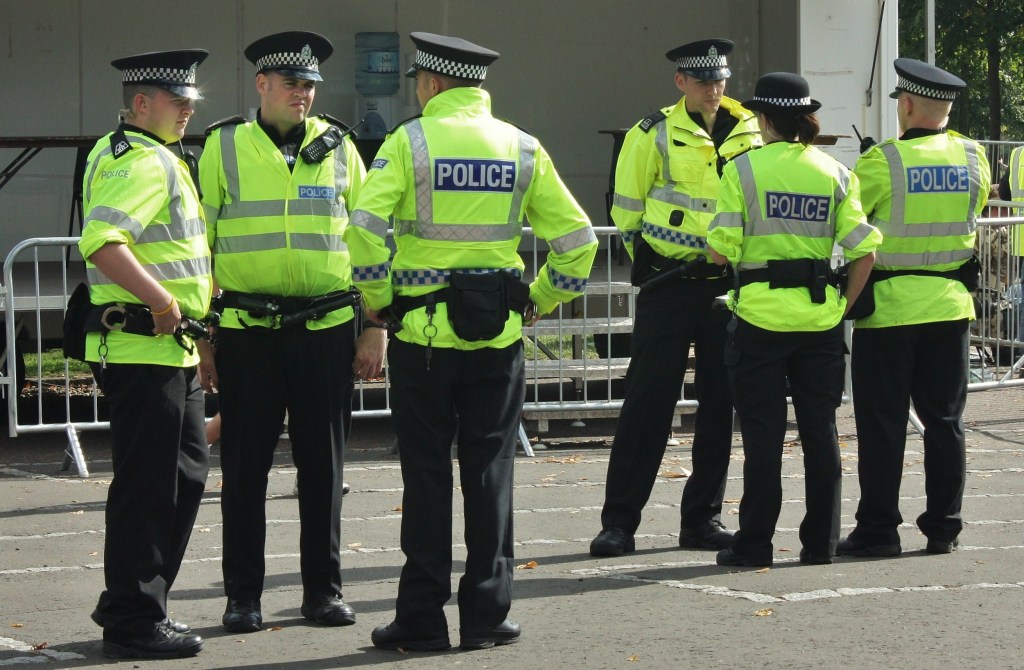
In the run-up to May’s elections, new research has found stark differences in the calibre of Police and Crime Commissioners, with some “ill equipped”, leaving police accountability “hinging on luck”.

New research, based on exclusive interviews with high-ranking figures from across UK policing, suggests a postcode lottery in police accountability. The calibre of individual Police and Crime Commissioners (PCCs) is seen as the key factor in ensuring adequate oversight, with stark differences exposed between forces.

Dr Simon Cooper, from our School of Law, gained unprecedented access to key figures from all sides, on condition of their anonymity. He interviewed PCCs, Chief Constables and members of Police and Crime Panels [PCPs] in five police forces, as well as one of the persons directly involved with introducing the current system and one of the most senior figures in policing at a national level.

While Dr Cooper’s findings, published in Policing: A Journal of Policy and Practice, support the argument that the current system can work, he identifies a “significant anomaly”, with accountability dependent on the relative strengths of PCCs and Chief Constables and the relationship between the two. Success, in this respect, can be seen to “hinge on luck”.

Dr Cooper said: “These findings suggest a significant variation in how police accountability is administered around the country. While one Chief Constable described being regularly ‘grilled’ by their PCC, some Commissioners are seen as ill-equipped, ill-prepared and potentially ego-driven. The importance placed by the system on these single individuals suggests there is a real possibility that some Chief Constables are being held to account more effectively than others.”

One Chief Constable, identified as Chief Constable D, outlined the issues that exist when dealing with their elected PCC, contrasting it with the previous ‘tripartite’ structure, where Chief Constables would report to the Home Secretary and their local Police Authority: “…there is a significant risk that the relationship (between PCC and CC) either becomes excessively hostile, excessively friendly or… there isn’t the balance, additional questioning or informing of the debate that a wider group would give. (…) Because of poor safeguards and governance arrangements it too quickly descends into personalities and subjectivity in which accountability becomes likeability, becomes re-electability. Accountability becomes all of those things it shouldn’t.”

Another Chief Constable, Chief Constable C, underlined the importance of the PCC-CC relationship, noting the impact of individual experience and characters: “I have seen evidence of PCCs who are ill equipped and ill prepared and actually don’t have the skills to understand big organisations making sweeping statements and making assumptions about individuals without any basis what so ever. I have also seen Chief Constables that do not want to adapt to a new way of working and will be very obstructive towards PCCs.”

Summarising the impact on oversight, Police and Crime Commissioner D asked: “The question is can a PCC be played by a Chief Constable? They clearly could be and some I suspect are. I am quite sure that there are some Chief Constables who just play lip service to their PCC.”

The current system was seen by some as placing an impractical burden on one individual. The lack of a ‘pool of different views’ limits opportunities for the PCC to moderate their thoughts and has the potential to leave the PCC either exposed or guided by advice from others, with no formal oversight role. PCC A commented: “Presumably if it’s something they (the PCC) didn’t know a lot about they talk to a lot of people about it but you don’t see any of those conversations played out.”

In reality, one senior figure, Person Z, was left questioning the original design of the PCC system: “For one person, even though they are elected, to replace the wisdom and contribution of 19 [Police Authority members] is a tall ask. There’s only one person [the PCC] providing scrutiny [of Chief Constables] and that’s a heavy responsibility, so in terms of scrutiny of course it’s a lot less. Palpably has it worked? No… I suspect PCCs might, in hindsight, be regarded as a blunder.”

Dr Cooper says his findings suggest a need for the Home Secretary to review the Policing Protocol and for an Accountability Code of Practice to be issued.

Dr Cooper said: “This research encourages the Home Secretary to exercise their power and urgently review The Policing Protocol Order. In its current form, the PPO is overly broad, presumption-based, loosely-worded and generic, with a resulting impact on accountability.”

Dr Cooper’s research is published at a time of continuing debate on police accountability. The Police Foundation recently launched a Strategic Review, Her Majesty’s Inspector of Constabulary and Fire & Rescue Services recommended “profound and far reaching police reform” and there have been calls for a Royal Commission.

Dr Cooper’s research also found that in some instances the PCC model is viewed favourably when contrasted with its forerunner, with the previous bureaucracy and resulting backlog replaced by a “single point of decision-making” and a greater “visibility” of the decision-making process at a local level.

Other interviewees, however, suggested such appearances could be deceptive. PCC E commented: “We have gained in terms of visibility but lost in terms of detailed scrutiny that the Police Authority was capable of.”

The full text of the article is published is available in open access here.

This piece was originally uploaded as part of a University of Essex news story here.

Impact on Victims’ Law Policy Paper

Photo by Edward Howell

In a report published in November 2020 (Constitutional Powers of the Victims’ Commissioner for England and Wales), co-written by the Essex Law School’s Professor Maurice Sunkin together with Professor Pam Cox and Dr Ruth Lamont, these experts argued that the role of the Victims’ Commissioner for England and Wales – set up in 2004 to promote the interests of the victims of crime – needs to be strengthened if it is to be effective.

This report has been influential in recent developments in this area. In particular, a new paper (titled Victims Law Policy Paper: The Victims’ Commissioner’s proposals for a Victims Law) by the current Victims’ Commissioner, Dame Vera Baird, appears to have been closely informed by eight of the recommendations made by Sunkin, Cox and Lamont.

These included Recommendation 2 to develop a set of core statutory rights, with a statutory duty on those  agencies listed in the Victims’ Code to ensure all their policies and practice are compliant; and Recommendation 25 to establish a single cross-criminal justice system complaints body for all victim complaints in respect of non-compliance with the Victims’ Code, which is responsible for the oversight of the handling and response to the complaint.

It is great to see how the November 2020 report has produced some very concrete impact and helped develop thinking around what The Victims’ Commissioner for England and Wales wants to see from a Victims Law.