In that judgment, the GFCC for the first time declared a judgment of the Court of Justice of the European Union (CJEU) to be ultra vires. As the symposium in I•CON demonstrates, this decision has come in for sustained attack from many quarters, and defences of it are partial at best.
Most significantly, critics decry the PSPP judgment of the GFCC for giving succour to the authoritarian governments of particular Member States, most notably Hungary and Poland: if Germany can defy the primacy of EU law, then surely every other Member State can too?
In this context, Dr. Flynn analyses PSPP in the light of previous national court decisions (Italian, Danish, Czech, and Hungarian) that challenged the CJEU’s conception of the primacy of EU law, and argues that it cannot, on its own, be used to justify the imposition or adoption of an absolutist conception of the primacy of EU law.
Instead, we can reconceive national court objection to the CJEU’s conception of primacy as a form of ‘loyal opposition’, analogous to the political concept, where mere opposition to the tendencies and policies of the current government must not be regarded as being somehow disloyal or unspeakable.
The theory of constitutional pluralism, which conceptualises the relationship between EU constitutional law and that of the Member States as being heterarchical rather than hierarchical, must therefore not be regarded as being inherently dangerous, or as an expression of some kind of retrograde ‘sovereigntism’.
Rather, we must pay close attention to the reasoning and justification of any given instance of national disapplication of EU law. This is particularly so in the context of a Union that is showing itself increasingly ill-equipped to handle the rise of authoritarianism in the Member States: just as not all expressions of national constitutional primacy are wicked, not all expressions of Union primacy are good.
Dr. Flynn instead proposes a ‘legitimacy test’, whereby we can learn to distinguish principled, reasoned, ‘loyal’ opposition in the EU constitutional space from unprincipled, unreasoned, ‘disloyal’ constitutional backsliding.
The full citation of Dr. Flynn’s new article is: Tom Flynn, Constitutional pluralism and loyal opposition, International Journal of Constitutional Law, Volume 19, Issue 1, January 2021, Pages 241–268, https://doi.org/10.1093/icon/moab035.
The rule of law is embedded in UK law since the Magna Carta. Its importance to the proper functioning of democracies has been affirmed by the Council of Europe’s Venice Commission and the United Nations, among others. As Lord Bingham wrote, at the core of the rule of law is the notion ‘that all persons and authorities within the state, whether public or private, should be bound by and entitled to the benefit of laws publicly made, taking effect (generally) in the future and publicly administered in the courts’. Respect for the rule of law means that even the rights and interests of those who are derided in society are safeguarded in the same way as anyone else. In a society governed by the rule of law, both the government and members of society must accept that from time to time, the outcomes of judicial proceedings may not be to their liking or accord with where they consider justice lies.
Respect for the rule of law has been recognised and affirmed as a defining principle of UK democracy. But at the same time, there is a sense amongst some in government that the rule of law is being used as an arsenal against the Government. The Lord Chancellor has recently stated, ‘I believe it is incumbent upon me to ensure that the rule of law itself cannot be misused to in effect weaponise the courts [what some would term ‘lawfare’], against political decision making.’
But hasn’t the Government’s anti-‘weaponization’ gone too far? What is happening is simply an attempt to limit the power of law over the executive and to shut down those lawyers who represent clients whose claims are perceived to counter government policies. There is no ‘lawfare’ plot being prepared by over-zealous lawyers; to the contrary, what we are seeing is government reticence about the placement of law and lawyers in an effective democracy: it is a problem about respect for the rule of law.
The legislative attack
There is an increasing amount of law – some proposed, some already adopted – which seeks to restrict access to justice, constrain the powers of the courts to decide or award remedies, and/or introduces new arbitrary powers. This has been done by concentrating power in the hands of the executive and simultaneously blocking or severely limiting the role of the judicial and legislative branches of government which traditionally afford key safeguards for the rule of law.
Pushbacks against the rule of law, a strong judiciary and an able barare often couched in terms of the improper use of the courts for political objectives. But when one pares back the veneer of the justifications, it is about the majority not wanting to be challenged on its actions and policies; the tyranny of the majority suits the majority just fine.
The attack on the legal profession
The ‘legislative attack’ has been matched with attacks on the legal profession – both against judges and lawyers, and to an extent, their clients. Over the past decade, the Government has used incendiary language with increasing frequency against lawyers and others who have sought to advocate publicly and before the courts against a string of government practices and policies. Incendiary language is never appropriate; it fosters divisiveness, it discourages respect for a plurality of views, can damage reputations and can also put people’s lives at risk.
Solicitor and senior partner at law firm Leigh Day, Martyn Day, was called by Jonny Mercer MP, during a Parliamentary hearing, ‘dishonest’ with the work of his firm bringing claims against the Ministry of Defence characterised as ‘entirely the product of deliberate lies, reckless speculation and ingrained hostility’. These statements were made despite Leigh Day having been cleared of any wrongdoing by the Solicitors Regulatory Tribunal.
The government has referred to claims against the military as “vexatious”, “spurious”, “unpatriotic” and “wholly without merit”. UK law provides a clear meaning for vexatious claims which are those brought without any foundation whatsoever. The Government appears to adopt this language as political rhetoric to admonish those bringing the litigation. Not only is it self-serving, in that the civil claims were brought against the Government, but there is little to suggest that the claims were vexatious in actual fact. To the contrary, it has been made clear that many of the claims regarding military abuses were credible and convincing. As the International Criminal Court prosecutor recently stated:
[…] there is considerable reason to treat with caution the suggestion that the allegations which have been the subject of criminal or civil proceedings in the UK resulted from vexatious claims, or to characterise one of the main solicitor firms involved, Public Interest Lawyers (‘PIL’), and its former principal Phil Shiner, as vexatious litigants. Indeed, your letter provides a more accurate reflection of the situation when you observe that, “we have settled many of the civil claims made by Iraqi nationals against the MOD and we fully engaged with the courts to deal with those cases”.
Fatou Bensouda, ICC Prosecutor
The government is protected in making public statements, which is justified because of the general interest of the public to be kept informed about current debates. The broad privileges given to members of the executive usually insulate them from legal repercussions for statements made on the job. But privileges aren’t absolute; nor should they be used as a license to mislead or to stoke divisive narratives. This point is made by the Joint Committee on Human Rights: ‘It is wrong for public office holders such as Ministers to refer generally to lawyers as “ambulance-chasing lawyers” (or other politically charged and inaccurate terms) when they represent members of the Armed Forces, veterans and civilians in their claims against the MoD—many of which claims have been very well founded claims against the MoD. The calculated and repeated use of such derogatory language by Ministers towards legal professionals is unbecoming and undermines democracy and the rule of law.’
At worst, particularly when the statements relate to ongoing proceedings, (as was the case with some statements about alleged army abuses) they fall foul of the sub judice rule, which prevents officials from commenting on ongoing proceedings. This rule recognises that comment on the (lack of) merits of a case in a public forum without due process of law, may affect the fairness of the proceedings, or the perception of fairness. Conduct, including speech acts, that is calculated to prejudice the proceedings undermines public confidence in the rule of law and will constitute contempt of court. The sub judice rule is well-recognised and well-practiced; frequently, the government has refrained from commenting on ongoing cases.
Conclusion
One should not underestimate the long-term impact of attacks on the rule of law. The rule of law is there to protect everyone. It is a short-sighted strategy to weaken law and legal structures for quick political gains. Next time around the stakes may be different, with new issues to confront, with different actors promoting new agendas. But all a weakened rule of law will do is make it more difficult to navigate the many complex problems all governments continue to be confronted with.
The last round of belligerency between Hamas and Israel claimed a significant toll from civilians, with many arguing that some of the more devastating activities conducted by the IDF were in breach of the laws of war (for example, here, here, and here). Just days before a ceasefire was declared, Judge Shlomo Friedlander of Israel’s Be’er Sheva District Court released his ruling in the case of The Estate of Iman Elhamtz v. Israel, dismissing a claim for compensation for the killing of a 13 year old girl from the Gaza Strip by IDF forces in 2004. At first glance, this case seems to be just another instance in which the state’s immunity from tort liability for losses they inflict during combat is reaffirmed. However, a closer examination reveals that it is a significant development of the immunity, which could have vast ramifications for Palestinians’ ability to obtain compensation for losses they sustained from IDF activities that were in breach of the laws of war. Currently, Israel is immune from tort liability for losses it inflicts during battle, even if combatants inflicted the loss negligently. Yet, Judge Friedlander seems to expand the immunity further so that it applies not only to combatant activities that comply with the laws of war, but also to war crimes. This approach to the immunity has yet to be considered by the Supreme Court, but it is in stark opposition to international trends towards the scope of state’s immunity from tort liability.
The Elhamtz Case
The tragic events that resulted in Iman Elhamtz’ death unfolded in 2004 while Operation “Days of Penitence” was being conducted in the midst of the Second Intifada. An IDF military post at south Gaza Strip near Rafah was under high alert against threat of attack. Elhamtz approached the post, but the lookout did not properly execute his duties resulting in Elhamtz reaching within 100 meters of the post before being detected. Surprised and, according to their testimony, fearing that she is there as a part of a terrorist activity, soldiers began shooting towards Elhamtz even as she was fleeing. Elhamtz was killed. Major R, who was the commanding officer at the time, charged her dead body and engaged in ‘dead-checking’. A total of 20 bullets were found in her body.
A military court exonerated Major R of criminal wrongdoing. Elhamtz’ estate sought a ruling that would hold Israel accountable for her death through civil proceedings, and filed a tort law-suit against Israel in the Be’er Sheva District Court in 2005, arguing that she was shot and killed negligently and in violation of international humanitarian law.
In May 2021, the court dismissed their claim, despite finding that the military force indeed acted negligently and in violation of international humanitarian law. Judge Friedlander found that the military force was negligent on two counts. First, the lookout failed to perform his duties. If he was not preparing for a shift change but had properly observed the post’s surroundings, Judge Friedlander held, Elhamtz could have been spotted from a greater distance, chased away and probably would still be alive today. Second, the immediate and excessive use of force when there was no clear threat was in breach of the rules of engagement. The court adopted these rules to determine the relevant standard of care that is expected from a military force under such circumstances and held that this standard was breached. The military force should not have fired on Elhamtz to begin with, should have stopped when she began to flee, and dead-checking was completely incompatible with the standard of care that is expected from combatants.
The court also held that the actions of the military force violated the principle of proportionality. The sheer fact that Elhamtz was near the post, according to Judge Friedlander, does not mean that combatants can use deadly force against her. Even if she posed a risk, which was highly doubtful, she should have been chased away or restrained, not killed.
The sole reason for which Israel was not held liable for the death of Elhamtz was that Israel, like many other countries, has a special immunity from tort liability for losses it inflicts during armed conflict called the ‘combatant activities exception’. Through his opinion, Judge Friedlander paved the way to reject future tort claims that are likely to be filed by Palestinian casualties from the most recent round of fighting. But to understand the legal mechanism that allows this reality, a better appreciation of the immunity is needed.
The Combatant Activities Exception
In the mid-20th century, states began reforming laws concerning their immunity from tort liability, by removing procedural and substantive hurdles for filing claims, as well as limiting the scope of the doctrine of sovereign immunity to enable holding foreign states liable in tort. Nevertheless, while immunity from liability became more limited, it was not done away with altogether. Some pockets of immunity remained, including the combatant activities exception, which, essentially, provides a blanket immunity from tort liability for wrongful actions conducted in battle.
The scope of the combatant activities exception varies between jurisdictions. Canada, for example, has what appears to be the broadest statutory exception, which precludes liability for “anything done or omitted in the exercise of any power or authority exercisable by the Crown, whether in time of peace or of war, for the purpose of the defence of Canada or of training, or maintaining the efficiency of, the Canadian Forces.” The U.S. statutory exception is somewhat more limited in its scope, maintaining that no liability would be imposed in “any claim arising out of the combatant activities of the military or naval forces, or the Coast Guard, during time of war.”
When Israel first enacted its version of the combatant activities exception through the Civil Wrongs (State Liability) Act 1952, it was very similar to the U.S. exception, simply stating that Israel is not “liable in tort for a combatant activity committed by the Israel Defense Forces.” Initially, courts interpreted the exception narrowly, holding that it is applicable only to activities in which there was an objective and immediate risk that is of a combatant character. However, with each major conflict with the Palestinian population, the scope of the exception was expanded through judicial interpretation and by legislative amendments. These expansions have three notable themes.
First, the boundary between combatant and non-combatant activities has been blurred. During the First Intifada (1987-1993), IDF forces faced large-scale violent protests. Policing operation within the Occupied Palestinian Territories exposed the forces to imminent risk to their lives, and courts were torn between a narrow and a broad interpretation of the combatant activities exception. The narrow approach ruled out the exception’s applicability, holding that policing activities are not combatant activities, even if they are conducted by military forces who are exposed to considerable risks. The broad approach held the contrary view, finding that the exception is applicable even for policing activities due to the real risk to soldiers’ lives, who were operating in a hostile environment. Ultimately, the broad interpretation of the combatant activities exception was adopted by the courts and the legislature, expanding the scope of the exception to include policing and counter-terrorist activities. The exception became so broad that it currently applies to activities in which a soldier subjectively (and mistakenly) feels at risk, as were the circumstances that led Judge Friedlander to hold that Israel cannot be held liable for the killing of Iman Elhamtz.
Second, non-Israeli Palestinians are viewed as ‘the enemy’, and their tort claims are thought of as a continuation of terrorist activities through civilian means. For example, in 2005 the Israeli parliament sought to expand the scope of the exception to include any and all injuries in the Occupied Palestinian Territories, whether combatant or not. This legislation was struck down by the Supreme Court on the grounds of it being unconstitutional. Similarly, a 2012 amendment expanded the applicability of the exception to all non-Israeli residents of the Occupied Palestinian Territories, regardless of the character of the activities that resulted in the loss (this legislation is currently being reviewed by the Supreme Court).
Third, the temporal and geographical distinction between war and peace has been undermined. The original interpretation and definition of the exception meant that it was applicable only to engagement in actual hostilities. The courts examined the circumstances that resulted in the injury, analyzing the particular location in which the activity took place, taking into account a small window of time before or after it. Following the events of the Second Intifada (2000-2005), as well as the legislative expansion of the exception, courts consider an ever-increasing context. Courts no longer examine just what happened on the particular street and time in which someone was injured. Instead, they refer to the general area and history to deduce whether combatants faced a risk that would fall under the scope of the exception, sometimes expanding the timeframe to years prior to the activity that resulted in the injury itself.
The overall effect of the expansion of the combatant activities exception resulted in a dramatic decrease in the number of tort suits being filed, from thousands of cases in the early 2000s to a handful of cases a year currently, and a finding of liability against Israel is nearly impossible. Nevertheless, the scope of the exception is still being contested by plaintiffs, and it is far from clear that its current form can be Justified (see, for example: here, here, here, and here).
‘Testing the Waters’
The dismissal of the Elhamtz case coincided with the growing criticisms of Israel’s violations of the laws of war during the 2021 round of belligerency between Hamas and Israel. These should have been two unrelated matters. One revolved around a tragic incident in 2004, the other was still ongoing in May 2021. Yet, Judge Friedlander’s opinion, which held that the exception applies not only for the military’s negligent actions, but also for its actions that violate international humanitarian law, seems to create a link between the two. In the obiter, Judge Friedlander gave contrasting examples to illustrate the limits of the combatant activities exception, noting that even if one country indiscriminately and disproportionately bombs the civilian population of another country during an armed conflict, it is a combatant activity for which the exception applies.
Judge Friedlander did not need to use this example to reach the conclusion that the exception applies. The Supreme Court has ruled years ago that claims for compensation for violation of international law should be pursued through separate proceedings, not through tort claims, and that the exception applies even for negligent injuries by the IDF. Invoking this particular example at that particular time does not appear to be a redundant hypothetical, but rather laying the groundwork for dismissing future claims that are bound to be filed against Israel for the losses it inflicted in 2021.
The Supreme Court has yet to give clear guidance on whether the combatant activities exception can apply when the State’s actions are in clear violation of the laws of war. There is a growing trend in the international community to limit the availability of states’ immunities in such cases. If the Supreme Court of Israel was to adopt Judge Friedlander’s approach, it will be expanding the scope of the combatant activities exception significantly, blurring the line between legitimate combatant activities and criminal activities. Such an interpretation appears to contradict the position that was raised in several obiters by Israeli courts. On various occasions, courts clarified the limits of the combatant activities exception by stating that criminal activities, such as looting, do not fall under the combatant activities exception even when they are done on an active battlefield. It is hard to find a rationale that will allow for an imposition of tort liability for looting property but not for committing war crimes. Neither is a legitimate act of war, and both should be excluded of the dispensations that accompany sanctioned warfare.
Carla Ferstman and Noora Arajärvi, University of Essex, published a report which assesses the UK Overseas Operations (Service Personnel and Veterans) Bill, which makes provision about legal proceedings and consideration of derogation from the European Convention on Human Rights in connection with operations of the armed forces outside the British Islands.
The Bill was introduced in Parliament on 4 November 2020 by Mr Ben Wallace, Secretary of State for Defence of the United Kingdom, and sets out a series of measures intended to make it more difficult to prosecute current and former Service personnel for conduct occurring more than five years ago when operating overseas.
The Bill also restricts judicial discretion to allow civil claims for personal injury and/or death and claims under the Human Rights Act 1998 in respect of overseas operations by requiring the court to consider additional factors (on top of those that already exist in law) when deciding whether to allow a claim outside the set limitation periods.
The proposed legislation has provoked considerable debate in both Houses of Parliament, amongst former service personnel, lawyers, academics and civil society. Much of the discussion surrounding the Bill has also focused on the extent to which the proposed changes to how decisions about potential prosecutions are taken will negatively impact upon the capacity for the UK to implement its obligations under international human rights law and the International Criminal Court statute.
The focus of this report
The report focuses on civil claims for personal injury and/or death and claims under the Human Rights Act 1998 in respect of overseas operations.
The Overseas Operations (Service Personnel and Veterans) Bill sets out several rationales for the introduction of the reforms to civil and human rights claims, and the authors of the report saw value in scrutinising these justifications in some depth, given the significance of the proposed reforms and the limited attention they have received to date.
As the report explains, the civil claim longstop would have the effect of shielding the Ministry of Defence from public scrutiny and legal accountability and would take away crucial means by which to ensure transparency and to promote institutional lessons learned.
To make this assessment, Carla Ferstman and Noora Arajärvi carried out a review of civil and human rights judgments pertaining to overseas operations, issued within the last twenty years. These have mainly concerned claims against the Ministry of Defence, though their sample has also included claims involving overseas engagements by the security services and other parts of government to the extent relevant.
The report argues:
Considering the checks and balances within the UK legal system and how it operates as a whole, impeding access to civil and human rights claims ignores the vital role such claims play in ensuring that criminal investigations and prosecutions and related accountability processes are not shut down prematurely. A crucial means of oversight will be lost.
Victims’ access to reparation is an important value worthy of protection and a fundamental and obligatory aspect of UK human rights obligations. This is especially the case for claims involving wrongful death, torture, and ill-treatment; and
The introduction of limitation periods for civil and human rights claims without a possibility for judges to be able to use their discretion to extend them where the exigencies of the circumstances so require, is a significant and unjustifiable limitation of claimants’ access to reparation.
Her paper examined the distinction between legally enforceable status of the Coronavirus Act 2020 and the persuasive status of various Government guidance on the coronavirus on social relationships and communications. Her paper placed a particular focus on social distancing, social gatherings and the use of face masks.
Just to provide an overview, the Coronavirus Act 2020 was created via emergency powers and was fast-tracked into existence in just four days. As a consequence, this statute lacked the usual prolonged scrutiny which legislation receives from the Houses of Parliament. The urgency to create new law was to address the high numbers of people becoming seriously ill or dying due to contracting the coronavirus. The Conservative Government was under pressure to impose practical measures via law to reduce the spread of the virus, which had swept across the world, and to provide special protection for vulnerable members of society including the elderly and disabled.
Dr. Davey’s paper sought to address the legitimacy of ministerial coronavirus guidance which has been created through powers under the Coronavirus Act.
It placed a focus on social distancing, social gatherings and the use of face masks. In doing so, her paper explored the legitimacy of the coronavirus guidance and its application by public bodies, with reference to three of the Nolan principles on integrity, accountability and openness, which guide the conduct of public officials such as ministers.
The discussion considered how social and familial relationships are being increasingly regulated, including by criminal law, due to the guidance created by the Executive and applied by public bodies such as the police. A particular cause for concern is the extent to which members of the public and public bodies (such as police and councils) can fully appreciate the distinction between guidance, which is not usually legally enforceable, and legislation, which is legally enforceable.
Prof. Theodore Konstadinides and Dr. Anastasia Karatzia acted as the UK national rapporteurs for theFédération Internationale Pour Le Droit Européen (FIDE) Congress 2020, one of the most significant conferences on EU law which brings together academics, advocates, judges and representatives from the EU institutions.
The Congress is an occasion to exchange views and expertise on EU law. Prof. Konstadinides and Dr. Karatzia were selected as the national rapporteurs for one of the three topics of the conference: National Courts and the Enforcement of EU Law: The Pivotal Role of National Courts in the EU Legal Order.
In their report, the authors explore pertinent questions about the interaction between UK national courts and the Court of Justice of the European Union concerning issues such as the preliminary reference procedure, the principle of supremacy, presumption of mutual trust, and the judicial independence of national courts and tribunals.
The Congress Publications, which include Prof. Konstadinides’ and Dr. Karatzia’s report, were published in July 2020 and are available digitally as Open Access resource here.
Liverpool Street Station, London; photo by Ben Garratt
Lee Marsons, PhD Candidate and Graduate Teaching Assistant, School of Law, University of Essex
As part of my compilation of resources on Covid-19 for the UK Administrative Justice Institute (UKAJI), I have been paying close attention to the publication of delegated legislation throughout this crisis. My main sources for this have been legislation.gov.uk, the Gazette, and the gov.uk website. One of my growing concerns has been the number of times where I have observed a delay between new regulations being signed by a Minister and coming into force, and the regulations becoming publicly available on any of these websites.
The risk with this delay is that a Minister has created a new criminal offence – or at least has modified an offence created by previous regulations – without a member of the public being able to discern the offence’s specifics so that they may remain within the law. This concern is underlined when we realise that, since many of these regulations have been authorised by Ministers without recourse to Parliament in the immediate term, not even the elected representatives of the public may have knowledge of these offences so as to advise their constituents accordingly. As yet, I am unaware of an actual case, but with 15,715 fixed penalty notices having been issued as of 8 June 2020, there remains the real risk that a person has been, or will be, fined and prosecuted by the police where that person has had no ability to specifically discern the scope and contents of the regulation under which they have been sanctioned. Whatever theory of the rule of law one prefers, this state of affairs is troubling for those concerned with legal certainty for the individual vis-à-vis the punitive and coercive powers of the executive.
“now debating the coronavirus No. 3 regulations which…have in some cases already been superseded by the No. 4 regulations, which were laid before the House on Friday and in some cases came into force almost immediately afterwards, with some regulations coming into force on Saturday.”
This was a concern because:
“the regulations are actually quite complicated and not everybody will understand them in great detail, [and] because they are the law a breach of them is actually an offence. We are creating criminal offences here, and when we do that it is important that we let people know what the offence is and how they can make sure that they remain within the law. I suspect that if we were to do a survey among Members of Parliament, even they probably would not get all the regulations correct. They are quite difficult to follow, given that they start off with a set of regulations that is then amended over and over again. It is quite a challenge to work out what the current legal position is.”
Such are the risks to legal certainty in situations, like now, where major restrictions on ordinary liberties are achieved via statutory instruments which, while coming into force and creating offences immediately upon ministerial signature, may not be disseminated to the public – and are certainly not approved by Parliament – until some time later.
Protections in England, Wales, and Scotland
In England, Wales, and Scotland, there is at least the possibility that a person prosecuted in these circumstances would have a defence under s. 3(2) of the Statutory Instruments Act 1946, which reads that:
“In any proceedings against any person for an offence consisting of a contravention of any…statutory instrument, it shall be a defence to prove that the instrument had not been issued by or under the authority of His Majesty’s Stationery Office at the date of the alleged contravention unless it is proved that at that date reasonable steps had been taken for the purpose of bringing the purport of the instrument to the notice of the public, or of persons likely to be affected by it, or of the person charged.”
In the few cases to have considered s. 3(2), the provision is understood to provide a defence where there has been no act of publication or dissemination of the statutory instrument after its approval. As Streatfield J observed in R v Sheer Metalcraft [1954] 1 QB 586:
“There does not appear to be any definition of what is meant by “issue,” but presumably it does mean…that the making of an instrument is one thing and the issue of it is another. If it is made it can be contravened; if it has not been issued that provides a defence to a person charged with its contravention. It is then upon the Crown to prove that, although it has not been issued, reasonable steps have been taken for the purpose of bringing the instrument to the notice of the public or persons likely to be affected by it.”
Similar views were expressed by Lord Goddard in Simmonds v Newell [1953] 1 WLR 826, which concerned a statutory instrument which had been approved by a Minister but not made entirely publicly available:
“The Solicitor-General agrees that if this matter is not contained in the instrument, in order that people may know whether they are committing offences or not, it must be shown that proper steps have been taken to bring it to the notice of people in the trade that these prices exist. That is certainly a very reasonable attitude for the Solicitor-General to take up, because it is not desirable, in criminal matters, that people should be prosecuted for breaches of orders unless the orders can fairly be said to be known to the public. It is clear from the case stated that there never was evidence before the justices that the steps that the section requires to be proved by the prosecution had ever been taken and that the defendants were therefore entitled to rely on that as a defence.”
3) In proceedings against a person for an offence consisting of a contravention of a Scottish statutory instrument, it is a defence to prove that, at the date of the alleged contravention, the instrument had not been published by the Queen’s Printer.
(4) The defence mentioned in subsection (3) is not available if it is proved that reasonable steps had been taken before that date by or on behalf of the responsible authority to bring the purport of the instrument to the notice of –
(a) the public,
(b) persons likely to be affected by it, or
(c) the person charged.
Therefore, it seems a reasonable argument that where a Minister in England, Wales, and Scotland has created or modified an offence by statutory instrument and this information has not been made available to the public – perhaps, as I am considering here, because of a delay in disseminating the instrument – a person would have a defence against prosecution under these provisions during that period where the information was unknown.
However, it is unlikely to be as simple as this in reality. One complicating feature of these provisions is their demand that the purport of the instrument is brought to the notice of the public, rather than the instrument itself. This raises the question as to whether the daily broadcast press conferences attended by Secretaries of State, media interviews given by Ministers, and the guidance documents produced by Departments would make the purport of the instrument sufficiently clear, though the instrument itself is not yet public. It seems to me that there is no abstract answer to this question, it would be a matter of fact and degree in the circumstances of the case and would depend on whether Ministers have announced the major features of the offence to the public, perhaps alongside an indication of possible sanctions. Consequently, while these provisions provide no absolute bar against a prosecution in circumstances where a statutory instrument had yet to be published, it at least provides the possibility of a defence depending on the extent of the information given by Ministers about the offence through other channels, such as television or guidance documents.
Protections in Northern Ireland
In Northern Ireland the position is substantially more complex. The defence under s. 3(2) would not be available because, but for in specific circumstances, s. 13 of the 1946 Act declares that the Act does not extend to Northern Ireland. Nor is it obvious that Northern Ireland has an equivalent provision to s. 3(2) elsewhere. The best that I have discovered is Article 5(2)(b) of the Statutory Rules (Northern Ireland) Order 1979, which requires a Minister, ‘as soon as may be after the making of those rules to arrange for the publication of those rules or of notice of the making of those rules in the Belfast Gazette’. This is different to s. 3(2) because Article 5(2)(b) provides no actual defence to a prosecution, only an obligation on a Minister making those rules to publish them in a particular place.
Article 5(2)(c) provides that some statutory rules may be exempt from the requirements of Article 5(2)(b), namely those listed in Schedule 3 of the Order. These include the Public Health Acts Amendment Act 1907 and the Public Health (Ireland) Act 1878, but Schedule 3 does not mention the Public Health Act (Northern Ireland) 1967 nor the Coronavirus Act 2020, the parent legislation for most of the statutory rules made. Alternatively, s.8 of Schedule 3 also exempts statutory rules of a temporary nature which in the opinion of the Minister are likely to cease to be in force within three months after they are made. It is conceivable that a Minister might think this, but in my view that would be a major – and problematic – assumption to make in the coronavirus context. Therefore, without more, I assume that there is a requirement to make public in the Gazette any statutory rule related to coronavirus.
Where this has not been complied with, though there is no statutory defence, Lim Chin Aik v R [1963] AC 160 might be a helpful authority for a defence at common law. In this case, Lord Evershed, sitting in the Privy Council, commented that the traditional maxim ignorantia juris non excusat – ignorance of the law is no excuse – could not apply where there was no possibility for a person to carry out inquiries as to what the law affecting them was. Nevertheless, I am not certain that this is a conclusive authority for at least two reasons. First, these comments were obiter given that the main issue in the case was the mens rea of a Singaporean immigration offence. And second, there is no direct analogy to coronavirus rules because Lim Chin Aik concerned an order directed against a specific person that was not disclosed to that individual, rather than a general offence applying to all persons.
In addition, despite there being an obligation for a Northern Irish Minister to publish the relevant statutory rules, I am not convinced that a failure to do so would render a statutory rule ultra vires and, therefore, any relevant offence made void. There is no authority for this proposition from the courts (Westlaw, at least, identifies no cases at all on Article 5(2)(b)) or in the Order itself. As such, I can see no particular reason to be confident either of a common law defence or of the statutory rule being ultra vires.
All that said, the Human Rights Act 1998 may assist. In the qualified rights contained in Articles 8 to 11 of Schedule 1, any restriction on those rights must be ‘prescribed by law’. There is a plausible argument that a statutory rule that had not been published but had led to a conviction would not be ‘prescribed by law’ and, therefore, would violate one of the relevant qualified rights. I am assuming that since being prosecuted or fined for breach of the regulations may restrict a person’s ordinary movement and assembly, worship, business activities, family contact, and other social conduct, there may well be at least a modest interference with the rights to respect for private and family life (Article 8), freedom of assembly, association, and protest (Articles 10 and 11), and freedom of religion (Article 9).
In Huvig v France (1990) 12 EHRR 528, the European Court of Human Rights identified four questions from earlier cases which provide a test for deciding if any given interference with a right is ‘prescribed by law’:
Does the domestic legal system sanction the infraction?
Is the relevant legal provision accessible to the individual?
Is the legal provision sufficiently precise to enable the individual reasonably to foresee the consequences which a given action may entail?
Does the law provide adequate safeguards against arbitrary interference with the respective substantive rights?
The most relevant question here is question two – is the relevant legal provision accessible to the individual? In Sunday Times v United Kingdom (1979) 2 EHRR 245, the European Court held that accessibility means that the individual, ‘must be able to have an indication that is adequate in the circumstances of the legal rules applicable to a given case’. As an example, in Silver v United Kingdom [1983] 5 EHRR 347, the Court held that the Standing Orders and Circular Instructions which the Home Secretary issued to prison governors failed the accessibility test since they were not published, were not available to prisoners, nor were their contents explained in cell cards.
For these reasons, in circumstances where a Northern Irish statutory rule which had yet to be published led to a criminal conviction, it is likely that there would be a violation of one or more of the qualified rights under Articles 8-11 and, on that basis, the conviction would be unlawful given that under s. 6 of the 1998 Act, public authorities have an obligation to act compatibly with those rights. Nevertheless, where Northern Irish Ministers had not published the rules but had informed the public through other means – such as press conferences, interviews, and guidance – a Minister could still reasonably argue that, despite the failure to publish, the individual was still aware in principle of the relevant offence through other channels.
In sum, there is no easy answer to the concerns raised in this piece. There is no authority for any absolute prohibition or bar on prosecution in circumstances where a coronavirus related statutory instrument created or modified an offence, that offence was enforced, but the instrument had not yet been made available to the public. Nevertheless, at least in England, Scotland, and Wales, a person is likely to have a defence under s. 3(2) of the Statutory Instruments Act 1946 or under s. 41(3)-(4) of the Interpretation and Legislative Reform (Scotland) Act 2010 against such a prosecution. In Northern Ireland, where there is no equivalent provision, a person may still be able to use the Human Rights Act 1998 as a ‘shield’ against such a prosecution, on the basis that it would violate one of the qualified rights under Articles 8 to 11 to suffer a conviction in these circumstances. Hopefully these debates will never have to be tested in the courts because no person has been fined or prosecuted in these circumstances, but it is not obvious to me that this is so and legal advisors to those convicted under coronavirus regulations ought to bear this complication in mind.
The author would like to thank Grainne McKeever, Conor McCormick, Brice Dickson, James Chalmers, Benjamin Lewis, and Rich Greenhill for their helpful comments on this issue. Incidentally, if any readers are aware of a potential Northern Irish equivalent to s. 3(2) of the Statutory Instruments Act 1946, please do contact the author.
This post was first published on the UKAJI blog and is reproduced here with permission and thanks.
I. The Corporate Insolvency and Governance Act 2020
On 25 June 2020, the Corporate Insolvency and Governance Act 2020(‘the Act’) completed its progress in the Parliament and received Royal Assent. The Act has unanimously been hailed by the insolvency community as the most significant regulatory reform in the United Kingdom in the past 20 years.
The Act represents the culmination of a debate on regulatory reforms commenced in 2016 and continued in 2018. This debate was made more urgent by the need not to fall behind the European Union and by the inadequacies of the system evidenced by recent corporate scandals (Carillion) and systemic failures (airline industry).
While some of the measures are the result of long-planned reforms the Government has previously consulted upon, some changes are temporary in nature and they are designed to provide companies with the breathing space and flexibility needed to deal with the economic impact of the Covid-19 pandemic.
This blog-post briefly discusses the relevance and impact of the time-limited measures introduced by the Act. The Act’s long-term regulatory reforms were discussed in a separate post here.
II. Time-Limited Measures
The most significant changes affecting insolvency rules are: (i) a suspension of statutory demands and restrictions on winding-up petitions;[1] (ii) a suspension of liability for wrongful trading;[2] and (iii) an extension to end of June 2021 to the power to legislate on sales to connected persons, which was granted by the Small Business, Enterprise and Employment Act 2015 (‘SBEEA 2015’) but expired in May 2020.[3]
The Act also allows for temporary flexibility regarding other administrative burdens, such as the holding of annual general meetings (AGMs) and filing requirements. These temporary measures, however, fall outside the remit of this blog-post as they do not deal with insolvency provisions.
With reference to statutory demands and winding-up petitions, the Coronavirus Act 2020 introduced a moratorium on commercial landlords to enforce the forfeiture of commercial leases for unpaid rent. This measure was designed to protect companies unable to trade during the lock-down period introduced by the Government to limit the spread of Covid-19.
However, landlords sidestepped this original ban by serving statutory demands on businesses followed by winding-up petitions. The Corporate Insolvency and Governance Act 2020 addresses this loophole by introducing temporary provisions to void statutory demands made between 1 March and 30 September 2020.
Statutory demands can still be served as this may trigger a termination clause under an existing contract. However:
service of a statutory demand without the treat of a winding-up petition is of limited benefit;
defaults in debtor’s facility documents or commercial contracts are usually equally triggered by ordinary as opposed to statutory demands;
even if these clauses are triggered, the creditor might still not be able to enforce the termination as such option might be prevented by the newly enforced ban on ipso facto clauses discussed here.
The Act also restricts winding-up petitions based on statutory demands from 27 April to 30 September 2020. For the same period, it also prevents creditors from presenting a winding-up petition unless they have reasonable grounds to believe that: (a) the Covid-19 pandemic has not had a “financial effect” on the debtor company; or (b) the facts by reference to which the relevant ground applies would have arisen even if the Covid-19 pandemic had not had a financial effect on the company.
These temporary measures are intended to prevent aggressive creditor actions against otherwise viable companies that are struggling because of the consequences of the Covid-19 pandemic.
As mentioned before, creditors can still commence a winding-up petition if they prove that the Covid-19 pandemic had no “financial effect” on the debtor. This bar is very low, as in virtually all sectors of the economy the Covid-19 pandemic produced financial effects on the debtors. This is particularly true for the worst affected sectors, such as the airline industry, non-essential retail, hospitality and leisure sectors (where revenue has been nil or restricted as a result of the lockdown and social distancing measures). Still, creditors may be able to submit a winding-up petition based on aged and undisputed debts that pre-date the Covid-19 pandemic.
As for the suspension of liability for wrongful trading, the Act suspends the liability arising from wrongful trading (sections 214 and 246ZB of the Insolvency Act 1986) in the period 1 March to 30 September 2020.
Under wrongful trading provisions, directors face personal liability on debts incurred by their company. This is, if they decided to continue trading while they knew or ought to have known that the company was unlikely to avoid entering insolvent liquidation or administration. For directors who may have previously rushed to liquidate their businesses with these provisions in mind, this suspension should help delay that process.
III. Preliminary Assessment
There is no doubt that the Act complements the Coronavirus Act 2020 with a series of more measures designed to provide companies with the much-needed temporary relief to cope with the impact of the Covid-19 pandemic.
However, all that glitters is not gold.
With reference to the use of statutory demands and winding-up petitions, the Business Secretary originally advocated for the introduction of these measures to safeguard the UK high street against aggressive debt recovery actions during the Covid-19 pandemic (Alok Sharma, 23 April 2020). However, the temporary provisions as enacted are not sector specific. They apply to any registered or unregistered company that can be the subject of a winding-up petition. They also apply in relation to any debt owed by a debtor company, not just rent or other commercial lease liabilities. As a result, there is the risk that this temporary protection is used in a strategic manner by otherwise non-distressed firms as a leverage in negotiations with their creditors, in order to reduce outstanding and future liabilities arising from ongoing executory contracts.
Additionally, while the Act does not introduce a blanket ban on presenting winding-up petitions, the Government, some professionals and non-specialist publications are suggesting the contrary, thus causing potential confusion in the business community.
The Act also provides that if a winding-up order has been made in relation to a debtor in the period between 27 April 2020 and the day before the Act came into force, the order is void if it does not meet the new requirements for the making of an order. The retrospective nature of this provision can lead to significant challenges in practice. For instance, if the procedure has already commenced, it is not clear what happens to the debts incurred during the procedure, as they normally enjoy a super-priority status. However, it is expected that few orders were made on this basis in the past few weeks, as the judiciary was aware of the content of the Bill and enforced a ban on winding-up petitions before the Act was passed.[4]
Dr. Vaccari has already evidenced in a paper published by the University of Essex[5] and at the St Petersburg’s International Legal Forum the limits of the other, most significant temporary measures introduced by the Act, i.e. the suspension of liability for wrongful trading.
The comments made in the House of Lords debates indicate that the Government was aware of some of the limits evidenced in the above-mentioned papers. The Government stressed in these debates that its intention is that there should be no liability for wrongful trading until 30 September 2020. However, under the Act courts are only instructed “to assume that the [director] is not responsible for any worsening of the financial position of the company or its creditors that occurs during the relevant period”.[6] Therefore, applicants may still seem to have the power to demonstrate that the directors acted in breach of the wrongful trading provisions as outlined in sections 214 and 246ZB of the Insolvency Act 1986 for actions taken before the end of September of this year.
The Act does not affect the several other provisions. These include the rules on fraudulent trading[7] and transactions defrauding creditors,[8] on undervalue or preferential transactions,[9] as well as the director disqualification regime[10] and the general directors’ duties.[11] All these rules, therefore, continue to apply. Particularly, the common law duty of directors to give consideration to the interests of creditors when a company is in the zone of insolvency[12] is preserved and remains in full force.
Sections 12(3) and (4) of the Act clarify that the suspension of liability for wrongful trading does not apply to a variety of companies. These include (among others) insurance companies, banks (including investment banks and firms), building societies, friendly societies, credit unions, public-private partnership project companies and overseas companies with corresponding functions. In other words, a good deal of medium and large enterprises are excluded from the scope of this provision without any apparent justification.
Additionally, unlike the provisions on statutory demands and winding-up petitions, the rules on wrongful trading state that there is no requirement to show that the company’s worsening financial position was due to the Covid-19 pandemic.
The Act adopts a blanket approach: liability for losses incurred in the relevant period is waived, irrespective of whether the losses are incurred because of the Covid-19 pandemic. This blanket approach raises issues of potential abuse of the law if the office holders cannot hold the directors accountable for losses that are not caused by the Covid-19 pandemic.
As a result of all these considerations (and the others mentioned in the publication cited above), a measure in theory designed to “remove the threat of personal liability” caused by the Covid-19 pandemic on businesses (Alok Sharma, 28 March 2020) is likely to lift significant restrictions on the arbitrary exercise of powers by rogue directors. This is likely to significantly and negatively affect creditors’ rights and the rule of law. It is highly unlikely that the suspension of liability for wrongful trading results in being a “jail-free card” (although it is salient to note that we are discussing civil, as opposed to criminal, liability issues).
A final contentious aspect is represented by the power granted to the Secretary of State to temporarily (for up to six months) amend corporate insolvency primary and secondary legislation and related measures to deal with the consequences of the Covid-19 pandemic on companies. This power is virtually unrestricted as no effective check-and-balance system is put into place.
IV. Concluding Remarks
The Act provides much-needed temporary relief for distressed companies. However, given the speed with which the Act has been passed, the complexity of the legislation, and some questionable legislative choices, there are undoubtedly areas of ambiguity and potential challenge.
The extent to the Act will help companies navigate through the Covid-19 pandemic is far from clear. More importantly, the legislation, whilst very welcome for debtors, does not deal with the substantive problem of debt being built up and long-term balance sheet issues.
In fact, the Act provides no solution for debtors once the restrictions expire. At that point (end of September 2020), the debtors may have significant arrears of debt. These issues are particularly acute in those sectors of the economy that have been worst affected by the Covid-19 pandemic. As a result, these time-restricted measures may have the unintended effect of postponing the unavoidable, reducing returns to creditors and resulting in a spike of liquidation-oriented procedures in the last quarter of this year.
[4] Re A Company (Injunction to Restrain Presentation of Petition) [2020] EWHC 1406 (Ch), [2020] 6 WLUK 13 – restraining the presentation of a winding-up petition against a company which had been unable to pay its rent as a result of the Covid-19 pandemic by taking into account the likelihood of the change in the law represented by the relevant provisions of the Corporate Insolvency and Governance Bill 2020.
[5] The paper makes reference to the Bill, but the wording of the relevant provisions has not changed in the Act.
[11] Chapter 2, Companies Act 2006. These include the duties to act within their powers, to exercise independent judgement, to avoid conflicts of interest and to exercise reasonable care, skill and diligence.
The 5th of May 2020 will be remembered as a strange day for EU law and German constitutionalism. The German Constitutional Court upheld the constitutional complaints by several groups of individuals against the European Central Bank’s Public Sector Purchase Programme (PSPP). As explained in yesterday’s post by Thomas Horsley, the PSPP set up a framework that enabled the ECB to purchase government bonds or other marketable debt securities issued by the governments of Member States in the eurozone with a view to return to an appropriate level of inflation (below 2 per cent). The Constitutional Court found that the PSPP carried considerable impact on the fiscal framework in the Member States and the banking sector in general. As such, the Court concluded that both the German Government and Parliament violated the complainants’ rights under the Constitution by failing to monitor the European Central Bank’s (ECB) mandate, in particular as regards the adoption and implementation of the PSPP.
Most importantly perhaps, the Constitutional Court held that it was not bound by the preliminary ruling of the CJEU (Article 267 TFEU) on the same issue (in Weiss discussed below). Its reasoning was centred on the Luxembourg Court’s alleged failure to properly apply the proportionality principle under the Treaty (Article 5 (1) and (4) TEU). This failure was due to a lack of assessment of the possible economic policy implications of the purchase program of public debt and lack of consideration of the availability of less restrictive means. Consequently, the Constitutional Court held that the CJEU acted ultra vires.
Two immediate reactions to the judgment
The judgment reaches beyond the practical implications of policing the boundaries between monetary and economic policies. Its impact is twofold.
First, on an institutional level, questioning the monetary mandate of the European Central Bank (ECB) as a sui generis institution operating within the EU institutional system may destabilise the high degree of independence enjoyed by the ECB in the financial crisis related cases heard before the CJEU and national courts. As feared by Maduro, the ripple effect of the judgment may therefore reach beyond the credibility of the PSPP. It may further endanger the coming into fruition of similar ECB ventures such as its recent response to Covid-19 through its new Pandemic Emergency Purchase Programme (PEPP). New cases may emerge in Germany against this and future financial assistance decisions questioning the economic side effects of the ECB’s own programmes.
Second, constitutionally the judgment poses questions of an existential nature in the midst of the Covid-19 crisis concerning the balancing between the authority and primacy of EU law, and national competences and sovereignty beyond budget matters. It also questions the current stability of the preliminary reference procedure under Article 267 TFEU as the main communication channel fostering dialogue between the national and EU legal orders. This post will consider the judgment’s constitutional implications by criticising what the judgment means for the limits of the transfer of sovereign powers to the EU, and for judicial dialogue between national courts and the CJEU, but also between the three branches of government in Germany.
Constitutional confrontations prior to the PSPP judgment
While the judgment has attracted a great deal of attention in the blogosphere, little is mentioned of the fact that the PSPP judgment is not the first instance where the German Constitutional Court has challenged the validity of the decisions of the ECB. A few years back the same Court established that its powers of review may extend outside the context of Treaty revision or secondary law implementation qua an act of an EU institution, such as the ECB, that has its own legal personality and decision-making bodies. In the seminal Gauweiler judgment of 2015 (the first ever preliminary reference from the German Constitutional Court to the CJEU) the German Constitutional Court contested the validity of the Decision of the Governing Council of the ECB on features of the ECB’s government bond buying programme (Outright Monetary Transactions – OMT) arguing that it violates EU rules on monetary policy and the Protocol on the Statute of the European System of Central Banks and of the ECB. Its reasoning was purely constructed on legal grounds – i.e. whether the OMT programme marked an important shift in the delimitation of competence to the Member States’ detriment.
In its OMT judgment, the BVerfG placed the ECB’s Decision under the scrutiny of German constitutional law due to the fact that it operated without any express judicial or parliamentary approval. It was in this regard that its constitutional identity review power kicked in as a means to reinstate the default constitutional position that fiscal policy is only to be exercised according to the principles of representation and of distribution of powers. Equally, the Bundestag was responsible for the overall budgetary responsibility. As such, the Constitutional Court’s reasoning was predicated on the condition that the balance of competence would only be restored once the CJEU provided assurances that the OMT Programme merely consists of a supporting mechanism for the EU economic policies and not one concerning the stability of the EMU. Indeed, the CJEU provided such assurances and, despite its reservations, the Constitutional Court nodded to its satisfaction.
Shortly after Gauweiler, the German Constitutional Court made another request for a preliminary ruling in Weiss, this time on the validity of the ECB’s Decision on PSPP and its subsequent amendments as a means to maintain price stability. The applicants in Weiss asked similar questions to Gauweiler in relation to ECB’s monetary mandate and its potential ultra vires acts by venturing into economic policy reserved by the Member States. The CJEU rejected this claim and ruled in 2018 that the PSPP is a proportionate measure for mitigating the risks to the outlook on price developments and that it falls within the ambit of the ECB’s competences. It is worth mentioning that compared to OMT, the CJEU’s judgment in Weiss received little wider publicity, perhaps because one could almost predict another positive nod from the German Constitutional Court.
The constitutional dimension of the PSPP judgment
This brings us to the current judgment of the Constitutional Court of 5 May 2020 vis-a-vis the refusal of the German Constitutional Court to implement the above judgment of the CJEU. This refusal was based on the grounds that the CJEU manifestly failed to give consideration to the principle of proportionality which applies under the Treaty to the division of competences between the EU and national legal orders (Article 5 (1) and (4) TEU). The judgment is reminiscent of the scenario that the Constitutional Court has been rehearsing for years (since its Maastricht decision in 1993) in its collective mind: that when push comes to shove it will be competent to decide whether an act of EU secondary law is ultra vires. It is a scenario that we have been teaching our students with the caveat that this had never materialised in Germany. As mentioned elsewhere, our syllabi might have to be revised for next year, given that the judgment signals the first time that the BVerfG directly diverges from the ruling of the CJEU in a case that it has initiated through the preliminary reference procedure (Article 267 TFEU).
But the PSPP judgment goes beyond a declaration of ultra vires of EU secondary legislation. The Constitutional Court extends its ultra vires review to the interpretation of proportionality undertaken by the CJEU as exceeding its mandate as conferred by the Treaty (Article 19 (1) TEU). It confronts the CJEU as acting ultra vires because its standard of review is not conducive to restricting the scope of competences conferred by the Treaty upon the ECB. The Constitutional Court declares that it is the final arbiter and thus not bound by the CJEU’s judgment in Weiss because it does not agree with its reasoning which it describes as ‘simply not comprehensible’ (see for instance paras 116 and 153). By holding that the Weiss judgment exceeded the mandate conferred upon the CJEU, the Constitutional Court disregards the principle that rulings of the CJEU are binding on all national courts. The Constitutional Court also seems to take no notice of Article 344 TFEU which provides that ‘Member States undertake not to submit a dispute concerning the interpretation or application of the Treaties to any method of settlement other than those provided therein’. It both hinders any future communication between the two courts on the matter and oversteps the boundaries of its powers by acting ultra vires itself.
Yet, despite its bravado, the PSPP decision does not provide any assurances that the BVerfG has finally adopted a unified and coherent approach when it comes to exercising its power to impose constitutional locks upon EU competence. A careful review of the Constitutional Court’s previous record of decisions reveals that its constitutional review has been purely theoretical and consisted of a means of getting assurances from both the EU and domestic institutions that the balance of competence between the EU and the Member States has not been transgressed. We cannot, however, overlook the possibility that in the present case this may be a gamble too far for the credibility of the German Constitutional Court. If the Court, for instance, accepts the Bundesbank’s stronger justification for why the ECB program, and decisions implementing it, are proportional the PSPP judgment may be remembered as some of the most scathing satire to scrape across the Karlsruhe courtroom since the days of Lisbon Urteil. There, the Constitutional Court took it upon itself to scrutinise the exercise of EU competences through an intra vires identity review (even when the EU is acting within its bounds of competence) in order to preserve the inviolable core content of Germany’s constitutional identity.
Throughout Germany’s history of EU membership, the Constitutional Court’s ultra vires competence review has been constructed on a ‘so-long-as’ presumption of equivalence of constitutional standards which were never deemed to be deficient at the EU level by the judges of the Constitutional Court. The current decision, however, is different because the same judges placed an additional caveat on the judicial interpretation of EU law by the CJEU. They boldly declare that:
As long as the CJEU applies recognised methodological principles and the decision it renders is not objectively arbitrary from an objective perspective, the Federal Constitutional Court must respect the decision of the CJEU even when it adopts a view against which weighty arguments could be made (para. 112)
Hence there are two important dimensions of the case where the Constitutional Court interferes with the current EU rulebook. On the one hand, the Constitutional Court appears unequivocal about imposing external controls upon the ECB’s economic assessment, seeking more transparency and proportionality as to its measures. It throws the ball aggressively into the Bundesbank’s court hoping that it will bounce in the right direction and strike at the ECB’s headquarters. There is a silver lining to this dimension of the judgment given the growth of the ECB’s competence in recent years. However, the Court’s economic analysis is hardly so convincing as to make a bulletproof argument.
On the other hand, the PSPP judgment establishes an ultra vires test that is insensitive to the CJEU’s jurisdiction conferred under the Treaty. There is a surprise element here given that the CJEU has been consistent in its last two preliminary rulings about proportionality. Of course, one can argue that the CJEU’s proportionality control over the acts of the ECB has always been based on the wrong footing. But for the above reasons, unlike the Constitutional Court’s previous theoretical Kompetenz-Kompetenz challenges, the current decision seems to allow little scope for putting the reverse gear in place (unless the Court is prepared to accept any proportionality justification). But even if the judgment is about principle and the Court runs with just about any Bundesbank proportionality justification thrown at it, some damage is too severe to handle on its own without causing further harm to Germany’s EU membership.
By disregarding the CJEU’s exclusive powers of treaty interpretation the Constitutional Court endangers Germany’s duty of sincere cooperation (under Article 4(3) TEU) to the EU against the wishes of the other two branches of government. Even if the judgment is about principle, the price is too high to pay as an ultra vires act is not to be applied in Germany. This means effectively that the German Government is put on the spot and asked to choose between its EU membership obligations and its allegiance to the Constitution as interpreted by the Constitutional Court. At the same time, the judgment raises a question about the extent to which the duty of sincere cooperation under EU law applies in the internal tensions of a Member State.
While, therefore, protecting individual rights under the Constitution, the PSPP judgment questions the principle of separation of powers under the German Constitution and the unity between the three branches of government and people to respond to external pressure from the ECB. The judgment is, however, more than an attempt of the German Constitutional Court to revert to a long-standing statement of intention to review EU law and show its real teeth to the EU Institutions. As such we must be careful in attributing it a veneer of constitutional patriotism. By holding that both the German Government and Parliament violated the Constitution, judges turn in effect against all parties involved in the materialisation of the PSPP, albeit them sitting in Frankfurt, Luxembourg or in Berlin. One can hardly interpret as healthy national dialogue the 3-month ultimatum given by the Constitutional Court to the German Government and Parliament to secure a new evaluation of the PSSP from the Governing Council of the ECB that complies with the proportionality test set by the Court as regards its economic and fiscal policy implications. The ECB needs, in particular, to provide authorisation to the Bundesbank to send to the Constitutional Court all relevant documentation both published and unpublished providing the necessary proof that all possible consequences of the purchase program were considered. Failure to do so means that the Deutsche Bundesbank will have to withdraw from the implementation and enforcement of the PSPP.
Conclusion
While EU Institutions are far from being infallible and Member States can and should confront their counterparts in the EU, the current decision sets a dangerous course because it allows no room for internal dialogue to be fostered between the Constitutional Court, the Government, and Parliament so that a uniform national approach can be adopted against ECB policies, whether this means accepting them or challenging them before the CJEU as a Member State. The Constitutional Court’s judgment shall not therefore be only interpreted as an act of defiance against the EU but also as a decision that jeopardises the Constitutional Court’s own reputation (which, as explained yesterday, has been envied by last instance courts across Europe) and, depending on the EU’s reaction, Germany’s good record of membership in the EU.
The ECB’s and CJEU’s responses to the judgment, as well as the Commission’s issuing of a Press Release warning of the possibility of bringing infringement proceedings against Germany (if the Bundesbank fails to implement its obligations under the Eurosystem) are proof that the judgment is more than a storm in a teacup and that the current mutiny in Karlsruhe may have to be resolved by using formal EU dispute resolution mechanisms. Any fears that the PSPP judgment is emblematic of the wider rule of law crisis (in the form of defiance towards EU membership obligations) that has been brewing for the last half decade at the heart of the EU are indeed legitimate. Responding to such a crisis during an extraordinary period of disruption, ill health and economic hardship is perhaps the biggest challenge that the EU has been confronted with since its very inception. This is tenfold when faced with a founding Member State questioning, through its judiciary, the integrity of EU Institutions. Let us hope that both the EU institutions and the German Constitutional Court will measure the cost of this episode and common sense will prevail.
The author wishes to thank Mike Gordon and his colleagues Anastasia Karatzia and Nikos Vogiatzis for their useful suggestions. This post was originally published on the UKCLA Blog and is reproduced here with permission and thanks.
The current pandemic is testing political, legal, and social systems in significant ways. Europe has faced, among other things, strains regarding the notion of solidarity within the Union, questions as to the ability of economic and financial systems to co-ordinate responses, and now, in Hungary, challenges to the claimed democratic values of the Union itself.
The Hungarian Fundamental Law of 2011 regularly contemplates its own negation: Articles 48–54 establish a total of six ‘special legal orders’. These are the ‘state of national crisis’, the ‘state of emergency’, the ‘state of preventative defence’, the ‘terror-threat situation’, ‘unexpected attacks’, and the ‘state of danger’. It is through this last provision, defined as ‘a natural disaster or industrial accident endangering life and property’ that Viktor Orbán’s Fidesz party initially channelled its legal response to the Covid-19 pandemic. However, chafing under Article 53 (3)’s imposition of a 15-day limit on decrees under the ‘state of danger’, Orbán last week used his two-thirds parliamentary majority to pass what we can rightly call an Enabling Act, allowing him to rule by decree for an indefinite period. Others have written cogently of the Act as a ‘constitutional moment’; of how it fits perfectly with Orbán’s long-established patterns of behaviour; and of the dim prospects of EU law being any use against it, at least in the short- to medium-term. The purpose of this short piece is to accept and adopt these critiques, and to contrast the brilliant opportunism of Orbán’s move with the lumpen foolishness of the European response. What emerges from such a study paints a grim picture: the chancelleries of Europe full of little Neros, fiddling while the Hungarian Rechtsstaat burns.
The response from the Commission and from the Member States has been pathetic. On 31 March, Commission President Ursula von der Leyen tweeted that:
‘[i]t’s of outmost importance that emergency measures are not at the expense of our fundamental principles and values. Democracy cannot work without free and independent media. Respect of freedom of expression and legal certainty are essential in these uncertain times.’
She added that the Commission:
‘will closely monitor, in a spirit of cooperation, the application of emergency measures in all Member States. We all need to work together to master this crisis. On this path, we’ll uphold our European values & human rights. This is who we are & what we stand for.’
Such dishwater platitudes are to be expected from a President who owes her position to the votes of MEPs from Fidesz and from Poland’s ideologically-related ruling PiS party, and who thought it a clever idea to try to appoint a Commissioner for ‘Protecting Our European Way of Life’, (a post later made no less nonsensical and insulting by being changed to one of ‘promoting’ this alleged ‘way of life’).
A striking aspect of both these responses was their unwillingness—their seeming inability—to name Hungary, and to specifically state that Orbán’s power grab would be resisted and challenged. The consequences of this diplomatic squeamishness soon became clear: just a day later, on 2 April, in an act of the purest, most distilled chutzpah, the Hungarian government had the gall to join in adopting the statement issued by the ‘deeply concerned’ 17 Member States. Whatever his other flaws, we can credit Viktor Orbán with being a master of comic timing. Of course he joined the statement! Why wouldn’t he? After all, the statement did not identify any particular Member State as being the reason for the ‘deep concerns’ expressed, and by claiming to echo the Member States’ concerns, Orbán can continue to assert that his is an entirely mainstream—just very conservative—political project. This is in keeping with Fidesz’s continuing membership of the European People’s Party, which affords political cover to Orbán’s project of remaking Hungary in his image.
Meanwhile, the decrees are coming in thick and fast. The plan to build a ‘museum quarter’ in Budapest’s City Park, held up by the unexpected victory of the opposition in last year’s mayoral elections, will go ahead. A person’s legal sex will now be fixed at birth, and cannot be legally altered. Municipal theatres—rare islands of intellectual independence and the possibility of artistic and political dissent—will be brought under central government control. Quite what these measures have to do with stopping the spread of the coronavirus and managing the current crisis is not clear. What is clear is the Enabling Act is mere opportunism, seizing on a deadly threat to permit the government to go about its agenda with the very minimum of political, legal, and press scrutiny.
The idea of ‘naming and shaming’ as an enforcement method only works if you actually name offenders, and if the offenders are actually capable of feeling shame. Hungary’s mocking adoption of the joint statement demonstrates the sheer shamelessness of the Orbán government. The refusal of the Commission and the Member States to name Hungary and to specifically condemn Orbán’s behaviour illustrates the extent to which senior figures in Europe are beholden to a kind of comity of idiots, where each is afraid of being undiplomatic to the other, just in case the other might one day be undiplomatic to them.
The apparent reluctance of European heads of state and government to ‘interfere’ in one another’s ‘domestic’ affairs is a relic of a bygone age, a time when we really could draw such bright lines between the ‘national’ and the ‘European’. Our political leaders know this, but they maintain the pretence because it is a useful insulator: it preserves ‘the national’ as a kind of petty fiefdom, which will brook no criticism from outside, despite the fact that domestic action is influenced by, and in turn influences, action at the Union level and in every other Member State. The Enabling Act does not just endanger Hungary and Hungarians, but Europe and Europeans: the rot can spread from the Member States to the Union, from the Union to the Member States, and from one Member State to another. Orbán’s pollution of the Hungarian body politic; PiS’s degradation of Poland; and the murders of Daphne Caruana Galizia and Ján Kuciak are not directly related, but taken together they are all indicative of a Union sliding ever further into the mire, where the appearance of unity is more important than any actual substantive commonality of democratic standards, or those beloved ‘values’ of which we hear so much.
There has recently been at least some movement in terms of legal sanction for Orbán and those like him. AG Kokott last month argued that the CJEU should find Orbán’s ‘lex CEU’, by which the Central European University was hounded out of Budapest, in breach of EU and WTO law. This month, the CJEU held that Poland, Hungary, and Czechia had failed in their obligations under Union law to join in the EU’s relocation programme for the distribution of asylum-seekers across the Union. But these victories are partial, reactive, and belated, and have met with scorn from Fidesz. Union law in general, and the Treaties in particular, are simply not geared towards the rectification of the kind of authoritarian opportunism of which Orbán is the standard-bearer.
The tension between ‘capital Europe’ and ‘social Europe’ is as longstanding as the disconnect between ‘economic Europe’ and ‘political Europe’, but the current crisis is bringing these tensions to boiling point. Most notable is the issue of ‘solidarity’, a word frequently on the lips of European leaders but only rarely evident in their actions. The crisis exposes the EU’s historical baggage about what it is, what it does, and what it’s meant to be. From bailouts to borders to non-interference in ‘domestic’ politics, we must stop pretending that the EU can exist as a kind of rarefied space of apolitical technocracy. In this sense, we can learn a valuable lesson from Orbán: opportunities ought not to be wasted. The homeless can be housed. Private healthcare systems can be nationalised. The Union can—and must—take action in defence of its claimed fundamental values.
A young democracy in an old nation at the very heart of Europe is being snuffed out before our eyes, and our leaders are doing nothing.
At least Nero could play the fiddle.
This post first appeared on the DCU Brexit Institute Blog and is reproduced here with permission and thanks.






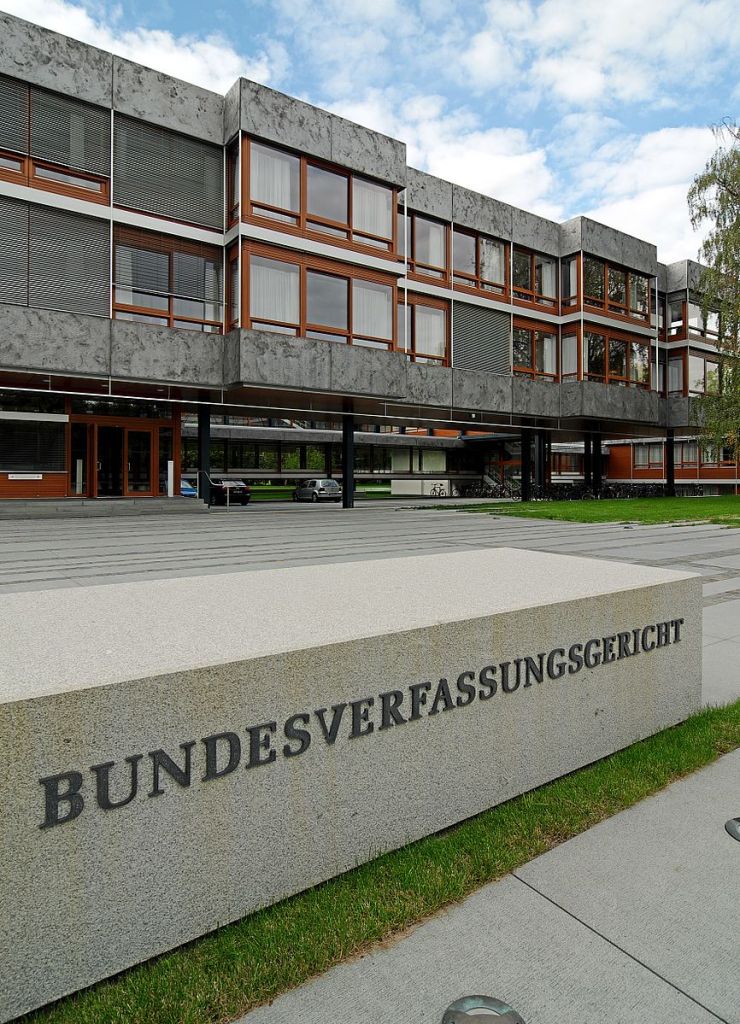
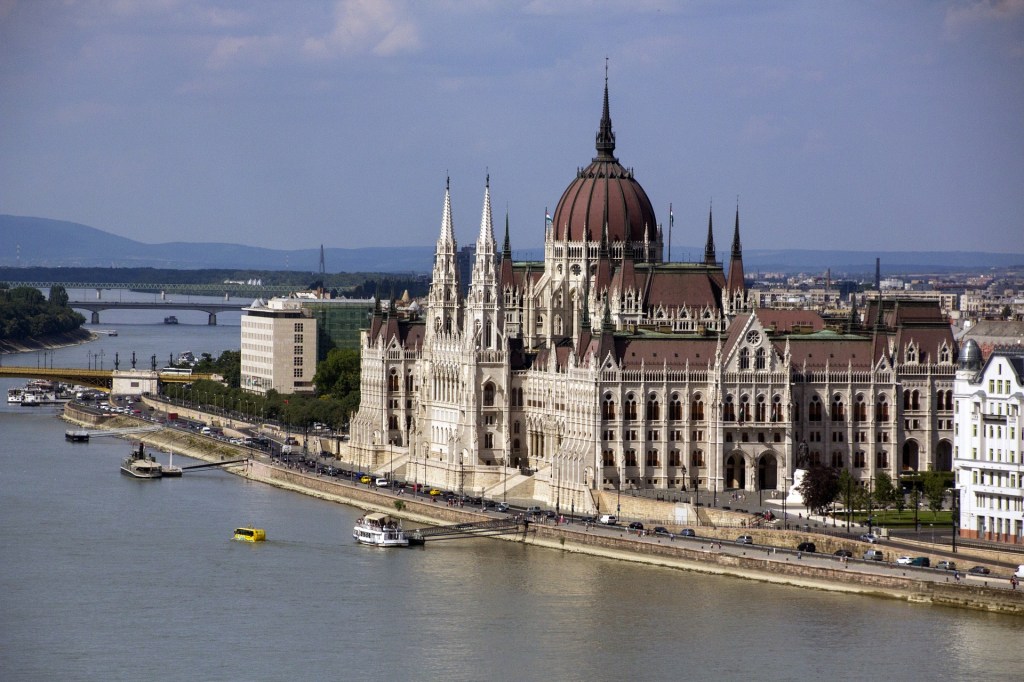
 Essex Law Research Blog