Photo from the workshop, credit: Dr Anastasia Karatzia
The EU-CIEMBLY project organized an internal staff training workshop from November 4th to 6th at the Universidad Complutense de Madrid, Spain. The primary goal of the workshop was to advance and harmonize the partners’ understanding of the theoretical and analytical framework, essential for designing and implementing an inclusive and intersectional European Citizens’ Assembly (CA). The event aimed to equip the project team with both normative tools and empirical insights essential for creating an inclusive deliberative process throughout the project. Dr Anastasia Karatzia, Dr Niall O’Connor, and Dr. Sam Woodward represented at the workshop the University of Essex team, which also includes Dr. Rebecca Warren and Prof. Ileana Steccolini from Essex Business School.
The workshop’s agenda included various presentations and structured discussions designed to engage participants deeply with key project objectives. The first segment of the event provided an introduction to intersectionality, a conceptual framework that examines the interconnected nature of social categories such as gender, nationality, ability, age and more, and how they combine to affect individuals’ experiences of inequality and exclusion. Participants engaged with this concept to explore how intersectional equality, inclusion, and deliberation could be effectively applied in the design and implementation of a CA.
Credit: Dr Anastasia Karatzia
Following this, the participants explored the three key componentsof a CA which are governance and organization, sampling and recruitment, and deliberation and facilitation. Break-out group discussions were featured, where participants were divided into smaller groups to brainstorm ways to enhance intersectional equality and inclusion across the various stages of the CA. Facilitators documented the insights shared during these discussions and later presented the findings to the broader group for collective reflection.
On the second day of the workshop, four theoretical models for an intersectional CA were discussed in detail, with the understanding that these could evolve based on ongoing feedback and the evolving needs of the project. The workshop concluded with discussions on the development of the glossary with complicated terms along with a presentation of the project’s language policy to guarantee that all materials and discussions are accessible and inclusive.
A few words about the project:
The EU-CIEMBLY project started on January 1, 2024, with the main goal of creating an innovative and inclusive EU CA that addresses issues of intersectionality, inclusiveness, and equality in European Union political life. The project seeks to improve the landscape of participatory and deliberative democratic mechanisms firstly by providing an analytical framework and prototype for establishing the Assembly at the European Union level, with potential for adaptation at national and local levels of European Union Member States. The project draws on an academic and theoretical understanding of intersectionality, equality, and power relations. Furthermore, EU-CIEMBLY emphasizes open research practices, including open access, optimal research data management, early open sharing, and the involvement of knowledge actors.
The project will develop several activities, with one of its biggest milestones being the three upcoming pilot CAs: a local pilot, a national pilot, and a transnational pilot involving citizens from up to six countries across diverse regions of the European Union. EU-CIEMBLY has a duration of four years and is funded by the European Union under the Horizon Europe research and innovation program. The consortium consists of eleven partner organizations, bringing a wide range of expertise and knowledge related to the project’s scope and objectives.
The project deliverables so far:
Since the project’s launch, the team has produced:
Extensive Literature Review: An in-depth literature review in the form of a bibliographic map was conducted to develop the analytical framework for the EU Citizens’ Assembly.
The Analytical and Normative Framework of the project, which clearly integrates intersectionality into the inclusivity, equality, and deliberation dimensions of Citizens’ Assemblies.
An exploration of several Theoretical Models for Inclusive Citizens’ Assemblies: The Theoretical Models for an Intersectional and Inclusive Citizens’ Assembly were developed and reviewed during the session in Madrid.
Our project embraces multilingualism! Should an accurate translation for specific sections of this Press Release, please contact us at eu-ciembly@ij.uc.pt
This project has received funding from the European Union’s Horizon Europe research and innovation program under grant agreement number 101132694. This press release reflects only the author’s view. The Commission is not responsible for its content or any use that may be made of the information it contains.
If you are an aspiring legal scholar seeking advanced training in law within a dynamic research environment that encourages innovation and interdisciplinary exploration, a Doctoral Training Partnership at Essex Law School could be your gateway to an exciting academic journey.
Essex Campus in the winter, Credit: University of Essex.
What are SENSS and CHASE?
The South and East Network for Social Sciences (SENSS), an ESRC-funded Doctoral Training Partnership (DTP), is dedicated to fostering innovative and inclusive social science research training and collaboration. Among the eight distinguished institutions comprising SENSS, the University of Essex plays a pivotal role as the coordinating institution.
The Consortium for Humanities and the Arts South-East England (CHASE) is an AHRC-funded Doctoral Training Partnership, providing funding and training opportunities to the next generation of world-leading arts and humanities scholars. Essex is one of the 8 world-leading institutions that comprise the membership of the CHASE DTP.
SENSS and CHASE provide fully funded doctoral studentships, mentorship from global experts, and advanced subject-specific and research methods training. These opportunities empower researchers to extend their social scientific skills beyond academia.
Here at the Essex Law School and Human Rights Centre, aspiring PhD students can apply for SENSS and CHASE studentships, unlocking comprehensive support and collaborative excellence in their academic journey.
Why choose the Essex Law School?
Choosing where to pursue your doctoral training is a significant decision. At the Essex Law School, we have meticulously crafted an environment that champions excellence and fuels innovation. Here is why you should join us:
We are a research powerhouse. Our Law School has been ranked 3rd in the UK for research power in law according to the Times Higher Education research power measure (REF2021). Law at Essex is also ranked 47th in the THE World University Rankings, which show the strongest universities across the globe for key subjects (and 9th for UK Universities). This speaks volumes about the calibre of research conducted within our School. Our academic staff collaborates globally, working with the United Nations, the European Union, governments, and non-governmental organisations.
We believe in the power of interdisciplinary research. Our dynamic research clusters foster collaboration across diverse backgrounds, creating a vibrant intellectual space for innovative and stimulating legal exploration.
With expertise spanning diverse legal disciplines, our academics are the driving force behind the Law School’s excellence. Our faculty boasts exceptional scholars, providing intellectual leadership in key areas, including Human Rights Law, led by Professor Carla Ferstman who is Director of the Human Rights Centre; International & Comparative Law led by Professor Yseult Marique, an associate member of the International Academy of Comparative Law; Private and Business Law, led by Professor Christopher Willett who also spearheads the Law, Business and Technology Interdisciplinary Hub; as well as Public Law & Sociolegal Studies, led by Professor Joel I Colón-Ríos, who is also a member of the Constitutional and Administrative Justice Initiative (CAJI). Our academic leads are ready to guide you and link you with the ideal academic mentors.
Our research student community is central to our success. These talented colleagues explore a broad range of exciting topics under expert supervision, forming a vibrant tapestry of ideas.
We asked Boudicca Hawke about her experience as a CHASE-funded doctoral student at Essex Law School.
“CHASE is a great DTP to be a part of. It is a quite a competitive funding source, but the application process itself is accessible. Especially at Essex, there’s a tremendous amount of support throughout the entire process, which really helps. There are a few rounds of revision you’ll need to go through, so it does require consistent work, but really, it’s wonderful to have guidance and support at every step so you can end with the best proposal possible.
I chose to apply primarily because of the holistic way CHASE supports affiliated doctoral researchers and encourage interdisciplinary research. Beyond the funding, CHASE also hosts annual conferences and year-round research network meetings where you can collaborate closely with other doctoral researchers who share interests but come from different universities and backgrounds. CHASE also has an incredible placement scheme, where you can get hands-on experience throughout the PhD process which is quite valuable.”
Boudicca, who is working on the status of fighters in non-international armed conflict, also shared some insights about the preparation of a research proposal: “Try to be as clear in the proposal as possible. Many of the reviewers won’t be experts in your field, so communicating the issue at-hand and value of your work in an easily digestible way is key. It can also be quite helpful to make sure you highlight relevant work experience and show why you are well-suited to do your specific project. If you don’t get it the first time around, don’t be afraid to re-apply!’’
We also talked to Matteo Bassetti, one of our SENSS-funded doctoral students. For Matteo, whose work focuses on the rights of trans people, and the underestimation of harm inflicted by States through institutional pathologisation frameworks, told us that SENSS “has contributed in many ways to my PhD experience, and has allowed me to take part to training that I would have otherwise been unable to attend. I am hoping to go on an Overseas Institutional Visit in the next term to broaden my network and horizon. However, if I have to be honest, I am still looking for more ways to use the opportunities offered by SENSS in the best way.”
He also gave us some tips about the application process: “Start ahead of time. SENSS is looking not only at the quality of the individual applicant’s proposal, but also at the match between student and supervisors. Treat your application as a collaboration between you and your supervisors, where you need to do the heavy lifting. Be prepared to modify your dream proposal to make it fit better with the selection criteria.”
Where can you find out more?
Explore the opportunities offered by the SENSS and CHASE scholarships at the Essex Law School on our informative webpages. Discover eligibility criteria, application processes, and the outstanding benefits that await you by accessing the downloadable documents provided below.
For inquiries about legal research and the SENSS and CHASE schemes, please contact Professor Joel I Colón-Ríos, our Postgraduate Research Director.
Specific questions about academic disciplines? You can also reach out directly to our dedicated Academic Leads (mentioned above) who can put you in touch with suitable supervisors.
Embark on your journey to become a world-leading scholar in law. Do not miss the chance to benefit from these funding opportunities at the Essex Law School, where innovation, excellence, and transformation define the doctoral experience.
Essex Law School made a significant contribution to the ICON•S conference in Madrid in July 2024, with a substantial contingent of faculty and scholars in attendance. ICON•S is an international learned society with a worldwide membership of scholars – at all levels of seniority – working on different areas of public law and cognate disciplines in the humanities and social sciences. The Society was officially launched at its Inaugural Conference in Florence in June 2014, sponsored by the European University Institute and New York University School of Law. Since then, the Society has held annual meetings in New York (2015), Berlin (2016), Copenhagen (2017), Hong Kong (2018), Santiago de Chile (2019), online with ICON•S Mundo (2021), Wrocław (2022), and Wellington (2023). This year’s meeting (8-10 July), hosted by IE University in Madrid, attracted more than 2,000 delegates and was the largest meeting of the Society up to date.
The conference’s plenary programme was organised around the theme of The Future of Public Law: Resilience, Sustainability, and Artificial Intelligence. The theme, as explained in the conference’s Call for Papers, sought to “foster reflection and discussion on the different transformations that public law is going through as a result of the major societal challenges of our time: the quest for sustainability, the AI revolution and, more generally, the need for resilience in a world of exponential change.” Alongside the plenary programme, there were hundreds of parallel panels allowing scholars and the broader community (including practitioners, judges, and policy makers) to present their work and/or take part in thematically organised panels on legal pluralism, global warning, freedom of speech electoral law, democratic theory, human rights, judicial review, and many other areas.
The Essex Constitutional and Administrative Justice Initiative (CAJI) was in an excellent position to showcase the diversity of its interests and strengths both in terms of academic research and partnerships/collaboration across the world. CAJI Co-Director and Public Law Academic Lead, Professor Theodore Konstadinides noted how excellent the conference was to foster new collaborations and rejuvenate older relationships. For instance, he met with Professor Vanessa McDonnell (Associate Professor and Co-Director, uOttawa Public Law Centre) to discuss among else our respective partnership with Ottawa in public law and our newly-launched Canadian Constitutional Law module. He also reconnected with Giuseppe Martinico (Santa Anna in Pisa) in Madrid. Theodore also mentioned how the very stimulating environment of ICON•S kindled interests among our representatives to be more actively involved in the British Chapter of ICON•S in the future.
We have contributed to a number of different themes and panels this year, some specific to sustainability (Etienne Durand), some specific to digitalisation (Dr Giulia Gentile) and some more general (Professor Theodore Konstadinides, Dr Esin Küçuk, Dr Tom Flynn, Professor Yseult Marique). In a nutshell, here some of the main highlights of the conference for our team.
***
Professor Theodore Konstadinides chaired and participated in a panel entitled ‘Assessing the sub-constitutional space of the UK constituent nations in the post-Brexit constitution’. This panel discussed how within the EU multi-level order, governmental and legislative powers can be largely apportioned vertically at three tiers moving from regional to supranational: (i) substate-regional (e.g., Catalonia, Flanders, and Lombardy); (ii) (Member) State-national (e.g., Spain, Belgium, and Italy); and (iii) supranational, i.e., the European Union itself. The UK’s withdrawal from the EU apart from marking the first time that a Member State decided to put an abrupt end to the federalist ’sonderweg’ of ‘an ever closer union’, it meant that a number of powers that were exercised at the supranational level were ‘repatriated’. Four years after Brexit, this panel analysed the effect of such ‘repatriation’ on the sub-constitutional space of the UK constituent nations. It assessed whether this has happened at the expense of the devolved nations.
To do so, the three papers looked at the following areas of the UK’s post-Brexit territorial constitution: (i) foreign affairs (Professor Konstadinides, Essex and Professor Nikos Skoutaris, UEA); ii) the internal market (Ms Eleftheria Asimakopoulou, QMUL); and iii) digital governance (Dr Giulia Gentile, Essex). The picture that emerged from the papers highlighted the extent to which the UK constitutional order has proved its resilience – one of the themes of the 10th Annual conference.
***
For her third participation to an ICON•S conference (after Copenhagen in 2017 and online at the ICON Mundo during the pandemic), Professor Yseult Marique was invited to take part in a panel, part of a twin session on judicial deference following the reversal of Chevron by the US Supreme Court in Loper a few weeks earlier. This twin session was organised by Professor Oren Tamir (Arizona) and Professor Mariolina Eliantionio (Maastricht). This session was devoted to a comparison from European jurisdiction. Professor Marique’s co-presenters were colleagues drawn from past or present members of REALaw : Professor Luca de Lucia, Professor Luis Arroyo Jimenez, Professor Ferdinand Wollenschläger and Dr Pavlina Hubkova. The panel discussed whether their respective jurisdictions (Italy, Spain, Germany, Czech Republic and Belgium) have a similar concept or functional equivalent to deference.
The other session proceeded in a similar manner for Common law jurisdictions (USA – Professor Susan Rose Ackerman; South Africa – Professor Cora Hoexter; New Zealand – Professor Dean Knight; and Canada – represented by a long-standing collaborator of CAJI, Professor Matthew Lewans). A series of blog pieces on this topic is likely to be published on REALaw blog in the upcoming year.
***
Also very familiar with ICON•S, having presented in Wrocław in 2022 and in Wellington in 2023, Dr Tom Flynn was invited to take part in two sessions. One was a roundtable discussion of Radical Constitutional Pluralismin Europe (Routledge 2023) by Orlando Scarcello (KU Leuven). Dr Flynn had previously taken part in the book’s launch event on Zoom, and it was great to meet with Dr Scarcello and others in person to continue their discussion of the book. Dr Flynn’s presentation was entitled ‘Two Cheers for Substantive Pluralism’, and was a partial defence of the kind of substantive constitutional pluralism that Scarcello’s approach, with its specifically radical focus, discounts.
The other was a panel organised by Professor Mikel Díez Sarasola (Universidad del País Vasco/Euskal Herriko Unibertsitatea) on ‘Plurinational States and their Constitutional Shape’. Dr Ewan Smith (UCL) and Dr Flynn presented together on ‘The idea of parity of esteem as a constitutional principle in Northern Ireland and beyond’, which will be the focus of a BA-funded conference they are organising in Belfast in April 2025 with colleagues Prof Katy Hayward and Anurag Deb (both QUB).
After the panel, Professor Díez Sarasola was kind enough to organise a tour of the Congreso de los Diputades in Madrid, during which Tom was able to see the main chamber and the sala constitucional, among other parts of this magnificent building.
***
Also a former participant of the ICON Mundo conference, Dr Giulia Gentilewas involved in three panels as a speaker. The panels concerned (a) AI and good administration, with a presentation covering AI and actions for damages; (b) the future of EU rights in the Brexit era, with a presentation discussing data protection in the UK post-Brexit landscape; (c) AI and courts, with a paper unpacking the interplay between judicial independence and the EU AI Act.
The panel on AI and actions for damages was a spin-off of a collaboration with Melanie Fink and Simona Demkova (both Leiden University) on AI and good administration. Her findings were published on DigiCon. The panel on EU rights after Brexit stems from collaboration and discussions with Essex colleague Theodore Konstadinides, with whom she is applying for a research funding bid on EU Citizens rights after Brexit. The final panel organised by Monika Zalnieriute offered Giulia the chance to discuss her forthcoming chapter on the AI Act and Judicial Independence to appear in the Cambridge Handbook on AI and Courts, edited by Dr Zalnieriute.
***
Dr Esin Küçük was involved in two panels, presenting papers. The first presentation, titled “Resilience of the EU Constitutional Order in Times of Crises”, was part of a panel on EU solidarity during crises. The debate centred on how recent measures to manage crises have reshaped our understanding of solidarity within the EU framework. This paper is now under review for publication.
The second paper Dr Küçük presented, “EU’s Externalised Smart Borders: Türkiye as a Case Study”, explores the externalisation of EU borders in migration management and the implications of emerging technologies in the process from a human rights perspective. This paper, co-authored with Elif Kuşkonmaz, is currently under development, and we aim to evolve this initial research into a broader project.
***
For his first participation to an ICON.S Conference, Dr Etienne Durand chaired the panel entitled ‘The Future of Energy Law: a Consumer-centric Legal Framework’, which featured Marie Beudels, (PhD Student in Law, University of Brussels, Belgium) and Dr Luka Martin Tomaszic (Assistant professeur, Alma Matar European University, Slovenia) as speakers.
The general aim of the discussions was to observe the changing nature of the role of energy consumers in their interaction with EU Law. The discussion was based on current developments in law and technology that enable energy consumers not only to benefit from the energy transition, but also to participate in bringing it about, thus playing an active role in (re)shaping the EU energy law itself. Taking these developments into consideration, the panel sought to identify the transformative power that energy consumers have or could have in shaping the future of European energy law, a hypothesis which we now aim to integrate into a broader research project.
Dr Etienne Durand on the right at the ICON conference. Credit: Dr Etienne Durand.
***
Professor Joel Colón-Ríos first participated a panel titled “Navigating the Paradox: The Doctrine of Unconstitutional Constitutional Amendments”, where he commented on a paper by Sergio Verdugo (IE Madrid). His paper on the concept of a permanent constituent power was also presented in that panel by his co-author, Mariana Velasco Rivera (Maynooth). Later that day, Professor Colon-Rios chaired a roundtable titled “Deliberative Constitutionalism under Debate”, which featured papers by Cristina Lafont (Northwestern), Chiara Valentini (Bologna), Ana Cannilla (Glasgow), Roberto Gargarella (Pompeu Fabra, Torcuato di Tella), Yanina Welp (Albert Hirshman Democracy Centre), and Ignacio Guiffré (Pompeu Fabra).
On Tuesday, Professor Colon-Rios participated in a panel on “Constitutional Identity in Times of Illiberalism”, where some of the papers that will appear in an International Journal of Constitutional Law symposium where presented, including his piece (“Constitutional Identity, Democracy, and Illiberal Change”), co-authored with Svenja Behrendt (Max Planck, Freiburg). Finally, he was one of the speakers in the book roundtable of Guido Smorto’s and Sabrina Ragone’s Comparative Law: A Very Short Introduction. This was Professor Colon-Rios’ fifth ICON’s conference, also having co-organised last year’s annual meeting in Wellington.
***
Overall, the ICON•S provided a fascinating opportunity to learn from the Presidents and former President of the Human Rights Courts in Europe, Africa and South America; to meet up with old acquaintances and to catch up with the representatives of international publishing houses, always ready to provide feedback and chat about current and possible publishing projects. We were much bemused by how much Italians love Spain and very pleased to hear how lively the regional chapters were actively planning together for further activities (such as for instance the Benelux ICON•S Chapter.) The Essex Law team greatly enjoyed the event, and the team’s diverse work in public law contributes to excellent academic exchanges that we bring back to our undergraduate and postgraduate community as we are developing further our education curriculum and expanding our postgraduate research community in public law. We look forward to building stronger academic ties and impact at both in the UK and globally.
Picture a city with an acute housing shortage. Now, envision a plot of land formerly used for industrial purposes, now vacant following a fire that razed most of its buildings two decades ago. Next, imagine a property development initiative set to deliver 150 shiny new houses and 100 smart apartments on that very site. Finally, consider that the project also includes plans for landscaped stretches of open space and a dedicated area earmarked for on-site biodiversity protection.
In this fictional setting, 250 new homes sound great. The open space and the bio-diversity protection area sound good too. But let’s also imagine some potential adverse effects of the development. Perhaps there are many families in acute housing need in the local area who will be priced out of the development. Maybe local primary and secondary schools are already oversubscribed. Perhaps traffic crawls along local roads at the pace of a sedated snail.
Can a local authority compel the developer carrying out this type of development project to mitigate these adverse effects?
My article develops ideas I discussed in a lecture I gave in December 2023 as part of UCL’s flagship Current Legal Problems lecture series and expands upon work I previously discussed in a blog on the role of contracts in contemporary town planning. In my lecture and blog post, I highlighted tensions in current planning practice that arise when local authorities rely on private developers to provide public goods that the local authority has identified as important.
UCL Current Legal Problems Lecture:Contracting in the public interest? Re-examining contract in contemporary town planning processes
I build on my earlier work in my latest article by investigating how local authorities and developers create ‘planning obligations’ to mitigate the potentially adverse effects of property development on local communities and on local infrastructure needs. The planning obligations that I discuss are made by local authorities and developers by agreement pursuant to section 106 of the Town and Country Planning Act 1990. The article asks important questions about the detailed and highly intricate framework of duties, rights and powers that these ‘section 106 agreements’ create.
I base my analysis in the article on two case study developments. Examining the section 106 agreements created for these developments enables me to provide rich insights into this complex area of legal and planning practice.
I summarise my findings below.
Finding 1: A limited role in ordering ‘private’ relations
In most property development projects, the developer will seek to obtain planning permission by applying to the planning part of a local authority. Before the local authority grants planning permission, the local authority and the developer will usually identify potential negative effects of the proposed development, and the two parties will negotiate planning obligations to be secured in a section 106 agreement. These obligations might aim to mitigate the development’s negative impacts through the provision, by the developer, of funding for local schools, affordable housing, and local amenities, amongst other things.
When a developer and a local authority enter into a section 106 agreement, the developer should perform the planning obligations and the local authority can enforce them.
The first key issue that my article considers is the nature of the ‘private’ bilateral contractual relations between a developer and a local authority that a section 106 agreement creates.
I ask an important question about this in my article: How do section 106 agreements contribute to a development culture in which private developers do not always perform their public policy obligations?
In the pursuit of answers to this question, I examine the content of the obligations in the section 106 agreements created for my case study developments, I scrutinise monitoring arrangements and I investigate enforcement powers.
In the article, I explain the first key insight from my case studies as follows:
My [case studies] show how these agreements consist of administrative clauses that appear to create an intricate framework of rights, responsibilities, duties and powers relating to the performance of planning obligations. But I also showed how the detail, complexity and apparent rigidity of the obligations in the agreements belies the one-sidedness and the haphazardness of these arrangements. This is important, and suggests that these agreements are ill-equipped to serve as effective instruments for ordering the ‘private’ relations between a [local authority] and a developer.
Finding 2: New questions about the ‘expressive force’ of section 106 agreements
A further crucial finding that my article presents relates to the public-facing work that section 106 agreements do.
My second case study involved a development proposed for a site where ownership of the land was divided amongst multiple unwilling sellers. The local authority had granted a developer planning permission for that development and, to enable that development to take place, had agreed to use its compulsory purchase powers to acquire the entire site.
The land acquisition context of this development enables me to analyse the operation of section 106 agreements as a justificatory device local authorities and developers deploy at planning inquiries convened to consider the use of compulsory purchase powers.
Alongside this, another striking aspect of my second case study development was the way that the section 106 agreement addressed local policies relating to affordable housing provision.
In my article, I ask a second important research question: How does the presence of ostensibly binding promises in section 106 agreements facilitate the exercise of regulatory decision-making in planning and property development processes?
By examining my second case study development, I conclude in my article as follows:
My discussion here presents new findings showing how these agreements can have a powerful expressive force in signalling a commitment to public policy interests that ‘de-risks’ these contentious land acquisition and affordable housing issues for developers and local authorities (Legacy and others 2023). But the crucial point in this section is that these agreements do this despite the emptiness of the commitments that they sometimes contain. These findings demonstrate how planning scholarship needs to look beyond the impression of binding force that a section 106 agreement creates to scrutinise the way that these agreements reinforce uneven outcomes and marginalise certain interests.
Photo by Maximillian Conacher on Unsplash
Finding 3: The need for greater transparency and community participation
My second case study provides an opportunity to examine a section 106 agreement containing developer obligations designed to discharge a local authority’s public sector equality duty.
The third research question that my article asks relates to this public sector equality duty. I ask: How do local authorities manage the implementation of novel developer obligations designed to shape broader community relations?
In my article, I describe my findings in response to this question as follows:
[Making] a section 106 agreement containing developer obligations designed to discharge a local authority’s public sector equalities duty … is an innovative and under-explored way of using a section 106 agreement, so this part of the paper provides a rare insight into the more unusual obligations in these agreements and into the practical challenges local authorities can face when monitoring the implementation of novel planning devices.
My findings also enable me to explain how equalities considerations created a focal point for opposition to an apparently settled development trajectory.
I argue that this highlights the need for greater transparency and public involvement in setting and implementing planning obligations.
Agenda for further research
Planning, public law and contract law scholars will find helpful insights in my article about the diverse and multilayered roles contractual arrangements play in current regulatory practices.
But while my article highlights various problems with the current use of section 106 agreements, understanding how local authorities might more effectively compel developers to mitigate the impacts of property development requires further research.
Here are some key areas where a greater understanding of section 106 agreements and their use might enable insights that would inform better practice:
How might planning law and planning practice enable greater transparency and public involvement in setting and implementing planning obligations?
How do planners and lawyers gather and use the monitoring information about developer behaviour theoretically made accessible through the section 106 agreements studied in my article?
How do planners and lawyers use the enforcement powers contained in section 106 agreements, and could they use those powers differently?
Professor Maurice Sunkin discussed the new relationship between the Crown and the Government
The eagerly awaited concluding part of the series The Crown is set to arrive on 14 December 2023. Professor Maurice Sunkin recently engaged in an interview with Italy’s esteemed public national broadcaster RAI, delving into the intricacies raised by this acclaimed historical drama.
The show, a fictional portrayal of Queen Elizabeth II’s journey intertwined with the pivotal political events of her reign, prompted probing questions regarding public law. During the interview, Professor Sunkin provided insightful perspectives on topics such as the Crown’s impartiality and legitimacy. A noteworthy excerpt from his interview is highlighted below:
What will the reign of King Charles III be like?
His mother was very widely respected and admired and even loved by many. In part because she presented the image of a kindly grandmother. In part, because she had served the country for so long. In part, because people recognised the troubles that she must have confronted. And in part, possibly in large, part because she generally kept herself aloof and apart. She had a deep respect for the sanctity of the institution that she represented. For the most part she kept the Crown away from the trials and tribulations of daily life and politics. This has always been very important.
Charles III is a rather different person – his personal life has been much more public. He is known to have views on matters of public discussion, and has been willing to have his views expressed. In these senses he is much more likely to make the Crown a more engaged institution. But this carries risks. The Crown’s standing depends largely on its symbolic and institutional status as above and beyond politics and normal life. There are real risks that this status could be challenged if the King becomes more active and open to personal criticism.
So there’s a very fine balance – between modernising the Crown and shaking off the dust of previous periods while retaining the symbolic status of the Crown as an institution above and beyond day to day life and politics. We’ll have to see how well that balance is achieved.
How can he maintain his commitment to the environment while preserving impartiality as head of State?
This is one of the challenges that he and his advisers are no doubt thinking about very carefully. One the one hand he will not want to get too closely involved in political disputation or in direct campaigning. On the other he will be concerned to ensure that the Crown is seen to be aware of, and concerned, about the need for environmental protection. If he does too much he will damage the Crown by dividing opinion. If he does too little he will damage the Crown by presenting it as unaware, uncaring and out of touch.
The key will be in his and his family’s own actions. How he is seen to be managing his estates. How he is seen to be conducting his own affairs. Careful attention to matters such as travel. Sensitive organisation of the Crown’s affairs. Supporting environmentally friendly charitable activities
Considering the majority of the population declares themselves as non-Christian (Census 2021), what legitimises the role of bishops in the House of Lords and a King as both head of Anglican Church and State?
This is an important and big question. The King is the head of the Church of England. The Bishops are in the House of Lords because of the standing of the Church of England. Some will see these as out dated relics that no longer fit with a modern liberal pluralist democratic society. In these respects they represent the archaic character of the Crown itself – but they add an increasingly challenging dimension as the UK becomes more diverse and less religious.
When the King is crowned it will be a heavily religious ceremony rooted in Christian Anglicanism. It will be interesting to see if there is anything in the ceremony to reflect a non Anglican view of the world. Either way it will be interesting to see how people react. There can be little doubt that Charles III is alive to these issues and will do everything he can to strengthen links with non-Anglicans.
Could the reform of the House of Lords, a Labour proposal, change the institutional structure of the State?
Like the Crown, the House of Lords is a feature of the UK’s constitutional system that is not obviously democratic. But reform has been on the agenda for years and little has been achieved. Whether reform will alter the structure of the state depends of course on the nature of the reform. In my view a second chamber is valuable not least because it diffuses the power of the executive in the HC. But it’s clearly no longer appropriate to have a second chamber with no political legitimacy. So, a way needs to be found to provide political legitimacy without simply duplicating the power relationships in the HC. If this can be done it will significantly strengthen the work of Parliament.
Is it time for the UK to have a written Constitution?
This is a good exam question for first year law students. The UK constitution is a complete mystery to most people –even to those of us who haves studied or work with it for years. Every time public issues arise – such as around the power of the executive in relation to Brexit or its ability to prorogue Parliament – or about the powers of the executive to send troops abroad – we realise how little we understand about some of the basics of our constitution.
So, one of the key benefits of attempting to write down our constitution down is educational we would learn more about it. Key issues – such as around matters that we’ve been talking about – would be more widely discussed including in schools.
Setting things in written would also add clarity. If the key institutions and their powers and responsibilities were set out in a single clear document this would have tremendous value and add clarity and help most of us understand the system – it would in sense be a great boost to our democratic culture and to the rule of law.
That’s not to say that everything could be written down. We shouldn’t assume that setting out the basics would resolve all the problems or tensions. The system would still have to operate and practice and culture would still evolve. But we would have a clearer written starting point would be a great help. I’m a great enthusiast for trying to present the nature of our system as clearly as possible and at the moment too much power is in the hands of those on the inside who have the ability to determine what the constitution requires.
Human Rights is a good example. The Human Rights Act 1998 which incorporated the Convention Rights made these rights much clearer and accessible. Now there are threats to repeal the Act and replace it with more amorphous principles. Such a reform will not add clarity but will make the system less clear and possibly open the UK to greater scrutiny from the ECtHR.
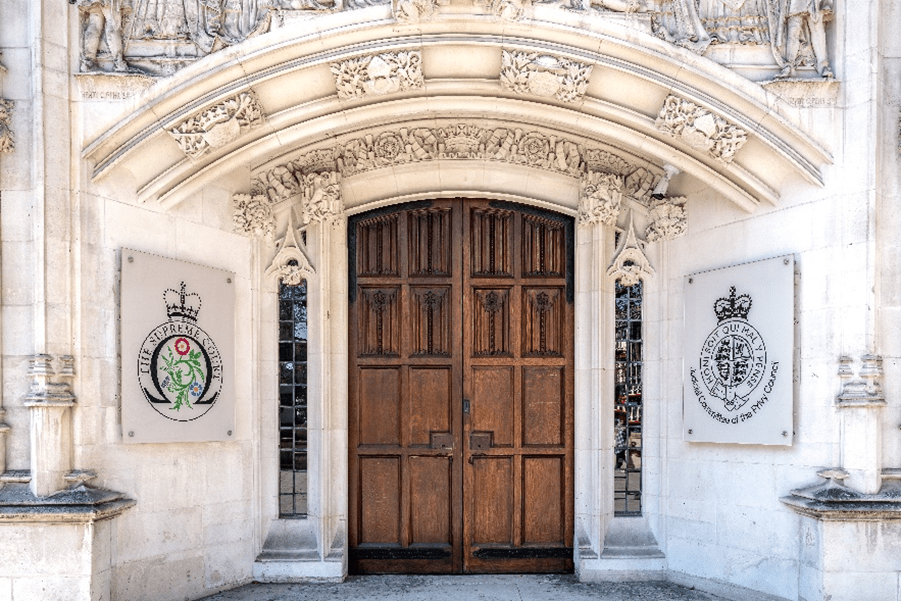
The UK’s Supreme Court on Parliament Square, Westminster
The UK’s long-delayed and controversial proposal to deport asylum-seekers to the central African state of Rwanda was rejected by the Supreme Court on Wednesday 15 November 2023.
The Supreme Court unanimously dismissed the Home Secretary’s appeal and upheld the Court of Appeal’s earlier conclusion that “the Rwanda policy is unlawful”. This is because there are substantial grounds for believing that asylum seekers would face a real risk of ill-treatment by reason of refoulement to their country of origin if they were removed to Rwanda. Lord Reed and Lord Lloyd-Jones gave a joint judgment with which the other members of the Court agreed.
The Supreme Court cited evidence by the UN refugee agency indicating Rwanda’s lack of adherence to the non-refoulement principle and raised doubts about the Rwandan authorities’ fairness of asylum claim assessments and human rights violations.
The Court made it clear that it was “not concerned with and should not be regarded as supporting or opposing any aspect of the political debate surrounding the policy”. However, its decision deals a blow to the government’s pledge to “stop the boats”, and with the Rwanda plan being at the centre of the recently passed Illegal Migration Act, a reassessment of asylum policies seems inevitable now.
In October 2022, the House of Lords International Agreements Committee published its 7th Report of Session 2022–23 on its inquiry into the Memorandum of Understanding (MoU) between the UK government and the government of the Republic of Rwanda for the provision of an Asylum Partnership Arrangement, citing written evidence submitted by Professor Theodore Konstadinides and Dr Anastasia Karatzia of the Essex Law School.
Prof. Konstadinides and Dr. Karatzia had questioned whether an MoU is an appropriate vehicle for the relocation of asylum seekers deemed to have arrived illegally in the UK, “especially given: (a) the implications it has for individual rights, and (b) the assurances and safeguards included in the MoU, particularly those relating to inspection and monitoring, a relocated individuals’ access to legal assistance, and data protection which give rise to legitimate expectations as to the other party’s conduct.”
The Research Visibility Team interviewed Prof. Konstadinides, co-director of the Constitutional and Administrative Justice Initiative (Essex CAJI) and academic lead for Public Law, to find out more about the Supreme Court’s ruling and its implications.
The Supreme Court’s ruling emphasised serious flaws in Rwanda’s asylum procedures. Could you elaborate on these shortcomings that led the court to determine it wasn’t a safe option for asylum seekers?
Removals to Rwanda, a practice established by the Home Secretary’s immigration rules, were held to be unlawful by the Supreme Court because of substantial evidence, including over 100 examples from the UN Refugee Agency, regarding Rwanda’s inadequate system of processing asylum claims. Rwanda’s poor human rights record and the lack of guarantees that upon arrival to Rwanda asylum seekers would have their claims properly examined by the respective authorities could result to further removal and repatriation where they would face a real risk of ill-treatment. The Supreme Court took this possibility very seriously despite the Home Secretary’s reassurance that Rwanda entered the deal in good faith.
There is a legal rule, or prohibition if you may, that refugees must not be returned to their countries of origin if their life or freedom will be under threat. This principle is known as ‘non-refoulement’ and it is a core principle of international law. Our colleague Prof. Geoff Gilbert is an expert in international refugee law and could tell you more about it. Suffice to say for now that asylum seekers are protected against refoulement by several international treaties to which the UK is a party including the UN Refugee Convention, the UN Convention against Torture and the European Convention on Human Rights (ECHR). As Lord Reid emphasised it is not, therefore, only the ECHR which is triggered here regarding the returning of asylum seekers in their country of origin without proper examination of their claims. The obligations under these international treaties are also reflected in our statute book for some time now, see for instance, the Asylum and Immigration Appeals Act (1993); the Nationality, Immigration and Asylum Act (2002) and, last but not least, the Human Rights Act (1998).
This explains in a way why the Supreme Court was unanimous that, once there are substantial grounds for believing that asylum seekers who are sent to Rwanda will be at real risk of ill-treatment or refoulment, there is only one way to decide this case.
The government is considering emergency legislation to declare Rwanda a safe country for asylum seekers, bypassing the Supreme Court’s judgment. What legal and political challenges might arise from such a move, and how could it impact the ongoing debate within the Conservative Party on issues like leaving the European Convention on Human Rights?
The government will try to negotiate changes and inject extra safeguards to the Rwanda deal. Of course, a revised or renewed deal cannot stop fresh litigation, especially challenges against the decisions of the Home Secretary made in light of such deal. Following the Court’s decision on the 16th of November, the Prime Minister expressed the will to use Parliament as a vehicle to reverse the Supreme Court’s unanimous decision.
If Parliament were to pass such legislation that would override the ECHR and the HRA (which gives the ECHR domestic effect) in relation to non-refoulment claims that would be the law of the land due to Parliamentary Sovereignty. But that would not be the end of the matter as far as international law is concerned: the government’s policy could still be in breach of international law. Also, as Lord Reid emphasised, the ECHR and the HRA are not the only relevant pieces of international and national legislation that protect asylum seekers from refoulment.
This takes us to your question about leaving the ECHR altogether, getting Parliament to repeal the HRA and either resuscitating Dominic Raab’s Bill of Rights Bill or relying on a combination of rights under the common law and statute and other international obligations that have found their way into our statute book. I don’t personally think it is a good idea to establish a record of treaty withdrawal every time we are unhappy with the outcomes that international law produces, although I worry that leaving the ECHR will become part of a future Tory Manifesto that has been flirting for some years now with the idea of repealing the HRA or “updating” it.
Unfortunately, this government has been too ready in its rhetoric to breach international law, albeit ina specific and limited way which is worrying in terms of the rule of law which requires compliance by the state with its obligations in both national law and international law.
Given the ruling on the Rwanda plan and its implications for the UK’s asylum policy, what do you foresee as potential avenues for the government to reconsider its approach? Could the quest for a new safe third country lead to similar legal challenges, and how might this affect the broader discourse on asylum processing in the UK and globally?
A new Bill that will, according to Suella Braverman’s response on X (formerly Twitter), “block off ECHR, HRA and other routes of legal challenge” is a legal fiction. As Prof. Mark Elliott (University of Cambridge) responded to her post, domestic legislation cannot just “block off” the ECHR, which the UK will still be obliged in international law to comply with for as long as it remains a member of the Council of Europe. Prior to legislation, a new treaty with Rwanda or another safe third country is possible, however. The Supreme Court, and the Court of Appeal before it, said explicitly that if there are no grounds for believing that asylum seekers who are sent to Rwanda or a third state for that matter will be at real risk of ill-treatment then the policy is sound and lawful.
The current memorandum of understanding between the UK and Rwanda provides some reassurance but being an expression of political will and not legally binding, it cannot be relied upon by asylum seekers. A treaty, however, can better protect such commitments, something that I initially argued with Dr. Anastasia Karatzia in our evidence to the International Agreements Committee of the House of Lords that got cited in the end. Following the judgment yesterday, the UK’s Prime Minister publicly stated that his government has been working on “a new international treaty with Rwanda” which will push to “ratify without delay” in Parliament and “will provide a guarantee in law that those who are relocated from the UK to Rwanda will be protected against removal from Rwanda”.
Some people, including myself, will still find this solution to the issue disappointing given Rwanda’s poor track record of human rights protection, judicial independence, and lack of adherence to the terms of similar agreements with other countries in the past, especially on non-refoulment of asylum seekers. However, yesterday’s judgment is a small legal victory insofar as the rule of law is concerned.
Unlike the initial memorandum that the government signed with Rwanda, a treaty will be subject to Parliament’s statutory role in scrutinising treaties as set out in the Constitutional Reform and Governance Act 2010. In the grand scheme of things, this may look like a small step. But let me remind readers that the UK-Rwanda memorandum was only published when it became operational on signature which left no space for any type of review or revisions by Parliament.
If the House of Commons passes a resolution opposing the ratification of a new UK-Rwanda treaty, it triggers an extra 21-day delay, preventing the government from proceeding with the ratification during this time. However, there is a catch: a minister has the authority to ratify a treaty without following this process, but this option becomes void if either House passes a negative resolution. Essentially, this represents a modest legal triumph.
In the ever-evolving landscape of family law, the Supporting Families conference, held in September 2023, stands as a beacon of hope and progress. This remarkable event, held under the aegis of the Family Law Reform Now network project, has been nothing short of a resounding success. Spearheaded by the visionary duo of Dr. Charlotte Bendall and Dr. Rehana Parveen at the University of Birmingham, this conference is a testament to the power of collective determination and expertise.
The Supporting Families conference was not just another gathering of legal minds. It is a dedicated platform, aimed at addressing the intricate challenges entwined within the public law system, particularly in the context of legal proceedings involving families. Its core objective is clear: to initiate conversations, explore possibilities, and pave the way for much-needed policy reform, strengthening the support structures for families entangled in these intricate legal proceedings.
Discussion Panel led by Dr Rehana Parveen
This momentous event is the brainchild of a passionate team: Dr. Samantha Davey, a Lecturer in Law at the University of Essex; Celeste Greenwood, a Barrister-at-Law at Exchange Chambers; Omolade Adedapo and Anna Rickards from PAUSE; and Bessy Eigbefoh, a Solicitor at Francis Solicitors. Together, they have orchestrated an assembly of experts and professionals, bringing diversity and dynamism to the discussion table.
The Supporting Families conference was designed to cast a piercing spotlight on the deficiencies of the public law system, with a specific focus on care and adoption cases. It boldly underlined the urgency of implementing legal and policy reforms to fortify the foundation of support for these embattled families.
This conference was about tangible action. Attendees were in for a treat, as they benefited from the opportunity to learn from a constellation of practitioners and academics who have dedicated their careers to unraveling the complexities of these cases. Their shared experiences illuminated the path toward change, guiding our collective vision towards more humane, empathetic, and effective legal proceedings.
As we look back on the Supporting Families conference, we celebrate not just its resounding success, but also the unwavering determination of those who organised and participated in this transformative event.
The PAUSE team
The conference stood out like a vibrant thread, weaving a narrative of change, empowerment, and justice. It was a milestone in the journey of transforming the lives of families and a shining example of what can be achieved when dedicated minds come together to effect change.
Looking ahead, the legacy of the Supporting Families conference continues to flourish, with the promise of an even brighter future. The event in Birmingham was a prelude to the next chapter in Dr. Davey’s journey toward reform. Through the support of the SLS research activities fund, further work will now commence With Dr. Charlotte Bendall on the benefits of mediation for grandparents, recognising the invaluable role they play in the lives of children.
Additionally, a partnership with Dr. Jaime Lindsey from the University of Reading, fueled by a grant from the British Academy, is set to unveil critical insights into the experiences of child survivors of sexual abuse within the Family Court. A seminar series is set to start, with Dr. Lindsey delivering a seminar on November 9th at the University of Essex. If you are interested in attending, please contact Dr. Samantha Davey at smdave@essex.ac.uk.
The Supporting Families conference was just the beginning, and it has ignited a beacon of hope that will continue to illuminate the path to a more compassionate, just, and inclusive family law system.
The conference programme and speaker details can be downloaded here:
Image via Shutterstock: The entrance to The Supreme Court, Parliament Square, London
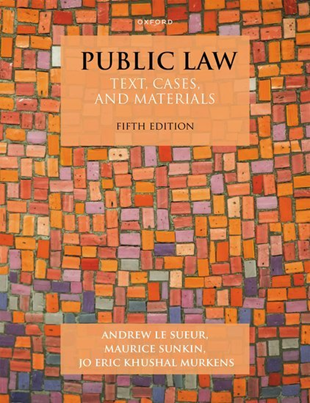
Public Law: Text, Cases, and Materials, the definitive guide to understanding the practical workings of UK Public Law, has just released its eagerly awaited 5th edition. Authored by renowned legal scholars Prof. Andrew Le Sueur, Prof. Maurice Sunkin KC (Hon), and Prof. Jo Eric Khushal Murkens, this latest edition brings to life the key institutions, legal principles, and conventions that underpin Public Law in the UK.
Recognising the need for an accessible and comprehensive resource, the authors have meticulously curated extracts from key sources, providing clear explanations and insightful critiques to facilitate a deeper understanding of this legal field. By examining case law and its political context, this book encourages students to explore the core issues in public law with a critical mindset.
The 5th edition of Public Law: Text, Cases and Materials is now available by OUP
One of the standout features of Public Law: Text, Cases, and Materials is the inclusion of clear commentary and analysis, expertly complemented by a diverse range of extracts from various sources. By incorporating academic writing, reports from parliamentary committees, and key judicial decisions, students are provided with an enriching array of information. This enables them to develop vital analytical skills, essential for success in the field.
This latest edition offers important additions and updates to enhance the learning experience. Notable highlights include reorganisation of the book’s structure, incorporating a new chapter on devolution. Additionally, the coverage of judicial review has been significantly expanded to reflect the growing political and constitutional significance of this area.
Readers will also benefit from the inclusion of the latest developments, such as the withdrawn Bill of Rights Bill (2022), the Independent Review Human Rights Act Review (2021), the United Kingdom Internal Market Act (2020), the Scottish Continuity Bill Reference and the Protocol on Northern Ireland/Ireland and more.
Public Law: Text, Cases, and Materials aims to bridge the gap between theory and practice, providing an indispensable resource for law students, practitioners, and anyone interested in understanding the complex landscape of public law. With its clear commentary, engaging analysis, and thought-provoking learning features, this edition empowers readers to explore and interpret legal concepts with confidence.
The authors’ collective expertise and experience bring unparalleled value to the latest edition of Public Law: Text, Cases, and Materials. The research visibility team had the chance to speak with Professor Sunkin, who delves deeper into the latest updates and insights featured in this highly anticipated publication:
In light of recent legal developments in the UK, could you identify one or two key updates you have made to the new edition of the book? How do these changes reflect the evolving landscape of public law?
“This has been a fast-moving area of law especially in the post-Brexit era. But, Brexit has been only part of the picture. Since the previous edition debates around devolution, and around the place of judicial review and human rights in our system have intensified. In this edition, we have been able to consider the importance of these and other developments to provide an updated account of UK public law.”
Can you identify one or two seminal cases or legislative developments that have had a significant impact on our understanding and interpretation of public law since the previous edition of your textbook? How have these cases shaped the field?
“We have always sought to use case studies to help readers understand the interplay between law and government. In this edition we have, for example, included a case study on the Windrush scandal that highlights some of the worst elements of administrative injustice within the UK system. Important cases on the power of government, including to seek to prorogue Parliament, also give valuable insights into how judges seek to ensure that the executive respects the rule of law.“
Public law is deeply intertwined with democratic governance and the exercise of state power. Could you elaborate on any new chapters or expanded sections in the latest edition that explore the relationship between public law and democratic institutions? How do these additions enhance the readers’ understanding of the complex interplay between law and democratic processes?
“We hope that the additional space devoted to judicial review, along with the revised and updated chapters on administrative justice and human rights will help readers understand how law and democratic governance are deeply intertwined.”
To learn more about the contents of the latest edition of Public Law: Text, Cases, and Materials, please visit the publisher’s website here.
In October 2022, the Essex Law School launched the Constitutional and Administrative Justice Initiative (CAJI). This builds on and extends the work of the UK Administrative Justice Institute which was established in 2014 with funding from the Nuffield Foundation to kickstart the expansion of empirical research on administrative justice in the UK. Since 2018, the Institute has been funded by Essex Law School to progress the priorities set out in its Research Roadmap.
Establishing CAJI reflects the importance of connecting research and scholarship on administrative justice with Essex Law School’s broader public law scholarship on constitutional justice, judicial review, comparative public law, constitutional theory, social justice and human rights.
CAJI’s core team
Maurice Sunkin KC (Hon), Professor of Public Law and Socio-Legal Studies, is co-director of CAJI and a member of the team that originally established the UK Administrative Justice Institute.
CAJI also has an advisory group comprising of colleagues from the Essex Law School as well as other departments of the University of Essex and external participants from academia and NGOs.
The importance of constitutional and administrative justice
Constitutional justice concerns matters critical to the relationship between the citizen and the state, including adherence to the principles of supremacy of law, accountability before the law and fairness in its application. At its core, it concerns state protection of our constitutional rights such as liberty, equal protection under the law and procedural due process. This requires decision-makers to respect their constitutional responsibilities: that the legislature legislates, and the executive governs according to established constitutional principles and that both branches are politically and legally accountable. Hence, constitutional justice is often discussed in the context of constitutionalism meaning that in serving the people the legislature and the executive are themselves governed by fundamental rules rooted in the consent of the people.
A commitment to the rule of law and avoidance of arbitrary exercise of power by the executive and those acting on its behalf are vital components of constitutional justice and good government. The decisions of independent courts demand respect and play a vital role in providing redress to those adversely affected by state action, constraining the unlawful exercise of state powers, and safeguarding fundamental constitutional values.
The impact of the European Union and the Council of Europe and its advisory bodies such as the Venice Commission have become key in the globalisation of constitutional justice. This development entails the consolidation of constitutional principles common to their signatories and the maintenance of coherent standards of constitutional rights protection. Recent threats to the independence of the judiciary in several European countries show that we cannot assume that appropriate constitutional standards are easily enforced.
At its core, administrative justice is about ensuring that those delivering public services act justly and make correct decisions and about what can be done when things go wrong. It encompasses matters of everyday importance that affect most of us at some point, such as education, health care housing, immigration, land use planning, social security and taxation.
We are interested in how public services are designed and delivered, how legislation is drafted, how people are consulted about laws and policies, how people can challenge decisions by public bodies, how redress bodies consider those challenges, and how learning from such challenges is used to improve delivery and decision-making in the first place. These matters are of vital importance to society.
Professor Theodore Konstadinides, CAJI co-director and Academic Lead for Public Law, stated:
“The CAJI is a research hub within the Essex Law School that builds on the legacy of the UK Administrative Justice Institute and pays tribute to all the amazing research that colleagues like Andrew Le Sueur and Maurice Sunkin have undertaken in public law and socio-legal studies.
CAJI’s research agenda is ambitious in that it draws on many issues pertaining to the exercise of public authority at all levels with the aim of improving the quality of decision making and access to justice in the UK and at international level.
While it is an active research hub of the Law School, CAJI embraces academics from multiple disciplines and acts as a forum to discuss how we conduct research where the doctrinal meets the empirical.
CAJI is also interested in how academic research can contribute on the ground by advising public bodies and NGOs about pertinent issues of public life and commenting about complex topics in a way that is accessible to the wider public. Questions related to institutional independence, just government, states’ international obligations, modern living environments, provide exciting opportunities for interdisciplinary research and postgraduate research study. Our work dovetails neatly with the University’s research priorities in social deprivation, sustainability and health and wellbeing.
We therefore invite prospective visiting researchers and PhD students to contact us in order to discuss their ideas and potential opportunities for future collaboration.”
As part of this change, UKAJI’s website – available here – will be migrated to a dedicated webpage on Essex Law School’s website. All original content will be protected.
UKAJI also has a Twitter account which will be maintained during this process.
We are delighted to announce the details of a fascinating workshop taking place on 29-30 August 2022 in Molyvos, Greece. This international workshop aims to explore the relationship between freedom and proportionality, bringing together human rights law doctrine and philosophical theorising.
It will do so by pursuing two main themes:
Is there a morally valuable – albeit overridable – freedom to engage in potentially harmful behaviour or should the concept of freedom be inherently limited by the reasonable interests of others?
Is the proportionality test, as applied in human rights law, committed to a particular philosophical conception of freedom? If so, is that conception morally justified?
Underlying these abstract questions are urgent issues of practice about the balance between the individual and society, the correct interpretation and application of rights, and the role of courts and other state institutions in their protection. For example, the relationship between freedom and proportionality is at the heart of controversies over the lawfulness of government measures aiming to tackle the COVID-19 pandemic such as restrictions of movement and economic activity and compulsory vaccinations.
The issue is typically framed in terms of the proportionality between the public benefit of these measures and the intensity of the interference with human rights. However, for many scholars, this framing is deeply problematic. It assumes that such restrictions amount to losses of valuable rights, which must be offset by an overriding public benefit. But, so the argument goes, we do not have even a prima facie right to be a public threat e.g. by carrying a contagious virus. To think otherwise is to assume a highly individualistic and antisocial notion of personal freedom. And yet arguably this assumption underpins the proportionality doctrine, inasmuch as claimants must clear a relatively easy hurdle to establish that a restriction amounts to a prima facie interference with their human rights. As a result, almost any activity or personal preference, however harmful, triggers a proportionality assessment.
By ensuring that proportionality best reflects moral notions of freedom, we vindicate it and guide its use towards the optimal results. The workshop has this dual aim, to elucidate legal doctrine through sustained theoretical scrutiny and improve it, so that it can successfully address contemporary challenges in human rights law.
The workshop is hybrid. Most of the speakers will meet in Molyvos (Greece), the hometown of Stavros Tsakyrakis, who spearheaded the aforementioned line of attack against proportionality. But the proceedings will also be accessible via a Zoom webinar that is open to everyone. The workshop’s programme and registration details can be found below:







 Essex Law Research Blog