Both posthuman theory and the rights of nature (RoN) movement have the potential to challenge the anthropocentrism of international environmental law (IEL).
Scholars have begun to document the transformative shifts that could occur through the application of posthuman legal theory to IEL, but these theories have yet to be applied to law in practice.
On the other hand, RoN have been applied in domestic law but hardly in international law, while the question of what RoN includes and excludes remains contested.
Dr. Emily Jones, Senior Lecturer in Law at the University of Essex, published a new article in the Journal of Human Rights and the Environment which brings posthuman theory and RoN together, reflecting on how posthuman legal theory can contribute to the framing of RoN, with a focus on challenging the anthropocentrism of IEL.
The article argues, first, that the next step for posthuman legal theory will be its application to existing law.
Noting convergences between posthuman legal theory and the rights of nature (RoN), the article contends that those seeking to apply posthuman legal theory might find some interesting alliances by turning to RoN.
Second, the article argues that using posthuman theory to frame RoN could help to ensure that RoN live up to their transformative potential.
Article full citation: Jones, E. (2021). Posthuman international law and the rights of nature, Journal of Human Rights and the Environment, 12(0), 76-101. DOI: https://doi.org/10.4337/jhre.2021.00.04. A copy can be accessed through the publisher’s website here or requested through the University’s research repository here.
By Dr. Erin Pobjie (@EPobjie), Lecturer in Law, University of Essex
Russia’s unannounced direct-ascent anti-satellite (DA-ASAT) missile test earlier this month raises important legal and policy questions about the prohibition on the use of force in outer space. The highly destructive weapons test – which forced astronauts aboard the International Space Station to seek shelter and created a long-lasting field of space debris – underscores the need to urgently develop international standards for responsible behavior in space.
The timing of the test is provocative, as the United Nations (UN) General Assembly’s First Committee (Disarmament and International Security) passed several draft resolutions at the start of this month aimed at preventing an arms race in outer space, which are expected to be adopted at the next General Assembly session in early December. China and Russia were among only a handful of states to vote against the key draft resolution on “Reducing space threats through norms, rules and principles of responsible behaviours,” reflecting a deep rift on this issue between the major space powers.
Passing these reforms is crucial given the long-term consequences of resorting to force in space. Russia’s missile strike against its own defunct satellite, Tselina-D, created a field of space debris of nearly 1,500 trackable pieces (i.e., pieces greater than about 10 cm in diameter). Given high orbital velocities, even tiny pieces of space debris place astronauts and satellites at risk and, in the worst case, could lead to Kessler Syndrome – a cascading cloud of orbital debris – preventing access to outer space from Earth for generations.
This is not the first kinetic DA-ASAT test creating a long-lasting debris field: notoriously, China conducted such a test in 2007, blowing up its own weather satellite and creating 2,300 pieces of debris. The United States also conducted a kinetic DA-ASAT test in 2008, creating 400 pieces of debris, as did India in 2019, creating similar levels of debris. (The United States at the time justified the low-altitude strike against its malfunctioning spy satellite as necessary to prevent its re-entry into the atmosphere and the release of toxic fuel.)
The Russian defense minister, Sergei Shoigu, hailed its test as “promising” and denied that the fragments posed any threat to space activity. The United States retorted with a statement by Secretary of State Anthony Blinken: “The long-lived debris created by this dangerous and irresponsible test will now threaten satellites and other space objects that are vital to all nations’ security, economic, and scientific interests for decades to come.” The United Kingdom and France also condemned the weapons test, with the French Ministers for Europe and Foreign Affairs and for the Armed Forces labelling it “a destabilizing, irresponsible action which could cause very long-term consequences for the space environment and all space players.”
The Russian DA-ASAT test takes place against the background of ongoing and urgent efforts by the international community to prevent an arms race in outer space, known as “PAROS.” PAROS seeks to preserve outer space as a peaceful domain for the benefit of all, by preventing the weaponization of outer space, reducing threats to space systems, and avoiding escalated tensions and conflict caused by misunderstanding and miscommunication. Efforts towards PAROS began in earnest shortly after the conclusion of the last space treaty, the Moon Agreement, in 1979, with negotiations taking place in various multilateral fora, including the Conference on Disarmament, the UN Committee on the Peaceful Uses of Outer Space, and the UN General Assembly First Committee.
However, efforts to negotiate PAROS have been long stymied due to a deep divide in the international community on the best approach to ensuring space neutrality. The approach favored by Russia and China is a binding treaty, namely, the “Treaty on the Prevention of the Placement of Weapons in Outer Space, the Threat or Use of Force Against Outer Space Objects” (PPWT) proposed in 2008 and revised in 2014. An alternative approach would be to adopt soft law guidelines aimed at transparency and confidence building measures (TCBMs), such as the European Union’s Draft International Code of Conduct for Outer Space Activities. Key substantive issues at stake include effective verifiability, legal gaps in definitions and framing of rules which could be exploited by adversaries (for example, Russia’s DA-ASAT test would not violate the Russia-China draft treaty, which does not ban ground-based weapons), and the desire for flexibility.
A breakthrough finally was reached on Nov. 1 this year, when the UN General Assembly First Committee adopted a UK-proposed draft resolution to establish an Open-Ended Working Group (OEWG) to identify threatening and irresponsible space behaviors. This resolution is likely to be approved by the UN General Assembly next month, given the voting patterns in the First Committee, in which 163 States voted in favor, with nine abstaining and only eight against (including China and Russia). The OEWG will meet in 2022 and 2023 to:
(a) Take stock of the existing international legal and other normative frameworks concerning threats arising from State behaviors with respect to outer space;
(b) Consider current and future threats by States to space systems, and actions, activities and omissions that could be considered irresponsible; [and]
(c) Make recommendations on possible norms, rules and principles of responsible behaviours relating to threats by States to space systems, including, as appropriate, how they would contribute to the negotiation of legally binding instruments, including on the prevention of an arms race in outer space.
In parallel with these multilateral initiatives, private efforts to codify the applicability of international law to military uses of outer space such as the Manual on the International Law Applicable to Military Uses of Outer Space (MILAMOS) and the Woomera Manual are also underway. In the face of relatively slow progress in confronting these urgent threats through UN channels, the Outer Space Institute (a global network of space experts) recently launched an International Open Letter on Kinetic Anti-Satellite Testing that has already gathered hundreds of prominent signatories, calling for a new international treaty banning kinetic DA-ASAT weapons testing of the type we have just witnessed by Russia. (The letter is open for further signatures here.)
Needless to say, there is already an international legal framework that applies to military activities in outer space, including the Outer Space Treaty, the UN Charter (especially its article 2(4) prohibiting the use of force between States), international humanitarian law, and international human rights law. But there are major areas of ambiguity that will need to be addressed, including the controversial questions of what counts as a “space weapon” and “use of force” in outer space. The unique environment in outer space gives rise to special challenges of identifying prohibited “uses of force,” including issues of attribution, dual-use objects of a military and civilian nature, difficulties with identifying hostile intent (for instance, when a satellite conducts rendezvous and proximity operations), and whether attacks with temporary and reversible effects (such as dazzling satellites through directed energy attacks, i.e., temporarily blinding an imaging satellite by using a laser to interfere with its sensor) would meet the threshold of prohibited force under jus ad bellum. Of particular relevance to Russia’s weapons test, a DA-ASAT strike against a state’s own satellite could in certain circumstances fall within the scope of prohibited force under article 2(4) of the UN Charter, since the space debris generated could cause foreseeable damage to another State’s space object. Yet none of the international efforts to define “use of force” in outer space have achieved consensus so far. And importantly, under current international law, kinetic DA-ASAT tests are not explicitly banned.
The use of force in space would also have significant non-military implications. Critical civilian infrastructure increasingly relies on space systems, including infrastructure essential for food production, health care, disaster relief, transport, communication, energy and trade, and the global navigation satellite systems such as GPS, which themselves underpin global communication networks, banking and financial markets, and energy grids. Disabling, damaging, or destroying such satellites, including through missile attacks, could have “wide-reaching consequences for civilians on earth.”
Russia’s missile test and the long-lasting space debris field it created should give policymakers increased impetus to clarify the international legal rules and norms applicable to military uses of outer space in order to prevent conflict and preserve this domain for peaceful purposes.
This piece was first published on Just Security and is reproduced on the ELR Blog with permission and thanks. The original post can be accessed here.
Digital reconstructions of crime scenes have been used more frequently in both domestic and international courts as technology becomes more developed and accessible to courtroom actors.
Though digital reconstructions can be beneficial, especially in the context of international criminal law, as they allow judges to visit crime scenes that would otherwise be too expensive or dangerous to travel to in person, there are inherent risks that come with the use of this novel type of evidence in a court of law.
Sarah’s article explores some key considerations which arise if digital reconstructions are to be used in international criminal courts and tribunals, with an emphasis on the rights of the accused and effects on victims and witnesses.
The article argues that in order for fair trial standards to be upheld and for international courts to fulfil their roles not just as prosecutors of crimes, but as seekers of truth and reconciliation, digital reconstructions need to be approached with caution and analysed through a critical eye.
Sarah will present her paper as part of the Launch Event for the JICJ Special Issue on New Technologies and the Investigation of International Crimes, which will be held virtually on 9 November 2021 at 15:30-17:00 GMT.
This event will bring the authors of articles in the special issue together, including Essex Law School’s Dr. Daragh Murray who also contributed to the same issue and served as one of its co-editors, for a discussion of their key insights on the future role of technology in accountability processes. Those interested in attending can register here.
The meeting, which will be held on 11-12 November 2021, encompasses several events, including the Research Forum, which features cutting-edge international law scholarship by more than 70 authors and is open to the public. Registration details are available here.
Marija’s presentation is titled ‘Redesigning Slavery Through Law: A Play in Four Acts’ and will be hosted by the Reimagining International Law panel, chaired by Professor Noah B. Novogrodsky of the University of Wyoming College of Law.
Marija’s paper investigates, in particular, the relationship between the law and slavery including ‘modern slavery’. It argues that just as states in the Global North have maintained ‘traditional’ slavery using law as a primary tool, so have they substituted the old with ‘modern slavery’ to accommodate and fulfil the needs of the present-day global economic order and political reality. This contradicts their projected image of the champions of the abolitionist movement and the recent global action against ‘modern slavery’.
This work is situated within Marija’s broader research on modern slavery and human trafficking, which explores how various aspects of law both contribute to and work to suppress these practices. It builds on her doctoral work, which is further developed in the book on State Responsibility for ‘Modern Slavery’ in Human Rights Law: A Right Not to be Trafficked forthcoming with the Oxford University Press in 2022.
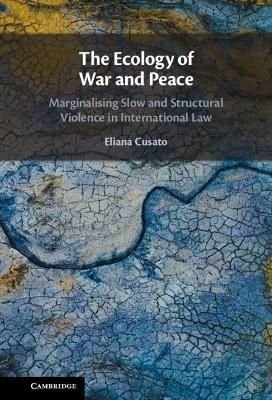
The interrelation of ecology and conflict has been the object of extensive study by political scientists and economists. From the contribution of natural resource ‘scarcity’ to violent unrest and possibly armed conflict; to resource ‘abundance’ as an incentive for initiating and prolonging armed struggles; to dysfunctional resource management and environmental degradation as an obstacle to peacebuilding, this literature has exerted a huge influence upon academic discussions and legal/policy developments.
While international law is often invoked as the solution to the socio-environmental challenges faced by conflict-affected countries, its relationship with the ecology of war and peace remains undertheorized. Drawing upon environmental justice perspectives and other theoretical traditions, the book unpacks and problematizes some of the assumptions that underlie the legal field.
Through an analysis of the practice of international courts, the United Nations Security Council, and truth commissions, the book shows how international law silences and even normalizes forms of structural and slow environmental violence (notably, uneven access and distribution of natural resources; less visible forms of violence associated with the environmental aftermath of wars).
This, in turn, jeopardizes the prospects of creating more peaceful societies, while perpetuating deeply rooted inequalities. Ultimately, the book urges us to imagine entirely different legal notions of justice, peace, and security in times of ecological disruption.
By drawing upon extra-legal fields of inquiry (e.g., the literature on environmental security, the political economy of civil wars, the resource curse, and environmental peacebuilding), the book strives to refine extant understandings of how international law conceptualizes and regulates the ‘environment’ before, during, and after armed conflict.
By engaging with some of the international legal order’s most pressing concerns – rising intra-state violence, environmental degradation, resource depletion, and their interaction – the book opens intellectual spaces for rethinking current approaches to the ecological challenges of our hyperconnected world and their adverse impact on the most marginalized peoples. As such, it offers a critical companion work to related titles and, at the same time, pushes the research envelope further and in new directions.
E Cusato, The Ecology of War and Peace: Marginalising Slow and Structural Violence in International Law (CUP 2021)
The book will be of interest to academics and students across different disciplines, primarily international law, but also peace and conflict studies, political theory, and international relations. It will also prove useful as a reference for policymakers and practitioners working at the intersection of environmental issues, human rights, and peace and security within international organisations/tribunals, governmental departments, think thanks, and NGOs.
Dr. Eliana Cusato is currently on academic leave from the Essex Law School.
The collection was edited by Ilias Bantekas (Hamad Bin Khalifa University, Qatar) and Michael Ashley Stein (Harvard Law School, Massachusetts), and was published in September 2021 by Cambridge University Press.
How can businesses operate profitably and sustainably while ensuring that they are applying human rights? I. Bantekas and M. Stein (eds), The Cambridge Companion to Business and Human Rights Law (CUP 2021)
Marija’s chapter explains the role and responsibility of the business sector in securing the rights to work and just and favourable conditions of work by clarifying the origins, legal nature, scope, and enforcement of obligations placed upon corporate actors.
It explores the differences between the role of businesses and that of states in safeguarding these rights and seeks to establish whether any obligations placed upon business actors are owed to individuals employed by their subsidiaries and suppliers outside of their country of domicile.
The chapter reflects on the three modalities of framing obligations of the business sector to secure the rights to work and just and favourable conditions of work in today’s globalised economy. It also considers whether states have – or should have – an international obligation to enact and enforce legislation that enables individuals from other jurisdictions to seek redress for the violations of the two rights by their corporate nationals.
Marija’s contribution and the further twenty-four chapters of the Companion are intended to serve as both a specialist guide to businesses, states, and consumer organisations and civil society at large in their pursuit of business and human rights related actions and policies, as well as a comprehensive textbook for business and human rights modules.
Earlier this year, Dr Meagan Wong and Dr Emily Jones from the School of Law at the University of Essex, co-founded and co-convened a new lecture series on public international law: The Essex Public International Law Lecture Series. This is a weekly series which builds upon two important intellectual traditions of Public International Law: legal formalism and international legal practice; and international theory including postcolonial and feminist perspectives.
Co-chaired by Dr Wong and Dr Jones, the series features judges of international courts and tribunals, leading academics, and practitioners of international law from governmental service, international organizations, and private practice from across the globe.
The inspiration behind the series stems from the scholarly profiles and research interests of both co-founders.
Dr Meagan Wong is a formalist generalist international lawyer who has advised States on a broad set of issues of international law including the law of treaties, jurisdiction, the law of international organizations, international courts and tribunals, and the relationship between international law and domestic law. She has also spoken to senior navy officials on matters concerning provisional arrangements pending maritime delimitation.
Dr Emily Jones is a generalist international lawyer who is a critical legal scholar that specializes in gender and conflict, science and technology and international environmental law, and is the author of two books: The Law of War and Peace: A Gender Analysis (Volume One) (Zed Publishing 2021)and Feminist Theory and International Law: Posthuman Perspectives (forthcoming with Routledge’s GlassHouse series)
The lecture series was inaugurated on 25 January 2021 on the occasion of the 75th anniversary of the first Security Council resolution by Professor Niels Blokker, who holds the Schermers Chair of International Institutional Law at the University of Leiden and is the former deputy legal advisor of the Ministry of Foreign Affairs of the Netherlands.
As the leading authority in international institutional law, Professor Blokker delivered the inaugural lecture, entitled ‘the UN Security Council at 75’. The inaugural lecture, which was in the format of a Zoom webinar, was attended by over 400 attendees, with an audience comprising judges of international courts and tribunals, members of the UN International Law Commission, legal advisors to governments and International Organizations, diplomats, private practitioners, academics, scholars, colleagues and students within and outside of Essex.
The strength of the series continued across the Spring Term, featuring:
Ms Lucía Solano, legal advisor of the Colombian Permanent Mission to the United Nations and former head of the Treaty Office – International Law Directorate at the Colombian Ministry of Foreign Affair: A fireside chat ‘Negotiating Maritime Delimitation Agreements’.
Professor Campbell McLachlan QC, Victoria University of Wellington, member of the Institut de droit international on: Systemic Integration, Revisited.
The Peace Palace, the Hague, seat of the International Court of Justice, and the Permanent Court of Arbitration | Photo by Vladyslav Lanovoy
With between 150-350 attendees per event, the far-reaching and varied audience enjoyed hearing about cutting edge research, scholarship and practice in these lectures.
Professor Malksoo’s lecture was based on the recent amendments to Russia’s constitution featured his 2021 publication with the American Journal of International Law, ‘International Law and the 2020 Amendments to the Russian Constitution’. His lecture was attended by legal advisors to the European Parliament, Council of Europe, constitutional law advisors and practitioners, government and cabinet advisors, academics and students.
Dr Ntina Tzouvala’s lecture featured her recently published monograph with Cambridge University Press entitled Civilisation as Capitalism and was the first legal theory lecture of the series. Her lecture was attended by academics of both international legal theory and formalism, legal advisors to governments, diplomats, practitioners, and students from various parts of the world, including Australia, Latin America and Asia.
H.E. Judge Kriangsak Kittichaisaree’s lecture was the first public discussion of his new bookThe International Tribunal for the Law of the Sea with Elements of International Law, Oxford University Press – of which the Editors of the Series from the Press House had attended. Other members of ITLOS had attended his lecture, along with diplomats, government advisors, practitioners, academics and students.
Lucía Solano’s fireside chat on the negotiation of maritime delimitation agreements featuring a very important practice of international law had been attended by judges from the International Tribunal for the Law of the Sea, members of the UN International Law Commission, legal advisors, government lawyers, navy officials, academics, and students.
Of note, was Judge Liesbeth Lijnzaad from ITLOS making a nod to women in international law of the sea during the Q&A session.
Professor Campbell McLachlan’s lecture featured his ongoing research for his forthcoming book entitled The Principle of Systemic Integration in International Law with Oxford University Press. His lecture was attended by judges of international courts and tribunals, members of the UN International Law Commission, legal advisors to government, diplomats, practitioners, academics, and students.
We will publish in due course a follow-up piece about the Summer Term lectures.






 Essex Law Research Blog