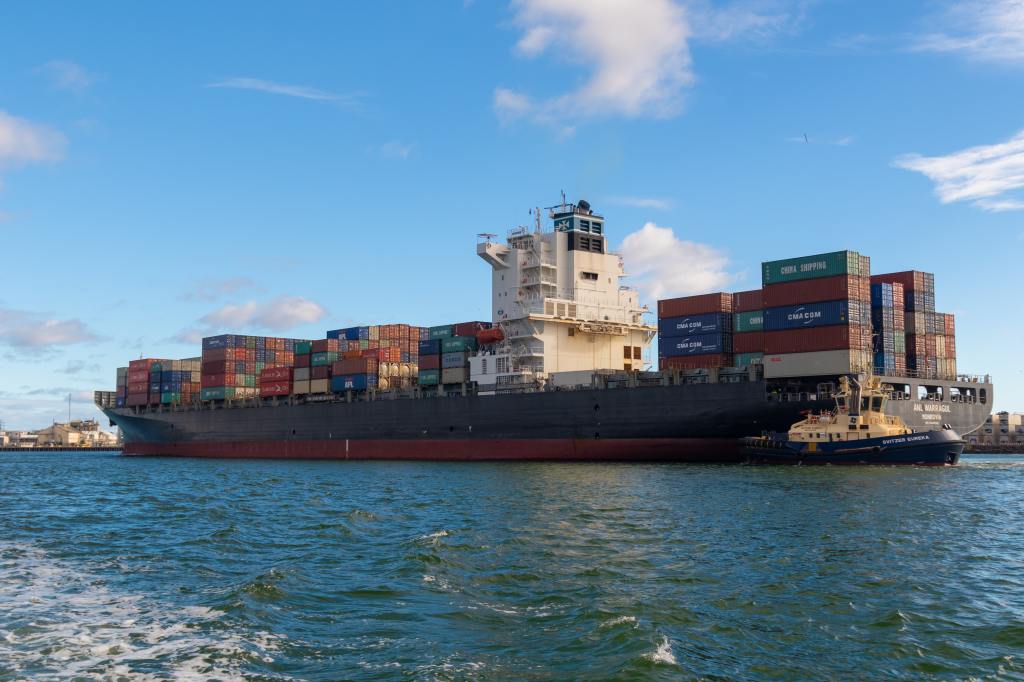
Digitalizing the End-to-End International Trade Finance Process and the Law

Photo by Chris Liverani on Unsplash

By Dr Mohammed Khair Alshaleel, Essex Law School

Trade finance is one of the backbones of global trade. By its nature, it is a heavily paper-based industry as it relies on ownership of title documents. Processes that currently support the global trade finance ecosystem are extremely focused on documentation and checking. An end-to-end process can often take weeks to complete.

The spread of digitalization and digital services in the broader society has led to calls for similar applications in the trade finance sector. However, embracing digital innovations in the trade finance industry has been very slow, trailing behind the rapid digitalization advancements made by the financial services and banking sectors.

Many of the complexities in trade finance are driven by the fact that each trade finance transaction requires the input of a large number of entities in different locations worldwide, including, for example, buyers, sellers, banks, customs authorities, insurance companies and carriers. Each entity has a unique mix of internal and external requirements to comply with. Importantly, they are at very different levels on the technology adoption curve. These variations present one of the main challenges for the trade finance industry to digitalize.

The emergence and adoption of new technologies in trade finance and trade generally have made full digitalization possible. Digitalization here refers to the incorporation of digital technologies into traditional trade finance processes and practices.

Legal framework and ecosystem collaboration

Dr Alshaleel’s research raises novel questions about whether the current trade finance legal framework is sufficient for allowing the transition to a fully digital system and whether the legal obstacles concerning the developments in technological applications in the trade finance industry are reflected in the international standards and rules.

His new article ‘Digitalizing the End-to-End International Trade Finance Process and the Law: A Mission for the Entire Ecosystem’, which is by the European Business Law Review, identifies the key challenges and barriers that impede the successful digitalization of the end-to-end trade finance process, and the factors that contribute to, or hinder, the attainment of critical mass in the adoption of digitalization within the trade finance ecosystem.

The article argues that technical innovation is only one piece of the puzzle and effective legal frameworks as well as recognized standards are essential to accelerate the digitalization journey. It also posits that digitalizing an end-to-end trade finance process is a mission for the entire trade finance ecosystem: successfully digitalizing the full trade finance process requires cooperation and buy-in from all the players involved.

Finally, Dr. Alshaleel’s analysis also emphasizes that deeper coordination and collaboration between the parties in the trade finance ecosystem is crucial in helping digitalization reach critical mass.

Incremental Development of a Legal Framework for Arbitration in Emerging Markets: A Case Study of Construction Arbitration in Nigeria

Photo by David Rotimi

Dr. Fikayo Taiwo, Lecturer in Law at the University of Essex, has concluded her Ph.D. thesis titled ‘Incremental Development of a Legal Framework for Arbitration in Emerging Markets: A Case Study of Construction Arbitration in Nigeria’.

The problem the thesis sought to investigate is the continued exportation of Africa-related disputes for arbitration outside of the continent based on a perceived lack of an appropriately attractive seat of international arbitration within the region.

Given the economic impact of arbitration activity on a nation’s gross domestic product (GDP), the issue of capital flight was especially concerning.

To this end, the aim of the thesis was dual: first, to ascertain the viability of existing frameworks for commercial arbitration in African emerging markets for the purposes of promoting their reputation as seats of international arbitration; and second, to extend the literature on the African Union’s economic integration agenda that has recently been brought to the fore again by the Agreement establishing the African Continental Free Trade Area (AfCFTA).

In dealing with the problem, Dr. Taiwo set out to investigate the main research question of the extent to which a sector-specific specialist arbitration framework could enhance the right of access to justice.

Using a hybrid methodology and the single case study design, the central argument was that, to the extent that the necessary political will is present, identifying small spaces for reform (especially through specialist arbitration frameworks) and dealing with these issues in chunks is an effective way of progressively improving the parameters of access to justice, building attractive seats of international arbitration in Africa and consequently, contribute to economic and sustainable development.

One of the original contributions the thesis makes is applying access to justice from human rights law to commercial law as a major conceptual basis for the research to address not only arbitration matters but also other issues that parties take into consideration when choosing a seat of arbitration.

The wider significance of the work lies in its ability to not only reinforce the idea that the law is part of the development and should be part of critical sectors like the construction industry but also to inform law and policy for commercial arbitration in emerging markets and international institutions.

The thesis also expands the knowledge base of access to justice and the role it plays in issues beyond the realm of human rights law and discourse.

Dr. Taiwo plans to publish journal articles from her thesis to further explore the theme of the interplay of commercial dispute resolution and human rights for sustainability, and pathways to effective regionalisation through commercial arbitration in Africa.

Redesigning Slavery Through Law: A Play in Four Acts

Photo by Hermes Rivera

Dr. Marija Jovanovic’s work was selected for presentation at the 2021 Midyear Meeting of the American Society of International Law.

The meeting, which will be held on 11-12 November 2021, encompasses several events, including the Research Forum, which features cutting-edge international law scholarship by more than 70 authors and is open to the public. Registration details are available here.

Marija’s presentation is titled ‘Redesigning Slavery Through Law: A Play in Four Acts’ and will be hosted by the Reimagining International Law panel, chaired by Professor Noah B. Novogrodsky of the University of Wyoming College of Law.

Marija’s paper investigates, in particular, the relationship between the law and slavery including ‘modern slavery’. It argues that just as states in the Global North have maintained ‘traditional’ slavery using law as a primary tool, so have they substituted the old with ‘modern slavery’ to accommodate and fulfil the needs of the present-day global economic order and political reality. This contradicts their projected image of the champions of the abolitionist movement and the recent global action against ‘modern slavery’.

This work is situated within Marija’s broader research on modern slavery and human trafficking, which explores how various aspects of law both contribute to and work to suppress these practices. It builds on her doctoral work, which is further developed in the book on State Responsibility for ‘Modern Slavery’ in Human Rights Law: A Right Not to be Trafficked forthcoming with the Oxford University Press in 2022.

The Essex Law School represents the UK at the 2022 IACL General Congress

Photo by Mikel Parera

Dr Anna – Mari Antoniou, Lecturer in Maritime and Commercial Law, has been appointed as the UK’s special national rapporteur at the International Academy of Comparative Law’s (IACL) General Congress, which will take take place in Asunción, Paraguay in 2022.

Dr Antoniou will be representing the United Kingdom for Trade Finance and her report deals with Topic IV of the Congress: ‘The Effectiveness of International Legal Harmonisation through Soft Law – UCP600’. It discusses the UK’s approach to several trade finance issues, including how courts, arbitral tribunals and financial institutions solve recurring problems in documentary credit contracts.

The report’s most significant contribution is an investigation and analysis of two current problems: first, how the COVID-19 pandemic has affected the industry and supply chains; and second, the way the pandemic has forced the issue of digitisation of trade finance.

It discusses the Law Commission’s Electronic Trade Documents project, which is in the consultation phase, and if the proposed draft Bill is adopted by Parliament, electronic transport documents will become a reality.

Dr Antoniou’s report looks at the issue both from a practical perspective and a legal perspective; international trade is worth £1.153 trillion to the UK so an incredibly significant amount is reflected in this report.

Moreover, the legal issues discussed are an excellent example of how the law needs to be updated to reflect the commercial reality. COVID-19 has highlighted other failings in the trade system, but has also emphasised the need for electronic alternatives for an industry deeply rooted in paper-only transactions.

Dr Antoniou’s preliminary report was submitted on 31 August 2021 with final reports due November 2021.

Secure Financing in International Trade

Photo by John Simmons

In August 2021, Dr Anna Mari Antoniou, Lecturer in Maritime and Commercial Law at the University of Essex, published an article on Trade Finance in the Journal of International Banking Law and Regulation.

The article, Bank Security in Letters of Credit: Mere pledgee or something more?, looks at security measures for financial institutions when financing international trade transactions via letters of credit. It examines banks’ security rights as pledgees of shipping documents and potential security rights under The Carriage of Goods by Sea Act 1992.

The article argues that the traditional approach, a bank as pledgee, has limits, and is now superseded by the bank’s position as bill of lading holder under the Act. Though the Act is almost 20 years old, cases concerning the position of banks under it and related issues are still common, for example, The Erin Schulte [2014] EWCA Civ 1382 and Sea Master Shipping Inc v. Arab Bank (Switzerland) Ltd [2018] EWHC 1902 (Comm).

Dr Antoniou argues that pledgee rights are none the less necessary in some circumstances and clarifies how the two positions can work together by proposing a tiered system of rights. The shipping market has been particularly volatile since the 2008 financial crisis and the COVID-19 pandemic has exasperated the situation.

Secure financing is considered a backbone of international trade and the particular financing method, the letter of credit, has often been described as the ‘lifeblood of international commerce’. The combination of this volatility in the market and the importance of the credit in commerce, makes bank security rights a crucial issue to examine.

The proposals in the article provide solutions in practice, enhancing bank efficiency, giving certainty to the parties involved in high value transactions. The proposals also provide a more transparent view of the law, a troublesome area for years, as evidenced by the cases.

Dr Antoniou’s article is available via Westlaw and in print with the full citation: Antoniou, A-M., (2021). Bank Security in Letters of Credit: Mere pledgee or something more?. Journal of International Banking Law and Regulation. 36(9), 367-378.