The Business Sector and the Rights to Work and Just and Favourable Conditions of Work

Photo © Marcel Crozet/ILO from Flickr

Dr Marija Jovanovic, Lecturer in Law at the University of Essex, published a new chapter titled ‘The Business Sector and the Rights to Work and Just and Favourable Conditions of Work’ in The Cambridge Companion to Business and Human Rights Law.

The collection was edited by Ilias Bantekas (Hamad Bin Khalifa University, Qatar) and Michael Ashley Stein (Harvard Law School, Massachusetts), and was published in September 2021 by Cambridge University Press.

How can businesses operate profitably and sustainably while ensuring that they are applying human rights? I. Bantekas and M. Stein (eds), The Cambridge Companion to Business and Human Rights Law (CUP 2021)

Marija’s chapter explains the role and responsibility of the business sector in securing the rights to work and just and favourable conditions of work by clarifying the origins, legal nature, scope, and enforcement of obligations placed upon corporate actors.

It explores the differences between the role of businesses and that of states in safeguarding these rights and seeks to establish whether any obligations placed upon business actors are owed to individuals employed by their subsidiaries and suppliers outside of their country of domicile.

The chapter reflects on the three modalities of framing obligations of the business sector to secure the rights to work and just and favourable conditions of work in today’s globalised economy. It also considers whether states have – or should have – an international obligation to enact and enforce legislation that enables individuals from other jurisdictions to seek redress for the violations of the two rights by their corporate nationals.

Marija’s contribution and the further twenty-four chapters of the Companion are intended to serve as both a specialist guide to businesses, states, and consumer organisations and civil society at large in their pursuit of business and human rights related actions and policies, as well as a comprehensive textbook for business and human rights modules.

The animal legal turn: could animals qualify as victims before the International Criminal Court?

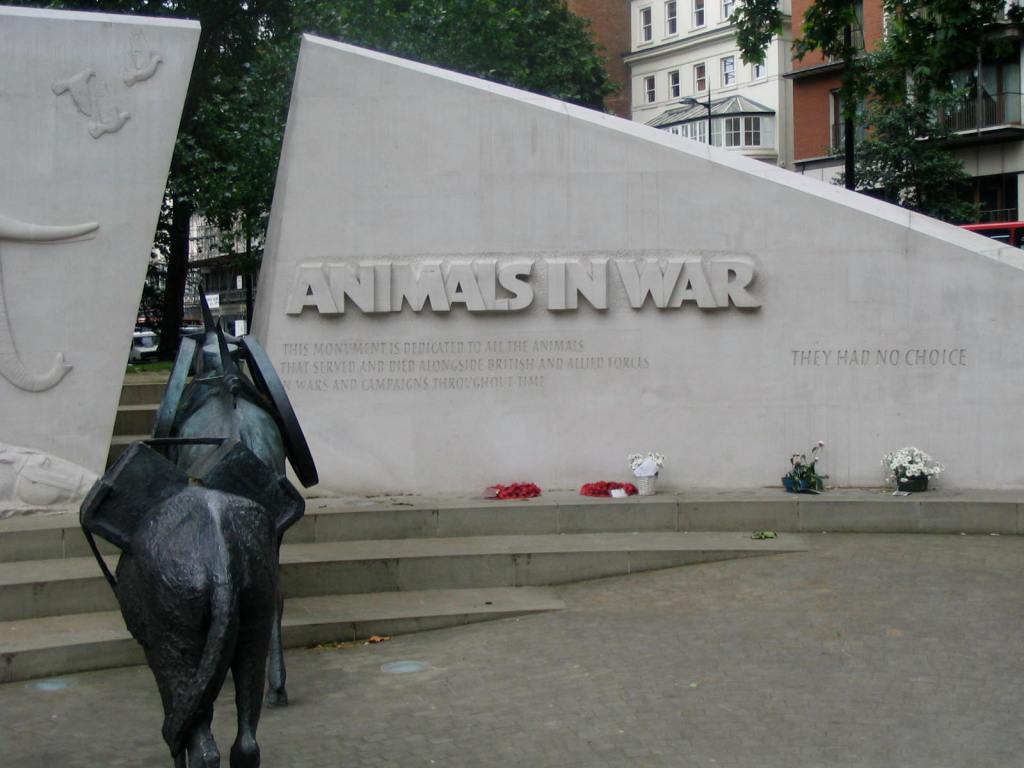
The Animals in War Memorial in Hyde Park, London (sculptor: David Backhouse)

Dr. Marina Lostal, Senior Lecturer in Law at the University of Essex, published a new article titled ‘De-objectifying Animals: Could they Qualify as Victims before the International Criminal Court?’ in the Journal of International Criminal Justice.

The article notes that the legal framework of the International Criminal Court (ICC) does not contain any provision concerning animals. Yet, animals frequently appear in both trial and reparations proceedings. The lack of animal regulation at the ICC is problematic insofar as there is now a visible animal legal turn whereby their status as mere objects is increasingly being questioned and remedied at the international and domestic levels.

Dr. Lostal’s article wishes to visibilize the ‘animal question’ at the Court by examining whether they could qualify as victims under Rule 85(a) of the Rules of Procedure and Evidence. While the short answer to this outlandish question is an unequivocal ‘no’, the conclusion reached is not the purpose of the article.

The purpose lies in showing that animals cannot qualify as ‘victims’ just because they are not human beings. Yet, they comfortably meet the other two criteria, namely (a) suffering harm, which (b) results from the commission of crimes within the Court’s jurisdiction. In short, animals may not be humans, but they also suffer in connection with core crimes.

The article concludes with the observation that granting animals the same treatment as human beings is no more objectionable as a matter of legal principle than granting them the status of ‘things’. In the author’s view, this calls for a prompt discussion of the regulation of animals within the Court.

Dr. Lostal recently presented her research at the 2021 European Animal Rights Law Conference held on 17 and 18 September in the Woolf Institute on the Westminster College site in Cambridge. The article can be accessed through the publisher’s website here.

Making the Right to Housing Real in Newcastle

Photo by Jack Foster

Dr Koldo Casla, Lecturer in Law and Director Human Rights Centre Clinic, Human Rights Local Project Lead

In June 2019, Newcastle City Council and Crisis announced a partnership to end homelessness in the city within ten years. An evidence review took place in 2020 and 2021 to inform the development of such partnership. Based on that evidence review and other documentary sources, I wrote a report to examine how Newcastle City Council can implement the internationally recognised right to adequate housing. The full report is available here.

The evidence review included frontline perceptions of homelessness provision and associated services operating in Newcastle, participatory research with people with lived experience of homelessness, an analysis of current local expenditure, how the local authority collects data, and the impact of national health, housing or social security policies in Newcastle.

On that evidential basis, I looked at Newcastle’s policy and practice on homelessness in light of the right to adequate housing as recognised in international law. The purpose of the report is to analyse what human rights may offer to end homelessness in Newcastle, connecting the evidence with human rights principles and standards.

Adequate housing is recognised as a human right in international law, particularly in Article 25 of the Universal Declaration of Human Rights and Article 11 of the International Covenant on Economic, Social and Cultural Rights (ICESCR).

Housing is more than a roof over one’s head and more than a mere commodity. Housing, as observed by the UN Committee on Economic, Social and Cultural Rights (CESCR), “should be seen as the right to live somewhere in security, peace and dignity.”

The adequacy of adequate housing is determined by seven criteria:

  1. Legal security of tenure, including protection from forced evictions, irrespective of the type of property and tenure (homeownership, lease, informal settlement, etc.);
  2. Availability of services, materials, facilities and infrastructure, including access to natural and common resources, all of which is essential for health, security, comfort and nutrition;
  3. Affordability, including protection from unreasonable rent levels and increases, so as not to compromise or threaten the attainment and satisfaction of other essential needs and rights;
  4. Habitability, in terms of protection from cold, damp, heat, rain, wind and other threats to health and safety;
  5. Accessibility, paying particular attention to the requirements of groups and individuals at greater risk of harm, disadvantage and discrimination;
  6. Location, allowing access to employment, healthcare services, schools, transport and other facilities, bearing environmental conditions in mind; and
  7. Cultural adequacy, using materials and tools that recognise and express appropriately the cultural identity and diversity of the population.

Human rights obligations extend to all branches and all public authorities, national and local. The practical content of human rights obligations, however, depends on the availability of resources. Years of austerity have significantly diminished those resources for local authorities, despite an ever-greater need for social protection.

Public authorities bear the responsibility to prove that they are putting in place the most appropriate policies, allocating all of their available resources in the most strategic way, to fulfil the right to adequate housing.

Newcastle was one of the three cities worst affected by welfare reforms in cumulative terms, alongside Manchester and Central London, with losses of over £2,000 per household in the 2010s. Austerity also materialised in cash-strapped local governance, which resulted in diminishing resources to prevent and tackle homelessness, and to deliver other public services. Newcastle faced an overall budget cut of 32% between 2010-11 and 2018-19.

Despite the UK context of austerity in public spending, the city managed to mobilise available resources to limit the impact and prevalence of homelessness. A comparatively large stock of council homes (around 26,000) provides a structural baseline to prevent and tackle homelessness. During the years of austerity-driven national policies, Newcastle largely avoided cutting public spending on housing and homelessness. With its preventive approach, Newcastle City Council managed to make the most of available resources, which are nonetheless limited considering existing demand, relatively high levels of poverty and destitution, and the cumulative consequences of austerity and Covid-19.

The right to adequate housing includes a requirement on public authorities to ensure that nobody is rendered homeless as a result of an eviction. This means that local authorities must adopt reasonable measures to provide adequate alternative housing solutions.

There was a 75% reduction in the number of evictions from Newcastle’s council housing between 2007 and 2020. Unlike other core cities, Newcastle does not use B&B accommodation as a temporary solution. The city has a single-site purpose-built supported accommodation facility with 720 beds in self-contained units at Cherry Tree View.

The relative low level of homelessness in Newcastle has been attributed to a combination of factors, particularly the preventive approach (before the 56-day target of the Homelessness Reduction Act 2017), the availability of a large stock of council homes (conductive to higher social lettings and lower private rent levels), and a financial commitment from the local authority.

However, interviewees and focus group participants identified hostels, particularly larger hostels, as potentially harmful for the city’s homeless population. In line with international human rights standards, temporary accommodation should only be used exceptionally, it must not put personal safety at risk, cannot become a long-term solution, must not separate family members, and must provide space to respect individual’s privacy.

Families are kept together in Cherry Tree View, where there are no shared rooms, so everyone has their own private space, their own apartment with toilet and kitchen. In other accommodation, these facilities would be shared.

Adequate housing must be accessible for everyone. This means public authorities should take proactive measures to ensure that housing is accessible also for groups and individuals who, due to different reasons, may face particular difficulties in accessing adequate housing.

Housing solutions for people seeking asylum should be culturally adequate, including community support, and proximity of places for worship and shops. This should be a consideration in the general suitable and sustainable homes checklist. Newcastle City Council and the Home Office should explore ways to ensure that the Council receives notice at least 56 days in advance.

Newcastle should also accommodate people who are homeless based on need alone, including people with no recourse to public funds, particularly when children are involved. The local authority should refuse to co-operate with immigration rules that infringe the right of local residents to feel safe at home.

Newcastle should ensure that survivors of domestic abuse are given priority access to a housing alternative should they need it.

The principle of active participation speaks to the spirit of involving everyone in the community in the delivery of the ambitious goal of ending homelessness. Inasmuch as possible, meaningful engagement between public authorities and the voluntary sector should include people with lived experience of homelessness, who should be listened to in the identification of challenges and possible solutions. There is no better way to defend social rights than to hand over a megaphone to the people most affected by inequality, public spending cuts and social exclusion.

Newcastle City Council is demonstrating a high dose of audacity and commitment by embracing a human rights-based approach to housing. Creating the material conditions for the fulfilment of all human rights, including the right to adequate housing, is a collective task that should concern everyone in society. This includes public and private actors, particularly when private actors receive public funds. Years of austerity have resulted in diminishing resources available to local authorities, and Newcastle City Council has been particularly affected. Yet, the evidence shows that Newcastle has achieved remarkable results despite the limitations. To ensure non-retrogression in human rights, Newcastle should maintain its proactive and preventive approach to end homelessness, above and beyond the relief and refer duties of the Homelessness Reduction Act 2017.

School of Law and Human Rights Centre Host Workshop on Critical Perspectives on Global Law and the Environment

Photo by Mike Erskine

On 22-23 April 2021, the School of Law and Human Rights Centre (HRC) held a workshop bringing together scholars at an early stage in their careers to support the development of research on critical perspectives on global law and the environment.

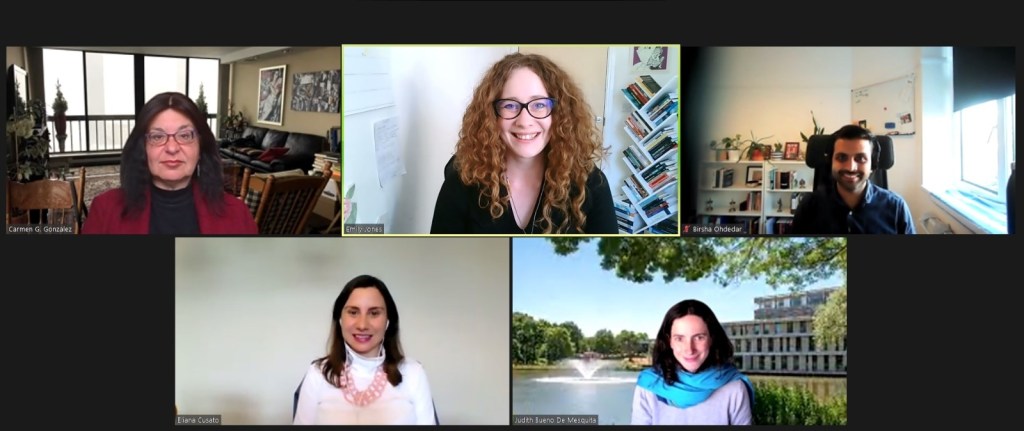
The workshop was organised by Emily Jones, Eliana Cusato, Judith Bueno De Mesquita and Birsha Ohdedar (all Lecturers in the School of Law and Human Rights Centre).

The workshop aimed to foster and develop the emerging area of critical scholarship on law and the environment, specifically among early-career researchers. In confronting global challenges such as climate change, biodiversity loss, freshwater scarcity and other symptoms of planetary breakdown, it has been noted that traditional approaches of environmental law have only managed to save “some trees” but failed to keep “the forest” (Bosselmann, 2010). The current environmental crises intertwine with poverty, inequality, and gendered and racial hierarchies that stem from colonial origins and replicate in the postcolonial and neoliberal worlds. Therefore, the challenge laid down for critical scholarship is to interrogate (and re-imagine) the role of law in the unending drive for economic expansion, unbridled exploitation of people and nature, rather than merely attempt to mitigate its excesses (Gonzalez, 2015).

Workshop partipants during the second day of the work-shop

In recent years, an emerging body of work broadly re-examines environmental law from a critical lens. These include perspectives that account for: Third World Approaches to International Law (TWAIL) and Global South-North relations; critical interrogations of human rights and the environment; innovative research methods; new materialism; and climate and environmental justice. This workshop builds on these critical perspectives with the aim of fostering a new generation of scholars.

The workshop had 18 early-career scholars participating, with a cross-section of representation from early-stage PhD researchers to those up to 5 years into their post-PhD academic careers. The virtual workshop meant participants were based across the globe, including from Europe, Canada, Turkey, Brazil, Australia, Barbados, and India, with representation across genders.

Each participant in the workshop produced a paper in advance of the day. The workshop adopted an innovative format by pairing up participants to present on each other’s paper rather than their own. The format resulted in greater engagement, feedback and the development of presenting work that is not their own, concisely and clearly. Each paper was closely discussed with other participants and invited senior discussants, providing an opportunity to gain a range of feedback on their work.

In between the two days of discussion, Prof. Carmen Gonzalez, Professor of Law at Loyola University of Chicago, delivered a keynote address on the topic of racial capitalism and global environmental law.

Keynote speaker Professor Carmen Gonzalez and the organisers of the workshop

A symposium edition of the Asian Journal on International Law is planned for 2022, as a workshop output, which will showcase some of the presented papers.

The workshop complements the work at the School of Law and HRC in this area, including through a research cluster on Human Rights and Environment and recent symposiums on human rights and climate change, albeit bringing a more focussed critical perspective.

Rising Sea-Levels and International Law: Asia and Beyond

Photo by Saad Chaudhry

On the 26th May 2021, Dr Meagan Wong, Lecturer in Law at the University of Essex, appeared in a panel of the 8th Biennial Conference of the Asian Society of International Law titled ‘Rising Sea-Levels and International Law: Asia and beyond’. The panel was also joined by Professor Patrícia Galvão Teles and Mr Alessandro Rollo, and was chaired by Dr Nilüfer Oral.

The panel was proposed and co-submitted by the four members of the event in response to an open call by the Asian Society of International Law. Dr Nilüfer Oral and Professor Patrícia Galvão Teles are both members of the UN International Law Commission and Co-Chairs of the study group on ‘Sea-level rise in relation to international law’; and Alessandro Rollo is an Associate at Omnia Strategy who specialises in public international law and international dispute settlement.

The panel drew attention to the fact that sea-levels are rising at an accelerating rate. Indeed, Asia-Pacific is home to island States, to whom sea-level rise is an immediate and pressing concern, archipelagic States which are potentially vulnerable, and major cities including Tokyo, Jakarta, Ho Chi Minh City and Shanghai that are considered most at risk from sea-level rise.

That said, the panel also acknowledged that sea-level rise is very much a global concern which merits attention from the international community as a whole and emphasised the work of the International Law Commission, which in 2019 decided to include the topic ‘Sea-level rise in relation to international law’ into the agenda, which broadly examines three themes: i) issues related to the law of the sea; ii) issues related to statehood; iii) issues related to the protection of persons affected by sea-level rise.

UN Secretary-General António Guterres has said ‘climate change offers an opportunity for multilateralism to prove its value‘ and sea-level rise is just one of the unfortunate impacts of climate change. In light of the call for multilateralism, Dr Meagan Wong’s presentation in the panel focused on ‘Sea-level rise and multilateralism.’ Her talk was structured in two main parts: first, cooperation between States; and secondly, non-compliance of States of their international obligations within existing frameworks that address climate change.

In relation to cooperation between States, Dr Wong first looked at multilateralism and the international legal order in the United Nations, highlighting the work of the UN International Law Commission. This was further elaborated upon by Professor Galvão Teles. Next, Dr Wong considered climate change and the oceans, drawing upon the legal frameworks of the UN Law of the Sea Convention 1982, the UN Framework for Climate Change 1992 and the Paris Agreement 2015.

Dr Wong then considered the obligation on States to settle their international disputes by peaceful means and the various peaceful means of choice in the event of non-compliance of States with their respective obligations. The cooperation between States in various multilateral settings and the peaceful settlement of disputes in the event of non-compliance in relation to climate change obligations reflect two important themes of multilateralism.

This was followed by a discussion by Mr Alessandro Rollo on the impact of sea-level rise on international human rights law. Mr Rollo addressed how sea-level rise jeopardises the human rights of individuals living in affected States in Asia and beyond, and the duty of affected States to protect the human rights of individuals under their jurisdiction in relation to the impact of rising sea levels. Professor Patrícia Galvão Teles expanded further upon the themes discussed by the earlier two panelists with particular reference to the work of the UN International Law Commission Study Group on sea-level rise in relation to international law.

Further information about the work of the UN International Law Commission on Sea-Level Rise can be seen here.

Pushing Past the Tipping Point: Can the Inter-American System Accommodate Abortion Rights?

Dr. Patricia Palacios Zuloaga, Lecturer in Law, University of Essex, had a new article published in the Human Rights Law Review, titled ‘Pushing Past the Tipping Point: Can the Inter-American System Accommodate Abortion Rights?’

While anti-abortion activists have been successful in pushing to restrict access to abortion across the USA, reproductive rights activists have been mobilizing across Latin America to push for the easement of strict anti-abortion policies. These opposing directions of travel have renewed interest in which human rights arguments would best support the expansion of access to abortion in Latin America.

To date, progress in this area has mostly relied on understanding that the prohibition of cruel, inhuman and degrading treatment requires states to allow abortions in the direst of circumstances. However, the vast majority of women in the region who seek abortions do not qualify for the small exemptions contained in the law. Activists looking to expand abortion provisions beyond the cruelty paradigm therefore need to find arguments that can stand firm in a generally conservative Latin American region.

In this search, Dr. Palacios Zuloaga argues, the Inter-American System could, somewhat surprisingly, provide keys to constructing a new discourse surrounding reproductive rights based on a nuanced understanding of structural discrimination and a willingness to visibilise the suffering of women.

A copy of the article can be accessed through the publisher’s website here.

Effective Oversight of Large-Scale Surveillance Activities: A Human Rights Perspective

Photo by Lianhao Qu

Daragh Murray, Pete Fussey, Lorna McGregor, and Maurice Sunkin, University of Essex, explore the international human rights law implications of state surveillance in a new article published in the Journal of National Security Law and Policy (JNSLP).

Today, state surveillance involves the large-scale collection and analysis of digital data—activities which allow for widespread monitoring of citizens. And while commentary on the legality of these bulk surveillance regimes has focused on whether this routine surveillance is permissible, the European Court of Human Rights has recently held that, subject to appropriate safeguards, surveillance of this type is legitimate, and sometimes necessary, for national security purposes in a democratic society.

In their analysis, the authors outline the types of oversight mechanisms needed to make large-scale surveillance human rights compliant. To do so, they break down state surveillance into its constituent stages—authorization, oversight, and ex post facto review—and focus their attention on the first two stages of the process.

First, they argue that effective oversight of authorizations requires increasing data access and ensuring independent judicial review.

Second, they argue that effective oversight of ongoing surveillance requires improving technical expertise and providing for long term supervision.

The authors conclude that a “court-plus” model of judicial officers and non-judicial staff would deliver enhanced judicial qualities to authorizations while also providing continuous engagement through ongoing review and supervision.

This post was first published on the JNSLP website and is reproduced here with permisson and thanks. The original piece and a link to the authors’ article can be found here.

World Oceans Day: the School of Law Celebrates with Law of the Sea Lectures

In celebration of World Oceans Day, the convenors of the Essex Public International Law Lecture Series, Dr Meagan Wong and Dr Emily Jones invite you to re-visit our law of the sea lectures in our series featuring the impressive speakers who play a leading role in advising, facilitating, negotiating, pleading, and adjudicating various matters of the international law of the sea in a variety of settings: Ms Lucía Solano (legal advisor to Colombian mission at the United Nations), Judge Kriangsak Kittichaisaree (International Tribunal for the Law of the Sea), Judge Ida Caracciolo (International Tribunal for the Law of the Sea), Mr Osvaldo Urrutia (Senior legal advisor to Chile on fisheries & ocean affairs and former Chair of the South Pacific Regional Fisheries Management Organization (SPRFMO).

In relation to the negotiation of maritime delimitation agreements, Ms Lucía Solano, legal advisor of the Colombian Permanent Mission to the United Nations and former head of the Treaty Office – International Law Directorate at the Colombian Ministry of Foreign Affairs is chaired by Dr Meagan Wong in a fireside chat, hosted by Dr Emily Jones:

In her former capacity as head of treaties in the Colombian Ministry of Foreign Affairs, Lucía Solano lead the negotiation of all sorts of agreements for her country, including in particular maritime delimitation agreements. Lucía thus brings her insights from the negotiating table and will provide suggestions on how States’ officials should prepare for negotiating these agreements. She will shares her thoughts on what the content of those agreements should be, bearing in mind the interest of States but also new developments in the law of the sea and the concerns of the communities located on both sides of a maritime boundary. 

Although seemingly technical or mathematical, negotiating delimitation lines are really at the heart of the interests of States because such lines ultimately determine the extent of rights and obligations of States in exercising their sovereignty and rights in the sea, within their side of the line. In this chat, Lucia draws to light the legal, political, technical, historical, environmental, and economic elements involved in negotiating maritime delimitation agreements, which have turned this topic into one of the most studied not only by jurists, but hydrographers, geographers, cartographers, and other experts. 

From the experience of a career diplomat, she shares with us the important role diplomats and government officials play in negotiating these agreements on behalf of their States, and the need or pertinence of involving other actors or advisors; as well as the practice of Caribbean States in entering maritime delimitation agreements, having in mind the importance of historical, environmental, and economic considerations, among other, play in entering into these agreements.

You can watch the recording of this event here.

With regard to the peaceful settlement of disputes in the law of the sea, His Excellency Judge Kriangsak Kittichaisaree, Judge of the International Tribunal for the Law of the Sea (“ITLOS”), former Ambassador of Thailand, former member of the UN International Law Commission delivered a lecture entitled, ‘International Tribunal for the Law of the Sea: Upholding the Rule of Law’ which was premised on his new book with Oxford University Press: The International Tribunal for the Law of the Sea (Oxford University Press, 2021).

Judge Kittichaisaree’s lecture features this book which is one of the first books in the elements of international law series by Oxford University Press – which provides readers with a highly reliable, objective, readable and in-depth account of the subject using an objective, non-argumentative, approach. 

In the lecture, Judge Kittichaisaree discusses the Tribunal’s intended role as the main dispute settlement mechanism for the international law of the sea under the 1982 United Nations Convention on the Law of the Sea, the Settlement of Disputes Part of which is the most complicated dispute settlement regime of all currently existing international courts and tribunals. The pros and cons of resorting to the Tribunal as compared with other forums that may have concurrent jurisdiction will be explained. So will the Tribunal’s limitations and unutilized potentials in rendering advisory opinions and judgments in contentious cases, including in new fields such as human rights at sea as well sea-level rise.  

You can watch the recording of this event here.

On matters pertaining to maritime security, navigation, rights and duties of States in relation to the regime of international straits, Judge Ida Caracciolo, Judge of the International Tribunal for the Law of the Sea, Full Professor of International, Member of the Permanent Court of Arbitration for Italian National Group, Alternate Arbitrator in the Court of Conciliation and Arbitration of the OECD delivered a lecture entitled, ‘The regime of international straits – freedoms, rights and obligations at stake’:

International straits have always been important and strategic shipping routes for sea communication and world trade. Therefore, they received special attention by the UN Convention on the Law of the Sea which tries to balance the different and opposing interests that are centred around straits: those of States using the straits and those of coastal States of the straits. The point of equilibrium has been reached with the introduction of the new regime of the transit passage in addition to the pre-existing regime of innocent passage and through an articulated set of rights and obligations of coastal States bordering the straits whose interpretation pose a continuous challenge to scholars and practitioners.

You can watch the recording of this event here.

And bringing forth cutting edge developments in relation to fishing in the high seas and the conservation of marine biodiversity beyond national jurisdiction, Osvaldo Urrutia, senior legal advisor to the Government of Chile in Fisheries and Ocean Affairs, and the former Chair of the Compliance for the Commission for the Conservation of Antarctic Marine Living Resources and the former Chair of the South Pacific regional Fisheries Management Organization, former Chair of the Commission of the South Pacific regional Fisheries Management Organization, delivers a lecture entitled, ‘International law and the problems with high seas fishing – the future ahead’:

The challenges of high seas fishing seem endless. Fishing is an economic activity that causes severe impacts on marine biodiversity and ecosystems. This is no exception on the high seas: overfishing, bycatch, discards, harmful fishing practices that affect ecosystems, IUU fishing, and marine pollution from lost fishing gear are environmental impacts occurring every day “out of sight” in our seas. The legal, political, and operational difficulties of managing the high seas exacerbate these problems. The climate change crisis, triggering significant changes in ocean dynamics, will only worsen the uncertainties.

International law has been a critical factor in the dynamics of global fisheries, and the high seas are no exception. But is international law responding to the high seas? Why is the system not delivering? Do we need radical ideas for the future ahead, or can we improve the system with the current forces at work? This talk will discuss some legal challenges facing the high seas from two connected perspectives: regulatory and institutional. Is this a problem of lack of treaties, stagnant state practice or simply poor compliance? Critical for the future of high seas ecosystems are little, decentralised organisations called RFMOs, with significant responsibilities but overwhelmed by all sort of problems. Do they need reform or support? The talk will close by discussing the role that a future BBNJ Agreement may have in regulating high seas fishing.

You can watch the recording of this event here.

Earlier this year, Dr Meagan Wong and Dr Emily Jones from the School of Law, co-founded and co-convened a new lecture series on public international law: The Essex Public International Law Lecture Series. This is a weekly series which builds upon two important intellectual traditions of Public International Law: legal formalism and international legal practice; and international theory including postcolonial and feminist perspectives. Co-chaired by Dr Wong and Dr Jones, the series features judges of international courts and tribunals, leading academics, and practitioners of international law from governmental service, international organizations, and private practice from across the globe.

We welcome all students, academics, practitioners, and legal advisors to join us.   

Human Rights and Climate Change Symposium – University of Essex 9-11th June 2021

There are many ways in which climate change impacts upon a range of human rights. Therefore, it may appear strange that the linkages between human rights and climate change were not widely acknowledged until relatively recently. The first UN Human Rights Council resolution relating to climate change occurred in March 2008, where it acknowledged that climate change, ‘poses an immediate and far-reaching threat to people and communities around the world’.

The meaning and understanding of the linkages between human rights and the environment more generally have taken a long time to emerge at national and international levels. Following a key moment at UNCHE in Stockholm in 1972 when it was declared that people have a ‘fundamental right to freedom, equality and adequate conditions of life, in an environment of a quality that permits a life of dignity and well-being..’, developments have taken place gradually and often in a fragmented manner.

All the same, through national constitutions and courts, regional human rights treaties and tribunals, declarations of international organisations and through the work of the international community more generally, law and opinion in the field of human rights and the environment have developed year by year. And yet, in spite of the many developments that have taken place, the right to a safe, clean, healthy and sustainable environment has still not been acknowledged through a globally applicable international treaty or a resolution of the UN General Assembly. 

Climate change as a specific environmental issue has gained prominence relatively recently, however, the trajectory of developments in its relationship with human rights has been rapid. In the early 1970s, the international issues that dominated the headlines were issues such as the Vietnam war, famines in different parts of the world, factional wars and violence in newly independent countries and the introduction of early computers. In contrast, the 2000s have seen climate change rise rapidly up international agendas. This is seen through the intensity of attention afforded to it at meetings among national leaders, through the strategies of multinationals to respond to the need to reduce emissions, and through the levels of engagement with the issue by the international community generally. This has meant that work has intensified very rapidly to fully understand the human rights implications of climate change.

That said, there are still many questions that need to be answered. These include questions relating to the ways that climate change impacts upon and intersects with existing human rights, those relating to the ways that human rights as legal mechanisms can be activated to respond to the challenges related to climate change, and questions relating to the level of recognition or the status of the ‘right to a safe climate’ itself. 

Between 9-11 June 2021, the School of Law and the Human Rights Centre at the University of Essex in conjunction with its partner organisations, will be hosting a symposium that will focus on issues related to the nexus between human rights and climate change. The symposium is grateful to the numerous international experts who have offered to participate.

In particular, it is grateful to Elizabeth Mrema (Executive Secretary of the Convention on Biological Diversity) and Professor John Knox (former UN Special Rapporteur on Human Rights and the Environment) for their participation and support.

The symposium will include talks and panel sessions that focus on different aspects of the intersections between human rights and climate change. They include environmental constitutionalism, biodiversity, dignity, migration, energy provision in developing countries and the rights of a child. The symposium will also include panel sessions that specifically consider Bhutan and the rights of nature. 

We extend a warm welcome to you and hope that you will join us. 

For further information and details on how to register see: Human Rights and Climate Change Symposium

Partner Organisations: 

  • Environmental Law Institute (Washington DC)
  • University of Bayreuth (Germany)
  • University of East Anglia (UK)
  • Global Environmental Rights Institute, Dignity Rights Project (USA)
  • Widener University Delaware Law School (USA)

The Ntaganda Reparations Order: a marked step towards a victim-centred reparations legal framework at the ICC

International Criminal Court building in The Hague | Source: Wikimedia Commons

Dr. Marina Lostal, University of Essex, School of Law

NB: The author has been involved in the work of reparations at the ICC, first as a Court-appointed expert in the Al Mahdi case in 2017 and, between 2018 and 2020, as a reparations expert at the TFV. However, this post is written in the author’s personal capacity.

On 8 July 2019, Trial Chamber VI of the International Criminal Court (ICC) sentenced Bosco Ntaganda to 30 years of imprisonment after finding him guilty of five counts of crimes against humanity and thirteen counts of war crimes committed between 2002-2003 in Ituri (DRC). The Appeals Chamber confirmed both the sentence and verdict on 30 March 2021.

A few weeks earlier, on 8 March 2021, Trial Chamber VI issued the Ntaganda Reparations Order. An order for reparations is the document that sets out the foundations for the implementation of measures in favour of victims and, for that purpose, must be (1) directed against the convicted person; (2) establish the convicted person’s amount of liability; (3) identify – or set the criteria to later identify – the victims of the case; (4) determine the harm suffered; and (5) the type and modalities of reparations appropriate to address such harm. Aside from this case-specific goal, and pursuant to article 75(1) of the Rome Statute, an order for reparations can be used to amend or develop the legal framework applicable to reparations through the enunciation of principles.

The Ntaganda Reparations Order is the fourth issued by the Court following those of Lubanga (2012-2015), Katanga (2017), and Al Mahdi (2017). It is, however, the first one that expands and modifies the reparations principles that had been initially laid down in the Lubanga case (i.e. Lubanga reparations principles). In so doing, the Ntaganda reparations principles (in paras 28-103 of the Reparations Order) have effectively modified the legal framework applicable to reparations at the ICC, and brought it closer to a victim-centred approach where the emphasis is increasingly placed in the goal of repairing the harm caused to victims.

This post gives an overview of the five elements of the Ntaganda Reparations Order, and discusses some of the changes that it has brought to the Court’s reparative framework.

Against the convicted person

Article 75(2) of the Rome Statute requires the order for reparations to be made against the convicted person. However, nothing in the legal framework demands such conviction to be final. The Ntaganda Trial Chamber decided to issue an order for reparations while the verdict and sentence were on appeal; a practice that remains in keeping with the legal framework but that, nonetheless, is unusual and, in this author’s view, potentially problematic. 

Never before had a Trial Chamber issued a proper order for reparations until the judgment had become final (cf. Ntaganda Reparations Order, footnote 10). In Bemba, Trial Chamber III held off until the Appeals Chamber reached a decision. Following Mr Bemba’s acquittal, Trial Chamber III found that “no reparations order [could] be made against Mr Bemba under Article 75 of the Statute” (Final decision on the reparations proceedings, para. 3).

The longer the lapse of time between a pre-appeal order for reparations and an appeal judgment, the more problematic this practice could become. If the conviction is partially or completely reversed on appeal, the order for reparations would have to follow suit by reducing the monetary sum and cutting off entire pools of victims. In practice this would imply, at the very least, damage-controlling any outreach messages already made and, in the worst case, halting or reversing any implementation work taken up.

The Ntaganda Trial Chamber justified issuing a Reparations Order ahead of the appeal judgment because the mandate of two of its judges was coming to an end before the date foreseen for the appeals judgment (para. 5). It also argued that issuing the Reparations Order earlier could “contribute to more expeditious reparations proceedings” (ibid.) pursuant to the victims’ right to receive prompt reparations. However, given that the appeal judgment was rendered only 23 days after the Reparations Order, the latter reason remains unconvincing. It would have been perhaps more appropriate to argue the opposite: that because the appeal judgment was expected only shortly after, any potential reversal of some or all of the charges would not have impacted victims because the implementation work was unlikely to have started. Be that as it may, since the Appeals Chamber confirmed the trial sentence and verdict, no amendments were needed to the Ntaganda Reparations Order.

Monetary liability

Mr Ntaganda’s liability has been set at USD 30 million (para. 247); the highest so far (Lubanga USD 10 million, Katanga USD 1 million, and Al Mahdi EUR 2.7 million). In arriving at this sum, the Reparations Order has finally clarified the primary factors that should be taken into account in determining someone’s monetary liability: the harm and the costs to repair it (para. 98). Modes of liability, gravity of the crimes, or mitigating factors are irrelevant for the determination of the sum (ibid.). This has changed the Lubanga principle on liability, according to which the convicted person’s liability for reparations had to be:

“proportionate to the harm caused and, inter alia, his or her participation in the commission of the crimes for which he or she was found guilty, in the specific circumstances of the case”

Lubanga Reparations Principles, para. 21

The application of this principle had led to contrasting outcomes. In Lubanga, the Court “appears to have found Lubanga monetarily responsible for the totality of harm suffered”, USD 10 million, irrespective of the fact that there were other perpetrators. By contrast, in Katanga, the Trial Chamber first calculated the sum-total of the harm caused in the attacks against Bogoro (i.e. USD 3,752,620) and then, apportioned Mr Katanga with USD 1 million based on his participation and mode of responsibility (Katanga Reparations Order, para. 264). In Al Mahdi, the Trial Chamber considered that EUR 2.7 million was a fair assessment of the Mr Al Mahdi’s liability alone, and did not deem it “necessary to decide whether the figures […] constitute[d] the sum-total of harm suffered” (Al Mahdi Reparations Order, para. 111).

The internal discrepancies with the Lubanga principle on liability became even more tangible when, in its judgment against the Katanga Reparations Order, the Appeals Chamber both endorsed and rejected the principle in the same paragraph. It said the fact that a convicted person’s liability for reparations had to be proportionate to the harm caused and, inter alia, issues of participation

“d[id] not mean, however, that the amount of reparations for which a convicted person is held liable must reflect his or her relative responsibility for the harm in question vis-à-vis others who may also have contributed to that harm”.

Katanga Appeals Judgment on Reparations, para. 175

The Ntaganda Trial Chamber decided to unequivocally amend the Lubanga liability principle as follows:

“[i]n determining the amount of the convicted person’s liability, the primary consideration should be the extent of the harm and the costs to repair it. Other criteria, such as modes of liability, gravity of the crimes, or mitigating factors are not relevant to this determination”.

Ntaganda Reparations Order, para. 98

In other words, the Ntaganda Trial Chamber has embraced a victim-centred approach where the objective is repairing the harm caused to the victims, not as caused by the offender. This is also more in line with the non-punitive nature of reparations proceedings where, as a consequence, the degree of culpability of the individual should be inconsequential to questions of monetary liability. Accordingly, the Ntaganda Reparations Order found:

“Mr Ntaganda liable to repair the full extent of the harm caused to the direct and indirect victims of all crimes for which he was convicted, regardless of the different modes of liability […] and regardless of whether others may have also contributed to the harm” (para. 218).

When there are other perpetrators, two things must be taken into account: first, victims cannot be over-compensated over time (paras 99-100). Second, the existence of responsibility in solidum where the perpetrator who bore the cost of reparation can “seek to recover from the co-perpetrators their proportionate share” (para. 221).

Accordingly, concerning the child soldier victims that Mr Ntaganda shared with Mr Lubanga, the Ntaganda Reparations Order stated that “the reparation programmes implemented in the Lubanga case […] should be understood to repair the victims’ harm on behalf of both” (para. 220). Even though the measures in favour of these former child soldiers would be implemented under the umbrella of the Lubanga Reparations Order, Mr Ntaganda remains jointly and severally liable to repair in full the harm suffered by these child soldiers, that is, he also bears the obligation to reimburse the Trust Fund for Victims in that respect (para. 221).

Identify – or set the criteria to later identify – the victims of his crimes

There is no doubt that the Ntaganda reparations will deal with a very large pool of victims, but the estimated number of prospective eligible victims remains far from clear. The Trial Chamber conceded that the “exact number [of victims] may never be determined given the passage of time, the widespread and systematic nature of the crimes committed” (para. 8). Current figures range from a starting base of 2,500 according to the Registry (paras. 232 and 234); 3,500 direct victims according to the Court-appointed experts (para. 232), to 100,000 people as per common legal representative 2 (para. 233). Given the impossibility to identify victims by name at this stage, the Trial Chamber has opted for establishing their eligibility criteria instead (para. 105).

The Trial Chamber kept the distinction between direct and indirect victims where the former “are those whose harm is the result of the commission of a crime for which the defendant was convicted” (para. 34); and the latter refers to “those who suffer harm as a result of the harm suffered by the direct victims” (para. 35). This would include family members of direct victims, even those who were not born at the time of the commission of the crime but that are able to prove transgenerational harm, that is, the transmission of noxious effects of trauma from one generation to the next (paras 36, 73 and 183(d)(vi))

Aside from the two known existing categories of direct victims (viz. victims of the attacks and child soldiers), the Ntaganda Reparations Order added a third one: children born out of rape and sexual slavery (para. 122). This carries an important practical implication: the offspring of these children born out of rape and sexual slavery could, in turn, qualify as indirect victims on account of transgenerational harm. Therefore, the damage Mr Ntaganda caused could transcend to, not only one, but two generations that were unborn at the time of the commission of the crimes.

Determine the harm suffered

The Ntaganda Reparations Order acknowledged that the crimes of Mr Ntaganda had led to mass victimisation (paras 149-169) and provided a detailed list of the, often multidimensional, types of harm suffered per victim category (para. 183).

As to questions of evidence, the Ntaganda Reparations Order has endorsed the same legal tests used in previous reparations proceedings. This is the balance of probabilities to establish someone’s identity and the occurrence of harm (para. 136), and the but/for and proximate cause tests to link the harm to the crime in question (para. 132).

The balance of probabilities requires presenting some sort of documentation or, in its absence, a statement signed by two credible witnesses (para. 137). However, a special rule will apply to victims of sexual and gender-based violence where “the victim’s coherent and credible account shall be accepted as sufficient evidence to establish their eligibility” (para. 139). In addition, factual presumptions will be relied on for certain types of victims. This means that material, physical and psychological harm would be assumed for, say, rape victims without any need to scrutinize the specific harm in question (paras 144-147).

Type and modalities of reparations

Reparations can be individual or collective, and both types can be awarded concurrently (rule 97(1) RPE). However, the Ntaganda Reparations Order has crystallised a middle-of-the-way category known as “collective reparations with individualised components”. These reparations, which are the only ones that will feature in the Ntaganda case (paras 7 and 186), are collective in nature but they result in individual benefits.

The Ntaganda Reparations Order seems to suggest that collective reparations with an individualised component may adopt any given modality, even monetary compensation (para. 86), something that had so far been framed as an individual form of reparation (Al Mahdi Reparations Order, paras 81 and 90). Why then label reparations as collective when they end up leading to concrete individual benefits?

Aside from the different expressive function embedded in these two terms, in the ICC legal framework, there are certain practical advantages in calling something “collective” reparations. One should be mentioned here. The Trust Fund for Victims (TFV) may prioritize funding collective reparations over individual ones (TFV Observations, para. 124). On its side, the Ntaganda Reparations Order has established that certain victims need priority treatment, such as “individuals who require immediate physical and/or psychological medical care, […] victims who are homeless” (para. 214). If the Ntaganda Trial Chamber had not categorised reparations as “collective” there could be, in principle, a clash between the prioritisation policy of the TFV, and that of the Ntaganda Reparations Order where the victims in need of tailored and urgent care would come last in their access to funding.

How would these reparative measures will look in practice? The ball is now in the TFV’s court as it is in charge of submitting two draft implementation plans, one urgent for priority victims by 8 June 2021, and the rest by 8 September 2021. What is clear is that the future draft implementation plans of the TFV needs to be comprehensive and include all modalities of reparations – compensation, restitution, rehabilitation, satisfaction and symbolic – or justify their exclusion (para. 212) and, of course, adopt a very victim-centred approach. Moreover, Mr Ntaganda is considered indigent and the Trial Chamber has, as in all other cases to date, invited the TFV to complement the award (para. 257).  If so, the TFV would need to conduct an enormous fundraising effort, the biggest so far (see TFV Financial Overview, pp. 17-19, 25), where State parties are expected to play a major role so that reparations plans are turned into reality.

This piece was first published on the Blog of the European Journal of International Law and is reproduced here with permission and thanks. The original post can be accessed here.