Sustainability as a Legal Principle: Call for Papers

Third YUFE LAW Meeting, Rijeka, 23-24 June 2022

Photo by Headway

YUFE, the Young Universities for the Future of Europe, is an alliance of ten dynamic, student-centred research-based universities and four non-academic partners from the non-governmental and private sector for an impactful European University. Together, the YUFE partners aim to establish one of the first true European Universities.

Essex is part of the YUFE alliance and is working with its partners to shape the future of European higher education by establishing a European University that’s open to all. 

Continuing its recently established YUFE LAW practice, first at the meeting in Maastricht in January 2020 and subsequently, at the meeting in Bremen in May 2021, applications are invited for the Third YUFE LAW meeting which will be held by the Faculty of Law in Rijeka, Croatia on 23 and 24 June 2022.

Following last year’s model, the discussion concerning the past and future cooperation within the YUFE LAW will be held in parallel with the dissemination of research at the international scientific conference dedicated to the topic of Sustainability as a Legal Principle.

The term “sustainable development” started gaining planetary recognition probably with the 1992 United Nations Conference on Environment and Development and the Earth Plan. At the 2002 World Summit for Sustainable Development in Johannesburg, the need for consistency between the three pillars of sustainable development – being social justice, economic growth, and environmental protection – was stressed as crucial thus paving the way for what we understand as sustainable development nowadays.

The 2030 Agenda for Sustainable Development was adopted by all United Nations Member States in 2015 to ensure common values of peace and prosperity for people and the planet, now and into the future. The core of the Agenda is made of the 17 Sustainable Development Goals (SDGs) which recognize that ending poverty and other deprivations must go hand-in-hand with strategies that improve health and education, reduce inequality, and spur economic growth – all while tackling climate change and working to preserve our oceans and forests.

Understanding sustainable development as a development that meets the needs of the present without compromising the ability of future generations to meet their own needs, its initial meaning has been broadened much beyond environmental protection to encompass virtually all aspects of human activities.

Reaching SGDs can thus be done by means of regulating emissions and promoting developments in renewable energy, developing responsible ICT enabled transformation, reducing waste, or fighting extreme poverty just as by eradicating inequalities, empowering women, ensuring full and productive employment, and decent work for all, or promoting peaceful and inclusive societies, providing access to justice for all and building effective, accountable and inclusive institutions at all levels.

Law is a powerful means in achieving SDGs because the underlying policies may be more efficiently achieved if effectively in-built in legal regulation and not just made part of promotional activities or alike. Reinforcement by means of legal norms seems to be one of the key factors in following through the 2030 Agenda.

Indeed, by now, many preambles, pieces of legislation. statements and declarations contain references to sustainable development, international, European or national. In various areas of law, support or justification for certain regulatory solutions is sought in sustainable development concerns. Such concerns are being more explicitly articulated by the courts and tribunals in different countries.

It is increasingly recognised at many levels that bringing together social, environmental and economic rules and regimes is necessary. Gradually, sustainable development has entered the legal sphere and we may ask ourselves to what extent is sustainability a legal principle.

Against this backdrop, recent years have witnessed also intensified academic discussions on the role of law in sustainable development. For legal researchers, this is a daring endeavour since it entails an interdisciplinary approach including deepening the understanding of the sustainable development and SDGs and attempting to gain a broader understanding and wider picture of the researched issues.

At the same time, legal scholars have a huge responsibility to attempt to discover the old laws which are at odds with the SDGs or to unmask the new ones which use the “greenwashing” practices rather than truly contribute to the achievement of one or more SDGs.

The Third YUFE LAW Research Conference welcomes papers from any area of law, with more or less interdisciplinary threads, which would discuss legal regulation in the context of the SGDs. The conference aims to gather experts in various fields of law affiliated with any of the YUFE partners, to discuss different topics under the umbrella of sustainability as a legal principle.

If you are interested and willing to contribute, please send the title and abstract of your proposed topic (1-2 pages) and your short CV (5 lines on current position and relevant publications) no later than 15 March 2022 to yufe.law@uniri.hr.

The conference will be held in hybrid form. The Faculty of Law in Rijeka will be able to provide lunch and refreshments to all onsite participants, but travel and accommodation should be covered from other sources (e.g., Erasmus+ funding or home institutions).

We look forward to meeting you in Rijeka!

Antonio Cassese: The Stubborn Sparrow

Photo by C D-X

Ιn collaboration with the Cassese InitiativeDr. Antonio Coco (Lecturer in Law at the University of Essex) recently launched ‘Antonio Cassese: The Stubborn Sparrow’, a podcast series on the work and legacy of the late Professor Antonio Cassese, pioneering international lawyer, on the occasion of the 10th anniversary of his passing.

The series is exploring Prof. Cassese’s impact on international law and institutions on five selected issues:

  • genocide;
  • terrorism;
  • torture;
  • human rights in the European Union; and
  • war crimes.

Two episodes are already available.

Episode 1 ‘Genocide and the Commission of Inquiry on Darfur’ discusses the findings on genocide and working methods of the UN Commission of Inquiry in Darfur, which Antonio Cassese chaired in 2004-2005. The two co-hosts, Paola Gaeta and Salvatore Zappalà, interview Fannie Lafontaine, who worked with Cassese as his legal assistant at the time.

Episode 2 ‘The crime of terrorism and the Special Tribunal for Lebanon’ recalls that Cassese was the first President of the Special Tribunal for Lebanon, a hybrid court established in 2007 to try those responsible for the attack that killed the former Lebanese Prime Minister Rafic Hariri and others. In February 2011, under Cassese’s presidency, the Tribunal rendered a controversial decision on the definition of the international crime of terrorism. The co-hosts Antonio Coco and Giulia Pinzauti discuss the decision and Cassese’s contribution to it with guest Guido Acquaviva, the Tribunal’s Chef de Cabinet at the time.

New episodes are released monthly on SimplecastApple PodcastSpotifyGoogle PodcastsAmazon Music, and everywhere you get your podcasts.

Event: Posthuman International Law and the Rights of Nature

Photo by Elissa Garcia

Both posthuman theory and the rights of nature (RoN) movement have the potential to challenge the anthropocentrism of international environmental law (IEL).

Scholars have begun to document the transformative shifts that could occur through the application of posthuman legal theory to IEL, but these theories have yet to be applied to law in practice.

On the other hand, the RoN have been applied in domestic law but hardly in international law, while the question of what RoN includes and excludes remains contested.

Dr, Emily Jones, Senior Lecturer in Law at the University of Essex, brings posthuman theory and RoN together, reflecting on how posthuman legal theory can contribute to the framing of RoN, with a focus on challenging the anthropocentrism of IEL.

She is presenting her work on the rights of nature and posthumanism at a special seminar hosted by Law and Global Justice at Durham (LGJD) on Friday 4 February 2022 15:00-17:00 GMT.

You can attend this event either online or in-person (Durham University, Room PCL152, Moot Court). To register, please email roman.f.chuffart@durham.ac.uk.

‘Cyber Due Diligence’: A Patchwork of Protective Obligations in International Law

Photo by Kevin Ku

With a long history in international law, the concept of due diligence has recently gained traction in the cyber context, as a promising avenue to hold states accountable for harmful cyber operations originating from, or transiting through, their territory, in the absence of attribution.

Nonetheless, confusion surrounds the nature, content, and scope of due diligence. It remains unclear whether it is a general principle of international law, a self-standing obligation, or a standard of conduct, and whether there is a specific rule requiring diligent behaviour in cyberspace.

This has created an ‘all-or-nothing’ discourse: either states have agreed to a rule or principle of ‘cyber due diligence’, or no obligation to behave diligently would exist in cyberspace.

In their new article in the European Journal of International Law, Dr. Antonio Coco, Lecturer in Law at the University of Essex, and Dr. Talita de Souza Dias, Postdoctoral Research Fellow at the Oxford Institute for Ethics, Law and Armed Conflict (ELAC), propose to shift the debate from label to substance, asking whether states have duties to protect other states and individuals from cyber harms.

By revisiting traditional cases, as well as surveying recent state practice, the authors contend that – whether or not there is consensus on ‘cyber due diligence’ – a patchwork of different protective obligations already applies, by default, in cyberspace.

At their core is a flexible standard of diligent behaviour requiring states to take reasonable steps to prevent, halt and/or redress a range of online harms.

A copy of the authors’ article can be accessed here.


This is an Open Access article distributed under the terms of the Creative Commons Attribution License, which permits unrestricted reuse, distribution, and reproduction in any medium provided the original work is properly cited.

Article full citation: Antonio Coco, Talita de Souza Dias, ‘Cyber Due Diligence’: A Patchwork of Protective Obligations in International Law, European Journal of International Law, Volume 32, Issue 3, August 2021, Pages 771–806, https://doi.org/10.1093/ejil/chab056.

Reparations Before The International Criminal Court: Who Are The Victims of Cultural Heritage Destructions and How Should Their Harm Be Addressed?

Source: Wikimedia Commons

Ahmad al-Faqi al-Mahdi (Mr. Al Mahdi) was brought to the International Criminal Court to stand trial for his involvement in the destruction of several historical and religious sites in Timbuktu (Mali) during an armed conflict in 2012. This was the first time in the history of international criminal justice that an individual was prosecuted for the destruction of cultural heritage alone.

Following his guilty plea and conviction in 2016, the case moved on to the reparations phase where the focus was that of redressing the harm caused to victims. Therein, the unprecedented nature of the Al Mahdi case led to an equally unprecedented question: who are the victims of cultural heritage destruction?

Drawing upon her personal involvement in the case as a Court-appointed expert, Dr. Marina Lostal, Senior Lecturer at the University of Essex, has published an article explaining how this question was resolved and the practical challenges it posed during the implementation phase.

The challenges encountered are labeled as ‘monumental’ because they had one thing in common: the amount of theoretical thinking and reflection that they deserved was inversely proportionate to the urgency with which they had to be addressed and the precedent they would establish. To surmount this, drawing from the author’s background, the Trust Fund for Victims turned to academia and consulted with scholars.

The article focuses on three of such challenges:

(i) whether ‘unborn children’ should be included in the pool of victims given that cultural heritage is meant to be preserved for the benefit of future generations;

(ii) what place women ought to occupy in the implementation of reparations, despite the customary practices of side-lining them; and

(iii) the decision of whether to memorialize events surrounding the crime.

On the latter point, the article introduces the concept of ‘restorative agency’, a working principle that was adopted in the context of memorialization measures to ensure that victims are given a platform to decide, not a decision.

Lastly, Dr. Lostal’s article provides a framework to demonstrate the level of complexity involved in the implementation of any Court-ordered reparations and reveals some of the work of the Trust Fund for Victims, one of the Court’s least comprehended creations.


Article full citation: Marina Lostal, Implementing Reparations in the Al Mahdi Case: A Story of Monumental Challenges in Timbuktu, Journal of International Criminal Justice, Volume 19, Issue 4, September 2021, pp. 831–853, https://doi.org/10.1093/jicj/mqab064

Whose Perception of Justice? Real and Perceived Challenges to Military Investigations in Armed Conflict

Image by iStock

States must investigate possible violations of international humanitarian law in armed conflict, and many of them use military procedures for all or part of the investigation process.

Particular tensions can arise with regard to the perception of justice in the context of military judicial procedures, especially surrounding questions of independence and impartiality.

In her new article, Claire Simmons, Senior Research Officer at the University of Essex School of Law and Human Rights Centre lays out the international legal framework which should be used to solve these challenges.

The article argues that a State must address both the specificities of military institutions and the need for a perception of justice by the affected communities in considering the proper administration of justice in armed conflict.

Here is a 30-second video summary of Claire’s article:

The article is published in a special edition of the International Review of the Red Cross on Emerging Voices of International Humanitarian Law, Policy and Action, and can be accessed here for free.

Posthuman International Law and The Rights of Nature

Photo by David Marcu

Both posthuman theory and the rights of nature (RoN) movement have the potential to challenge the anthropocentrism of international environmental law (IEL).

Scholars have begun to document the transformative shifts that could occur through the application of posthuman legal theory to IEL, but these theories have yet to be applied to law in practice.

On the other hand, RoN have been applied in domestic law but hardly in international law, while the question of what RoN includes and excludes remains contested.

Dr. Emily Jones, Senior Lecturer in Law at the University of Essex, published a new article in the Journal of Human Rights and the Environment which brings posthuman theory and RoN together, reflecting on how posthuman legal theory can contribute to the framing of RoN, with a focus on challenging the anthropocentrism of IEL.

The article argues, first, that the next step for posthuman legal theory will be its application to existing law.

Noting convergences between posthuman legal theory and the rights of nature (RoN), the article contends that those seeking to apply posthuman legal theory might find some interesting alliances by turning to RoN.

Second, the article argues that using posthuman theory to frame RoN could help to ensure that RoN live up to their transformative potential.


Article full citation: Jones, E. (2021). Posthuman international law and the rights of nature, Journal of Human Rights and the Environment, 12(0), 76-101. DOI: https://doi.org/10.4337/jhre.2021.00.04. A copy can be accessed through the publisher’s website here or requested through the University’s research repository here.

The Use of Digital Reconstruction Technology in International Law

Photo by Sajad Nori

Digital reconstructions of crime scenes have been used more frequently in both domestic and international courts as technology becomes more developed and accessible to courtroom actors.

Though digital reconstructions can be beneficial, especially in the context of international criminal law, as they allow judges to visit crime scenes that would otherwise be too expensive or dangerous to travel to in person, there are inherent risks that come with the use of this novel type of evidence in a court of law.

Sarah Zarmsky, a doctoral candidate with the Human Rights Centre at the University of Essex, published an article titled ‘Why Seeing Should Not Always Be Believing: Considerations Regarding the Use of Digital Reconstruction Technology in International Law‘ in the Journal of International Criminal Justice (JICJ).

Sarah’s article explores some key considerations which arise if digital reconstructions are to be used in international criminal courts and tribunals, with an emphasis on the rights of the accused and effects on victims and witnesses.

The article argues that in order for fair trial standards to be upheld and for international courts to fulfil their roles not just as prosecutors of crimes, but as seekers of truth and reconciliation, digital reconstructions need to be approached with caution and analysed through a critical eye.

Sarah will present her paper as part of the Launch Event for the JICJ Special Issue on New Technologies and the Investigation of International Crimes, which will be held virtually on 9 November 2021 at 15:30-17:00 GMT.

This event will bring the authors of articles in the special issue together, including Essex Law School’s Dr. Daragh Murray who also contributed to the same issue and served as one of its co-editors, for a discussion of their key insights on the future role of technology in accountability processes. Those interested in attending can register here.

Redesigning Slavery Through Law: A Play in Four Acts

Photo by Hermes Rivera

Dr. Marija Jovanovic’s work was selected for presentation at the 2021 Midyear Meeting of the American Society of International Law.

The meeting, which will be held on 11-12 November 2021, encompasses several events, including the Research Forum, which features cutting-edge international law scholarship by more than 70 authors and is open to the public. Registration details are available here.

Marija’s presentation is titled ‘Redesigning Slavery Through Law: A Play in Four Acts’ and will be hosted by the Reimagining International Law panel, chaired by Professor Noah B. Novogrodsky of the University of Wyoming College of Law.

Marija’s paper investigates, in particular, the relationship between the law and slavery including ‘modern slavery’. It argues that just as states in the Global North have maintained ‘traditional’ slavery using law as a primary tool, so have they substituted the old with ‘modern slavery’ to accommodate and fulfil the needs of the present-day global economic order and political reality. This contradicts their projected image of the champions of the abolitionist movement and the recent global action against ‘modern slavery’.

This work is situated within Marija’s broader research on modern slavery and human trafficking, which explores how various aspects of law both contribute to and work to suppress these practices. It builds on her doctoral work, which is further developed in the book on State Responsibility for ‘Modern Slavery’ in Human Rights Law: A Right Not to be Trafficked forthcoming with the Oxford University Press in 2022.

The Ecology of War and Peace: Marginalising Slow and Structural Violence in International Law

Photo by Sergio Torres

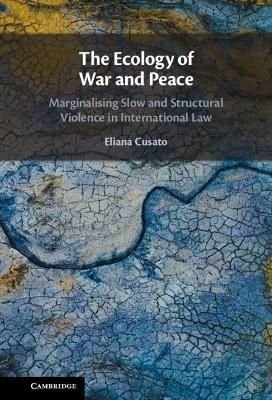
Dr. Eliana Cusato, who is currently appointed as a Marie Skłodowska-Curie postdoctoral fellow at the Amsterdam Center for International Law, authored a new book titled The Ecology of War and Peace: Marginalising Slow and Structural Violence in International Law. Her book was published by Cambridge University Press in September 2021.

The interrelation of ecology and conflict has been the object of extensive study by political scientists and economists. From the contribution of natural resource ‘scarcity’ to violent unrest and possibly armed conflict; to resource ‘abundance’ as an incentive for initiating and prolonging armed struggles; to dysfunctional resource management and environmental degradation as an obstacle to peacebuilding, this literature has exerted a huge influence upon academic discussions and legal/policy developments.

While international law is often invoked as the solution to the socio-environmental challenges faced by conflict-affected countries, its relationship with the ecology of war and peace remains undertheorized. Drawing upon environmental justice perspectives and other theoretical traditions, the book unpacks and problematizes some of the assumptions that underlie the legal field.

Through an analysis of the practice of international courts, the United Nations Security Council, and truth commissions, the book shows how international law silences and even normalizes forms of structural and slow environmental violence (notably, uneven access and distribution of natural resources; less visible forms of violence associated with the environmental aftermath of wars).

This, in turn, jeopardizes the prospects of creating more peaceful societies, while perpetuating deeply rooted inequalities. Ultimately, the book urges us to imagine entirely different legal notions of justice, peace, and security in times of ecological disruption.

By drawing upon extra-legal fields of inquiry (e.g., the literature on environmental security, the political economy of civil wars, the resource curse, and environmental peacebuilding), the book strives to refine extant understandings of how international law conceptualizes and regulates the ‘environment’ before, during, and after armed conflict.

By engaging with some of the international legal order’s most pressing concerns – rising intra-state violence, environmental degradation, resource depletion, and their interaction – the book opens intellectual spaces for rethinking current approaches to the ecological challenges of our hyperconnected world and their adverse impact on the most marginalized peoples. As such, it offers a critical companion work to related titles and, at the same time, pushes the research envelope further and in new directions.

E Cusato, The Ecology of War and Peace: Marginalising Slow and Structural Violence in International Law (CUP 2021)

The book will be of interest to academics and students across different disciplines, primarily international law, but also peace and conflict studies, political theory, and international relations. It will also prove useful as a reference for policymakers and practitioners working at the intersection of environmental issues, human rights, and peace and security within international organisations/tribunals, governmental departments, think thanks, and NGOs.


Dr. Eliana Cusato is currently on academic leave from the Essex Law School.