New Legal Protections for the Environment in Relation to Armed Conflict

Image via Shutterstock

By Professor Karen Hulme (School of Law, University of Essex) and Elizabeth B. Hessami (Johns Hopkins University)

Nature and conservation are inevitably harmed during armed conflict. The laws of armed conflict do provide some measure of legal protection for nature, but these rules are limited and vague. The recent adoption by the International Law Commission (a legal body within the United Nations) of a set of Draft Principles for environmental protection in relation to armed conflict is to be lauded. This post will briefly examine some of the main additions to the law in this area.

Armed conflict pollutes and destroys the environment, often leaving a permanent scar on the landscape and biodiversity of affected states. The Russian conflict in Ukraine, for example, demonstrates the devastation caused to fauna and flora when states engage in warfare on a massive scale in areas rich in biodiversity. It also witnessed a horrifying few weeks as the world saw what happens when warfare takes place in a nuclear-powered state. Thus, from the destruction of targets in forests or protected areas, to collateral harm caused by oil spills in the marine or desert environment, toxic chemical pollution from abandoned munitions, destruction of agricultural lands, and destruction of wildlife – armed conflict inflicts a multitude of harms on the natural world.

The WCEL Specialist Group on Peace, Security and Conflict has, therefore, been following closely the work of the International Law Commission (ILC) on its programme of work on the Protection of the Environment in relation to Armed Conflict. In May 2022 the ILC adopted the final version of its recommended 27 Draft Principles, sending them to the General Assembly for final consideration before adoption. Many of the Draft Principles are already rooted in international law, while some provide best practice guidance.

The culmination of over ten years work, there is no doubt that the Draft Principles represent a significant moment in the advancement of legal protection of the wartime environment. Before the creation of the Draft Principles, the current ILC Special Rapporteur, Ambassador Marja Lehto, opined that there was no “coherent legal framework for the protection of the environment in relation to armed conflict”. The approval of the ILC mandate by states, therefore, reflected an acceptance that the law in this area was inadequate, ill-defined and outdated. Certainly, there are limited treaty rules protecting the war-torn environment, particularly in civil wars – the most prevalent type of conflict. Thus, the Draft Principles draw together an extensive body of rules covering both international armed conflicts as well as civil wars (non-international armed conflicts) and are addressed to a wide range of non-state actors.

Two key dimensions of the ILC’s analysis warrant fanfare. Innovative was the decision to take a holistic approach, ensuring analysis of the legal protections afforded not just during conflict, but prior to the outbreak of conflict and post-conflict. Methodologically unique, this temporal approach allowed for the second innovative approach, namely a focus beyond the laws of armed conflict. Any area of law today is a complex web of interactions between hitherto distinct areas of law. Throwing off the shackles of a pure laws of armed conflict analysis, the ILC undertook a comprehensive analysis of the issues, drawing from areas such as environmental law, human rights law, arms control and business and human rights obligations. Having said that, it is still less than clear how these other legal regimes apply during the combat phase of conflict.

The Draft Principles are, thus, a blend of treaty law, including the laws of armed conflict, and novel guidance or best practice (known as ‘progressive development’) – which states and other actors are encouraged to follow. For example, Draft Principle 16 reiterates the clearly established treaty rule that pillage of natural resources is prohibited (effectively theft during conflict), and Draft Principle 14 the equally clear application of the foundational laws of armed conflict to the environment, such as the principles of distinction, proportionality and precautions. Novel rules are included on cooperation for post-conflict environmental assessments and remedial measures (DP 24) for example. A key one of which is the obligation for removal of toxic or other hazardous remnants of war (DP 26).

The novel structure has certainly helped the Special Rapporteurs to approach the issues from new angles, highlighting novel issues for consideration. One example being the post-conflict part, which analysed obligations of environmental remediation, liability and cooperation – issues which are generally omitted from legal instruments and are proving rather elusive in the current Russia-Ukraine conflict.

The recent humanitarian crisis created by the Russian invasion of Ukraine, when added to the plethora of other events causing people to flee their homes and lands, such as climate-related events, has pushed the number of IDP’s and Refugees above an estimated 100 million people globally according to UNHCR. Thus, displaced people must be considered during armed conflict, as must the environment that they are inhabiting. Environmental protection of lands housing displaced persons is, therefore, a welcome addition to the Draft Principles, particularly in a world where displacement is increasing at a dramatic pace. Draft Principle 8 on Human Displacement takes a novel look at the issue, recommending that states not only ‘protect the environment where they are located’, but also provide ‘relief and assistance for such persons and local communities’. Importantly, environmental protection also extends to areas of transit.

Draft Principles 10 and 11 on Corporate Due Diligence and Corporate Liability respectively require that states ensure business enterprises ‘exercise due diligence and protect the environment and human health’ in conflict-affected areas. These two provisions are an important addition to the field to deter corporate actors from preying on local populations and natural resources during such turbulent times, and preventing conflict financing through the exploitation and trade in such commodities.

Implementation of the Draft Principles will be the final step with states expected to implement them through domestic law and military manuals. They present a concise statement of law in one document, undoubtedly expanding the law on certain issues. Thus, the Draft Principles will undoubtedly serve as a point of dialogue for states to further the discussion of how to protect the environment during the conflict cycle.

Fernando Bordin wrote “Codification conventions and draft articles completed by the International Law Commission are often – and increasingly – invoked by courts, tribunals, governments and international organizations as ‘reflections of customary international law’.”

The Draft Principles, therefore, represent, an important opportunity to make a tangible, meaningful difference in the lives and environment of people caught in the crosshairs of conflict.


This article was first published on the website of the International Union for Conservation of Nature (IUCN) and is reproduced on the ELR Blog with permission and thanks. You can read the original piece here.

More about the authors:

Professor Karen Hulme, School of Law, University of Essex, UK, specializes in the legal protection of the environment during armed conflict. She has published on environmental human rights, environmental security, post-conflict obligations, the legality of specific weapons, as well as climate change, biodiversity/nature protection, oceans and protected areas. Karen is Chair of the IUCN WCEL Specialist Group on Environmental Security and Conflict Law.

Elizabeth B. Hessami

Elizabeth B. Hessami, J.D., LL.M. (Environmental Law), is a licensed attorney and Faculty Lecturer of International Environmental Policy and Environmental and Natural Resources Security for Johns Hopkins University. She has also served as a Visiting Attorney for the Environmental Law Institute (remote) for several years.

Investigating Allegations of Child Sexual Exploitation and Abuse in Humanitarian Settings

Photo by Claudia Soraya on Unsplash

Professor Carla Ferstman is a member of the Justice Rapid Response (JRR) Sexual and Gender-Based Violence Justice Experts Roster. She recently wrote a research paper for JRR on the investigation of sexual exploitation and abuse (SEA) allegations involving children.

Along with Fabian Ilg, who is a Justice Rapid Response Roster Expert, Prof. Ferstman participated in a launch event: Investigating Allegations of Sexual Exploitation & Abuse of Children Occurring in Humanitarian Settings: Reflections from Practice (recording available). 

Prof. Ferstman and Fabian Ilg recently conducted an interview with JRR about the research paper. Their responses are reproduced on the ELR Blog below with permission and thanks.

Carla, As the author of the report, could you summarize the key findings and its recommendations?

The purpose of the report is to explain the key challenges to investigate allegations of sexual exploitation and abuse involving child victims. It is not a “how to” guide, but there are several clear messages to the report.

First, allegations of SEA involving child victims are likely to happen in settings that present unequal power dynamics. This will include fragile settings whether impacted by conflict, insecurity, weak governance, poverty, disease, or natural disasters. Because of this likelihood, all humanitarian agencies and organizations working in these environments need to actively prepare for such eventualities. Hoping that it won’t happen is simply not a good enough strategy. Active preparation includes having clear child-friendly policies in place, being proactive about uncovering child SEA, having specialist staff on hand, and taking effective steps to mitigate the risk of SEA involving child victims.

Second, agencies and organizations should ensure that their policies and practices maximize the rights of child victims. Ensuring the best interests of the child in relation to SEA investigations is not only about protecting children from psychological and other forms of harm during investigations; it also requires that children’s rights to information, to participate in investigation processes, to justice and to reparations are all maximized to the greatest possible extent. How child victims are consulted during SEA investigations should reflect their evolving capacities and their maturity. Third, agencies and organizations should recognize and address the conflicts of interest they often have when conducting SEA investigations. This includes ensuring children have access to independent advice and support about how best their interests, needs and rights can be respected during a SEA investigation and subsequently.

Being the first report of its kind, dedicated to exploring the issue of SEA investigations through a child-centered perspective, what do you hope it will achieve?

It is hoped that the report will raise awareness about a really complex issue that arises all too often in humanitarian settings.

Hopefully, it will spur agencies and organizations to action, so that the needs and rights of child victims can be met and so that accountability for this horrific crime can prevail.

Fabian, why do you feel that this project and paper are important and needed? 

First, I am very proud and glad to have had the opportunity to participate in this very important project and to bring in some of my own experience from the field while investigating different SEA cases involving children (CSEA) over many years, both as a JRR expert and as a professional in law enforcement.
 
This report is one of the most complete documents created about this topic and fills a large void. Over the past years, the focus to improve protection of CSEA victims has increased a lot. As a result, organizations working in the humanitarian sector have needed guidance and specific standards to prevent CSEA, as many CSEA cases still occur regularly all over the world. Now more than ever, it is very important to do the utmost to protect children, the most vulnerable human beings, to treat them with respect during this process, and to start helping survivors to make their future life as bearable as possible. This report provides the needed guidance in a comprehensive manner, and is therefore a perfect tool for all who may be involved with CSEA during their work.

As someone who has conducted SEA investigations, how do you have to adapt your approach to investigate SEA against children?

SEA investigations are very complex on different levels. CSEA investigations are an even greater challenge. In many cases, material evidence is missing and the victims’ voice is the only proof. Relationships of dependency and abuse of power are some of the usual modus operandi used by perpetrators, to make victims appear to have wanted the sexual contact. In court, judges follow the strong voice of the lawyers of the perpetrators and the statements of adults often have a much higher weight than that of children. Children are very vulnerable and can often not distinguish between right and wrong, and as such their judgement is viewed as limited. Furthermore, the chances of their re-victimization at a later point in time are sadly quite high.

This makes CSEA very different from SEA. We, as CSEA investigators, have a grave responsibility to protect these young victims, and must do so by putting them in the centre of the investigation. This starts with ensuring all their rights are protected during the investigation process. Among other things, to be interviewed is a very traumatic experience for a child. The victim-centred approach is in many ways the most critical step to support a child and provides them with the chance of having a bearable life in the future.

Investigations in Armed Conflict

Image by Shutterstock

Investigations into alleged violations of international humanitarian law and international human rights law in armed conflict are crucial to the implementation of these bodies of law.

There are, however, numerous legal and practical challenges that arise when considering a State’s obligations under international law with regard to such investigations.

These include establishing the bases and scope of the duty to investigate under both bodies of law, and determining the way in which these investigations must be carried out.

Furthermore, addressing the framework for investigations in armed conflict necessarily requires an examination of the interplay of international humanitarian law and international human rights law.

In her new chapter in the latest edition of the Research Handbook on Human Rights and Humanitarian Law, Dr. Claire Simmons, a researcher at the Essex Armed Conflict and Crisis Hub (under Essex’s Human Rights Centre), focuses on the concept of effectiveness of investigations under international law.

Dr. Simmons addresses, in particular, the legal and practical challenges surrounding the conduct of investigations in armed conflict, taking into account the complementary way in which both bodies of law interact.

Research Handbook on Human Rights and Humanitarian Law, edited by Robert Kolb, Gloria Gaggioli, and Pavle Kilibarda

Chapter full citation: Claire Simmons, ‘Investigations in Armed Conflict’, in Robert Kolb, Gloria Gaggioli, and Pavle Kilibarda (eds), Research Handbook on Human Rights and Humanitarian Law: Further Reflections and Perspectives (Elgar 2022).

Affordable, Clean Energy and Climate Action in Sub-Saharan Africa

Image via Shutterstock

How can energy policy measures for realizing the UN Sustainable Development Goals (SDGs) 7 (Affordable and Clean Energy) and 13 (Climate Changes and Its Impact) in sub-Saharan Africa (SSA) be framed toward achieving energy justice?

This position is quite challenging for developing countries that seek to resolve the rising inequality of access to modern and affordable energy systems as stipulated in SDG 7, whilst simultaneously working to meet their international obligations towards the attainment of SDG 13.

Both goals highlight interdependent and conflicting interactions that policymakers should be aware of whilst working to realize them.

Godswill Agbaitoro, Lecturer in Law at the University of Essex, and Kester Oyibo, an Associate at Punuka Attorneys & Solicitors in Lagos (Nigeria), aim to resolve this conflict by proposing some viable measures for a synergy between SDGs 7 and 13.

Their article in The Journal of World Energy Law & Business examines the paradoxical situation faced by countries in the SSA region and argues for a contextualization of the two goals within the energy justice framework.

The proposed approach entails a systematic transition from fossil fuels to low-carbon through socio-economic policies that take into account social injustices and further incorporate sustainable actions such as developing renewable energy technologies, diversification of energy options, energy efficiency, and regional alignments and/or cooperation.

The measures outlined in their article aim to help the SSA region achieve energy justice by 2030.

Essex Law School academic joins the UN’s Harmony with Nature expert network

Photo by Noah Buscher

Dr. Emily Jones, Senior Lecturer in the School of Law and Human Rights Centre at the University of Essex, became a member of the United Nations Expert Knowledge Network on Harmony with Nature.

Dr. Jones offers below her input on the theme of Earth Jurisprudence.

Earth Jurisprudence is a philosophy of law and human governance that is based on the idea that humans are only one part of a wider community of beings and that the welfare of each member of that community is dependent on the welfare of the Earth as a whole.

What would the practice of Earth-centered Law look like from an Earth Jurisprudence perspective? How is that different from how Earth-centered Law is generally practiced now? And, what are the benefits of practicing Earth-centered Law from an Earth Jurisprudence perspective?

I am an international lawyer so I will comment mostly from within that field. Right now, I don’t think the law accommodates an Earth jurisprudence approach at all. Even international environmental law, the area of international law that is there to protect the environment, is very anthropocentric. We can see this by looking at the principle of sustainable development.

This is arguably the main overarching principle of international environmental law. This principle broadly notes that development needs must be sustainable for the environment. However, as scholars Usha Natarajan and Kishan Kohdy have noted, the principle is seldom used ‘to call for less development.’ Overall, this principle sets up a system whereby the environment is seen as a resource to be exploited, an object, with humans being the only subjects in this paradigm.

An Earth jurisprudence perspective would challenge that paradigm. We need to move from the current legal position which sees the environment as an exploitable object and start challenging human exceptionalism. Humans are deeply connected to their environments, impacting on and being impacted by them. An Earth jurisprudence perspective will push the law to see those relationships as opposed to always seeing humans as distinct from and superior to their natural environments. This shift will be urgently needed if we are to address the pressing environmental challenges of our times.

What promising approaches would you recommend for achieving the implementation of an Earth-centered worldview for Earth-centered Law?

I find a lot of hope in the emerging recognition of the Rights of Nature. The Rights of Nature are increasingly gaining traction and have now been recognized in over 27 countries on all continents. States are increasingly interested in applying Rights of Nature approaches and so this is something I think we need to push for.

Personally, I am interested in how we can start applying the Rights of Nature in international law. So far, the Rights of Nature have mostly been applied in local contexts e.g. to a river or a specific area where the boundaries are legally defined. However, for the Rights of Nature to have a global impact, they need to be applied globally. After all, ecosystems are not bounded entities but are deeply connected to one another. The UN Harmony with Nature Program has been key in getting the Rights of Nature on the international agenda, but there is a lot more work that still needs to be done.

I also think we need to do a lot more work to continue to amplify the voices of Indigenous peoples. There is so much knowledge that has, for centuries, been ignored and silenced. It can also not be forgotten that, while Indigenous peoples have not been involved in all instances of the recognition of the Rights of Nature, and not all Indigenous peoples support the Rights of Nature, with some questioning the Eurocentrism of the term “rights”, Indigenous worldviews instigated this movement. The Rights of Nature, as noted, represent a key shift in re-thinking out currently anthropocentric legal frames, and it is no coincidence that Indigenous peoples have played such a vital role in this moment thus far.

I also find hope in emerging calls for degrowth approaches. This is one way that we may start to challenge some of the dominant economic models and ways of thinking that justify the exploitation of the environment for so-called economic needs.

What key problems or obstacles do you see as impeding the implementation of an Earth-centered worldview in Earth-centered Law?

I think the key challenge, and one that international environmental law as a field has long faced, is getting things done. International law is based on state consent and states, as we know, are not always very forthcoming when it comes to protecting the environment.

There are many factors at play here, including the state’s need to promote its own economic development but also the pressure put on by powerful corporations. Our global order is so focused on neoliberal economics, on profit and on prioritizing the needs of corporations.

Pushing people to think differently, to think beyond those entrenched systems of thought and power, will be difficult, but I think we will get there – we have to!

What are the top recommendations for priority, near-term action to move Earth-centered Law toward an Earth Jurisprudence approach? What are the specific, longer-term priorities for action?

  • Promote the Rights of Nature globally. This means taking local, regional and international actions to get this on the agenda of lawmakers.
  • Engage the public. For us to move towards a legal system based on Earth jurisprudence, we need to ensure people are on board and are calling for this. The Rights of Nature sounds interesting to people when they first hear it but we need to work harder to explain this to people and why it matters.
  • In terms of getting the Rights of Nature on the international legal agenda, I think the next step will be applying the Rights of Nature to case studies. We have some examples from domestic legal systems where the Rights of Nature have been applied but, for the most part, how we can put this into action in international law remains unclear. We need to start doing that detailed work to show states and other stakeholders exactly how it can be done.

This Q&A is available on the UN’s Harmony with Nature Experts’ Library.

Social Rights and the Constitutional Moment: Learning from Chile and International Experiences

Image by Patrick McDonald

In the 1990s, Bruce Ackerman defined ‘constitutional moments’ as historic milestones of intense deliberation and change in a country’s politics, change that reflects in the country’s constitutional settlement.

Since October 2019, Chile is going through its own constitutional moment, a moment that began with popular resistance against rising public transport fees in the capital Santiago.

Social Rights and the Constitutional Moment seizes the opportunity of this unique moment to unpack the context, difficulties, opportunities, and merits to enhance the status of environmental and social rights (health, housing, education, and social security) in a country’s constitution.

Social Rights and the Constitutional Moment (Hart 2022): please see below contents and links to chapter summaries

This edited volume arose from a collaboration between the Global Initiative for Economic, Social and Cultural Rights, the Human Rights Centre of the University of Essex in the UK, and the University of Concepción in Chile.

In 2020-2021, this partnership brought together practitioners and academics from Chile and other countries (Argentina, Brazil, Canada, Colombia, Ireland, Mexico, South Africa, Spain, the United Kingdom and the United States) to share and learn from international and comparative practice with the goal of informing the ongoing process of constitutional reform in Chile.

More than thirty contributions were compiled and submitted to members of the constitutional convention and other public authorities in the country in September 2021. This new book presents an extended version of a selection of those essays.

Still today, with laudable exceptions (such as this, this, this, this and this), the majority of comparative constitutional studies in the English language tend to focus on the United States and Europe, and the analysis of peripheral legal systems, when it exists, can only be found on the sidelines as a more or less blatant afterthought. Unlike common practice in comparative constitutional law, this book is anchored in Latin America, building from Chile.

Drawing on the analysis of both academics and practitioners, the book provides rigorous answers to the fundamental questions raised by the construction of a new constitutional bill of rights that embraces climate and social justice.

With an international and comparative perspective, chapters look at political economy, the judicial enforceability of social rights, implications of the privatisation of public services, and the importance of active participation of most vulnerable groups in a constitutional drafting process.

Ahead of the referendum on a new constitution for Chile in the second half of 2022, this collection is timely and relevant and will have a direct impact on how best to legislate effectively for social rights in Chile and beyond.


Full book citation:

Koldo Casla, Magdalena Sepúlveda, Vicente Silva and Valentina Contreras (eds), Social Rights and the Constitutional Moment Learning from Chile and International Experiences (Hart 2022).

Contents and links to chapter summaries:

Chapter 1. Introduction: Social Rights and the Constitutional Moment by Koldo Casla, Magdalena Sepúlveda, Vicente Silva and Valentina Contreras

Chapter 2. Yesterday’s Accomplices, Beneficiaries of Today: The Knots of Inequality Tied by the Dictatorship by Juan Pablo Bohoslavsky, Karinna Fernández and Sebastián Smart

Chapter 3. An Open Constitution to Reverse Chile’s Neoliberal Trajectory by Francisca Moya and Constanza Salgado

Chapter 4. Advancing Equal Rights in Constitutions: Insights from 193 Countries by Aleta Sprague, Pam Stek, Amy Raub and Jody Heymann

Chapter 5. Socio-Economic Rights in South Africa’s Constitution: Aspirations, Achievements, Disappointments and Lessons by Sandra Liebenberg

Chapter 6. Publicity and the Rule of Law: Access to Public Information in the Political Constitution of Colombia by Vivian Newman

Chapter 7. The Path of the Inter-American Court Towards Direct Justiciability of Economic, Social, Cultural and Environmental Rights: Impact on Domestic Legal Systems by Julieta Rossi

Chapter 8. Constitutional Provisions on Disability Rights: National Approaches and International Context by Gonzalo Moreno, Michael Ashley Stein and Jody Heymann

Chapter 9. Persons with Disabilities in the Chilean Constitution-Making Process by Pablo Marshall, Viviana Ponce De León and Eduardo Marchant

Chapter 10. The Right to Education in Chile: Evolution, Critical Issues and Perspectives of Change by Alfonso Henriquez R

Chapter 11. Integrating the Abidjan Principles on the Right to Education into the Constitution: Keys for the Chilean Process by Valentina Contreras, Vicente Silva and Delphine Dorsi

Chapter 12. Taking the Right to Adequate Housing Seriously in Chile’s Next Constitution: Building from Scratch by Koldo Casla and Verónica Valenzuela

Chapter 13. Health Rights in the New Chilean Constitution by Alejandra Zúñiga-Fajuri

Chapter 14. The Right to Social Security in Chile’s Constitution: Considerations and Opportunities by Alexandra Barrantes

Chapter 15. Environmental Issues in a New Constitution by Verónica Delgado and Dominique Hervé

Research Seminar: Posthuman International Law and the Rights of Nature

Photo by Evangeline Shaw

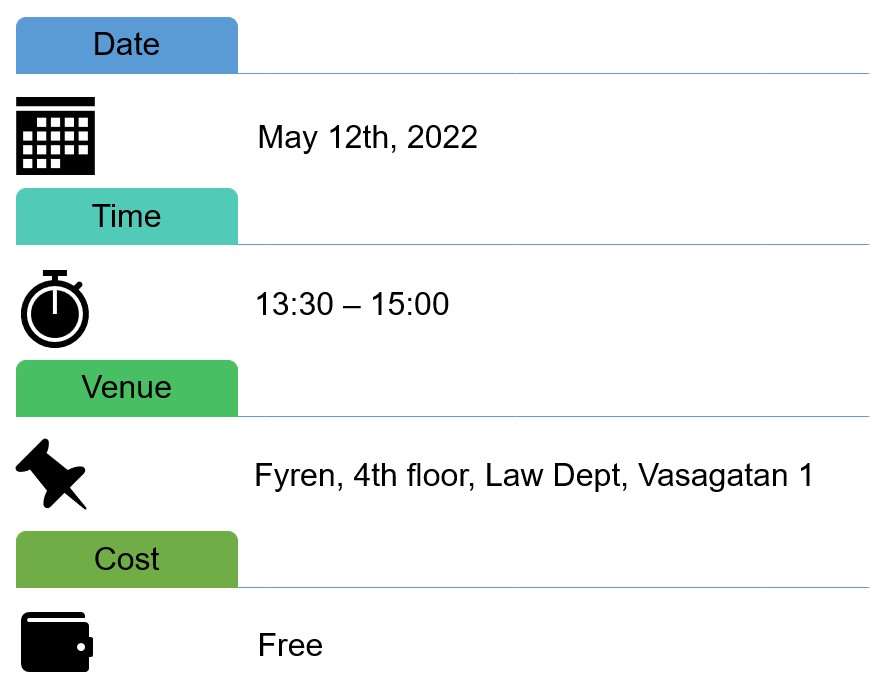
Dr. Emily Jones, Senior Lecturer in Law, University of Essex, will lead a seminar on the theme of ‘Posthuman International Law and the Rights of Nature’.

The rights of nature are beginning to be recognised in many countries but have yet to be recognised in international law.

Seeking to challenge and re-think the anthropocentrism that permeates International Environmental Law, this seminar will discuss the synergies between posthuman theory and the legal recognition of the rights of nature, reflecting on the application of both to international law.

The lecture will draw on multiple examples of contexts where nature’s rights have been recognised, including in New Zealand, India, Ecuador, the US, and beyond, to think through the similarities and differences between these contexts and the lessons to be learned.

Reflecting on the possibility of the recognition of the rights of nature in international law, the talk will conclude with an evaluation of the ways that posthuman theory can be applied to help inform the rights of nature project, seeking to ensure that the rights of nature live up to their transformative posthuman potential. 

The seminar is organized by Dr. Matilda Arvidsson, as part of the project ‘AI, the social contract, and democracy’, financed by WASP-HS in collaboration with the international law and environmental law groups at the Department of Law of the University of Gothenburg.

The seminar is open to researchers, students at an advanced level, and the public.

No registration is needed.

Nazanin Zaghari Ratcliffe: Her Journey to Freedom and the Lessons We Can Learn

Photo of Richard Ratcliffe at the candlelit vigil outside the Foreign Office on Friday 05 Nov. 2021, eleven days into his hunger strike, via Flickr.

Professor Carla Ferstman is a lawyer and an activist. Before joining the School of Law in 2018, she directed REDRESS, an organization dedicated to helping torture survivors in all parts of the world to seek justice for all the harm they suffered. That is where she first met Richard Ratcliffe, the husband of Nazanin Zaghari Ratcliffe who was released earlier this week on 15 March 2022 after almost six years of being kept as a hostage in Iran.

Kate Clayton, Senior Communications Officer at the University of Essex, spoke to Carla to find out more about her perspective on Nazanin’s journey to freedom and to ask her what lessons we might be able to draw from her case.

Why has the plight of Nazanin and her family resonated with so many people in the UK and beyond?

On a human level, it is hard to fathom what it must feel like to have one’s family torn apart by such an arbitrary, brutal act and to feel so powerless over so many years. So this was about compassion first of all. But also, Richard’s advocacy, his unwillingness to be quieted in the face of the injustice he and Nazanin faced helped to bring and keep people on board.

Do you think there were any turning points in the campaign?

Yes, several, and I will focus on the positive ones.

First, is the recognition by the UN Working Group on Arbitrary Detention that Nazanin’s detention was arbitrary, that she was likely to have been arrested because of her status as a dual Iranian-British national, and that she should be immediately released. This 2016 decision made it clear that this was no ordinary criminal case where the UK should sit back and wait for justice to take its course. No, Nazanin was being targeted. Removing the veneer of a criminal justice justification for her detention was really important because it helped to move the UK Government towards a position where it understood that it had to act. Passivity was not an option.

Second, was the coming together of many of the families of detainees, mainly dual nationals and Iranian nationals with foreign links. This was crucial to change the narrative about what was happening. All the stories were so similar – this was a form of hostage-taking. It was also important to counter isolation and build a sense of common solidarity. 

Third, was the 2019 decision by then Foreign Secretary Jeremy Hunt to grant Nazanin diplomatic protection, meaning that the UK Government had recognised formally that the harm caused to Nazanin was a harm to the UK Government and one for which it could intervene as a state to state claim. This was a landmark recognition.

Fourth, was the March 2022 repayment by the UK of a £400m debt that had been outstanding since the 1970s in relation to an outstanding order for military equipment.

You managed to involve Essex students in the campaign. How did this go?

Iran’s human rights record was being considered by the UN Human Rights Council in Geneva through its universal periodic review process. The students, under the auspices of the Human Rights Centre Clinic helped prepare a submission on behalf of seven families to highlight the injustice of their situation. This came at a really important time and was a start of much more robust joint advocacy by families of detainees. This was quite a unique opportunity for the students to work on such a concrete, live case involving real people undergoing serious human rights violations in real-time.

Have campaigns like this impacted your academic research?

Indeed, I just recently co-authored with my colleague Dr Marina Sharpe a journal article which considers whether the arbitrary detention of dual and foreign nationals in Iran violates the Convention on the Taking of Hostages and may constitute a crime against humanity. We hope this will be useful to ongoing scholarly debates and also assist the many organisations who are following these issues and governments whose citizens continue to be affected by the practice.

What do you think comes next for Nazanin and Richard?

One of the wonderful things about the freedom they now have is that it is absolutely for them to figure out their next steps. Something we may all take for granted, I imagine for them feels very luxurious.

What next for the other cases?

There are still so many people who remain arbitrarily detained in Iran in a hostage context, many for multiple years, under very difficult circumstances. And the practice is also happening in more and more countries. The advocacy must continue until the practice stops.


This piece was first published on the Blog of the University of Essex and is reproduced on the ELR Blog with permission and thanks.

‘No Longer a Member State of the Organisation’: The Expulsion of Russia from the Council of Europe and Articles 7 and 8 of the Statute

Council of Europe Committee of Ministers, via Flickr

By Dr. Nikos Vogiatzis, University of Essex

Introduction

Russia is no longer a member state of the Council of Europe. On 16 March, the Committee of Ministers (CM) of the Council of Europe decided, “in the context of the procedure launched under Article 8 of the Statute of the Council of Europe, that the Russian Federation ceases to be a member of the Council of Europe”. The decision was effective immediately. This came just a day after the Parliamentary Assembly of the Council of Europe (PACE) unanimously recommended that ‘the Committee of Ministers should request the Russian Federation to immediately withdraw from the Council of Europe’ and, if Russia does not comply, ‘that the Committee of Ministers determines the immediate possible date from which the Russian Federation would cease to be a member of the Council of Europe’. At the same time, shortly before PACE voted on this matter, the Russian Federation had submitted a formal notification to the Secretary-General indicating that it would withdraw from the Council of Europe under Article 7 of the Statute, and that it would denounce the European Convention on Human Rights. This post will revisit some of the key decisions of the last three weeks, demonstrating how these decisions could shed light on legal ambiguities surrounding withdrawal, suspension and expulsion from the Council of Europe.

Suspension and Expulsion

After its invasion of Ukraine, an obvious and fundamental violation of international law, the Council of Europe has clearly taken a firm stance against Russia. It was understood that, after more than two decades of a turbulent relationship, the war in Ukraine could not warrant anything less than an immediate and clear reaction. Thus, the Secretary-General, the Committee of Ministers, the President of the Venice Commission – among others – have all condemned on multiple occasions and in the strongest terms the invasion. For the first time, Article 8 of the Council of Europe Statute was relied upon on 25 February to suspend Russia’s rights of representation in the Council of Europe. The European Court of Human Rights also granted urgent interim measures, asking Russia to refrain from military attacks against civilians and civilian objects and abstain from blocking and terminating the activities of Novaya Gazeta. On 15 March and 16 March the PACE and CM adopted the aforementioned historic opinion and decision, respectively.

Questions surrounding the withdrawal, suspension and expulsion from the Council of Europe had not been the subject of extensive scholarly analysis, until the insightful study by Dzehtsiarou and Coffey of 2019. The key provisions are indeed Articles 7 and 8 of the Council of Europe’s Statute – but, as Milanovic observed, the wording of these provisions is not ideal. These provisions should be read alongside Article 3 of the Statute, which states the values of the Council of Europe. Thus, the clear political determination of the Council of Europe’s organs to request Russia to withdraw took place in the context of a number of legal ambiguities surrounding the relationship between Articles 8 and 7, in particular. After all, this is the first time that Article 8 is enforced against a member state. In that sense, the expulsion decision against Russia has shed light on the applicable legal framework in a number of ways, as will be shown below.

Key decisions since 24 February

The exposition of key decisions of the CM and PACE is selective and focused on the scope of the post; all decisions or further information is available here:

24 February: The CM decides to hold an extraordinary meeting on 25 February to examine measures to be taken under Article 8.

25 February: The CM decides, under Article 8, to suspend Russia’s rights of representation in the Council of Europe. Resolution CM/Res(2022)1 on 2 March clarifies that the suspension concerns the CM, PACE, the Congress of Local and Regional Authorities and committees set up under Articles 15.a, 16 and 17 of the Statute.

10 March: Russia announces (albeit not formally triggering Article 7) its intention of not participating in the Council of Europe.

10 March: On the same day, the CM decides to consult PACE with a view to deciding further measures against Russia under Article 8. PACE had already decided, on 25 February, to hold an extraordinary meeting on 14 and 15 March to discuss the consequences of the Russian Federation’s aggression against Ukraine.

14 March: PACE begins the extraordinary meeting; the members show clear support for the further use of Article 8. A draft report on the ‘Consequences of the Russian Federation’s aggression against Ukraine’ is circulated among members.

15 March: Shortly before the vote, the Russian Federation submits its letter under Article 7 and also notifies the Secretary-General of its intention to denounce the European Convention on Human Rights (ECHR) under Article 58 ECHR. The President of the Assembly (rightly, as will be shown below) informs the members that the Article 7 letter will in no way impact the discussions and the vote on the further use of Article 8.

15 March: PACE votes unanimously in favour of the CM requesting Russia to withdraw from the Council of Europe ‘immediately’.

15 March: After the vote, the Secretary-General, the Chair of the CM and PACE’s President make a joint statement on the ‘exclusion’ of Russia, indicating that it can no longer be a member of the organisation.

16 March: The CM decides to end Russia’s membership with immediate effect, namely from 16 March 2022.

A two-step process against Russia and the role of the Assembly

The first point to be noted is that, on this occasion, Article 8 was used as a two-step process. The first step was the suspension decision on 25 February. The second step was that of ‘expulsion’. Thus, the further use of Article 8 referred to in the decision of 10 March concerned the second step, which is that of ‘expulsion’. Nevertheless, Article 8 is not ideally worded as it refers to Article 7. This matter is returned to below. The question as to why the Parliamentary Assembly was not consulted more extensively (see below) prior to the suspension decision of 25 February could be answered with reference to Statutory Resolution (51) 30Admission of new members (annexed to the Statute), which also refers to withdrawal:

The Committee of Ministers, before inviting a State to become a Member or Associate Member of the Council of Europe, in accordance with Articles 4 and 5 of the Statute, or inviting a Member of the Council of Europe to withdraw, in accordance with Article 8, shall first consult the Consultative (Parliamentary) Assembly in accordance with existing practice.

The above provision indicates that the Parliamentary Assembly should be consulted prior to the request to withdraw under Article 8 – but not necessarily in the case of suspension. It was possibly felt that it was of the utmost importance to activate immediately Article 8 and proceed with the suspension decision that it entailed on 25 February. However, the Decision of 25 February was adopted ‘[f]ollowing an exchange of views with the Parliamentary Assembly in the Joint Committee’, so clearly the Parliamentary Assembly was involved.

Simultaneously, it is worth noting that Article 8 of the Statute is not the only provision which could have been drafted in a clearer way. Indeed, the above provision in Statutory Resolution (51) 30 is not ideally worded, too. In particular, it refers to an ‘invitation to withdraw’, while Article 8 indicates that this is not an invitation but rather a request.

Russia’s expulsion and the full separation of Articles 7 and 8

When the Assembly prepared and circulated the draft report on the further use of Article 8, it was not known, it appears, that Russia would submit the Article 7 letter shortly afterwards. When that was announced, the Parliamentary Assembly rightly continued with the consideration of the use of Article 8 despite the activation of Article 7. As von Gall argued, even if Article 7 would be triggered by Russia, the organs of the Council of Europe would still need to proceed with the request to leave under Article 8. As she explained, ambiguities surrounding membership of the Council of Europe should not be used to undermine the mandate of the organization. Nothing in the text of the Statute appears to suggest that such a move is not legally permissible.

It is now known that Article 7 was triggered by Russia on 15 March. The above sequence of decisions indicates that the Council of Europe organs were determined to force Russia to withdraw – in effect, to expel it from the organization. The Article 7 letter was an attempt by Russia to avoid that. It is important to recall that, under the text of Article 7, the withdrawal takes effect at the end of the financial year. Simultaneously, one of the amendments that were adopted in the report of the Assembly concerned precisely the addition of the word ‘immediately’ – which brings to the fore the question of the timing of withdrawal and the possibility of immediate expulsion (which, as we know now, is exactly what has happened). Leaving aside the timing of withdrawal, and contrary to Article 8, Article 7 provides for a ‘voluntary withdrawal’ (p. 65) – which clearly is not the case here as we are before the most serious violation of Article 3 of the Statute.

As the draft, and then the adopted Opinion, confirm, the Assembly was of the view that no discretion should be left to the Committee, and it thought so even before the submission of the Article 7 letter. This is legally significant because Article 8 provides that if the state does not comply, the Committee ‘may decide’ that the state is not a member after a specific date. Of course, the Opinion of the Assembly is not binding as the Committee makes the decision – but, as already noted, it proved very influential.

In this context, the activation of Article 7 by the Russian Federation on 15 March (and the withdrawal at the end of the financial year that it implied) inevitably brought to the fore the interplay between Articles 8 and 7 of the Statute. Article 8 provides that the Committee of Ministers can request a state ‘to withdraw under Article 7’. Simultaneously, it has already been mentioned that Article 7 provides for a voluntary withdrawal and also that the use of Article 8 is autonomous from Article 7: a state cannot use Article 7 at will to evade the consequences of the use of Article 8 by the Council of Europe.

The decision to expel immediately was made by the Committee, taking into account the Opinion of the Assembly. After this sequence of decisions, Article 8 could have been interpreted by the CM in at least two ways. First, as implying a connection with Article 7 in the following way: that the request to withdraw if the state complies would take place under the terms of Article 7, namely by the end of the financial year. Differently put, that an ‘expulsion’ on a specific date (including with immediate effect) could only take place once it was established that the member state in question is unwilling to cooperate. This situation could be viewed as a de facto expulsion, even if legally Russia would remain a member state until the end of the financial year. By analogy, the example that Klein provides (p. 66) of the Greek military junta would be of relevance (Greece, having declared its withdrawal under Article 7, was de facto suspended from December 1969 until the end of the next financial year).

Second, Article 8 could be (and indeed was) interpreted as enshrining a right to terminate the state’s membership immediately, regardless of whether or not the state cooperates. This position strengthens the connection between Articles 3 and 8, thereby providing for the possibility of immediate expulsion regardless of the willingness of the state. As Dzehtsiarou observed, ‘Russia was suspended as a result of aggression and gross violations of the values and principles of the organisation’ and therefore ‘the termination of membership should be imminent’.

These considerations were certainly taken into account in the Opinion of the Assembly. Arguably, the Committee went even further than the Opinion by ceasing Russia’s membership with immediate effect (ie without a ‘request’). Thus, Article 8 was fully dissociated from Article 7 and provided for the immediate expulsion from the organization. In doing so, the Council of Europe organs and the CM in particular emphasised that (i) this was clearly not a voluntary withdrawal but an expulsion (ii) the terms and timeframe of expulsion would be determined by the Council of Europe and not Russia.

The clear separation of Article 8 from Article 7 could also have implications for the difficult question of whether Russia is bound by the ECHR for the next six months (see Article 58 ECHR). Plausible arguments have been provided in both directions, and clearly this matter will be the subject of much discussion. Until a decision is made, one would be inclined to think that precisely because Article 8 was interpreted and applied in this way (i.e. immediate expulsion), the starting point would be that the ECHR ceased to apply on 16 March as well.

Conclusion

Russia’s exit from the Council of Europe (and from the European Convention on Human Rights, on which more generally see here and here) was an inevitable and necessary decision which has of course consequences, especially because, as the Council of Europe leaders acknowledged, it deprives the Russian people of access to the European Court of Human Rights (for a broader discussion see the aforementioned article, p. 467 et seq). But ultimately, in every step of this process, and in light of the seriousness of the violations of Article 3, it was the Council of Europe suspending, requesting to leave, and eventually expelling Russia. In this context, the full separation of Articles 7 and 8 is legally and politically significant.

The author would like to thank (with the usual disclaimer) Kanstantsin Dzehtsiarou and Kushtrim Istrefi for very helpful comments on earlier versions.


This article was first published on 17 March 2022 on the ECHR Blog and is reproduced on the ELR Blog with permission and thanks. The original piece can be accessed here.

International Law and Transformation: Environmental Justice

Photo by Sincerely Media

Dr. Emily Jones, Senior Lecturer in Law at the University of Essex, alongside her colleague, Dr. Marie Aronsson-Storrier, Lecturer in Law at the University of Reading, has been successfully awarded just under £5000 by the Modern Law Review to run a seminar on the theme of International Law and Transformation: Environmental Justice.

The seminar will be held at the University of Essex in May 2022 and will bring a series of experts together to discuss key issues in environmental law.

It will centre around the ability to seek transformative environmental justice by working with and through international environmental law.

Key topics of discussion will include:

  • the epistemic basis of international environmental law;
  • recent attempts to transform international environmental law such as the ongoing negotiations to create a Global Pact for the Environment or the recent recognition by the Human Rights Council of a human right to a healthy environment; and
  • the application of the law in case studies, including in crises and disasters.

Further details will be announced in due course, so keep an eye on our blog for updates.