From the University of Essex to the United Nations: Evidence about social security, healthcare, and protection and assistance to the family in the UK

By Dr Koldo Casla

Dr Koldo Casla, project lead of Human Rights Local, has submitted evidence to the UN Committee on Economic, Social and Cultural Rights for their inquiry into the state of socio-economic rights in the UK. Socio-economic rights include, among others, the right to housing, food, education, social security, health, access to work and good working conditions, all of which are recognised in the 1966 International Covenant on Economic, Social and Cultural Rights (ICESCR).

Launched in 2020, Human Rights Local is a project of Essex Human Rights Centre to make human rights locally relevant in the UK.

Every few years, the 170+ states that have ratified ICESCR ought to report to the UN Committee on Economic, Social and Cultural Rights (CESCR) on the policies they are implementing to respect, protect and fulfil socio-economic rights. For the UK, the last review was completed in 2016. The current one began in 2022 and will end with a UN report, known as ‘concluding observations’, that will probably be published around mid-2025. This report will be based on information provided by the UK government and devolved administrations, as well as evidence from three National Human Rights Institutions (the Equality and Human Rights Commission, the Scottish Human Rights Commission and the Northern Ireland Human Rights Commission), and evidence from NGOs and academics. On 13-14 February, the UN Committee will meet with civil society groups and NHRIs in Geneva, and it will also hold a ‘constructive dialogue’ with UK government representatives.

As part of Human Rights Local, Dr Koldo Casla has provided support to community groups and people with lived experience of poverty so they could provide their own evidence to the UN and their recommendations to bring about the necessary changes to improve their lives. This is part of GRIPP (Growing Rights Instead of Poverty Partnership), of which Essex Human Rights Centre is a founding member.

In addition, Dr Casla has also conducted research for Amnesty International about the extent to which the UK’s social security system (Article 9 ICESCR) meets international standards in relation to the right to social security. The study will be published later this year, but beforehand Amnesty International will rely on the evidence and the recommendations in their advocacy with the UN Committee on Economic, Social and Cultural Rights.

Dr Casla has also co-authored two submissions for the UN Committee. One of them identifies a series of concerns about the level of enjoyment of the right to health (Article 12 ICESCR) among Gypsy, Roma and Travelling communities in the East of England. It is based on qualitative evidence in the form of testimonies gathered in 37 peer-to-peer interviews conducted by four partner organisations – COMPAS, GATE Essex, Oblique Arts, and One Voice 4 Travellers – between June and August 2023. The evidence was part of the project “Building a community of practice to identify strengths, barriers and prioritise solutions to the right of access to healthcare for Travelling Communities”, led by colleagues in the School of Health and Social Care, and funded by the National Institute for Health and Care Research, between February 2023 and August 2024. The qualitative evidence compiled in the document is the unreserved confirmation that the UN’s concerns persist in relation to stigma, prejudice, discrimination, lack of informational accessibility and lack of cultural acceptability of healthcare for Gypsy, Roma and Traveller communities. This is reflected in the lack of cultural awareness in availability of suitable health professionals, lack of non-English language provision, problems of trust due to lack of cultural competence, lack of understanding of issues around literacy, and ongoing social exclusion, particularly digital exclusion.

The second submission goes hand in hand with the anti-poverty human rights NGO ATD Fourth World. It examines the impact of child protection services on families in poverty. Creating a social security system that guarantees the essentials in life, regulating for-profit children’s homes, and extending peer-parent support are among a list of recommendations to preserve the right to protection and assistance to the family (Article 10 ICESCR) for households living in poverty. 

As argued by Dr Casla and Lyle Barker in a paper published in the Journal of Human Rights Practice in 2024, lived experience brings both epistemic and instrumental value to human rights research. In relation to the former value, in a peer-led process, people with lived experience of poverty do not simply provide evidence, data and information. Instead, they rank their concerns, frame their grievances in their own terms and decide about their priorities and the research methodology. This approach intends to address the epistemic injustice that silences people in poverty and dismisses their knowledge. In relation to the second value, the instrumental one, lived experience can help detect the real impact of the distinguishing features of specific human rights. For example, in relation to child protection services, a peer-led and participatory action research with families showed that one of the instrumental values of putting lived experience first is that it can reveal the true nature, prevalence and damage of povertyism – the negative stereotyping of people in poverty – on people in poverty.

For more information lease contact Dr Koldo Casla @ Koldo.casla@essex.ac.uk

Elevate Your Academic Journey: SENSS, CHASE, and Essex Law School

 By Essex Law School, written by Professor Joel Colón-Ríos

If you are an aspiring legal scholar seeking advanced training in law within a dynamic research environment that encourages innovation and interdisciplinary exploration, a Doctoral Training Partnership at Essex Law School could be your gateway to an exciting academic journey. 

Essex Campus in the winter, Credit: University of Essex.

What are SENSS and CHASE? 

The South and East Network for Social Sciences (SENSS), an ESRC-funded Doctoral Training Partnership (DTP), is dedicated to fostering innovative and inclusive social science research training and collaboration. Among the eight distinguished institutions comprising SENSS, the University of Essex plays a pivotal role as the coordinating institution. 

The Consortium for Humanities and the Arts South-East England (CHASE) is an AHRC-funded Doctoral Training Partnership, providing funding and training opportunities to the next generation of world-leading arts and humanities scholars. Essex is one of the 8 world-leading institutions that comprise the membership of the CHASE DTP. 

SENSS and CHASE provide fully funded doctoral studentships, mentorship from global experts, and advanced subject-specific and research methods training. These opportunities empower researchers to extend their social scientific skills beyond academia. 

Here at the Essex Law School and Human Rights Centre, aspiring PhD students can apply for SENSS and CHASE studentships, unlocking comprehensive support and collaborative excellence in their academic journey. 

Why choose the Essex Law School? 

Choosing where to pursue your doctoral training is a significant decision. At the Essex Law School, we have meticulously crafted an environment that champions excellence and fuels innovation. Here is why you should join us: 

We are a research powerhouse. Our Law School has been ranked 3rd in the UK for research power in law according to the Times Higher Education research power measure (REF2021). Law at Essex is also ranked 47th in the THE World University Rankings, which show the strongest universities across the globe for key subjects (and 9th for UK Universities). This speaks volumes about the calibre of research conducted within our School. Our academic staff collaborates globally, working with the United Nations, the European Union, governments, and non-governmental organisations. 

We believe in the power of interdisciplinary research. Our dynamic research clusters foster collaboration across diverse backgrounds, creating a vibrant intellectual space for innovative and stimulating legal exploration. 

With expertise spanning diverse legal disciplines, our academics are the driving force behind the Law School’s excellence. Our faculty boasts exceptional scholars, providing intellectual leadership in key areas, including Human Rights Law, led by Professor Carla Ferstman who is Director of the Human Rights Centre; International & Comparative Law led by Professor Yseult Marique, an associate member of the International Academy of Comparative Law; Private and Business Law, led by Professor Christopher Willett who also spearheads the Law, Business and Technology Interdisciplinary Hub; as well as Public Law & Sociolegal Studies, led by Professor Joel I Colón-Ríos, who is also a member of the Constitutional and Administrative Justice Initiative (CAJI). Our academic leads are ready to guide you and link you with the ideal academic mentors. 

Our research student community is central to our success. These talented colleagues explore a broad range of exciting topics under expert supervision, forming a vibrant tapestry of ideas. 

We asked Boudicca Hawke about her experience as a CHASE-funded doctoral student at Essex Law School. 

“CHASE is a great DTP to be a part of. It is a quite a competitive funding source, but the application process itself is accessible. Especially at Essex, there’s a tremendous amount of support throughout the entire process, which really helps. There are a few rounds of revision you’ll need to go through, so it does require consistent work, but really, it’s wonderful to have guidance and support at every step so you can end with the best proposal possible. 

I chose to apply primarily because of the holistic way CHASE supports affiliated doctoral researchers and encourage interdisciplinary research. Beyond the funding, CHASE also hosts annual conferences and year-round research network meetings where you can collaborate closely with other doctoral researchers who share interests but come from different universities and backgrounds. CHASE also has an incredible placement scheme, where you can get hands-on experience throughout the PhD process which is quite valuable.” 

Boudicca, who is working on the status of fighters in non-international armed conflict, also shared some insights about the preparation of a research proposal: “Try to be as clear in the proposal as possible. Many of the reviewers won’t be experts in your field, so communicating the issue at-hand and value of your work in an easily digestible way is key. It can also be quite helpful to make sure you highlight relevant work experience and show why you are well-suited to do your specific project. If you don’t get it the first time around, don’t be afraid to re-apply!’’ 

We also talked to Matteo Bassetti, one of our SENSS-funded doctoral students. For Matteo, whose work focuses on the rights of trans people, and the underestimation of harm inflicted by States through institutional pathologisation frameworks, told us that SENSS “has contributed in many ways to my PhD experience, and has allowed me to take part to training that I would have otherwise been unable to attend. I am hoping to go on an Overseas Institutional Visit in the next term to broaden my network and horizon. However, if I have to be honest, I am still looking for more ways to use the opportunities offered by SENSS in the best way.” 

He also gave us some tips about the application process: “Start ahead of time. SENSS is looking not only at the quality of the individual applicant’s proposal, but also at the match between student and supervisors. Treat your application as a collaboration between you and your supervisors, where you need to do the heavy lifting. Be prepared to modify your dream proposal to make it fit better with the selection criteria.” 

Where can you find out more? 

Explore the opportunities offered by the SENSS and CHASE scholarships at the Essex Law School on our informative webpages. Discover eligibility criteria, application processes, and the outstanding benefits that await you by accessing the downloadable documents provided below. 

For inquiries about legal research and the SENSS and CHASE schemes, please contact Professor Joel I Colón-Ríos, our Postgraduate Research Director.  

Specific questions about academic disciplines? You can also reach out directly to our dedicated Academic Leads (mentioned above) who can put you in touch with suitable supervisors. 

Embark on your journey to become a world-leading scholar in law. Do not miss the chance to benefit from these funding opportunities at the Essex Law School, where innovation, excellence, and transformation define the doctoral experience. 

Prohibited Force: A Symposium on Rethinking the Prohibition of ‘Use of Force’ in International Law

By Essex Law Research Team

Credit: Dr Erin Pobjie

In Prohibited Force: The Meaning of ‘Use of Force’ in International Law (Cambridge University Press, 2024), Dr. Erin Pobjie addresses the ambiguities surrounding the prohibition of ‘use of force’ under article 2(4) of the UN Charter, a foundational rule of international law designed to prevent war and maintain international peace and security. Article 2(4) prohibits States from using force against each other, except in cases of self-defence or UN Security Council authorisation, yet its interpretation is often unclear in complex, real-world situations. Recognizing these challenges, Dr Pobjie introduces her ‘type theory’ framework, which suggests that determining a prohibited use of force should involve a set of contextual requirements and a flexible set of ‘non-essential’ elements – including physical force, effects, gravity, and hostile or coercive intent – that are weighed together, rather than applied rigidly. With this framework, Pobjie brings analytical depth to ambiguous cases, refining our understanding of this cornerstone of international law. Adil Haque describes Prohibited Force as ‘an extraordinary book’ with a ‘striking and rare’ combination of theoretical sophistication and empirical rigour. 

Opinio Juris, a leading blog on international law, recently hosted a symposium to engage critically with Prohibited Force. The discussion opened with Dr Alonso Gurmendi’s introduction, followed by Professor Claus Kreß, who highlighted the book’s potential to strengthen the international legal order. Professor Adil Haque explored its implications for self-determination units, while Ambassador Tomohiro Mikanagi considered its relevance to cases of territorial acquisition. Professor Andrew Clapham underscored the framework’s real-world impact, noting that its insights could affect thousands of lives by shaping legal responses to blockades impacting food and humanitarian supplies in conflict zones like Yemen and Gaza. Professor James Green reflected on the strengths and potential limitations of type theory when applied to complex, borderline cases, and Professor Alejandro Chehtman highlighted the need to balance analytical sophistication with accessibility in practical settings. In her response, Dr Pobjie engaged with each contributor’s insights and critiques, underscoring her framework’s potential to foster richer discourse on the prohibition of force and its role in advancing international peace and security. 

The full symposium can be read here: Symposium on Erin Pobjie’s Prohibited Force: The Meaning of ‘Use of Force’ in International Law – Introduction – Opinio Juris  

Prohibited Force is available open access for all readers thanks to the University of Essex’s Open Access Fund: https://doi.org/10.1017/9781009022897  

Global Roundtables on International Protection of Refugees: Exploring Laws on Climate-Induced Displacement and Refugee Travel Documents with Essex Law School and the UNHCR

 By Professor Geoff Gilbert 

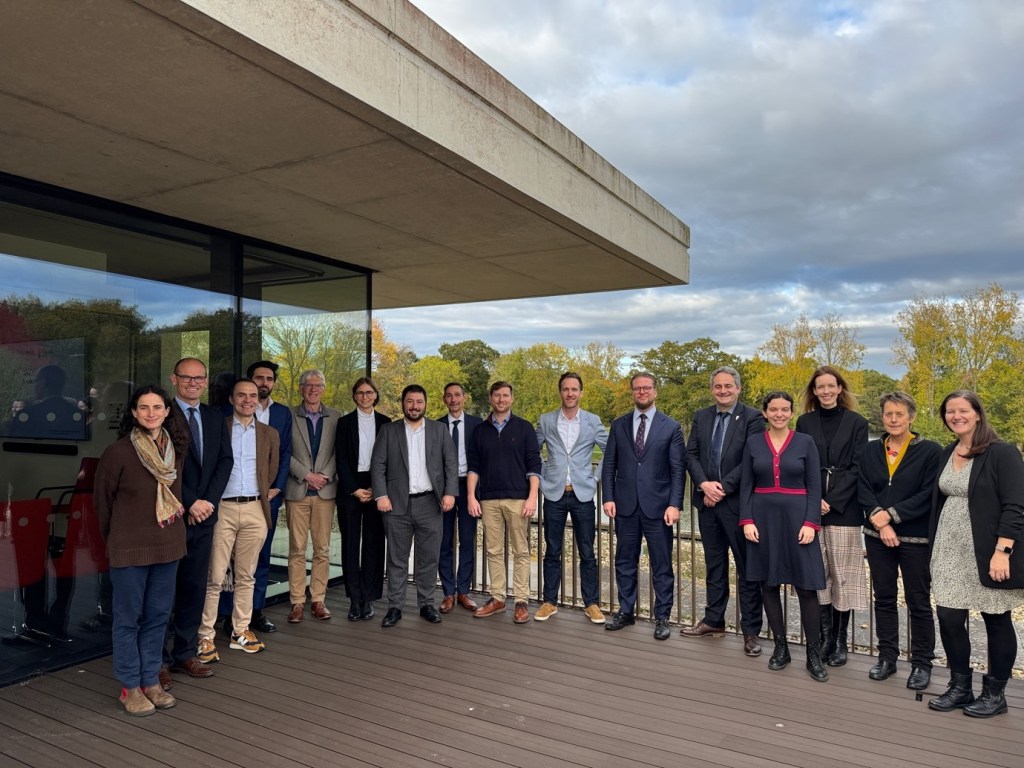
Participants from at the UNHCR-Essex Roundtable on travel documents for refugees, asylum seekers and stateless persons, October 2024 , Credit: Professor Geoff Gilbert

On 22 and 23 October, 17 people from a diverse set of organisations and backgrounds came together from all over the world on campus to discuss travel documents for forcibly displaced and stateless persons in need of international protection. On 23 October, over 60 people attended two online roundtables covering Africa, Europe, the Americas and Asia to consider a toolkit advisory on refugees and asylum seekers affected by climate-induced events or disasters. Professor Geoff Gilbert from Essex Law School hosted both events.  

First for the roundtable on climate-Induced displacement, Essex Law School & Human Rights Centre for a year has been working with the Kaldor Centre for International Refugee Law, UNSW, and the Center for Gender & Refugee Studies (CGRS), University of California College of the Laws, San Francisco, to draft a toolkit for practitioners, decision- and policy-makers on international protection in the context of climate induced events and disasters; it became part of a joint pledge to the 2023 Global Refugee Forum.  

Being forced to move across an international border as a consequence of a climate-induced or other disaster does not in and of itself qualify one as a refugee under the 1951 Convention relating to the Status of Refugees. However, as UNHCR made clear in 2020 in its Legal considerations regarding claims for international protection made in the context of the adverse effects of climate change and disasters, a person displaced in the context of climate induced or other disaster may also qualify under the 1951 Convention if they meet the criteria set out in Article 1A.2. Drought can often lead to conflicts between farmers and herders over access to water or a government may adversely discriminate against a minority ethnic group on its territory post-disaster. Equally, those who are already refugees or asylum seekers may be affected by disasters, too.  

In 2023, CGRS had produced a practice advisory for US lawyers bringing refugee status determination claims in US courts that prompted ELS-HRC and Kaldor to consult on a global equivalent dealing with international and regional refugee and human rights law. On 23 October that Practical Toolkit on ‘International Protection Principles for People Displaced Across Borders in the Context of Climate Change and Disasters’ was considered by over 60 expert academics (including Professor Karen Hulme), lawyers, judges, UNHCR staff and persons with lived experience of forced displacement from across the world. Those discussions will allow the authors, Professor Jane McAdam, Professor Kate Jastram, Dr Felipe Navarro, Dr Tamara Wood, and Professor Geoff Gilbert, to finalize this draft and disseminate it through UNHCR’s REFWorld and other specialist platforms in the next few weeks. 

Turning to the other Roundtable held on campus at the University of Essex Law School, the organisations involved included UNHCR, the International Civil Aviation Organization (ICAO), the International Organization for Migration, the EU Commission, and Frontex, as well as private sector actors, think tanks and persons with lived experience of forced displacement. The meeting also benefited greatly from the attendance of four Essex colleagues, Professor Ahmed Shaheed, former Special Rapporteur on the Human Rights Situation in Iran and on Freedom of Religion and Belief, Professor Paul Hunt, former member of the Committee on Economic, Social and Cultural Rights and Special Rapporteur on the Right to the Highest Attainable Standard of Health, Dr Matthew Gillett, Chair of the Working Group on Arbitrary Detention and a member of the Platform of Independent Experts on Refugee Rights (PIERR), and Dr Judith Bueno de Mesquita, adviser to the World Health Organisation. This roundtable discussed travel documents for persons in need of international protection, that is refugees, asylum seekers, internally displaced persons and stateless persons. 

At the end of 2023, there were 117.3m people within UNHCR’s mandate, 75% in low- or middle-income countries, and there were only 158,500 resettlement places across the world. Some would have managed to bring travel documents with them as they fled, but many are without. As such, they are trapped in the country where they are receiving protection. Even if they are in a state party to the 1951 Convention relating to the Status of Refugees or the 1954 Convention relating to the Status of Stateless Persons, then while Article 28 of both Conventions provide that the country of asylum shall provide a Convention Travel Document, it is only to refugees or stateless persons who are lawfully staying in the territory, a term that is undefined.  

As such, refugees and stateless persons not meeting the threshold, such as asylum seekers and those who have applied for refugee status but where the state has yet to make a decision granting leave to remain, for example, and any person in need of international protection in a non-Contracting state, has no opportunity to obtain a travel document; even Article 28 Convention Travel Documents might only last one to two years and they are difficult to renew outside the country of asylum. Thus, a more generic travel document more widely available to forcibly displaced and stateless persons would facilitate them achieving autonomy in finding a durable and sustainable solution. In part, this fits with the additional solution provided for through Complementary Pathways in paragraphs 85-100 of the Global Compact on Refugees, 2018 (GCR). Traditionally, the durable and sustainable solutions were only resettlement in a third country, local integration in the country of asylum and voluntary repatriation; complementary pathways might involve opportunities to take up employment opportunities or access education in a third country. 

The roundtable considered all the technical requirements for travel documents as set out in Annex 9, Facilitation, to the Chicago Convention on Civil Aviation 1944, administered by ICAO. As such, whatever the form of the travel document for persons in need of international protection, given that it will be machine readable, it should be accepted by all carriers. What cannot be guaranteed is that it will be accepted by the country of destination – that is always, even in the case of national passports, a matter of choice by the state having regard to the trustworthiness of the document.  

In this regard, though, it was suggested that one proposal to take forward is whether the right to leave and return from one’s country of nationality under Article 12 International Covenant on Civil and Political Rights and the right to legal recognition before the law under Article 16 thereof might generally grant everyone the right to a travel document, or at least in combination with the right to access the highest attainable standard of health (Article 12 International Covenant on Economic, Social and Cultural Rights), the right to access employment opportunities (Article 6 ICESCR) or education opportunities (Article 13 ICESCR), as well as the implicit guarantee of family reunification (Article 17 ICCPR). While that may require strategic litigation and engagement with governments to highlight their commitments under the international covenants and the GCR, it shows that ensuring autonomy for refugees and stateless persons and upholding their international human rights could facilitate the acquisition of travel documents. 

The two global roundtables facilitated by Essex Law School marked a significant step towards addressing the complex needs of forcibly displaced and stateless individuals, including those impacted by climate change. Bringing together global scholars, practitioners, and experts from diverse sectors, the discussions highlighted the urgency of accessible travel documents for refugees and comprehensive international protections. These insights will inform final revisions to the toolkit and strengthen advocacy for policies that support autonomy and uphold human rights for those seeking refuge across borders.  

Essex Digital Verification Unit (DVU) contributes to Article 15 Communication to the ICC filed against Russian propagandists

Photo of the ICC (seated in The Hague) by Roel Wijnants on Flickr

On 6 June 2024, the International Federation of Human Rights (FIDH) filed an Article 15 Communication to the International Criminal Court (ICC) in The Hague, regarding speech crimes by Russian political and media figures, including Dmitry Medvedev, Dmitry Kiselyov, and Vladimir Solovyov. This marks an important step in the direction of accountability for hate speech and incitement to genocide.

The Communication, covering the period since the beginning of the full-scale Russian invasion of Ukraine in 2022, was produced in conjunction with several organisations as co-contributors, including the Essex Digital Verification Unit (DVU). Over several months in early 2024, members of the DVU contributed to the project, analysing statements by Dmitry Kiselyov and Vladimir Solovyov to identify possible instances of incitement.

An Article 15 Communication is a submission to the Prosecutor of the ICC, which aims to draw their attention to possible human rights violations. The Communication outlines the situation, the individuals it is brought against, as well as the alleged crimes that the Communication proposes for investigation. The Prosecutor will consider the facts presented, and on their basis might decide to start an investigation of the activities mentioned, which, in turn, might lead to arrest warrants against the persons behind these activities.

Source: International Federation for Human Rights (FIDH)

As a result of the research, numerous inflammatory statements by these figures were identified and analysed. They included the denial of the existence of Ukrainians as a separate nation, accusations of Nazism towards Ukrainian leadership and citizens, as well as calls to carry on the war against Ukraine until the said “Nazism” is destroyed. All of these statements were recorded and forwarded to FIDH in order to be used in preparation of the Article 15 Communication.

“Hateful rhetoric has played a crucial role in Russia’s criminal campaign in Ukraine”, stated FIDH. It added that “Our organisations believe that in the context of crimes against humanity hate speech is a separate offense that warrants greater scrutiny by the International Criminal Court. Our Communication provides ample evidence substantiating the need to further investigate these acts and ultimately issue arrest warrants.”

Dr. Matthew Gillett, Senior Lecturer at Essex Law School and a leader of the Essex DVU, contributed to the writing of the Article 15 Communication itself, and its launch on 6 June 2024. As a former international prosecutor and the co-producer of the Hartford Guidelines on Speech Crimes under International Criminal Law, he was glad to see the guidelines used as a basis for this ground-breaking speech crimes Communication to the ICC.

The Essex DVU’s mission is to enhance global investigations into human rights violations through the application of open-source research methodologies. Its activities leverage the transformative advancements in digital communications technology in recent years, notably the ubiquitous use of social media platforms and smartphones, and the growing use of this technology to obtain evidence of human rights violations and atrocity crimes.

Prohibited Force: The Meaning of ‘Use of Force’ in International Law 

By Dr Erin Pobjie, Lecturer at Essex Law School

Dr Erin Pobjie has just published Prohibited Force: The Meaning of ‘Use of Force’ in International Law (CUP, 2024). Dr Pobjie made use of the University’s dedicated open access (OA) fund to ensure that her book is freely available to students, scholars, and readers everywhere. You can download your copy here.  

Dr Pobjie has kindly answered some questions about her work, her choice to go open access and future projects. 

Congratulations on the publication of your new book! How does it feel to have it published and freely available? 

Thank you! The book is the culmination of a long process, starting with my PhD at the University of Cologne and continuing through my post-doc at the Max Planck Institute in Heidelberg and then as a new lecturer at Essex University. There were many highs and lows over that period and I learnt so much along the way, so it feels emotional and very satisfying to see it finally out.  

You chose to make use of the University’s open access fund. Why is open access important to you and how do you think it will benefit your work?  

I believe in the principles of open science so it was important to me to publish my book OA. Publishing OA allows me to share my ideas more broadly and without financial barriers, so that my book can hopefully contribute to scholarship, policy and practice on this important topic. Having poured so much into the project, I’m happy that it’s freely available open access thanks to the University’s OA fund. 

How did you find the open access process?  

It was fairly straight forward once the funding became available. The Open Access team at the University liaised with my editor at Cambridge University Press and were very helpful and responsive in supporting me throughout the process.   

What advice about open access, or publishing in general, would you offer to colleagues? 

My advice would be to seek feedback early and often, to be proactive throughout the publication process and to advocate for the ideas in your book so that they can contribute to the conversation. These are things I would try to do better next time. It continues to be a learning process now that I’m in the next phase of post-publication, so it’s been very helpful to speak to other colleagues who have recently published books for advice. 

Now, about your book, which feels incredibly timely: how did the idea come up and could you explain the key ideas of the book? 

The seed for the idea was planted during my LLM at Essex, where I was inspired by the module ‘International Law of Armed Conflict’ taught by Professor Noam Lubell. The first class was about jus ad bellum – the prohibition of the use of force between States. I was captivated by the topic and thought it could be a way to contribute to a cause I feel passionate about (the prevention of war) by exploring and clarifying fundamental legal concepts. Noam introduced me to my future doctoral supervisor, Professor Claus Kreß at the University of Cologne, who encouraged me to focus on the meaning of prohibited force.  

The prohibition of the use of force between States is a cornerstone of the modern international legal system and key to international peace and security, but its meaning is unclear. This is especially problematic for uses of force in newer domains like cyber and outer space, or that use emerging technologies. My book therefore seeks to clarify the meaning of prohibited force and proposes a definitional framework that can be applied in practice to identify illegal uses of force. To do this, I analyse the sources of the prohibition (article 2(4) of the UN Charter and customary international law) and their relationship, identify the elements of a prohibited use of force and set out a framework to define a prohibited use of force.  

In a nutshell, my argument is that a ‘use of force’ under article 2(4) of the UN Charter describes a type rather than a concept. This means that rather than consisting of a checklist of necessary and sufficient elements (a concept), it consists of a basket of elements which must be weighed and balanced to determine whether the threshold of the definition is met (a type). According to this framework, not all elements must be present for an act to constitute prohibited force if they are compensated by other elements. For example, a hostile or coercive intent may turn a forcible act into a use of force even if other elements are relatively weak, such as a low gravity or if the harm is only potential but unrealised. The final part of my book applies this framework to illustrative case studies, including the use of force in outer space. 

What’s next for you? Do you have new projects lined up? 

I was recently appointed as co-Rapporteur of the International Law Association’s Committee on the Use of Force, a committee of global experts on the law on the use of force to draft a new report to bring normative clarity to the area of ‘military assistance upon request’ (a.k.a. intervention by invitation). The Committee has a mandate until 2026 to produce the report, so together with my co-Rapporteur Professor James Green I am taking the lead in carrying out the work of the Committee and drafting our report on this topic, with conclusions and commentaries to provide guidance for States. 

I’m also excited to have the opportunity to apply the framework I developed in my book to outer space security at the United Nations. I’m currently undertaking a residential fellowship at the United Nations Institute for Disarmament Research in Geneva in their Space Security Programme, where I’m producing a policy report on the use of force in outer space. Humans globally depend on the preservation of safe, secure and sustainable uses of outer space, including for communications, global navigation systems (which underpin banking, financial markets and energy grids), disaster emergency response and humanitarian relief, food production and climate science. These are all placed at risk by military uses of outer space. The policy report will raise awareness of legal restraints on space threats under international law, which must be considered when negotiating and developing new norms for the prevention of an arms race in outer space.  

I’m enjoying the mix of doctrinal research and policy engagement and am grateful to have the opportunity to further develop and apply the ideas from my book following its publication. 

Prohibited Force: The Meaning of ‘Use of Force’ in International Law is available online and open access through Cambridge University Press. In case you would also like to purchase a hardcopy of the book, you can use the code POBJIE23 on the publisher’s website for a 20% discount until 31 December 2024. DOI: https://doi.org/10.1017/9781009022897.

Do you want to publish your work Open Access? Just complete this brief form and the Open Access team will soon be in touch. More information about making your research available open access can be found on the Open Access Publishing webpage, and you can also get in touch with the OA team via oapublish@essex.ac.uk.  

Essex Law Scholars Tackle Corporate Accountability and Human Rights at the U.N. Forum on Business and Human Rights

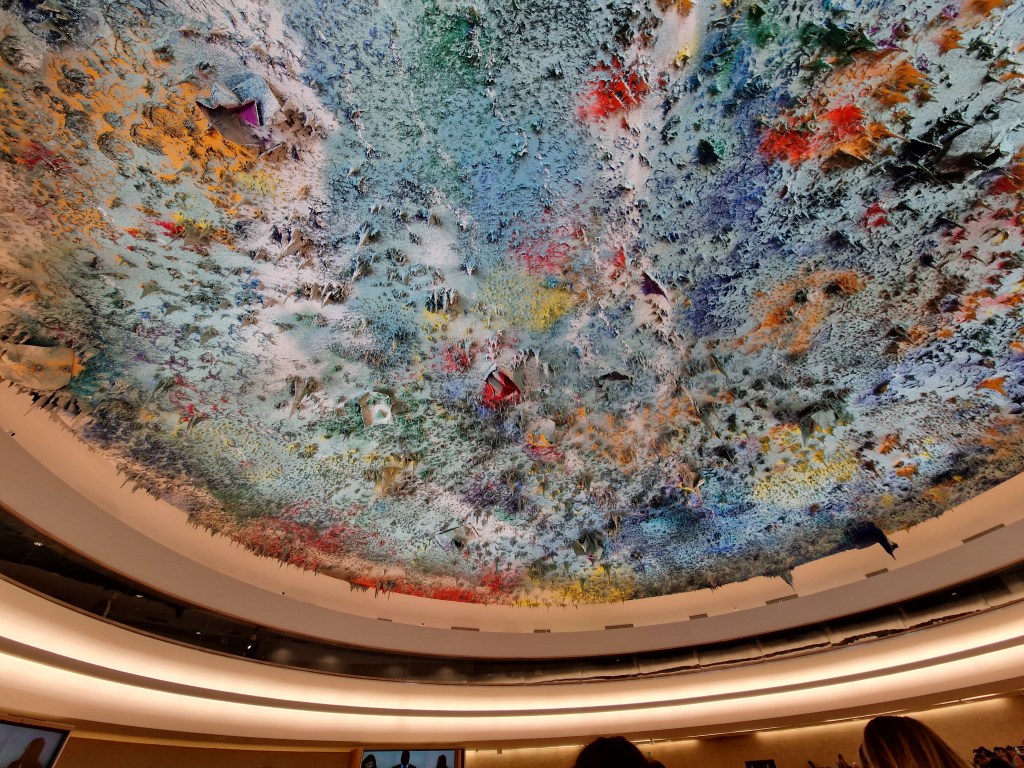
The UN Human Rights Council room ceiling in Geneva

From 27-29 November, the United Nations in Geneva will host its 12th annual U.N. Forum on Business and Human Rights. Essex Law School scholars Drs Jessica Lawrence and Tara Van Ho and Professors Sabine Michalowski and Clara Sandoval will attend to share their work and insights in the field.

In addition to hosting an event for our Alumni, Professors Michalowski and Sandoval and Dr Van Ho will speak at side events, focusing on issues arising from business operations in conflict-affected areas.

Professors Michalowski and Sandoval will address a side event organised by the Colombian Mission on the potential of securing accountability for business actors by that state’s Special Jurisdiction for Peace (JEP). They will join Roberto Vidal, a member of the JEP. This event, titled “Accountability of economic actors for grave human rights violations as part of transitional justice processes” will be delivered in English on Monday, 27 November from 11-12.30pm in Room VII at the Palais des Nations.

This year, Dr Van Ho will speak at a side event organised by Pax for Peace and Swedwatch on the controversial corporate merger and acquisition of Swedish company Lundin with Norwegian company Aker BP. The event is taking place on Tuesday, 28 November from 10:45-12:00 GMT (11.45-13.00 CET).

The remainder of this post will address the controversy of the Lundin-Aker case and information about our alumni gathering in Geneva.

Allegations of war crimes by Swedish company Lundin 

Non-governmental organisations and victims have long alleged that Lundin was complicit in war crimes committed in Sudan between 1998-2002 (the location is now located in South Sudan following the state’s 2011 independence). Allegedly, Lundin asked the Sudanese military to ensure the security of their oil field with either knowledge or indifference that this would result in the commission of war crimes.  

In 2010, Swedish prosecutors opened an investigation into the allegations. Under international law, statutes of limitations should not apply to war crimes. On 11 November 2021, Swedish prosecutors charged the company’s then-Chief Executive, Ian Lundin and its former vice president, Alex Schneiter, with complicity in those crimes. Both the company and the two men deny the allegations. After a challenge from Schneiter was denied by the Swedish Supreme Court, the case was scheduled for trial, which began earlier this year. 

As Dr. Van Ho has previously discussed on the prominent international justice podcast Asymmetrical Haircuts, transnational criminal prosecutions of corporate executives for war crimes remain rare, despite a large number of significant and well-substantiated allegations against multinational corporations. 

In 2014, Dr. Van Ho published her chapter on the rarity of successful corporate criminal prosecutions for human rights and humanitarian law violations in conflict-affected areas and oppressive regimes. Since then, the landscape of corporate criminal prosecutions has not significantly changed, making the Lundin case the most significant prosecution of corporate executives since the Nuremberg trials.  

The 2014 piece was only one in a series by Dr. Van Ho exploring the responsibility of corporations for terminating and remedying human rights violations committed in the context of conflicts. She now has a grant from Open Society Foundations for a study into the business responsibility to remediate international crimes, including war crimes, and the standards businesses should apply when exiting a conflict-affected area.   

The controversial acquisition by Aker 

On 21 December 2021—approximately five weeks after the Swedish prosecutors announced its charges—Aker announced its acquisition of Lundin, to be carried out in three stages starting in July 2022. The merger allegedly leaves just enough assets to cover any criminal fines levied as a result of the prosecutions but would deny remedies to Sudanese and South Sudanese victims.

Those victims were expected to make civil claims against the company following a successful criminal prosecution, a common practice in civil law states that both reduces the potential of conflict civil and criminal judgements as well as the costs and risks victims must otherwise undertake themselves when litigating a civil claim against a large multinational company. The arrangements for the merger and acquisitions also appear to include a clause indemnifying Aker from any further claims brought against Lundin as a result of its actions in Sudan.  

In other words: the acquisition appears to deny the South Sudanese victims of war crimes an opportunity to pursue their right to an effective remedy. 

A Panel Discussing the Effort to Secure Justice 

In response to the merger and acquisition, 8 South Sudanese and European NGOs have filed a complaint before the OECD National Contact Point in Norway alleging Aker BP failed to adequately conduct the human rights due diligence expected of the company under the OECD’s 2011 Guidelines for Multinational Enterprises.  

Dr. Van Ho has a forthcoming book chapter, co-authored with Dr Eugenio Vaccari of Royal Holloway, on the need for human rights due diligence during corporate insolvency proceedings, a topic intimately related to the denial of remedies through corporate mergers and acquisitions. She has spoken with Dr Vaccari and others about the issue of remedies in corporate insolvency proceedings as part of the INSOL International podcast

In Geneva, Dr. Van Ho will discuss the intricacies of this case, focusing on how the right to an effective remedy should factor into mergers and acquisitions and what both the prosecution and the OECD complaint should tell us about the state of corporate accountability in the context of conflict.  

While in-person capacity in Geneva is limited, the event will also be live-streamed and you can register to attend the event here.

From Judgment to Justice: Discussing the Implementation of International Judgments on Socio-Economic Rights in Johannesburg

Dr. Casla’s visit to the South African Constitutional Court

By Dr Koldo Casla, Senior Lecturer in Law and Director of the Human Rights Centre Clinic

In the first week of November, I participated in a workshop on advancing the implementation of positive rulings on economic, social, cultural and environmental rights. The event took place in Johannesburg, South Africa, and it was jointly convened by Amnesty International and the International Network for Economic, Social and Cultural Rights (ESCR-Net). Taking stock of the discussion, some of us also held a meeting of the steering committee of the working group on strategic litigation of ESCR-Net.

The event gave us the opportunity to talk about specific examples of what is working and what not in strategic litigation around the world, with a particular focus on cases from Africa (South Africa, Kenya, Gambia and Malawi), but also from India (workers’ rights and the right to food), Canada (right to health of undocumented migrants), Ecuador (land rights of Sarayaku indigenous people) and Spain (evictions in the private rental sector).

The team deliberated on strategic approaches to address the challenges posed by the uncertainties associated with litigation and its enduring consequences. Emphasis was placed on the critical role of civil society in spearheading the identification of concerns and the implementation of judicial decisions.

We had the privilege of visiting the South African Constitutional Court, possibly the most important national court as regards the justiciability of socio-economic rights globally. The building is full of symbolism appealing to values of transparency, culture and accessibility of justice. It is built on top of the remains of a brutal prison of the apartheid regime. Gandhi and Mandela spent time there. The location is a powerful message about learning from the past to build a more promising future founded on the principles of the rule of law and human rights.

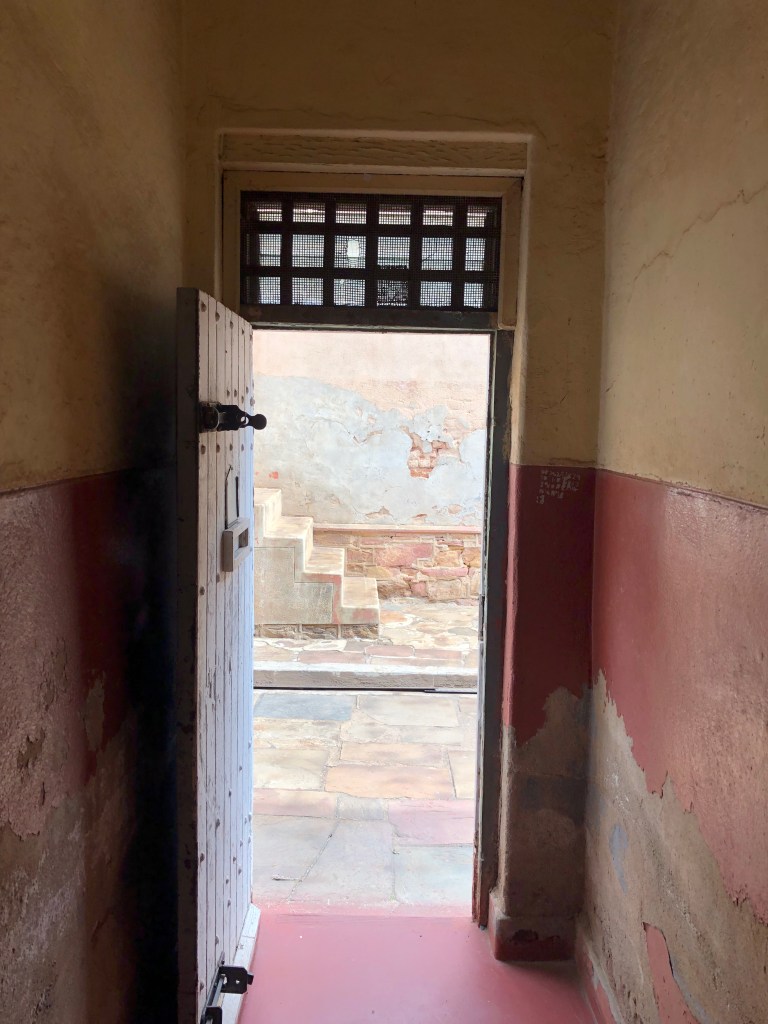
From the cells in the prison on Constitution Hill, where the Constitutional Court is located.

The occasion was also an opportunity to express solidarity with the Ogiek indigenous people in Kenya. Some of the community leaders were present at the workshop. Despite several rulings from the African Commission on Human and Peoples’ Rights, the Ogiek have suffered repeatedly violations of their human rights, including further evictions from their ancestral land.

An action in solidarity with the Ogiek people of Kenya, who have suffered multiple evictions and other human rights violations, as documented by the African Commission and Court of Human and Peoples’ Rights.

At the event, I talked about the UN Committee on Economic, Social and Cultural Rights (CESCR) as a venue for strategic litigation on housing rights in Spain. The Optional Protocol on Economic, Social and Cultural Rights was adopted in 2008 and entered into force in 2013. It allows individuals to lodge complaints in front of the CESCR against States Parties for violations of socio-economic rights. To this day, 26 countries have ratified this treaty. Spain was the third country to do so, the first one in Europe.

More than 90% of CESCR decisions concern Spain, and the vast majority of them are about the right to adequate housing. One of the most significant cases is Ben Djazia and Bellili v Spain (2017), where the CESCR made two big contributions to international human rights law: firstly, it established that the proportionality test applies to the private rental sector as well as the public one; and secondly, it ruled that the State had breached the principle of non-retrogression because in the background of the eviction there had been a large-scale sale of some 4,000 social housing units by regional authorities in Madrid to transnational real estate investment trusts.

Dr. Casla presented the Ben Djazia case at the workshop

Since 2019, Spain’s legislation has been amended several times, and some of those amendments have brought to life some of the recommendations of the CESCR. Not all recommendations have been taken onboard yet; in particular, the issues of progressive realisation and the adoption of a national plan have not been given due consideration.

However, judges are now given the opportunity to look at personal circumstances (while not obliged to do so), and there is an expectation of coordination between the judiciary and social services before an eviction is executed (but not a specific timeframe or duties on public authorities). Housing laws at regional as well as central/national levels have created additional duties for large landlords over small landlords, which the CESCR considers part of the proportionality test (López Albán v Spain, 2019).

The experience of strategic litigation on housing rights in Spain has taught us some valuable lessons.

Firstly, sometimes human rights progress comes from non-human rights litigation. In the case of Spain, the first major court victory was the Aziz case (2013), where the Court of Justice of the European Union ruled that foreclosure procedures must give judges the chance to look for potential unfair terms in the contract, opening the door to a kind of proportionality test. This ruling was based on consumer law (EU 1993 Directive), not human rights law.

Secondly, recent legal developments in Spain are a reminder that parliaments can play a central role in the implementation of international human rights rulings. After all, hardly anything can beat securing a majority in parliament for human rights-friendly legislation.

Thirdly, recent developments also show that in federal or quasi-federal countries, regions can indeed learn from each other in a sort of laboratory for democracy. As I show in Chapter 5 of Spain and Its Achilles Heels, I would argue that this is precisely what happened between several of Spain’s regional legislative chambers between 2013 and 2017.

Finally, we must not make perfect the enemy of the good. Not all of the CESCR recommendations have been implemented in Spain. The situation is far from perfect. Even those that have been implemented have been implemented only to some extent. However, in the spirit of joyful advocacy, it is important to celebrate victories when they occur, including partial victories, even if we do not achieve everything we may hope for.

The Rwanda Plan is Unlawful, the Supreme Court Rules

The UK’s Supreme Court on Parliament Square, Westminster

The UK’s long-delayed and controversial proposal to deport asylum-seekers to the central African state of Rwanda was rejected by the Supreme Court on Wednesday 15 November 2023.

The Supreme Court unanimously dismissed the Home Secretary’s appeal and upheld the Court of Appeal’s earlier conclusion that “the Rwanda policy is unlawful”. This is because there are substantial grounds for believing that asylum seekers would face a real risk of ill-treatment by reason of refoulement to their country of origin if they were removed to Rwanda. Lord Reed and Lord Lloyd-Jones gave a joint judgment with which the other members of the Court agreed.

The Supreme Court cited evidence by the UN refugee agency indicating Rwanda’s lack of adherence to the non-refoulement principle and raised doubts about the Rwandan authorities’ fairness of asylum claim assessments and human rights violations.

The Court made it clear that it was “not concerned with and should not be regarded as supporting or opposing any aspect of the political debate surrounding the policy”. However, its decision deals a blow to the government’s pledge to “stop the boats”, and with the Rwanda plan being at the centre of the recently passed Illegal Migration Act, a reassessment of asylum policies seems inevitable now.

In October 2022, the House of Lords International Agreements Committee published its 7th Report of Session 2022–23 on its inquiry into the Memorandum of Understanding (MoU) between the UK government and the government of the Republic of Rwanda for the provision of an Asylum Partnership Arrangement, citing written evidence submitted by Professor Theodore Konstadinides and Dr Anastasia Karatzia of the Essex Law School.

Prof. Konstadinides and Dr. Karatzia had questioned whether an MoU is an appropriate vehicle for the relocation of asylum seekers deemed to have arrived illegally in the UK, “especially given: (a) the implications it has for individual rights, and (b) the assurances and safeguards included in the MoU, particularly those relating to inspection and monitoring, a relocated individuals’ access to legal assistance, and data protection which give rise to legitimate expectations as to the other party’s conduct.”

The Research Visibility Team interviewed Prof. Konstadinides, co-director of the Constitutional and Administrative Justice Initiative (Essex CAJI) and academic lead for Public Law, to find out more about the Supreme Court’s ruling and its implications.

The Supreme Court’s ruling emphasised serious flaws in Rwanda’s asylum procedures. Could you elaborate on these shortcomings that led the court to determine it wasn’t a safe option for asylum seekers?

Removals to Rwanda, a practice established by the Home Secretary’s immigration rules, were held to be unlawful by the Supreme Court because of substantial evidence, including over 100 examples from the UN Refugee Agency, regarding Rwanda’s inadequate system of processing asylum claims. Rwanda’s poor human rights record and the lack of guarantees that upon arrival to Rwanda asylum seekers would have their claims properly examined by the respective authorities could result to further removal and repatriation where they would face a real risk of ill-treatment. The Supreme Court took this possibility very seriously despite the Home Secretary’s reassurance that Rwanda entered the deal in good faith.

There is a legal rule, or prohibition if you may, that refugees must not be returned to their countries of origin if their life or freedom will be under threat. This principle is known as ‘non-refoulement’ and it is a core principle of international law. Our colleague Prof. Geoff Gilbert is an expert in international refugee law and could tell you more about it. Suffice to say for now that asylum seekers are protected against refoulement by several international treaties to which the UK is a party including the UN Refugee Convention, the UN Convention against Torture and the European Convention on Human Rights (ECHR). As Lord Reid emphasised it is not, therefore, only the ECHR which is triggered here regarding the returning of asylum seekers in their country of origin without proper examination of their claims. The obligations under these international treaties are also reflected in our statute book for some time now, see for instance, the Asylum and Immigration Appeals Act (1993); the Nationality, Immigration and Asylum Act (2002) and, last but not least, the Human Rights Act (1998).

This explains in a way why the Supreme Court was unanimous that, once there are substantial grounds for believing that asylum seekers who are sent to Rwanda will be at real risk of ill-treatment or refoulment, there is only one way to decide this case.

The government is considering emergency legislation to declare Rwanda a safe country for asylum seekers, bypassing the Supreme Court’s judgment. What legal and political challenges might arise from such a move, and how could it impact the ongoing debate within the Conservative Party on issues like leaving the European Convention on Human Rights?

The government will try to negotiate changes and inject extra safeguards to the Rwanda deal. Of course, a revised or renewed deal cannot stop fresh litigation, especially challenges against the decisions of the Home Secretary made in light of such deal. Following the Court’s decision on the 16th of November, the Prime Minister expressed the will to use Parliament as a vehicle to reverse the Supreme Court’s unanimous decision.

If Parliament were to pass such legislation that would override the ECHR and the HRA (which gives the ECHR domestic effect) in relation to non-refoulment claims that would be the law of the land due to Parliamentary Sovereignty. But that would not be the end of the matter as far as international law is concerned: the government’s policy could still be in breach of international law. Also, as Lord Reid emphasised, the ECHR and the HRA are not the only relevant pieces of international and national legislation that protect asylum seekers from refoulment.

This takes us to your question about leaving the ECHR altogether, getting Parliament to repeal the HRA and either resuscitating Dominic Raab’s Bill of Rights Bill or relying on a combination of rights under the common law and statute and other international obligations that have found their way into our statute book. I don’t personally think it is a good idea to establish a record of treaty withdrawal every time we are unhappy with the outcomes that international law produces, although I worry that leaving the ECHR will become part of a future Tory Manifesto that has been flirting for some years now with the idea of repealing the HRA or “updating” it.

Unfortunately, this government has been too ready in its rhetoric to breach international law, albeit in a specific and limited way which is worrying in terms of the rule of law which requires compliance by the state with its obligations in both national law and international law.

Given the ruling on the Rwanda plan and its implications for the UK’s asylum policy, what do you foresee as potential avenues for the government to reconsider its approach? Could the quest for a new safe third country lead to similar legal challenges, and how might this affect the broader discourse on asylum processing in the UK and globally?

A new Bill that will, according to Suella Braverman’s response on X (formerly Twitter), “block off ECHR, HRA and other routes of legal challenge” is a legal fiction. As Prof. Mark Elliott (University of Cambridge) responded to her post, domestic legislation cannot just “block off” the ECHR, which the UK will still be obliged in international law to comply with for as long as it remains a member of the Council of Europe. Prior to legislation, a new treaty with Rwanda or another safe third country is possible, however. The Supreme Court, and the Court of Appeal before it, said explicitly that if there are no grounds for believing that asylum seekers who are sent to Rwanda or a third state for that matter will be at real risk of ill-treatment then the policy is sound and lawful.

The current memorandum of understanding between the UK and Rwanda provides some reassurance but being an expression of political will and not legally binding, it cannot be relied upon by asylum seekers. A treaty, however, can better protect such commitments, something that I initially argued with Dr. Anastasia Karatzia in our evidence to the International Agreements Committee of the House of Lords that got cited in the end. Following the judgment yesterday, the UK’s Prime Minister publicly stated that his government has been working on “a new international treaty with Rwanda” which will push to “ratify without delay” in Parliament and “will provide a guarantee in law that those who are relocated from the UK to Rwanda will be protected against removal from Rwanda”.

Some people, including myself, will still find this solution to the issue disappointing given Rwanda’s poor track record of human rights protection, judicial independence, and lack of adherence to the terms of similar agreements with other countries in the past, especially on non-refoulment of asylum seekers. However, yesterday’s judgment is a small legal victory insofar as the rule of law is concerned.

Unlike the initial memorandum that the government signed with Rwanda, a treaty will be subject to Parliament’s statutory role in scrutinising treaties as set out in the Constitutional Reform and Governance Act 2010. In the grand scheme of things, this may look like a small step. But let me remind readers that the UK-Rwanda memorandum was only published when it became operational on signature which left no space for any type of review or revisions by Parliament.

If the House of Commons passes a resolution opposing the ratification of a new UK-Rwanda treaty, it triggers an extra 21-day delay, preventing the government from proceeding with the ratification during this time. However, there is a catch: a minister has the authority to ratify a treaty without following this process, but this option becomes void if either House passes a negative resolution. Essentially, this represents a modest legal triumph.

UN Mission on Arbitrary Detentions in Mexico: In Conversation with Dr Matthew Gillett

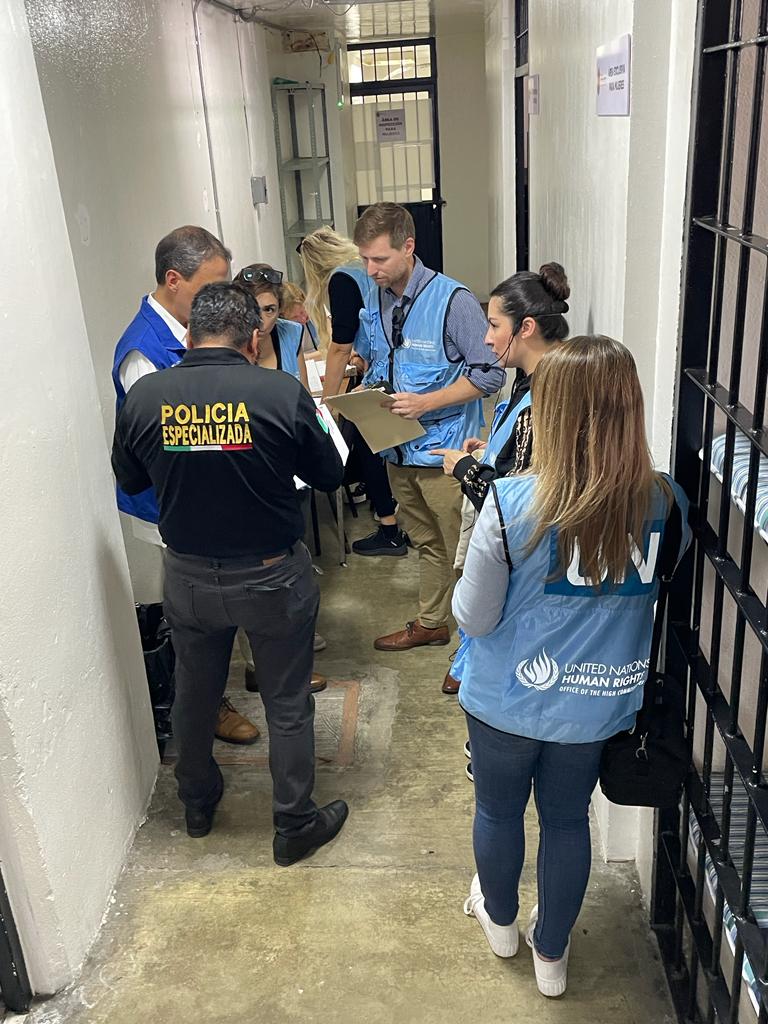
Dr. Gillett and his team during an Inspection of a detention facility

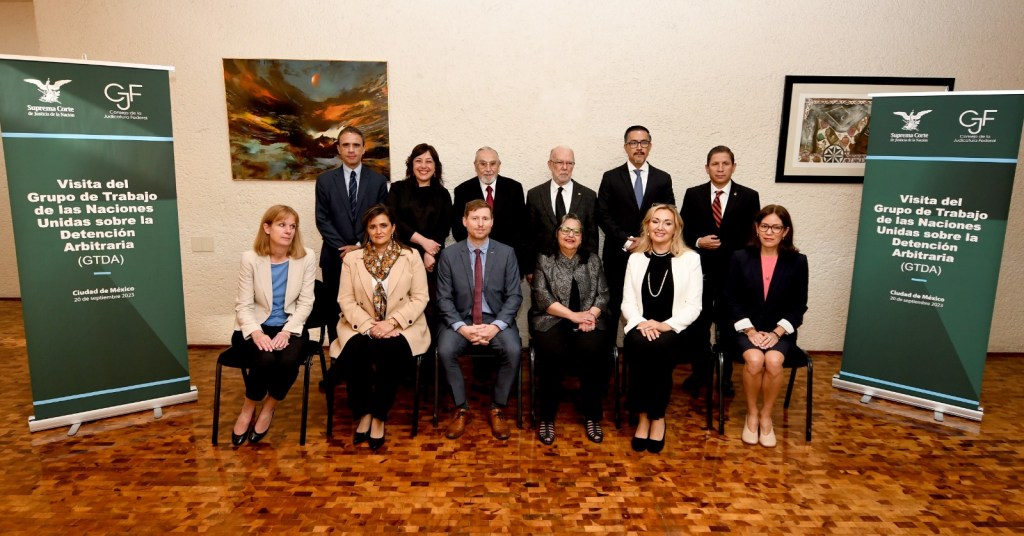
Dr. Matthew Gillett, the Vice-Chair of UN Working Group on Arbitrary Detention and Essex Law School academic, spearheaded a high level delegation on a recent mission to Mexico. His team visited multiple sites across Mexico City, Nuevo León, and Chiapas over 11 days. 

Their mission included interviews with detainees and assessments of police stations, migration detention centres, sanctuaries of vulnerable children, mental health institutions and the very corridors of prosecutors’ offices. The delegation also met with significant figures, including President Norma Lucía Piña Hernández of the Supreme Court, and offered key recommendations to the Mexican government. 

Meeting the president and members of the Supreme Court of Mexico

The Essex Law School Research Visibility Team had the opportunity to interview Dr. Gillett about his recent trip, the different layers of the UN project and their impact:  

Dr. Gillett, what inspired or motivated you to focus on arbitrary detentions, and how did the idea to visit Mexico specifically come about? 

Having worked in criminal justice for 20 years, I have increasingly seen that the moment of detention is a critical point in the application of the law. If the State power to detain is misused, then it can violate a person’s right to liberty and can also lead to other violations including enforced disappearance, torture, and even extra-judicial killings. I’ve worked on detention related matters in New Zealand, Afghanistan, Mongolia and several other countries. 

But this latest mission to Mexico came about through the United Nations Working Group on Arbitrary Detention, of which I am the Vice-Chair. We considered Mexico an important country to assess, because of its large and diverse population, and its major issues with migrant-related detention at the moment.   

Were there any moments or encounters during your trip that deeply impacted or surprised you? 

There were many moments during the mission to Mexico that were deeply affecting. Seeing detainees with open wounds, sometimes sleeping on concrete floors in over-crowded cells, was shocking. But also learning of the challenges that Mexico faces, including the hundreds of thousands of migrants passing through its territory, brought home the complexity of the situation.

While observing the situation in Mexico, what progress stood out to you, and conversely, what challenges deeply concerned you?

Mexico’s progress in terms of placing human rights at the centre of its constitution and establishing a National Registry of Detentions were important steps forward. Prison officials were largely professional and not using violence against detainees in a systematic way from what we discerned. 

However, significant challenges remain, particularly in terms of the use of violence by security forces conducting arrests out on the streets, and the imposition of mandatory pre-trial detention, as well as shortages in staff and resources at prisons which lead to many detainees being kept in their cells the vast majority of the time without access to proper sunlight and fresh air.

What are the key recommendations you’d like to emphasise from the UN Working Group, and how have the responses from the Mexican authorities and international community felt to you? 

We would strongly recommend increasing the scope of the National Registry of Detentions to cover all deprivations of liberty, including administrative detentions of migrants for example. We would also emphasise the need to remove mandatory pre-trial detention and ensure that individualised assessments are carried out to verify that persons detained before trial are either a flight risk, or risk of tampering with evidence or serious re-offending. The Working Group and the Inter-American Court of Human Rights have both called for this change in their judgments. 

During the visit, we sensed an openness on the part of the Mexican authorities to take up our recommendations. At the same time, we urged them not to wait for our full report, which we will deliver to the United Nations Human Rights Council in September 2024, to start implementing changes.

On a personal note, how has this trip impacted your views on human rights and arbitrary detention globally? What message would you want to convey to international readers regarding the situation in Mexico and the efforts of the UN Working Group?

There are two points which I take away from the Mexico mission. 

One is the importance of investigating at multiple levels in order to get a holistic view of the situation. We spoke to over 170 detainees, as well as officials at the federal, state and local levels, and many NGO and civil society actors. The communications are critical to understand the depth and breadth of human rights challenges, but also to provide focused recommendations which are feasible and impactful. 

The second is that the wheels of justice must speed up! People should not be left for years, languishing in detention, before they have a trial. It’s a global problem that requires a concerted effort on the part of governments and the judiciary. They must ensure that everyone charged with a crime enjoys their right to trial without undue delay.