Reparations Before The International Criminal Court: Who Are The Victims of Cultural Heritage Destructions and How Should Their Harm Be Addressed?

Source: Wikimedia Commons

Ahmad al-Faqi al-Mahdi (Mr. Al Mahdi) was brought to the International Criminal Court to stand trial for his involvement in the destruction of several historical and religious sites in Timbuktu (Mali) during an armed conflict in 2012. This was the first time in the history of international criminal justice that an individual was prosecuted for the destruction of cultural heritage alone.

Following his guilty plea and conviction in 2016, the case moved on to the reparations phase where the focus was that of redressing the harm caused to victims. Therein, the unprecedented nature of the Al Mahdi case led to an equally unprecedented question: who are the victims of cultural heritage destruction?

Drawing upon her personal involvement in the case as a Court-appointed expert, Dr. Marina Lostal, Senior Lecturer at the University of Essex, has published an article explaining how this question was resolved and the practical challenges it posed during the implementation phase.

The challenges encountered are labeled as ‘monumental’ because they had one thing in common: the amount of theoretical thinking and reflection that they deserved was inversely proportionate to the urgency with which they had to be addressed and the precedent they would establish. To surmount this, drawing from the author’s background, the Trust Fund for Victims turned to academia and consulted with scholars.

The article focuses on three of such challenges:

(i) whether ‘unborn children’ should be included in the pool of victims given that cultural heritage is meant to be preserved for the benefit of future generations;

(ii) what place women ought to occupy in the implementation of reparations, despite the customary practices of side-lining them; and

(iii) the decision of whether to memorialize events surrounding the crime.

On the latter point, the article introduces the concept of ‘restorative agency’, a working principle that was adopted in the context of memorialization measures to ensure that victims are given a platform to decide, not a decision.

Lastly, Dr. Lostal’s article provides a framework to demonstrate the level of complexity involved in the implementation of any Court-ordered reparations and reveals some of the work of the Trust Fund for Victims, one of the Court’s least comprehended creations.


Article full citation: Marina Lostal, Implementing Reparations in the Al Mahdi Case: A Story of Monumental Challenges in Timbuktu, Journal of International Criminal Justice, Volume 19, Issue 4, September 2021, pp. 831–853, https://doi.org/10.1093/jicj/mqab064

Whose Perception of Justice? Real and Perceived Challenges to Military Investigations in Armed Conflict

Image by iStock

States must investigate possible violations of international humanitarian law in armed conflict, and many of them use military procedures for all or part of the investigation process.

Particular tensions can arise with regard to the perception of justice in the context of military judicial procedures, especially surrounding questions of independence and impartiality.

In her new article, Claire Simmons, Senior Research Officer at the University of Essex School of Law and Human Rights Centre lays out the international legal framework which should be used to solve these challenges.

The article argues that a State must address both the specificities of military institutions and the need for a perception of justice by the affected communities in considering the proper administration of justice in armed conflict.

Here is a 30-second video summary of Claire’s article:

The article is published in a special edition of the International Review of the Red Cross on Emerging Voices of International Humanitarian Law, Policy and Action, and can be accessed here for free.

The Ecology of War and Peace: Marginalising Slow and Structural Violence in International Law

Photo by Sergio Torres

Dr. Eliana Cusato, who is currently appointed as a Marie Skłodowska-Curie postdoctoral fellow at the Amsterdam Center for International Law, authored a new book titled The Ecology of War and Peace: Marginalising Slow and Structural Violence in International Law. Her book was published by Cambridge University Press in September 2021.

The interrelation of ecology and conflict has been the object of extensive study by political scientists and economists. From the contribution of natural resource ‘scarcity’ to violent unrest and possibly armed conflict; to resource ‘abundance’ as an incentive for initiating and prolonging armed struggles; to dysfunctional resource management and environmental degradation as an obstacle to peacebuilding, this literature has exerted a huge influence upon academic discussions and legal/policy developments.

While international law is often invoked as the solution to the socio-environmental challenges faced by conflict-affected countries, its relationship with the ecology of war and peace remains undertheorized. Drawing upon environmental justice perspectives and other theoretical traditions, the book unpacks and problematizes some of the assumptions that underlie the legal field.

Through an analysis of the practice of international courts, the United Nations Security Council, and truth commissions, the book shows how international law silences and even normalizes forms of structural and slow environmental violence (notably, uneven access and distribution of natural resources; less visible forms of violence associated with the environmental aftermath of wars).

This, in turn, jeopardizes the prospects of creating more peaceful societies, while perpetuating deeply rooted inequalities. Ultimately, the book urges us to imagine entirely different legal notions of justice, peace, and security in times of ecological disruption.

By drawing upon extra-legal fields of inquiry (e.g., the literature on environmental security, the political economy of civil wars, the resource curse, and environmental peacebuilding), the book strives to refine extant understandings of how international law conceptualizes and regulates the ‘environment’ before, during, and after armed conflict.

By engaging with some of the international legal order’s most pressing concerns – rising intra-state violence, environmental degradation, resource depletion, and their interaction – the book opens intellectual spaces for rethinking current approaches to the ecological challenges of our hyperconnected world and their adverse impact on the most marginalized peoples. As such, it offers a critical companion work to related titles and, at the same time, pushes the research envelope further and in new directions.

E Cusato, The Ecology of War and Peace: Marginalising Slow and Structural Violence in International Law (CUP 2021)

The book will be of interest to academics and students across different disciplines, primarily international law, but also peace and conflict studies, political theory, and international relations. It will also prove useful as a reference for policymakers and practitioners working at the intersection of environmental issues, human rights, and peace and security within international organisations/tribunals, governmental departments, think thanks, and NGOs.


Dr. Eliana Cusato is currently on academic leave from the Essex Law School.

The War on Compensation: Troubling Signs for Civilian Casualties in the Gaza Strip

Photo by Timon Studler

Dr. Haim Abraham, Lecturer in Law, University of Essex

Follow Dr. Abraham on Twitter here

The last round of belligerency between Hamas and Israel claimed a significant toll from civilians, with many arguing that some of the more devastating activities conducted by the IDF were in breach of the laws of war (for example, herehere, and here). Just days before a ceasefire was declared, Judge Shlomo Friedlander of Israel’s Be’er Sheva District Court released his ruling in the case of The Estate of Iman Elhamtz v. Israel, dismissing a claim for compensation for the killing of a 13 year old girl from the Gaza Strip by IDF forces in 2004. At first glance, this case seems to be just another instance in which the state’s immunity from tort liability for losses they inflict during combat is reaffirmed. However, a closer examination reveals that it is a significant development of the immunity, which could have vast ramifications for Palestinians’ ability to obtain compensation for losses they sustained from IDF activities that were in breach of the laws of war. Currently, Israel is immune from tort liability for losses it inflicts during battle, even if combatants inflicted the loss negligently. Yet, Judge Friedlander seems to expand the immunity further so that it applies not only to combatant activities that comply with the laws of war, but also to war crimes. This approach to the immunity has yet to be considered by the Supreme Court, but it is in stark opposition to international trends towards the scope of state’s immunity from tort liability.

The Elhamtz Case

The tragic events that resulted in Iman Elhamtz’ death unfolded in 2004 while Operation “Days of Penitence” was being conducted in the midst of the Second Intifada. An IDF military post at south Gaza Strip near Rafah was under high alert against threat of attack. Elhamtz approached the post, but the lookout did not properly execute his duties resulting in Elhamtz reaching within 100 meters of the post before being detected. Surprised and, according to their testimony, fearing that she is there as a part of a terrorist activity, soldiers began shooting towards Elhamtz even as she was fleeing. Elhamtz was killed. Major R, who was the commanding officer at the time, charged her dead body and engaged in ‘dead-checking’. A total of 20 bullets were found in her body.

A military court exonerated Major R of criminal wrongdoing. Elhamtz’ estate sought a ruling that would hold Israel accountable for her death through civil proceedings, and filed a tort law-suit against Israel in the Be’er Sheva District Court in 2005, arguing that she was shot and killed negligently and in violation of international humanitarian law.

In May 2021, the court dismissed their claim, despite finding that the military force indeed acted negligently and in violation of international humanitarian law. Judge Friedlander found that the military force was negligent on two counts. First, the lookout failed to perform his duties. If he was not preparing for a shift change but had properly observed the post’s surroundings, Judge Friedlander held, Elhamtz could have been spotted from a greater distance, chased away and probably would still be alive today. Second, the immediate and excessive use of force when there was no clear threat was in breach of the rules of engagement. The court adopted these rules to determine the relevant standard of care that is expected from a military force under such circumstances and held that this standard was breached. The military force should not have fired on Elhamtz to begin with, should have stopped when she began to flee, and dead-checking was completely incompatible with the standard of care that is expected from combatants.

The court also held that the actions of the military force violated the principle of proportionality. The sheer fact that Elhamtz was near the post, according to Judge Friedlander, does not mean that combatants can use deadly force against her. Even if she posed a risk, which was highly doubtful, she should have been chased away or restrained, not killed.

The sole reason for which Israel was not held liable for the death of Elhamtz was that Israel, like many other countries, has a special immunity from tort liability for losses it inflicts during armed conflict called the ‘combatant activities exception’. Through his opinion, Judge Friedlander paved the way to reject future tort claims that are likely to be filed by Palestinian casualties from the most recent round of fighting. But to understand the legal mechanism that allows this reality, a better appreciation of the immunity is needed.

The Combatant Activities Exception

In the mid-20th century, states began reforming laws concerning their immunity from tort liability, by removing procedural and substantive hurdles for filing claims, as well as limiting the scope of the doctrine of sovereign immunity to enable holding foreign states liable in tort. Nevertheless, while immunity from liability became more limited, it was not done away with altogether. Some pockets of immunity remained, including the combatant activities exception, which, essentially, provides a blanket immunity from tort liability for wrongful actions conducted in battle.

The scope of the combatant activities exception varies between jurisdictions. Canada, for example, has what appears to be the broadest statutory exception, which precludes liability for “anything done or omitted in the exercise of any power or authority exercisable by the Crown, whether in time of peace or of war, for the purpose of the defence of Canada or of training, or maintaining the efficiency of, the Canadian Forces.” The U.S. statutory exception is somewhat more limited in its scope, maintaining that no liability would be imposed in “any claim arising out of the combatant activities of the military or naval forces, or the Coast Guard, during time of war.”

When Israel first enacted its version of the combatant activities exception through the Civil Wrongs (State Liability) Act 1952, it was very similar to the U.S. exception, simply stating that Israel is not “liable in tort for a combatant activity committed by the Israel Defense Forces.” Initially, courts interpreted the exception narrowly, holding that it is applicable only to activities in which there was an objective and immediate risk that is of a combatant character. However, with each major conflict with the Palestinian population, the scope of the exception was expanded through judicial interpretation and by legislative amendments. These expansions have three notable themes.

First, the boundary between combatant and non-combatant activities has been blurred. During the First Intifada (1987-1993), IDF forces faced large-scale violent protests. Policing operation within the Occupied Palestinian Territories exposed the forces to imminent risk to their lives, and courts were torn between a narrow and a broad interpretation of the combatant activities exception. The narrow approach ruled out the exception’s applicability, holding that policing activities are not combatant activities, even if they are conducted by military forces who are exposed to considerable risks. The broad approach held the contrary view, finding that the exception is applicable even for policing activities due to the real risk to soldiers’ lives, who were operating in a hostile environment. Ultimately, the broad interpretation of the combatant activities exception was adopted by the courts and the legislature, expanding the scope of the exception to include policing and counter-terrorist activities. The exception became so broad that it currently applies to activities in which a soldier subjectively (and mistakenly) feels at risk, as were the circumstances that led Judge Friedlander to hold that Israel cannot be held liable for the killing of Iman Elhamtz.

Second, non-Israeli Palestinians are viewed as ‘the enemy’, and their tort claims are thought of as a continuation of terrorist activities through civilian means. For example, in 2005 the Israeli parliament sought to expand the scope of the exception to include any and all injuries in the Occupied Palestinian Territories, whether combatant or not. This legislation was struck down by the Supreme Court on the grounds of it being unconstitutional. Similarly, a 2012 amendment expanded the applicability of the exception to all non-Israeli residents of the Occupied Palestinian Territories, regardless of the character of the activities that resulted in the loss (this legislation is currently being reviewed by the Supreme Court).

Third, the temporal and geographical distinction between war and peace has been undermined. The original interpretation and definition of the exception meant that it was applicable only to engagement in actual hostilities. The courts examined the circumstances that resulted in the injury, analyzing the particular location in which the activity took place, taking into account a small window of time before or after it. Following the events of the Second Intifada (2000-2005), as well as the legislative expansion of the exception, courts consider an ever-increasing context. Courts no longer examine just what happened on the particular street and time in which someone was injured. Instead, they refer to the general area and history to deduce whether combatants faced a risk that would fall under the scope of the exception, sometimes expanding the timeframe to years prior to the activity that resulted in the injury itself.

The overall effect of the expansion of the combatant activities exception resulted in a dramatic decrease in the number of tort suits being filed, from thousands of cases in the early 2000s to a handful of cases a year currently, and a finding of liability against Israel is nearly impossible. Nevertheless, the scope of the exception is still being contested by plaintiffs, and it is far from clear that its current form can be Justified (see, for example: hereherehere, and here).

‘Testing the Waters’

The dismissal of the Elhamtz case coincided with the growing criticisms of Israel’s violations of the laws of war during the 2021 round of belligerency between Hamas and Israel. These should have been two unrelated matters. One revolved around a tragic incident in 2004, the other was still ongoing in May 2021. Yet, Judge Friedlander’s opinion, which held that the exception applies not only for the military’s negligent actions, but also for its actions that violate international humanitarian law, seems to create a link between the two. In the obiter, Judge Friedlander gave contrasting examples to illustrate the limits of the combatant activities exception, noting that even if one country indiscriminately and disproportionately bombs the civilian population of another country during an armed conflict, it is a combatant activity for which the exception applies.

Judge Friedlander did not need to use this example to reach the conclusion that the exception applies. The Supreme Court has ruled years ago that claims for compensation for violation of international law should be pursued through separate proceedings, not through tort claims, and that the exception applies even for negligent injuries by the IDF. Invoking this particular example at that particular time does not appear to be a redundant hypothetical, but rather laying the groundwork for dismissing future claims that are bound to be filed against Israel for the losses it inflicted in 2021.

The Supreme Court has yet to give clear guidance on whether the combatant activities exception can apply when the State’s actions are in clear violation of the laws of war. There is a growing trend in the international community to limit the availability of states’ immunities in such cases. If the Supreme Court of Israel was to adopt Judge Friedlander’s approach, it will be expanding the scope of the combatant activities exception significantly, blurring the line between legitimate combatant activities and criminal activities. Such an interpretation appears to contradict the position that was raised in several obiters by Israeli courts. On various occasions, courts clarified the limits of the combatant activities exception by stating that criminal activities, such as looting, do not fall under the combatant activities exception even when they are done on an active battlefield. It is hard to find a rationale that will allow for an imposition of tort liability for looting property but not for committing war crimes. Neither is a legitimate act of war, and both should be excluded of the dispensations that accompany sanctioned warfare.

This post first appeared on the Blog of the European Journal of International Law and is reproduced on our research blog with permission and thanks. The original article can be accessed here.

Why Civil Claims are a Necessary Part of the Arsenal to Address Military Excesses

Carla Ferstman and Noora Arajärvi, University of Essex, published a report which assesses the UK Overseas Operations (Service Personnel and Veterans) Bill, which makes provision about legal proceedings and consideration of derogation from the European Convention on Human Rights in connection with operations of the armed forces outside the British Islands.

The Bill was introduced in Parliament on 4 November 2020 by Mr Ben Wallace, Secretary of State for Defence of the United Kingdom, and sets out a series of measures intended to make it more difficult to prosecute current and former Service personnel for conduct occurring more than five years ago when operating overseas.

The Bill also restricts judicial discretion to allow civil claims for personal injury and/or death and claims under the Human Rights Act 1998 in respect of overseas operations by requiring the court to consider additional factors (on top of those that already exist in law) when deciding whether to allow a claim outside the set limitation periods.

The proposed legislation has provoked considerable debate in both Houses of Parliament, amongst former service personnel, lawyers, academics and civil society. Much of the discussion surrounding the Bill has also focused on the extent to which the proposed changes to how decisions about potential prosecutions are taken will negatively impact upon the capacity for the UK to implement its obligations under international human rights law and the International Criminal Court statute.

The focus of this report

The report focuses on civil claims for personal injury and/or death and claims under the Human Rights Act 1998 in respect of overseas operations.

The Overseas Operations (Service Personnel and Veterans) Bill sets out several rationales for the introduction of the reforms to civil and human rights claims, and the authors of the report saw value in scrutinising these justifications in some depth, given the significance of the proposed reforms and the limited attention they have received to date.

As the report explains, the civil claim longstop would have the effect of shielding the Ministry of Defence from public scrutiny and legal accountability and would take away crucial means by which to ensure transparency and to promote institutional lessons learned.

To make this assessment, Carla Ferstman and Noora Arajärvi carried out a review of civil and human rights judgments pertaining to overseas operations, issued within the last twenty years. These have mainly concerned claims against the Ministry of Defence, though their sample has also included claims involving overseas engagements by the security services and other parts of government to the extent relevant.

The report argues:

  • Considering the checks and balances within the UK legal system and how it operates as a whole, impeding access to civil and human rights claims ignores the vital role such claims play in ensuring that criminal investigations and prosecutions and related accountability processes are not shut down prematurely. A crucial means of oversight will be lost.
  • Victims’ access to reparation is an important value worthy of protection and a fundamental and obligatory aspect of UK human rights obligations. This is especially the case for claims involving wrongful death, torture, and ill-treatment; and
  • The introduction of limitation periods for civil and human rights claims without a possibility for judges to be able to use their discretion to extend them where the exigencies of the circumstances so require, is a significant and unjustifiable limitation of claimants’ access to reparation.

Carla Ferstman‘s and Noora Arajärvi’s research was facilitated by the University of Essex’s ESRC Impact Acceleration Account.

A copy of their report can be accessed here.

The Nagorno-Karabakh Conflict through the Lens of International Law

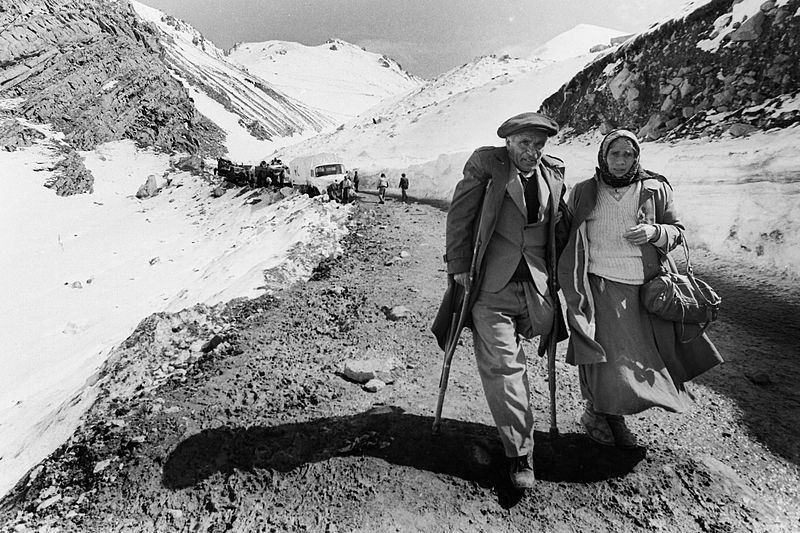
Azerbaijanis flee Nagorno-Karabakh during the 1991-94 war | Source: Wikimedia Commons

A new article by Sabina Garahan, doctoral candidate at the Human Rights Centre at the University of Essex, on Opinio Juris analyses False Equivalences in the Nagorno-Karabakh Conflict – International Humanitarian and Criminal Law Perspectives.  

The announcement of a peace deal in the Nagorno-Karabakh conflict on the night of 9-10 November 2020 marked the end of 28 years of hostilities between Azerbaijan and Armenia. Tensions leading to the 1991-94 war had begun in 1987 with the violent expulsion of 200,000 Azerbaijanis from the Armenian region of Kafan, which resulted in dozens of deaths. Although, in 1993, the UN Security Council had adopted four resolutions demanding the immediate withdrawal of all occupying Armenian forces from all occupied territories in Azerbaijan, these were never enforced.  

In the light of further territorial claims made by the Armenian government on Georgia and Turkey, the article fills two key gaps – thus rectifying resultant false equivalences – within the discourse on the Nagorno-Karabakh conflict. First, from the perspective of international humanitarian law, no distinction has been made between attacks on the occupied territories and other (non-occupied) cities in Azerbaijan. Second, from the perspective of international criminal law, the 1992 Khojaly massacre (recognised by some states as a genocide) of Azerbaijanis is frequently compared to the Sumgait pogroms which killed 26 Armenians, despite the latter atrocity having been fully addressed under domestic law in the absence of state complicity. The Khojaly massacre, is, by contrast, staunchly denied by the Armenian government and diaspora groups alike.  

As chronicled in a Human Rights Watch / Helsinki report, before the attack, the Azerbaijani town of Khojaly had been home to some 6,000 people, including those who had fled there previously from other parts of Nagorno-Karabakh after Armenian forces had invaded their villages in the winter of 1991-92. On the night of 25-26 February 1992, Armenian forces seized Khojaly. As residents fled, Armenian forces fired on them. After the massacre, more than 300 bodies showing evidence of a violent death were submitted for forensic examination, of which many had been scalped, had body parts removed, or been otherwise mutilated. 

The article also addresses France’s contentious role in the OSCE Minsk Group (the body formerly tasked with attaining peace between Armenia and Azerbaijan) in view of the French government’s secret deals with Armenian terrorist groups.

The Scope of Military Jurisdiction for Violations of International Humanitarian Law

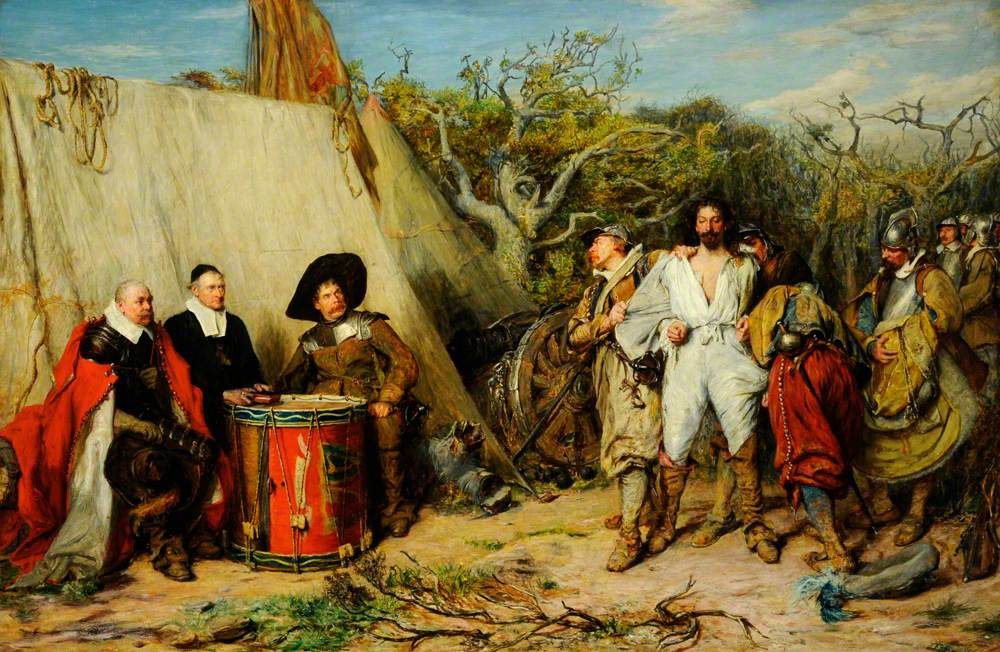
The Drumhead Court Martial John Pettie (1839–1893) | Photo credit: Museums Sheffield

Claire Simmons, PhD Candidate in Law at the University of Essex, published a new article in the Israel Law Review, titled ‘The Scope of Military Jurisdiction for Violations of International Humanitarian Law’.

With the adequacy of military jurisdiction over violations of international law being questioned in certain spheres, the article explores the role and limits of military jurisdiction in combating impunity for violations of International Humanitarian Law (IHL), the body of law which regulates situations of armed conflict.

The article demonstrates that that the unique context of armed conflict and military operations can provide important reasons to retain and strengthen military justice systems to combat impunity for certain violations of IHL, especially to suppress non-criminal or administrative violations.

For jurisdiction over criminal offences (including war crimes), the adequacy of military or civilian systems will depend on domestic, regional, and international factors which are difficult to generalise. Increased scrutiny under international human rights law into the impact of these justice systems on the rights of individuals has led to restrictions on the format and scope of military jurisdiction, yet States have implemented these obligations in different ways at a domestic level. What is clear in all cases is that the systems of justice used must respect international standards of fair trial and general principles of justice.

There is a need to continue the discussion on the adequacy of military justice in combating impunity for violations of international law. Claire Simmons’ article highlights the importance for such debates to address State obligations in a holistic manner, including by recognising the applicability of different bodies of international law, differences in domestic legal systems, and applicable legislation in times of both peace and war. Such a holistic approach is crucial to promoting accountability under international law while protecting the rights of both those accused of offences as well as those affected by violations in armed conflict.

The Forever War and the Laws of War

Photo by israel palacio

Dr. Nathan Derejko, Lecturer in Law, University of Essex

The looming threat of a ‘forever war’, characterised by the so-called ‘Global Battlefield’ and the perpetual applicability of International Humanitarian Law (IHL), has thrust the question of when and how Non-international Armed Conflicts (NIAC) end to the forefront of international concern and debate. In both practical and legal terms, identifying the end of a NIAC is notoriously difficult. There are several reasons for this, but two in particular should be highlighted.

First, is the complex spectrum of social, political and economic factors that underpin, propel, and ultimately bring NIACs to an end. Indeed, history is replete with NIACs spanning several years and, in some cases, several decades.

Second, is the virtual silence of IHL regarding its temporal scope of application during NIAC. While conventional IHL speaks of the ‘end of hostilities’ and the ‘end of the conflict’, it stops short of providing any guidance on the precise meaning and scope of these expressions, or the relationship between them.

These factors are further compounded by a comparative dearth in legal scrutiny of when and how NIACs end. While considerable judicial and academic analysis has focussed on IHL’s threshold of activation (when a NIAC legally comes into existence), much less attention has been given to its threshold of termination (when a NIAC legally ends).

In a recent article, A Forever War? Rethinking the Temporal Scope of Non-International Armed Conflict (published in the Journal of Conflict and Security Law), I undertake a forensic examination of IHL’s threshold of termination during NIAC.

The article first explores the temporal architecture of Common Article 3 and Additional Protocol II to determine what, if anything, IHL has to say about its threshold of termination. From here, it unpacks and critically examines two of the leading approaches for determining IHL’s threshold of termination during NIAC: the ‘peaceful settlement’ approach advanced in the jurisprudence of International Criminal Law; and the ‘lasting pacification’ approach advanced by the International Committee of the Red Cross.

While both of these approaches possess advantages and limitations, it is argued that neither produce entirely satisfactory results for determining IHL’s threshold of termination during NIAC.  In short, their common ailment is a quest for a single point in time that marks the ‘end’ of a NIAC, and at which point IHL terminates in toto. In practice, such an approach invariably results in the over-extension of IHL to factual circumstances that no longer warrant its application, or by the termination of its applicability before comprehensive protection is restored under International Human Rights Law.

For these reasons, the article develops and proposes an innovative ‘functional approach’ for determining IHL’s threshold of termination during NIAC, which  addresses the silence and shortcomings of existing law and doctrine, while at the same time, holds true to the very object and purpose of IHL during NIAC.

Knowing all of the law, all of the time – responding to COVID-19

Photo by Phil Botha

Geoff Gilbert, Professor of International Human Rights and Humanitarian Law, University of Essex 

As Paul White has written on these pages, success in our COVID-19 response in humanitarian settings should not be measured in the ‘number of webinars, seminars, guidance and strategies’. Part of achieving success, though, is ensuring that humanitarian actors in the field are aware of key laws, so as to ensure that governments fulfil their obligations and displaced persons do not fail to obtain their rights. While this pandemic raises new challenges, there are well-established bodies of law to keep at the front and centre of responses, including international human rights law, international refugee law and international humanitarian law.

If governments and humanitarian actors are to safeguard displaced persons during this pandemic, they need to be aware of all of the law, all of the time. Only by constantly reasserting these legal commitments will governments be forced to leave no-one behind.

Protection is often thwarted by lack of access – access to safety, access by humanitarian actors, and access to services. According to UNHCR, as at 24 April 2020, there had been no serious outbreaks of COVID-19 in any refugee or IDP camp or settlement. However, governments had restricted access to protection, curtailed the rights of displaced people in their territories, and had limited humanitarian agencies’ access to them in some cases. Let’s look at each challenge in turn, and the pertinent law that can help our response.

Access to safety

Much has been published on the right of refugees to seek and enjoy asylum and protection from refoulement, despite states’ power to control their own borders in the light of the pandemic. Yet, article 14 of the Universal Declaration of Human Rights and article 33(1) of the Refugee Convention mean that states cannot use their power to control borders to override the rights of refugees and people seeking asylum. In addition, article 12 of the International Covenant on Civil and Political Rights provides the right to freedom of movement, including the right of individuals to leave their country of nationality. Article 12 also protects IDPs seeking safety within their own country.

Individuals caught up in conflict must be allowed to move within the country in order to obtain protection. According to Additional Protocol I to the Geneva Conventions, parties to an international conflict cannot constrain the movements of non-fighters ‘in order to attempt to shield military objectives from attacks or to shield military operations’ (art 51(7)). In an internal armed conflict, Additional Protocol II provides that ‘displacement of the civilian population shall not be ordered for reasons related to the conflict unless the security of the civilians involved or imperative military reasons so demand’ (art 17(1), emphasis added). Principles 5–9 of the Guiding Principles on Internal Displacement are about trying to prevent displacement, but Principle 15 recognises that when people are displaced, they have the right to leave their country and seek asylum.

Access by humanitarian agencies

Under its 1950 Statute, UNHCR has a unique mandate to provide international protection to refugees; its extended mandate includes conflict-driven IDPs and other persons of concern. To fulfil that role, UNHCR needs access to these populations, and governments have a duty to cooperate with UNHCR in the exercise of its functions (Refugee Convention, art 35). 

During the pandemic, however, access by humanitarian actors has been restricted, particularly in conflict zones – even though they face the same COVID-19 threat. To resolve this, regard needs to be had not just to human rights law, but also to the international law of armed conflict and the international rule of law which strangely have been missing from much of the current analysis.

Under the 1949 Geneva Conventions, the International Committee of the Red Cross and ‘any other impartial humanitarian organization’ (Geneva Convention IV, art 9; Additional Protocol I, art 5; Additional Protocol II, art 18(1)) may undertake care for the sick, while parties to the conflict should permit ‘relief actions which are humanitarian and impartial in character and conducted without any adverse distinction’ (common art 3). The UN General Assembly has also affirmed that international and national rule of law applies to states and international organizations. Read with the 2018 Global Compact on Refugees, which ‘emanates from fundamental principles of humanity and international solidarity, and seeks to operationalize the principles of burden- and responsibility-sharing to better protect and assist refugees and support host countries and communities’ (para 5) and the humanitarian principles that include humanity, neutrality and impartiality, it is clear that states have obligations to ensure access so that people’s essential and medical needs can be met.

Access to services

Displaced people need to be able to obtain a variety of services, whether they are refugees or IDPs. During the pandemic, the most obvious is access to health care. However, when it comes to accessing health care, legal status matters. IDPs, by definition, are within their own country so should have access to all services as normal (unless, of course, their displacement resulted from an event that disrupted services for everyone). As for refugees, it will depend on the laws of each country, but if a country has recognised someone as a refugee then he or she will ordinarily be treated the same way as a national. However, asylum seekers may not have full access to health care. That said, they should always have access to emergency care – there should be no discrimination based on the fact that they are seeking asylum.

Refugees, asylum seekers and IDPs must be able to access the highest attainable standard of health (International Covenant on Economic, Social and Cultural Rights, art 12). If people are scared that seeking medical advice might lead to their detention and removal, then they will be more likely to conceal their presence. And if they are contagious, then this has huge risks for the virus spreading. It therefore makes sense – for everyone – to ensure that displaced people have as much access as possible to testing and health care. 

Equally, they need access to information, which includes access to the internet. Access to the internet for information has been recognised as a right by the Human Rights Council, and governments must ensure there is no digital divide. As UNHCR’s guidance has made clear, that information must be understandable by refugees, asylum seekers and IDPs, possibly requiring governments and UNHCR to combine their resources. 

Likewise, everyone has the right to an adequate standard of living (ICESCR, art 11). What is adequate in the time of a global pandemic that requires social distancing is clearly different from what would be acceptable at other times. It should also be noted that over 60 per cent of refugees live in urban settings, not camps, so the ability of international organisations to regulate accommodation in such circumstances is limited.

The flipside of in-state services is detention by the state. Quarantining those who may have the virus is undoubtedly permitted, but it must be provided for by law, be proportionate and last for no longer than is necessary. When it comes to those held in immigration detention, governments must ensure that people are not placed at greater risk of infection from COVID-19 – social distancing and proper sanitation must be part of any detention regime.

Conclusion

The lives of displaced people are already complicated and challenging: COVID-19 has added a further layer of complexity, if not outright threat. Within the already complex context of displacement, the pandemic presents new and pressing issues for all the various actors – but existing law can address these challenges provided that we have the knowledge and will to use it. Refugees and IDPs have to be resilient to survive displacement, but, as Jane McAdam has made clear on these pages, they are in situations of vulnerability, and when states are threatened, the ‘outsider’ is frequently left unprotected.

This post was first published on the Kaldor Centre for International Refugee Law website and is reproduced here with permission and thanks.

New RightsCast Episode

Photo by Jonathan Farber

Before the COVID-19 crisis there was the refugee crisis: protecting forcibly displaced persons in a global pandemic

UNHCR have released a set of documents relating to protection considerations in the context of the COVID-19 response. Roughly 75% of refugees live in overcrowded camps, settlements or shelters around the world, where they lack access to adequate sanitation and are therefore extremely vulnerable to the COVID-19 pandemic.

Listen to the new RightsCast episode, in which Dr. Madeline Garlick of UNHCR and Professor Geoff Gilbert of the University of Essex discuss the work to protect the 80 million people of concern to UNHCR globally and how that work is adapting to the challenges posed by Coronavirus.

Their enlightening conversation ranges from a reminder of states’ obligation to provide access to asylum in a context of closed borders, to how refugees are contributing to health responses in their communities, and ultimately ends with a call for strengthened international cooperation in light of the Global Compact on Refugees.

International Organizations Accountability Symposium: Reparations for Mass Torts Involving the United Nations–Misguided Exceptionalism in Peacekeeping Operations

Dr. Carla Ferstman, Senior Lecturer in Law, University of Essex

Where do individuals who suffer harm as a result of the negligence or malfeasance of the UN go to seek redress? Sadly, there is nowhere for them to go. Maybe I shock easily, or maybe I hold the UN up on a pedestal and expect it to react in a way in which it is clearly not capable of reacting. Regardless, the UN’s handling of mass torts claims, arising largely in the context of peacekeeping, is shocking.

The victims can’t go to a domestic court where they live or work, or where the harm happened, because the UN is largely immune. They can’t go to a regional or international Court because the UN will also be immune from such proceedings. The UN’s internal complaints processes are not independent, equipped or given jurisdiction to handle mass claims. At the same time, victims have not usually been able to rely on their own countries to pursue claims on their behalf. These are countries emerging from conflict, with weak legal systems and infrastructure. The last thing on their minds or within their capacity is to bring an international dispute against a country or organization that has come to help them keep the peace.

The UN has sometimes seen fit to set up trust funds or similar frameworks to rehabilitate victims, but this approach has only been taken after widescale media attention, and then, purely on a humanitarian basis – so without accepting any liability. This is simply about charity. So, victims have no ability to demand restitution or compensation that corresponds to the harms they suffered – they just have to wait and see what’s on offer and be thankful for what they’re given.

This is what happened with cholera victims in Haiti. In 2016 the UN issued a qualified apology and outlined a two-track strategy: Track 1 focuses on intensified efforts to treat, control and eradicate cholera, and Track 2 promises to deliver “a package of material assistance and support to those Haitians most directly affected by cholera” to be developed in a victim-centered manner, including through consultations with victims. A Trust Fund was established to generate and manage its resources. As of July 2019, it was reported that only 4% of the funding target had been met.

It is also what happened to Roma, Ashkali and Egyptian displaced persons in Kosovo who were forced to live in camps where they were subjected to lead poisoning resulting in serious illnesses and deaths. A UN Human Rights Advisory Panel determined that the UN was responsible for an array of violations and recommended reparations including public acknowledgment, payment of adequate compensation to the victims for material and moral damages suffered, reimbursement of fees and expenses and a series of measures to guarantee non-repetition. However, in May 2017 it was announced that the UN would establish (only) a trust fund for projects to help the affected communities. In February 2019, it was reported that the trust fund had received no contributions. 

It is also what happened to victims of peacekeeper sexual exploitation and abuse. A trust fund was set up to support victims. However, it had little to do with reparation or recognition of victims’ rights.

This bit of charity has become like a business expense, without any real sense of accountability or recognition of victim’s rights. This is shocking for an institution that has been a key promoter of standards on victims’ rights. And, because there is no one to hold the institution to account (because victims have no access to an independent court to adjudicate the claims), there is no incentive to strengthen the system to avoid recurrence – there is no learning from mistakes despite all the lip-service about victim-centred processes.

How has this happened?  One of the reasons is the (mis)use of the principle of lex specialis by the UN to exempt it from the general obligation to account for and address fully the harms it causes. The UN Secretariat has expressed its view that ‘the obligation to make reparation, as well as the scope of such reparation, must be subject, in the case of the UN, to the rules of the organization, and more particularly, to the lex specialis rule’ [Art 30, para 8].

This use of the lex specialis principle is misguided for three reasons.

First, the principle is only capable of displacing general law when there are more precise or ‘special’ rules that apply in a given situation. The UN hasn’t put in place special rules; it has simply exempted itself from dealing with parts of the situation – which is not the same thing.

Second, the UN cannot change the law that applies to individuals unconnected to the organization who were not involved or consulted about the change and have not agreed to be bound: ‘[i]n regard to conflicts between human rights norms, for instance, the one that is more favourable to the protected interest is usually held overriding.At least derogation to the detriment of the beneficiaries would seem precluded’ [para. 108].

Third, applying the UN’s lex specialis would frustrate the purpose of the general law, which is to ensure that victims receive adequate reparations. The special regime has ‘no reasonable prospect of appropriately addressing the objectives for which [it was] enacted’ [para. 251 (8)-(16)].

In peacekeeping, this lex specialis principle has been used (like a get out of jail free card) to limit the types of scenarios which may give rise to a claim; restrict the categories of eligible beneficiaries; limit the timeframe during which claims may be filed; justify abridged administrative procedures for the handling of claims as well as limit the scale of recoverable damages.

The principle has also been used unofficially, when the UN simply decides not to submit itself to any form of internal claims process. Given the absence of an alternative forum, the de facto restriction is an additional, virtually absolute, barrier to the resolution of claims. For example, the UN’s practice of distinguishing between claims of a ‘private’ and ‘public’ nature, and deeming the latter category of claims to be ‘non-receivable’, part of an approach Philip Alston, UN Special Rapporteur on Extreme Poverty has called ‘morally unconscionable, legally indefensible and politically self-defeating.’

Mass claims are often resolved in expedited or abridged fashions. But when this happens there is usually some independent adjudicative body which is capable of addressing the claims which fall outside the mold or where the claimants prefer or the circumstances require a more judicial process because of the particularity of the claim. Victims should have the possibility to opt out of a limited administrative process that does not take into account the full spectrum of their needs or rights. Some transitional justice or administrative claims commissions as well as mass claim settlement procedures afford this two-tiered possibility. The General Assembly resolution on third-party claims provides no scope for a more individualized and independent adjudication process, even if it were to allow for a wider understanding of ‘private’ claims. 

The cynics among the readers will be wondering why I am shocked; why I expect more from this global multilateral institution in an era when multilateral approaches have fallen out of favour with the most powerful states. But some things are just worth fighting for.   

This piece originally appeared on Opinio Juris as a part of the recent symposium on International Organizations Accountability and is reproduced here with permission and thanks. Read the original piece here.