Global Roundtables on International Protection of Refugees: Exploring Laws on Climate-Induced Displacement and Refugee Travel Documents with Essex Law School and the UNHCR

 By Professor Geoff Gilbert 
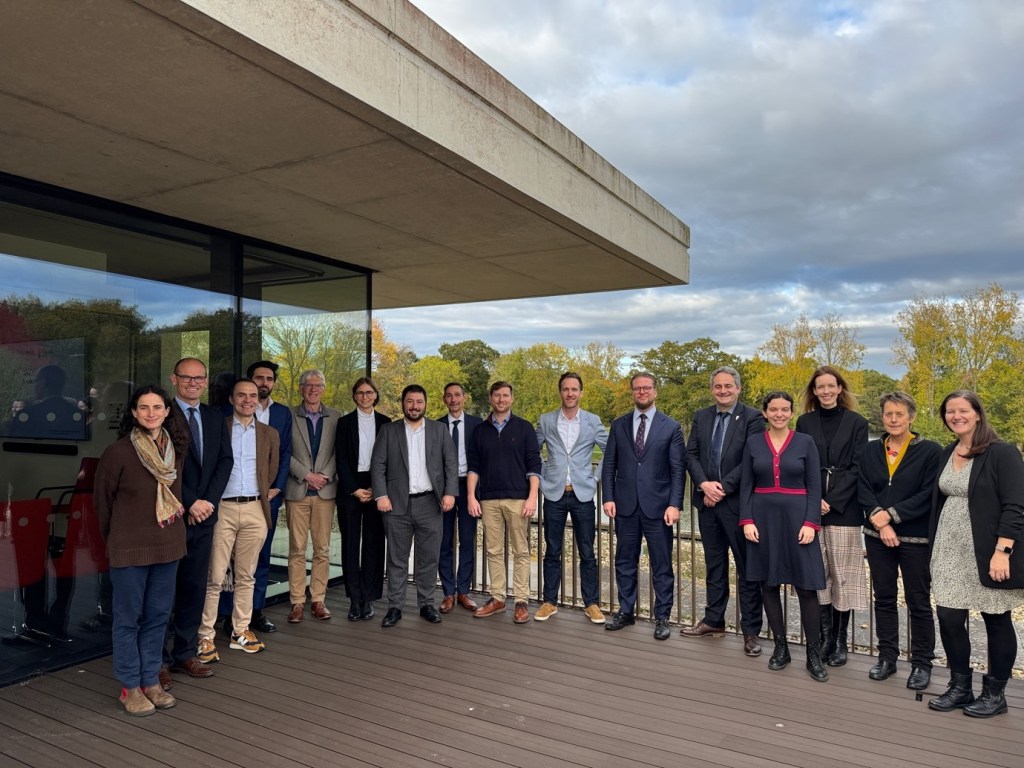
Participants from at the UNHCR-Essex Roundtable on travel documents for refugees, asylum seekers and stateless persons, October 2024 , Credit: Professor Geoff Gilbert

On 22 and 23 October, 17 people from a diverse set of organisations and backgrounds came together from all over the world on campus to discuss travel documents for forcibly displaced and stateless persons in need of international protection. On 23 October, over 60 people attended two online roundtables covering Africa, Europe, the Americas and Asia to consider a toolkit advisory on refugees and asylum seekers affected by climate-induced events or disasters. Professor Geoff Gilbert from Essex Law School hosted both events.  

First for the roundtable on climate-Induced displacement, Essex Law School & Human Rights Centre for a year has been working with the Kaldor Centre for International Refugee Law, UNSW, and the Center for Gender & Refugee Studies (CGRS), University of California College of the Laws, San Francisco, to draft a toolkit for practitioners, decision- and policy-makers on international protection in the context of climate induced events and disasters; it became part of a joint pledge to the 2023 Global Refugee Forum.  

Being forced to move across an international border as a consequence of a climate-induced or other disaster does not in and of itself qualify one as a refugee under the 1951 Convention relating to the Status of Refugees. However, as UNHCR made clear in 2020 in its Legal considerations regarding claims for international protection made in the context of the adverse effects of climate change and disasters, a person displaced in the context of climate induced or other disaster may also qualify under the 1951 Convention if they meet the criteria set out in Article 1A.2. Drought can often lead to conflicts between farmers and herders over access to water or a government may adversely discriminate against a minority ethnic group on its territory post-disaster. Equally, those who are already refugees or asylum seekers may be affected by disasters, too.  

In 2023, CGRS had produced a practice advisory for US lawyers bringing refugee status determination claims in US courts that prompted ELS-HRC and Kaldor to consult on a global equivalent dealing with international and regional refugee and human rights law. On 23 October that Practical Toolkit on ‘International Protection Principles for People Displaced Across Borders in the Context of Climate Change and Disasters’ was considered by over 60 expert academics (including Professor Karen Hulme), lawyers, judges, UNHCR staff and persons with lived experience of forced displacement from across the world. Those discussions will allow the authors, Professor Jane McAdam, Professor Kate Jastram, Dr Felipe Navarro, Dr Tamara Wood, and Professor Geoff Gilbert, to finalize this draft and disseminate it through UNHCR’s REFWorld and other specialist platforms in the next few weeks. 

Turning to the other Roundtable held on campus at the University of Essex Law School, the organisations involved included UNHCR, the International Civil Aviation Organization (ICAO), the International Organization for Migration, the EU Commission, and Frontex, as well as private sector actors, think tanks and persons with lived experience of forced displacement. The meeting also benefited greatly from the attendance of four Essex colleagues, Professor Ahmed Shaheed, former Special Rapporteur on the Human Rights Situation in Iran and on Freedom of Religion and Belief, Professor Paul Hunt, former member of the Committee on Economic, Social and Cultural Rights and Special Rapporteur on the Right to the Highest Attainable Standard of Health, Dr Matthew Gillett, Chair of the Working Group on Arbitrary Detention and a member of the Platform of Independent Experts on Refugee Rights (PIERR), and Dr Judith Bueno de Mesquita, adviser to the World Health Organisation. This roundtable discussed travel documents for persons in need of international protection, that is refugees, asylum seekers, internally displaced persons and stateless persons. 

At the end of 2023, there were 117.3m people within UNHCR’s mandate, 75% in low- or middle-income countries, and there were only 158,500 resettlement places across the world. Some would have managed to bring travel documents with them as they fled, but many are without. As such, they are trapped in the country where they are receiving protection. Even if they are in a state party to the 1951 Convention relating to the Status of Refugees or the 1954 Convention relating to the Status of Stateless Persons, then while Article 28 of both Conventions provide that the country of asylum shall provide a Convention Travel Document, it is only to refugees or stateless persons who are lawfully staying in the territory, a term that is undefined.  

As such, refugees and stateless persons not meeting the threshold, such as asylum seekers and those who have applied for refugee status but where the state has yet to make a decision granting leave to remain, for example, and any person in need of international protection in a non-Contracting state, has no opportunity to obtain a travel document; even Article 28 Convention Travel Documents might only last one to two years and they are difficult to renew outside the country of asylum. Thus, a more generic travel document more widely available to forcibly displaced and stateless persons would facilitate them achieving autonomy in finding a durable and sustainable solution. In part, this fits with the additional solution provided for through Complementary Pathways in paragraphs 85-100 of the Global Compact on Refugees, 2018 (GCR). Traditionally, the durable and sustainable solutions were only resettlement in a third country, local integration in the country of asylum and voluntary repatriation; complementary pathways might involve opportunities to take up employment opportunities or access education in a third country. 

The roundtable considered all the technical requirements for travel documents as set out in Annex 9, Facilitation, to the Chicago Convention on Civil Aviation 1944, administered by ICAO. As such, whatever the form of the travel document for persons in need of international protection, given that it will be machine readable, it should be accepted by all carriers. What cannot be guaranteed is that it will be accepted by the country of destination – that is always, even in the case of national passports, a matter of choice by the state having regard to the trustworthiness of the document.  

In this regard, though, it was suggested that one proposal to take forward is whether the right to leave and return from one’s country of nationality under Article 12 International Covenant on Civil and Political Rights and the right to legal recognition before the law under Article 16 thereof might generally grant everyone the right to a travel document, or at least in combination with the right to access the highest attainable standard of health (Article 12 International Covenant on Economic, Social and Cultural Rights), the right to access employment opportunities (Article 6 ICESCR) or education opportunities (Article 13 ICESCR), as well as the implicit guarantee of family reunification (Article 17 ICCPR). While that may require strategic litigation and engagement with governments to highlight their commitments under the international covenants and the GCR, it shows that ensuring autonomy for refugees and stateless persons and upholding their international human rights could facilitate the acquisition of travel documents. 

The two global roundtables facilitated by Essex Law School marked a significant step towards addressing the complex needs of forcibly displaced and stateless individuals, including those impacted by climate change. Bringing together global scholars, practitioners, and experts from diverse sectors, the discussions highlighted the urgency of accessible travel documents for refugees and comprehensive international protections. These insights will inform final revisions to the toolkit and strengthen advocacy for policies that support autonomy and uphold human rights for those seeking refuge across borders.  
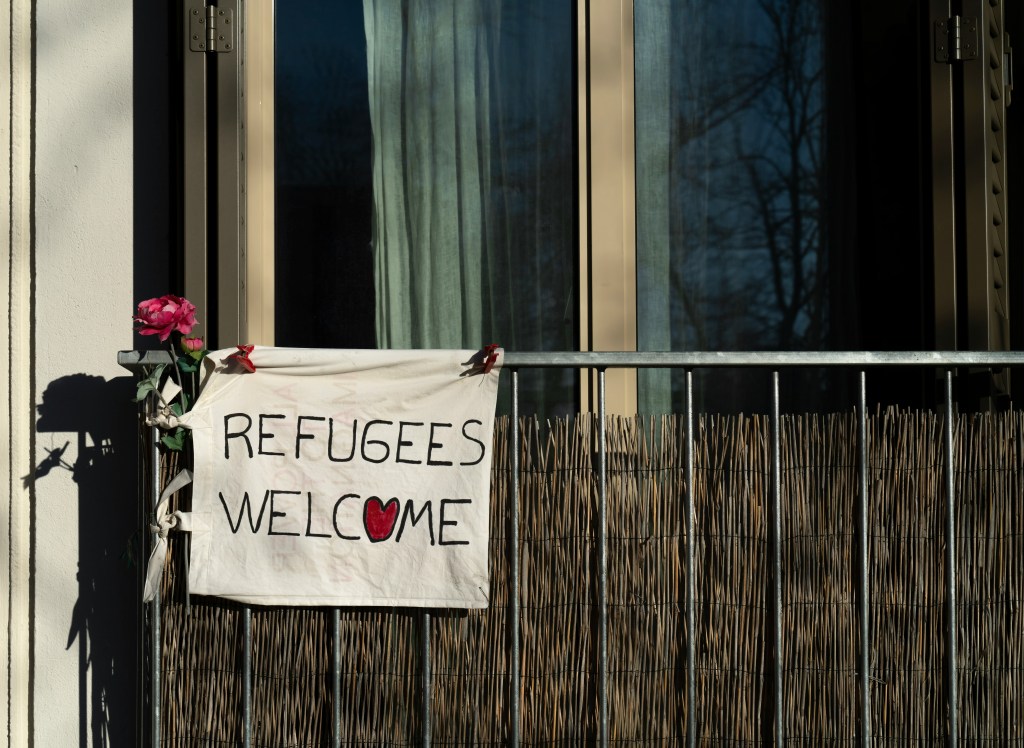
Civil Society Support to Refugees and Other Migrants in Europe: The Need to End the Backlash on Civil Society Space

Photo by Ricardo Gomez Angel on Unsplash

By Professor Carla Ferstman, Director of Impact, Essex Law School

The theme of Refugee Week 2024 (17-23 June 2024) is “Our Home” – This can be a place of refuge, a feeling or a state of mind; ‘Home can be more than one place and finding it can be a journey, as it is for so many of us who have to leave our countries and rebuild our lives. Sometimes we can find home in a single person. Other times it’s in a whole community. And often, it’s in a single gesture of care and welcome.’

An important part of what ‘Our Home’ means to me, is making people feel welcome – My home is your home. Mi casa, su casa.  It is also about compassion – what must it feel like to be forced to be away from one’s home? How can we individually and collectively, lessen that sense of alienation?

Solidarity is an essential component of these notions of “welcome” and “compassion.” Expressing solidarity with refugees and other migrants recognises and seeks to foster their humanity and their dignity, and it attempts to bridge the divide between the “us” and the “them”.

As an expression of this solidarity, and on the occasion of Refugee Week 2024, the Council of Europe Conference on International NGOs’ Expert Council on NGO Law, of which I am a member, is launching a new thematic studyCivil society support to refugees and other migrants in Europe: The need to end the backlash on civil society space.

This study, which I authored on behalf of the Expert Council, canvasses how civil society organisations and solidarity networks as well as many ordinary individuals in villages, towns and cities throughout Europe have been doing their best to provide humanitarian assistance and support to the many refugees and other migrants who find themselves in Europe in very difficult circumstances.

It focuses on what happens when this welcome and compassion goes against state policy. As the report documents, civil society have faced impediments including the criminalisation of their activities, subjecting them to harsh regulations and fines, publicly stigmatising them and their work, impeding their access to locations where refugees and other migrants are located, imposing barriers on their ability to register as NGOs or to maintain their registration, as well as obstructing their access to funding. This shrinking civil society space has made the precarious circumstances in which so many refugees and other migrants find themselves in, even more precarious.

The research for this study has been greatly enhanced by the involvement of members of the Essex Human Rights Centre Clinic. In this series of blog posts, which are launched on 21 June to coincide with the launch of the thematic study, these fabulous students have reflected in different ways on those aspects of the research that have moved them:

In this sense, these blog posts are an expression of their solidarity with the plight of all people on the move in Europe.

UN Mission on Arbitrary Detentions in Mexico: In Conversation with Dr Matthew Gillett

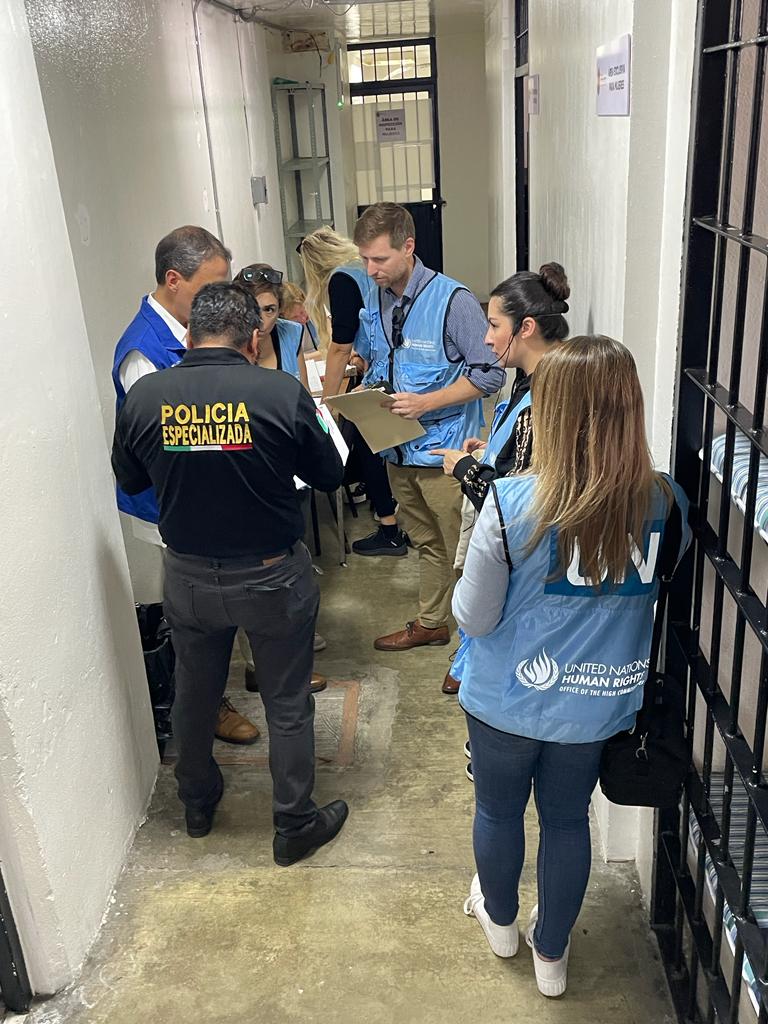
Dr. Gillett and his team during an Inspection of a detention facility

Dr. Matthew Gillett, the Vice-Chair of UN Working Group on Arbitrary Detention and Essex Law School academic, spearheaded a high level delegation on a recent mission to Mexico. His team visited multiple sites across Mexico City, Nuevo León, and Chiapas over 11 days. 

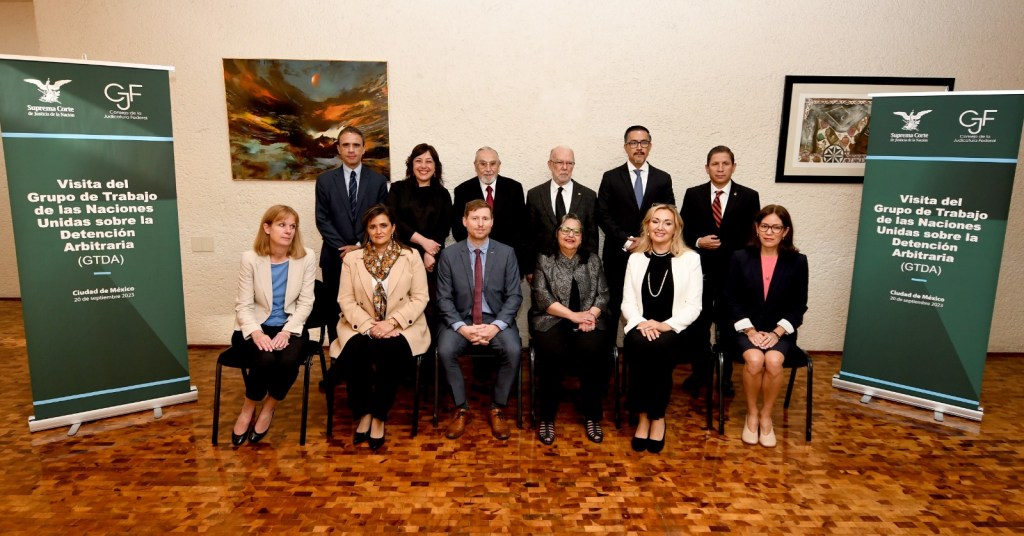
Their mission included interviews with detainees and assessments of police stations, migration detention centres, sanctuaries of vulnerable children, mental health institutions and the very corridors of prosecutors’ offices. The delegation also met with significant figures, including President Norma Lucía Piña Hernández of the Supreme Court, and offered key recommendations to the Mexican government. 

Meeting the president and members of the Supreme Court of Mexico

The Essex Law School Research Visibility Team had the opportunity to interview Dr. Gillett about his recent trip, the different layers of the UN project and their impact:  

Dr. Gillett, what inspired or motivated you to focus on arbitrary detentions, and how did the idea to visit Mexico specifically come about? 

Having worked in criminal justice for 20 years, I have increasingly seen that the moment of detention is a critical point in the application of the law. If the State power to detain is misused, then it can violate a person’s right to liberty and can also lead to other violations including enforced disappearance, torture, and even extra-judicial killings. I’ve worked on detention related matters in New Zealand, Afghanistan, Mongolia and several other countries. 

But this latest mission to Mexico came about through the United Nations Working Group on Arbitrary Detention, of which I am the Vice-Chair. We considered Mexico an important country to assess, because of its large and diverse population, and its major issues with migrant-related detention at the moment.   

Were there any moments or encounters during your trip that deeply impacted or surprised you? 

There were many moments during the mission to Mexico that were deeply affecting. Seeing detainees with open wounds, sometimes sleeping on concrete floors in over-crowded cells, was shocking. But also learning of the challenges that Mexico faces, including the hundreds of thousands of migrants passing through its territory, brought home the complexity of the situation.

While observing the situation in Mexico, what progress stood out to you, and conversely, what challenges deeply concerned you?

Mexico’s progress in terms of placing human rights at the centre of its constitution and establishing a National Registry of Detentions were important steps forward. Prison officials were largely professional and not using violence against detainees in a systematic way from what we discerned. 

However, significant challenges remain, particularly in terms of the use of violence by security forces conducting arrests out on the streets, and the imposition of mandatory pre-trial detention, as well as shortages in staff and resources at prisons which lead to many detainees being kept in their cells the vast majority of the time without access to proper sunlight and fresh air.

What are the key recommendations you’d like to emphasise from the UN Working Group, and how have the responses from the Mexican authorities and international community felt to you? 

We would strongly recommend increasing the scope of the National Registry of Detentions to cover all deprivations of liberty, including administrative detentions of migrants for example. We would also emphasise the need to remove mandatory pre-trial detention and ensure that individualised assessments are carried out to verify that persons detained before trial are either a flight risk, or risk of tampering with evidence or serious re-offending. The Working Group and the Inter-American Court of Human Rights have both called for this change in their judgments. 

During the visit, we sensed an openness on the part of the Mexican authorities to take up our recommendations. At the same time, we urged them not to wait for our full report, which we will deliver to the United Nations Human Rights Council in September 2024, to start implementing changes.

On a personal note, how has this trip impacted your views on human rights and arbitrary detention globally? What message would you want to convey to international readers regarding the situation in Mexico and the efforts of the UN Working Group?

There are two points which I take away from the Mexico mission. 

One is the importance of investigating at multiple levels in order to get a holistic view of the situation. We spoke to over 170 detainees, as well as officials at the federal, state and local levels, and many NGO and civil society actors. The communications are critical to understand the depth and breadth of human rights challenges, but also to provide focused recommendations which are feasible and impactful. 

The second is that the wheels of justice must speed up! People should not be left for years, languishing in detention, before they have a trial. It’s a global problem that requires a concerted effort on the part of governments and the judiciary. They must ensure that everyone charged with a crime enjoys their right to trial without undue delay.

Illegal Migration Bill: Essex Law School experts on the international system of protection against arbitrary detention express concerns in their written evidence to the JCHR

Image via Shutterstock

On 5 April 2023, Dr. Sabina Garahan (Lecturer, Essex Law School) and Dr. Matthew Gillett (Senior Lecturer, Essex Law School submitted evidence to the Joint Committee on Human Rights (the “JCHR”) as part of its legislative scrutiny of the Illegal Migration Bill. Their submission focused on detention-related questions posed by the JCHR.

Dr. Garahan recently completed her AHRC-funded research on the right to liberty under European human rights law. Dr. Gillett is the Vice-Chair of the UN Human Rights Council’s Working Group on Arbitrary Detention (the “Working Group”). The submission expresses shared concerns that the proposed legislation conflicts with fundamental protections against arbitrary detention set out in the European Convention on Human Rights (the “ECHR”) and the International Covenant on Civil and Political Rights (the “ICCPR”).

The authors’ submission identifies several areas in which the Bill conflicts with the right to liberty as enshrined in Article 5 of the ECHR. Importantly, it raises the possibility that the UK Government may be the first Council of Europe Contracting State in history to be found in breach of Article 17, which prohibits the destruction and excessive limitation of ECHR rights.

Dr. Garahan’s and Dr. Gillett’s written evidence equally highlights the potential breach of Article 18 in conjunction with Article 5, on account of the likelihood that the legislation was introduced in bad faith under the ECHR – namely, on the basis of aims not listed under Article 5. Immigration detention that is predominantly imposed on grounds other than those permitted by Article 5 will be found to violate Article 18. The Government’s documented anti-migrant rhetoric, which has sparked significant concerns among international expert bodies, and the expedited passage of the Bill through Parliament strongly indicate the existence of bad faith.

Finally, the submission addresses likely violations of Article 9 of the ICCPR, which protects against arbitrary detention in a range of contexts including immigration-related processes, as held by the Working Group. In introducing discretionary powers to detain anyone suspected of entering the UK unlawfully, for such period as is “in the opinion of the Secretary of State” reasonably necessary (namely, without any time limit), the Bill undermines the exceptionality and necessity limitations of immigration detention.

Dr. Garahan and Dr. Gillett are members of Essex Law School/Human Rights Centre and the Essex Constitutional and Administrative Justice Institute. Their full submission can be accessed on the JCHR website here and a copy can be downloaded from our ELR Blog below.

A Right Not to Be Trafficked

Image via Shutterstock

What is ‘modern slavery’ and who is responsible for it?

What is the relevance of human rights law, which primarily regulates state conduct, for practices predominantly committed by private actors?

Where can victims seek justice and redress when national authorities fail to protect them?

In her new book State Responsibility for Modern Slavery in Human Rights Law: A Right Not to Be Trafficked, Dr. Marija Jovanovic analyses the role and responsibility of states for addressing ‘modern slavery’ – a diverse set of practices usually perpetrated by non-state actors – against the backdrop of international human rights law. Her work explores the dynamic between criminal law and human rights law and reveals the different ways these legal domains work to secure justice for victims.

In particular, the book considers the ‘absolute’ nature of the prohibition of modern slavery in human rights law, the range of practices covered by this umbrella term and their mutual relationships, the positive obligations of states established by international human rights tribunals owed to individuals subject to modern slavery, and the standards for assessing state responsibility in these situations.

By engaging with the concept of exploitation in human rights law, Dr. Jovanovic glues together diverse practices of modern slavery, including servitude, forced labour, and human trafficking, into a coherent concept.

State Responsibility for Modern Slavery in Human Rights Law: A Right Not to Be Trafficked elucidates the theoretical foundations of this fundamental human right and explains why human trafficking has an independent place within it.

In addition to providing a comprehensive critique of the existing human rights jurisprudence, the book offers a roadmap for the future development of law on this subject, emphasising the limits of human rights law as a tool for addressing modern slavery.

Dr. Jovanovic’s book will be published by Oxford University Press in January 2023.

Who Owns Justice? When States Refuse to Provide Justice, Let the People Make Their Own Justice

By Professor Carla Ferstman, Essex Law School

Image credit: Aban Tribunal website

I have recently had the honour to be part of the panel of judges of the Aban Tribunal – a People’s Tribunal established by civil society to review evidence of atrocities allegedly perpetrated by the Islamic Republic of Iran as part of its crackdown on the mass protests that had engulfed Iran in November 2019, sparked by massive rises in fuel prices but fundamentally were about social and economic rights and governance in the country. Our judgment, in which we found that acts of extrajudicial killings, torture, sexual violence, arbitrary detentions, enforced disappearances and persecution amounted to crimes against humanity, was released on 1 November 2022.

This was my first foray into the world of People’s Tribunals, a concept which originated with the Russell Tribunal, named after Bertand Russell. That was a process he initiated together with Jean Paul Sartre, Simone de Beauvoir and other luminaries of the day to consider the American role in Vietnam. Since then, the People’s Tribunal concept has developed and evolved and many other tribunals have been established to consider a wide array of issues ranging from the coalition-led invasion into Iraq, the situation in Palestine, the situation in Kashmir, Japanese wartime practices related to sexual slavery, the treatment of refugees and migrants, the treatment of Uyghurs, climate change and the murder of journalists. And the list goes on.

People’s Tribunals tend to come into play when more traditional justice avenues are completely blocked or when the official narrative about what happened denies the space for other voices or perspectives. Either a regime has no interest in any kind of justice and will not be cajoled into a justice process. Or, there is a particular issue that is completely taboo in a country or which cannot be solved by bringing a case to court.

In the case of the Aban Tribunal, the Islamic Republic had authorised the violent crackdowns on protesters and in the aftermath of those events, had instituted a devastating campaign of intimidation against family members who had sought out information about how their loved ones had died or were calling out for justice. Authorities had also interrupted families’ burial rituals in order to deflect attention away from the many killings, preventing families from grieving their loved ones. Thus, there was no realistic prospect of domestic investigations or prosecutions of those responsible or any likelihood of an official acknowledgment of the wrongs done and the harms caused. Victims and witnesses, who faced significant risks of reprisals for their participation, testified, often by video link – with faces covered and voices distorted, from inside Iran. The opportunity to tell their stories to the world was one they could not pass up lightly.  

People’s Tribunals are about drawing attention to problems that are not being solved by traditional courts, governments or others. These tribunals are intended to bring public attention to issues not sufficiently in the public domain; to build solidarity with victims; to provide some kind of ritualised forum in which evidence is evaluated and the moral weight of a conclusion is given; to serve as a catalyst either for later formal justice processes or for changing public opinion or inspiring political debate.

In the case of the Aban Tribunal, the goal was to do all these things. And, to draw attention to the patterns of repression; impunity breeds recurrence and we are seeing this every day with the Iran Government’s brutal repression of the ongoing protests into the killing of Mahsa Amini. These tribunals can also serve as an end in and of themselves, by serving the goal of acknowledgement of wrongs and doing justice that otherwise would never had been done.

Who gets to decide what justice looks like?

What makes “justice” justice? This is perhaps a philosophical or sociological question, it can also be considered anthropologically – what do we turn to a justice system to do for us? And when do we see that it has the power to deliver?

Do we do a disservice to victims if justice is not sanctioned by a government; if the results of this “contrived” justice process cannot result in “real” sanctions?

In some cases, a People’s Tribunal might make it more difficult to have a formal justice process afterwards (but sometimes the opposite with be the case). But often “real justice” is symbolic – victims will take cases to human rights courts that they know will not get enforced; but often the reason why victims bring cases to court is for an official body to acknowledge that they were wronged and that they suffered. It is important that there is official recognition that what was done to them was wrong and that they – the victims, are not to blame.  

As such, it becomes a question of whether the People’s Tribunal is imbued through the rituals it cloaks itself with, with enough internal legitimacy that victims and communities see it as having the power to do justice in the form of acknowledgement.

In some cases, it will be important for the judges of People’s Tribunals to don robes, to use gavels, and to seem otherworldly, and to speak the language of the courtroom for the victims to believe that the justice ritual they are part of is “real” and “meaningful”. This was the case with the Aban Tribunal – it was our determined belief, based on our understanding of the situation and speaking with civil society that there was this overwhelming sense of impunity – the total and absolute absence of justice. Donning the rituals of the courtroom was therefore an important part of our process.

In other cases, it is the formal justice system that is alienating and has failed victims in the past; the People’s Tribunal will be embraced and seen as legitimate only if it gets stuck in with the community in a more visceral way.  

Can justice exist without a government legitimising it?

In most societies, justice is like a social contract – the justice process helps reinforce the rules by which the society lives by. Justice that is fair makes communities feel comfortable to abide by the rules. Everyone knows their place. In this sense, justice is something a  government uses to reinforce the rule of law within the society. When state actors commit crimes, subjecting them to the same scrutiny, to the same justice, reinforces the sense that everyone plays by the same rules. When the state exempts itself from the rules, this undermines the rule of law in society.

Before embarking on this People’s Tribunal journey, I was convinced that for justice to be meaningful it had to be done by the decision-makers. As someone who has worked a lot on the issue of reparations or remedies to victims, – reparations were always something the government or the direct perpetrators should provide – indeed, this was part of their social contract, their role in reinforcing the rule of law. When civil society groups or development agencies started getting involved in reparations, my sense was always that they were just muddying the waters; reparations means something specific; it is special – it is about the wrongdoers acknowledging the wrongs and harms that they caused. So similarly, a justice process needed to be set up by governments because of the role governments play, or should play, in society, in reinforcing the rule of law.

But with People’s Tribunals, I realised, the idea that victims and civil society create their own framework of justice when justice is not otherwise going to happen, recognises that a government does not have the power to deny justice – this itself is really powerful. When the government does nothing, the victims, the civil society, the international community say no – that is not alright; we deserve justice; if you won’t provide it, we will not allow you to block it for us; we will take matters into our own hands and create our own justice.

It recognises that justice as acknowledgement is a ritualised project, and it is not owned by governments.  

The result can be very creative; participatory; and if done well, a really positive experience for victims that they wouldn’t get in a traditional courtroom.

How to avoid the accusation of Kangaroo Justice?

There will always be arguments that Peoples’ Tribunals are one-sided; that they are just a politically motivated tirade against a government. For any People’s Tribunal to have a positive effect, it must guard against this. It is the judges of the People’s Tribunal who need to control the process. They must give space for nuance, hear all possible arguments even if not all sides are participating, recognise that there are defence rights even if there are no accused. This is difficult, and not always as obvious as it should be.

The truth is never simple, the organisers of tribunals are advocates, with advocacy positions – it is important for judges/deciders of fact to be independent of that, to be as neutral as possible.  

Another line of argument is that a Peoples’ Tribunal should not seek to resemble a court – the more they don the rituals of a court, but do not have the necessary checks and balances of a court, the more they veer towards kangaroo justice. However, one needs to consider the purpose of the People’s Tribunal – in some cases, it is set up precisely because the community has a real need for justice – and there is no accountability in the society – so becoming as “court-like” as possible is really important, for the victims and the ritual of the process.

For the Aban Tribunal, it was really important that we were a court – we wore robes, the witnesses were sworn in, the judges spoke in legalese and the judgment is a judicial ruling – but this obviously raises other challenges – we had to take special care about process, about fairness, about our own accountability.

Conclusions

People’s Tribunals play a really interesting part of the mix of justice processes. They are particularly important to adjudicate situations or issues which would not otherwise have benefited from adjudication. They also play an important role in expressing solidarity with victims and affected communities who often feel isolated in authoritative regimes.  

The idea that justice comes only in one shape, or size, is evolving. This evolution is necessary in light of the many instances of absolute impunity around the world. But also, it can be very empowering and freeing to develop conceptions of justice that are centred on the needs of victims and communities.

Human Rights Centre Clinic: United Nations High Commissioner for Refugees Project (2021-22)

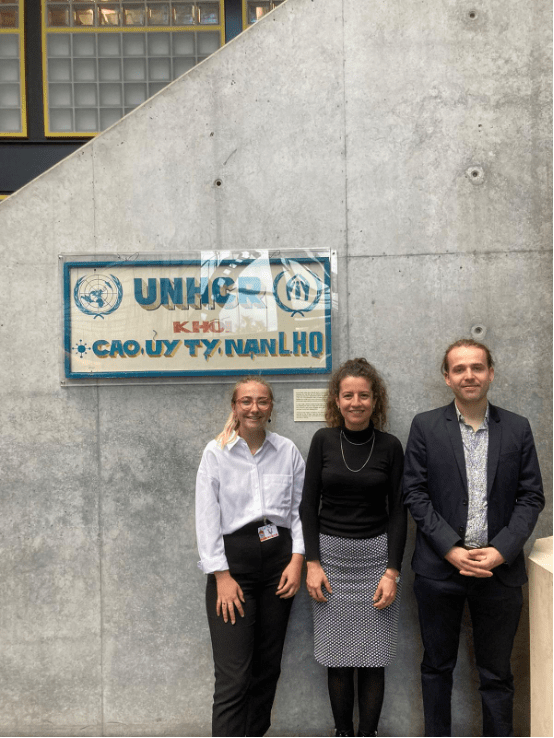
Charlotte Dickson, Ayşe Uzun Demir and Arne Vermeerbergen in UNHCR HQ

Over the Summer of 2021, the Human Rights Liaison Unit (HRLU) in the Division of International Protection (DIP) of the Office of the United Nations High Commissioner for Refugees (UNHCR) negotiated with Essex’s Human Rights Centre (HRC) Clinic to coordinate a project with human rights and humanitarian law masters students to investigate the interaction between Special Procedure Mandate Holders (SPMHs) and UNHCR at headquarters, in the regions, and at country level.

In October 2021, Arne Vermeerbergen, Ayşe Uzun Demir, Charlotte Dickson and Parkhi Saxena took on this project. They came with varying degrees of prior knowledge, but for all of them, the scope and complexity of the project was a steep learning curve which they all took on with great enthusiasm. This was one of the six projects of the HRC Clinic of the University of Essex in 2021-22 (the annual report of the Clinic’s activities can be found here).

To give a brief overview of the scope of the project, there are 45 Thematic Mandate and 13 Country Mandate Holders, variously titled Special Rapporteurs, Independent Experts or members of a Working Group. They are supported by the Office of the High Commissioner for Human Rights (OHCHR). They are a Charter mechanism and so are not tied to any particular human rights treaty, but they all have their own separate mandates.

Clearly, the Country Mandate Holders focus on human rights in that country, but the thematic SPMHs focus on their mandate globally; they may issue thematic reports, communications, statements and undertake country visits on their mandate followed by a country report. SPMHs change regularly and a new one may have more or less knowledge of persons within the mandate of UNHCR.

Initially limited to refugees, UNHCR’s mandate has expanded over the past eight decades to include stateless persons and conflict-driven internally displaced persons (IDPs) within the Global Protection Cluster. And UNHCR staff move in and out of headquarters and between countries and regional offices in the field.

Maintaining links in such circumstances is not straightforward and the Clinic Project was about improving communication along with expanding interaction. The Team needed to learn all about the Mandates, but also about UNHCR’s mandate and its operations, as well as the interaction between different parts of the UN: UNHCR, OHCHR, and the independent Mandate Holders.

The desk-based research showed that there was a wide variation in engagement by SPMHs with persons in UNHCR’s mandate, and sometimes there was no carry-over when the SPMH changed. While there is an obvious link between the Special Rapporteurs on the human rights of internally displaced persons and on the human rights of migrants, nearly every thematic SPMH has some relevance to refugees, IDPs and stateless persons – violence and discrimination against women might spark flight and be a constant threat during protracted displacement, minorities are often persecuted and have to flee, the threat to freedom of religion and belief is often the reason for seeking refugee status abroad, transitional justice may be essential for refugees and IDPs to feel it is secure to return. To substantiate the desk-based research, the Team also interviewed SPMHs, their OHCHR support teams and relevant sections in UNHCR HQ and the regions.

Their report made clear the need for greater training for SPMHs regarding UNHCR’s protection mandate, but also for improving awareness of the usefulness of SPMHs to UNHCR’s field operations – UNHCR achieves most of its successes through quiet diplomacy from its in-country missions to 137 countries. Over 80% of the 100 million forcibly displaced persons within UNHCR’s mandate are living in low- or middle-income countries, many that are not party to any refugee convention or even international human rights law treaty. A lot of what UNHCR does has to remain confidential, in much the same ways as the ICRC. However, SPMHs can and should speak out about rights violations and while SPMHs are there for every victim, they are also there for refugees, IDPs and stateless persons.

What the Team also highlighted was UNHCR’s cross-border perspective compared to SPMHs that either are mandated for one country or are carrying out country visits. While the independence of all parties needs to be maintained, the potential for coherent and coordinated intervention cannot be doubted.

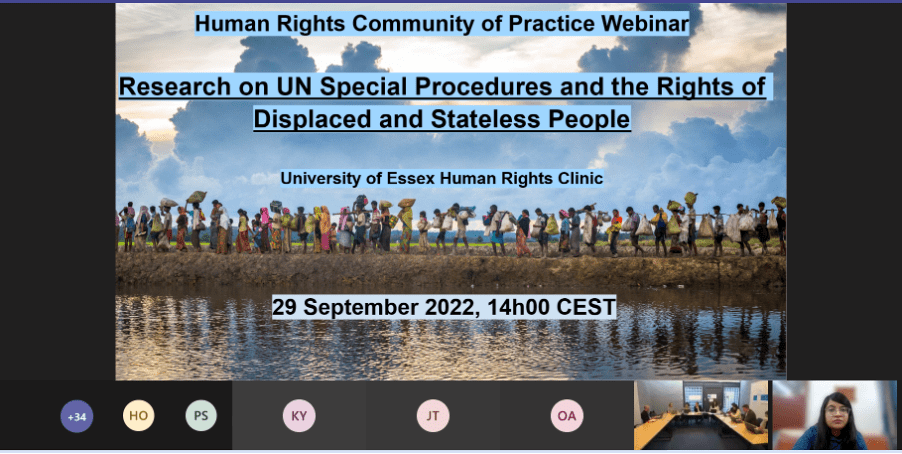
In recognition of their continued association with the project, the Team received the Essex Law School Bursary of the 2021-22 academic year. Furthermore, to promote their findings, the Team were invited by Peter Swiniarski of the HRLU, who hard worked with them all year, to speak at the UNHCR HQ in Geneva on 29 September 2022. They prepared over the Summer and then, with a little specific planning on the night before and in the morning, three of them in person, Arne, Ayşe, and Charlie, with Parkhi joining online from India as she prepared to take up her new position as Assistant Lecturer at Jindal Global Law School, presented in Lecture Room 4 in UNHCR to members of the HRLU and to about 40 field officers around the world.

A picture of the online presentation (inset: ongoing session in UNHCR HQ, Parkhi Saxena presenting online)

It was a fantastic success and the following day, a former Essex student, now based in Mogadishu for UNHCR, Sebastian Herwig, contacted Prof. Geoff Gilbert (who supervised the project) to congratulate them. This was insightful, beyond Masters-level, impactful research that will affect UNHCR, OHCHR and SPMHs as they all seek to enhance the human rights of persons within their mandates.

The Team summed up their year-long experience in a few words:

We were fortunate to work on a project that was incredibly interesting yet very challenging. We hope that the outcomes of our research can make a difference to UNHCR’s and SPMH’s work in building better lives for those forced from their homes.

New Legal Protections for the Environment in Relation to Armed Conflict

Image via Shutterstock

By Professor Karen Hulme (School of Law, University of Essex) and Elizabeth B. Hessami (Johns Hopkins University)

Nature and conservation are inevitably harmed during armed conflict. The laws of armed conflict do provide some measure of legal protection for nature, but these rules are limited and vague. The recent adoption by the International Law Commission (a legal body within the United Nations) of a set of Draft Principles for environmental protection in relation to armed conflict is to be lauded. This post will briefly examine some of the main additions to the law in this area.

Armed conflict pollutes and destroys the environment, often leaving a permanent scar on the landscape and biodiversity of affected states. The Russian conflict in Ukraine, for example, demonstrates the devastation caused to fauna and flora when states engage in warfare on a massive scale in areas rich in biodiversity. It also witnessed a horrifying few weeks as the world saw what happens when warfare takes place in a nuclear-powered state. Thus, from the destruction of targets in forests or protected areas, to collateral harm caused by oil spills in the marine or desert environment, toxic chemical pollution from abandoned munitions, destruction of agricultural lands, and destruction of wildlife – armed conflict inflicts a multitude of harms on the natural world.

The WCEL Specialist Group on Peace, Security and Conflict has, therefore, been following closely the work of the International Law Commission (ILC) on its programme of work on the Protection of the Environment in relation to Armed Conflict. In May 2022 the ILC adopted the final version of its recommended 27 Draft Principles, sending them to the General Assembly for final consideration before adoption. Many of the Draft Principles are already rooted in international law, while some provide best practice guidance.

The culmination of over ten years work, there is no doubt that the Draft Principles represent a significant moment in the advancement of legal protection of the wartime environment. Before the creation of the Draft Principles, the current ILC Special Rapporteur, Ambassador Marja Lehto, opined that there was no “coherent legal framework for the protection of the environment in relation to armed conflict”. The approval of the ILC mandate by states, therefore, reflected an acceptance that the law in this area was inadequate, ill-defined and outdated. Certainly, there are limited treaty rules protecting the war-torn environment, particularly in civil wars – the most prevalent type of conflict. Thus, the Draft Principles draw together an extensive body of rules covering both international armed conflicts as well as civil wars (non-international armed conflicts) and are addressed to a wide range of non-state actors.

Two key dimensions of the ILC’s analysis warrant fanfare. Innovative was the decision to take a holistic approach, ensuring analysis of the legal protections afforded not just during conflict, but prior to the outbreak of conflict and post-conflict. Methodologically unique, this temporal approach allowed for the second innovative approach, namely a focus beyond the laws of armed conflict. Any area of law today is a complex web of interactions between hitherto distinct areas of law. Throwing off the shackles of a pure laws of armed conflict analysis, the ILC undertook a comprehensive analysis of the issues, drawing from areas such as environmental law, human rights law, arms control and business and human rights obligations. Having said that, it is still less than clear how these other legal regimes apply during the combat phase of conflict.

The Draft Principles are, thus, a blend of treaty law, including the laws of armed conflict, and novel guidance or best practice (known as ‘progressive development’) – which states and other actors are encouraged to follow. For example, Draft Principle 16 reiterates the clearly established treaty rule that pillage of natural resources is prohibited (effectively theft during conflict), and Draft Principle 14 the equally clear application of the foundational laws of armed conflict to the environment, such as the principles of distinction, proportionality and precautions. Novel rules are included on cooperation for post-conflict environmental assessments and remedial measures (DP 24) for example. A key one of which is the obligation for removal of toxic or other hazardous remnants of war (DP 26).

The novel structure has certainly helped the Special Rapporteurs to approach the issues from new angles, highlighting novel issues for consideration. One example being the post-conflict part, which analysed obligations of environmental remediation, liability and cooperation – issues which are generally omitted from legal instruments and are proving rather elusive in the current Russia-Ukraine conflict.

The recent humanitarian crisis created by the Russian invasion of Ukraine, when added to the plethora of other events causing people to flee their homes and lands, such as climate-related events, has pushed the number of IDP’s and Refugees above an estimated 100 million people globally according to UNHCR. Thus, displaced people must be considered during armed conflict, as must the environment that they are inhabiting. Environmental protection of lands housing displaced persons is, therefore, a welcome addition to the Draft Principles, particularly in a world where displacement is increasing at a dramatic pace. Draft Principle 8 on Human Displacement takes a novel look at the issue, recommending that states not only ‘protect the environment where they are located’, but also provide ‘relief and assistance for such persons and local communities’. Importantly, environmental protection also extends to areas of transit.

Draft Principles 10 and 11 on Corporate Due Diligence and Corporate Liability respectively require that states ensure business enterprises ‘exercise due diligence and protect the environment and human health’ in conflict-affected areas. These two provisions are an important addition to the field to deter corporate actors from preying on local populations and natural resources during such turbulent times, and preventing conflict financing through the exploitation and trade in such commodities.

Implementation of the Draft Principles will be the final step with states expected to implement them through domestic law and military manuals. They present a concise statement of law in one document, undoubtedly expanding the law on certain issues. Thus, the Draft Principles will undoubtedly serve as a point of dialogue for states to further the discussion of how to protect the environment during the conflict cycle.

Fernando Bordin wrote “Codification conventions and draft articles completed by the International Law Commission are often – and increasingly – invoked by courts, tribunals, governments and international organizations as ‘reflections of customary international law’.”

The Draft Principles, therefore, represent, an important opportunity to make a tangible, meaningful difference in the lives and environment of people caught in the crosshairs of conflict.


This article was first published on the website of the International Union for Conservation of Nature (IUCN) and is reproduced on the ELR Blog with permission and thanks. You can read the original piece here.

More about the authors:

Professor Karen Hulme, School of Law, University of Essex, UK, specializes in the legal protection of the environment during armed conflict. She has published on environmental human rights, environmental security, post-conflict obligations, the legality of specific weapons, as well as climate change, biodiversity/nature protection, oceans and protected areas. Karen is Chair of the IUCN WCEL Specialist Group on Environmental Security and Conflict Law.

Elizabeth B. Hessami

Elizabeth B. Hessami, J.D., LL.M. (Environmental Law), is a licensed attorney and Faculty Lecturer of International Environmental Policy and Environmental and Natural Resources Security for Johns Hopkins University. She has also served as a Visiting Attorney for the Environmental Law Institute (remote) for several years.

Investigating Allegations of Child Sexual Exploitation and Abuse in Humanitarian Settings

Photo by Claudia Soraya on Unsplash

Professor Carla Ferstman is a member of the Justice Rapid Response (JRR) Sexual and Gender-Based Violence Justice Experts Roster. She recently wrote a research paper for JRR on the investigation of sexual exploitation and abuse (SEA) allegations involving children.

Along with Fabian Ilg, who is a Justice Rapid Response Roster Expert, Prof. Ferstman participated in a launch event: Investigating Allegations of Sexual Exploitation & Abuse of Children Occurring in Humanitarian Settings: Reflections from Practice (recording available). 

Prof. Ferstman and Fabian Ilg recently conducted an interview with JRR about the research paper. Their responses are reproduced on the ELR Blog below with permission and thanks.

Carla, As the author of the report, could you summarize the key findings and its recommendations?

The purpose of the report is to explain the key challenges to investigate allegations of sexual exploitation and abuse involving child victims. It is not a “how to” guide, but there are several clear messages to the report.

First, allegations of SEA involving child victims are likely to happen in settings that present unequal power dynamics. This will include fragile settings whether impacted by conflict, insecurity, weak governance, poverty, disease, or natural disasters. Because of this likelihood, all humanitarian agencies and organizations working in these environments need to actively prepare for such eventualities. Hoping that it won’t happen is simply not a good enough strategy. Active preparation includes having clear child-friendly policies in place, being proactive about uncovering child SEA, having specialist staff on hand, and taking effective steps to mitigate the risk of SEA involving child victims.

Second, agencies and organizations should ensure that their policies and practices maximize the rights of child victims. Ensuring the best interests of the child in relation to SEA investigations is not only about protecting children from psychological and other forms of harm during investigations; it also requires that children’s rights to information, to participate in investigation processes, to justice and to reparations are all maximized to the greatest possible extent. How child victims are consulted during SEA investigations should reflect their evolving capacities and their maturity. Third, agencies and organizations should recognize and address the conflicts of interest they often have when conducting SEA investigations. This includes ensuring children have access to independent advice and support about how best their interests, needs and rights can be respected during a SEA investigation and subsequently.

Being the first report of its kind, dedicated to exploring the issue of SEA investigations through a child-centered perspective, what do you hope it will achieve?

It is hoped that the report will raise awareness about a really complex issue that arises all too often in humanitarian settings.

Hopefully, it will spur agencies and organizations to action, so that the needs and rights of child victims can be met and so that accountability for this horrific crime can prevail.

Fabian, why do you feel that this project and paper are important and needed? 

First, I am very proud and glad to have had the opportunity to participate in this very important project and to bring in some of my own experience from the field while investigating different SEA cases involving children (CSEA) over many years, both as a JRR expert and as a professional in law enforcement.
 
This report is one of the most complete documents created about this topic and fills a large void. Over the past years, the focus to improve protection of CSEA victims has increased a lot. As a result, organizations working in the humanitarian sector have needed guidance and specific standards to prevent CSEA, as many CSEA cases still occur regularly all over the world. Now more than ever, it is very important to do the utmost to protect children, the most vulnerable human beings, to treat them with respect during this process, and to start helping survivors to make their future life as bearable as possible. This report provides the needed guidance in a comprehensive manner, and is therefore a perfect tool for all who may be involved with CSEA during their work.

As someone who has conducted SEA investigations, how do you have to adapt your approach to investigate SEA against children?

SEA investigations are very complex on different levels. CSEA investigations are an even greater challenge. In many cases, material evidence is missing and the victims’ voice is the only proof. Relationships of dependency and abuse of power are some of the usual modus operandi used by perpetrators, to make victims appear to have wanted the sexual contact. In court, judges follow the strong voice of the lawyers of the perpetrators and the statements of adults often have a much higher weight than that of children. Children are very vulnerable and can often not distinguish between right and wrong, and as such their judgement is viewed as limited. Furthermore, the chances of their re-victimization at a later point in time are sadly quite high.

This makes CSEA very different from SEA. We, as CSEA investigators, have a grave responsibility to protect these young victims, and must do so by putting them in the centre of the investigation. This starts with ensuring all their rights are protected during the investigation process. Among other things, to be interviewed is a very traumatic experience for a child. The victim-centred approach is in many ways the most critical step to support a child and provides them with the chance of having a bearable life in the future.

Investigations in Armed Conflict

Image by Shutterstock

Investigations into alleged violations of international humanitarian law and international human rights law in armed conflict are crucial to the implementation of these bodies of law.

There are, however, numerous legal and practical challenges that arise when considering a State’s obligations under international law with regard to such investigations.

These include establishing the bases and scope of the duty to investigate under both bodies of law, and determining the way in which these investigations must be carried out.

Furthermore, addressing the framework for investigations in armed conflict necessarily requires an examination of the interplay of international humanitarian law and international human rights law.

In her new chapter in the latest edition of the Research Handbook on Human Rights and Humanitarian Law, Dr. Claire Simmons, a researcher at the Essex Armed Conflict and Crisis Hub (under Essex’s Human Rights Centre), focuses on the concept of effectiveness of investigations under international law.

Dr. Simmons addresses, in particular, the legal and practical challenges surrounding the conduct of investigations in armed conflict, taking into account the complementary way in which both bodies of law interact.

Research Handbook on Human Rights and Humanitarian Law, edited by Robert Kolb, Gloria Gaggioli, and Pavle Kilibarda

Chapter full citation: Claire Simmons, ‘Investigations in Armed Conflict’, in Robert Kolb, Gloria Gaggioli, and Pavle Kilibarda (eds), Research Handbook on Human Rights and Humanitarian Law: Further Reflections and Perspectives (Elgar 2022).