Essex Digital Verification Unit (DVU) contributes to Article 15 Communication to the ICC filed against Russian propagandists

Photo of the ICC (seated in The Hague) by Roel Wijnants on Flickr

On 6 June 2024, the International Federation of Human Rights (FIDH) filed an Article 15 Communication to the International Criminal Court (ICC) in The Hague, regarding speech crimes by Russian political and media figures, including Dmitry Medvedev, Dmitry Kiselyov, and Vladimir Solovyov. This marks an important step in the direction of accountability for hate speech and incitement to genocide.

The Communication, covering the period since the beginning of the full-scale Russian invasion of Ukraine in 2022, was produced in conjunction with several organisations as co-contributors, including the Essex Digital Verification Unit (DVU). Over several months in early 2024, members of the DVU contributed to the project, analysing statements by Dmitry Kiselyov and Vladimir Solovyov to identify possible instances of incitement.

An Article 15 Communication is a submission to the Prosecutor of the ICC, which aims to draw their attention to possible human rights violations. The Communication outlines the situation, the individuals it is brought against, as well as the alleged crimes that the Communication proposes for investigation. The Prosecutor will consider the facts presented, and on their basis might decide to start an investigation of the activities mentioned, which, in turn, might lead to arrest warrants against the persons behind these activities.

Source: International Federation for Human Rights (FIDH)

As a result of the research, numerous inflammatory statements by these figures were identified and analysed. They included the denial of the existence of Ukrainians as a separate nation, accusations of Nazism towards Ukrainian leadership and citizens, as well as calls to carry on the war against Ukraine until the said “Nazism” is destroyed. All of these statements were recorded and forwarded to FIDH in order to be used in preparation of the Article 15 Communication.

“Hateful rhetoric has played a crucial role in Russia’s criminal campaign in Ukraine”, stated FIDH. It added that “Our organisations believe that in the context of crimes against humanity hate speech is a separate offense that warrants greater scrutiny by the International Criminal Court. Our Communication provides ample evidence substantiating the need to further investigate these acts and ultimately issue arrest warrants.”

Dr. Matthew Gillett, Senior Lecturer at Essex Law School and a leader of the Essex DVU, contributed to the writing of the Article 15 Communication itself, and its launch on 6 June 2024. As a former international prosecutor and the co-producer of the Hartford Guidelines on Speech Crimes under International Criminal Law, he was glad to see the guidelines used as a basis for this ground-breaking speech crimes Communication to the ICC.

The Essex DVU’s mission is to enhance global investigations into human rights violations through the application of open-source research methodologies. Its activities leverage the transformative advancements in digital communications technology in recent years, notably the ubiquitous use of social media platforms and smartphones, and the growing use of this technology to obtain evidence of human rights violations and atrocity crimes.
Is International Criminal Law Ready to Accommodate Online Harm? 

By Sarah Zarmsky, Assistant Lecturer, Essex Law School

Photo from Unsplash

Historically, international criminal law (ICL) has been mainly concerned with physically violent crimes. Progressively, ICL has begun to recognise the importance of mental forms of suffering (such as for torture and genocide), but this has always been in connection with cases focused on physical harms. Recently, developments such as the proposed addition of the crime of ecocide to the Rome Statute of the International Criminal Court have signalled that ICL may be ready to evolve further and accommodate novel types of harm, including those perpetrated through technology.  

To explore the potential of ICL to encompass online harms, or harmful acts perpetrated through online spaces, Sarah Zarmsky, PhD Candidate and Assistant Lecturer with the Law School, recently published her article ‘Is International Criminal Law Ready to Accommodate Online Harm? Challenges and Opportunities’ with the Journal of International Criminal Justice (JICJ). This article stems from part of Sarah’s doctoral research on accountability for digital harms under ICL, which encompasses a broader range of harms inflicted using technology than online harms. 

This article aims to answer the understudied question of how technology can serve as the vehicle by which certain international crimes are committed or lead to new offences. It explores how current international criminal law frameworks may be able to accommodate ‘online harms’ to ensure that the law recognises the full scope of harms caused to victims, who currently may not be able to access redress through the international criminal justice system.  

Three examples of online harm that have a foreseeable nexus to the perpetration of international crimes are identified, including (a) hate speech and disinformation, (b) sharing footage of crimes via the internet, and (c) online sexual violence. The article analyses these online harms alongside similar harms that have been encompassed by core ICL crimes, including genocide, crimes against humanity, and war crimes, to assess how they might fit into existing definitions of crimes (potentially as an aggravating factor at sentencing or as a new manner of commission), or warrant the creation of an entirely new offence.  

The article concludes that the examples of online harm considered in the piece should be able to be accommodated by existing crimes, but this does not mean they should necessarily be treated the same as ‘traditional’ offences.  

For example, in the case of the spread of hate speech, this online harm could likely fall under existing definitions of persecution or incitement to genocide, or when footage of crimes is shared online, it could likely amount to an outrage upon personal dignity. Yet, the online component often exacerbates the harm—for instance, posting a video of a crime could be potentially even more humiliating than committing the same crime in a public square, where the footage is not preserved, distributed, and virtually impossible to get rid of.  

These elements should be recognised by ICL Chambers in future cases, such as during the gravity assessment of the crimes or at sentencing, to ensure that the full scale of the harm is acknowledged.  

Finally, the article emphasises that as technology will only continue to develop and serve as a vehicle for an increasing array of harms, finding ways to account for online harm and bring redress to victims should be an issue at the forefront of ICL.  

The article forms part of a forthcoming Special Issue with the JICJ edited by Dr Barrie Sander (Leiden University) and Dr Michelle Burgis-Kasthala (University of Edinburgh) titled ‘Contemporary International Criminal Law After Critique’.  

The discussions that will be sparked by this article are relevant to the explorations of engaging with ICL ‘after critique’ presented in the Special Issue, as it is important that ICL be able to recognise and adapt to new forms of harm to avoid the favouring of existing criminal harms that can reinforce traditional assumptions and stereotypes behind the law.  

Accountability for Digital Harm Under International Criminal Law: In Conversation With Sarah Zarmsky

Image via Shutterstock

Sarah Zarmsky, PhD Candidate and Assistant Lecturer at the Human Rights Centre, is a recipient of the 2023-2024 Modern Law Review Scholarship for her PhD thesis ‘Accountability for Digital Harm Under International Criminal Law’, supervised by Professor Carla Ferstman (University of Essex) and Dr Daragh Murray (Queen Mary University of London).

Sarah was awarded the Mike Redmayne Scholarship, instituted in memory of past MLR Committee Member Professor Mike Redmayne, which is presented to the best applicant in the fields of Criminal Law and the Law of Evidence (and related fields).

Modern Law Review Scholarships are prestigious awards provided to doctoral researchers in the United Kingdom and are funded by the Modern Law Review. Sarah is the first candidate from the University of Essex to receive the scholarship!

The research visibility team talked to Sarah about her success and took the opportunity to find out more about her plans:

This is an impressive achievement. How does it feel to bring this award to the University of Essex for the first time?

Thank you! It feels great, I’m very proud of it and to be part of such an impressive group of recipients. It’s very rewarding to have your research, that you invest so much hard work in, be recognised by others, especially by a journal as reputable as the Modern Law Review.

Could you tell us a bit more about your research? What gaps or shortcomings have you identified when it comes to addressing digital harm in the context of international criminal law?

My research examines how digital harm with relevance to the perpetration of international crimes may or may not be accommodated within existing international criminal law frameworks. Where criminalization may not be appropriate or feasible, it identifies possible alternatives for obtaining justice for victims of digital harms, such as through corporate criminal liability or regulatory frameworks.

I think the main takeaway so far is that the law has not yet ‘caught up’ with new ways of inflicting harm through technology, and depending on the type of harm, international criminalisation may or may not be the answer. There are some digital harms where we can see a clear link to existing international crimes, such as online hate speech and incitement to genocide, or sharing footage of crimes as an outrage upon personal dignity. It will be harder to accommodate more ‘novel’ types of harms, such as algorithmic harms or digital mass surveillance with ICL as it stands, so I am entering the stage of my research where I explore complementary strategies for achieving justice for victims of those harms.

In a single sentence, how would you summarise the importance of your research when describing it to an undergraduate student?

New technologies are important for advancing accountability for international crimes, but they also create new ways to perpetrate existing crimes or entirely new crimes, so this research is important in laying the foundation for future discussions as to how international criminal law can best accommodate digital harms.

With the evolving nature of digital threats and the global nature of the internet, how can international cooperation and collaboration be fostered to ensure effective accountability mechanisms for digital harm? Are there any notable examples or initiatives you could share that illustrate promising efforts in this area?

This is a complex question, but to answer it briefly, I would stress that as an international community, we need to be recognizing how harmful new technologies can be if used maliciously and that these harms are grave enough to be international crimes. I think sometimes the technology aspect can be roped in with other more ‘traditional’ offences and not treated as crimes on their own, which can result in less tailored justice for victims.

There are some promising developments in domestic war crimes trials, such as in The Netherlands, Germany, and Sweden, where individuals have been convicted and sentenced for war crimes for sharing degrading footage of executions on social media. I think these are positive developments because they serve the expressive function of recognizing how humiliating and degrading it can be to share footage of people in their most vulnerable states, and send a message that this is a serious crime.

This has not yet happened at an international criminal court or tribunal, but with the rise of open-source evidence initiatives at the ICC for example, I think it could definitely be a possibility going forward.

Do you anticipate your research will influence policy and if so, how?

I hope that my research can provide guidance for how ICL lawmakers and practitioners can ensure that the law keeps up with the times to fully address new ways of inflicting harm through technological means. My goal is to bring these issues to light and hopefully spark discussions within the ICL community about how we can account for digital harms moving forward.

Which direction do you see your research going in the future and why?

I’m now entering the third year of my PhD, during which I plan to apply my research thus far to one or two case examples and be able to highlight how the theory might work in practice, which I think will be really valuable. After the PhD, I would like to continue in this realm of ICL, human rights, and new technologies, perhaps delving deeper into one of the specific digital harms with a nexus to international criminal law that I have identified in the thesis.

A Proposal for a Policy and Structural Change in the Interpretation and Application of the International Criminal Court’s Principle of Complementarity for the Achievement of Victim-oriented Justice

Image via Shutterstock

Dr. Miracle Chinwenmeri Uche concluded her PhD programme under the supervision of Professor Lars Waldorf, Dr. Marina Lostal and Dr Clotilde Pegorier. Her thesis is titled ‘Victim-oriented Complementarity is the Key: A Proposal for a Policy and Structural Change in the Interpretation and Application of the International Criminal Court’s Principle of Complementarity for the Achievement of Victim-oriented Justice’.

The thesis examined the International Criminal Court (ICC) principle of complementarity through the lens of victim-oriented justice, i.e., justice that considers and accommodates victims’ needs and interests procedurally and substantively within the limits of criminal justice processes.

Complementarity, the chosen form of jurisdictional relationship between the ICC and its States Parties, is key to the Court’s existence and sustainability. It is inter alia a tool for deciding who between the ICC and states, can exercise jurisdiction over war crimes, crimes against humanity, genocide, and aggression (core international crimes).

For victims of core crimes, complementarity is much more than that; it has implications on whether justice will be served, who will investigate and where necessary prosecute — the ICC or states? Where will these proceedings take place, in The Hague or in domestic jurisdictions? Which victims can participate? How will justice be shaped?

Given the centrality of the principle of complementarity to the Rome Statute system, the thesis’ main aim was to propose ways for turning complementarity into a fulcrum for the pursuit of victim-oriented justice in the Hague and fostering the same in domestic jurisdictions.

For this purpose, the thesis asked two main research questions; firstly, how has the ICC interpreted and applied the principle of complementarity in relation to victims? Secondly, how can victims’ interests be adequately accommodated in the complementarity regime and process to aid the ICC in the fight against impunity and in achieving victim-oriented justice? To address these questions, the thesis analyzed the ICC’s complementarity, and victim jurisprudence using the doctrinal research method.

In response to the first research question, the thesis argued that victims’ needs, and interests were minimally considered in the development of the principle of complementarity; the focus was on sovereignty protection and prosecutorial issues. This is replicated in complementarity provisions within the Rome Statute, the ICC’s case law and practice. Admissibility determinations at the ICC tend to focus on issues of investigations and prosecutions of a small number of situations and cases, and the exercise of jurisdiction by the Court or states. This problem is exacerbated by the structure of the ICC’s main complementarity body — the Jurisdiction, Complementarity and Cooperation Division (JCCD) which does not include a victims’ representative. The thesis argued that sustaining a sovereignty and prosecutorial-focused approach to complementarity will circumscribe, if not eclipse the ICC’s ability to pursue victim-oriented justice and galvanize states to do the same.

Thus, in answering the second research question, the thesis argued that a re-interpretation of the principle of complementarity and the creation of an independent, inclusive ICC complementarity body are crucial to ensuring that victims’ needs, and interests are adequately considered and accommodated throughout all stages of proceedings.

The thesis’ original contribution is twofold; it outlines a reinterpretative framework for the introduction of victims’ needs and interests into admissibility determinations by the ICC. It is the first study to propose a design for an inclusive, neutral, and independent ICC complementarity division based on the existing Rome Statute regime.

The thesis also contributes to the discussions of ways in which the ICC’s relationship with African states and the African Union can be improved in the interests of victims, and the role this can play in bringing the Rome Statute closer to becoming a universal treaty.

Dr. Miracle Chinwenmeri Uche is now employed as a Lecturer at the University of Exeter. She is currently working towards publishing a monograph and journal articles from her thesis to apply her proposals to ongoing situations and cases before the ICC. She intends to further investigate the potential impact of a new and improved complementarity mechanism on victims, the ICC’s work, and workload.

A Study on Ignorance and Blame

Photo by krakenimages via Unsplash

The adage ‘ignorance of the law is no excuse’ is significantly inaccurate. Ignorance and mistake of law do, under certain circumstances, exclude responsibility both in national and international criminal law.

Dr. Antonio Coco‘s recently published monograph The Defence of Mistake of Law in International Criminal Law updates the existing reviews of law and practice on the topic, aiming to go a step further: it takes the analysis of mistake of law as a starting point for systematic observations about international criminal law in general.

First, the book defines the contours of the defence of mistake of law in the general theory of criminal law, distinguishing it from cognate defences and highlighting, most notably, its connection with superior orders.

Secondly, it gives an overview of the possible approaches to the defence, offering examples from national law as terms of reference for the subsequent analysis of international criminal law.

Thirdly, it surveys the relevant law and practice of international criminal tribunals, with a focus on the International Criminal Court, and it contemplates offences for which a defence of mistake of law may potentially succeed.

Finally, the author tries to interpret what the rules on mistake of law applicable before international criminal tribunals imply about the purpose of punishing individuals and the legitimacy of such punishment.

Published by OUP

Whilst the discourse on international criminal law is more and more concerned with global politics, The Defence of Mistake of Law in International Criminal Law brings back the focus on the appropriateness of imposing a guilty verdict on the individual defendant, a human being constituting the basic unit of each society.

Reparations Before The International Criminal Court: Who Are The Victims of Cultural Heritage Destructions and How Should Their Harm Be Addressed?

Source: Wikimedia Commons

Ahmad al-Faqi al-Mahdi (Mr. Al Mahdi) was brought to the International Criminal Court to stand trial for his involvement in the destruction of several historical and religious sites in Timbuktu (Mali) during an armed conflict in 2012. This was the first time in the history of international criminal justice that an individual was prosecuted for the destruction of cultural heritage alone.

Following his guilty plea and conviction in 2016, the case moved on to the reparations phase where the focus was that of redressing the harm caused to victims. Therein, the unprecedented nature of the Al Mahdi case led to an equally unprecedented question: who are the victims of cultural heritage destruction?

Drawing upon her personal involvement in the case as a Court-appointed expert, Dr. Marina Lostal, Senior Lecturer at the University of Essex, has published an article explaining how this question was resolved and the practical challenges it posed during the implementation phase.

The challenges encountered are labeled as ‘monumental’ because they had one thing in common: the amount of theoretical thinking and reflection that they deserved was inversely proportionate to the urgency with which they had to be addressed and the precedent they would establish. To surmount this, drawing from the author’s background, the Trust Fund for Victims turned to academia and consulted with scholars.

The article focuses on three of such challenges:

(i) whether ‘unborn children’ should be included in the pool of victims given that cultural heritage is meant to be preserved for the benefit of future generations;

(ii) what place women ought to occupy in the implementation of reparations, despite the customary practices of side-lining them; and

(iii) the decision of whether to memorialize events surrounding the crime.

On the latter point, the article introduces the concept of ‘restorative agency’, a working principle that was adopted in the context of memorialization measures to ensure that victims are given a platform to decide, not a decision.

Lastly, Dr. Lostal’s article provides a framework to demonstrate the level of complexity involved in the implementation of any Court-ordered reparations and reveals some of the work of the Trust Fund for Victims, one of the Court’s least comprehended creations.


Article full citation: Marina Lostal, Implementing Reparations in the Al Mahdi Case: A Story of Monumental Challenges in Timbuktu, Journal of International Criminal Justice, Volume 19, Issue 4, September 2021, pp. 831–853, https://doi.org/10.1093/jicj/mqab064

The Use of Digital Reconstruction Technology in International Law

Photo by Sajad Nori

Digital reconstructions of crime scenes have been used more frequently in both domestic and international courts as technology becomes more developed and accessible to courtroom actors.

Though digital reconstructions can be beneficial, especially in the context of international criminal law, as they allow judges to visit crime scenes that would otherwise be too expensive or dangerous to travel to in person, there are inherent risks that come with the use of this novel type of evidence in a court of law.

Sarah Zarmsky, a doctoral candidate with the Human Rights Centre at the University of Essex, published an article titled ‘Why Seeing Should Not Always Be Believing: Considerations Regarding the Use of Digital Reconstruction Technology in International Law‘ in the Journal of International Criminal Justice (JICJ).

Sarah’s article explores some key considerations which arise if digital reconstructions are to be used in international criminal courts and tribunals, with an emphasis on the rights of the accused and effects on victims and witnesses.

The article argues that in order for fair trial standards to be upheld and for international courts to fulfil their roles not just as prosecutors of crimes, but as seekers of truth and reconciliation, digital reconstructions need to be approached with caution and analysed through a critical eye.

Sarah will present her paper as part of the Launch Event for the JICJ Special Issue on New Technologies and the Investigation of International Crimes, which will be held virtually on 9 November 2021 at 15:30-17:00 GMT.

This event will bring the authors of articles in the special issue together, including Essex Law School’s Dr. Daragh Murray who also contributed to the same issue and served as one of its co-editors, for a discussion of their key insights on the future role of technology in accountability processes. Those interested in attending can register here.

The International Criminal Court and the Transformation of Post-War Justice in Northern Uganda

International Criminal Court, The Hague | Source: Flickr

Miracle Chinwenmeri Uche, Assistant Lecturer and Postgraduate Researcher at the University of Essex, co-authored an article with Tonny Raymond Kirabira (Researcher, Portsmouth Law School) titled ‘The International Criminal Court and the transformation of post-war justice in Northern Uganda’. The article was published in Sentio Journal, Issue 3 (Transformations).

In recent years, the legitimacy of the International Criminal Court (ICC) has attained increased attention across interdisciplinary scholarship. At the same time, the impact of the ICC in Africa remains contested.

To this end, Tonny Raymond Kirabira and Miracle Chinwenmeri Uche examine the interface between the ICC and transitional justice processes in Northern Uganda, following a 20-year war involving the Lord’s Resistance Army (LRA) and the government forces.

The article draws on qualitative work in the fields of international criminal law, human rights, and political science. It finds that the Ugandan situation demonstrates that top-down transitional justice has both positive and negative dimensions.

In their article, the authors argue that while the ICC has helped to transform judicial aspects, it has also contributed towards the decline of traditional justice mechanisms.

As such, they posit that the ICC’s approach to addressing international crimes in situation countries needs to be aligned with the domestic complementary mechanisms, whilst also allowing space for other transitional justice approaches like amnesty and reconciliation.

Tonny Raymond Kirabira and Miracle Chinwenmeri Uche conclude by making a compelling case for the involvement of international criminal tribunals in post-war contexts but also argue that this needs to be done in such a way that promotes good domestic processes and incorporates bottom-up perspectives.

The article can be accessed through the publisher’s website here.

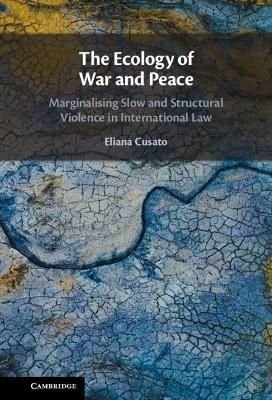
The Ecology of War and Peace: Marginalising Slow and Structural Violence in International Law

Photo by Sergio Torres

Dr. Eliana Cusato, who is currently appointed as a Marie Skłodowska-Curie postdoctoral fellow at the Amsterdam Center for International Law, authored a new book titled The Ecology of War and Peace: Marginalising Slow and Structural Violence in International Law. Her book was published by Cambridge University Press in September 2021.

The interrelation of ecology and conflict has been the object of extensive study by political scientists and economists. From the contribution of natural resource ‘scarcity’ to violent unrest and possibly armed conflict; to resource ‘abundance’ as an incentive for initiating and prolonging armed struggles; to dysfunctional resource management and environmental degradation as an obstacle to peacebuilding, this literature has exerted a huge influence upon academic discussions and legal/policy developments.

While international law is often invoked as the solution to the socio-environmental challenges faced by conflict-affected countries, its relationship with the ecology of war and peace remains undertheorized. Drawing upon environmental justice perspectives and other theoretical traditions, the book unpacks and problematizes some of the assumptions that underlie the legal field.

Through an analysis of the practice of international courts, the United Nations Security Council, and truth commissions, the book shows how international law silences and even normalizes forms of structural and slow environmental violence (notably, uneven access and distribution of natural resources; less visible forms of violence associated with the environmental aftermath of wars).

This, in turn, jeopardizes the prospects of creating more peaceful societies, while perpetuating deeply rooted inequalities. Ultimately, the book urges us to imagine entirely different legal notions of justice, peace, and security in times of ecological disruption.

By drawing upon extra-legal fields of inquiry (e.g., the literature on environmental security, the political economy of civil wars, the resource curse, and environmental peacebuilding), the book strives to refine extant understandings of how international law conceptualizes and regulates the ‘environment’ before, during, and after armed conflict.

By engaging with some of the international legal order’s most pressing concerns – rising intra-state violence, environmental degradation, resource depletion, and their interaction – the book opens intellectual spaces for rethinking current approaches to the ecological challenges of our hyperconnected world and their adverse impact on the most marginalized peoples. As such, it offers a critical companion work to related titles and, at the same time, pushes the research envelope further and in new directions.

E Cusato, The Ecology of War and Peace: Marginalising Slow and Structural Violence in International Law (CUP 2021)

The book will be of interest to academics and students across different disciplines, primarily international law, but also peace and conflict studies, political theory, and international relations. It will also prove useful as a reference for policymakers and practitioners working at the intersection of environmental issues, human rights, and peace and security within international organisations/tribunals, governmental departments, think thanks, and NGOs.


Dr. Eliana Cusato is currently on academic leave from the Essex Law School.

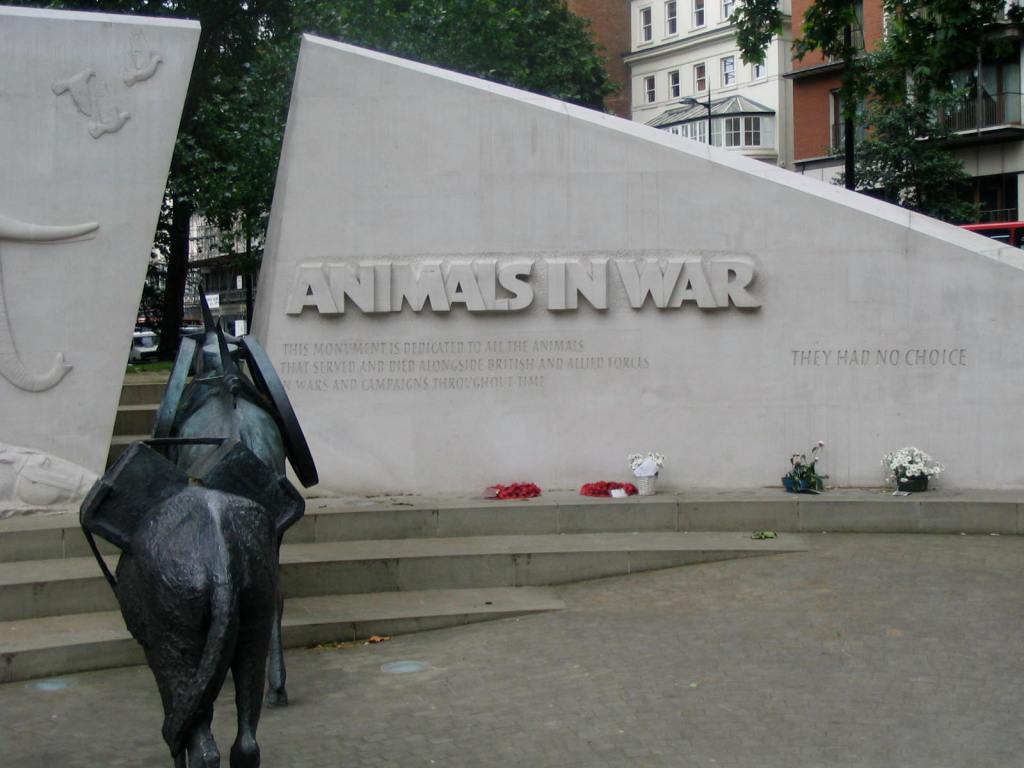
The animal legal turn: could animals qualify as victims before the International Criminal Court?

The Animals in War Memorial in Hyde Park, London (sculptor: David Backhouse)

Dr. Marina Lostal, Senior Lecturer in Law at the University of Essex, published a new article titled ‘De-objectifying Animals: Could they Qualify as Victims before the International Criminal Court?’ in the Journal of International Criminal Justice.

The article notes that the legal framework of the International Criminal Court (ICC) does not contain any provision concerning animals. Yet, animals frequently appear in both trial and reparations proceedings. The lack of animal regulation at the ICC is problematic insofar as there is now a visible animal legal turn whereby their status as mere objects is increasingly being questioned and remedied at the international and domestic levels.

Dr. Lostal’s article wishes to visibilize the ‘animal question’ at the Court by examining whether they could qualify as victims under Rule 85(a) of the Rules of Procedure and Evidence. While the short answer to this outlandish question is an unequivocal ‘no’, the conclusion reached is not the purpose of the article.

The purpose lies in showing that animals cannot qualify as ‘victims’ just because they are not human beings. Yet, they comfortably meet the other two criteria, namely (a) suffering harm, which (b) results from the commission of crimes within the Court’s jurisdiction. In short, animals may not be humans, but they also suffer in connection with core crimes.

The article concludes with the observation that granting animals the same treatment as human beings is no more objectionable as a matter of legal principle than granting them the status of ‘things’. In the author’s view, this calls for a prompt discussion of the regulation of animals within the Court.

Dr. Lostal recently presented her research at the 2021 European Animal Rights Law Conference held on 17 and 18 September in the Woolf Institute on the Westminster College site in Cambridge. The article can be accessed through the publisher’s website here.