Navigating Trade Mark Protection in the Digital Word

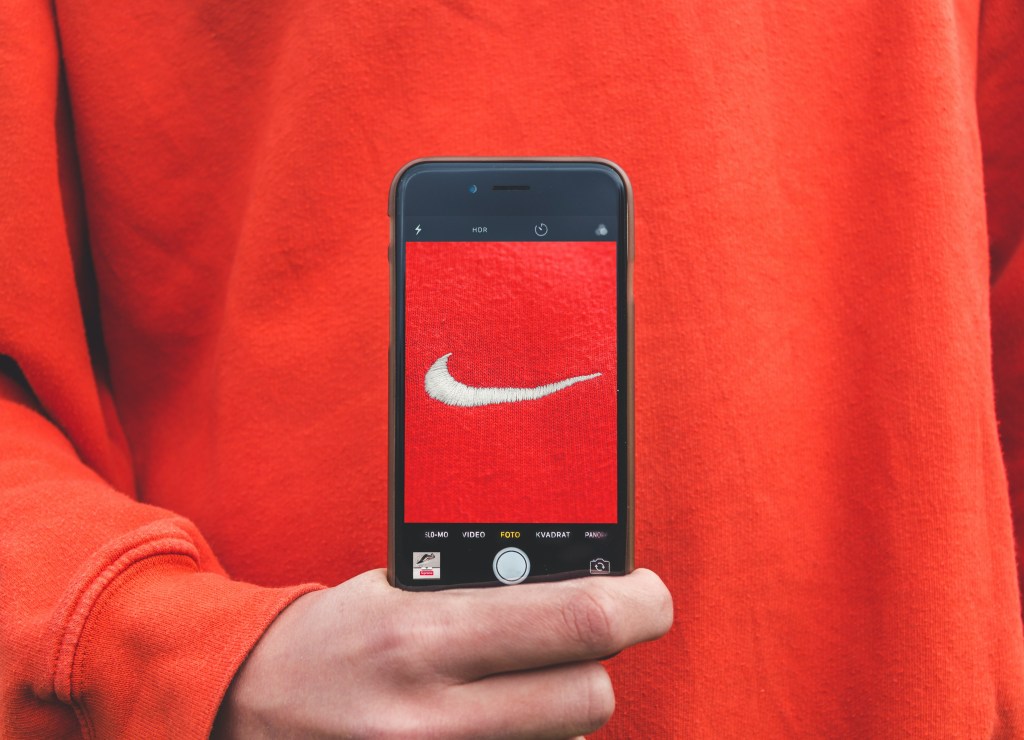
Photo by Kristian Egelund on Unsplash

By Laia Montserrat Chávez González and Renata Alejandra Medina Sánchez

The digital age has given businesses the opportunity to expand and establish their trade marks worldwide. As a result, they have been able to make themselves known to more consumers and increase their profits. A well-known trade mark has the power to create great economic value for businesses and strengthen a company’s branding in the marketplace.

With WhatsApp, Facebook, and Instagram dominating the social media landscape in the United Kingdom, brands are eager to bolster their presence on these platforms to effectively promote their products or services. However, the advent of e-commerce and social media platforms and the emergence of new technologies have created novel challenges for trade mark protection.

One of these challenges is trade mark infringement, which takes place when someone violates the exclusive rights attached to a registered trade mark without the owner’s authorisation or licence. In this evolving digital landscape, businesses must swiftly adapt and deploy suitable protection strategies to safeguard their trade mark rights online.

This blog post aims to elucidate trade mark infringement on social media for entrepreneurs, while outlining available protective measures within these platforms.

The importance of trade marks in the online business landscape

Social media platforms such as Facebook offer a highly promising opportunity for businesses to communicate with their audience in a fast and direct manner. Several studies have highlighted that these platforms are efficient channels to manage communication with customers and reach a broader audience, not only as a publicity channel but also as a way to attract new clients and recruit employees. In this sense, social media is a valuable tool for preserving and boosting brand reputation at minimal cost.

Brands build relationships with their customer base through offline methods such as offering personalised services, hosting events, and running loyalty programmes, as well as online methods including engaging on social media, utilising email marketing, fostering online communities, collecting, and acting on feedback, and providing responsive customer support. The real-time and multi-directional nature of social media facilitates communication and content usage, challenging offline communication models, such as radio and television advertisements. Social media now allows consumers to actively participate by sharing opinions and information, influencing brand perception.

To distinguish themselves and ensure their unique identity is recognised and protected across all platforms, brands rely on trade marks. Trade marks have the same role in the online business realm as they do in traditional markets: to differentiate goods and services. Therefore, their legal protection is crucial, not just to prevent consumer confusion but also to safeguard a business’ reputation.

In 2009, L’Oréal SA, a multinational cosmetics and beauty company, and other luxury brands filed a lawsuit against eBay for allowing the sale of counterfeit products bearing their trade marks on its platform. This example highlights the challenges that e-commerce platforms face in monitoring and preventing trade mark infringement by third-party sellers and emphasises the need for robust monitoring systems and cooperation between online platforms and brand owners to maintain consumer trust.

Understanding trade marks: some fundamental concepts

Entrepreneurs must grasp fundamental concepts associated with trade marks and their use in order to protect their brands from infringement on social media and maintain brand integrity in a competitive online marketplace. This section briefly outlines the importance and relevance of these concepts for trade marks.

Trade mark: A trade mark is any sign capable of being represented in a manner which enables the registrar and other competent authorities and the public to determine the clear and precise subject matter of the protection afforded to the proprietor, and of distinguishing goods or services of one undertaking from those of other undertakings. It may consist of words (including personal names), designs, letters, numerals or the shape of goods or their packaging.


Domain Names: Trade marks and domain names intersect in protecting brand identity online; while a trade mark provides rights to a brand name, securing a corresponding domain name, namely the unique address that people use to find the website on the internet, helps ensure exclusive use and prevents ‘cybersquatting’, i.e., the unauthorised registration of domain names resembling trade marked names.


Usernames: Trade marks extend to social media usernames, as usernames often serve as digital representations of trade marks. A username on social media can enhance brand recognition but might not guarantee trade mark protection.


Terms and conditions: They are legal agreements between a service provider and its client, which set the obligations and responsibilities of the parties. Platforms’ terms and conditions may restrict or regulate trade mark use to prevent confusion or misuse, ensuring brand integrity and user trust.


Branding: By integrating various elements such as logo, design, and mission, branding refers to the process of developing a positive image of a company or its products in customers’ minds. This is achieved by ensuring a consistent theme across all marketing channels, including social media, maintaining consistency in trade mark use, and adhering to trade mark laws.

Trade mark infringement

Infringement occurs when someone uses a trade mark that is substantially similar to a registered trade mark owned by another person, for products or services that are the same or similar to those covered by the registered trade mark. The following represent some common ways in which infringement can occur on social media:

Jacked usernames:

This refers to social media or online account usernames that are ‘hijacked’ by someone other than the trade mark owner, often to exploit a well-known trade mark’s reputation or value. This unauthorised use can mislead consumers and harm a brand. For instance, this could happen if someone other than Nike Inc. registers the username ‘nikeofficial’ on a social media platform. This unauthorised use could confuse consumers into thinking that the account is the official representation of the Nike brand, potentially infringing on Nike’s trade mark rights.

Hashtag hijacking:

Using a trade marked name or slogan as a hashtag without permission can be particularly problematic, especially if the hashtag is used in a way that could confuse consumers or dilute the brand’s identity. Using trade marked terms in hashtags accompanying social media posts should be avoided, unless the explicit permission from the trade mark owner has been obtained.

As a general rule, using a protected trade mark in a hashtag can risk infringement if it implies sponsorship, association, or endorsement by the trade mark owner. However, if the hashtag simply promotes the user’s own goods or services, indicating compatibility or common origin, it may be considered permissible.

Advertising and trade mark use:

Incorporating trade marks into social media advertising initiatives is very important for businesses. However, according to consumer law and domestic legislation applicable in each case, trade mark owners must ensure that advertisements adhere to trade mark laws, steering clear of any practices that could be deemed misleading or deceptive.

Claims made in social media ads must be substantiated, and the use of trade marks must not create a false impression about the product or service. Misleading use of trade marks can result in regulatory action, fines, and damage a business’ reputation. Moreover, social media ads employing registered trade marks must not suggest affiliations or product characteristics that are not true. For instance, implying that a product has certain qualities or is endorsed by a trade mark owner when it is not can be considered deceptive.

Misleading influencer partnerships:

Content creators, such as popular bloggers, online streamers, celebrities, social media personalities, have the power to influence customer’s buying behaviour. Including influencers in promoting products or services might seem like a good idea for businesses looking to expand their audience. Nevertheless, these collaborations should not involve making false claims about the benefits and effectiveness of what is being promoted.

In addition to the potential for misleading claims, influencers’ promotional content on social media has the potential to amount to trade mark infringement. When influencers use logos, brand names, or other trade marked elements without proper authorisation, they may inadvertently or deliberately create confusion about the source or sponsorship of the products or services being promoted. Such unauthorised uses, if not properly unmonitored, can mislead consumers into believing that there is an official partnership between the influencer and the trade mark owner, which might not exist. Such actions can dilute the brand’s identity and value, potentially resulting in legal disputes and damaging the reputation of both the influencer and the involved businesses.

Confusing similarity:

Using a sign that closely resembles an existing registered trade mark in a way that could confuse consumers could constitute infringement. Such confusion can arise from similar logos, names, or products/services offered under those trade marks, potentially leading consumers to mistake one for the other.

Consider, for instance, a scenario where a tech start-up called ‘AppLinx’ creates a logo closely resembling Apple’s iconic bitten apple and uses a name like ‘iLinx’ to promote its mobile app development services on social media. Users browsing their feed might mistake ‘iLinx’ for an Apple-affiliated service, potentially leading to trade mark infringement issues and confusion among consumers about the origin of the app development services.

Domain name infringement:

It should be remembered that trade marks represent intellectual property rights protecting brands and their associated products or services, but domain names are addresses used to access websites on the internet.

Domain name infringement can occur by registering a domain name that is deemed to be identical or confusingly similar to another party’s trade marked name or brand, known as ‘cybersquatting’. Such similarity can lead to confusion among consumers, potentially diverting traffic away from the rightful owner’s website or causing harm to their reputation.

Take the example of a reputable company, ‘XYZ Clothing,’ which owns the trade mark and domain name ‘XYZClothing.com.’ If another party registers the domain ‘XYZClothing.net’ and uses it to sell counterfeit goods, customers searching for ‘XYZ Clothing’ might stumble upon the ‘.net’ website, purchase lower quality products, and have a negative experience. This confusion and association of poor quality can damage XYZ Clothing’s reputation and lead to a loss of trust among consumers.

In the 2003 case of Harrods Limited v. Pete Lormer (WIPO Case No. D2003-0504), an American individual named Pete Lormer registered the domain name ‘www.harods.com’ which closely resembled the HARRODS registered trade mark. Users entering ‘www.harods.com’ were redirected to ’www.expedia.com’, suggesting a false sense of origin or sponsorship for any associated products, goods, or services. As a result, the Panel of the WIPO Arbitration and Mediation Center concluded that Lormer had registered and used the domain in bad faith, intending to exploit the HARRODS trade mark for commercial gain. Consequently, the Panel ordered the transfer of ‘harods.com’ to Harrods Limited.

Parody accounts:

Another issue that deserves attention is parody accounts mimicking the style of a well-known brand without clearly labelling themselves as satire. It involves social media profiles or online personas that use the likeness of a person, group, or organisation in their profile to discuss, satirise, or share information about that entity. Although this might be considered legal when the account name and profile clearly indicate that it is not affiliated with the original entity, using terms like ‘parody’, ‘fake’ or ‘fan’, can cross legal boundaries when they engage in trade mark infringement, impersonation, or deceptive practices when they mislead users.

One notable example involved a spoof Twitter account, @UKJCP, which operated under the name ‘UKJobCentrePlus not’ and had adapted the job placement body’s official logo. The account mocked Jobcentre Plus and welfare policies, attracting the then Conservative government’s fury. The Department for Work and Pensions (DWP) complained to Twitter that the account was set up ‘with a malicious intent’ to undermine the work of Jobcentre Plus, but Twitter (now X), after initially suspending the account, eventually restored it because it allowed at the time parody accounts as long as they were clearly labelled as such.

Ensuring trade mark integrity amidst digital challenges

In conclusion, the digital landscape offers both vast opportunities and significant challenges for trade mark protection. Navigating trade mark protection in today’s digital age requires a deep understanding of the evolving dynamics of social media and e-commerce platforms. As brands increasingly engage with their audience on platforms like Facebook and Instagram, the risk of trade mark infringement and misleading advertising also increases. Therefore, businesses must implement rigorous measures to protect their trade marks. These measures may include monitoring for unauthorised use, ensuring transparent endorsement disclosures, and working with social media platforms to enforce policies effectively.

To preserve consumer trust and protect brand integrity in today’s competitive digital marketplace, businesses must prioritise transparency and implement robust trade mark protection strategies. A proactive approach to trade mark protection empowers brands, ensuring their sustained success and reputation. At the same time, the active involvement of social media platforms in developing and enforcing trade mark protection policies is essential in enhancing enforcement against trade mark infringement.

About the authors

Laia Montserrat Chávez González is currently in her final semester for a double degree in Law and Economics at Tec de Monterrey in Mexico, and in parallel pursuing an LLM in International Commercial and Business Law at the University of Essex. Laia has advised national and international clients on trade mark registrations and feasibility studies, and managed administrative procedures with the Mexican Institute of Intellectual Property. Passionate about protecting creativity and innovation, she also oversaw intellectual property aspects in transactions, ensuring compliance across different legal systems and facilitating trade mark rights transfers.

Renata Alejandra Medina Sánchez is a lawyer who graduated from the Pontifical Catholic University of Ecuador, with a Senior Specialization in Business Law from the Universidad Andina Simón Bolívar, and a Master’s in Contemporary Contracting from the Universidad Externado de Colombia. She is currently pursuing an LLM in Corporate Social Responsibility and Business at the University of Essex. She holds extensive experience in corporate, contractual, labour, tax, and commercial law. Throughout her career, she has collaborated with both domestic and foreign companies, assisting them from their establishment to the expansion of their operations. Her expertise encompasses involvement in merger and acquisition processes, as well as the drafting and negotiation of contracts.


The Case of the Caterpillar Cakes: Why Legal Protection for a Shape is So Hard to Come By

A very hungry caterpillar (image via Flickr)

By Prof. Stavroula Karapapa and Dr. Alexandros Antoniou, School of Law, University of Essex

UK retailers Marks and Spencer (M&S) and Aldi have finally called a truce to the trademark-based legal spat pitting their caterpillar cakes, Colin and Cuthbert, against each other. While details of the settlement have not been made public, Aldi’s Cuthbert will not reportedly return in quite the same form. As Aldi tweeted, upon announcing that an agreement had been reached:

Colin the Caterpillar, a roll sponge cake decorated with milk and white chocolate icing and sprinkles, has been an M&S stalwart for more than 30 years. The retailer claims to have sold more than 15 million to date. Since 2011, rival products with similarly alliterative names have appeared: Asda’s Clyde, Tesco’s Curly, Waitrose’s Cecil, Co-op’s Curious and Cuthbert.

In April 2021, presumably because it was thought that, of all the caterpillar cakes, Cuthbert most closely resembled Colin, M&S launched legal proceedings to protect its intellectual property and get Aldi to remove the product from its shelves. The retailer claimed that the similarity between the two cakes would lead consumers to think that they were of the same standard, thereby allowing Cuthbert to ride on Colin’s coattails.

Companies often seek to protect, as trademarks, certain signs that help them distinguish their products and services from those of their competitors, such as brand names, logos and slogans. Along with patents (which protect innovative technical solutions) and copyright (which protects creative or intellectual works such as books and music), they are a form of intellectual property.

The Colin v Cuthbert dispute hinges specifically on trademarks, because it related to the distinctive characteristics of commercial assets. M&S has held trademarks in the UK in relation to Colin’s name and green packaging since 2009 and 2020 respectively, but these have not been infringed.

The problem for M&S is that its trademark would probably not extend to the underlying idea of a chocolate roll with a smiley face on it. Securing protection for the shape of a product is actually quite difficult in trademark law – not to mention proving that a competitor has presented his goods as those of somebody else.

The four-finger-shaped KitKat chocolate bar and the shape of the London taxi are two examples of iconic shapes that have not succeeded. One key reason behind this is that the average consumer doesn’t usually make assumptions about the origin of products on the basis of their shape, or that of their packaging, when other graphic or word elements are absent.

Caterpillar cakes have seen decades of children grow up (image via Flickr)

Passing Off

There have been cases in the UK where shapes and packaging have attracted protection under what jurists refer to as the law of passing off. Passing off offers legal protection against harm to what is termed the “goodwill” of a business. And it can be used to protect unregistered trademarks.

Goodwill here is a legal concept, which refers to a business’s means of attracting people’s custom. It is harmed when a trader suggests – through misdescription on packaging or parasitic copying of a well-known product – that their product or service has some association or connection with another trader, when this is not the case.

In 2015, pop-star Rihanna famously won her battle to stop fashion brand Topshop using an unlicensed image of her on a T-shirt. She did so by convincing a judge that customers buying the top would think she had endorsed it. The Court of Appeal ruled that the unauthorised use of her photograph amounted to passing off.

Passing-off claims are notoriously difficult to establish. If someone promotes their bottled drinking water business as “the De Beers of still water”, they may be infringing the De Beers trademark but it is unlikely that a judge would find that they were passing themselves off as connected to De Beers in any commercial sense.

To win a passing-off claim against Aldi, M&S would have essentially had to prove that Colin had built up such a reputation as a signature product – in the same way that Rihanna had done as a music artist and style icon – that customers would be able to recognise it without difficulty. The retailer would also have had to prove that Cuthbert was so similar to Colin that consumers, after opening the packaging, would be misled into thinking that the two were somehow associated.

What is more, the fact that so many supermarket chains now have their own version of a caterpillar cake – coming in a variety of sizes and decorative features – would not have helped in establishing that Colin is unique. M&S would have had to prove that in the minds of cake buyers in the UK, the caterpillar has not become a generic shape for cakes.

Further, Aldi’s excellent Twitter campaign – and the widespread publicity the lawsuit has attracted – will have also contributed to dispersing any consumer confusion.

Lastly, it would have been difficult for M&S to argue that Aldi’s caterpillar cake had damaged or had the potential to damage the goodwill in Colin – that is, its power to attract and retain buyers of the cake. The market for caterpillar cakes is saturated: there are just so many to choose from.

The agreed settlement between the two parties means there was no court judgement on the facts. The terms of the settlement remain confidential. It is unknown whether liability – that is, blame – was admitted by Aldi for the wrong allegedly suffered by M&S.

Rarely does a party in a settlement walk away thinking, I have won. Typically, there is no winner and no loser in a negotiated resolution. This case will nonetheless have seen both M&S and Aldi benefit from the kind of marketing exposure that money cannot readily buy.


This article was first published on The Conversation and is reproduced on the ELR Blog under a Creative Commons Licence. View the original article here.

Licensing System for 3D Printing in China

Source: PxFuel

James Griffin (Associate Professor, University of Exeter), Onyeka Osuji (Professor, University of Essex), and Hing Kai Chan (Professor, Nottingham University Business School China) have developed a digital watermarking technology that enables the tracking and tracing of 3D Printing (3DP) content, from its creation through to its destruction.

A watermark is embedded into creative content; the team’s research made the technology easier to implement and difficult to remove, thus enabling new forms of 3DP works.

The technology was successfully demonstrated operating at a conference in China in 2017 and received widespread and acclaimed international press and television coverage. It has been granted a patent in China in August 2020.  

The research team’s next task, with James Griffin as principal investigator in the impact follow on research, is to develop the technology further for implementation into licensing systems. They will do this with two China-based companies. The AHRC awarded Griffin, Osuji, and Kai Chan £65,774 for the project.

Professor Osuji’s role is mainly to apply contract law to 3D printed watermarks, provide training sessions concerning contracts and lead the development of the best practice code.  

Attaching the technology to an existing licensing platform will allow for the use of 3DP content in new creative ways, leading to new artistic forms. For example, the technology could be attached to 3DP materials themselves, resolving an ongoing problem in ensuring the quality of materials that are used for printing. This could allow for more complex artistic works; it could even lead to organic works involving 3DP biological material.

The technology would open up new markets, even overcoming existing regulatory hurdles. This is because the technology would enable right holders to guarantee sources of materials and can be used to check if the structure of a 3DP object has changed internally. 

More details about the project can be found here.

Who Killed the Radio Star? How Music Blanket Licensing Distorts the Production of Creative Content in Radio

Photo by Eric Nopanen

According to popular and scholarly belief, video killed the radio star. The golden age of radio, culminating in the 1930s and 1940s, was gone with the rise of television in the 1950s and 1960s.

In their new article, titled ‘Who Killed the Radio Star? How Music Blanket Licensing Distorts the Production of Creative Content in Radio’ and published in the American University Law Review, Dr. Eden Sarid, Lecturer in Law at the University of Essex and Prof. Ariel Katz, Associate Professor at the Faculty of Law, University of Toronto, advance the argument that television’s role in the “death” of the radio star has been more limited than commonly believed.

A major culprit, the authors argue, is the common licensing practice of musical content for broadcasting, or more precisely, the blanket license issued by copyright collective management organizations (CMOs). CMOs offer all-you-can-eat blanket licenses that allow broadcasters to use as many songs from the CMO’s repertoire as they like for a fixed fee.

Thus, by setting a zero marginal price for broadcasting additional songs from the CMO’s repertoire, CMOs’ blanket licensing drives commercial radio stations to dedicate a larger portion of their programming to the broadcasting of recorded songs and to reduce the time and resources spent on producing or procuring other content.

The article then reveals that the analysis of blanket licenses should not be limited to their static effects (i.e., the trade-off between lower transaction costs and supra-competitive pricing), but it should also include the dynamic effect of blanket licensing on the type and quality of content production.

This dynamic effect also poses a challenge for copyright law and policy: while collective licensing may be beneficial to one class of copyright holders, it may hinder the production of other content and harm creators of such content, by depriving them of important opportunities for market and cultural participation.

Moreover, the article provides a novel explanation for the well-documented phenomenon of the “death” of the radio star and re-evaluates some of the existing explanations.

Finally, the authors discuss some alternative models for music licensing that can mitigate the distortion created by blanket licenses.

A copy of the article can be accessed on the University’s research repository.

Success at the SLS ‘Make the News’ Competition

On 30 June 2021, the Society of Legal Scholars (SLS) announced that Dr. Eden Sarid, Lecturer in Law at the University of Essex, was one of the winners in its Make the News competition for his project Freeing Our Cultural Treasures from a Copyright Limbo.

The SLS’ competition presents early career researchers with a unique experience to learn more about getting your research noticed by a wider audience. A meeting will now be scheduled for all four of the winners to make their pitches to the judging panel of Catherine Baksi (The Times and The Guardian), Joshua Rozenberg QC (BBC, Law Society Gazette) and Thom Brooks, the SLS President.

In a statement to our Research Blog, Dr. Sarid explained that his project:

‘aims to propose a novel solution to a major copyright challenge, of orphan works. Orphan works are items – such as photos, music, or books – which are subject to copyright, but whose copyright owners cannot be located and therefore permission to use the works cannot be granted. Currently in the UK, a limited licensing scheme results in millions of orphan works remaining unavailable to the public. Based on a theoretical examination of copyright justifications, the project advances a framework that will allow public access to these works.’

Look out for Dr. Sarid making the news in coming weeks and months!

University of Essex Academics Respond to the European Commission Consultation on Digital Cultural Heritage

Photo by Roman Kraft

Professor Stavroula Karapapa, University of Essex, School of Law

Digitisation has enabled access to and availability of cultural heritage to an extent previously unknown and, in addition, it has enhanced preservation and modern research opportunities, e.g. through text mining and data analytics. The availability of and access to cultural materials in digital form can provide significant support to conservation, renovation, research, study and promotion of cultural assets and, in this regard, digital cultural heritage can serve as a resource for education, enjoyment or re-use, including use towards the development of new knowledge. The need for digital transformation has been revealed and become as relevant as ever as a result of the COVID-19 pandemic. Despite its benefits, the digitisation of cultural heritage challenges traditional legal norms, such as copyright law.

Colleagues from the School of Law, in collaboration with staff from the University’s Library Services and University Archives, have contributed to a consultation of the European Commission on Digital Cultural Heritage.

In their position paper, they recommend that digitisation should enable preservation of cultural artefacts, including world heritage properties, access to the public, and accessibility by people with special needs and educational institutions.

They also recommend that law and policy should offer further support to cultural institutions towards developing digitisation initiatives (e.g. the legislative framework on orphan works should be revisited in terms of its breadth and parameters of application).

They warn against the creation of digital monopolies (e.g. public domain material should remain in the public domain after digitisation) and urge for the development of legal provisions ensuring the security of computer infrastructure both to safeguard digital culture and avoid the spread of misinformation.

Click below to download a copy of the position paper:

If I could turn back time: the confusion between two TENETs and the role of trade marks

Image from Wikimedia Commons, the free media repository

Dr. Alexandros Antoniou, Lecturer in Media Law, University of Essex

Christopher Nolan’s much-anticipated “mind-bending” film Tenet was released in the UK in late August 2020 to mixed reviews. Nevertheless, it performed well internationally. This is not, however, surprising for Nolan, whose blockbusters Inception, Dunkirk and The Dark Knight trilogy saw massive box office returns.

“The story [in Tenet] takes on ideas of time and how we experience it – interacting a science fiction component with the classic elements of the spy genre”, Nolan said. The first trailer of the movie arrived with a simple title logo in which the last two letters, i.e. E and T, were inverted, making an indirect reference to the concept of time inversion which provides a framework for the film’s plot.

When the first trailer dropped in December 2019, a bicycle components brand based out of Bellingham in the US state of Washington, also named Tenet, published the following post on Instagram:

View this post on Instagram

𝟱/𝟮𝟱/𝟮𝟬 𝗨𝗣𝗗𝗔𝗧𝗘: 𝗔𝗽𝗽𝗮𝗿𝗲𝗻𝘁𝗹𝘆 𝗜 𝗻𝗲𝗲𝗱 𝘁𝗼 𝗵𝗶𝗴𝗵𝗹𝗶𝗴𝗵𝘁 𝘁𝗵𝗮𝘁 𝘁𝗵𝗶𝘀 𝗽𝗼𝘀𝘁 𝗶𝘀 𝗻𝗲𝗮𝗿𝗹𝘆 𝟲 𝗺𝗼𝗻𝘁𝗵𝘀 𝗼𝗹𝗱. 𝗦𝗶𝗻𝗰𝗲 𝗽𝗼𝘀𝘁𝗶𝗻𝗴 𝘁𝗵𝗶𝘀 𝗠𝗿. 𝗡𝗼𝗹𝗮𝗻 𝗮𝗻𝗱 𝗪𝗕 𝗵𝗮𝘀 𝗯𝗲𝗲𝗻 𝗶𝗻 𝗰𝗼𝗻𝘁𝗮𝗰𝘁 𝘄𝗶𝘁𝗵 𝘂𝘀 𝗿𝗲𝗴𝗮𝗿𝗱𝗶𝗻𝗴 𝘁𝗵𝗲 𝘀𝗶𝘁𝘂𝗮𝘁𝗶𝗼𝗻. 𝗜𝗳 𝘆𝗼𝘂 𝘄𝗼𝘂𝗹𝗱 𝗹𝗶𝗸𝗲 𝘁𝗼 𝗿𝗲𝗮𝗱 𝗠𝗿. 𝗡𝗼𝗹𝗮𝗻’𝘀 𝗲𝗺𝗮𝗶𝗹 𝗮𝘀 𝘄𝗲𝗹𝗹 𝗮𝘀 𝗼𝘂𝗿 𝗿𝗲𝗽𝗹𝘆 𝗶𝗻 𝘁𝗵𝗲𝗶𝗿 𝗲𝗻𝘁𝗶𝗿𝗲𝘁𝘆 𝘄𝗲 𝗵𝗮𝘃𝗲 𝗽𝗼𝘀𝘁𝗲𝗱 𝘁𝗵𝗲𝗺 𝗼𝗻 𝗼𝘂𝗿 𝘄𝗲𝗯𝘀𝗶𝘁𝗲. • ORIGINAL POST FROM 2019 -> No, despite the striking similarities, we are not making a movie with Christopher Nolan. Maybe it was a coincidence, or maybe Nolan was inspired by our branding; regardless the apparent negligence is frustrating to say the least. Thank you to all the people that have reached out in support of Tenet (the bike brand). When we became aware of this, our biggest fear was that many of our peers who haven’t heard of Tenet (the bike brand, shit this is going to get old quick) might think WE stole the logo from Nolan, when in reality, we launched long before this movie was announced. If you would like to share this post to help spread the word, it would be greatly appreciated. I’m sure one day we’ll all look back on this and shake our heads in disbelief. #supportriderowned #damntheman

A post shared by TENET COMPONENTS ™️ (@ride_tenet) on

Christopher Nolan was seemingly unaware that a strikingly similar logo was already being used by the bicycle making company. Tenet Bicycles holds a registration for the mark (USPTO, registration number 5581507) since 9 October 2018, i.e. prior to its adoption for the film. However, in trade mark law, this registration only protects them from the use of the word within the biking industry.

The core aim in registering a trade mark is to acquire a monopoly right over a sign that distinguishes a trader’s goods or services from those of others. But, that sign gives in principle protection in the class or classes of goods and services for which it is registered (there are 45 classes under the NICE classification system). For instance, the name Lloyds is used in various classes: a bank, a pharmacy chain and an insurance market, but only one bank, one pharmacy chain, etc. can register the mark Lloyds. Special rules apply, however, to very strong and vulnerably famous marks, which are afforded in trade mark law stronger protection against use by third parties, even on dissimilar goods or services and even if no confusion will arise on the part of the average consumer.

In the case at issue, there was understandably a real concern that people unfamiliar with the Washington-based brand, which launched in June 2018, would think that the recently established company attempted to ride on the coat-tails of the logo used to promote the forthcoming film of a reputable director in order to benefit from its prestige and power of attraction. Being minded to mitigate the risk of confusion, the founder of Tenet Bicycles, Tyler Deschaine, said in a public statement:

I don’t have any issue with them using the word Tenet, there are thousands of trademarks for that word across dozens of industries. My issue is with the stabilization, but that is neither here nor there. I’ve spoken with lawyers and despite the validity of my concerns; I’ve been advised not to pursue it. Even sending a letter could potentially open myself up to a pre-emptive lawsuit from Warner Brothers. These sorts of things can get dragged on for years and the legal fees can go well into the hundreds of thousands of dollars. We’re a tiny component company that is taking baby steps to carve out a place for ourselves in the industry. We in no way want to get raked through the coals of litigation. That would end poorly for us. Also, we’ve got more important things to focus on, like developing new product and creating rad content. I want to make it clear that I never thought of this scenario as a get rich quick scheme. At the end of the day, I just want to avoid potential damages to my brand’s reputation and I suppose this article will help clear the air.

After the publication of this statement, Warner Bros., the production company behind Nolan’s film, reached out to the bike parts manufacturer, with the following response by the director:

Dear Tyler,

Warners just showed me the logo for your company, so I wanted to reach out directly and reassure you that our logo was arrived at without reference to yours. I know this because I designed ours myself, evolving it over the last six years, driven by a fascination with the symmetries of a word which is central to my story and its themes. I thought I’d done something unique – but clearly, you were driven by the same creative impulse. I guess lightning can strike twice, and obviously I understand that you would not want anyone thinking that you had been inspired by our movie’s title treatment – feel free to quote me in shooting such misunderstandings down. I love our logo so I hope you won’t feel this is necessary, but if you like, I can stop using it since it seems you went public with yours first.

Yours respectfully.

Chris Nolan

This story is a useful reminder that not all trade mark disputes have to result in bitterly fought litigation. Both Deschaine and Nolan took this matter as a simple coincidence, though Tenet Bicycles did ask Warner Bros. to refrain from using the partially inverted logo with the same font for Nolan’s film. The producers followed up by slightly amending the film’s logo in its latest trailer, which premiered with a plain title card instead. This mutually acceptable outcome represents an amicable compromise and reasonable settlement of the issue, which led to positive publicity for both sides involved, the bicycle company and the film producers.

Another key take-away message is that brands must learn to carefully pick their battles. Warner Bros. producers could have been left with a PR nightmare on their hands, had they attempted to ‘discipline’ a small company. Resorting to legal correspondence with a threatening tone or aggressive point-scoring enforcement practices that frustrate lawyers and the public might not always be the best way forward. Instead, it is wise to determine on a case-by-case basis how best to address potentially infringing activities. The type of business being written to, the precise nature of the alleged infringement as well as the risk of future litigation and the management of commercial risks to the business itself should be carefully considered. The legal and public relations teams of brands need to work together in assessing whether to pursue cases of infringement, and if so, in what way. The balance between brand protection through robust legal enforcement and the risk of adverse publicity is a delicate one.

This piece first appeared on INFORRM, the International Forum for Responsible Media Blog, and is reproduced here with permission and thanks.