Climate Change Litigation in India and Pakistan: Analyzing Opportunities and Challenges

Photo by Cristi Goia

Dr Birsha Ohdedar, Lecturer in Law at the University of Essex, has contributed a chapter in the edited volume Climate Change Litigation: Global Perspectives (BRILL, 2021). The book brings together experts around the globe to analyse the role of litigation at the national, regional and international level in advancing efforts to tackle climate change.

Dr Ohdedar’s chapter, ‘Climate Change Litigation in India and Pakistan: Analyzing Opportunities and Challenges’, contextualises and analyses cases in India and Pakistan. Since the case of Asghar Leghari v Pakistan, where a Pakistani farmer successfully petitioned the Court to hold the Pakistani government to account for its lack of climate action, the region has been of interest to lawyers, activists and academics. Ohdedar’s chapter looks at this case, and other similar cases in India, that aim to catalyse national level climate action.

Ohdedar’s chapter goes beyond a focus on headline cases. The chapter analyses the development of litigation with reference to broader socio-political dimensions of litigation, environment and climate change in the region. The chapter highlights, for instance, that a narrow focus on climate change and emissions reduction can obscure livelihood, ecology, poverty and rights concerns. For instance, renewable energy development has often seen the dispossession of local communities of their land or destroying forest land. In many instances, courts have overlooked these concerns because of a narrow focus on emissions reduction and generation of clean energy.

The chapter also argues for future approaches that account for ‘litigation in the context of climate change’. These are cases dealing with mitigation and adaptation in substance but not necessarily expressly framed as ‘climate’ in their arguments or court decisions. Ohdedar draws on litigation concerning coal mining and drought relief showing how they actively shape climate-related concerns. These cases are often unaccounted in ‘climate litigation’ in scholarship, yet their impact for climate mitigation and adaptation is significant.

Accordingly, the chapter provides a fresh perspective to the current literature on climate litigation in India and Pakistan through a more focussed analysis of climate litigation in the domestic political and legal context within which such litigation takes place.

A version of the chapter is available for free from ResearchGate here.

Towards Consolidating Synergies Between Business and Human Rights and Transitional Justice

By Hobeth Martínez CarrilloSabine Michalowski and Michael Cruz Rodríguez

Last October, the UN Working Group on Business and Human Rights launched its report ‘Business, human rights and conflict-affected regions: towards heightened action’. From a transitional justice perspective, the report is hugely important, not only for addressing the lack of attention paid to how businesses contribute to or are linked to human rights violations in conflict settings, but also for dedicating a whole section to reparation and transitional justice. Stressing the importance of engaging with transitional justice as part of business and human rights and considering synergies between the two fields is essential to improve the accountability of businesses and other economic actors for their role in conflict-related human rights violations, provide victims with reparation and prevent recurrence of these violations. Although the report makes a significant step in the right direction, a lot remains to be done to fully integrate lessons from transitional justice into business and human rights frameworks.

Transitional justice is the full range of processes and mechanisms associated with a society’s attempt to come to terms with a legacy of large-scale past abuses, in order to ensure accountability, serve justice and achieve reconciliation. Unlike the field of business and human rights that focuses much of its attention on corporate actors, in transitional justice processes, victims occupy centre stage. This is so because transitional justice deals with the aftermath of massive violations of human rights where a substantial number of people suffered abuses. It addresses victims’ quest for justice, finding out the truth of what happened and why, and redresses the harm they suffered. Giving attention to victims is a moral duty to dignify them as part of a democratic society, a prerequisite to the kind of social reconciliation needed in societies torn apart by violence and, more substantially, a right and a correlative state obligation. As a consequence, victims must be at the forefront of any intervention in post-conflict societies, whether they aim to provide redress for so-called blood crimes or address more structural violations to transform the social contexts that were conducive to conflict.

In transitional justice contexts, businesses and States’ heightened due diligence to prevent human rights violations makes sense precisely because it would help to avoid the victimisation of civilian communities and contribute to achieving guarantees of non-recurrence, transitional justice’s forward-looking pillar. But where violations have already taken place, as is always the case in transitional justice contexts, a consequence of heightened due diligence must be to engage with transitional justice processes, guided by victims’ demands.

Additionally, current transitional justice theory and practice is moving towards a holistic model of transitional justice that is built on the four pillars of truth, justice/accountability, reparation and guarantees of non-recurrence, which operate side-by-side and complement one another to address as best as possible, central demands of victims and societies trying to overcome civil wars. We are pleased that the UN Working Group’s report adopted our suggestion to embrace the holistic approach to transitional justice  as part of the application of the UN Guiding Principles on Business and Human Rights by embedding the four pillars of transitional justice, all of which contribute to the reparation of victims, into the Guiding Principles’ remedy pillar. Nevertheless, we believe that there is still more room for businesses to meaningfully engage with transitional justice processes.

Ideally, all actors in societies should contribute to transitional justice mechanisms. However, the expectation is even greater for powerful economic actors who could have benefited from past contexts of violence and that can also find more business opportunities or get access to natural resources as a result of pacification. It is also important to bear in mind that post-conflict reconstruction and transitional justice processes often exist side-by-side and that businesses cannot forego their responsibility to engage with transitional justice processes through contributing to post-conflict reconstruction, but rather have an important role to play in both. While post conflict reconstruction is a complex process aiming at rebuilding a country’s social, economic and political institutions, transitional justice primarily addresses injustices committed during the conflict period and victims’ demands in that respect.

Finally, transitional justice practice has taught us that neither conflicts nor transitions can be easily confined within temporal limits. It is not only difficult to determine the precise moment when a conflict starts or finishes, but the end of a transition period is also often unclear. Armed confrontations might persist despite the formal end of a conflict by a ceasefire or a peace accord, and relapsing into conflict remains a common feature of countries that have endured a civil war. Successive waves of armed confrontations in the Colombian conflict might be a good example of such a ‘conflict trap’, as it has been coined, while legal cases open before Argentinian courts against the former military involved in crimes committed during the 1976-1983 dictatorship might also exemplify the long duration of transitional justice efforts.

What, exactly, this implies for business and human rights of course depends on the particular context, but a couple of insights are worth considering. On the one hand, businesses’heightened duty of due diligence persists despite the formal end of a conflict because confrontations, and therefore the risks of human rights abuses might continue. On the other hand, early engagement with transitional justice mechanisms might benefit businesses by preventing future social or legal demands for justice, truth or reparations that were unaddressed at early stages of the transition. The Apartheid Litigation in US courts is a good example here, as it shows that multinational businesses’ lack of-engagement with reparations as part of the South African transitional justice process led victims to seek other routes to achieve accountability and reparation.

Consolidating synergies between business and human rights and transitional justice, which until recently have been two separate fields of practice with little exchange, requires more conversations between practitioners working in both fields. Inspired by advances in business and human rights and the growing recognition of the role of business in human rights violations, transitional justice has been broadening its scope to include businesses in its remit, still facing many challenges in the process, as the Colombian example shows. At the same time, the willingness of business and human rights to engage with transitional justice is exemplified by the Working Group’s report. These are steps in the right direction but continued efforts to bring the two disciplines together are crucial in strengthening the efforts of both areas to improve business accountability.

About the authors:

Hobeth Martínez Carrillo is senior research officer at the University of Essex and Senior Atlantic Fellow for Social and Economic Equity (AFSEE), Sabine Michalowski is Professor of Law and Co-director of the Essex Transitional Justice Network (ETJN), University of Essex and Michael Cruz Rodríguez is senior research officer at the University of Essex. Michael holds a PhD in Law from the Universidad Nacional de Colombia.

This post was first published on the Business and Human Rights Journal Blog and is reproduced on our blog with permission and thanks. The original post can be accessed here.

Implementing Human Rights Decisions: Reflections, Successes and New Directions

The Open Society Foundation, Bristol University and the Human Rights Law Implementation project recently launched its project on Implementing Human Rights Decisions: Reflections, Successes, and New Directions – a series of 11 posts, between February and March 2021, which seek to bridge the gap between academic and practice communities by offering short and accessible analyses of a critical phase in the strategic litigation process of human rights decisions.

Professor Clara Sandoval, from the School of Law at the University of Essex (and Co-Director of the Essex Transitional Justice Network), is a part of the Human Rights Law Implementation project and contributed a post on The Power of Hearings: Unleashing Compliance with Judgments at the Inter-American Court of Human Rights.

In this, Professor Sandoval argues that while the dynamics of implementation are multi-factored and multi-actored, human rights bodies like the Inter-American Court of Human Rights do more than mere monitoring of orders; rather, they trigger and cajole implementation in different ways.

From Wikimedia Commons, the free media repository

The online page where all posts, and more on the project, can be accessed here. All posts are available in various languages (English, French and Spanish and, in some cases, also Russian). The following is a list of current posts – to read these please visit the project website here.

  1. Introduction Christian De Vos and Rachel Murray
  2. The Power of Hearings: Unleashing Compliance with Judgments at the Inter-American Court of Human Rights Clara Sandoval
  3. Taking Rights Seriously: Canada’s Disappointing Human Rights Implementation Record Paola Limon
  4. Reflections on the Role of Civil Society Organizations in Implementing Cases from the African Commission and Court Felix Agbor Nkongho
  5. Addressing Cote d’Ivoire’s Statelessness Problem: Utilizing Multiple Tools to Support Implementation of Judgments Amon Dongo and Alpha Sesay 
  6. Litigating Torture in Central Asia: Lessons Learned from Kyrgyzstan and Kazakhstan Masha Lisitsyna and Anastassiya Miller
  7. Some Justice out of Repression and Reprisals: On the Plight of Human Rights Defenders in Azerbaijan Philip Leach
  8. The Power of Persistence: How NGOs can Ensure that Judgments Lead to Justice Alice Donald
  9. How Can NGOs Push for Implementationand What’s Stopping Them? A Conversation with NGO Leaders in the Americas, Africa and Europe A conversation with Viviana Krsticevic, Gaye Sowe, and George Stafford facilitated by Anne-Katrin Speck
  10. A New Court for Human Rights Cases: The Court of Justice of the European Union Márta Pardavi and Kersty McCourt
  11. More than the Sum of our Parts: Reflections on Collective Implementation of Economic, Social and Cultural Rights Decisions Susie Talbot

A Suspected Murderer’s Right to a Fair Trial

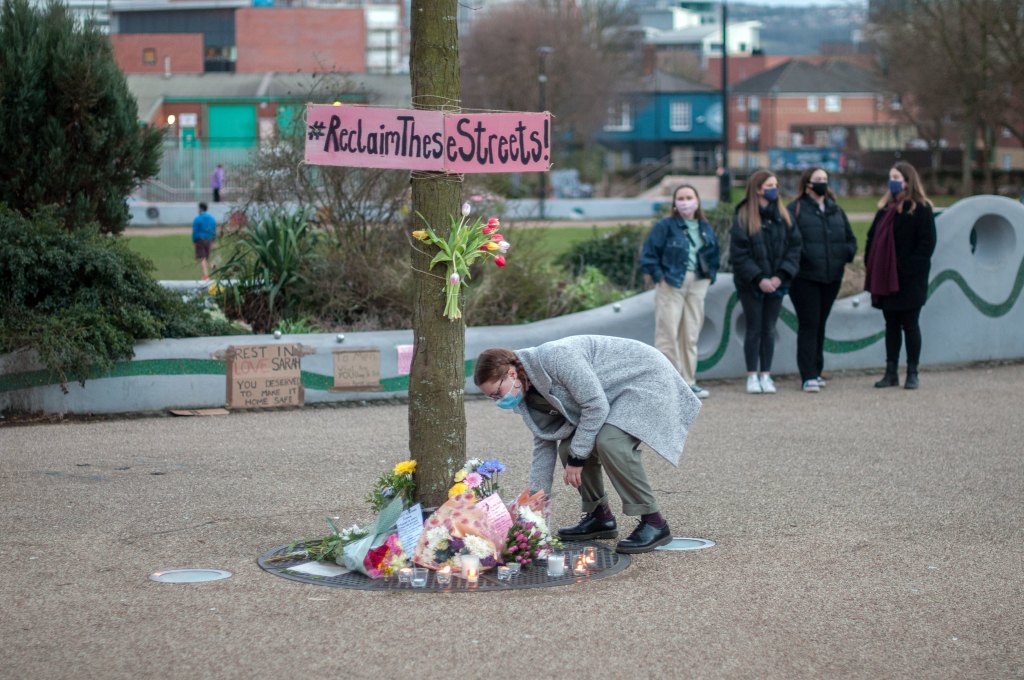
Vigil for Sarah Everard in Sheffield | Photo by: Tim Dennell on Flickr

When Sarah Everard was reported missing on March 4, the police launched an investigation and arrested a suspect, Wayne Couzens, a 48-year-old Metropolitan police officer. Then when human remains, later identified as Everard’s body, were found in Ashford, Kent, the suspect was charged with kidnap and murder. 

This led to a social media frenzy, as explicit details of Wayne Couzens’ background were brought to the surface. Many posts, tweets, and comments accused Couzens of his connection to serial killing, rape cases, and public indecency. These allegations spiralled the public feed of Facebook, Twitter, and Reddit, reaching millions of eyeballs collectively. This had potential to threaten the course of justice.

The Attorney General, Rt Hon Michael Ellis QC MP, released a statement after the online disorder. He reminded anyone writing about the case to not publish material that asserts or assumes the guilt of anyone who has been arrested. The statement reads: 

[…] it can amount to contempt of court to publish information relating to untested and unconnected allegations against the suspect and matters adverse to his character, the admissibility of which a Judge in due course may need to determine.”

Media Advisory Notice, Attorney General’s Office

Under Article 6 of the European Convention on Human Rights, the right to a fair and public trial or hearing, a defendant has the right to be presumed innocent until proven guilty. If a potential juror reads adverse stories of a defendant, then they cannot be guaranteed a fair trial. 

In his statement, the Attorney General referred to ‘contempt of court’. This is the consequence of publishing material which creates a substantial risk of serious prejudice to the outcome of a case. If a juror has a polluted knowledge of the case, because of external publications, they cannot be an impartial member of the jury.  

The law of contempt applies as soon as a case becomes active. Under Schedule 1 of the Contempt of Court Act 1981, a criminal proceeding becomes active when: a suspect is arrested with or without a warrant; a summons or indictment is issued; or a suspect is orally charged. In this case, the suspect was arrested, then charged. 

If a contempt case is brought by the court, a judge will assess: the likelihood of the publication coming to the attention of a potential juror; the impact of the publication on the ordinary reader; and the outstanding impact on a juror at the time of the trial.

The implications of being found in contempt of court can be catastrophic, causing a trial to be held outside the area where the crime was committed, with all the extra costs that involves, or, worse, halting a trial. There is no limit on the financial penalty either and, in serious cases, there may be a sentence of up to two years imprisonment. 

The Contempt of Court Act 1981 also applies to posts that are published on social media. Even though fewer cases of contempt arise from social media, it does not decrease the severity of the prejudice and, in some cases, can be a catalyst in perpetuating it. All it takes is one tweet. 

In R v Akhtar (2019), the founder of the English Defence League, Tommy Robinson, was found in contempt of court after his reckless misconduct. The anti-Islam activist confronted defendants aggressively as they walked into court, describing the accused group as ‘Muslim child-rapists’. 

He also broadcast a Facebook live stream outside of court, which was viewed by 10,000 people in real time and 1.2 million people afterwards. This case involved a series of sexual offences, which led Judge Geoffrey Marson to impose a reporting restriction, postponing reports of proceedings until the end of the last trial. By breaching this, and recording in the precincts of court, Robinson was sentenced to 10-months in prison. 

Despite the editorial restrictions that come with all criminal cases, they can still be reported. There is a huge public interest in the criminal justice system and section 5 of the Contempt of Court Act is the exception of public affairs. Information that is published in good faith, and is a matter of public interest, cannot be treated as contempt of court. 

A similar case occurred ten years ago in AG v Mirror Group Newspapers (2011). The Daily Mirror and The Sun faced being in contempt of court over the reporting of Joanna Yeates, whose body was found on Christmas Day 2010. The coverage focussed on the arrest of Chris Jefferies, who was the victim’s landlord, and presented him as a suspicious character who behaved mysteriously. In some publications, he was even exposed for being previously affiliated with someone, later found he only vaguely knew, that had been charged with child abuse. 

Some of the headlines read ‘Jo Suspect is Peeping Tom’ and ‘Jo Suspect “Scared Kids”.’ As the investigation progressed, the police released Jefferies without charge and someone else was later convicted of the murder.

Even though there was no trial and, therefore, no jury to influence, the court argued that the stories had potential to seriously impede or prejudice the case. The material in the papers were openly biased and might have prevented witnesses who could have helped in Jefferies’ defence from coming forward. The Daily Mirror and The Sun were fined £50,000 and £18,000 respectively.

The UK mourned Sarah Everard’s death, with vibrant flowers swallowing the space around a bandstand in Clapham Common. Many have taken to the internet to demand change and prioritise women’s safety once the lockdown eases. Anger, fury, disappointment, and disbelief are emotions that flow from the cruel circumstances of Sarah Everard’s death. In expressing this, care should be taken to avoid inadvertently delaying the course of justice, by being found in contempt of court. Ultimately, Wayne Couzens is innocent until proven guilty, and not guilty until proven innocent.

Thank you to Tom Sancassani for sharing this piece with the Essex Law Research Blog. Tom is a training journalist at the Department of Literature, Film, and Theatre Studies with a special interest in Media Law and Court Reporting.

Why Civil Claims are a Necessary Part of the Arsenal to Address Military Excesses

Carla Ferstman and Noora Arajärvi, University of Essex, published a report which assesses the UK Overseas Operations (Service Personnel and Veterans) Bill, which makes provision about legal proceedings and consideration of derogation from the European Convention on Human Rights in connection with operations of the armed forces outside the British Islands.

The Bill was introduced in Parliament on 4 November 2020 by Mr Ben Wallace, Secretary of State for Defence of the United Kingdom, and sets out a series of measures intended to make it more difficult to prosecute current and former Service personnel for conduct occurring more than five years ago when operating overseas.

The Bill also restricts judicial discretion to allow civil claims for personal injury and/or death and claims under the Human Rights Act 1998 in respect of overseas operations by requiring the court to consider additional factors (on top of those that already exist in law) when deciding whether to allow a claim outside the set limitation periods.

The proposed legislation has provoked considerable debate in both Houses of Parliament, amongst former service personnel, lawyers, academics and civil society. Much of the discussion surrounding the Bill has also focused on the extent to which the proposed changes to how decisions about potential prosecutions are taken will negatively impact upon the capacity for the UK to implement its obligations under international human rights law and the International Criminal Court statute.

The focus of this report

The report focuses on civil claims for personal injury and/or death and claims under the Human Rights Act 1998 in respect of overseas operations.

The Overseas Operations (Service Personnel and Veterans) Bill sets out several rationales for the introduction of the reforms to civil and human rights claims, and the authors of the report saw value in scrutinising these justifications in some depth, given the significance of the proposed reforms and the limited attention they have received to date.

As the report explains, the civil claim longstop would have the effect of shielding the Ministry of Defence from public scrutiny and legal accountability and would take away crucial means by which to ensure transparency and to promote institutional lessons learned.

To make this assessment, Carla Ferstman and Noora Arajärvi carried out a review of civil and human rights judgments pertaining to overseas operations, issued within the last twenty years. These have mainly concerned claims against the Ministry of Defence, though their sample has also included claims involving overseas engagements by the security services and other parts of government to the extent relevant.

The report argues:

  • Considering the checks and balances within the UK legal system and how it operates as a whole, impeding access to civil and human rights claims ignores the vital role such claims play in ensuring that criminal investigations and prosecutions and related accountability processes are not shut down prematurely. A crucial means of oversight will be lost.
  • Victims’ access to reparation is an important value worthy of protection and a fundamental and obligatory aspect of UK human rights obligations. This is especially the case for claims involving wrongful death, torture, and ill-treatment; and
  • The introduction of limitation periods for civil and human rights claims without a possibility for judges to be able to use their discretion to extend them where the exigencies of the circumstances so require, is a significant and unjustifiable limitation of claimants’ access to reparation.

Carla Ferstman‘s and Noora Arajärvi’s research was facilitated by the University of Essex’s ESRC Impact Acceleration Account.

A copy of their report can be accessed here.

Impact on Victims’ Law Policy Paper

Photo by Edward Howell

In a report published in November 2020 (Constitutional Powers of the Victims’ Commissioner for England and Wales), co-written by the Essex Law School’s Professor Maurice Sunkin together with Professor Pam Cox and Dr Ruth Lamont, these experts argued that the role of the Victims’ Commissioner for England and Wales – set up in 2004 to promote the interests of the victims of crime – needs to be strengthened if it is to be effective.

This report has been influential in recent developments in this area. In particular, a new paper (titled Victims Law Policy Paper: The Victims’ Commissioner’s proposals for a Victims Law) by the current Victims’ Commissioner, Dame Vera Baird, appears to have been closely informed by eight of the recommendations made by Sunkin, Cox and Lamont.

These included Recommendation 2 to develop a set of core statutory rights, with a statutory duty on those  agencies listed in the Victims’ Code to ensure all their policies and practice are compliant; and Recommendation 25 to establish a single cross-criminal justice system complaints body for all victim complaints in respect of non-compliance with the Victims’ Code, which is responsible for the oversight of the handling and response to the complaint.

It is great to see how the November 2020 report has produced some very concrete impact and helped develop thinking around what The Victims’ Commissioner for England and Wales wants to see from a Victims Law.

COVID-19 Research on Vulnerable Communities Proves Influential

Photo by Kate Trifo

A publication featuring rapid responses to the impact of COVID-19 from a range of Essex experts has been recognised as influential by a panel providing evidence to government.

COVID-19, Law and Human Rights: Essex Dialogues, a 32-chapter collection featuring contributions from the School of LawHuman Rights Centre and School of Health and Social Care, has been cited in a new summary of research on the impact of COVID-19.

The summary, Rebuilding a Resilient Britain: Vulnerable Communities, looks at the relevant expert evidence in 11 Areas of Research Interest (ARIs), selected by Chief Scientific Advisors within the Government Office of Science.

The contributions of Essex experts are noted under two ARIs: “the role of local authorities in protecting vulnerable populations”; and “analysis of whether, where and how states or non-state actors use the disruption caused by the crisis to curtail minority rights or promote ideologies”.

Dr Carla Ferstman, who co-edited the Essex collection, said: “The goal of the publication was to bring together the widest possible array of scholars to think through the multiple, intersecting impacts of COVID-19, and to help frame the global research agenda. The interest in COVID-19, Law and Human Rights: Essex Dialogues has exceeded our initial expectations. It has fostered interdisciplinary research and has led to important new collaborations within academia and in numerous policy domains.”

COVID-19, Law and Human Rights: Essex Dialogues has been downloaded over 2,700 times since its publication in July 2020, making it the most downloaded single publication in this period on the University’s Research Repository. The individual chapters from the publication have resulted in an additional 5,500 downloads.

ARIs were developed as a result of the Nurse Review of Research Councils, which called on government departments to communicate clearly where their research objectives lie. The ARIs are an annually-updated list of priority research questions, chosen from a list of topics identified by government departments, which in turn invite academics to engage with government departments to inform policy making.

The report was produced by the Vulnerable Communities Working Group, which comprises 26 members including academics, civil servants, funders and civil society groups.

The foreword to their report notes: “Working across government and drawing from the extensive expertise of our academic community will be essential in the recovery from the COVID-19 pandemic, to rebuild a resilient Britain.”

This post originally appeared on the University of Essex news webpage and is reprocuded here with permission and thanks.

‘Old-fashioned alpha males’ against ‘professional homosexuals’: media justice and discriminatory reporting in the wake of the Greek #MeToo movement

Dr. Dimitris Akrivos, Lecturer in Media Law, University of Essex

From the exposure of Hollywood producer Harvey Weinstein’s crimes to the Westminster sexual harassment scandal, the #MeToo movement has in recent years spread around the world, empowering survivors of sexual violence to share their traumatic experiences on social and news media. It was not until January 2021, however, that the impact of the movement became apparent in Greece.

Talking in an online event about the protection of children in sports on the 14 January 2021, Greek Olympic medallist Sofia Bekatorou publicly accused the vice president of the Hellenic Sailing Federation of sexually assaulting her in 1998. Bekatorou’s allegations led to the emergence of the hashtag #metinSofia (i.e. with Sofia) on Twitter with many other athletes but also actresses, singers and influencers following her example and reporting their own experiences of physical and/or psychological victimisation by powerful men (including famous actor Giorgos Kimoulis as well as actor and former Deputy Minister of Social Security Pavlos Haikalis). It was no surprise that, due to the celebrity status of many of the alleged victims and perpetrators, such claims dominated the Greek news agenda during these past two months alongside stories about the COVID-19 pandemic.

In February 2020, the Greek #MeToo movement acquired even greater momentum with clear political ramifications when former director of Greece’s National Theatre Dimitris Lignadis was remanded over allegations of serial rape – some of which involved underage victims. Responding to criticisms for appointing Lignadis, culture minister Lina Mendoni stated that he is a ‘dangerous man’ who ‘deceived her’ and ‘with deep acting talent tried to convince her that he had nothing to do with all this’. At the same time, Lignadis’ defence attorney Alexis Kougias dismissed the allegations against his client as a ‘crude fabrication’ made by ‘professional homosexuals’.

The news media’s involvement in Lignadis’ and all the other cases forming part of the Greek #MeToo movement constitutes an indicative example of what Greer and McLaughlin (2010: 27) define as a trial-by-media: ‘a dynamic, impact-driven, news media-led process by which individuals – who may or may not be publicly known – are tried and sentenced in the “court of public opinion”.’ In the era of 24/7 news, media seek to perform an alternative function of ‘justice’ which runs parallel to that administered by formal institutional authorities. There is an undeniable benefit in shedding light to such historic cases of sexual violence and thereby encouraging an honest, free-from-stigma discussion around the issue. Despite its belated emergence (or possibly because of it) the Greek #MeToo appears to extend the boundaries of the movement even further by also placing emphasis on cases of gender-based workplace bullying as well as male victimisation.

The shortcomings of this ‘trial-by-media’, however, including its impact on the defendant’s right to a fair trial, the consequent reputational damage and the risk of vigilantism also need to be taken into consideration. In the context of the ongoing discussion on the allegations made, journalistic objectivity and due process can easily give way to moralising, sensationalist speculation about the motives and actions of the accused who are assumed to be ‘guilty until proven innocent’ and therefore deserving to be ‘named and shamed’.

In addition, the homophobic dimension of some of the relevant mediated discourse also need to be highlighted. From the Greek state television censoring a gay kiss from an episode of Downton Abbey to bishop Amvrosios publicly urging people to ‘spit on gays’ because they are ‘freaks of nature’ and the killing of LGBT+ activist Zak Kostopoulos by the police, there is still a lot of progress to be made in order for LGBT+ people to achieve equal rights in Greek society. This is something that became even more apparent with the recent rise of the Greek #MeToo.

Apart from Kougias building Lignadis’ defence around claims (in Greek) of ‘crude lies’ told by ‘professional homosexuals’ who are ‘untrustworthy personalities’, the language used in some relevant news stories in the Greek press has been salacious, offensive and discriminatory: indicatively, tabloid newspapers ran controversial front-page stories with headlines like ‘Fa—[anti-gay slur] and paedophile bathhouse brings down the government’ (Makeleio, 20 February 2021), ‘Dirty nights with Ali and Saleem: dark-skinned boys at Lignadis’ disposal’ (Espresso, 25 February 2021) and ‘Homosexuals, perverts and paedophiles run the country with Mitsotakis [the incumbent Greek PM] in charge’ (Makeleio, 27 February 2021).

Such stories clearly associate homosexuality with paedophilia, creating a ‘signification spiral’ (Hall et al., Policing the Crisis, 1978) in the context of which both behaviours are constructed as sexual ‘perversions’. Such an association is intrinsically linked to and largely legitimised by the patriarchal discourse used by some of the accused to explain their actions – for example, Haikalis’ claim that he is an ‘old-fashioned alpha male’ – which also favours a view of non-heterosexual masculinities as deviant and socially reprehensible (Buchbinder, Studying Men and Masculinities, 2013).

There is extensive research on moral panics and the media’s role in marginalising social groups, portraying them as ‘folk devils’ who allegedly behave in ways that pose a risk towards society’s dominant moral values (Cohen, Folk Devils and Moral Panics, 2002[1972]). The aforementioned homophobic reporting can largely be made sense of within this framework. What is disconcerting, however, in the case of Greek media is not merely the exposure but most importantly the limited protection offered to LGBT+ people against such prejudicial and sensational media coverage on a regulatory level.

On the one hand, ESIEA, which is main trade union of Greek journalists based in Athens, provides in its Ethical Guidelines for Journalists (in Greek) that news reporting should be free from ‘discrimination based on nationality, sex, ethnicity, religion, political beliefs, financial situation and social status’ [Article 2(a)]. Although discrimination on the basis of gender identity or sexual orientation could in principle fall under the broad category of ‘social status’, it could be argued that the Code’s failure to refer explicitly to this particular form of discrimination creates an ambiguity which allows cases of homophobic reporting like those mentioned earlier to emerge without any threat of serious sanctions.

On the other hand, the National Council for Radio and Television (NCRT), which is the main regulator for public and private broadcast Greek media, seemingly adopts a more inclusive approach in its Code of Ethics for News and other Current Affairs and Political Programmes (in Greek): Article 4.1 of the Code specifically states that discriminatory reporting based on sexual orientation is not allowed while Article 4.2, which prohibits demeaning comments towards ‘ethnic and religious minorities and other vulnerable or powerless social groups’ (emphasis added), potentially covers sexual minorities too even if these are not explicitly mentioned.

This prima facie protection from discriminatory reporting offered by the NCRT Code to LGBT+ people is contradicted by the Council’s regulatory practice which has on several occasions led LGBT+ supporters to accuse NCRT of institutional homophobia and transphobia. For instance, in 2013, NCRT rejected (in Greek) the request of the Athens Pride organisers to air the event’s TV spot on all major Greek TV stations free of charge on the grounds that the spot ‘could not be described as one with a social message’.

Similarly, in 2010, NCRT imposed a fine of €20,000 on the Star Channel afternoon show Fotis and Maria Live for interviewing trans actress and author Betty Vakalidou based on the following rationale (emphasis added):

‘the issue of homosexuality (the sexual preference for individuals of the same sex) and of sex change with or without surgical intervention that was presented in the show constitutes a social issue and a reality that concerns only a small minority of people. It constitutes a condition that goes beyond the normal and, for that reason, it largely sounds strange to the underage viewer… The presentation of information about the sex life of homosexuals or transsexuals, about the sex change procedure and the feelings and experiences of the woman being interviewed, could possibly have a negative impact on underage viewers.’

Such discourse not only fails to protect LGBT+ people from discrimination but has the potential to add to their vulnerability and marginalisation even further by portraying them as ‘others’ who live outside the boundaries of the normal, heterosexual society. By prioritising a moralistic argument about how a discussion on LGBT+ issues might affect underage viewers, it also neglects the impact that prejudicial media portrayals or the lack of media representation can have on LGBT+ people’s mental well-being, self-image and aspirations. Positive LGBT+ representation in the news and entertainment media can play a key role in promoting social acceptance and tackling homophobic and transphobic violence. In a country like Greece where, according to a 2020 survey by the EU Agency for Fundamental Rights, 73% of LGBTI individuals avoid holding hands in public out of fear of being assaulted, threatened or harassed (one of the highest percentages among the 28 EU member states), it is profoundly disappointing and alarming that regulatory bodies like the NCRT fail to see the importance of responsible media reporting in creating a more inclusive Greek society and thereby improving LGBT+ individuals’ quality of life.

Finally, it is worth noting that, in our multi-mediated world, those identified as ‘folk devils’ and their advocates can use different outlets to challenge their demonisation in mainstream media instead of being completely defenceless against it. Following Kougias’ statement about his client’s reputation being tarnished by ‘professional homosexuals’, several well-known public figures hastened to criticise the lawyer’s language on news and social media: songwriter Foivos Delivorias condemned (in Greek) Kougias’ attempt to associate homosexuality with paedophilia and rape while, in a sarcastic move, both he and journalist Elena Akrita changed their employment statuses on Facebook to ‘Employed at Professional Homosexuals’.

The power to resist the conservative ideology of traditional media, however, does not change the fact that more work is required by media professionals and the relevant authorities in order to approach and report on the complex issues raised by the #MeToo movement sensitively. The Greek #MeToo movement can be seen as a tipping point which has the potential to effect societal change by eliminating the stigma attached to those issues and encouraging an open dialogue around them. But, as shown by some of the news coverage in former National Theatre director Dimitris Lignadis’ case, more responsible reporting is needed for this potential to be materialised.

In an attempt to show it is taking these allegations seriously (and perhaps also to divert attention away from its own unforeseen implication in Lignadis’ scandal), the Greek government set up the website metoogreece.gr to provide victims with the contact details of relevant support services. Allegations of rape, sexual assault, paedophilia and bullying against Lignadis and other powerful men of the Greek show business still dominate the Greek media at the time of writing. The exact number of victims and perpetrators, the actual impact of the ongoing ‘trial-by-media’ on due process and ultimately the extent to which the Greek #MeToo movement will succeed in rocking the hetero-patriarchal foundations of the Greek society remain to be seen.

This piece was originally published on The International Forum for Responsible Media and is reproduced here with permission and thanks.

The Scope of Military Jurisdiction for Violations of International Humanitarian Law

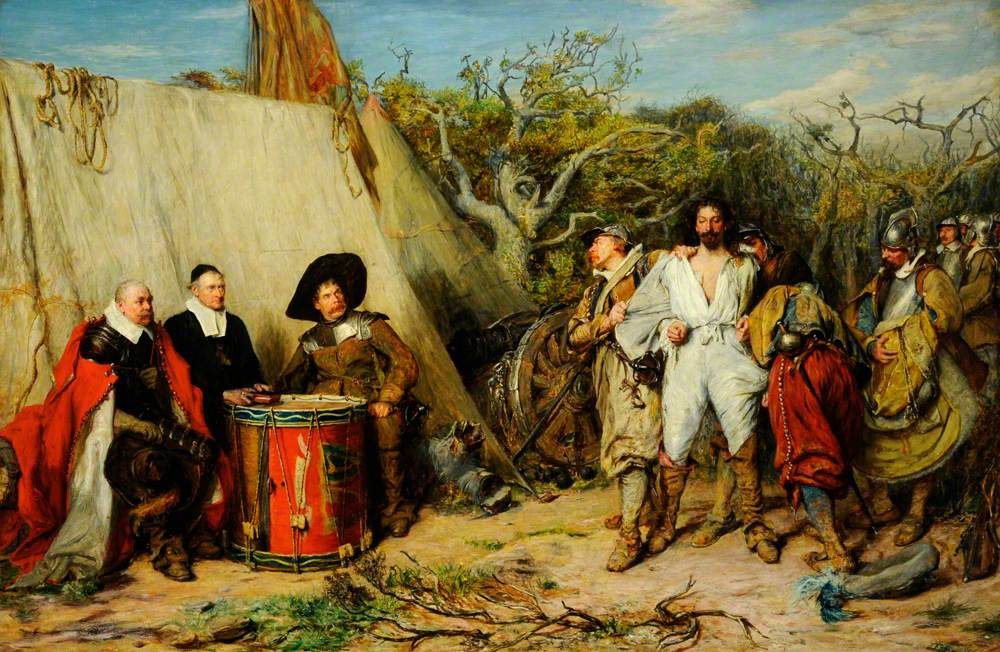
The Drumhead Court Martial John Pettie (1839–1893) | Photo credit: Museums Sheffield

Claire Simmons, PhD Candidate in Law at the University of Essex, published a new article in the Israel Law Review, titled ‘The Scope of Military Jurisdiction for Violations of International Humanitarian Law’.

With the adequacy of military jurisdiction over violations of international law being questioned in certain spheres, the article explores the role and limits of military jurisdiction in combating impunity for violations of International Humanitarian Law (IHL), the body of law which regulates situations of armed conflict.

The article demonstrates that that the unique context of armed conflict and military operations can provide important reasons to retain and strengthen military justice systems to combat impunity for certain violations of IHL, especially to suppress non-criminal or administrative violations.

For jurisdiction over criminal offences (including war crimes), the adequacy of military or civilian systems will depend on domestic, regional, and international factors which are difficult to generalise. Increased scrutiny under international human rights law into the impact of these justice systems on the rights of individuals has led to restrictions on the format and scope of military jurisdiction, yet States have implemented these obligations in different ways at a domestic level. What is clear in all cases is that the systems of justice used must respect international standards of fair trial and general principles of justice.

There is a need to continue the discussion on the adequacy of military justice in combating impunity for violations of international law. Claire Simmons’ article highlights the importance for such debates to address State obligations in a holistic manner, including by recognising the applicability of different bodies of international law, differences in domestic legal systems, and applicable legislation in times of both peace and war. Such a holistic approach is crucial to promoting accountability under international law while protecting the rights of both those accused of offences as well as those affected by violations in armed conflict.

Galindo: COVID-19 Unearths Ghosts of Spain’s ‘Dirty War’

The death of a former General convicted for murder divides Spain

Enrique Rodríguez Galindo. Screen capture of TV channel LaSexta’s video on YouTube

Dr. Koldo Casla, Lecturer in Law, University of Essex

Enrique Rodríguez Galindo died on February 13, 2021, with COVID-19, at 82 years of age.

The former general of Spain’s gendarmerie force, the Guardia Civil, Rodríguez Galindo headed the garrison of Intxaurrondo in the Basque city of Donostia-San Sebastián in the 1980s and 90s. At that time, police officers were frequently targeted by ETA, the Basque pro-independence armed group that extorted and threatened thousands of people, killing 850 over half a century until it was forced to put an end to its violence in 2011. Lack of popular support and effective police action were important factors for why ETA came to an end.

Rodríguez Galindo was in charge of anti-terrorism action in very difficult circumstances. Yet, he was also a kidnapper and a murderer himself.

This is what Spain’s High Court concluded in 2000, and it was confirmed a year later by the Supreme Court. Rodríguez Galindo was sentenced to 75 years in prison for ordering the kidnapping and killing of José Antonio Lasa and José Ignacio Zabala. They were tortured and executed in 1983 by death squads known as GAL, the “Antiterrorist Liberation Groups.” They were buried with quicklime in the mistaken expectation that the chemistry would make the remains disappear for good. The bodies were found in 1985, and medical examiners could identify them only in 1995.

Out of 75 years, Rodríguez Galindo only spent five in prison. He was granted a partial release in 2005 and parole in 2013.

In 2021, Rodríguez Galindo’s death awoke Spain’s ghosts of the past.

Secretly funded by the Spanish Government, GAL was responsible for no fewer than 27 extrajudicial executions between 1983 and 1987 in what is known as the “dirty war”.Some victims were alleged ETA members, such as Lasa and Zabala, others simply bystanders in the wrong place at the wrong time. In 1998, Spain’s Home Secretary José Barrionuevo and his deputy Rafael Vera were imprisoned for their responsibility in GAL; Felipe González, Prime Minister at the time, was photographed hugging them goodbye at the jail’s gate. In an interview in 2010, González declared cryptically: “I had to decide whether to blow up the leaders of ETA. I said no. And I don’t know if I made a mistake.” Much has been speculated about González’s involvement in GAL, but so far nothing sufficiently definitive has been proven.

As pointed out by the scholar Omar Encarnación, GAL was “a continuation rather than a departure of the State’s counter-terrorism strategies” after Franco’s dictatorship, which ended in 1975. GAL was the result of a less than perfect transition to democracy, where institutions were not cleaned up, resulting in the lack of democratic control over the police, the militarized Guardia Civil, and the military intelligence. GAL’s existence also emboldened ETA, giving them discursive ammunition to dispute the democratic character of Spain, and offering them the chance to present themselves as victims of state-sponsored repression.

Some of the reactions to Rodríguez Galindo’s death are proof that segments of Spanish society have a lot of work to do to face their demons.

In its obituary, the widely sold newspaper El País spoke of the General’s “dazzling record of service,” tainted only by the “shadow” of “supposedly being part of the so-called dirty war.” One would think that the word “supposedly would no longer be necessary considering Galindo’s court sentence.

Macarena Olona, Member of Parliament of the far-right Vox, the third-largest party in Spain, wrote on Twitter: “May the earth rest lightly on you, my general.”

“May the earth rest lightly on you, my General. Today, more than ever, Intxaurrondo is in our hearts. Rest in Peace.”

On the same social platform, her fellow party member sitting in the European Parliament, Jorge Buxadé, wished that “perpetual light shine upon him.”

The death of General Rodríguez Galindo is another opportunity given to us by social media to block, denounce and identify the accounts of those who live and promote hatred of Spain and its laws.

May he rest in peace. And may the perpetual light shine upon him.

The sister of one of Rodríguez Galindo’s confirmed victims, Pili Zabala said on television on February 14 that she had tried to get in touch with Rodríguez Galindo to urge him to take responsibility for the pain he had caused her family. She wanted him to admit what he did had been wrong, but she never heard back from him. Now, Zabala is seeking full accountability: Galindo “was an army man, he was obeying orders, and it is clear to me that he received orders from his superiors, who were politicians.” Zabala is hoping that former Prime Minister Felipe González will eventually sit in the dock.

In 2000, Provincial Governor in Donostia-San Sebastián, Juan María Jauregi, had given evidence in court about Rodríguez Galindo’s involvement in the killing of Lasa and Zabala. Twenty years later, in light of a Twitterstorm of eulogies for the general hours after the announcement of his death, Jauregi’s daughter, Maria Jauregi, shared:

These words by my father come to mind, which I will never forget: “I don’t know who will kill me, ETA or Galindo himself”

It was ETA in the end, and it happened in 2000. His widow, Maixabel Lasa, and their daughter, Maria, became two of the most powerful voices against hatred and for justice and reparations for all victims of human rights abuses in the Basque Country.

Today, it is worth recalling these words by Pablo de Greiff, the former UN Special Rapporteur on Truth, Justice and Reparations, after his mission to Spain in 2014:

“The strength of democratic institutions must be measured not by their ability to ignore certain issues, especially those that refer to fundamental rights, but rather by their ability to manage them effectively, however complex and awkward they may be”.

This piece was first published on Global Voices and is reproduced here under a Creative Commons Licence.