Supporting the Colombian Transitional Justice Process

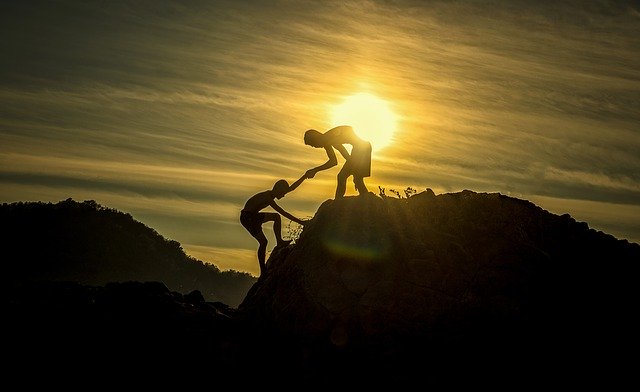
Image by Pixabay

GCRF@Essex interview questions: Prof. Sabine Michalowski and Prof. Clara Sandoval-Villalba

Partners/organisations: Dejusticia, a Colombian Think-Do-Tank

What is your research about?

Colombia and the FARC (Revolutionary Armed Forces of Colombia—People’s Army; Spanish: Fuerzas Armadas Revolucionarias de Colombia) signed a comprehensive peace agreement in 2016 which devises a transitional justice system to respond to the atrocities suffered by more than 9 million victims over various decades of armed conflict. The focus of our research is the transitional justice system (mechanisms and processes) which was designed by the peace agreement. In particular, our research focuses on one of the key transitional justice mechanisms: the Special Jurisdiction for Peace (SJP), which was created to ensure accountability for the atrocities, especially on how its work can be supported and strengthened to fulfil victims’ right to justice, reparation, and truth.

What activities did your GCRF@Essex funding support?

Our GCRF@Essex funding supported trips to Colombia to build and strengthen networks and contacts, hold events such as meetings with colleagues at the Special Jurisdiction for Peace about the challenges they are facing. We also organised meetings to receive feedback from relevant stakeholders on our research, and on future research that would be of relevance for Colombian transitional justice actors.

We also hired Colombian researchers to write policy papers and other documents, for example, a guide on how the Colombian Special Jurisdiction should deal with economic actors and how to define legal concepts that are of crucial importance for the work of the Special Jurisdiction for Peace. We launched these publications at events in Bogota.

We also obtained GCRF@Essex funded fellowships for several Colombian colleagues to attend the Human Rights Centre Research Methods summer school at Essex or to spend some research time at Essex to develop further research projects. For example, a key GCRF@Essex funded activity was to carry out joint research with Dejusticia, a Colombia-based research and advocacy organisation dedicated to the strengthening of the rule of law and the promotion of social justice and human rights in Colombia and the Global South. We successfully applied with Dejusticia colleagues to an AHRC GCRF urgency funding call and are currently working with Dejusticia and the Bonavero Institute for Human Rights at the University of Oxford on the AHRC funded project: Legitimacy, accountability, victims’ participation and reparation in transitional justice settings – lessons from and for Colombia. GCRF@Essex funds have supported our work on various legal and other issues that have emerged from this AHRC grant. For example, work on potential alternative sanctions for those responsible for mass atrocities who confess their crimes before the Special Jurisdiction for Peace.

You have been looking at the Special Jurisdiction for Peace (SJP) in Colombia, how is your project benefitting the country and which Sustainable Development Goals (SDGs) are being addressed?

Our project benefits the country by strengthening the work of the Colombian Special Jurisdiction for Peace (SJP), which plays a central role for ending impunity, achieving accountability for conflict related crimes and justice for victims. Through assisting the SJP we ultimately support the goals of consolidating peace and promoting reconciliation. The SJP is working under enormously challenging circumstances, as Colombia is a highly polarised country and the implementation of the peace agreement, and the legitimacy of the SJP, are highly contested. In that context, it is of crucial importance to support the SJP’s work. The legal framework within which this jurisdiction is working is new not only in Colombia but also worldwide. Colombia’s transitional justice approach is highly innovative and ambitious and that translates into big challenges that need to be overcome on a daily basis. The daily work of the SJP raises many conceptual challenges that are relevant for advancing SDGs 16 (Promoting Peace, Justice and Strong Institutions), 10 (Reducing Inequalities), and 5 (promoting gender equality). Our research contributes to Colombia’s achieving these goals by providing urgently needed recommendations to the SJP, particularly on key legal concepts such as the criteria for the selection of cases, victim participation and reparation. All of this strengthens the work of the SJP.

What tips would you give to other people applying for projects funded by the Global Challenge Research Fund?

The main advice would be to invest a lot of time and effort in building in-country academic and non-academic networks and devise projects with partners and stakeholders in the relevant countries to maximise the impact of the research.

Your GCRF activities have involved various colleagues from Colombia, especially Dejusticia and the SJP, how did you find your collaborators?

Initially, we built the connection with Dejusticia more than a decade ago, in the context of a project focused on linking corporate accountability and transitional justice, funded by a British Academy UK Latin America links grant. To that event, we invited a colleague from Dejusticia to a seminar at Essex who then contributed to an edited collection that followed from that project. We sustained and broadened our links with Dejusticia through regular visits to Colombia where we would hold meetings with them and gradually started to design and carry out joint projects.

Collaboration with the Special Jurisdiction for Peace partly came about through professional contacts who work at the SJP, but also through regular meetings jointly organised with Dejusticia where we would provide a space to exchange experiences and be kept updated with the main challenges the SJP is facing. This information feeds back into our work and makes it relevant to the work of the SJP which in turn helps to broaden our networks in Colombia.

What were the main challenges you encountered working on these collaborative projects?

Obtaining the necessary funding to keep the projects going and finding the time for our involvement.

How do your GCRF funded projects support your wider research plans?

Our research plans have greatly benefited from GCRF funding, as our research is impact focused and the GCRF funded projects permitted us to focus on our areas of interest while at the same time devising impact work which we consider of significant importance in the area of transitional justice. Importantly, GCRF funding has permitted us to tackle relevant issues that have come to our attention in the middle of other research, and to respond to them effectively by having access to the necessary human and other resources to carry out quality and timely research.

This interview first appeared on the website of the University of Essex and is reproduced on our research blog with permission and thanks.

School of Law and Human Rights Centre Host Workshop on Human Rights and Climate Change

Image by Marek Matecki

By Dr. Stephen Turner, Senior Lecturer in Law, University of Essex and Dr. Birsha Ohdedar, Lecturer in Law, University of Essex

On 30 April and 1 May 2020, the University of Essex (School of Law and Human Rights Centre) hosted a workshop on the subject of Human Rights and Climate Change.

Owing to the Covid 19 crisis it was necessary to hold the event as a webinar rather than an in person event at the university itself.  However, this had the welcome side-effect of providing the opportunity for more students, scholars and experts than had originally been anticipated to engage and participate in the discussions.

The intention behind the workshop was to provide a forum for debate relating to certain practical themes within the relationship between human rights and climate change where further clarification of state responsibilities is still required.

Over the last ten years, the United Nations (UN) has acknowledged the strong links between human rights and climate change. In particular the Human Rights Council has issued numerous reports elaborating on those links and it has encouraged further work on the subject.

At the domestic level, many countries have environmental rights incorporated into their constitutions. The Paris Agreement acknowledged the human rights impacts of climate change and in 2019 the UN Special Rapporteur on Human Rights and the Environment (Dr David Boyd), issued a report that asserted that people have the ‘right to a safe climate’.

However, despite the variety of developments that have taken place in the field within a relatively short space of time, there is still much work that needs to be done to further elucidate the content of  human rights responsibilities that states have relating to climate change and the ways that they should implement them.

Therefore, this workshop provided a focal point for debate related to specific areas where clarification is required. As the solutions to the issues in question inevitably require non-legal expertise to inform our understanding of the way that  law should be developed, the workshop brought together a uniquely interdisciplinary group of participants from law, policy, engineering, science, public health, urban planning and architecture. In bridging the gap between law and other disciplines it is hoped that the workshop contributed to the development of collaborative inter-disciplinary approaches in the field.

The organisers of the workshop would like to thank all those who participated by giving presentations or chairing sessions, also the School of Law and Human Rights Centre at the University of Essex; the Centre for Architecture and Sustainable Environment (CASE) at the University of Kent; The Eastern ARC Fund for its invaluable support and all those, from many different parts of the world, who attended the event.

The following provides a summary of the panel sessions that were held over the two days:

Panel 1: Institutional Understandings of the Relationship Between Human Rights and Climate Change

The first panel brought together the first two UN Special Rapporteurs on Human Rights and the Environment: Prof. John Knox (2012-2018) and Dr David R. Boyd (2018- present). The panel was chaired by Prof. Erin Daly (Widener University).

Prof. Knox traced and explained and provided insights relating to the history of the relationship between human rights and climate at the institutional level up until 2015. Dr Boyd then gave an account of the developments that have been taking place since the Paris Agreement along with an explanation of the work that he has undertaken in his role as the UN Special Rapporteur.

Panel 2: Human Rights, Climate Change and Transitions to a Low-Carbon Urban Environments

This session brought together experts from the diverse fileds of urban planning, architecture, engineering and law to discuss the challenges of developing low-carbon cities (particularly in the Global South) and the role that human rights should play in that process.  Speakers in this panel were: Dr. Silvio Caputo (University of Kent), Dr. Ruchi Choudhury (Cambridge) and Ms Naysa Ahuja (World Bank).

A video for this panel is not available.

Panel 3: Litigation on Human Rights and Climate Change

This panel focussed on the recent growth in climate change litigation around the world, taking stock of the role that human rights have played in it. Attention was given to litigation both at the international and domestic level, across different countries.

Speakers in this panel were: Ingrid Gubbay (Hausfeld LLP), Prof. James R. May (Widener University), Richard Lord QC and the panel was chaired by Prof. Karen Hulme (University of Essex).

Panel 4: Climate Change and Rights-Based Approaches to Public Health

The fourth panel focussed on understanding the role that rights-based approaches can have in addressing climate-related public health issues and the role that international health institutions should play in developing climate change policy. The panel covered the role of the WHO, the development of benchmarks and standards, as well as recent litigation related to air pollution and public health in a climate context.

There were three speakers: Dr. Stephen Turner (University of Essex), Judith Bueno De Mesquita (University of Essex) and Sam Varvastian (University of Cardiff). The panel was chaired by Dr. Avidan Kent (University of East Anglia).

Panel 5: Conflict and Contestations Around Human Rights and Climate Change

The final session of the workshop problematised the idea of a straight-forward relationship between climate change and human rights. Contributions examined the ways human rights may conflict with certain climate change mitigation or adaptation actions, covering a wide range of topics from renewable energy to migration and transport. Panellists considered the pathways towards equitable outcomes and examined these from regional perspectives that included sub-saharan Africa, South America and the Pacific.

The four speakers in this panel were: Dr. Annalisa Savaresi (University of Sterling), Dr. Thoko Kaime (University of Essex),  Patricia Iturregui (Catholic University of Peru) and Shanna McClain (NASA). The panel was chaired by Dr. Emily Jones (University of Essex).

Future Plans

A similar workshop is planned for the summer of 2021. More information will be made available in due course.

There are also plans to further collaborate with other institutions to develop inter-disciplinary workstreams that look at the practical application of human rights in tackling climate change.

If you are interested in knowing more or collaborating in the future, please get in touch with Dr. Stephen Turner or Dr. Birsha Ohdedar.

Spain’s New Minimum Income Scheme: A Victory and A Historic Failure

Photo by Daniel Prado

Dr. Koldo Casla, Lecturer in Law, University of Essex

This could be the most significant test of Spain’s fairness as a society.

Starting last month, Spain has a minimum income scheme in place. Considering some of the international coverage, you would be forgiven for thinking it is some sort of universal basic income. It is not so. It is rather a social assistance programme for the poorest families, similar to the ones existing in other European countries. Households will be allowed to claim between 462 and 1,015 Euro depending on their size and composition. The benefit will be compatible with other sources of income, in which case the amount of the benefit would be lowered accordingly.

It is a very last resort, which, believe it or not, the fourth largest economy in the Euro-area did not have until now, not at least for the whole country, and not one that deserved that name.

If it works well, this initiative has the potential for alleviating the most severe forms of social exclusion. Spain has the dishonour of having one the highest rates of child poverty in the EU: one in four children live below relative poverty in households that get less than 60% of the median income. After a long decade of austerity policies, this is a victory for the left, possibly the most significant one since equal marriage (2005), the social care law (2006) and the historical memory law (2007).

But, as well as a victory, it is also the expression of a huge policy and political failure. Spain’s regions and nationalities have had the power and the responsibility to protect the most vulnerable for more than three decades. However, by and large they have failed to do so, in a systematic breach of the human rights to social security and to an adequate standard of living.

The 1978 Constitution established that social security should be maintained “for all citizens (to) guarantee adequate social assistance and benefits in situations of hardship” (Article 41). Spain does have social security with public pensions, including non-contributory pensions, unemployment protection and other economic benefits for those temporarily unable to work for different reasons. But a lot of people suffer long-term unemployment, work in extremely precarious jobs, or are simply left behind by the system. The Constitution also bestowed on regions and nationalities the power to set up complementary social assistance schemes (Article 148.1.20), and all 17 of them accepted this responsibility in their respective statutes of self-government.

Starting with the Basque Country in 1989 and Andalusia in 1990, each region has created its own system. But there is huge variation between them in terms of coverage, adequacy and conditionality.

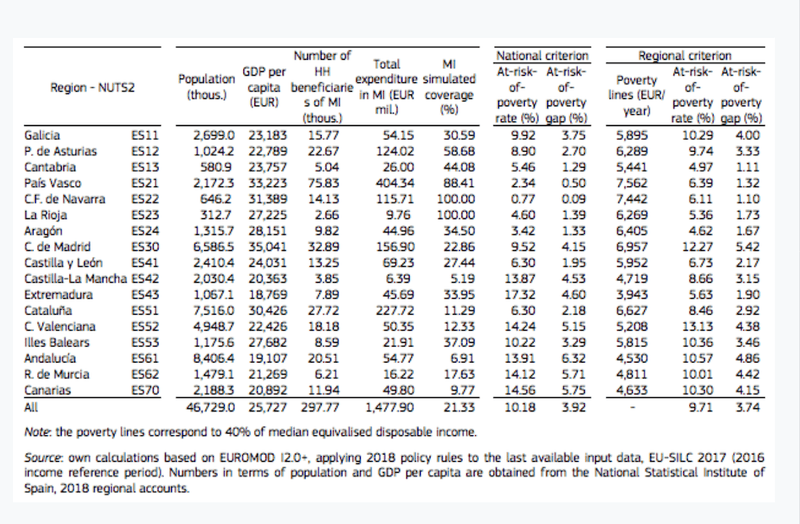
As seen in the table below (based on data from 2018), Madrid and the Basque Country are two of the richest regions, with similar levels of GDP per capita. Yet, despite having one third of Madrid’s population, and half the poverty level (6.4 for 12.3%), the Basque scheme reaches 2.3 times more people and public expenditure is 2.6 times greater. The Basque programme covers 88% of those in greatest need, compared to 23% in the case of Madrid.

With the exception of Navarre, La Rioja and the Basque Country, the vast majority of regions leave out half of the population that meet the economic criteria. The general average is just 21.33%, which means that almost eight in 10 people are unable to get the economic support they need. With just over 8% of the country’s population, nearly 38% of all recipients, living in the Basque Country, Navarra or Asturias, the three regions accumulate 43% of all of Spain’s public spending on minimum income.

Source: Adrián Hernández, Fidel Picos and Sara Riscado, “Moving towards fairer regional minimum income schemes in Spain”, JRC Working Papers on Taxation and Structural Reforms, European Commission, April 2020, p. 12

The austerity of the 2010s created an ever-greater need for a people’s quantitative easing. However, because of limited resources in some cases, and ideological blindness and lack of interest in others, for three decades the regional public authorities failed to fulfil the right to social assistance recognised in Article 13 of the European Social Charter, leaving millions of people behind.

Looking at the small print

Let us hope Spain’s new minimum income scheme will mark a turning point. For now, it is too early to tell if it will match up to the expectations. A number of issues remain unclear and are concerning.

For example, the coverage is arbitrarily limited to people between 23 and 65 years of age. Public authorities at the central, regional and local levels should urgently develop truly accessible and non-bureaucratic procedures. Considering the digital divide, it is essential to establish a system by which individuals can request this benefit from social services face-to-face. In light of the concerning experiences in other countries, observers must watch out for the possible misuse of sanctions and conditionalities. Just as crucial, existing regional schemes should be retained and developed to complement the new central benefit.

The real test will come when the flashlights focus on something else. If the practical questions get answered, and if conservatives do not get rid of it when they return to power whenever they do, then we will be able to celebrate this as one of the most important victories of the left.

This could be the most substantial policy for the people at greater risk of harm, disadvantage and poverty. This could be the most significant test of Spain’s fairness as a society.

The elephant in the room is that none of this would have happened without Covid-19. But this cannot be a passing whim, nor a PR stunt for the left-leaning coalition government. The right-wing Popular Party and the extreme-right Vox seem very confused. Some of their leaders have spoken against this initiative with hyperbolic references to the nanny-State. However, they did not dare to vote against it when the debate came to Parliament in mid-June.

The real test will come when the flashlights focus on something else. If the practical questions get answered, and if conservatives do not get rid of it when they return to power whenever they do, then we will be able to celebrate this as one of the most important victories of the left.

This could be the most substantial policy for the people at greater risk of harm, disadvantage and poverty. This could be the most significant test of Spain’s fairness as a society.

This post first appeared on Open Democracy and is reproduced here with permission and thanks.

Sexual Misconduct Claims against Conservative MP: What Stops the Media from Naming Rape Suspects?

Photo by Joe

Dr. Alexandros Antoniou, Lecturer in Media Law, University of Essex

The allegations of sexual misconduct against an unnamed Conservative MP have received significant media coverage lately. The Sunday Times reported that the ex-minister was taken into custody on Saturday 1 August 2020 after a former parliamentary employee accused them of rape, sexual assault and coercive control. The MP has not been named publicly so far. But what stops the media from naming rape suspects? There are several aspects of media law which are relevant to this case.

To start with, the Tory MP remains anonymous partly because of recent developments in the law of privacy. Cliff Richard’s legal action against the BBC in 2018 established that suspects of law enforcement investigations enjoy ‘a reasonable expectation of privacy’ up to the point of charge. This general principle was endorsed by the Court of Appeal in the subsequent case of ZXC v Bloomberg LP in May 2020. Giving lead judgment in this case, Lord Justice Simon stated:

[…] those who have simply come under suspicion by an organ of the state have, in general, a reasonable and objectively founded expectation of privacy in relation to that fact and an expressed basis for that suspicion. The suspicion may ultimately be shown to be well-founded or ill-founded, but until that point the law should recognise the human characteristic to assume the worst (that there is no smoke without fire); and to overlook the fundamental legal principle that those who are accused of an offence are deemed to be innocent until they are proven guilty.

[para. 82]

This does not necessarily mean that the media cannot report on criminal investigations. Such investigations can only lawfully be reported where there are countervailing public interest grounds to outweigh the suspect’s privacy interests and justify disclosure of their name (e.g. where the individual under investigation is a political figure). Different media organisations’ approach to this balancing exercise may, however, vary; hence, some media outlets may decide to name the suspect more quickly than others.

Furthermore, an alleged victim of a sexual offence enjoys an automatic right to lifelong anonymity under section 1 of the Sexual Offences (Amendment) Act 1992 and should not be identified in a written publication available to the public or a relevant programme for reception in England and Wales. The anonymity applies from the time an allegation is made by the alleged victim or anyone else. Section 5 of the 1992 Act makes it an offence to breach these provisions. The individual concerned may waive their right to anonymity if specific requirements are fulfilled and a court can lift the anonymity in certain circumstances, but this happens only rarely. One practical implication of these statutory provisions is that the media must be mindful of the potential for ‘jigsaw’ identification, i.e. piecing together different bits of information that create a more complete picture of an individual whose identity should be concealed. This means that the media must limit the publication of any matter ‘likely to lead’ to the complainant’s identification and as a result, care is needed with detail.

There could also be libel risks if, prior to any charge, a suggestion is published that an identified suspect may be guilty of a crime. A media report which includes the suspect’s name may allow that individual to successfully sue the publisher for defamation if the investigation does not lead to a prosecution. The media can safely publish the name of a person under investigation if the name is officially supplied by a spokesperson for a governmental agency, e.g. the police. This is because the report will be protected by the defence of qualified privilege in defamation law. It is anticipated that most media outlets will wait until the individual concerned has been named by the police. Finally, the publication of details which turn out to be incorrect could result in a conviction for contempt of court if a judge thinks that the material published created ‘a substantial risk of serious prejudice or impediment’ to the legal proceedings.

Tackling Online Hate Speech in France – Quo Vadis?

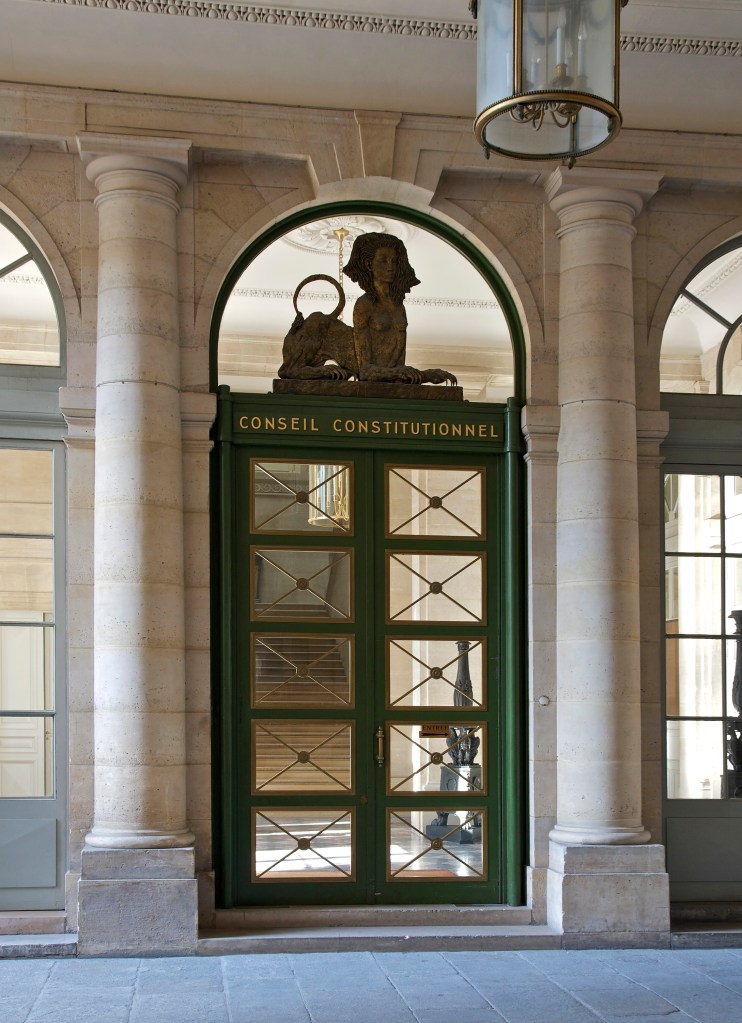
The main entrance of the French Constitutional Council, Palais-Royal, Paris, France (source: Wikipedia Commons)

Dr Clotilde Pegorier, Lecturer in Law, University of Essex

Note: the hyperlinks to the relevant webpages are in their original languages – French and German.

On 13 May 2020, the French Parliament passed a new bill geared to combatting online hate speech. Disputed from the outset, the bill was, on 18 June 2020, subsequently ruled by the Conseil constitutionnel – the Court that reviews legislation to ensure compliance with the French Constitution – to be partially, even largely, unconstitutional. Indeed, the ruling effectively quashed seven of the bill’s provisions, and made substantial amendments to several others, notably paragraphs I and II of Article 1. Small wonder that Bruno Retailleau, Vendéan Senator and president of ‘Les Républicains’, spoke of the ruling – in fitting French manner – as having “totally decapitated” the bill.

What is afoot here? And what does this mean for the French government’s efforts to regulate online content?

What was in the Original Bill?

Before reviewing the Conseil constitutionnel ruling, let us first consider the rationale and content of the original bill.

Named for its main sponsor, MP Laetitia Avia of Emmanuel Macron’s ‘La République en Marche’ party, the law was largely inspired by the German Netzwerkdurchsetzungsgesetz (NetzDG), which came into effect in October 2018 and which foresees significant fines for online platforms that do not remove “manifestly illicit” content within a stipulated timeframe of 24 hours after it being reported.

The ‘Loi Avia’ was designed in the light of the NetzDG to update the current legislative framework supplied by the Law on Confidence in the Digital Economy (Loi pour la confiance dans l’économie numérique, LCEN) of 2004, notably by reinforcing the contribution of digital providers and platforms to the struggle against online hate. Its central provision, set out in Article 1, was to command online platforms falling under the purview of the bill “to render inaccessible, within 24 hours of notification by one or more persons, any content manifestly constituting of the offences” stipulated in this and other laws – that is, content that violates France’s hate speech provisions. According to the bill, platforms were also obliged to adopt “appropriate resources to prevent the redistribution” of content deemed manifestly illegal (article 2). The scope of the law was to extend to “operators of online platforms […] offering an online public communication service based on connecting multiple parties for the purpose of sharing public content or based on classifying or referencing content by means of computer algorithms, which is offered or placed online by third parties, where this activity on French territory exceeds a threshold, determined by decree” (article 1). Where, precisely, this threshold lay was to be decided subsequently. Notably, the bill covered social media platforms and search engines, but not internet service providers. Failure to comply with the new law would incur a criminal fine of up to 250’000 euros for individuals and 1’250’000 euros for corporations. In addition, an administrative penalty of up to 20 million euros or 4% of a company’s global annual turnover could be imposed for “serious and recurrent” failures.

The Process of Adoption

It is worth reflecting for a moment on the particular process by which the bill was first adopted. In May 2019, the Government decided to apply the ‘procedure accelerée’ (accelerated procedure) foreseen in Article 45 of the French Constitution. This decrees that, after a reading by each of the two chambers of Parliament – the Assemblée nationale (roughly equivalent to the House of Commons) and the Sénat (House of Lords) – and in the case of no agreement being reached on a common text, the Prime Minister or the Presidents of the two Houses can convene a joint committee, comprising equal members from each House, to propose a compromise text on debated issues. This is what occurred here: the two parliamentary chambers could not find an accord on the text of the bill and a commission was constituted. This failed, however, to yield a compromise text acceptable to both sides, and so the ‘normal’ legislative procedure resumed – the original text as amended and adopted by the Sénat went back to the Assemblée nationale, which made its own modifications, and this new text was then returned to the Sénat for further amendment.

As the process stalled in this back and forth between the chambers, the Government eventually decided to give a final reading before the Assemblée nationale – again in line with constitutional provisions – and the bill was adopted in May 2020. All of which is to say that, as a consequence of such wrangling, the bill was passed only by one of the two parliamentary chambers, albeit it the more ‘democratic’ one. Given the nature of the bill, and the current “state of health emergency” in place in France, one can readily question how well- or ill-advised this move was on the part of the Government. What seems clear, though, is that it lent an air of almost inevitability to subsequent challenge and dispute. Following adoption, on 18 May, 60 members of the senate submitted an appeal to the Conseil constitutionnel to contest the constitutionality of the bill.

The Conseil Constitutionnel Ruling

The arguments put forward by the challengers to the bill – and those upheld by the Conseil constitutionnel – were, unsurprisingly, connected to the matter of legitimate and illegitimate restrictions to freedom of expression. Unsurprising, as these concerns were already at the forefront of jurisprudential and public debates and discussions during the bill’s drafting.

Citing the 1789 “Declaration of the Rights of Man and of the Citizen”, the Conseil constitutionnel determined in its ruling that both Paragraph 1 (demanding the removal of content relating to terrorism and child pornography within the hour) and Paragraph 2 (requiring the removal of hateful content within 24 hours) of Article 1 constitute an “infringement on the exercise of freedom of expression and communication that is unnecessary, inappropriate and disproportionate”. The follow-through from this determination on Article 1 was to render an entire raft of subsequent provisions unconstitutional. The removal window in both scenarios was, the council held, “particularly brief”, and the severity of the proposed sanctions would “only incite online platform operators to remove flagged content, whether obviously unlawful or not,” especially in the absence of specific cause that exonerates from responsibility. With no judicial intervention foreseen, it would be for platform administrators (as private actors) to determine whether or not particular content is unlawful – a situation that would, in the verdict of the council, likely encourage an excessively censorious approach and the removal of materials that are in fact lawful.

What remains of the bill after the ruling is modest. Perhaps most notable is the acceptance of a proposal to create an official online hate speech watchdog (article 16). While by no means inconsequential, this and other minor provisions represent a meagre return when set in the context of the bill’s ambitious aim to overhaul the legislative landscape for dealing with online hate speech.

And Now? 

So where does this leave the government’s efforts to police online content? Clearly, this is a substantial setback. While the bill was officially enacted, the ruling of the council stripped it of almost all meaningful impact.  If not quite in tatters, the government’s strategy is tarnished, and there is obvious need for a rethink. Not that there is any sign of submission – in a statement following the ruling, Laetitia Avia vowed not to give up the fight, and asserted that the judgement offered a “roadmap to improve a plan that we knew to be unprecedented and therefore perfectible.” Thus the show will go on. But the implications of the ruling should not be downplayed. These may also extend beyond national borders – the government had hoped that the new bill might provide a template for the European Commission’s Digital Services Act, scheduled to be put forward by the end of the year. The Commission said that it “took note” of the council’s ruling.  

Both of itself and as part of France’s extended efforts to regulate speech across diverse contexts, this recent chapter is variously revealing of the idiosyncrasies of our jurisprudence and constitutional arrangements, of the relationship the French state maintains with its citizens, and of its approach to balancing free speech with anti-discrimination concerns and the fight against harmful content  (which differs markedly from the US, for example). It has also proved another flashpoint in ongoing debates on possible limits to freedom of expression and the dilemma of hate speech. That this is a fraught and thorny issue barely needs restating. Nor does its importance. The question of where to set the line between permissible and impermissible speech is contentious, daunting and potentially confusing – most reflective minds would probably admit to being pulled in different directions at different times and in different contexts. Just as we bristle at attempts to muzzle freedom of expression, so we do at the harms caused by hateful speech. Marking that boundary was, is, and will likely always remain, a tightrope walk. How the French government opts to move forward in the coming months will be an interesting watch.  

The right to health must guide responses to COVID-19

Image by Raam Gottimukkala from Pixabay

Judith Bueno de Mesquita, Co-Deputy Director of the Human Rights Centre, and Lecturer in International Human Rights Law, University of Essex, has co-authored a Comment on ‘The right to health must guide responses to COVID-19’with Dr Dainius Puras (UN Special Rapporteur on the right to health), Luisa Cabal, Allan Maleche and Dr Benjamin Mason Meier.

While the impact of COVID-19 responses on human rights has elicited global attention and concern, much analysis has focused on tests of legitimacy for restrictions of civil and political rights, such as freedom of movement, freedom of association and privacy. Despite calls by the UN Secretary-General and the WHO to place the right to health at the centre of COVID-19 responses, this human right has been marginalized by Governments, as well as in many human rights analyses.

The Comment highlights that the human right to the enjoyment of the highest attainable standard of physical and mental health, protected in international human rights treaties, provides binding normative guidance for health-care systems, broader social responses, and global solidarity in the COVID-19 response. For example, the obligations on States deriving from the right to health require that States provide testing systems, personal protective equipment for frontline service providers, and health care, both for those suffering from COVID-19, as well as other essential healthcare services. It also requires actions beyond the health sector, to address social determinants of health which may be impacted by COVID 19, including through social distancing policies, which have a disproportionate impact on vulnerable and marginalized communities. Further, it requires States to protect vulnerable and marginalized communities, and to ensure that these communities participate in the design and implementation of COVID-19 responses.

One of the original features of international human rights law is that it supports both domestic and transboundary obligations. Thus, in the context of COVID-19, States must engage in international cooperation to support a coordinated global response, which has relevance across a range of fields such as the development of vaccines, economic sanctions, debt obligations and intellectual property. The right to health, as well as other rights, thus have an important role to play in responding to the call of the UN Secretary General for global solidarity in the COVID-19 response.

The Comment was originally published in 2020 by The Lancet, vol 359, p 1888.

International Law, the Paradox of Plenty and the Making of Resource-Driven Conflict

Image by skeeze

Dr Eliana Cusato, Lecturer in Law, University of Essex, has published a paper titled ‘International law, the paradox of plenty and the making of resource-driven conflict’.

This article intervenes in legal debates on the relationship between natural resource extraction and armed conflict. Since the 1990s there has been a proliferation of international/global initiatives to end wars fuelled through the exploitation of ‘conflict resources’ and improve resource management in fragile, conflict and post-conflict countries. Examples of such developments include the use of commodity sanctions by the UN Security Council to restrict trade in ‘conflict resources’ and multi-stakeholder initiatives, such as the Extractive Industry Transparency Initiative. International courts have also dealt with resource exploitation in conflict situations (e.g. the International Court of Justice in the Armed Activities Case) expanding the scope of international provisions, such as prohibition of pillage.

While the consensus in the field is that these international interventions have improved the governance of natural resources in war-torn and post-conflict countries (although enforcement remains a key concern), the capacity of the law to engage with questions of resource access and distribution, which may be at the root of these conflicts, is rarely discussed. Yet, as the peacebuilding literature tells us, a failure to address socio-economic grievances may weaken the chances of positive peace and reproduce inequalities important to conflict causation. In other words, although the objective of normative/institutional interventions is to reinforce international peace and security, they seem to ignore a crucial part of the picture. This is the puzzle at the core of the article.

Until now international legal scholarship has focused on ways to improve the protection of natural resources in conflict and post-conflict scenarios to reinforce the chances of creating more stable and sustainable societies. Limited, if any, attention has been paid to the political, economic, and theoretical assumptions underpinning international rules and how these assumptions shape current responses to violence/conflict in the Global South. The aim of this article is to fill this gap, by exploring the influence of the resource curse theory (or paradox of plenty) upon legal and institutional developments in this field.

The overall argument is that the uncritical acceptance of the paradox plenty (and its hidden propositions) by scholars, institutions, and civil society lead to a marginalisation of distributive concerns at the root of violent conflict in the Global South. To demonstrate the pervasiveness of the theory in legal practices and the problems with its understanding of the causes and dynamics of resource wars, I use the Sierra Leonean and Liberian TCs as a case study.

Ultimately, this article is a reminder of the risks of accepting a certain vision of the world as a given and using it to develop policies and normative solutions without questioning the structures and values upon which that vision is premised. It is an attempt ‘to defamiliarize these ways of imagining the world and is a first step in addressing the argument that understanding the world in that way is somehow normal’.

This article is published in Leiden Journal of International Law and is available here.

Is (More) Fairness Needed in the English Insolvency Framework?

Image by Sasin Tipchai

Dr. Eugenio Vaccari, Lecturer in Law, University of Essex recently published an article in the Journal of International Banking Law and Regulation (Volume 35, Issue 4, pp. 135-147).

The publication, titled ‘Broken companies or broken system? Charting the English insolvency valuation framework in search for fairness’, adopts a normative approach to investigate the measurement of value in English insolvency and bankruptcy cases.

In the article, the most commonly used (by courts and practitioners alike) valuation techniques are assessed against a revised communitarian, fairness-orientated framework. Such framework is based on a modified version of Rawls, Finch and Radin’s social justice concepts of fairness.

Asking questions about fairness and fair value in insolvency is particularly important due to a variety of factors. These include the increased complexity of valuation cases, where intangible assets such as cryptocurrencies and intellectual property rights feature with increasing prominence and frequency. They also include the need to counteract the increasing risks of conflict of interests with some of the parties involved in these procedures, particularly in rescue proceedings.

Answering questions about fairness in valuation cases can no longer be avoided due to the public outcry associated with the use of certain corporate insolvency procedures such as pre-packaged administrations to connected parties or company voluntary arrangements by large retailers to avoid or significantly reduce rents.

Dr. Vaccari’s article investigates the structural components of the notion of fairness, explains the need for a revised communitarian, fairness-orientated framework to measure value in insolvency, and suggests how this could be implemented in practice.

The publication is available on Westlaw, Researchgate.net and Academia.edu. Dr. Vaccari regularly discusses insolvency matters on Twitter (@eugevaccari86) and LinkedIn.

The Changing Landscape of Lockdown Law

Image by Tumisu from Pixabay

Dr Samantha Davey, Lecturer in Law, University of Essex

The original position can be summarised by the Government’s mantra ‘stay home, save lives’ which became ingrained in the minds of the general public. We were permitted to leave the house for one of the following reasons only: daily exercise, medical need, caring for vulnerable individuals, to shop for essential supplies, and to go to work if it was not possible to work from home. All shops, except for those selling essential supplies such as food and medicines, were closed. We were no longer permitted to socialise, face-to-face, with people outside of our households. Social distancing became the new norm with guidance emphasising that people should maintain distances of 2m from individuals outside of our households. The changes led to the need for adjustments with many people working from home and children being educated from home. No one could have anticipated how different our lives would have become in 2020. Nor could we have predicted the restrictions on our civil liberties deemed necessary to protect the individuals most vulnerable to the virus such as the elderly and those with pre-existing health conditions. At first, many people accepted the legitimacy of these measures. Over time, however, many people in support of the Coronavirus Law and the corresponding guidance have become concerned over constraints on their civil liberties. 

The restrictions on our daily lives were (and still are) overwhelming and perplexing for many people. While these measures felt short of the tough stance taken in countries such as Russia and Spain, where people were not even allowed to leave their home for daily exercise, we are not used to the state having such control over our day-to-day lives. In the space of just over two months, not only has the legal landscape shifted dramatically but so has the social landscape. Actions once seemed natural, such as hugging and visiting close relatives, were deemed as potentially dangerous and unlawful. In order to hope to continue to enforce lockdown law, the guidance accompanying the law needs to be seen as legitimate since legitimacy fosters public obedience. 

At the time of writing, in June 2020, over 36,000 people in England have died from the coronavirus. The daily death toll has decreased gradually which has led to changes in the restrictions which will apply from June 1st and June 15th. From June 1st, schools re-opened (albeit just to reception, year 1 and year 6 pupils) and some workers were able to return to work, including those working at shops selling non-essential goods. We can now go out more than once a day for daily exercise, we will have more choices in which shops to visit and we can meet in groups of up to 6, if these meetings take place outside and there is social distance. Further relaxations are to follow on June 15th. Social distancing seems likely to continue for the foreseeable future although there are talks of reducing this from 2m to 1.5m. 

Since my original reflections on the coronavirus law, the social and legal landscape has changed significantly. From both an academic and a personal perspective, it is challenging to remain up to date with the guidance accompanying the Coronavirus Law. This law and the corresponding guidance have been likened, by some, to George Orwell’s works of fiction such as 1984. It is argued that the legitimacy of the government guidance is under threat. At best, the guidance lacks clarity and, at worst, is contestable, ambiguous and even contradictory in nature. Indeed, the government guidance accompanying the Coronavirus Law has been voluminous, confusing and, at times, contradictory. The rules change so rapidly that the metaphorical ink on the paper barely has the chance to dry before pages are ripped out and replaced with fresh pages. This raises issues about the diminishing legitimacy of such government guidance and perhaps even of the Coronavirus Law itself. What is the democratic legitimacy of guidance provided via policy documents, press briefs and pages on government websites? In other words, what democratic legitimacy does guidance have which has been created to support law?

The Coronavirus Law contains provisions which permitted the police to intervene to arrest those who had committed breaches of the social distancing requirements. Police have been involved in cases where, for example, large parties have been organised and when offences have been committed against key-workers, such as coughing on them. The key difference with the Coronavirus Law compared to many other laws is that it is emergency legislation which has not been through the usual checks and balances. Worse still, the law has been interpreted and applied in the light of rapidly evolving government guidance rather than a single, thoughtfully drafted policy document. The government has provided guidance on the law via website summaries, reports and press briefings. Sometimes these sources have been contradictory and have changed rapidly with the passage of time. Although laws change over time and what might constitute lawful conduct one day and not the next (and vice versa), it is argued that actions by state officials based on guidance rather than on specific provisions from the Coronavirus Law (such as police actions) raises issues of legitimacy. The far-reaching nature of the guidance and emphasis on controlling day-to-day conduct makes it difficult to be certain that the guidance is being observed. These are challenging times for the government and members of the public alike but law and documents which seek to define, interpret and assist in developing law ought to have legitimacy also. 

There is little doubt that the furore over Dominic Cummings and other senior government officials, who left their homes for non-essential reasons, in contradiction of the guidance provided by the Government, has led to questions about whether the public can be expected to follow guidance and face sanctions if they do not. In particular, if those in authority are not seen to follow guidance they have helped to create, it undermines the legitimacy of the guidance. The perception of differential treatment and the confusing nature of the guidance documents also serves to distract the public from the government’s main objective behind the Coronavirus Law: the protection of the health and well-being of vulnerable groups in society. Will these relaxations be welcome measures to improve the country’s economic and psychological well-being or measures which will lead to further confusion about government guidance and a corresponding weakening of the legitimacy of the Coronavirus Law itself? Only time will tell. 

The COVID-19 Pandemic: Five Urgent Principles for Leaving No One Behind through Technology

Photo by James Yarema

Lorna McGregor, Professor of International Human Rights Law at the University of Essex and Director of the multi-disciplinary Human Rights, Big Data and Technology Project; and Dr. Ahmed Shaheed, Senior Lecturer in Law, University of Essex, UN Special Rapporteur on Freedom of Religion or Belief and Chairperson of the URG’s Board of Trustees

The UN Secretary General has characterised the pandemic as a ‘public health emergency … an economic crisis. A social crisis. And a human crisis that is fast becoming a human rights crisis’. Other UN agencies predict global mass unemployment and severe food insecurity. If urgent action is not taken, existing structural inequalities will expand and entrench and threaten the protection of human rights and the rule of law worldwide.

As the COVID-19 pandemic has pushed the world online, technology has been critical to coping with lockdowns and keeping our communities resilient and functioning. It has enabled many people to access essential public health information, and deal with isolation by maintaining contact with families and friends and sustaining existing and building new communities. It has also been critical for accessing public services, such as through e-health services; continuing education and work online; and allowing key institutions, such as parliaments and courts, to continue to function.

However, these possibilities have been denied to many people across the world due to the ongoing digital divide. The COVID-19 pandemic has laid bare the persistence of the digital divide in its most basic form: lack of physical access to the internet. Despite recent advances in mobile-cellular network coverage, only ‘half of the world’s population’ are current internet users, with only 20% in the least developed countries. Internet access is also shaped by ongoing structural inequalities. For example, worldwide, a stark gender digital divide exists, with the OECD reporting that, ‘327 million fewer women than men have a smartphone and can access the mobile Internet’. The UN Secretary-General has also pointed out that older persons and persons with disabilities are disproportionately affected by the digital divide.

During the COVID-19 lockdowns, the digital divide has meant a lack of access to work, critical services, health information and education for individuals and groups in positions of vulnerability, entrenching existing inequalities. Some parents have reported having to choose between whether to eat or top up data for their children’s education. The digital divide has also prevented people subject to domestic violence – which has risen significantly during lockdown – from reporting and accessing help.

The COVID-19 pandemic underscores the urgent need for immediate action to address the lack of physical access to the internet. However, that will not be enough. States also need to address the complex range of factors that sustain the digital divide, even once digital access is secured, including low digital literacy skills and security concerns.

The following five principles are immediate priorities for states in responding to harm caused by the digital divide during the COVID-19 pandemic. They are not exclusive but should be the first steps towards a multi-layered and multilateral strategy to closing the digital divide:

  • Guaranteeing Internet Access as a Human Right and Public Good

States must recognise that internet access is a human right and a global public good. They should pursue policies grounded on human rights principles to fulfil that obligation, including equality and non-discrimination, inclusion and empowerment, transparency and access to remedy, and respect for human dignity and privacy, paying particular attention to digital divides experienced by particular groups, such as older persons.

  • Increasing Availability and Acceptability of Digital Infrastructure

States should take urgent action to ensure that internet access is available to all. This includes increasing the availability of broadband access of acceptable quality and speed through targeted investments, public-private partnerships, regulation, and accelerated international cooperation. States should not resort to internet takedowns and other forms of internet disruption.

  • Increasing Accessibility and Affordability of Digital Services

States need to take urgent action to enable people to get online. This includes facilitating ‘access to and affordability and use of connected digital devices’, removing barriers to internet access, such as data caps, promoting net neutrality, and increasing access to free public Wi-Fi. They also need to roll-out digital literacy programmes to increase digital skills, ensure accessibility and adaptability for persons with disabilities, and increase locally relevant content.

As digital exclusion often results from wider structural inequalities, strategies to overcome the digital divide need to be embedded in wider strategies to address existing inequalities, such as gender divides and stereotypes in society.

Targeted strategies are needed to ensure access to physical devices and digital literacy to ensure that:

  • the offline right to education applies online, equally and in a non-discriminatory way;
  • states provide remote access to health care, including for mental health, in order to avoid unnecessary potential exposure to COVID-19 by limiting visits to healthcare centres but only in a way that complies with human rights-based approaches to health care, by being equally accessible, affordable and acceptable;
  • ensure access to essential services, including food, by ensuring that services are not digitally excluding;
  • offline services and support for domestic violence are moved online, as recommended by UN Women in relation to violence against women, and increase ‘online advocacy and awareness campaigns’.

Specific measures must be taken to ensure the most vulnerable can seek the help they need online such as providing toll-free 24-hours hotlines, free texting services and online chats, remote psychological and social services as well as new and creative solutions to support those most in need. Attention should be paid to intersectional vulnerabilities that reinforce and aggravate digital exclusion.

However, the introduction or strengthening of online public services must not lead to new inequalities after the pandemic. This could arise through the permanent replacement of face to face health care or education with online services. Rather, online public services should complement and improve existing services.

  • Empowering People by Addressing Disinformation and Hate Speech without Censorship

States must take effective measures to ensure safety online, including through cybersecurity measures. The COVID-19 pandemic has resulted in a surge in hate speech and hate crimes against groups scapegoated for the spread of the virus. States and internet companies must address disinformation in the first instance by themselves providing reliable information, through robust messaging in relevant languages and including sign language. Addressing hate speech requires robust implementation of community standards by service providers while protecting free speech in line with international standards.

  • Enabling Access Online Should Not Be A Cause for More Surveillance

States must not respond to the pandemic by widening and repurposing counterterrorism tools or introducing new surveillance tools, such as some forms of contact-tracing apps, as this could risk of a new era of surveillance, censorship, repression and discrimination even more severe than post 9-11. States must ensure that they continue to comply with their human rights obligations and that any limitations to human rights meet the specific purpose of preventing the spread of COVID-19 or injury to others and are lawful, necessary and proportionate, including time-limited and with effective safeguards in place. Failure to do so would reinforce the digital divide.

Lessons from COVID-19: Serious Commitment to Overcoming the Digital Divide

At the national and international level, very little action appears to be underway to address the urgent need to close the digital divide as one means to address inequalities in access to basic services during the COVID-19 pandemic. If states fail to take urgent action to address the divide, they will be failing in multiple human rights obligations and they will worsen the multiple crises identified by the UN Secretary-General.

If they take these steps, they will not only be addressing the serious harm being experienced by so many non-internet users but will also be taking concrete action to actually realising the longstanding international commitment to address the digital divide. Response to COVID-19 has brought home the urgency of realising SDG 9c on digital inclusion. The increasing reliance of technology also shows the importance of maximising the benefits of technology while mitigating risks, and the relevance of the human rights approach to technology. In addition to immediate responses identified above, investments in effective long-term solutions are vital. Harnessing digital technologies for good requires multi-stakeholder approaches at both the national and international levels, and, as the ITU Connect 2030 Agenda identifies, must pursue the five goals of growth, inclusion, sustainability, innovation and partnerships.

This post first appeared on the Universal Rights Group website and is reproduced here with permission and thanks.