The Voice of the Child: A Workshop on Private Family Law Proceedings Involving Sexual Abuse

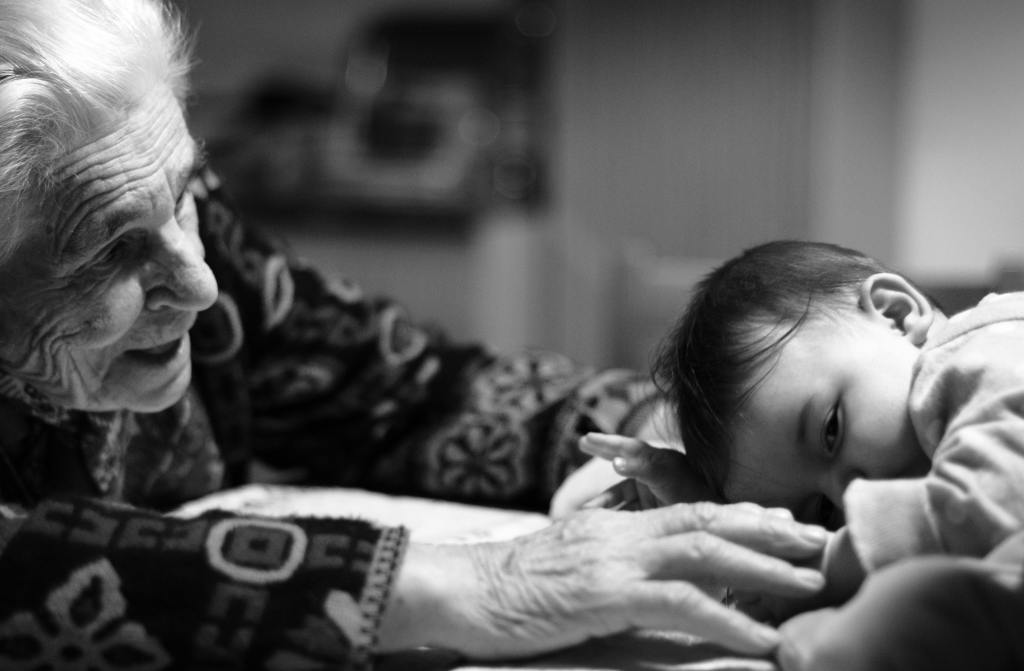
Photo by Ben Wicks

By Jaime Lindsey, Liz Fisher-Frank, Jo Harwood and Gillian Francis, University of Essex, School of Law

On the afternoon of 25 March 2021, we hosted an online workshop by Zoom exploring the voice of the child in the context of the treatment of sexual abuse allegations in private family law disputes in England and Wales. The workshop brought together a fascinating mix of over 50 attendees including members of the judiciary, practitioners, academics, policy makers, organisations supporting survivors, and people with lived experience of abuse and the family courts.

The assessment of harm to children in private law cases has recently been the focus of an expert report commissioned by the Ministry of Justice, which provided the impetus for this project. Following the review, the treatment of sexual abuse allegations has been identified as an under-researched but major threat to the safety of children.

A key aim of the workshop was to respond to the need arising from the review to build an evidence base with key stakeholders in the field, something we hope to take forward following the event. This complex and difficult area of legal practice needs to be dealt with sensitively and we were delighted with the mix of attendees who respectfully and passionately engaged with the serious issues raised by the family courts’ current approach to the challenges that exist in these cases. We hope that following the event we will have the opportunity to continue our work with stakeholders to enhance the voice of the child in private family law cases.

The workshop followed a panel presentation and discussion format, held under the Chatham House rule to ensure confidentiality for attendees, given the sensitive nature of these issues. There were 10 presentations in total, including from survivors of child abuse and the family courts, a member of the judiciary, academics and practitioners in the field. Following each panel, attendees had the opportunity to ask questions and provide comments on issues raised.

Panels covered themes including:

  • amplifying the voice of the child;
  • the role of ‘parental alienation’;
  • support and training for professionals;
  • supporting children through court;
  • legal aid and associated access to justice issues;
  • the role of the family court in responding to abuse allegations and the challenges and possibilities in doing so.

A rich variety of issues were considered, including specific legal changes as well as wider cultural factors that arguably influence this area of practice.

We are grateful to all who attended and spoke at the event for making it such a supportive and insightful discussion, as well as for the generous funding provided by the ESRC Impact Acceleration Account. Working collaboratively, we held an event that was constructive and reform-oriented with the aim of furthering the conversation in this important but challenging area.

We were delighted to receive positive feedback from attendees, including from a survivor who said, ‘I really feel empowered’ following the workshop. Another said, ‘We all thought it was a fantastic event. It was brilliantly brought together and managed with such diversity of thought and experience … this really brought home the extent and complexity of some of the issues that need addressing in the family justice system’.

A full report of the event will be available soon, which will identify core themes, recommendations and next steps that we intend to pursue. If you would like to find out more about any aspect of this project or would like to be sent a copy of the report once it is available, please contact one of the organisers at the details listed below:

Jaime Lindsey: j.t.lindsey@essex.ac.uk

Jo Harwood: jh18437@essex.ac.uk

Gillian Francis: gf17473@essex.ac.uk

A Failure of Proportion: Non-Consensual Adoption in England and Wales

Photo by Nikola Saliba

Dr Samantha Davey, Lecturer in Law, University of Essex

Dr Samantha Davey has recently published a book with Hart, entitled ‘A Failure of Proportion: Non-Consensual Adoption in England and Wales’. This book is the result of PhD research which was funded by the Arts and Humanities Research Council. It explored the topic of adoption – specifically the issue of adoption without parental consent.

The central question Samantha sets out to address in her book, is as follows: in what circumstances is it proportionate to remove children from their parents into care and place them for adoption?

In England and Wales, and most other jurisdictions, adoptions are final and irrevocable. Adoption, in these circumstances, is non-consensual, signals not only the end of the legal relationship between children and parents but the end of familial relationships. Once an adoption is finalised, it is very rare for it to be revoked and unusual for direct contact to take place between children and their parents.

Dr Davey’s book explores an area of law which has sparked considerable debate amongst academics, practitioners and the judiciary nationally and internationally. The emphasis of her book is on the circumstances in which non-consensual adoption may be regarded as a proportionate measure and when less severe forms of intervention, such as long-term foster care or kinship care, may also meet children’s needs while providing protection to children’s rights under the European Convention on Human Rights.

S Davey, A Failure of Proportion (Hart 2020)

The book builds on existing literature on adoption law but takes the discussion in new directions, placing an emphasis on the need to closely scrutinise children’s and parents’ rights at all stages of the adoption process. A unique feature of this book is its emphasis on routinely incorporating key provisions from the United Nations Convention on the Rights of the Child into analysis when determining whether an adoption order is a proportionate measure.

Grandparents: Anchors in Uncertain Times

Photo by Paolo Bendandi

Dr. Samantha Davey, Lecturer in Law at the University of Essex, explores family dynamics in the context of grandparents as primary caregivers.

Grandparents may live miles or even continents away from their grandchildren. Pre-existing relationships may have been affected adversely because of Coronavirus-related self-isolation. Regardless of current events, many grandparents have played, and will continue to play, a pivotal role in the lives of their grandchildren.

Grandparents’ involvement may range from helping parents via part-time childcare to providing full-time care for children, in circumstances where children cannot be raised by their parents. The circumstances in which grandparents may become full-time carers will vary. Some parents voluntarily relinquish children into the care of grandparents. In other sad cases, Social Services may become involved in children’s lives due to issues faced by parents including alcohol addiction, drug abuse or mental illness which have led to child neglect or abuse.

In such cases, provision of care by grandparents will not necessarily have been at the parents’ behest. In circumstances such as these, grandparents are of particular importance since these children would otherwise be placed in foster care. Furthermore, some children would be placed for adoption, with a permanent loss of legal ties and relationships with birth parents and other family members, including grandparents.

Where grandparents provide an alternative care option to adoption, this route is not without challenges. Potentially, grandparents face conflicts due to a moral obligation to balance the interests of their offspring with, a moral and potentially legal obligation to protect the best interests of their grandchildren.

There are cases, for instance, where it may be appropriate for children to have only supervised contact with their parents or none at all. Furthermore, grandparents may face difficulties in receiving financial support or practical support for children who may have special educational or emotional needs.

Despite the challenges faced by grandparents, the care they provide is preferable to adoption. Indeed, when grandparents look after their grandchildren, they may well protect them from further uncertainty via foster care. This option also makes it possible to avoid the long-term severance of the legal tie between children and their birth family. In effect then, grandparents can be seen not solely as care providers but as a vital link to children’s birth family.

Unfortunately, grandparents lack automatic rights which are enjoyed by parents such as party status in legal proceedings. The involvement and importance of grandparents in children’s lives is not reflected in legislation. The government has many priorities. Reforming the law in relation to grandparents is simply not one of them. But is it time to open up a discussion on this issue? Should grandparents’ involvement in children’s lives warrant acknowledgement in legislation?

For further discussion of grandparents in the context of adoption cases read: Samantha Davey, A Failure of Proportion: Non-Consensual Adoption in England and Wales (Hart Publishing 2020). This book provides a general overview of the issues faced where adoption takes place without parental consent and considers the vital role of grandparents’ provision of care as a viable alternative to adoption.

In due course a workshop on grandparents’ rights, law and social policy will be taking place at the University of Essex. The date of this is to be announced in the future due to the lockdown which is in place currently. If you are interested in producing a paper for this event, you are a grandparent affected by these issues or you have an interest in cases of adoption without parental consent please contact Dr Samantha Davey at smdave@essex.ac.uk.

A version of this article was first published on the MIHE Blog.

Divorcing Fault: Time to Stop Blaming and Shaming?

Breaking up is hard to do and current laws in the UK and Wales can make it a lot harder. Dr. Samantha Davey, Lecturer in Law at the University of Essex, explains why divorce law is ready for reform.

Divorce law in England and Wales has been discussed, dissected and been the subject of dismay for decades. Many practitioners and academics alike take issue with a fault-based approach to divorce because it is seen as out of date and unnecessarily cumbersome. Under the Matrimonial Causes Act 1973, there is one ground for divorce, namely that the couple’s marriage has irretrievably broken down. In order to establish this, there is a need to demonstrate that one of the following reasons exists: adultery; unreasonable behaviour; two years separation with consent; two years separation with no consent (desertion); or five years separation.

Aside from encouraging divorcing couples to play the blame game in divorce papers, which only serves to encourage conflict, there are two other main difficulties with these reasons for divorce. Couples’ relationships may break down for reasons other than adultery and unreasonable behaviour. Couples may grow apart or may decide that they wish to go their separate ways. Such couples may prefer to do so without assigning blame to one party but may not wish to wait two years before they divorce. The current procedure requires one party to seek to divorce another and demonstrate some type of fault on the part of the other party.

As a consequence, couples who may have ended their relationship amicably, sometimes feel forced to strain the ground of ‘unreasonable behaviour’ (e.g. domestic abuse, social isolation or debt) to find a reason for a speedy divorce or, as an alternative, wait two years before divorcing. Meanwhile, the spouses may form new relationships and may wish to move on with their lives.

Another issue is that if one party contests the divorce, this may delay the divorce unnecessarily. In practice, this is rare, but it happened in the case of Owens v Owens [2018] UKSC 41 which highlighted how out-of-date and potentially absurd the existing law on divorce is. In this case, Mrs Owens sought a divorce on the basis of her husband’s unreasonable behaviour.  Mr Owens contested the divorce and the judge who assessed the divorce application determined that her evidence of the alleged unreasonable behaviour of Mr Owens was insufficient and refused to permit the divorce. This led to a protracted court battle which led to an important decision on divorce by the UK Supreme Court. Lord Wilson affirmed the decisions of the initial judge and the Court of Appeal but stated that: ‘Parliament may wish to consider whether to replace law which denies to Mrs Owens any present entitlement to a divorce…’.

For many years, despite repeated expressions of dismay about the state of the law on divorce, this area of family law has not been a priority for reform by the government. The Law Commission proposed reform in 1990 and expressed a number of concerns with the divorce law. It was seen as unfair and unjust, as undermining the potential to save marriages and as likely to exacerbate conflict. The Owens case, however, gave the government a powerful judicial nudge to consider reform seriously.

Consequently, in April 2019, the Justice Secretary announced that divorce legislation would be reformed to help reduce family conflict. The ground ‘irretrievable breakdown’ would remain but the five facts would be replaced with a requirement to provide a statement about irretrievable breakdown. It would also provide for a joint divorce application to be made by both parties and remove the potential for one party to contest the divorce.

In essence, the proposed legal reform via the Divorce, Dissolution and Separation Bill ends the use of fault based divorce and provides well-needed modernisation to the law on divorce by reducing conflict and by preventing a scenario like Owens v Owens from occurring again. Currently, the Bill is passing through the House of Lords where it will reach the report stage on the 17th of March 2020. It will be a welcome change which will bring divorce law into the 21st century.

For further discussion of the Owens case and an overview of the proposed changes to the law on divorce, see: Samantha Davey, Family Law (10th edn, Palgrave Macmillan 2020).

This article first published on the MIHE Blog and is reproduced on the Essex Law Research Blog with permission and thanks. The original post can be accessed here.