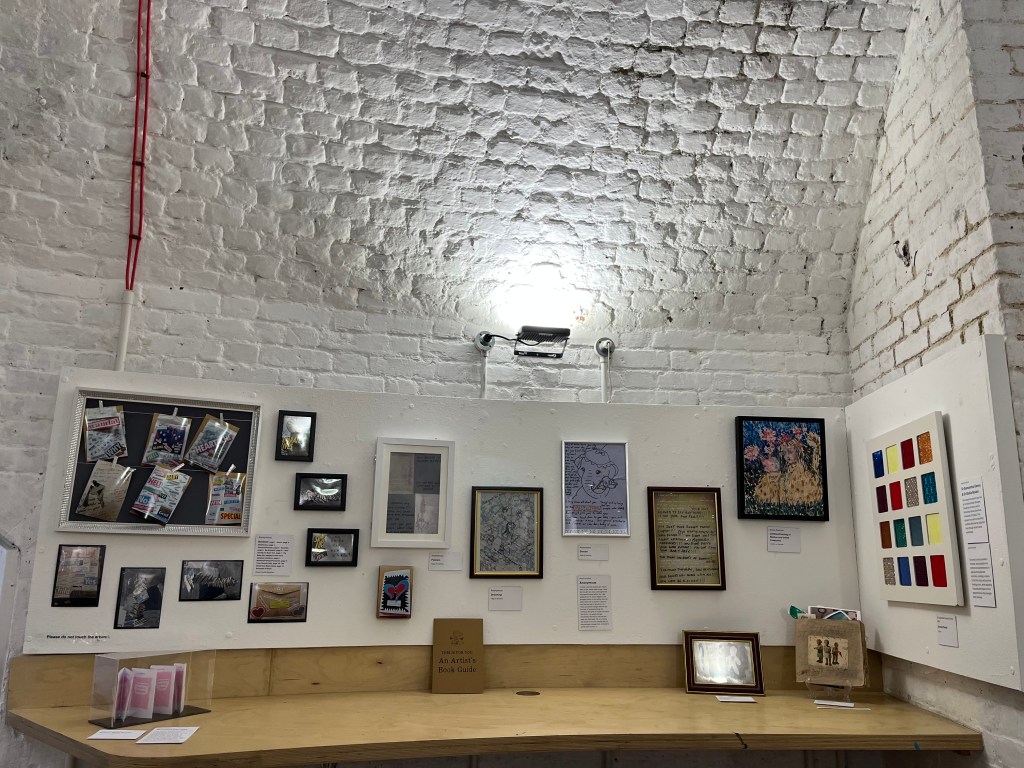
Following on from the success of last year’s Expressions of Trauma Exhibition led by Essex Healthwatch and held at The Minories, Colchester, the Essex Law School is contributing towards another exhibition, this time at the Martello Tower, Jaywick. The 2025 Expressions of Trauma provides those who missed last year’s Exhibition an opportunity to see the exhibits again – along with some new exhibits.
This thought-provoking Exhibition features diverse exhibits exploring trauma narratives. There is a dedicated installation which is based on the research of Dr Samantha Davey (University of Essex) and Dr Stella Bolaki (University of Kent), who ran a series of artist’s books workshops for mothers, which was funded by both institutions. This research highlights the experiences of mothers who have lost children through adoption, providing a powerful outlet for emotional expression. By sharing their stories through artist’s books, pictures and poetry, this exhibit encourages public awareness and empathy for mothers who suffer grief and loss, in the aftermath of adoption.
Credit: Dr Samantha Davey
Dr Davey and Dr Bolaki would like to thank Healthwatch Essex and their research champions Chloe Sparrow, Amanda Swan and Diana Defries for their participation and ongoing support with this project and the exhibitions. There are more exhibitions planned so please do keep an eye on our blog page, the Essex communications page (you can see our press release here).
For further information about this Exhibition please contact the organiser, Sharon Westfield de Cortez, Healthwatch Essex at Sharon.westfield-de-cortez@healthwatchessex.org.uk . If you are a mother who has experienced loss through adoption and would like to know more, or to participate in future exhibitions running later this year, please contact Dr Samantha Davey at smdave@essex.ac.uk.
The Minories, an art gallery based on the High Street in Colchester, hosted an evocative exhibition on ‘expressions of trauma’ run by Healthwatch Essex and led by Sharon Westfield de Cortez and Kate Mahoney. This exhibition delved deep into the complex layers of trauma, with a range of exhibits exploring themes such as pain, illness, abuse, grief and loss, with art being used as a medium to empower and shared the voices of those who chose to participate in the exhibition in October and November 2024.
One of the exhibits is the result of innovative research collaboration between Dr Stella Bolaki from the University of Kent and Dr Samantha Davey from the University of Essex. This research project was kindly funded and supported by both researchers’ institutions via awards designed for knowledge exchange, impact activities and public engagement.
The works included in the ‘Expressions of Trauma’ exhibition from this project are artists’ books created during specialised workshops led by Dr Bolaki. These workshops provided a safe, creative space for mothers who have suffered the painful experience of child loss via adoption proceedings. Many participants shared their personal narratives, crafting their stories into tangible art forms that speak to their emotional journeys through care and/or adoption proceedings and in the aftermath of those legal processes.
Credit: Chloe Sparrow
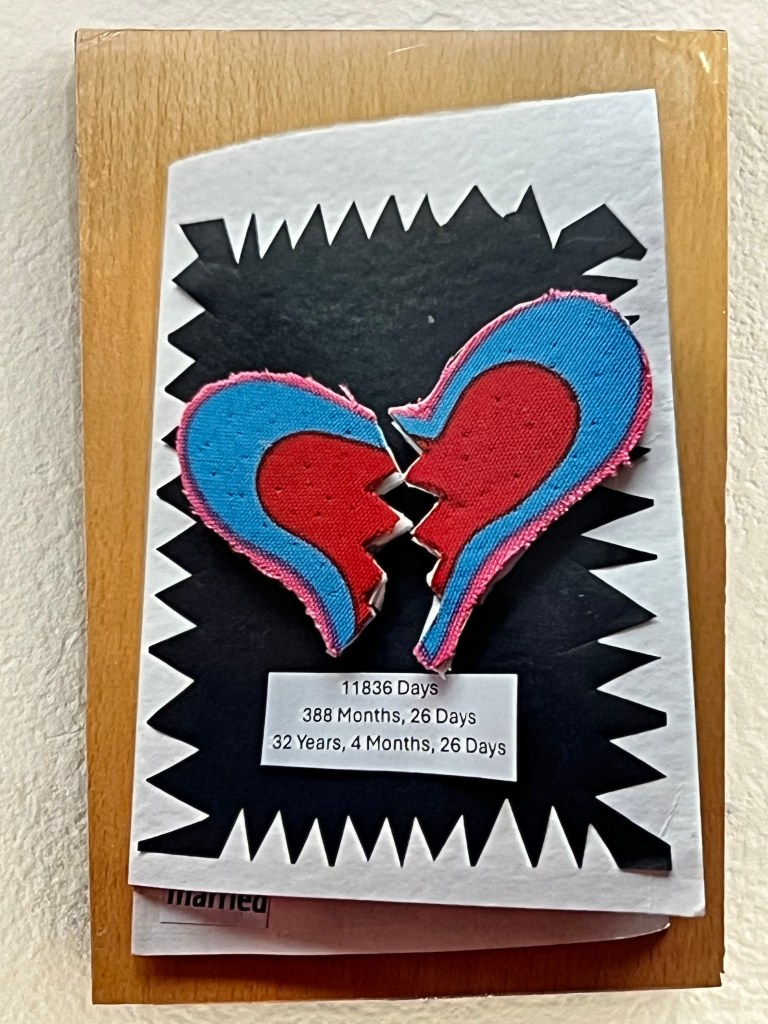
The artists’ books featured are a powerful reflection of each of these mothers’ experiences. Each page contains raw emotions and displays feelings of love, grief, sadness, anger, frustration and, ultimately, resilience. Through art, these mothers have found a way to express pain and connect with others facing similar struggles. This powerful element of storytelling through art is what made the ‘Expressions of Trauma’ exhibition not just an art display but a shared space for dialogue between mothers, professionals and the wider public – as well as a space for reflection, healing and social justice. One of the books included showed an image from the Disney film, Dumbo, the elephant who was separated from his mother. This image is accompanied by the haunting lyrics of ‘Baby Mine’, highlighting the raw grief and loss experienced because of the separation of mother and child. Diana Defries, spokesperson at Movement for an Adoption Apology, has a book titled ‘An Ocean Between Us’, poignantly representing the gulf between a mother and child over many years.
This exhibit also highlights the importance of the roles played by professionals who support these mothers. Barrister Sneha Shrestha, local art therapist Chloe Sparrow, and Kent-based counsellor Amanda Swan contributed their insights and expertise, showing how the artist’s book can assist professionals as well, as a tool in processing trauma. Chloe Sparrow’s emotive painting of a mother and child features prominently in the exhibition, capturing the essence of the bond that endures even in loss.
This exhibit demonstrates acutely that healing is not a solitary journey; it is often facilitated by the connections we make with others personally and professionally. The inclusion of professionals in this dialogue makes the narrative of the exhibit more powerful, adding layers of understanding and compassion, showing how professionals themselves connect with the raw grief experienced by mothers.
Visitors are encouraged to engage with the stories behind the books. Each artist’s book is a book of emotion, inviting reflection and empathy from anyone who encounters it. The exhibition encouraged a sense of community and shared experience, helping attendees to understand and empathise with those who have experienced loss in a range of contexts – loss of love, loss of one’s autonomy and loss of identity.
‘Expressions of Trauma’ was not just an artistic endeavour; it was a compelling invitation to explore the landscape of human emotion. Through this exhibition, Sharon Westfield de Cortez and Kate Mahoney created an important ongoing conversation around trauma, loss, and the healing power of art.
Credit: Chloe Sparrow
In a world where discussions about mental health and trauma are becoming increasingly prominent, ‘Expressions of Trauma’ boldly speaks to the power of storytelling through art. The exhibition challenged visitors to confront difficult emotions and inspires them to engage with the narratives of others from different walks of life with a vast range of life experiences.
For individuals who have been affected by issues explored within the artist’s book exhibit or have any questions about the research project out of which it emerged, please contact Dr Stella Bolaki at s.bolaki@kent.ac.uk and Dr Samantha Davey at smdave@essex.ac.uk .
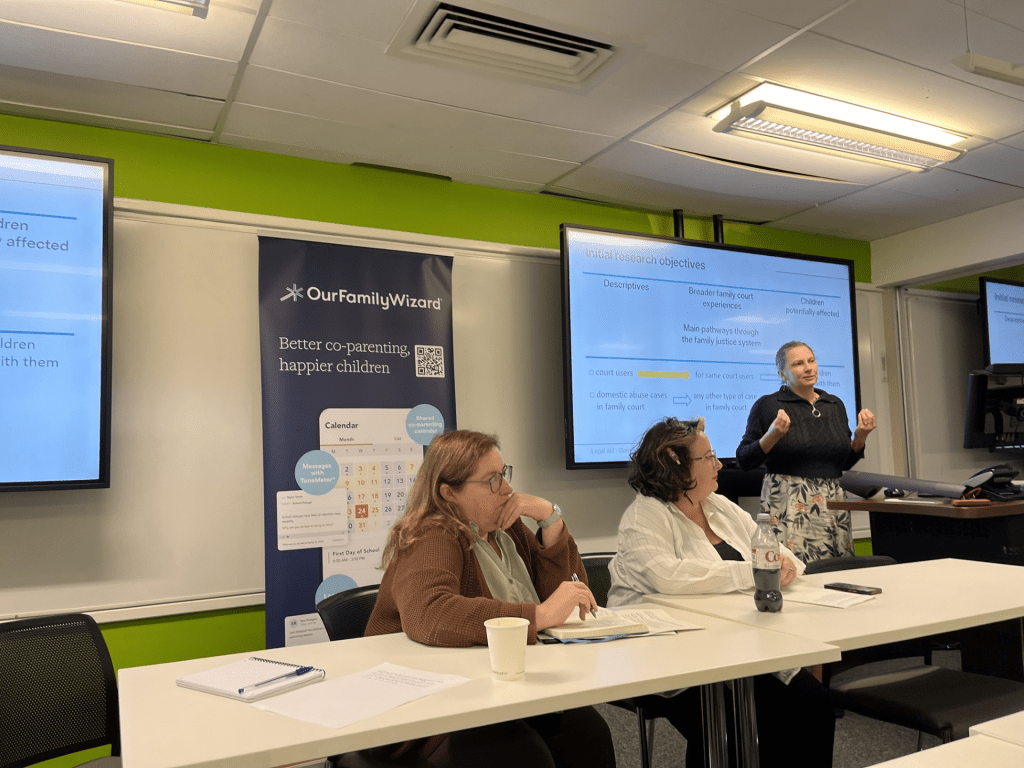
On September 20th, the Supporting Families conference was held, uniting a diverse group of speakers from various academic and professional backgrounds. The event was led by Dr Samantha Davey, a Lecturer in Law within the Essex Law School. The event was attended by academics from the University of Essex, as well as representatives from a number of other institutions including the University of Bristol, the University of Kent, with international contributors from Israel and Saudi Arabia, making it a global gathering focused on family justice. The event was kindly sponsored by Our Family Wizard.
Photo from the conference, credit: Dr Samatha Davey
The range of themes addressed at the conference centred on the challenges within the family justice system and explored innovative strategies for enhancing the experiences of families. The speakers presented on a wide array of issues such as legal barriers faced (for those such as litigants in person), psychological impacts of involvement in the family justice system, the growth of mediation as an important tool for families and the role of social work in supporting families to stay together and through the process of court proceedings. A presentation was delivered by Alicia Farran, a representative of the event’s sponsor Our Family Wizard, on its co-parenting app and the usefulness of online communication platforms as another tool to mediate disputes between couples in contact disputes.
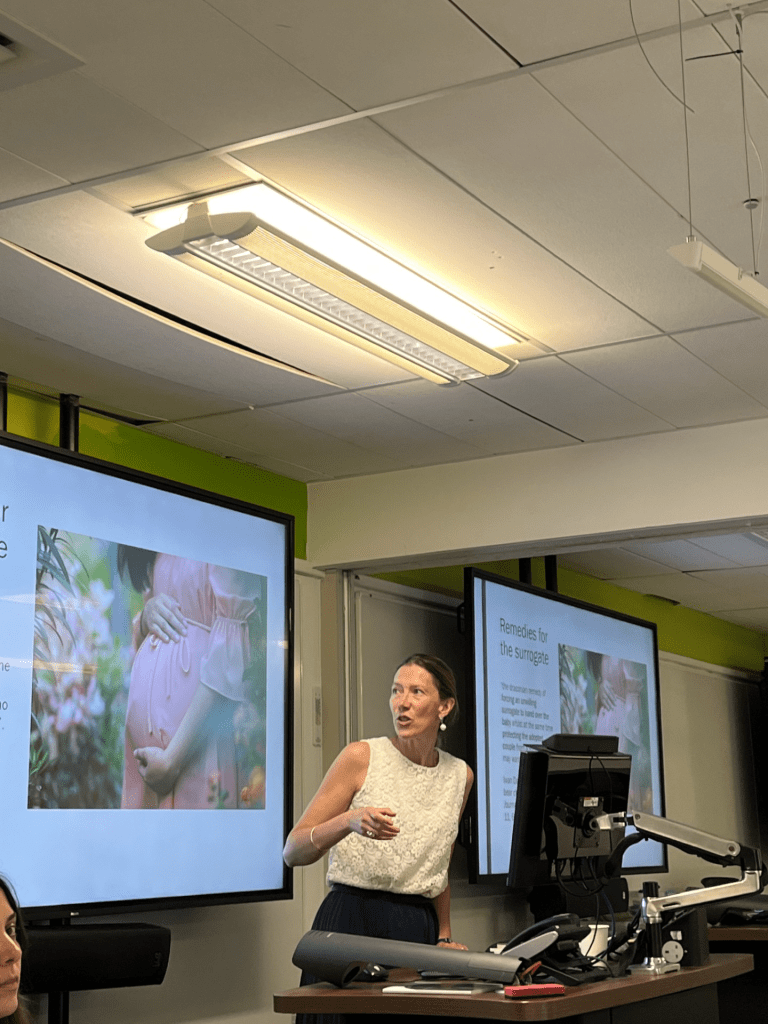
Photo from the conference, credit: Dr Samatha Davey
The conference was chaired by Dr Laure Sauve (University of Essex), Dr Olayinka Lewis (University of Essex), Liz Fisher Frank (Director of the Essex Law Clinic), and Liverpool barrister Celeste Greenwood (Exchange Chambers), who guided discussions and facilitated insightful dialogues throughout the day. We appreciate the dedication of Katherine Rose in assisting with the setup on the day and the Essex Law Clinic students who attended this event.
Photo from the conference, credit: Dr Samatha Davey
Overall, the Supporting Families conference successfully brought together a multidisciplinary group of academics and practitioners in law, psychology, and social work, which led to important dialogue aimed at improving the family justice system for all users. If you have any questions about the conference or would be interested in presenting at any future events, please contact Dr Samantha Davey at smdave@essex.ac.uk .
By Johanna Aimse, Research Assistant, Universities of Essex and Kent
Introduction
Even in today’s era of social media transparency, every society harbours unspoken dark secrets. One of those is children being removed from their mothers and given out for adoption without mothers’ consent.
Such situations occur for multiple reasons. But often, mothers are forced to fight the system either during the most challenging time of their lives or right after giving birth, which is something that the media to this day does not talk about.
Many mothers lose contact with their children due to unfavourable outcomes in the legal and social systems. This experience has led them to go on living with overwhelming feelings of grief, depression and loss.
The Artists’ Book Project
Over the past year, Dr Stella Bolaki of the University of Kent and Dr Samantha Davey of the University of Essex have conducted research on how creative methods could help mothers who have lost their children through adoption proceedings to process difficult feelings.
They have organised workshops for mothers and social workers who participate in such procedures. Different workshops were held with therapists, barristers and other professionals who would like to learn more about the challenges these mothers face and use the project activities to inform their practice areas.
Stella and Samantha have led face-to-face and online workshops. During the workshops, mothers craft a book out of a variety of materials provided to them, allowing them to express emotions they find hard to share for fear of judgment, trauma or guilt among others.
In combining the visual and the textual, the artist’s book expresses thoughts and experiences in ways words alone cannot. It operates as a creative outlet even for those who do not view themselves as “an artistic person”. The ability to experiment with different textures, colours and layouts allows mothers to strike a sensitive balance between healing, self-reflection and emotional release – the ultimate goal of the workshops.
Mothers describe the process of having their children removed without consent as disempowering and dehumanising. The workshops were designed to be a safe and supportive environment for mothers to connect with each other while making books. Being in an environment where they are free to share their experiences and feelings while being validated and understood by those with similar traumas seems to have a healing effect. Participants also received support from qualified counsellor Amanda Swan.
The feedback mothers gave showed that working on their books in a supportive environment facilitated the processing of some of the feelings and memories which many had forcefully held back or were forced to forget. Thus, the workshops have proven successful in allowing the participants to take creative steps towards healing.
Spreading awareness
The project’s future will see a new website and social media pages to spread awareness. Furthermore, cooperation with different charities and networks is planned to reach more mothers who need help or would like to discuss their experiences in the system.
We are keen to hear from mothers who can help bring diverse perspectives and voices to this study. If you have had a child removed and placed for adoption without consent, you are invited to participate in the research study, for which you will also be compensated.
The Grandparents United for Children Conference at Leeds Beckett Law School on 21 November 2023 saw a gathering of individuals passionate about addressing the challenges faced by grandparents who lose contact with their grandchildren.
The hybrid presentation by Dr. Samantha Davey of the University of Essex and Dr. Charlotte Bendall of the University of Birmingham on their research into mediation shed light on the complexities and potential solutions surrounding this issue.
Drs. Davey and Bendall delved into the intricacies of mediation, focusing on the formidable challenges encountered by grandparents in contact disputes. The discussion centred on the notable absence of explicit references to grandparents in the Children Act 1989, rendering them devoid of certain rights. This regulatory gap exposes the vulnerability of grandparental contact, with subsequent re-establishment proving to be particularly challenging.
Their interest extended towards a comprehensive examination of grandparents’ encounters with both court processes and mediation, drawing insightful comparisons between the two. A key objective was to gain an understanding of grandparents’ experiences and to explore avenues for improving the existing system.
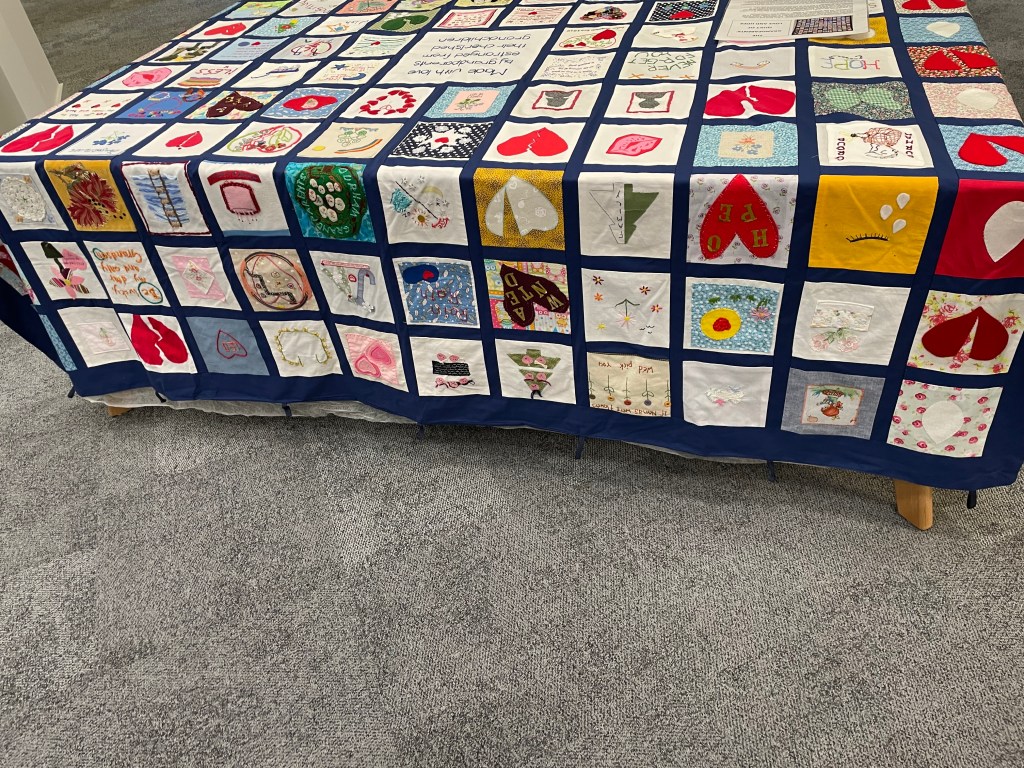
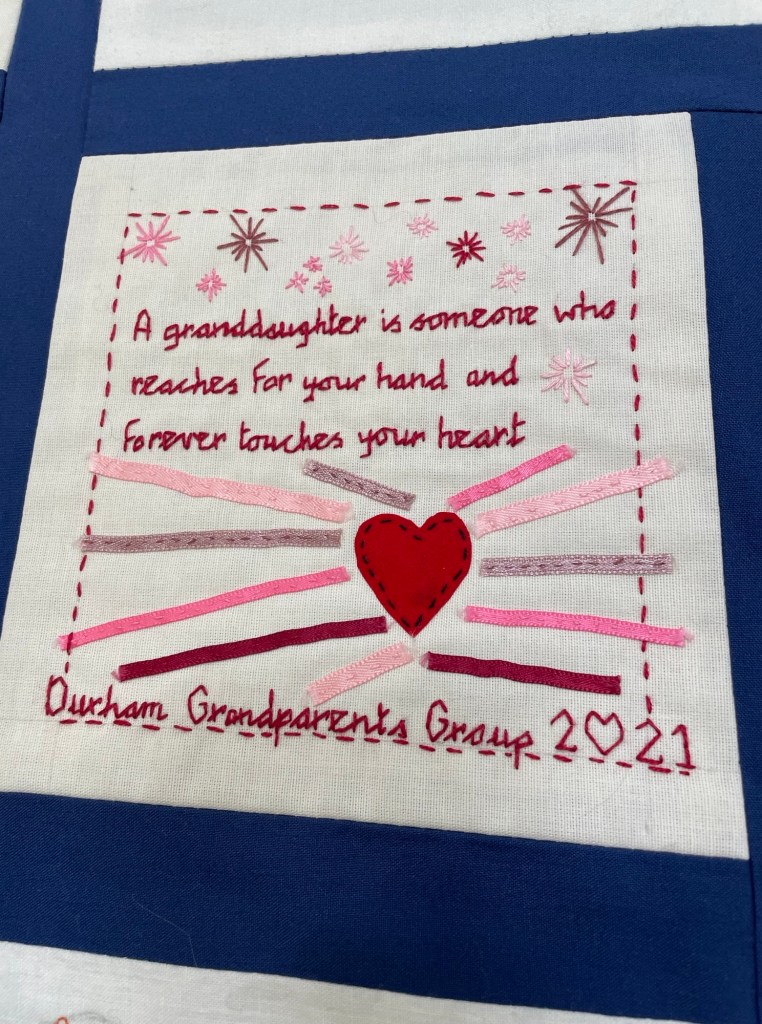
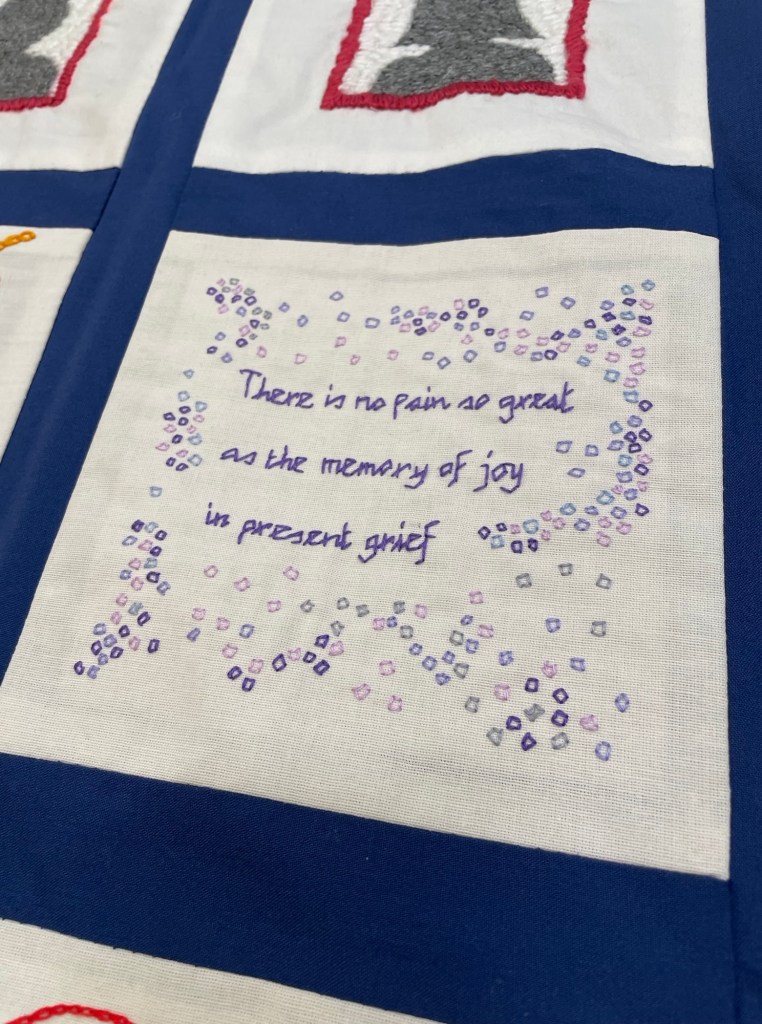
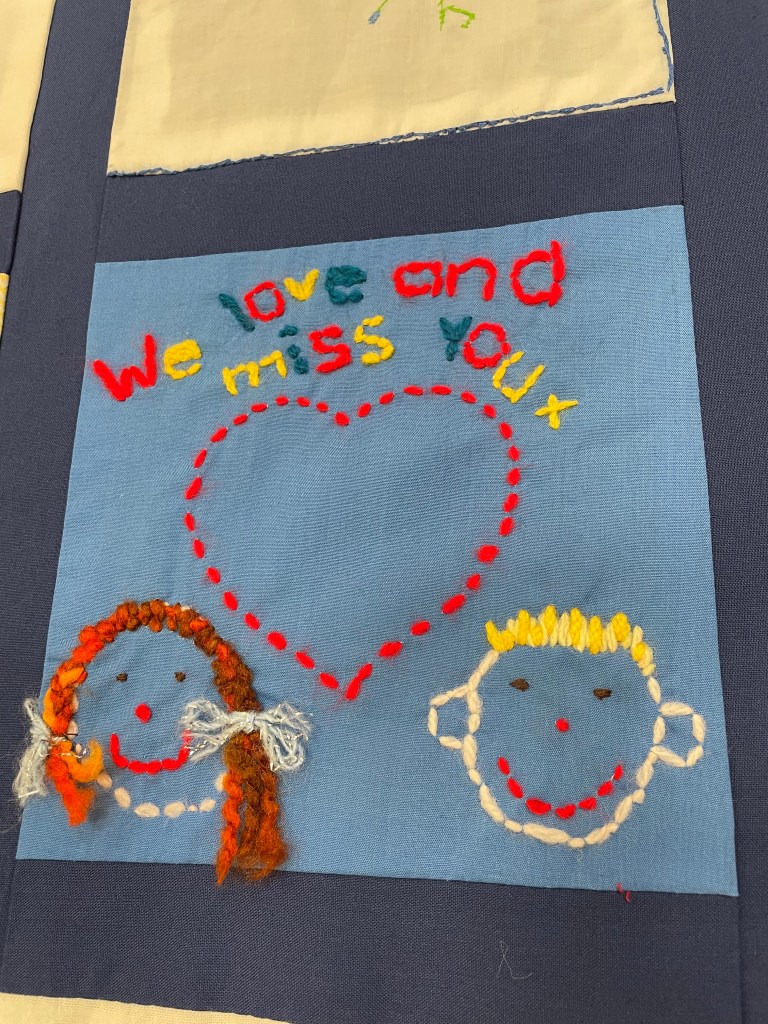
Threads of FeelingEach square stitched together by a grandparent estranged from their grandchild.
The event was organised by Tina Gallagher from Grandparents United for Children and chaired by Jasvinder Sanghera, a prominent advocate for women’s human rights. The conference provided an important platform for grandparents, academics, legal practitioners, and child welfare professionals to share their experiences and expertise.
The conference featured the perspectives of both grandparents and grandchildren. It also included a poignant and personal address from Jay Kontzle, an actor from the popular ITV soap opera Emmerdale Farm.
Jay’s heartfelt reflections on being raised by his maternal grandparents resonated deeply with the audience, reinforcing the importance of intergenerational relationships and how grandparents can influence the identity of their grandchildren.
The experience of a grandparent, estranged from her grandchild.The experience of another grandparent diistant from their cherished grandchildAnother grandparent feeling disconnected from their grandchild
Overall, the Grandparents United for Children Conference was a success, fostering thought-provoking conversations, and serving as a catalyst for meaningful action to support grandparents and grandchildren facing these challenging circumstances.
Drs. Bendall and Davey are currently recruiting grandparents, mediators, and solicitors for a research study on their experiences of court and mediation. If you are interested or know someone else who would like to participate, please contact Dr. Davey at smdave@essex.ac.uk.
A new research project has been funded by the British Academy which will explore the voice of the child in private family law cases concerning allegations of child sexual abuse (‘CSA’). The aim is to draw on first-hand insights into the experience of children who had disclosed CSA during or in relation to private family court proceedings.
The project fills a gap by aiming to directly hear the voice of the child in family proceedings through narrative interviews. It will contribute to the evidence base regarding experiences of, and reform to, the family courts.
This project draws upon a workshop held at the University of Essex School of Law in March 2021 with ESRC Impact Acceleration Account funding, which explored the voice of the child in private family law cases concerning allegations of CSA. This workshop highlighted the need for further research to obtain first-hand accounts of children’s experiences of the family court – accounts that are notably absent from the existing evidence base.
This research into the family courts is important now, at a time when there have been several concerns raised about the family courts’ response to domestic and sexual abuse allegations in private law cases. For example, a recent report by the University of Manchester, in conjunction with SHERA Research Group, found that women suffered ‘serious health problems … as a result … of biased family court proceedings.’ Relatedly, the Ministry of Justice in their published report ‘Assessing Risk of Harm to Children and Parents in Private Law Children Cases’ highlighted that ‘the voices of children experiencing domestic abuse and child sexual abuse are not sufficiently heard by the family courts’ (MoJ, 40). The Ministry of Justice report further noted that there are many reasons why victim-survivors of sexual abuse might have negative experiences. These may include the lack of resources, the way that the court works in a ‘silo’, lacking coordination with other organisations, and the adversarial approach of the court system which focuses on investigation rather than supporting survivors.
We know from evidence in other areas that victim-survivors of sexual abuse often recount sentiments of being silenced, misunderstood, or negatively judged, and often feel a sense of re-traumatisation from their courtroom experiences (Rape Crisis, 2023). The adversarial layout of court proceedings can sometimes exacerbate negative experiences, despite it being possible to make adjustments within the court system, such as allowing victims to give evidence through video links or behind screens.
The 2021 workshop, referred to above, demonstrated a need for research to facilitate the direct voice of child victim-survivors and to explore whether there is a need for reform in the law or court processes, shifting towards a child-centred approach to hearing the voice of the child where CSA allegations are raised in family courts.
Given the absence of evidence from children who have experienced family court processes, this research aims to record, through narrative interviews, the voices of those who experienced the family court as children and give them an opportunity to tell their stories directly through the research.
Contact details
If you would like to know more about this planned research or would like to be kept informed as the research progresses, please contact the Project Lead, Dr Jaime Lindsey at j.lindsey@reading.ac.uk or Co-Investigator Dr Samantha Davey at smdave@essex.ac.uk.
In the ever-evolving landscape of family law, the Supporting Families conference, held in September 2023, stands as a beacon of hope and progress. This remarkable event, held under the aegis of the Family Law Reform Now network project, has been nothing short of a resounding success. Spearheaded by the visionary duo of Dr. Charlotte Bendall and Dr. Rehana Parveen at the University of Birmingham, this conference is a testament to the power of collective determination and expertise.
The Supporting Families conference was not just another gathering of legal minds. It is a dedicated platform, aimed at addressing the intricate challenges entwined within the public law system, particularly in the context of legal proceedings involving families. Its core objective is clear: to initiate conversations, explore possibilities, and pave the way for much-needed policy reform, strengthening the support structures for families entangled in these intricate legal proceedings.
Discussion Panel led by Dr Rehana Parveen
This momentous event is the brainchild of a passionate team: Dr. Samantha Davey, a Lecturer in Law at the University of Essex; Celeste Greenwood, a Barrister-at-Law at Exchange Chambers; Omolade Adedapo and Anna Rickards from PAUSE; and Bessy Eigbefoh, a Solicitor at Francis Solicitors. Together, they have orchestrated an assembly of experts and professionals, bringing diversity and dynamism to the discussion table.
The Supporting Families conference was designed to cast a piercing spotlight on the deficiencies of the public law system, with a specific focus on care and adoption cases. It boldly underlined the urgency of implementing legal and policy reforms to fortify the foundation of support for these embattled families.
This conference was about tangible action. Attendees were in for a treat, as they benefited from the opportunity to learn from a constellation of practitioners and academics who have dedicated their careers to unraveling the complexities of these cases. Their shared experiences illuminated the path toward change, guiding our collective vision towards more humane, empathetic, and effective legal proceedings.
As we look back on the Supporting Families conference, we celebrate not just its resounding success, but also the unwavering determination of those who organised and participated in this transformative event.
The PAUSE team
The conference stood out like a vibrant thread, weaving a narrative of change, empowerment, and justice. It was a milestone in the journey of transforming the lives of families and a shining example of what can be achieved when dedicated minds come together to effect change.
Looking ahead, the legacy of the Supporting Families conference continues to flourish, with the promise of an even brighter future. The event in Birmingham was a prelude to the next chapter in Dr. Davey’s journey toward reform. Through the support of the SLS research activities fund, further work will now commence With Dr. Charlotte Bendall on the benefits of mediation for grandparents, recognising the invaluable role they play in the lives of children.
Additionally, a partnership with Dr. Jaime Lindsey from the University of Reading, fueled by a grant from the British Academy, is set to unveil critical insights into the experiences of child survivors of sexual abuse within the Family Court. A seminar series is set to start, with Dr. Lindsey delivering a seminar on November 9th at the University of Essex. If you are interested in attending, please contact Dr. Samantha Davey at smdave@essex.ac.uk.
The Supporting Families conference was just the beginning, and it has ignited a beacon of hope that will continue to illuminate the path to a more compassionate, just, and inclusive family law system.
The conference programme and speaker details can be downloaded here:
The book analyses the crucial role grandparents play as caregivers and spotlights through academic and practitioner contributions their relative absence within the English and Welsh legal frameworks.
The book is the first of its kind, as there is no edited collection exploring the legal and practical relationships between grandparents and grandchildren.
The book goes, however, beyond family law and draws on a wider range of legal and socio-cultural contexts to enhance our understanding of the role of grandparents in the law. It particularly explores issues of rights and relationships between grandparents, their families, and the law, including how the protection of grandparents’ rights can be balanced with parental rights and children’s welfare.
What happened at the event?
The book launch was a momentous occasion, brimming with scholarly enthusiasm and intellectual curiosity. Esteemed professionals gathered to celebrate the culmination of years of research and dedication.
The co-editors, Dr. Davey and Dr. Lindsey, took centre stage at the start, sharing insights into the book’s significance and offering a glimpse into the novel ideas contained within its pages.
An engaging and spirited debate (chaired by Professor Karen Hulme) ensued, fuelling the exchange of knowledge and fostering new collaborations. Professor Maurice Sunkin (Co-Director of the Essex Constitutional and Administrative Justice Initiative) contributed as an internal speaker, while Professor Felicity Kaganas (Brunel University) and Charlotte Knappett (partner at Fisher, Jones and Greenwood, a local solicitor’s firm) joined as external speakers – all praising the book.
Notably, Prof. Sunkin drew attention to inter-generational issues and how different events globally have affected the importance of grandparent/grandchild relationships.
Charlotte Knappett spoke about her experiences of working with grandparents as kinship carers seeking SGOs, etc.
Prof. Kaganas, an eminent expert in the fields of family and child law, discussed the issue of whether there should be a presumption in favour of grandparent contact. She agreed with most of the authors that there should not be such an emphasis.
Several of the contributing authors attended the event too: Sneha Shrestha, a barrister, as well as Essex Law School academics Dr. Laure Sauve, Dr. Sahar Maranlou and Liz Fisher-Frank. Professor Joan Hunt (School of Law & Politics, Cardiff University) as well as Jo Harwood (Essex Law School) and Dr Charlotte Bendall (Birmingham Law School) joined virtually.
Academic scholars, researchers, and practitioners gathered for the launch of the edited collection (pictured from left to right: Dr. Laure Sauve, Sneha Shrestha, Dr. Samantha Davey and Dr. Jaime Lindsey (co-editors), Charlotte Knappett, Liz Fisher-Frank and Dr. Sahar Maranlou.
Overall, the event fostered spirited discussions, highlighting the significance of this edited collection and its power to shape our understanding of the critical role grandparents play in our legal system. The book found its place on our Law School’s shelves, destined to shape academic discourse and inspire future generations in their pursuit of knowledge.
What’s next?
Building on their work on mediation within one of the collection chapters, Dr. Charlotte Bendall and Dr. Samantha Davey have been awarded a Research Activities Fund from the Society of Legal Scholars to pursue this research further.
The award will support a joint project undertaken by Dr. Davey and Dr. Bendall (Birmingham Law School), who worked together one of the chapters in the collection, focusing on mediation as a potential method of alternative dispute resolution for disempowered groups, affected by family fragmentation, such as grandparents.
The research grant will enable the co-authors to conduct empirical research on this matter. They are currently working with several non-governmental organisations, mediators, and legal practitioners with an interest in this area.
Dr. Davey has been working with Dr. Bendall and Dr. Rehana Parveen more generally on supporting families. To find out more about their work and collaborative network, see the Family Law Reform Now initiative here.
Legal aid, as we know it today, is a relatively recent institutional development, but the concept is old. From the Court of Requests in Tudor and early Stuart times to the pro bono advice offered by the Poor Man’s Lawyers Movement, the idea that everyone is entitled to some form of legal advice and support has been present in the United Kingdom for a long time.
However, legal aid as charity did little to help those unable to pay for legal counsel (it was, after all, mostly restricted to pre-trial advice) or to level the legal playing field, as the courts continued to be part of the modus vivendi of the aristocracy. Due to strong opposition to the idea that everyone should be entitled to legal aid (mainly for fear of encouraging people to be litigious), some of the first formal policies were, perhaps inevitably, heavily moralized. For example, the Poor Prisoners Defence Act 1903 included provisions for legal aid for prisoners who had a defence.
The end of World War II led to the foundation of legal aid roughly as we know it today. Since then, several reforms have attempted to manage both the volume and the cost of legal aid, with the post-1986 cuts being the first concentrated effort to reduce the budget. In April 2013, the Legal Aid, Sentencing and Punishment of Offenders Act 2012 (LASPO) introduced further cuts, which heavily affected several areas of litigation and excluded most private family law cases from the scope of legal aid.
LASPO and the Right to Legal Aid
LASPO’s explicit goal was to save money and family law was one of its main targets. While public law proceedings and the representation of children generally remained in scope, private family law was the reform’s main ‘victim’. Most private family law cases, including procedures as common and stressful as divorce and child contact, became ineligible for legal aid. Cases involving children or finance remain in scope only where there are issues concerning domestic violence or child abuse and specific evidence is provided (the evidence-related requirements relaxed in 2018). The Ministry of Justice expected that this new policy would also discourage litigation on private family problems, which could be resolved out of court. Apparently, the idea that people become unreasonably or excessively litigious if legal support is readily available still survives.
One possible concern with this blanket approach is that the exclusion of entire areas of law seems arbitrary and irreconcilable with the very raison d’ être of legal aid. Even where alternative means of dispute resolution (such as mediation) are available, some of these cases may inevitably end up in court. Furthermore, mediation itself requires legal support and, as we will see, there is evidence that people need to be advised by a lawyer that it is an available option. The problem, therefore, with the removal of almost the entire area of private family law from civil legal aid is that this policy choice may restrict access to justice for many people, without consideration for their needs and circumstances.
The idea that access to civil legal aid is inherently linked with effective access to justice is part of the European legal tradition. Article 47 of the European Charter of Fundamental Rights 2000 illustrates the point: ‘Legal aid shall be made available to those who lack sufficient resources in so far as such aid is necessary to ensure effective access to justice.’ However, there is no universal or unconditional right to legal aid, especially with regard to civil law cases. While efficient access to justice remains important for the European Court of Human Rights (‘the Court’), it has been ruled that Article 6 § 1 does not imply that the State must provide free legal aid for every dispute relating to a ‘civil right’ (Airey v. Ireland, § 26). The crucial question is whether the lack of legal aid would deprive the applicant of a fair hearing and the answer depends on the specific circumstances of the case (Airey v. Ireland, § 26; Steel and Morris v. the United Kingdom, § 61; McVicar v. the United Kingdom, § 48).
The Court has identified a set of criteria for assessing the states’ obligation to make legal aid available in non-criminal proceedings. These are: the importance of what is at stake for the applicant (Steel and Morris v. the United Kingdom, § 61; P., C. and S. v. the United Kingdom, § 100); the complexity of the relevant law or procedure (Airey v. Ireland, § 24); the applicant’s capacity to represent him/herself effectively (McVicar v. the United Kingdom, §§ 48-62; Steel and Morris v. the United Kingdom, § 61); and the existence of a statutory requirement to have legal representation (Airey v. Ireland, § 26; Gnahoré v. France, § 41). Two further criteria have emerged in the Court’s case law regarding the conditions attached to legal aid: the financial situation of the litigant; and the prospects of success in the proceedings (Steel and Morris v. the United Kingdom, § 62).
LASPO and Access to Justice: the Project’s Findings
The question that naturally emerges from these general remarks is whether LASPO was successful in saving money without ignoring the above criteria and restricting access to justice for many people who require legal aid to effectively exercise this right. In a research project funded by the British Academy, Theodoros Alysandratos, Mariol Jonuzaj and I looked at the effect of LASPO on family law cases, hoping to shed some light on these issues.
First, we find that legal aid funding started to drop in the first financial quarter of 2014 and kept on falling for the next two years. At the end of this period, funding had dropped by 35% relative to the amount approved before the fall started.
Legal Aid by Financial Year and Financial Quarter. The image illustrates the percentage change on a year-to-year basis (from the project’s findings)
Then, we observe that the number of funded cases started to drop in the first financial quarter of 2012 and continued for 3 years. At the end of this period about 60-65% fewer cases were being funded. The discrepancy in the timing of the effects between funding and funded cases can likely be attributed to the disbursement of commitments prior to LASPO coming into effect.
Volume by Financial Year and Financial Quarter. The image illustrates the percentage change on a year-to-year basis (from the project’s findings)
In terms of saving money, the case of private family law reveals that the LASPO had an immediate effect. Whether this effect was sustained in the years that followed remains to be seen. The same applies to the number of cases that received legal aid, since it also dropped significantly in the years immediately following LASPO. This means that, at least for a certain period of time, a considerable number of people was denied access to legal aid for private family law cases (with the exceptions noted in the introductory paragraph), regardless of their financial situation and/or ability to secure some kind of legal advice, let alone representation.
Did this lead to an increase in the number of cases going to mediation or the number of Mediation Information and Assessment Meetings (MIAMs)? According to the post-legislative memorandum released by the Ministry of Justice in 2017, this was certainly not the case, presumably because it is only after receiving legal advice that most people see mediation as an option. In fact, before LASPO came into force, 4 out of 5 cases that ended up in MIAMs were referrals from legally aided solicitors. To make things worse, the Legal Aid Agency reported in 2017 that only 61% of completed mediations were successful (slightly down from the 68% reported for 2013-2014).
This evidence suggests that, as far as legal aid is concerned, many people in England and Wales are experiencing a return to a pre-World War II world. Their chances of securing free legal advice and representation are very slim, as their only avenue is to contact organisations with already limited resources, such as Citizens Advice and Family First. University Law Clinics also shoulder some of the burden, but they cannot offer legal representation. In a sense, civil legal aid is to an extent seen, once again after almost a century, as a form of charity.
However, as lawyers realised at the time, charity is not enough to ensure effective access to justice for all. As one of the founders of the Poor Man’s Lawyers Movement observed more than 120 years ago, extensive lack of free access to legal advice and representation for those who most need them makes the rule of law ‘an anaemic attenuated make-believe which we flash in the eyes of the poor as justice’.
Dr. Samantha Davey, Lecturer in Law at the University of Essex, presented a paper titled ‘Grandparent Act or granny “annex”? Waiting for the Government?’ at the Family Law Reform Now conference, hosted by Birmingham Law School in September 2021. The event was organised in collaboration with the Law Commission and conference proposals will be published in a book as part of an initiative to feed into for the Commission’s 14th Programme of Law Reform.
This post offers a brief outline of Dr. Davey’s chapter.
The 21st century has been characterised by systematic social changes to the family unit and legal reforms aimed at regulating and protecting those within it. Many of these shifts in ‘familial landscape’ would have appeared ‘radical’ at the start of the 20th century. Such changes include recognition of and protection from domestic abuse, increasing emphasis on the need to place equal value upon the gender roles of men and women within the context of child welfare, especially in the wake of COVID-19.
Most of this reform has centred around the ‘nuclear’ family, however, rather than the extended family such as grandparents. This is even though grandparents have increasingly had a prominent role in 21st century family life due to longer lifespans, working mothers and as the providers of moral and practical support in single-parent families. Grandparents can thus be viewed either as ‘replacement’ figures for parents or as a valuable form of support for parents and/or children.
There has been conversation, from the academic community, non-governmental organisations and successive governments over the last decade, concerning the role of grandparents in children’s lives. Such discussion includes consideration of whether there is the need for improved protection of the grandchild-grandparent relationship via legislative reform or ‘soft law’ guidance.
Such academic excavation into the array of options has included the consideration of a legal presumption in favour of contact, the removal of a leave requirement and greater ease in obtaining legal funding and financial support (the latter being appropriate where grandparents become carers for children, with or without the explicit support of Children’s Services and/or approval of birth parents).
Dr. Davey’s chapter explores the matter in a more comprehensive manner and considers whether it is time for legal reform to reflect the diversity in family units, specifically the importance of the role of grandparents, via a ‘Grandparent’ Act, substantial reform to the public and private law regimes provided within the Children Act 1989 or an amendment or ‘granny annex’ which reflects greater ‘inclusivity’ of extended family members, namely grandparents.
Dr. Davey proposes that it is time to acknowledge the importance of the role of grandparents (and other kinship carers) and consider the ways in which the grandparent-grandchild relationship, in its myriad of forms, may be best protected via legal reform.
The chapter takes take a ‘holistic’ approach covering both private and public law matters and both procedural and substantive matters, with a focus on the grandparent-grandchild relationship, rather than the rights of grandparents per se.
Greater protection can be provided to grandparents and grandchildren via the development of an ‘inclusive’ legal framework within the Children Act 1989 which modifies the language of ‘decision-making’ (including the welfare checklist) and substantive orders (such as a parental responsibility order).










 Essex Law Research Blog