Empowering Healthier Food Choices: A Critical Look at EU Food Information Law 

Dr Nikhil Gokani, Lecturer in Consumer Protection and Public Health Law, University of Essex

One of the main ways the EU tries to improve nutrition is to inform consumers through labelling. The Farm to Fork Strategy states that one of the EU’s objectives is “empowering consumers to make informed, healthy…food choices”. However, the current EU food information law may not be as effective in empowering consumers to make informed, healthier food choices as the EU claims. 
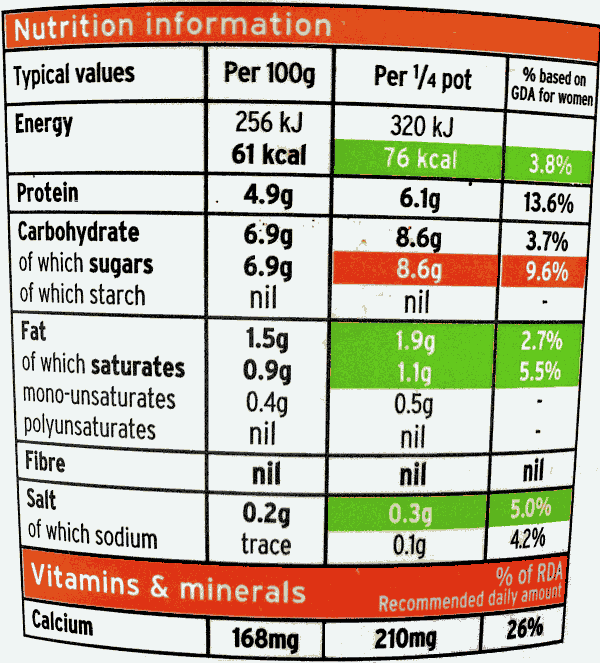
UK-style Nutrition Information label for low fat Yoghurt. Source: Wikipedia.

Well-informed consumers? 

EU food information rules – particularly those in Regulation 1169/2011 on the Provision of Food Information to Consumers (FIC Regulation) – seek to ensure that consumers are well-informed by giving food information that is sufficient, accurate, non-misleading, clear and easy to understand. However, EU food law does not achieve this aim. 

Sufficient food information 

Consumer do not actually have access to sufficient food information: 

  • Nutrient content must be declared per 100g/ml as sold. This helps consumers compare similar products because similar products may have comparable water content or portion sizes. It is less helpful for different product types. Information per portion would help but there is no requirement to provide nutrition information per portion. Indeed, there is also no requirement to provide information on recommended portion sizes, which is concerning because consumers are now eating larger portions. It is also does not give an interpretive guidance, as front-of-pack nutrition labelling would do. 
  • Ingredients are listed but the actual quantity of an ingredient is not required unless the ingredient is emphasised on the labelling. For instance, consumers may be aware that a product contains fruit, but they will not necessarily learn the quantity of fruit. Similarly, health consequences of unhealthy ingredients are not displayed. 
  • Mandatory particulars are only required on packaging and on sales websites. Purchase intentions are, however, also influence by advertising, but information is not required on advertising. 
  • There are many exemptions. Most mandatory particulars are not required for products in smaller packaging. A nutrition declaration is not required for 19 products or product categories. Most inexplicably, alcohol (which is defined as food in EU law) is exempt from nutrition or ingredients labelling. 

Accurate and non-misleading food information 

The FIC Regulation prohibits inaccurate information. However, accurate information can still be misleading. 

Mandatory labelling rules can give be misleading information:  

  • The nutrition declaration may also be expressed as a percentage of consumers’ reference intake. However, percentage of reference intake can be misleading because it is a nominal value based on the needs of an average adult female. It is, therefore, inaccurate for most of the population, including many women. 
  • Where nutrition information is given per consumption unit, this can also be misleading because a single consumption unit (such as one square of a chocolate bar) may not reflect a portion size (such as an entire chocolate bar).  

Food labelling that is given voluntarily by manufacturers can also be misleading: 

  • Nutrition and health claims provide positive information about the nutritional or health effects of a food product. They must be accurate and non-misleading as per Regulation 1924/2006 on Food Claims. However, even accurate food claims may be misleading. For instance, the claim that “iron contributes to the reduction of tiredness and fatigue” may be used without any explicit requirement to mention that this is only true if there is inadequate dietary intake. 
  • Nutrition and health claims can also be misleading. For instance, children’s cereal with significant levels of added sugars can be labelled with promotional claims such as “high in fibre” or “contains calcium”. Consumers over-generalise the positive qualities of claims, which creates a health halo, leading consumers to think that products are healthier than they are. 

The FIC Regulation requires that food information “shall not be misleading” but even this does not prohibit all misleading information: 

  • Whether or not information is misleading is assessed using the benchmark of the “average consumer”. This is a notional, rational consumer who is “reasonably well informed and reasonably observant and circumspect”. One difficulty with this is the inconsistency between the assumed behaviour of the “average consumer” and the actual behaviour of consumers. For instance, behavioural economics shows that consumers prefer stability, form habits, have limited cognitive capacity and often evaluate only the most salient information. Even if consumers do make rational choices, rational choices are not necessarily healthy choices. For example, a single parent working full-time on a low income may rationally choose to purchase food that is locally available, has high energy per unit cost and is quick to prepare, even if this might be less healthy. 

Clear and easy to understand food information 

The FIC Regulation also requires that information shall also be “clear and easy to understand” but this is also rather ineffective: 

  • “Clear” does not mean noticeable. For instance, the mandatory nutrition declaration may appear on the back of packaging, where it is less noticeable. Essential information can also be illegible as the minimum character height of mandatory particulars can be less than 0.9mm 
  • Voluntary information shall “not be displayed to the detriment of the space available for mandatory food information”. However, marketing messages on labelling – such as prominent cartoon characters or bright colours – can be distracting and detrimental to the noticeability of mandatory food information. 
  • Even the requirement that food information is “easy to understand” is not that helpful. For instance, consumers should understand the amount of fat in a product but not whether is a healthy level or not. 

Empowered consumers?  

It is clear that EU food information rules do not inform consumers well. But, if the rules on consumer food information were improved, could such improved rules empower consumers? 

To empower consumers to make healthy decisions the food environment should be conducive to consumers genuinely using health-related information. The EU is well positioned to identify features of the market that not only impede but also facilitate this. In the Consumer Agenda, the Commission stated that “empowering consumers means providing a robust framework of principles and tools” and a “robust framework ensuring their safety, information, education, rights, means of redress and enforcement”. 

Research shows the factors influencing consumer food choice empowerment. These can relate to food-internal factors (eg taste), food-external factors (eg food information and physical environments), personal-state factors (eg physiological needs and habits), cognitive factors (eg skills and attitudes) and sociocultural factors (eg culture and political elements). These broader factors are not acknowledged by the Commission, which instead focusses on safety, information and education, and rights. 

If food choice is a function of both multiple intrinsic consumer qualities and external environmental factors, giving consumers information is not on its own empowering them. Therefore, the EU’s strong emphasis on information regulation to empower consumers to make healthy decisions should be met with scepticism. 

Information regulation as one important part of empowerment 

Even if information regulation cannot, on its own, empower consumers, it is still a significant precursor to empowerment. For information to contribute to empowering consumers to make healthy food decisions, two conditions are needed. 

First, the information rules should be well-designed: 

  • For mandatory labelling, the EU needs to reflect on developing evidence-based and context-sensitive rules on whether consumer information is provided, what is provided, where and when, and how it is provided. For instance, nutrition information should be provided in a way that allows consumers to understand it, such as through mandatory front-of-pack-nutrition labelling. Even though the Commission committed to proposing harmonised front-of-pack nutrition, it continues to miss its 2022 deadline.  
  • Regulating voluntary information more effectively is also essential. Food claims should be prohibited for less healthy products, as should other food marketing designed to or having the effect of increasing the recognition, appeal or consumption of unhealthy food.  

Second, the limitations of information should be recognised:  

  • How consumers make food decisions is multifactorial and complex. In recent decades, it has become clear that unhealthy diets demand tackling the commercial determinants of health that drive poor nutrition. These industry practices are designed to maximise product sales by encouraging individuals to over-consume unhealthy food at the expense of healthy food. This includes creating new, highly palatable products, promoting them aggressively, selling them at lower prices than healthy food, packaging them in large ready-to-eat portions and selling them in widely accessible locations. 

Even though the EU’s strong emphasis on regulating consumer food information to improve diets is misplaced, this is not to suggest that information regulation is unimportant. Rather, it is to say that food information (i) in its current form does not lead to well-informed consumers and (ii) on its own does not empower consumers to make healthy food decisions. 

Better laws that effectively address labelling as well as the other determinants are essential. We continue to call on the Commission to use its power to propose new EU laws for the benefit of consumers and their health. 

This blog post is based on a more comprehensive analysis of EU food information law published in the Journal of Consumer Policy: Gokani, N., (2024). Healthier Food Choices From Consumer Information to Consumer Empowerment in EU Law. Journal of Consumer Policy. 47 (2), 271-296. It is available open access here: https://doi.org/10.1007/s10603-024-09563-0.

Booze, Bottles and Brussels: Member States’ Dilemma on Alcohol Health Warnings

By Dr Nikhil Gokani, Lecturer in Consumer Protection and Public Health Law, Essex Law School

Nikhil is Chair of the Alcohol Labelling and Health Warning International Expert Group at the European Alcohol Policy Alliance, Vice President of the Law Section at the European Public Health Association, and member of the Technical Advisory Group on Alcohol Labelling at WHO.

This blog is a condensed version of N Gokani, ‘Booze, Bottles and Brussels: Member States’ Dilemma on Alcohol Health Warnings’ (2024) 13(2) Journal of European Consumer and Market Law 97-102. The full article is available here. An open access version is also available here.

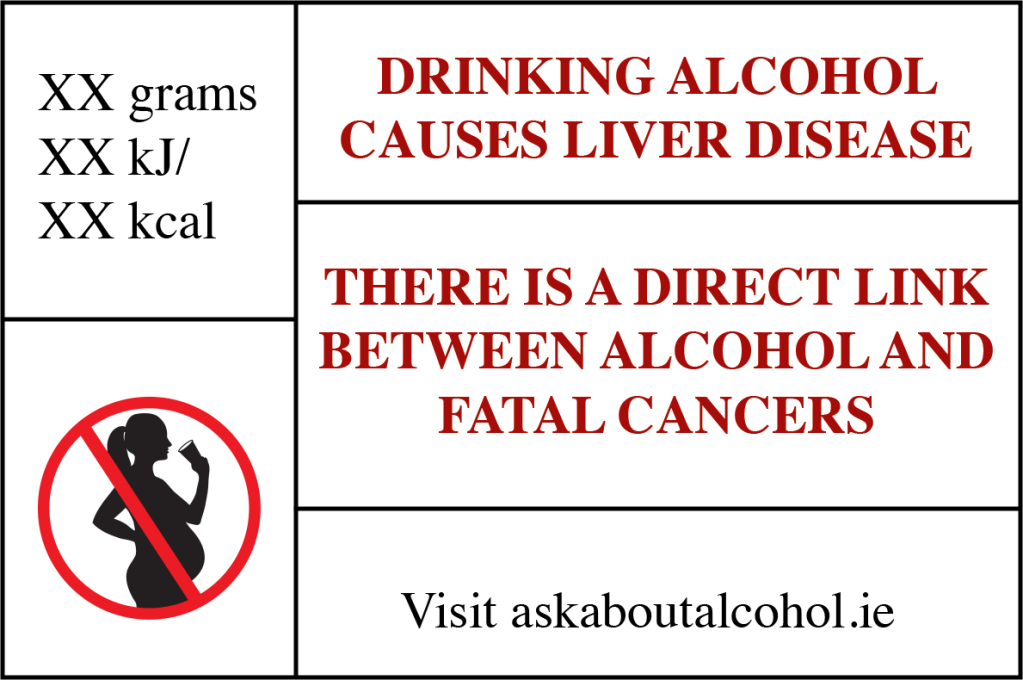
An example of an alcohol health warning. Pictured here as used in the Yukon Study.

Alcohol and the need for effective alcohol labelling

Alcohol is a causal factor in more than 200 diseases, injuries and disabilities. Even at lower levels of consumption, alcohol is associated with increased risks of heart diseases and stroke, liver cirrhosis, cancers and foetal alcohol disorders. In the EU, alcohol consumption causes between 255,000 and 290,000 deaths per year. Beyond health, alcohol results in significant social and economic losses to individuals and society at large.

Despite negative consequences of drinking alcohol, consumer awareness of its harms is low. The World Health Organization (‘WHO’) has repeatedly called on States to provide consumers with essential information through alcohol labelling. The EU has itself acknowledged the importance of consumer alcohol information, reflecting the foundation of EU consumer protection policy that consumers can be empowered through becoming well informed.

EU level regulation of alcohol labelling

Current EU rules in Regulation 1169/2011 on the provision of food information to consumers (‘FIC Regulation’) require alcoholic beverages with a content over 1.2% alcohol by volume (‘ABV’) to include alcohol strength on the label. Similar health-related information, including ingredients list and a nutrition declaration, which are required on the labels of most food products, are exempt for alcoholic beverages above 1.2% ABV. EU law does not require other health-related information to appear on the label.

Member State developments on alcohol labelling

Health-related warnings are not explicitly addressed under EU law and several Member States have introduced national mandatory labelling rules. These have focused on two forms on messaging: mandatory label labelling relating to the age of consumption and messaging against drinking during pregnancy.

In October 2018, Ireland signed into law its Public Health (Alcohol) Act 2018. In May 2023, Ireland signed into law as its Public Health (Alcohol) (Labelling) Regulations 2023. From May 2026, non-reusable alcohol containers will be required to include the following labelling.

While feedback from civil society organisations representing public health and consumer protection expressed strong support, industry bodies from across the globe responded opposing the measure. The feedback questioned the compatibility of the Irish Regulations, and warning labelling in general, with EU law in three key ways, which are addressed in turn below.

Legal objection 1: The Irish rules constitute a discriminatory barrier to free movement

Alcohol labelling is harmonised at EU level. National labelling rules fall within the scope of the FIC Regulation. National alcohol warning labelling rules are allowed under two different sets of rules in the FIC Regulation – depending on whether or not warning labelling would be considered to be “specifically” harmonised by the FIC Regulation.

On the one hand, health warnings are not specifically mentioned in the FIC Regulation. This suggest that health warning labelling is not “specifically” harmonised. Under this interpretation, Member States may introduce national rules. This is allowed providing that these are not contrary to general EU Treaty provisions.

On the other hand, the full list of mandatory labelling particulars (eg list of ingredients, use by date) have been listed in the FIC Regulation. This suggests that the mandatory labelling has been “specifically” harmonised. Under this interpretation, Member States may not introduce national rules unless the FIC Regulation includes a derogation. The FIC Regulation does indeed include a derogation. Article 39(1) allows Member States may adopt rules requiring additional mandatory particulars justified on public health or consumer protection grounds. This is allowed providing that Member States do not undermine the FIC Regulation and that the national rules are not contrary to general EU Treaty provisions.

Therefore, irrespective of the different interpretations of the FIC Regulation, Member States seem able to move forward with national warning labelling.

Legal objection 2: The Irish rules are not consistent with existing EU harmonisation

The FIC Regulation requires that Member States may not undermine its base protection in Article 7. Therefore, national labelling shall be “accurate”, “clear and easy to understand” and “not be misleading”.

Accurate: Taking the Irish labelling as case study, this labelling is accurate according to scientific consensus. Evidence that “Drinking alcohol causes liver disease” is well-stablished. The evidence on the dangers of drinking during pregnancy is also clear. No amount of alcohol is considered safe during pregnancy. There is also well-established evidence that “There is a direct link between alcohol and fatal cancers”. Alcohol is classified as a group 1 carcinogen by the WHO International Agency for Research on Cancer.

Clear: The requirement that information is “clear” relates to legibility and visibility. The Irish warnings meet this requirement not least as they appear against a white background, are within a black box and have a minimum size.

Not misleading: The Irish labelling is also not misleading. In line with broader consumer protection in the internal market, compliance with information rules is assessed against the behaviour of the “average consumer who is reasonably well informed and reasonably observant and circumspect taking into account social, cultural and linguistic factors”. This notional average is an active player in the market who reads information, has background knowledge, is critical towards information, does not take information literally, and will not be misled easily if sufficient information is available. This average consumer is likely to understand the meaning of the Irish labelling. The pregnancy warning simply advises women not to drink during pregnancy as per national health guidance. The message that “There is a direct link between alcohol and fatal cancers” communicates association with fatal cancers but does not go as far as communicating a direct causal relationship notwithstanding the well-established evidence on causation. The warning that “Drinking alcohol causes liver disease” is not misleading as liver disease occurs with even relatively lower levels of consumption.

Therefore, the Irish rules appear compatible with existing EU harmonisation.

Legal objection 3: The Irish rules are not proportionate

National alcohol labelling must also be proportionate, which it is when it is suitable and necessary to achieve its objective.

Legitimate objective:The primary objective for warning labelling is to inform consumers. It is also a part of a broader, secondary objective of reducing consumption and harms. As the Irish Regulations have been introduced under the Article 39 derogation, the objectives are limited to “the protection of public health” and “the protection of consumers”. Alcohol control clearly falls within these broad grounds as the CJEU has consistently held.

Suitability:Under the suitability limb of proportionality, it is necessary to determine whether the proposed labelling can attain its objectives of informing consumers and contributing to a reduction in consumption as part of a broader suite of measures. In respect of the primary objective, evidence demonstrates that there is a deficit of knowledge about the health consequences of alcohol consumption and labelling informs consumers. Studies show that alcohol health warnings leads to increased knowledge of health risks. Indeed, EU law already requires certain food products to be labelled with health warnings. As regards the secondary objective, evidence shows the contribution of labelling to reduction in harms and consumption.

Necessity:Under the necessity limb of proportionality, it must be determined whether a less intrusive measure can be equally effective as the proposed labelling to attain the objectives. Other measures are not equally effective. Labelling is available at both the point of purchase and point of consumption. Labelling is available on every container. It is targeted so that everyone can see the label when they see alcohol, but its visibility is in proportion to the number of containers a person consumes. It mitigates the effect of promotional marketing messaging on labelling. Ongoing costs are minimal.

Therefore, the Irish rules appear proportionate.

Moving towards effective alcohol health warning labelling

The objection raised by industry, that EU food law is a barrier to national alcohol health warning labelling rules, are demonstrably wrong. Therefore, in the absence of EU level action, Member States must take responsibility for moving forward independently. Let us hope the rest of the EU follows Ireland’s lead.

Nevertheless, EU institutions must support Member States to tackle alcohol-related harm. Tides appeared to be turning with Europe’s Beating Cancer Plan, in which the Commission committed to introducing proposals on alcohol health warning labelling by the end of 2023, but the deadline passed with no action. Let us also hope the EU decides to prioritise the health of consumers over the interests of economic actors.

Alcohol labelling and warnings: how progress at the Codex Alimentarius Commission can help States overcome challenges at the World Trade Organization

By Nikhil Gokani, Lecturer in Law, Essex Law School, University of Essex

In this post, Nikhil Gokani writes about the work he is involved in on developing international standards, which can help countries navigate challenges under the rules of the World Trade Organization. Nikhil works on food and alcohol labelling regulation in the UK, EU and globally. He is chair of the Alcohol Labelling and Health Warning International Expert Group at the European Alcohol Policy Alliance (Eurocare). He is also a member of the Technical Advisory Group on Alcohol Labelling at WHO.

Alcohol-related harm and consumer protection

Consuming alcohol is a causal factor in more than 200 diseases, injuries and other health conditions. Alcohol consumption affects other people, such as family, friends, colleagues and strangers. Globally, about 3 million deaths each year result from the use of alcohol. Beyond health, there are significant social and economic burdens.

Consumers do not have sufficient knowledge about the content and effects of alcoholic beverages. Most consumers are unaware of the energy and nutrition values (such as amount of carbohydrates) and ingredients. Few consumers are aware of the health risks, such as alcohol causing at least seven cancers.

Alcohol labelling and global progress

Alcohol labelling is an important source of information for consumers. Labelling is unique in providing information at both the point of purchase and consumption. Labelling improves knowledge. It is an effective measure to help ensure consumers are well-informed and not misled. Increasing evidence also shows that health information can empower consumers to make healthier consumption decisions, including drinking less.

Unfortunately, few countries in the world require that consumers are given essential facts on labelling, such as ingredients lists and nutrition declarations. Even fewer countries require beverages to be labelled with information warning consumers about the hazards of drinking alcohol.

The most recent success was in Ireland where new rules will require alcohol packaging to display warnings that “Drinking alcohol causes liver disease”, “There is a direct link between alcohol and fatal cancers” and a pictogram showing that alcohol can harm the unborn child if drunk during pregnancy. Countries like Ireland, unfortunately, face international legal challenges, particularly under international trade law.

International trade law and international standards

International trade law can constrain the regulatory autonomy of States. Significant to alcohol labelling is the World Trade Organization (WTO) Agreement on Technical Barriers to Trade (TBT Agreement). Most significantly, Article 2.2 of the TBT Agreement states that technical regulations, including rules on alcohol labelling, shall not create “unnecessary obstacles to international trade”. Technical regulations shall not be “more trade-restrictive than necessary to fulfil a legitimate objective”. Preventing alcohol-related harm is indeed a legitimate objective. However, many States trying to introduce better alcohol labelling rules have been challenged because other States have argued that labelling rules go beyond what is more trade-restrictive than “necessary”.

When a WTO State’s rule about alcohol labelling is challenged, international standards can either help or hinder them.

On the one hand, Article 2.4 of the TBT Agreement states that where “relevant international standards exist” States “shall use them…as a basis for their technical regulations” except when this would be ineffective or inappropriate Therefore, where international standards are not aligned with public health interests, they can make it harder for States to introduce effective national rules.

On the one hand, Article 2.5 of the TBT Agreement provides a powerful defence mechanism. It states that, when a technical regulation is “in accordance with relevant international standards”, there is a rebuttable presumption that the national rule does not create an unnecessary obstacle to international trade. Simply stated, where the State complies with a relevant international standard, they have a potentially strong defence for their labelling rules. Therefore, good international standards can be very powerful to help countries defend their national labelling policies.

Codex Alimentarius

An international standard is one which is made by a recognised body and compliance is voluntary. For alcohol labelling, there is indeed an international standard: the Codex Alimentarius is a collection of standards, guidelines and codes adopted by the Codex Alimentarius Commission.

Where alcohol labelling is in compliance with relevant Codex standards, States could use this as a defence under WTO rules. This underlines the importance of having good Codex standards that support effective national rules on alcohol labelling.

Significant progress has been made at the Codex Alimentarius Commission. Alcohol labelling was discussed at four Sessions of the Codex Committee on Food Labelling (CCFL). The Report of the 46th Session of CCFL noted “there was common ground on which to proceed with the work” but little further progress has since been made in recent years. At that Session, the Committee agreed that Russia, European Union and India with assistance from WHO and Eurocare would prepare a discussion paper for consideration at the next meeting. In fact, this was the first time this Committee included an NGO in the preparation of a discussion paper, which is a testament to the global leadership by Eurocare in this field.  Unfortunately, however, no discussion paper was submitted by Russia. Therefore, WHO and Eurocare each submitted their own discussion paper to keep the matter moving forward. The WHO representative spoke objectively and convincingly at the 47th meeting of CCFL. These efforts led to alcohol labelling remaining on the Codex agenda – something which several States, no doubt under the influence of the powerful alcohol industry, had resisted.

The Codex Alimentarius Commission has now started a new consultation process. It issued a Circular Letter which asks State members and Observers to comment on how work on developing alcohol standards should proceed.

For this consultation process to work best for public health and consumer protection, we need everyone to contact their governments (emails here) to demand effective progress at Codex. Please join us in these efforts!

Front-of-Pack Nutrition Labelling: Time for the EU to Adopt a Harmonized Scheme 

By Dr Nikhil Gokani (Essex Law School) and Prof Amandine Garde (School of Law and Social Justice, University of Liverpool)

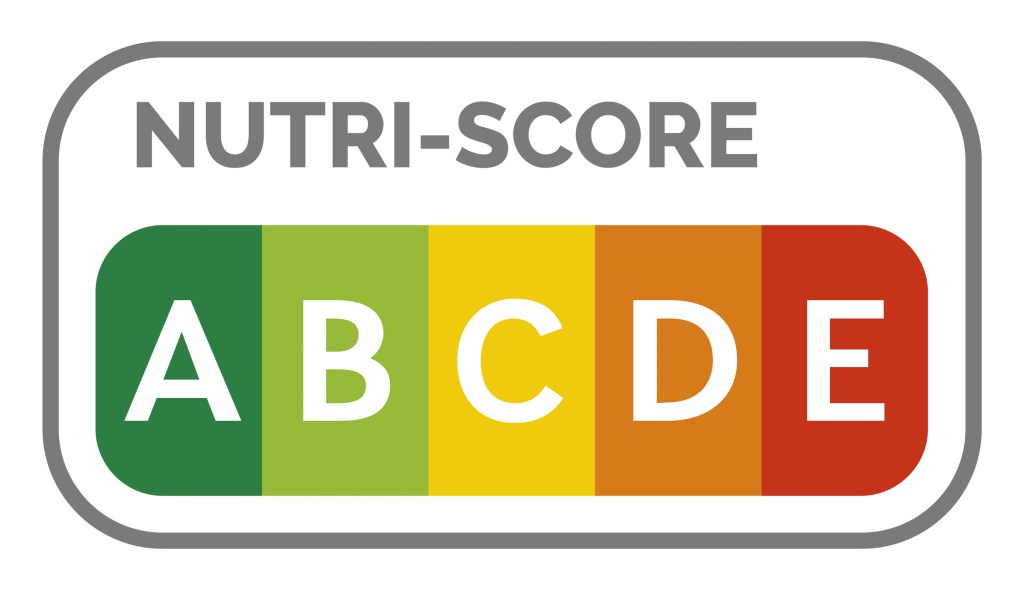
Nutri-Score label as published by Santé Publique France

In its Farm to Fork Strategy, published nearly 3 years ago in May 2020, the European Commission committed to ‘propose harmonised mandatory front-of-pack nutrition labelling’ (‘FoPNL’) to ‘empower consumers to make informed, healthy and sustainable food choices’ by the fourth quarter of 2022. This commitment was repeated in Europe’s Beating Cancer Plan in February 2021. The deadline has now passed and the promised proposals do not seem forthcoming. This is all the more disappointing considering there is strong support for the implementation of an EU-wide harmonized FoPNL scheme, as demonstrated by the results of the EU consultation on ‘Food labelling—revision of rules on information provided to consumers’ published in December 2021.

Such support is not surprising considering the significant advantages that the adoption of a harmonised FoPNL scheme has for consumers, traders, Member States and the EU alike.

  • From the perspective of consumers, an effectively designed FoPNL scheme helps inform them of the nutritional composition of food. Informing consumers lies at the heart of the EU’s consumer protection strategies and reflects its long-held view that regulating food labelling empowers consumers to make healthier choices whilst promoting the objectives of market integration. At present, the EU only mandates a small table of nutrition information on the back of food packaging. This is often hard to see and difficult to understand, whereas effectively designed FoPNL can provide easy-to-see and easy-to-understand information on the front of food packaging thus supporting healthier food choices.
  • From the perspective of traders, harmonized FoPNL will create a level playing field by reducing regulatory fragmentation, which will also increase legal certainty and lower labelling costs. There are currently 7 national FoPNL schemes recommended across 15 EU Member States. Further industry-led schemes are used, although they have not been officially endorsed by any Member State. While some manufacturers have adopted FoPNL, many have not, and others are using multiple different schemes.
  • From the perspective of Member States, a mandatory, EU-wide FoPNL scheme will contribute to improving diets and health outcomes. Current EU rules prohibit the adoption of FoPNL schemes which are interpretive, and do not facilitate the adoption of FoPNL schemes which are easy to use. They also prevent Member States from making FoPNL mandatory.
  • From the perspective of the EU itself, a harmonized FoPNL scheme will promote the proper functioning of the internal market in line with the EU’s mandate to ensure a high level of health and consumer protection in all its policies. Moreover, it will facilitate the compliance of all its Member States with the commitments that they have made at international level to promote healthier food environments.

The choice of any single scheme must be guided by evidence. The Commission’s Joint Research Centre reviews, published in 2020 and 2022, identify what makes FoPNL effective:

  • colour-coded labels draw consumer attention through increased salience, are preferred by consumers, are associated with increased understanding and encourage healthier food purchases;
  • simple labels require less attention to process and are preferred and more easily understood by consumers; and
  • consumers prefer and better understand consistent and simple reference quantities.

In its Inception Impact Assessment of December 2020, the Commission put forward four types of labels as contenders for a harmonized, mandatory EU-wide scheme: graded indicators (e.g. Nutri-Score); endorsement logos (e.g. Keyhole); colour-coded (e.g. Multiple Traffic Lights); and numerical (e.g. NutrInform). It is clear that of the four schemes considered in the Inception Impact Assessment, Nutri-Score is the only one meeting the criteria above, and its effectiveness is strongly established. Not only does it attract consumers’ attention, it is favourably perceived and well understood. It also has a positive impact on the nutritional quality of purchases. Additionally, the nutrient profiling model underpinning Nutri-Score has been extensively validated and shown to be associated with improved health outcomes. Even if no scheme will ever be described as ‘perfect’ by all stakeholders, its developed evidence base and adoption by a growing number of Member States, makes Nutri-Score the only viable option for the timely implementation of a mandatory, harmonised FoPNL scheme in the EU.

Growing rates of obesity and other diet-related diseases increase the urgency for the EU to act. We, therefore, call on the Commission to propose legislation requiring food to be labelled with Nutri-Score on a mandatory basis across the EU, as it has committed to do.


This post was originally published as an invited editorial in the European Journal of Public Health in June 2023. It is available here.

Nikhil Gokani is an expert in the regulation of front-of-pack nutrition labelling in the EU and globally. Please click here for his profile and contact details.

Financial Assistance Conditionality and Effective Judicial Protection: Chrysostomides

Image from Unsplash

By Anastasia Karatzia, Essex Law School

Dr. Anastasia Karatzia and Dr. Menelaos Markakis (Erasmus University Rotterdam) jointly published an article in the Common Market Law Review titled ‘Financial assistance conditionality and effective judicial protection: Chrysostomides‘. 

The article is a commentary on the ECJ’s judgment in the case of Council v K. Chrysostomides & Co. and Ors. It analyses the reasoning behind the ECJ’s findings regarding the legal nature of the Eurogroup, explores the implications of these findings for the accountability of the Eurogroup, and looks at the justiciability of the actions of the Council, Commission, and ECB in the context of the financial assistance programme for Cyprus and the EMU more generally speaking. 

The authors argue that the ECJ could have concluded that the Eurogroup is an EU institution within the meaning of Article 340(2) TFEU and that the theoretical possibility to hold the other EU institutions involved in financial assistance programmes accountable for their actions does not always suffice to guarantee the effective judicial protection of aggrieved individuals. This is the culmination of years of research on the topic of judicial protection in financial assistance given to EU Member States.

The article can be accessed in full here.

Do EU Organic Regulations Promote Better Animal Welfare?

Photo by Jan Kopřiva on Unsplash

By Eugénie Duval, Essex Law School

In the European Union (EU), the general concept of animal welfare is provided by the Treaty on the Functioning of the EU which considers animals as “sentient beings”. Briefly, animal welfare refers to the state of an animal that is healthy (both physically and emotionally) and has the ability to satisfy its behavioural needs. EU farm animal welfare legislation includes several acts laying down minimum standards for the protection of farm animals. However, these minimum standards fail to guarantee the welfare of farm animals. In contrast, the EU Organic Regulation 2018/848 and the Implementing Regulation 2020/464 provide detailed rules aiming to promote “high animal welfare standards”.

Adopted in 1991, the EU Organic Regulation was most recently revised in 2018, with the changes of this revision entering into force in 2022. One of the most significant updates is the expansion of the scope of the Organic Regulation (i.e., additional species and stages of production). Together with Benjamin Lecorps (Bristol Veterinary School), I have been invited by Alice Di Concetto (The European Institute for Animal Law & Policy) to contribute to a research note on the EU Organic regulations and their impact on animal welfare. This research note draws from my previous work on EU Organic regulations, where I first explored, together with two animal welfare scientists, how these regulations affect dairy cattle welfare[1] as well as other species farmed in the EU.[2]

Animal welfare standards in EU Organic regulations represent a significant improvement compared to the minimum standards. EU Organic regulations aim to provide animals with better protection from negative experiences, limiting pain or suffering induced by routing management practices.

For example, the use of cages and the practice of force-feeding (e.g., used for the production of foie gras) are prohibited in organic systems. Additional requirements aim to ensure animals’ needs are met, beyond the animals’ interest not to suffer. Organic farmers are required to provide their animals with the ability to express natural behaviours or access important resources (e.g., mandatory outdoor access; lower densities).

However, some challenges remain and animals in certified organic production still stand to benefit from further improvements yet to be implemented. On a number of aspects, EU Organic regulations provide exceptions (e.g., physical mutilations; tethering), use vague language or remain silent.

One of the main limitations  relates to the lack of emphasis by EU Organic regulations on the welfare of animals during transport. Apart from minor provisions, animals in organic agriculture are subjected to the same rules in the Transport Regulation that apply to non-organically produced animals. However, these rules are limited and there is evidence that they do not guarantee a good level of animal welfare during transport and need to be improved.[3]

If you are interested in knowing more about this research note, you can download it directly from our blog below:


[1] Eugénie Duval, Marina A.G. von Keyserlingk, Benjamin Lecorps, ‘Organic dairy cattle: Do European Union regulations promote animal welfare?’, Animals, 2020, 10, 1786.

[2] Eugénie Duval, “Le droit de l’Union relatif à l’agriculture biologique : la promotion d’un meilleur bien-être des animaux d’élevage ?”, in Isabelle Michallet (dir.), Bien-être et normes environnementales, Mare et Martin, 2022

[3] I am currently writing a paper comparing live animal transportation regulations in several jurisdictions, highlighting animal welfare challenges and future directions.

The Future of AI Liability in Europe

Image by VectorStock

Artificial Intelligence (AI) could revolutionise the world-wide economy as well as the way we live, work and interact with each other. While this new technology certainly presents great potential, it also comes with important risks to human life, health and wellbeing – among other risks.

In an effort to prepare for this new environment, the European Commission has been at the forefront of several initiatives that aim to provide a harmonised regulatory framework for the safe deployment and use of AI systems across Member States [1]. Amongst its most recent initiatives is a public consultation on how to adapt civil liability rules to the digital age and artificial intelligence. This public consultation, which closed on 10 January 2022, aimed to collect views on:

  1. how to improve the applicability of the Product Liability Directive (PLD) to the digital age, including AI, and
  2. whether there is a need to further harmonise rules of liability for damage caused by AI systems beyond the PLD.

The consultation is an important first step towards building a robust liability framework fit to address the current and future challenges posed by AI and the digital age in Europe. The changes that could be implemented as a result of the consultation could be immense and produce far-reaching consequences. Understandably, this public consultation attracted a high level of interest from various stakeholders, including businesses (Google, Bosh, Siemens, Avast), consumer organisations (BEUC, France Assos Santé), insurers (AXA, Insurance Europe, France Assureurs), NGOs, interest groups, legal scholars as well as members of the general public. In total, the European Commission received around 300 responses.

Pr. Jonas Knetsch (University of Paris 1 Panthéon-Sorbonne) and Dr. Emmanuelle Lemaire (University of Essex), assembled a small ad hoc research group, comprised of Pr. Michel Cannarsa (The Catholic University of Lyon), Dr. Laurie Friant (University of Paris 1 Panthéon-Sorbonne) and Pr. Simon Taylor (Paris Nanterre University), to produce a report in response to the consultation.

Overall, the authors of this report were of the view that the PLD should be adapted to enhance consumer protection in the digital age and increase legal certainty for all stakeholders. The authors also recognised that AI technology posed specific challenges and recommended that complementary measures be adopted to ensure the safe deployment and use of AI systems across Member States.

Adapting the PLD rules to the digital age and AI

The Product Liability Directive, which came into force on 30 July 1985, was a response to the increasing demand for consumer protection in a hyper-industrialised environment where goods were mass-produced, and mass-consumed. In essence, the Directive aimed to offer a high level of protection to consumers while ensuring that producers did not bear an undue burden. It was thus designed to strike a careful balance between the interests of both consumers and producers.

Yet, we must remember that the Directive was implemented at a time when the Internet was still in its early days, the use of AI remained largely theoretical, marketplaces were positioned in the ‘physical world’, and concepts such as ‘circular economy’ and ‘the Internet of Things’ (IoT) were simply non-existent. To say that the PLD – which did not undergo any major changes since 1985 – is in need of reform is certainly an understatement.

In order to adequately adapt the PLD to the digital age and AI, the authors of the aforementioned report took the view that the scope of application of the PLD should be extended, and in particular that:

  • the concept of ‘product’ should be expressly extended to intangible goods,
  • the concept of ‘producer’ should be extended to include online marketplaces and remanufacturers,
  • the concept of ‘damage’ should be extended to include specific types of immaterial loss (i.e. privacy or data protection infringements not already covered under the General Data Protection Regulation, and damage to, or the destruction of, data).

The authors of the report also recommended the amendment of specific PLD rules in certain situations, and more specifically:

  • the suppression of the development risk defence for AI products only,
  • the suppression of the 10-year longstop period in case of death or personal injury,
  • a clarification of the conditions enabling the 3-year limitation period to start running,
  • an alleviation of the burden of proof of ‘defect’ and ‘causation’ for products classified as ‘technically complex’ (which would include AI products and The Internet of Things).

In addition to recommending that the PLD be adapted, the authors of the report were also in favour of the European Commission adopting complementary measures in the context of AI to account for the specific features presented by this technology (autonomy, complexity, opacity, vulnerability, and openness).

Adopting complementary measures in the context of AI

The regulation of AI is proving challenging across legal systems, not least because of the difficulty in defining what AI is and what can be classified as an AI system. The European Commission made a recent effort to try and offer a clear – but open – definition of the term ‘AI system’ to ensure legal certainty while providing the necessary flexibility to accommodate any future technological developments. As the definition currently stands, an AI system means software that is developed with some specific listed techniques and approaches ‘and can, for a given set of human-defined objectives, generate outputs such as content, predictions, recommendations, or decisions influencing the environments they interact with.’[2] The definition is quite broad, and in consequence, the range of products based on – or using –  AI systems can be diverse and include voice assistants, image analysing software, search engines, speech and face recognition systems, as well as advanced robots, autonomous cars, drones or Internet of Things applications. Not all these products present the same type or level of risk, and some AI-based products are therefore more dangerous than others.

The authors of the report recommended that the European Commission consider:

  • the harmonisation of strict liability where AI-based products or services create a ‘serious risk of damage’ to consumers with an option to allow Member States to offer more protective liability rules to consumers,
  • the harmonisation of mandatory liability insurance for certain AI products,
  • the harmonisation of liability rules regarding the compensation of specific types of immaterial loss beyond the PLD (i.e. privacy or data protection infringements not already covered under the General Data Protection Regulation, and damage to, or the destruction of, data).

If you are interested in knowing more about the recommendations made by this university group to the European Commission, you can find a copy of their report (no. F2771740) – written in French – on the EC website or download it directly from our blog below:


[1] See e.g. European Commission, Communication from the Commission to the European Parliament, the European Council, the Council, the European Economic and Social Committee of the Regions – Artificial Intelligence for Europe (COM(2018) 237 final); European Commission, White Paper on Artificial Intelligence – A European approach to excellence and trust, (COM(2020) 65 final); European Commission, Communication Coordinated Plan on Artificial Intelligence (COM(2021) 205 final); European Commission, Proposal for a Regulation of the European Parliament and of the Council laying down harmonised rules on Artificial Intelligence (Artificial Intelligence Act) and amending certain Union legislative Acts (COM(2021) 206 final).

[2] European Commission, Proposal for a Regulation of the European Parliament and of the Council laying down harmonised rules on Artificial Intelligence (Artificial Intelligence Act) and amending certain Union legislative Acts (COM(2021) 206 final), Article 3(1).

Sustainability as a Legal Principle: Call for Papers

Third YUFE LAW Meeting, Rijeka, 23-24 June 2022

Photo by Headway

YUFE, the Young Universities for the Future of Europe, is an alliance of ten dynamic, student-centred research-based universities and four non-academic partners from the non-governmental and private sector for an impactful European University. Together, the YUFE partners aim to establish one of the first true European Universities.

Essex is part of the YUFE alliance and is working with its partners to shape the future of European higher education by establishing a European University that’s open to all. 

Continuing its recently established YUFE LAW practice, first at the meeting in Maastricht in January 2020 and subsequently, at the meeting in Bremen in May 2021, applications are invited for the Third YUFE LAW meeting which will be held by the Faculty of Law in Rijeka, Croatia on 23 and 24 June 2022.

Following last year’s model, the discussion concerning the past and future cooperation within the YUFE LAW will be held in parallel with the dissemination of research at the international scientific conference dedicated to the topic of Sustainability as a Legal Principle.

The term “sustainable development” started gaining planetary recognition probably with the 1992 United Nations Conference on Environment and Development and the Earth Plan. At the 2002 World Summit for Sustainable Development in Johannesburg, the need for consistency between the three pillars of sustainable development – being social justice, economic growth, and environmental protection – was stressed as crucial thus paving the way for what we understand as sustainable development nowadays.

The 2030 Agenda for Sustainable Development was adopted by all United Nations Member States in 2015 to ensure common values of peace and prosperity for people and the planet, now and into the future. The core of the Agenda is made of the 17 Sustainable Development Goals (SDGs) which recognize that ending poverty and other deprivations must go hand-in-hand with strategies that improve health and education, reduce inequality, and spur economic growth – all while tackling climate change and working to preserve our oceans and forests.

Understanding sustainable development as a development that meets the needs of the present without compromising the ability of future generations to meet their own needs, its initial meaning has been broadened much beyond environmental protection to encompass virtually all aspects of human activities.

Reaching SGDs can thus be done by means of regulating emissions and promoting developments in renewable energy, developing responsible ICT enabled transformation, reducing waste, or fighting extreme poverty just as by eradicating inequalities, empowering women, ensuring full and productive employment, and decent work for all, or promoting peaceful and inclusive societies, providing access to justice for all and building effective, accountable and inclusive institutions at all levels.

Law is a powerful means in achieving SDGs because the underlying policies may be more efficiently achieved if effectively in-built in legal regulation and not just made part of promotional activities or alike. Reinforcement by means of legal norms seems to be one of the key factors in following through the 2030 Agenda.

Indeed, by now, many preambles, pieces of legislation. statements and declarations contain references to sustainable development, international, European or national. In various areas of law, support or justification for certain regulatory solutions is sought in sustainable development concerns. Such concerns are being more explicitly articulated by the courts and tribunals in different countries.

It is increasingly recognised at many levels that bringing together social, environmental and economic rules and regimes is necessary. Gradually, sustainable development has entered the legal sphere and we may ask ourselves to what extent is sustainability a legal principle.

Against this backdrop, recent years have witnessed also intensified academic discussions on the role of law in sustainable development. For legal researchers, this is a daring endeavour since it entails an interdisciplinary approach including deepening the understanding of the sustainable development and SDGs and attempting to gain a broader understanding and wider picture of the researched issues.

At the same time, legal scholars have a huge responsibility to attempt to discover the old laws which are at odds with the SDGs or to unmask the new ones which use the “greenwashing” practices rather than truly contribute to the achievement of one or more SDGs.

The Third YUFE LAW Research Conference welcomes papers from any area of law, with more or less interdisciplinary threads, which would discuss legal regulation in the context of the SGDs. The conference aims to gather experts in various fields of law affiliated with any of the YUFE partners, to discuss different topics under the umbrella of sustainability as a legal principle.

If you are interested and willing to contribute, please send the title and abstract of your proposed topic (1-2 pages) and your short CV (5 lines on current position and relevant publications) no later than 15 March 2022 to yufe.law@uniri.hr.

The conference will be held in hybrid form. The Faculty of Law in Rijeka will be able to provide lunch and refreshments to all onsite participants, but travel and accommodation should be covered from other sources (e.g., Erasmus+ funding or home institutions).

We look forward to meeting you in Rijeka!

Constitutional Pluralism and Loyal Opposition

Image by Udo Pohlmann

Dr. Tom Flynn, Lecturer in Law at the University of Essex, has recently had an article published in the International Journal of Constitutional Law (I•CON) as part of a symposium on last year’s controversial PSPP judgment of the German Federal Constitutional Court (GFCC).

In that judgment, the GFCC for the first time declared a judgment of the Court of Justice of the European Union (CJEU) to be ultra vires. As the symposium in I•CON demonstrates, this decision has come in for sustained attack from many quarters, and defences of it are partial at best.

Most significantly, critics decry the PSPP judgment of the GFCC for giving succour to the authoritarian governments of particular Member States, most notably Hungary and Poland: if Germany can defy the primacy of EU law, then surely every other Member State can too?

In this context, Dr. Flynn analyses PSPP in the light of previous national court decisions (Italian, Danish, Czech, and Hungarian) that challenged the CJEU’s conception of the primacy of EU law, and argues that it cannot, on its own, be used to justify the imposition or adoption of an absolutist conception of the primacy of EU law.

Instead, we can reconceive national court objection to the CJEU’s conception of primacy as a form of ‘loyal opposition’, analogous to the political concept, where mere opposition to the tendencies and policies of the current government must not be regarded as being somehow disloyal or unspeakable.

The theory of constitutional pluralism, which conceptualises the relationship between EU constitutional law and that of the Member States as being heterarchical rather than hierarchical, must therefore not be regarded as being inherently dangerous, or as an expression of some kind of retrograde ‘sovereigntism’.

Rather, we must pay close attention to the reasoning and justification of any given instance of national disapplication of EU law. This is particularly so in the context of a Union that is showing itself increasingly ill-equipped to handle the rise of authoritarianism in the Member States: just as not all expressions of national constitutional primacy are wicked, not all expressions of Union primacy are good.

Dr. Flynn instead proposes a ‘legitimacy test’, whereby we can learn to distinguish principled, reasoned, ‘loyal’ opposition in the EU constitutional space from unprincipled, unreasoned, ‘disloyal’ constitutional backsliding.

The full citation of Dr. Flynn’s new article is: Tom Flynn, Constitutional pluralism and loyal opposition, International Journal of Constitutional Law, Volume 19, Issue 1, January 2021, Pages 241–268, https://doi.org/10.1093/icon/moab035.

European Commission’s Proposals to Revise Labelling Rules for Alcoholic Beverages

Image courtesy pxfuel

Dr Nikhil Gokani, Lecturer in Law, University of Essex, writes on the European Commission’s Roadmap on the ‘Proposal for a revision of Regulation (EU) No 1169/2011 on the provision of food information to consumers, for what concerns labelling rules on alcoholic beverages’.

This post is based on the response written by Dr Nikhil Gokani (Vice President, EUPHA-LAW) and Professor Amandine Garde (President, EUPHA-LAW; Law & NCD Unit, University of Liverpool) on behalf of the European Public Health Association.

In 2011, the European Union adopted Regulation (EU) No 1169/2011 on the provision of food information to consumers. Article 9 of this Regulation requires food products to be labelled with a nutrition declaration and an ingredients list. However, Article 16 of this Regulation specifically excludes alcoholic beverages from these requirements.

In 2017, the European Commission published its Report regarding the mandatory labelling of the list of ingredients and the nutrition declaration of alcoholic beverages which concluded, as public health and consumer protection organisations had been stating for many years, that no objective grounds justify the absence of information to consumers on ingredients and nutrition information on alcoholic beverages.

On 24th June 2021, the Commission released a Roadmap and Initial Impact Assessment on proposals to remedy the illogical and harmful labelling exemptions for alcohol. The Initial Impact Assessment identified three options. Option 0 would maintain the status quo. Option 1 would require mandatory nutrition and ingredient information for alcoholic beverages to be given off-label (for instance, on websites or on apps). Option 2 would require mandatory nutrition and ingredient labelling to be given directly on the label. Only option 2 should move forward for the following reasons.

Alcohol consumption is a significant public health concern

Alcohol consumption is associated not only with non-communicable diseases but also injuries and infectious disease. There is a direct relationship between higher levels of alcohol consumption and developing some cancers, liver diseases and cardiovascular diseases; and the level and pattern of drinking has a relationship with ischaemic heart and cerebrovascular diseases. Alcohol is a psychoactive substance which has dependence-producing properties, and the excessive consumption of alcohol ranks among the top risk factors for disease, disability and mortality. It is a causal factor in more than 200 disease and injury conditions.

Current ingredient and nutrition labelling on alcohol does not inform consumers

Alcohol commonly contains a variety of ingredients, such as wheat, barley, corn, rye, grapes, hops, histamine, sulphites and brewer’s yeast. One gram of alcohol contains seven calories, and together with sugar, heavy intake can significantly contribute to overweight and obesity.

There is increasing evidence that there is a deficit in consumer knowledge and understanding of the nutritional content and ingredients of alcoholic beverages as well as the consequences of alcohol consumption. Across the EU, consumers are interested in alcohol labelling.

In its 2006 Alcohol Strategy, the EU specifically aimed to ‘provide information to consumers so that they can make informed choices’ and to inform consumers about ‘the impact of harmful and hazardous alcohol consumption on health’. This is in line with the long held view the EU that well-informed consumers are empowered to make healthy purchasing and consumption decisions. As the Commission has plainly acknowledged in its Report regarding the mandatory labelling of the list of ingredients and the nutrition declaration of alcoholic beverages in 2017, there are no objective reasons for the exemptions.

Ingredient and nutrition labelling would promote high level of consumer and public health protection and promote the functioning of the internal market

It is extremely concerning indeed that alcoholic beverages containing more than 1.2% by volume of alcohol are exempt from the requirement of displaying a nutrition declaration and ingredients list. Once again, nothing justifies such an exemption on such harmful commodities.

Even when a nutrition declaration is provided on a voluntary basis, it can be limited to an energy-only declaration. This is insufficient. Effectively implemented nutrition and ingredients labelling would inform consumers about the content of alcoholic beverages and contribute to empowering consumers to make healthier alcohol purchasing and consumption decisions. This is particularly important bearing in mind the evidence referred to above regarding, firstly, the deficit of consumer information on alcoholic beverages and the appetite for such information, and secondly, the relationship between alcohol consumption and a wide range of diseases.

Moreover, several Members State have proposed or introduced measures acting on the derogation for ingredients labelling in Regulation (EU) No 1169/2011 on the provision of food information to consumers, as well as measures on nutrition labelling. Bearing in mind that alcoholic beverages are traded extensively within the internal market, there is a compelling rationale for the adoption of an EU-wide harmonised approach to the regulation of nutrition and ingredients labelling of alcoholic beverages to reduce market fragmentation.

On-label information is far more useful to consumers

It is well-established that, to be able to effectively inform consumers, information should be easily available, salient and well-perceived by consumers. On-label information is more readily accessible for consumers, particularly within in-store environments. Bearing in mind that consumers do not always search for nutrition and ingredient labelling, on-label information is more likely to be seen and read, which is particularly true for members of lower socioeconomic groups. This has been reflected in EU food law since the EU began regulating food information in the late 1970s. There is no reason to treat alcoholic beverages more leniently than other foods.

Option 2 of the Initial Impact Assessment is the only evidence-based option to meet the EU’s objectives of promoting a high level of consumer protection and public health.

The EU should also introduce other effective labelling, including front-of-pack labelling, to help empower consumers

The envisaged measures of back-of-pack nutrition labelling and ingredients labelling are just two forms of labelling to help inform consumers. To empower consumers to make healthier decisions, the EU should also develop proposals for mandatory front-of-pack labelling, mandatory serving size recommendations and per portion nutrition information, guidance on moderate levels of drinking and warnings on the health effects of consuming alcohol.[13] The Commission’s intention in the EU’s Beating Cancer Plan to make proposals on health warnings on alcohol labels by the end 2023 are supported. Not only does the WHO European Action Plan to Reduce the Harmful Use of Alcohol 2012–2020 call for ‘labelling similar to that used for foodstuffs, including alcohol and calorie content’ but also health warning. Moreover, empowerment by information can only be successful if voluntary forms of information and marketing are also regulated.

Over the years, the EU’s response to alcohol related harms has been substandard and it is high time that it rectified this failure through the adoption of evidence-based measures intended to limit the appeal, the acceptability and the affordability of alcoholic beverages. It is only then that it can claim that it has indeed complied with the obligation it derives from the EU Treaties and the EU Charter of Fundamental Rights and Freedoms to ensure a high level of public health protection in the development and implementation of all its policies, including its internal market and consumer protection policies.