The webinar is taking place on 20 Apr. 2021 at 5pm CET (4pm UK, 6pm Kenya, 11am US Eastern Time)
Dr. Emily Jones, Lecturer in Law at the University of Essex, joins a great panel of speakers with her paper titled: “Posthuman Feminism and the Rights of Nature”.
International environmental law is anthropocentric, categorising the environment and non-human animals as objects to be exploited for human needs. This anthropocentrism has contributed to the law’s inability to address environmental deterioration.
In her paper, Dr. Jones will draw on posthuman feminist theory and resonances between these theories and the emerging legal recognition of the rights of nature to challenge and re-think the anthropocentrism at the heart of international environmental law.
The following presenters join Dr. Jones on the panel of speakers for Tuesday’s event:
Atieno Mboya Samandari (Emory): “Ecofeminist Approaches to Climate Change”
Ellen Spannagel (McGill): “The Experiences and Resistance of Gender, Sexual, and Romantic Minorities to the Climate Crisis”
Nicholas Stump (West Virginia): “Radical Intersections: Critical Environmental Human Rights and an Ecofeminist Ecosocialism in the U.S. Appalachian Region”
Chair: Dina Lupin (Vienna)
To attend the webinar, register using the link on the GNHRE’s website here.
On 11 November 2020, Dr. Emily Jones, Lecturer in Law at the University of Essex, spoke in the Ghandi Research Seminar Series at the University of Reading Global Law at Reading (GLAR) group. The topic of Dr Jones’ talk was ‘Posthuman International Law and the Rights of Nature.’
The paper began by outlining what ‘the environment’ of international environmental law is, looking at both general public international environmental law regimes as well as developments within the field of human rights and the environment. Overall, the paper argued, by drawing on critical environmental law scholarship, that ‘the environment’ of environmental law largely remains anthropocentric in its conceptualisation, separating human, non-human and environmental interests into separate legal spheres and promoting human interests above all others. A more integrated approach to environmental law was highlighted as being necessary.
The paper then moved on to consider the usefulness of applying a posthuman theoretical framework to re-imagine international environmental law. Noting the links between posthuman theory and emerging rights of nature approaches to legal environmental protections, the paper went on to argue for the need to situate posthuman theory at the centre of the rights of nature project, it being noted that this will prove especially key as global standards are developed and begin to emerge.
The paper drew on examples of where nature has been granted rights in various contexts, including in Ecuador, New Zealand and the US. The examples were used to analyse best practice and emerging standards. Seeking to re-think the law in the posthuman, the paper concluded by outlining the potentials in the rights of nature project as well as the limitations, highlighting the barriers faced with working within, albeit seeking to change, the liberal humanist frame that is international law.
The paper given will make up part of a journal article on the same topic that Dr Jones is currently drafting. To listen to recording of this talk, please go to the GLAR website here.
Join us for this online workshop, which aims to bring together scholars to support the development of research.
The purpose of this workshop is to bring together scholars at an early stage in their careers to support the development of research on critical perspectives on global law and the environment. The workshop will be hosted by the School of Law and Human Rights Centre, University of Essex and held entirely online.
The workshop calls for papers that use innovative or (broadly) alternative approaches to the study of the relationship between global law and the environment.
This includes, but is not limited to, perspectives that examine:
North-South dimension of environmental issues, including from a TWAIL, and/or a critical race or post-colonial perspective;
critical perspectives on human rights and the environment;
uses of interdisciplinary methodologies to explore the role of law and the environment;
critical readings of the law in the Anthropocene/Capitlocene/Cthulecene;
relationship between law, environment and capitalism;
indigenous perspectives on the law and the environment;
critical international, transnational and domestic environmental law scholarship;
posthuman and new/neo materialist analyses of law and the environment;
queer theory, gender theory, intersectional theory and the relationship between law and the environment;
eco-centric and earth jurisprudence, including its limitations and critiques.
We warmly welcome papers that explore such questions from an interdisciplinary, theoretical, empirical, and practical perspective.
Applicants and papers from all disciplines are encouraged to apply.
Workshop Format
The workshop will be held via video conference over 2 days, with 8 to 10 papers selected. The workshop will bring together early career academics (up to 5 years post-PhD) and (late-stage) PhD researchers.
Each paper will receive comments and feedback from senior academic(s) as discussant(s), as well as other workshop participants who are expected to have read each other’s papers.
Invited participants will be expected to:
send a full paper (8,000 words) unpublished and not currently under consideration for publication, by 1 April 2021;
to read the papers of the other participants before the workshop and to engage actively in the discussion of the others’ papers.
The best papers presented at the workshop will be considered for a Symposium in the Asian Journal of International Law, subject to the journal’s review process and criteria of having a significant transnational or international component, in line with the journal’s focus.
Keynote Address
Professor Carmen G. Gonzalez, Morris I. Leibman, Professor of Law at Loyola University of Chicago, will deliver a keynote address on the topic of racial capitalism and global environmental law.
Carmen Gonzalez (BA, Yale University and JD, Harvard Law School) is a world-renowned expert in international environmental law, human rights and the environment, environmental justice, and food security.
Recent publications include International Environmental Law and the Global South (Cambridge University Press 2015) and Energy Justice: US and International Perspectives (Edward Elgar Publishing, 2018). She previously taught at Seattle University School of Law.
Submission of Abstracts
Abstracts of no longer than 500 words must be sent for consideration by 1 December 2020.
To submit an abstract, please write to Dr Birsha Ohdedar at b.ohdedar@essex.ac.uk with the subject heading ‘Early Careers Workshop 2021’. Along with your abstract, please include name, affiliation /institution, stage of career (number of years post-PhD, or PhD stage).
Successful applicants will be notified in early January 2021.
On 30 April and 1 May 2020, the University of Essex (School of Law and Human Rights Centre) hosted a workshop on the subject of Human Rights and Climate Change.
Owing to the Covid 19 crisis it was necessary to hold the event as a webinar rather than an in person event at the university itself. However, this had the welcome side-effect of providing the opportunity for more students, scholars and experts than had originally been anticipated to engage and participate in the discussions.
The intention behind the workshop was to provide a forum for debate relating to certain practical themes within the relationship between human rights and climate change where further clarification of state responsibilities is still required.
Over the last ten years, the United Nations (UN) has acknowledged the strong links between human rights and climate change. In particular the Human Rights Council has issued numerous reports elaborating on those links and it has encouraged further work on the subject.
At the domestic level, many countries have environmental rights incorporated into their constitutions. The Paris Agreement acknowledged the human rights impacts of climate change and in 2019 the UN Special Rapporteur on Human Rights and the Environment (Dr David Boyd), issued a report that asserted that people have the ‘right to a safe climate’.
However, despite the variety of developments that have taken place in the field within a relatively short space of time, there is still much work that needs to be done to further elucidate the content of human rights responsibilities that states have relating to climate change and the ways that they should implement them.
Therefore, this workshop provided a focal point for debate related to specific areas where clarification is required. As the solutions to the issues in question inevitably require non-legal expertise to inform our understanding of the way that law should be developed, the workshop brought together a uniquely interdisciplinary group of participants from law, policy, engineering, science, public health, urban planning and architecture. In bridging the gap between law and other disciplines it is hoped that the workshop contributed to the development of collaborative inter-disciplinary approaches in the field.
The organisers of the workshop would like to thank all those who participated by giving presentations or chairing sessions, also the School of Law and Human Rights Centre at the University of Essex; the Centre for Architecture and Sustainable Environment (CASE) at the University of Kent; The Eastern ARC Fund for its invaluable support and all those, from many different parts of the world, who attended the event.
The following provides a summary of the panel sessions that were held over the two days:
Panel 1: Institutional Understandings of the Relationship Between Human Rights and Climate Change
Prof. Knox traced and explained and provided insights relating to the history of the relationship between human rights and climate at the institutional level up until 2015. Dr Boyd then gave an account of the developments that have been taking place since the Paris Agreement along with an explanation of the work that he has undertaken in his role as the UN Special Rapporteur.
Panel 2: Human Rights, Climate Change and Transitions to a Low-Carbon Urban Environments
This session brought together experts from the diverse fileds of urban planning, architecture, engineering and law to discuss the challenges of developing low-carbon cities (particularly in the Global South) and the role that human rights should play in that process. Speakers in this panel were: Dr. Silvio Caputo (University of Kent), Dr. Ruchi Choudhury (Cambridge) and Ms Naysa Ahuja (World Bank).
A video for this panel is not available.
Panel 3: Litigation on Human Rights and Climate Change
This panel focussed on the recent growth in climate change litigation around the world, taking stock of the role that human rights have played in it. Attention was given to litigation both at the international and domestic level, across different countries.
Panel 4: Climate Change and Rights-Based Approaches to Public Health
The fourth panel focussed on understanding the role that rights-based approaches can have in addressing climate-related public health issues and the role that international health institutions should play in developing climate change policy. The panel covered the role of the WHO, the development of benchmarks and standards, as well as recent litigation related to air pollution and public health in a climate context.
Panel 5: Conflict and Contestations Around Human Rights and Climate Change
The final session of the workshop problematised the idea of a straight-forward relationship between climate change and human rights. Contributions examined the ways human rights may conflict with certain climate change mitigation or adaptation actions, covering a wide range of topics from renewable energy to migration and transport. Panellists considered the pathways towards equitable outcomes and examined these from regional perspectives that included sub-saharan Africa, South America and the Pacific.
The four speakers in this panel were: Dr. Annalisa Savaresi (University of Sterling), Dr. Thoko Kaime (University of Essex), Patricia Iturregui (Catholic University of Peru) and Shanna McClain (NASA). The panel was chaired by Dr. Emily Jones (University of Essex).
Future Plans
A similar workshop is planned for the summer of 2021. More information will be made available in due course.
There are also plans to further collaborate with other institutions to develop inter-disciplinary workstreams that look at the practical application of human rights in tackling climate change.
India should rewrite outdated, colonial laws and empower local people so that embankments work for communities and nature.
Cyclone Amphan has devastated millions of lives in the Sundarbans, a tidal forest on the shore of the Bay of Bengal. The Sundarbans lies in the southern part of the Ganges Delta, crossing both India and Bangladesh. It is an area of global importance, as the largest mangrove forest on Earth and a significant carbon sink.
Although famous for its biodiversity and ecology, the region is home to 5 million people and one of the most deprived areas. Since 2007, there have been at least 15 major cyclones in the region. On 20 May 2020, Cyclone Amphan made landfall, in the midst of the COVID-19 pandemic.
Beyond disaster relief, ‘rebuilding’ the Sundarbans will be a monumental task – one that cannot repeat past mistakes. It must be attuned to a climate-stressed world where rising sea levels and cyclones will continue to batter the region, which is the largest delta and mangrove forest on earth.
The region has long been in a state of structural dysfunction, bringing great harm and impoverishment to millions. This impoverishment is not a natural state or determined purely by the fragile ecology. Rather, it is the result of human agency, policies, laws and institutions.
Problematic laws and governance
After a disaster several things usually happen. There is a cry for funding, some (usually inadequate) funding provision, followed by reconstruction. In the Sundarbans, this involves building embankments.
The embankments of the Sundarbans protect the islands where people live and are vital to their safety and livelihoods. When an embankment is breached, saline water enters farmland and food can no longer be grown. A downward spiral often follows, as people move into further marginalised activities (such as collecting prawn seedlings), or migrate under precarious conditions.
Embankment law in the state of West Bengal has not changed much since the colonial era: the Bengal Embankment Act is almost 140 years old. Today this legislation operates in a completely different social and ecological reality.
Colonial laws vest complete power in the state bureaucracy, the Irrigation & Waterways Department (IWD). Under the law, the embankments are government property. The department is the ultimate arbiter of where, when and how embankments are built and maintained. These decisions are life-and-death issues for the people who live in the Sundarbans.
Research has shown a high level of apathy towards development in the region from local government bureaucracy, especially the IWD. The state chooses whether or not to respond, with local people unable to take part in any meaningful sense, in the decisions that govern their lives. For example, studies found that this centralised control was at the heart of poorly built infrastructure and the misuse of resources after Cyclone Aila in 2009.
Decisions about embankments could be democratically controlled, through legislative reforms, by the communities whose lives depend on their maintenance. Communities need to be empowered – both through the provision of resources and legal power – to create an environment where people and nature can thrive together.
Need for different technology
In recent years, a lot of money has been spent on constructing concrete embankments. These embankments are unfit for the surrounding environment. Research has found that concrete structures disrupt the natural ecology of the islands without offering protection when a strong cyclone hits – in 2012 Anurag Danda, then head of the WWF-India’s Sundarbans and climate adaptation programme, said such structures had been washed away twice at the island of Mousuni.
There is also an urgent need to update the science and knowledge embedded in the way embankments are built. The Bengal Embankment Act assumes a fixed distinction between land and water, as the British based the law on the geography of their own rivers.
But in the delta which makes up large parts of eastern India, the border between land and water is constantly changing. Concrete embankments assume a clear demarcation, but this is not possible in the region.
Architects in other parts of South Asia have been researching new ways of designing in flood-prone and coastal areas, which are cognisant of the local ecology, changing climate and social needs. These approaches try to work with water and floods – for example, embracing overflows into land at certain times and places, overturning many centuries of seeing water as a threat. Many experts are now calling for these ideas to be engaged with in the Sundarbans. The state’s role should be to facilitate the interaction of such experts with democratically empowered local populations.
Embankments (left) can displace people, who become more vulnerable as they are forced to rebuild their huts (right) outside the area the embankment protects (image by Megnaa Mehtta)
Building a better future
The state government has consistently failed to prioritise coastal planning. It only managed to produce a draft coastal zone map after numerous outcries and orders by the National Green Tribunal, India’s dedicated environmental court. The West Bengal government’s approach to formulating a coastal zone management plan also lacked meaningful public participation.
Recently, the Indian government pushed through a series of reforms that allow more “development” in areas such as the Sundarbans, where mangroves are recognised as a crucial buffer against cyclones and storms in a climate-stressed world. An investigation found that the reforms ignored 90% of public representations made nationwide. This demonstrates how coastal areas have always been ruled from the top down.
There is also widespread flouting of environmental rules to create ‘eco-tourism’ in the region. The badly planned construction of roads, resorts and jetties leads to massive habitat destruction. Moreover, infrastructure for tourism, such as hotels and restaurants, takes priority in the allocation of vital resources like water, with groundwater being diverted from local people and farmland.
Meanwhile, while local people have forestry rights, conservation concerns are often used as an excuse to deny their rights and criminalise their activities.
In 1979, the state carried out a massacre of hundreds of Dalits (people in the lowest group in the Hindu caste system) in Marichjhapi – ostensibly to protect the forest. For decades, interest in the Sundarbans has been limited to protecting tigers or forests, largely at the expense of communities. Recently, a planned relocation of populations in the Sundarbans to create buffer zones has been advocated by some researchers.
The overall approach could be described (to use the words of Nivedita Menon, the professor of political and feminist theory, from a different context) as privileging ‘the environment over people, and development over the environment’.
Mangroves, migration, embankments and eco-tourism will all have some role to play in rebuilding efforts. But, a reframing (and decolonising) of governance and law is long overdue. The rights of residents need to be reflected in law and policy. Ignoring the voices of the suffering has been central to the story of the Sundarbans. It must not be repeated now.
A version of this piece first appeared on thethirdpole.net and is reproduced here with permission and thanks.
With ongoing concern over the impact of waste on our environment, specifically the threat to marine life from plastic, a new report takes a timely look at our laws and responsibilities relating to litter and the costs to councils of dealing with it.
Litter itself can pose severe dangers to wildlife and deface our community spaces. Consequently, one of the principal questions that we posed was whether there were any gaps in the current anti-littering regime in terms of legal measures to deal with littering, as well as responsibilities for the clearance of litter and other debris. Importantly, we also looked beyond the strict confines of the law to other potential measures to help reduce the incidence of littering.
While welcoming recent government initiatives, such as the 2017 Litter Strategy for England, the new report identifies a range of obstacles to progress on dealing with litter.
Attempts to protect our marine environment from litter are hampered by the lack of clear oversight.
In addition, the way in which litter law has evolved makes it overly-complex; a lack of clarity exists over land ownership and therefore responsibility; councils are exercising their powers in different ways, creating a ‘postcode lottery’ in enforcement; and confusion over responsibilities between different councils and agencies such as Highways England are resulting in action being delayed.
A further contribution to the report, by Professor Shahzad Uddin of Essex Business School, asks if we know the true cost of dealing with litter. His chapter, based on interviews and Freedom of Information requests, paints a picture of significant expenditure by cash-strapped councils, which is still failing to fully address the problem of litter. A survey of eight local authorities across Essex resulted in only one council, Basildon, providing a detailed breakdown of costs.
The authors have called for clarity regarding both the law and the regulation of aquatic litter; an analysis of water-borne litter levels, to inform an updated DEFRA Code of Practice on Litter and Refuse; greater cooperation; and transparency on the costs to councils resulting from litter.
They also suggest councils should provide greater incentives to businesses to take greater responsibility for their own litter and littering around premises, and that the UK learn from initiatives in other countries, such as bottle return schemes.
With the UK government proposing a new national litter campaign, the report also asks if its strategy will make councils and landowners too reliant on volunteers.
Litter Law is a second key contribution to environmental debates in recent weeks from our School of Law. In April, Essex hosted a two-day workshop featuring experts in human rights and climate change, with speakers including two United Nations Special Rapporteurs, past and present, and experts from the World Bank, NASA, our own University and academics based on three continents.
Dr Davey and Professor Hulme were assisted in their research by students from Essex Law Clinic.
This post was first published on the University of Essex website and is reproduced here with permission and thanks.
Godswill Agbaitoro, PhD candidate at the University of Essex, and Dr Eghosa Osa Ekhator, Senior Lecturer in Law at the University of Derby, have published a book chapter titled ‘Energy Law and Policy in Nigeria with Reflection on the International Energy Charter and Domestication of the African Charter’.
Since the 1960s, energy resources, in particular oil and gas, have maintained a dominant position in the Nigerian economy. In fact, due to the availability of vast abundance of energy resources (conventional and unconventional), Nigeria remains one of the top nations both in Africa and to the rest of the world at least in terms of energy resources development. Over the years, this position prompted the central government of Nigeria to become signatories to a number of international documents mainly to explore avenues that would assist the country to remain relevant at the international level. In this book chapter, Dr Eghosa Osa Ekhator and Godswill Agbaitoro examine the benefits of one of these international documents – the International Energy Charter (IEC) – to signatory countries, such as Nigeria, with a view to illustrating its future relevance and influence in respect of domestic energy laws and policies.
The main outcome of the chapter is to point out some critical roles of the IEC in respect of energy governance and, more importantly, its impact on Nigeria in terms of maintaining its place in the global energy landscape. With this in mind, the authors examine possible contributions of the IEC to the ability of signatory countries to enhance international cooperation aimed at addressing contemporary energy challenges, while enabling these countries to harness their full energy resource potential.
Part of the analysis provided in the chapter flows from the authors’ quest to answer the main research question: whether the IEC possesses the requisite elements to transform Nigeria’s energy laws and policies so as to bring about positive outcomes in the country’s energy sector? To answer this, the authors argue for possible domestication of the IEC, in the same way as the African Charter on Human and Peoples’ Rights (African Charter) has been domesticated in Nigeria; and concludes that lessons can be gleaned from its successful domestication. Of course, this was not suggested without considering some barriers that may hinder the successful implementation of the IEC in Nigeria.
The chapter appears in Romola Adeola and Ademola Oluborode Jegede (eds), Governance in Nigeria post-1999: Revisiting the democratic ‘new dawn’ of the Fourth Republic (Pretoria University Law Press 2019). To read more, download the book for free here and see chapter 8.
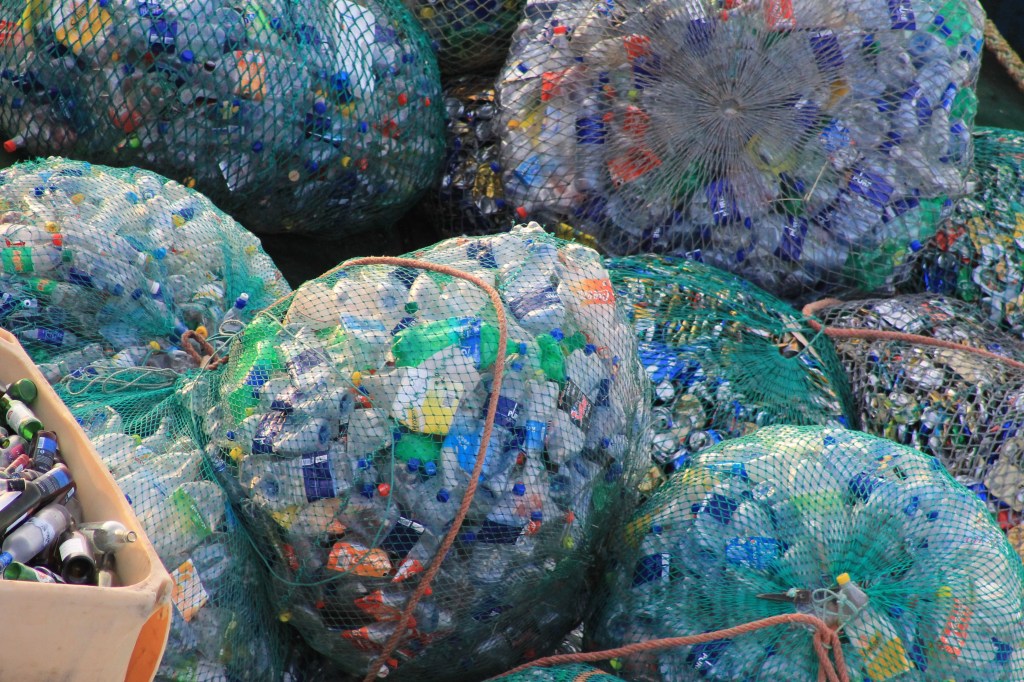
Birsha Ohdedar, Lecturer in Law at the University of Essex, co-edited a new publication on Designing Law and Policy Towards Managing Plastics in a Circular Economy, a special issue of the Law, Environment and Development (LEAD) Journal.
In recent years, there has been a global focus on plastics and plastic waste as an object of concern. In a context where the world has produced as much plastic since the beginning of the twenty-first century as in the whole of the twentieth century, warning signs observed by scientists have increasingly led to demands being placed on politicians, enterprises, lawyers and policy makers to come up with initiatives that can address the crisis. It is now recognised that we have reached peak-plastic at a planetary scale.
The legal and regulatory challenges to achieve systemic transformation need to be identified, understood and reimagined to deliver outcomes that can lead to a world that minimises the use of plastics and ensures that no plastic waste ends up in the environment. The contributions in the Special Issue provide a unique global perspective to these discussions on the circular economy. They include contributions from both the Global North (UK, EU specifically) and the Global South (Morocco, Taiwan and Kenya), as well as scientific perspectives of the life-cycle assessment.
While there have been efforts to address the plastic surge in different parts of the world, there is a strong North-South dimension to plastics recently highlighted by the Chinese ban on plastic waste imports. In other parts of the Global South, the issue is not just an environmental one but also one linked to livelihoods. These perspectives remain underexplored in academic and policy literature. Accordingly, the articles in the Special Issue provide an important contribution to fill this critical gap.
The Special Issue arose from a workshop was jointly organised by SOAS, University of London, the University of Essex and the University of Surrey in June 2018.








 Essex Law Research Blog