The Rule of Law: Driving Water and Climate Inequality?

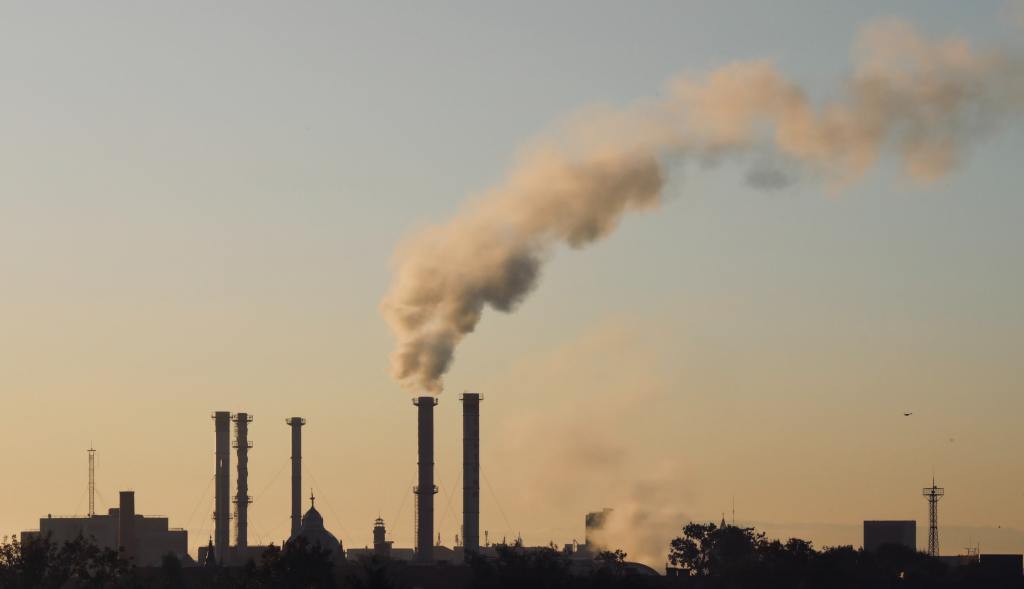
Image: Dravyavati R., Jaipur by Rod Waddington licensed under CC BY-SA 2.0

By Dr. Birsha Ohdedar, Lecturer in Law, University of Essex

The rule of law broadly underlies the idea that ‘no one is above the law’ and that the law is created and applied fairly. The dominant liberal-legal narratives on the rule of law often do not go much beyond this. That is, they do not ascribe content about ‘what that law should be’. Rarely does this narrow ‘rule of law’ speak to any right to have law made to protect the planet and realise the needs of marginalised and deprived peoples. As Baxi puts it, there is no theory of ‘the good’ in the rule of law. There are only minimal procedural ideas that inform the dominant narratives on the rule of law.

The narrow conception of ‘the rule of law’ serves particular ideological ends. The last three decades have shown that the rule of law has been a handmaiden of economic growth and capitalism. Growth that has brought about ecological disorder at a planetary scale. For instance, the rule of law has been used as an ideological concept by international development banks – such as the World Bank and the Asian Development Bank – to pursue legal, policy and technical reforms in the Global South. Such use has transformed the reason for the law, as Krever argues, to promote the mantras of economic efficiency and entrepreneurial activity.  

Water and Climate inequality in Jaipur, India

The rule of law and its relationship with climate change can be illustrated by looking at the Global South’s water and climate conflicts. The city of Jaipur in India is a growing city in the northwestern state of Rajasthan. Like many cities in the Global South, its economy has been urbanising and growing, driven by national and international policies.

However, the urbanisation in Jaipur operates in the context of water and climate stress. In India today, 600 million people face extreme water stress, and about 200,000 die every year due to inadequate access to safe water. Climate change is intrinsically woven into this water crisis, with 44 per cent of the country under various degrees of drought in 2019, increasing the intensity of floods, cyclones and grave climate impacts. Last year, massive farmer protests, which gained worldwide attention, were partly driven by the growing water crisis in rural areas.

The ability of Jaipur to grow in deeply unequal ways has been dependent on taking water from rural communities. This has created further climate vulnerability. A key water source for Jaipur is a reservoir outside the city, connected via a pipeline. The pipeline was built in the 2000s, funded by loans from international development banks. As part of the loan conditions, there were reforms, and state utilities were corporatised. Water utilities were to be reformed to operate under market logic, driven by profit and cost-recovery, rather than treating water as a public good that served a broader social and ecological purpose.

The reforms requested by international development banks transformed how water was used and distributed. The state was now incentivised to take water and re-direct to where it earned the most money. This was for city dwellers and industrial users who paid higher tariffs for water and are more likely to pay for greater use. Poorer rural and urban communities, less financially worthy, lose out. Law and policy were central in this reform and transformation.

Law also played a role in ensuring enough water was available for the city. In earlier years, communities living around the river that now supplied water into the pipeline built small earthen dams to capture water for their use and livelihoods. The judiciary consistently upheld a government ban on these dams. This was because of a perceived threat to the sustainability of the river that was now feeding the city.

Meanwhile, groundwater, a significant water source for many, is critically overexploited in the region. Colonial groundwater laws in India have notoriously allowed landowners the right to exploit as much as they wish. While the state can restrict future exploitation in overexploited blocs, it cannot stop existing users. Participatory governance, so often tied up in neoliberal and the rule of law rhetoric, has also failed to shift power structures that depend on who owns land, has water rights, and thus wealth. The rule of law stays silent on these broader questions.

The impacts on rural communities are devastating. Communities that relied on such water for livelihoods, growing food, and day-to-day use, now see pipelines that take water into the city, passing their houses. When construction of the pipeline began, protesters were shot and killed by police. Today, communities struggle with water scarcity and water quality. As climate change intensifies, the city demands more water, and conflicts ensue. With worsening water conditions in villages, people rely on cities’ employment opportunities to migrate to urban areas.

A combination of legal, policy and technical reforms drives this ‘accumulation by dispossession’. Certain actors have benefited (namely urban industries and wealthier urban residents) and profited from the dispossession of water and other resources from the rich.

A Different Rule of Law

The lessons from this small example are that the rule of law acts as either a silent actor or a handmaiden of social and ecological plunder. The perception of objectivity and neutrality of the law masks its deployment by powerful actors. Thus, we should not assume that the ‘rule of law’ is inherently positive in our efforts to have a fairer and more habitable planet.

At the same time, the rule of law is a concept capable of a radically different meaning. Like many other concepts, such as human rights or good governance, its content can be derived and transformed as a result of concrete social, legal, and political struggle. The rule of law should be rooted in democracy. However, beyond merely the procedural, participatory sense, it can include democratic re-commoning of natural resources like water. Indeed, a ‘bottom up’, ‘ecological’, rule of law, would entail supporting the efforts of peoples’ struggles to define an ecologically and socially just law.


This article was originally published in The Rule of Law and Climate Change Blog, run by UCL Centre for Law and Environment. The post is reproduced on the ELR Blog with permission and thanks.

Sustainability as a Legal Principle: Call for Papers

Third YUFE LAW Meeting, Rijeka, 23-24 June 2022

Photo by Headway

YUFE, the Young Universities for the Future of Europe, is an alliance of ten dynamic, student-centred research-based universities and four non-academic partners from the non-governmental and private sector for an impactful European University. Together, the YUFE partners aim to establish one of the first true European Universities.

Essex is part of the YUFE alliance and is working with its partners to shape the future of European higher education by establishing a European University that’s open to all. 

Continuing its recently established YUFE LAW practice, first at the meeting in Maastricht in January 2020 and subsequently, at the meeting in Bremen in May 2021, applications are invited for the Third YUFE LAW meeting which will be held by the Faculty of Law in Rijeka, Croatia on 23 and 24 June 2022.

Following last year’s model, the discussion concerning the past and future cooperation within the YUFE LAW will be held in parallel with the dissemination of research at the international scientific conference dedicated to the topic of Sustainability as a Legal Principle.

The term “sustainable development” started gaining planetary recognition probably with the 1992 United Nations Conference on Environment and Development and the Earth Plan. At the 2002 World Summit for Sustainable Development in Johannesburg, the need for consistency between the three pillars of sustainable development – being social justice, economic growth, and environmental protection – was stressed as crucial thus paving the way for what we understand as sustainable development nowadays.

The 2030 Agenda for Sustainable Development was adopted by all United Nations Member States in 2015 to ensure common values of peace and prosperity for people and the planet, now and into the future. The core of the Agenda is made of the 17 Sustainable Development Goals (SDGs) which recognize that ending poverty and other deprivations must go hand-in-hand with strategies that improve health and education, reduce inequality, and spur economic growth – all while tackling climate change and working to preserve our oceans and forests.

Understanding sustainable development as a development that meets the needs of the present without compromising the ability of future generations to meet their own needs, its initial meaning has been broadened much beyond environmental protection to encompass virtually all aspects of human activities.

Reaching SGDs can thus be done by means of regulating emissions and promoting developments in renewable energy, developing responsible ICT enabled transformation, reducing waste, or fighting extreme poverty just as by eradicating inequalities, empowering women, ensuring full and productive employment, and decent work for all, or promoting peaceful and inclusive societies, providing access to justice for all and building effective, accountable and inclusive institutions at all levels.

Law is a powerful means in achieving SDGs because the underlying policies may be more efficiently achieved if effectively in-built in legal regulation and not just made part of promotional activities or alike. Reinforcement by means of legal norms seems to be one of the key factors in following through the 2030 Agenda.

Indeed, by now, many preambles, pieces of legislation. statements and declarations contain references to sustainable development, international, European or national. In various areas of law, support or justification for certain regulatory solutions is sought in sustainable development concerns. Such concerns are being more explicitly articulated by the courts and tribunals in different countries.

It is increasingly recognised at many levels that bringing together social, environmental and economic rules and regimes is necessary. Gradually, sustainable development has entered the legal sphere and we may ask ourselves to what extent is sustainability a legal principle.

Against this backdrop, recent years have witnessed also intensified academic discussions on the role of law in sustainable development. For legal researchers, this is a daring endeavour since it entails an interdisciplinary approach including deepening the understanding of the sustainable development and SDGs and attempting to gain a broader understanding and wider picture of the researched issues.

At the same time, legal scholars have a huge responsibility to attempt to discover the old laws which are at odds with the SDGs or to unmask the new ones which use the “greenwashing” practices rather than truly contribute to the achievement of one or more SDGs.

The Third YUFE LAW Research Conference welcomes papers from any area of law, with more or less interdisciplinary threads, which would discuss legal regulation in the context of the SGDs. The conference aims to gather experts in various fields of law affiliated with any of the YUFE partners, to discuss different topics under the umbrella of sustainability as a legal principle.

If you are interested and willing to contribute, please send the title and abstract of your proposed topic (1-2 pages) and your short CV (5 lines on current position and relevant publications) no later than 15 March 2022 to yufe.law@uniri.hr.

The conference will be held in hybrid form. The Faculty of Law in Rijeka will be able to provide lunch and refreshments to all onsite participants, but travel and accommodation should be covered from other sources (e.g., Erasmus+ funding or home institutions).

We look forward to meeting you in Rijeka!

Event: Posthuman International Law and the Rights of Nature

Photo by Elissa Garcia

Both posthuman theory and the rights of nature (RoN) movement have the potential to challenge the anthropocentrism of international environmental law (IEL).

Scholars have begun to document the transformative shifts that could occur through the application of posthuman legal theory to IEL, but these theories have yet to be applied to law in practice.

On the other hand, the RoN have been applied in domestic law but hardly in international law, while the question of what RoN includes and excludes remains contested.

Dr, Emily Jones, Senior Lecturer in Law at the University of Essex, brings posthuman theory and RoN together, reflecting on how posthuman legal theory can contribute to the framing of RoN, with a focus on challenging the anthropocentrism of IEL.

She is presenting her work on the rights of nature and posthumanism at a special seminar hosted by Law and Global Justice at Durham (LGJD) on Friday 4 February 2022 15:00-17:00 GMT.

You can attend this event either online or in-person (Durham University, Room PCL152, Moot Court). To register, please email roman.f.chuffart@durham.ac.uk.

Posthuman International Law and The Rights of Nature

Photo by David Marcu

Both posthuman theory and the rights of nature (RoN) movement have the potential to challenge the anthropocentrism of international environmental law (IEL).

Scholars have begun to document the transformative shifts that could occur through the application of posthuman legal theory to IEL, but these theories have yet to be applied to law in practice.

On the other hand, RoN have been applied in domestic law but hardly in international law, while the question of what RoN includes and excludes remains contested.

Dr. Emily Jones, Senior Lecturer in Law at the University of Essex, published a new article in the Journal of Human Rights and the Environment which brings posthuman theory and RoN together, reflecting on how posthuman legal theory can contribute to the framing of RoN, with a focus on challenging the anthropocentrism of IEL.

The article argues, first, that the next step for posthuman legal theory will be its application to existing law.

Noting convergences between posthuman legal theory and the rights of nature (RoN), the article contends that those seeking to apply posthuman legal theory might find some interesting alliances by turning to RoN.

Second, the article argues that using posthuman theory to frame RoN could help to ensure that RoN live up to their transformative potential.


Article full citation: Jones, E. (2021). Posthuman international law and the rights of nature, Journal of Human Rights and the Environment, 12(0), 76-101. DOI: https://doi.org/10.4337/jhre.2021.00.04. A copy can be accessed through the publisher’s website here or requested through the University’s research repository here.

The Role of Courts in Tackling Climate Crisis

Photo by Markus Spiske

Dr. Birsha Ohdedar, Lecturer at the School of Law & Human Rights Centre of the University of Essex, recently spoke at a special side event during COP26, hosted by global law firm Hausfeld, the British Institute of International and Comparative Law (BIICL) and the University of Glasgow on ‘Mobilising the Rule of Law in Climate Change’.

Birsha spoke alongside Dr. David R. Boyd (UN Special Rapporteur on Human Rights and the Environment), Prof. Michael Gerrard (Columbia Law School), Prof. Christina Voigt (the University of Oslo and Chair of the IUCN World Commission on Environmental Law, Co-chair of the Paris Agreement´s Compliance and Implementation Committee). The panel was chaired by Ingrid Gubbay (Hausfeld). The event also included keynotes from Mary Robinson (former President of Ireland) and Vanessa Nakate (Climate Justice advocate)

The panel addressed the issue of climate litigation. The role of litigation has been a rapidly emerging area in recent years. The Paris Agreement, signed in 2015, catalysed thousands of cases around the globe and has become a way to hold governments and corporations to account.

The panel built on discussions that took place in July at a ground-breaking global summit entitled ‘Our Future in the Balance: The Role of Courts and Tribunals in Meeting the Climate Crisis’, which resulted in a landmark Declaration outlining the role of the law and judiciary in addressing climate change.

Birsha’s presentation discussed the role of the judiciary in South Asia – its procedural and substantive innovations that have led to environmental rights-based public interest litigation since the 1980s. These innovations hold much promise in addressing the climate crisis.

However, as Birsha explains there are wider political-economy questions of how the courts deal with climate issues that may create obstacles. For instance, the deference to the executive on large economic projects (which often involve further climate harm), issues with enforcement of decisions, the types of environmental claims it favours, and how the judiciary deals with trade-offs between rights, justice and climate action.

In relation to the last point, Birsha argues that we may see an increase in litigation around ‘green’ projects, which negatively impact people’s rights, for instance, dispossession of land for solar energy, and for forest conservation. Thus, we need to work with lawyers and judges to better understand climate issues under a justice and rights framework, that doesn’t see ‘climate action’ further marginalising the already marginalised.

Birsha’s recent work on climate litigation includes a book chapter on litigation in India and Pakistan and a forthcoming article on climate adaptation, vulnerability and litigation in the Journal of Human Rights and Environment.

The presentation is available in the video below:

The Ecology of War and Peace: Marginalising Slow and Structural Violence in International Law

Photo by Sergio Torres

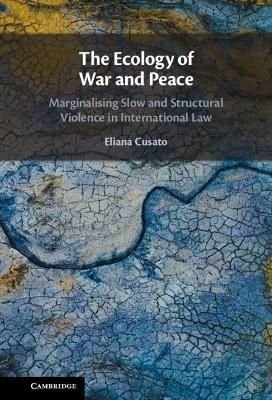
Dr. Eliana Cusato, who is currently appointed as a Marie Skłodowska-Curie postdoctoral fellow at the Amsterdam Center for International Law, authored a new book titled The Ecology of War and Peace: Marginalising Slow and Structural Violence in International Law. Her book was published by Cambridge University Press in September 2021.

The interrelation of ecology and conflict has been the object of extensive study by political scientists and economists. From the contribution of natural resource ‘scarcity’ to violent unrest and possibly armed conflict; to resource ‘abundance’ as an incentive for initiating and prolonging armed struggles; to dysfunctional resource management and environmental degradation as an obstacle to peacebuilding, this literature has exerted a huge influence upon academic discussions and legal/policy developments.

While international law is often invoked as the solution to the socio-environmental challenges faced by conflict-affected countries, its relationship with the ecology of war and peace remains undertheorized. Drawing upon environmental justice perspectives and other theoretical traditions, the book unpacks and problematizes some of the assumptions that underlie the legal field.

Through an analysis of the practice of international courts, the United Nations Security Council, and truth commissions, the book shows how international law silences and even normalizes forms of structural and slow environmental violence (notably, uneven access and distribution of natural resources; less visible forms of violence associated with the environmental aftermath of wars).

This, in turn, jeopardizes the prospects of creating more peaceful societies, while perpetuating deeply rooted inequalities. Ultimately, the book urges us to imagine entirely different legal notions of justice, peace, and security in times of ecological disruption.

By drawing upon extra-legal fields of inquiry (e.g., the literature on environmental security, the political economy of civil wars, the resource curse, and environmental peacebuilding), the book strives to refine extant understandings of how international law conceptualizes and regulates the ‘environment’ before, during, and after armed conflict.

By engaging with some of the international legal order’s most pressing concerns – rising intra-state violence, environmental degradation, resource depletion, and their interaction – the book opens intellectual spaces for rethinking current approaches to the ecological challenges of our hyperconnected world and their adverse impact on the most marginalized peoples. As such, it offers a critical companion work to related titles and, at the same time, pushes the research envelope further and in new directions.

E Cusato, The Ecology of War and Peace: Marginalising Slow and Structural Violence in International Law (CUP 2021)

The book will be of interest to academics and students across different disciplines, primarily international law, but also peace and conflict studies, political theory, and international relations. It will also prove useful as a reference for policymakers and practitioners working at the intersection of environmental issues, human rights, and peace and security within international organisations/tribunals, governmental departments, think thanks, and NGOs.


Dr. Eliana Cusato is currently on academic leave from the Essex Law School.

School of Law and Human Rights Centre Host Workshop on Critical Perspectives on Global Law and the Environment

Photo by Mike Erskine

On 22-23 April 2021, the School of Law and Human Rights Centre (HRC) held a workshop bringing together scholars at an early stage in their careers to support the development of research on critical perspectives on global law and the environment.

The workshop was organised by Emily Jones, Eliana Cusato, Judith Bueno De Mesquita and Birsha Ohdedar (all Lecturers in the School of Law and Human Rights Centre).

The workshop aimed to foster and develop the emerging area of critical scholarship on law and the environment, specifically among early-career researchers. In confronting global challenges such as climate change, biodiversity loss, freshwater scarcity and other symptoms of planetary breakdown, it has been noted that traditional approaches of environmental law have only managed to save “some trees” but failed to keep “the forest” (Bosselmann, 2010). The current environmental crises intertwine with poverty, inequality, and gendered and racial hierarchies that stem from colonial origins and replicate in the postcolonial and neoliberal worlds. Therefore, the challenge laid down for critical scholarship is to interrogate (and re-imagine) the role of law in the unending drive for economic expansion, unbridled exploitation of people and nature, rather than merely attempt to mitigate its excesses (Gonzalez, 2015).

Workshop partipants during the second day of the work-shop

In recent years, an emerging body of work broadly re-examines environmental law from a critical lens. These include perspectives that account for: Third World Approaches to International Law (TWAIL) and Global South-North relations; critical interrogations of human rights and the environment; innovative research methods; new materialism; and climate and environmental justice. This workshop builds on these critical perspectives with the aim of fostering a new generation of scholars.

The workshop had 18 early-career scholars participating, with a cross-section of representation from early-stage PhD researchers to those up to 5 years into their post-PhD academic careers. The virtual workshop meant participants were based across the globe, including from Europe, Canada, Turkey, Brazil, Australia, Barbados, and India, with representation across genders.

Each participant in the workshop produced a paper in advance of the day. The workshop adopted an innovative format by pairing up participants to present on each other’s paper rather than their own. The format resulted in greater engagement, feedback and the development of presenting work that is not their own, concisely and clearly. Each paper was closely discussed with other participants and invited senior discussants, providing an opportunity to gain a range of feedback on their work.

In between the two days of discussion, Prof. Carmen Gonzalez, Professor of Law at Loyola University of Chicago, delivered a keynote address on the topic of racial capitalism and global environmental law.

Keynote speaker Professor Carmen Gonzalez and the organisers of the workshop

A symposium edition of the Asian Journal on International Law is planned for 2022, as a workshop output, which will showcase some of the presented papers.

The workshop complements the work at the School of Law and HRC in this area, including through a research cluster on Human Rights and Environment and recent symposiums on human rights and climate change, albeit bringing a more focussed critical perspective.

Rising Sea-Levels and International Law: Asia and Beyond

Photo by Saad Chaudhry

On the 26th May 2021, Dr Meagan Wong, Lecturer in Law at the University of Essex, appeared in a panel of the 8th Biennial Conference of the Asian Society of International Law titled ‘Rising Sea-Levels and International Law: Asia and beyond’. The panel was also joined by Professor Patrícia Galvão Teles and Mr Alessandro Rollo, and was chaired by Dr Nilüfer Oral.

The panel was proposed and co-submitted by the four members of the event in response to an open call by the Asian Society of International Law. Dr Nilüfer Oral and Professor Patrícia Galvão Teles are both members of the UN International Law Commission and Co-Chairs of the study group on ‘Sea-level rise in relation to international law’; and Alessandro Rollo is an Associate at Omnia Strategy who specialises in public international law and international dispute settlement.

The panel drew attention to the fact that sea-levels are rising at an accelerating rate. Indeed, Asia-Pacific is home to island States, to whom sea-level rise is an immediate and pressing concern, archipelagic States which are potentially vulnerable, and major cities including Tokyo, Jakarta, Ho Chi Minh City and Shanghai that are considered most at risk from sea-level rise.

That said, the panel also acknowledged that sea-level rise is very much a global concern which merits attention from the international community as a whole and emphasised the work of the International Law Commission, which in 2019 decided to include the topic ‘Sea-level rise in relation to international law’ into the agenda, which broadly examines three themes: i) issues related to the law of the sea; ii) issues related to statehood; iii) issues related to the protection of persons affected by sea-level rise.

UN Secretary-General António Guterres has said ‘climate change offers an opportunity for multilateralism to prove its value‘ and sea-level rise is just one of the unfortunate impacts of climate change. In light of the call for multilateralism, Dr Meagan Wong’s presentation in the panel focused on ‘Sea-level rise and multilateralism.’ Her talk was structured in two main parts: first, cooperation between States; and secondly, non-compliance of States of their international obligations within existing frameworks that address climate change.

In relation to cooperation between States, Dr Wong first looked at multilateralism and the international legal order in the United Nations, highlighting the work of the UN International Law Commission. This was further elaborated upon by Professor Galvão Teles. Next, Dr Wong considered climate change and the oceans, drawing upon the legal frameworks of the UN Law of the Sea Convention 1982, the UN Framework for Climate Change 1992 and the Paris Agreement 2015.

Dr Wong then considered the obligation on States to settle their international disputes by peaceful means and the various peaceful means of choice in the event of non-compliance of States with their respective obligations. The cooperation between States in various multilateral settings and the peaceful settlement of disputes in the event of non-compliance in relation to climate change obligations reflect two important themes of multilateralism.

This was followed by a discussion by Mr Alessandro Rollo on the impact of sea-level rise on international human rights law. Mr Rollo addressed how sea-level rise jeopardises the human rights of individuals living in affected States in Asia and beyond, and the duty of affected States to protect the human rights of individuals under their jurisdiction in relation to the impact of rising sea levels. Professor Patrícia Galvão Teles expanded further upon the themes discussed by the earlier two panelists with particular reference to the work of the UN International Law Commission Study Group on sea-level rise in relation to international law.

Further information about the work of the UN International Law Commission on Sea-Level Rise can be seen here.

Human Rights and Climate Change Symposium – University of Essex 9-11th June 2021

There are many ways in which climate change impacts upon a range of human rights. Therefore, it may appear strange that the linkages between human rights and climate change were not widely acknowledged until relatively recently. The first UN Human Rights Council resolution relating to climate change occurred in March 2008, where it acknowledged that climate change, ‘poses an immediate and far-reaching threat to people and communities around the world’.

The meaning and understanding of the linkages between human rights and the environment more generally have taken a long time to emerge at national and international levels. Following a key moment at UNCHE in Stockholm in 1972 when it was declared that people have a ‘fundamental right to freedom, equality and adequate conditions of life, in an environment of a quality that permits a life of dignity and well-being..’, developments have taken place gradually and often in a fragmented manner.

All the same, through national constitutions and courts, regional human rights treaties and tribunals, declarations of international organisations and through the work of the international community more generally, law and opinion in the field of human rights and the environment have developed year by year. And yet, in spite of the many developments that have taken place, the right to a safe, clean, healthy and sustainable environment has still not been acknowledged through a globally applicable international treaty or a resolution of the UN General Assembly. 

Climate change as a specific environmental issue has gained prominence relatively recently, however, the trajectory of developments in its relationship with human rights has been rapid. In the early 1970s, the international issues that dominated the headlines were issues such as the Vietnam war, famines in different parts of the world, factional wars and violence in newly independent countries and the introduction of early computers. In contrast, the 2000s have seen climate change rise rapidly up international agendas. This is seen through the intensity of attention afforded to it at meetings among national leaders, through the strategies of multinationals to respond to the need to reduce emissions, and through the levels of engagement with the issue by the international community generally. This has meant that work has intensified very rapidly to fully understand the human rights implications of climate change.

That said, there are still many questions that need to be answered. These include questions relating to the ways that climate change impacts upon and intersects with existing human rights, those relating to the ways that human rights as legal mechanisms can be activated to respond to the challenges related to climate change, and questions relating to the level of recognition or the status of the ‘right to a safe climate’ itself. 

Between 9-11 June 2021, the School of Law and the Human Rights Centre at the University of Essex in conjunction with its partner organisations, will be hosting a symposium that will focus on issues related to the nexus between human rights and climate change. The symposium is grateful to the numerous international experts who have offered to participate.

In particular, it is grateful to Elizabeth Mrema (Executive Secretary of the Convention on Biological Diversity) and Professor John Knox (former UN Special Rapporteur on Human Rights and the Environment) for their participation and support.

The symposium will include talks and panel sessions that focus on different aspects of the intersections between human rights and climate change. They include environmental constitutionalism, biodiversity, dignity, migration, energy provision in developing countries and the rights of a child. The symposium will also include panel sessions that specifically consider Bhutan and the rights of nature. 

We extend a warm welcome to you and hope that you will join us. 

For further information and details on how to register see: Human Rights and Climate Change Symposium

Partner Organisations: 

  • Environmental Law Institute (Washington DC)
  • University of Bayreuth (Germany)
  • University of East Anglia (UK)
  • Global Environmental Rights Institute, Dignity Rights Project (USA)
  • Widener University Delaware Law School (USA)

Climate Change Litigation in India and Pakistan: Analyzing Opportunities and Challenges

Photo by Cristi Goia

Dr Birsha Ohdedar, Lecturer in Law at the University of Essex, has contributed a chapter in the edited volume Climate Change Litigation: Global Perspectives (BRILL, 2021). The book brings together experts around the globe to analyse the role of litigation at the national, regional and international level in advancing efforts to tackle climate change.

Dr Ohdedar’s chapter, ‘Climate Change Litigation in India and Pakistan: Analyzing Opportunities and Challenges’, contextualises and analyses cases in India and Pakistan. Since the case of Asghar Leghari v Pakistan, where a Pakistani farmer successfully petitioned the Court to hold the Pakistani government to account for its lack of climate action, the region has been of interest to lawyers, activists and academics. Ohdedar’s chapter looks at this case, and other similar cases in India, that aim to catalyse national level climate action.

Ohdedar’s chapter goes beyond a focus on headline cases. The chapter analyses the development of litigation with reference to broader socio-political dimensions of litigation, environment and climate change in the region. The chapter highlights, for instance, that a narrow focus on climate change and emissions reduction can obscure livelihood, ecology, poverty and rights concerns. For instance, renewable energy development has often seen the dispossession of local communities of their land or destroying forest land. In many instances, courts have overlooked these concerns because of a narrow focus on emissions reduction and generation of clean energy.

The chapter also argues for future approaches that account for ‘litigation in the context of climate change’. These are cases dealing with mitigation and adaptation in substance but not necessarily expressly framed as ‘climate’ in their arguments or court decisions. Ohdedar draws on litigation concerning coal mining and drought relief showing how they actively shape climate-related concerns. These cases are often unaccounted in ‘climate litigation’ in scholarship, yet their impact for climate mitigation and adaptation is significant.

Accordingly, the chapter provides a fresh perspective to the current literature on climate litigation in India and Pakistan through a more focussed analysis of climate litigation in the domestic political and legal context within which such litigation takes place.

A version of the chapter is available for free from ResearchGate here.