The book is about arbitrary detention, but it is also a reflection on the shifting meaning of arbitrariness as a concept. I consider how forms of marginalisation and other arbitrary factors influence who will be detained, when, for how long and in what conditions. Policies of securitisation, regimes of exception, and criminalisation have exacerbated these arbitrary distinctions given their propensity to target “otherness,” even though there is nothing exceptional about “otherness.” How these policies are applied, and their impact on individuals and communities, depends on the underlying political values and goals at stake, which differ between countries and over time.
The book also explores how arbitrary detention has become normalised. It is used purposively by governments to foster divisions and to enforce hostility against socially marginalised groups who I classify in this book as: the “unseen” (those marginalised on account of their destitution and/or extreme social needs); the “reviled and resented” (the recipients of racist, xenophobic and discriminatory attacks); and the “undeserving” (refugees and other migrants). When arbitrary detention is normalised, it becomes impossible for courts to only countenance detention that is exceptional – the logic no longer works. So, this conundrum is analysed from different angles and factual contexts.
Why did I write it?
The idea for the book crept up on me in a non-linear way. It was always the book I wanted to write but it took some internal prodding and mental gymnastics for me to figure out how to articulate the urgency that I was feeling about the subject matter in a way that made sense on the page. So, framing the ideas, and the ideas within the ideas took time. In many ways the book is a homage to all the survivors of arbitrary detention I have been privileged to know and support, and to all the courageous human rights defenders, lawyers and psychologists who continue to work in this space.
How did I go about doing this research?
The methodology question is never straight-forward and the sociolegal purists may want to turn away now!
My ideas about the subject matter stem from about two decades of legal practice and advocacy working with victims of torture and seeing up close the suffering people undergo while in detention. So, there was a significant evidence base from where I derived my thinking, but it was quite diffuse, deeply personal and of course, subjective.
The purpose it served in the research process was mainly to guide me with the crucial task of figuring out what themes I needed to foreground. A good example of this is the decision I took to delve into the relationship between arbitrariness and torture. I claim that the disorientation, despair, uncertainty, lack of agency that arbitrariness produces (also considering the extensive psychological literature) is so harmful psychologically that it can rise to the level of torture (all other elements of torture being present). My decision to tackle this theme stems from years of speaking with clients about how arbitrariness in and of itself, made them feel. It also helped me to work out where I wanted to situate my thinking critically on the side of key debates. An example of this is how I critically examined the caselaw on socially excluded and marginalised groups and began to confront the failure of some courts to confront the phenomenon of industrial-scale arbitrary detention.
Then, I would say there are different layers to the book, and some of these layers are more pronounced or prominent, depending on the chapter. There is a layer which is in the classic style of human rights rapportage; going through reams of testimonials and reports to locate patterns and derive meanings and using individual narratives to give context. Another layer is the analysis of how regional and international courts have addressed the phenomenon of arbitrary detention. So, there is a deep doctrinal analysis of the caselaw and how certain findings came to be. But, because much of the caselaw lacks an obvious internal coherence I also use a variety of critical legal theories, social theory, and political philosophy to help me with the task of making sense of what has little obvious internal logic.
I enjoyed the process of pulling the text together; here’s to hoping readers will find it just as enjoyable to read!
Photo of the ICC (seated in The Hague) by Roel Wijnants on Flickr
On 6 June 2024, the International Federation of Human Rights (FIDH) filed an Article 15 Communication to the International Criminal Court (ICC) in The Hague, regarding speech crimes by Russian political and media figures, including Dmitry Medvedev, Dmitry Kiselyov, and Vladimir Solovyov. This marks an important step in the direction of accountability for hate speech and incitement to genocide.
The Communication, covering the period since the beginning of the full-scale Russian invasion of Ukraine in 2022, was produced in conjunction with several organisations as co-contributors, including the Essex Digital Verification Unit (DVU). Over several months in early 2024, members of the DVU contributed to the project, analysing statements by Dmitry Kiselyov and Vladimir Solovyov to identify possible instances of incitement.
An Article 15 Communication is a submission to the Prosecutor of the ICC, which aims to draw their attention to possible human rights violations. The Communication outlines the situation, the individuals it is brought against, as well as the alleged crimes that the Communication proposes for investigation. The Prosecutor will consider the facts presented, and on their basis might decide to start an investigation of the activities mentioned, which, in turn, might lead to arrest warrants against the persons behind these activities.
Source: International Federation for Human Rights (FIDH)
As a result of the research, numerous inflammatory statements by these figures were identified and analysed. They included the denial of the existence of Ukrainians as a separate nation, accusations of Nazism towards Ukrainian leadership and citizens, as well as calls to carry on the war against Ukraine until the said “Nazism” is destroyed. All of these statements were recorded and forwarded to FIDH in order to be used in preparation of the Article 15 Communication.
“Hateful rhetoric has played a crucial role in Russia’s criminal campaign in Ukraine”, stated FIDH. It added that “Our organisations believe that in the context of crimes against humanity hate speech is a separate offense that warrants greater scrutiny by the International Criminal Court. Our Communication provides ample evidence substantiating the need to further investigate these acts and ultimately issue arrest warrants.”
Dr. Matthew Gillett, Senior Lecturer at Essex Law School and a leader of the Essex DVU, contributed to the writing of the Article 15 Communication itself, and its launch on 6 June 2024. As a former international prosecutor and the co-producer of the Hartford Guidelines on Speech Crimes under International Criminal Law, he was glad to see the guidelines used as a basis for this ground-breaking speech crimes Communication to the ICC.
The Essex DVU’s mission is to enhance global investigations into human rights violations through the application of open-source research methodologies. Its activities leverage the transformative advancements in digital communications technology in recent years, notably the ubiquitous use of social media platforms and smartphones, and the growing use of this technology to obtain evidence of human rights violations and atrocity crimes.
By Sarah Zarmsky, Assistant Lecturer, Essex Law School
Photo from Unsplash
Historically, international criminal law (ICL) has been mainly concerned with physically violent crimes. Progressively, ICL has begun to recognise the importance of mental forms of suffering (such as for torture and genocide), but this has always been in connection with cases focused on physical harms. Recently, developments such as the proposed addition of the crime of ecocide to the Rome Statute of the International Criminal Court have signalled that ICL may be ready to evolve further and accommodate novel types of harm, including those perpetrated through technology.
To explore the potential of ICL to encompass online harms, or harmful acts perpetrated through online spaces, Sarah Zarmsky, PhD Candidate and Assistant Lecturer with the Law School, recently published her article ‘Is International Criminal Law Ready to Accommodate Online Harm? Challenges and Opportunities’ with the Journal of International Criminal Justice (JICJ). This article stems from part of Sarah’s doctoral research on accountability for digital harms under ICL, which encompasses a broader range of harms inflicted using technology than online harms.
This article aims to answer the understudied question of how technology can serve as the vehicle by which certain international crimes are committed or lead to new offences. It explores how current international criminal law frameworks may be able to accommodate ‘online harms’ to ensure that the law recognises the full scope of harms caused to victims, who currently may not be able to access redress through the international criminal justice system.
Three examples of online harm that have a foreseeable nexus to the perpetration of international crimes are identified, including (a) hate speech and disinformation, (b) sharing footage of crimes via the internet, and (c) online sexual violence. The article analyses these online harms alongside similar harms that have been encompassed by core ICL crimes, including genocide, crimes against humanity, and war crimes, to assess how they might fit into existing definitions of crimes (potentially as an aggravating factor at sentencing or as a new manner of commission), or warrant the creation of an entirely new offence.
The article concludes that the examples of online harm considered in the piece should be able to be accommodated by existing crimes, but this does not mean they should necessarily be treated the same as ‘traditional’ offences.
For example, in the case of the spread of hate speech, this online harm could likely fall under existing definitions of persecution or incitement to genocide, or when footage of crimes is shared online, it could likely amount to an outrage upon personal dignity. Yet, the online component often exacerbates the harm—for instance, posting a video of a crime could be potentially even more humiliating than committing the same crime in a public square, where the footage is not preserved, distributed, and virtually impossible to get rid of.
These elements should be recognised by ICL Chambers in future cases, such as during the gravity assessment of the crimes or at sentencing, to ensure that the full scale of the harm is acknowledged.
Finally, the article emphasises that as technology will only continue to develop and serve as a vehicle for an increasing array of harms, finding ways to account for online harm and bring redress to victims should be an issue at the forefront of ICL.
The article forms part of a forthcoming Special Issue with the JICJ edited by Dr Barrie Sander (Leiden University) and Dr Michelle Burgis-Kasthala (University of Edinburgh) titled ‘Contemporary International Criminal Law After Critique’.
The discussions that will be sparked by this article are relevant to the explorations of engaging with ICL ‘after critique’ presented in the Special Issue, as it is important that ICL be able to recognise and adapt to new forms of harm to avoid the favouring of existing criminal harms that can reinforce traditional assumptions and stereotypes behind the law.
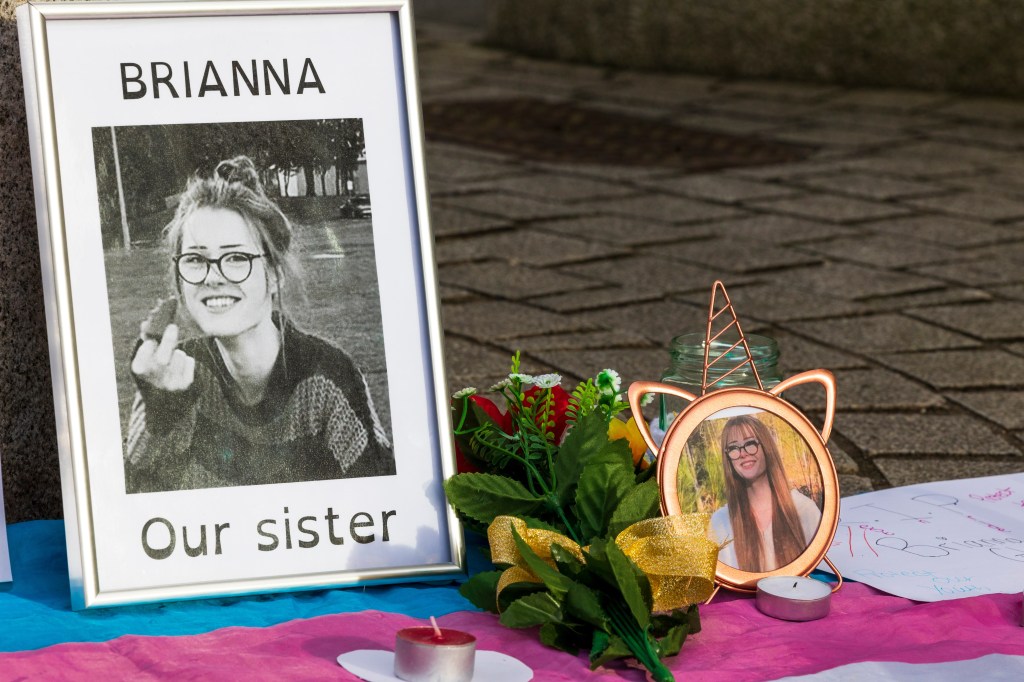
The death of 16-year-old Brianna Ghey at Culcheth Linear Park in February 2023 sent shockwaves across the United Kingdom. On 20 December 2023, Scarlett Jenkinson and Eddie Ratcliffe were found guilty of Brianna’s murder, subsequently receiving life imprisonment sentences on 2 February 2024.
From the brutality of the crime to the debate over whether the perpetrators’ names should have been published and the speculation about the potential influence of violent media on their actions as to whether their acts had been influenced by violent media, this case is reminiscent of James Bulger’s murder over three decades ago. A notable difference, however, is that the victim in this case was a transgender girl.
Brianna’s murder against the backdrop of the trans rights debate
Official figures reveal a concerning surge in police-recorded transphobic hate crimes in England and Wales in recent years (11% up from the year before in 2022/23 and a staggering 186% rise over the last five years). The latest Home Office report acknowledges that comments made by politicians and incendiary media discussions on trans issues might have contributed to this trend. In the current socio-political climate, where the polarisation between trans and women’s rights groups over gender self-identification can reach ‘toxic’ levels, there is a serious risk that victims like Brianna Ghey will – as the domestic abuse commissioner Nicole Jacobs warned – be ‘denied their dignity’.
Recognising the role transphobia has played in this violent crime is vital to tackling that risk. Yet, The Times were quick to ‘deadname’ Brianna, i.e. report the news of her murder using the victim’s pre-transition (male) name, triggering a strong backlash by trans advocates. Similarly, BBC News and Sky News also faced criticisms for initially failing to mention the victim was trans. Meanwhile, Fair Play for Women, a gender-critical campaign group which views sex as immutable, argued that the victim’s transgender identity was not relevant to stories about her murder and should have been omitted from them. Notably, Cheshire police did not consider the murder to have been motivated by hatred against Brianna’s transgender identity. DCS Mike Evans explained that Jenkinson and Ratcliffe had previously discussed killing other children, suggesting that, had they not been able to kill Brianna, they would have found another victim.
Why did Brianna’s murderers not remain anonymous?
Due to the defendants’ age, restrictions were in place throughout the trial to prevent the publication of any information likely to reveal the identities of the two perpetrators as the defendants in these proceedings. However, some controversy arose when the decision was made to publicly name the two teenagers at their sentencing. Mrs Justice Yip took the unusual step to revoke anonymity orders shielding the assailants’ identities, following an application by press representatives.
As there has been some misunderstanding around this issue, it is worth explaining how the anonymity orders worked in Brianna’s case. It will be recalled that the two perpetrators were tried before the Manchester Crown court, which is an adult criminal court – not a youth court (of note, a young person charged with murder cannot be tried or sentenced by a youth court because of the seriousness of the charge). While there is no automatic ban on identifying individuals under 18 as being concerned in the proceedings of adult criminal courts, section 45 of the Youth Justice and Criminal Evidence Act 1999 empowers criminal courts to grant anonymity to a juvenile defendant, victim or witness in adult criminal proceedings while they remain under the age of 18. This power is not available to youth courts. The intention of Parliament in enacting this provision was to widen the scope of protection available to under-18s.
Section 45 allows an adult criminal court to impose a discretionary reporting restriction. If the court so wishes, it can choose to impose no restrictions at all. The law draws, therefore, a distinction between young people appearing in youth courts, who are automatically entitled to anonymity, and those appearing in adult criminal courts, who must seek a discretionary reporting restriction.
This is critical. It means that in a youth court, there must be a good reason for lifting the anonymity order which applies by default, whereas under section 45 of the 1999 Act, there must be a good reason for imposing – or continuing with the imposition of – the anonymity order. So, in the case of section 45, there is a strong presumption in favour of open justice, placing the burden of justifying reporting restrictions on the party seeking to derogate from this fundamental principle.
The defendants in Brianna Ghey’s case, both 16 at the time of their conviction, would lose the anonymity protection upon reaching adulthood in 2025 by operation of the law. In the meantime, however, a court may consider lifting or relaxing restrictions in two circumstances: either when the court is satisfied that doing so is ‘necessary in the interests of justice’ (section 45(4)); or when it is satisfied that the reporting restriction unduly limits the coverage of the proceedings and it is ‘in the public interest’ to remove or modify the restriction (section 45(5)). A list of factors to be considered in an assessment of where the public interest lies in such situations is provided in section 52 of the Act.
No judge takes such decisions lightly. As the Court of Appeal has previously emphasised, judges are tasked with meticulously weighing the competing public interest factors at play on the particular circumstances before them. So, neither the open justice principle nor a young person’s best interests automatically dictate the conclusion in a given case. Pre-conviction and during the trial, a defendant’s welfare is likely to take precedence over the public interest in disclosure. However, post-conviction and sentencing, factors such as the offenders’ age and the severity of the crime acquire particular relevance in determining whether publication is warranted.
As Mrs Justice Yip observed in Brianna’s case, ‘the shock generated by [her] murder and the circumstances of it has spread well beyond the local community, across the nation and indeed internationally. The public will naturally wish to know the identities of the young people responsible as they seek to understand how children could do something so dreadful. Continuing restrictions inhibits full and informed debate and restricts the full reporting’ of an ‘exceptional’ case.
But the lifting of the discretionary reporting restrictions under section 45 was driven not only by the sustained public interest in knowing the identity of Brianna’s murderers, but also because of the likelihood of continued media attention regardless of the timing of disclosure as well as the defendants’ extended custody and rehabilitation process into adulthood. While acknowledging the distress to the defendants’ families, Mrs Justice Yip underlined that the powers under section 45 were not designed for convicted defendants’ family members, and the risk of harassment to the defendants’ families was deemed likely regardless of the timing of identification. It was the combination of all these considerations that favoured publication.
Sentencing in Brianna’s murder as a catalyst for confronting transphobia
Brianna’s murderers were named the day they were sentenced for her murder. Even though Cheshire police had dismissed transphobia as a motivating factor, Mrs Justice Yip expressly recognised in her sentencing remarks that the crime had been, at least partly, driven by hostility towards Brianna’s trans identity. Distinguishing between the young offenders’ motivations, the judge determined that Jenkinson was primarily seeking to act out her ‘sadistic’ fantasies and had a ‘deep desire to kill’ while Ratcliffe was, in part, driven by transphobic sentiments. This hostility towards trans people had, according to the judge, been ‘undoubtedly displayed’ in the dehumanising language Ratcliffe used in the WhatsApp messages he had sent to Jenkinson, in which he described Brianna as a ‘femboy thing’ or ‘it’, revealing that he wanted to ‘see if it will scream like a man or a girl’.
Such messages make for a harrowing read and it is easy or even convenient for our society to brush off the transphobia reflected in them as merely the hateful words of one ‘bad apple’. The truth is, however, that Brianna Ghey’s murder has shed light on a harsh reality: abuse often becomes a distressing aspect of vulnerable trans individuals’ lives, even if this does not always escalate to extreme violence. The Conservative Government’s and the UK mainstream media’s trans-othering rhetoric has been repeatedly criticised by several international human rights organisations. Indicatively, the Council of Europe’s Commissioner for Human Rights, Dunja Mijatović, warned of the risks deriving from an ‘increasingly toxic’ anti-trans political and media discourse built upon ‘deeply discriminatory stereotypes […] based on ideas of predatory determinism.’ This ‘culture war’ against trans people has also been cited by the International Lesbian, Gay, Bisexual, Trans and Intersex Association as one of the reasons behind the UK’s continuous drop in its annual rankings for LGBT rights across Europe.
During PM Questions on 7 February 2024, Rishi Sunak faced a backlash after his remark about Labour leader Keir Starmer’s purported difficulty in ‘defining a woman’ while Brianna’s mother was in the public gallery during the exchange. Trans allies, including Brianna’s father Peter Spooner, expressed ‘shock’ and ‘disgust’ towards the PM’s ‘degrading comments’, calling for an apology which Sunak has refused to offer. Amid the increasing tensions between the two main political parties, it is vital that trans people’s lives are not reduced to a bargaining chip in their bid to win the upcoming general election. Despite the tragic circumstances surrounding Brianna’s murder, her story has the potential to catalyse a wider and more constructive dialogue on the consequences of ‘othering’ an already marginalised community. There are undoubtedly valuable lessons to be gleaned from this landmark case. The pertinent question remains: are our leaders prepared to heed them?
In the first week of November, I participated in a workshop on advancing the implementation of positive rulings on economic, social, cultural and environmental rights. The event took place in Johannesburg, South Africa, and it was jointly convened by Amnesty International and the International Network for Economic, Social and Cultural Rights (ESCR-Net). Taking stock of the discussion, some of us also held a meeting of the steering committee of the working group on strategic litigation of ESCR-Net.
The event gave us the opportunity to talk about specific examples of what is working and what not in strategic litigation around the world, with a particular focus on cases from Africa (South Africa, Kenya, Gambia and Malawi), but also from India (workers’ rights and the right to food), Canada (right to health of undocumented migrants), Ecuador (land rights of Sarayaku indigenous people) and Spain (evictions in the private rental sector).
The team deliberated on strategic approaches to address the challenges posed by the uncertainties associated with litigation and its enduring consequences. Emphasis was placed on the critical role of civil society in spearheading the identification of concerns and the implementation of judicial decisions.
We had the privilege of visiting the South African Constitutional Court, possibly the most important national court as regards the justiciability of socio-economic rights globally. The building is full of symbolism appealing to values of transparency, culture and accessibility of justice. It is built on top of the remains of a brutal prison of the apartheid regime. Gandhi and Mandela spent time there. The location is a powerful message about learning from the past to build a more promising future founded on the principles of the rule of law and human rights.
From the cells in the prison on Constitution Hill, where the Constitutional Court is located.
The occasion was also an opportunity to express solidarity with theOgiek indigenous people in Kenya. Some of the community leaders were present at the workshop. Despite several rulings from the African Commission on Human and Peoples’ Rights, the Ogiek have suffered repeatedly violations of their human rights, including further evictions from their ancestral land.
An action in solidarity with the Ogiek people of Kenya, who have suffered multiple evictions and other human rights violations, as documented by the African Commission and Court of Human and Peoples’ Rights.
At the event, I talked about the UN Committee on Economic, Social and Cultural Rights (CESCR) as a venue for strategic litigation on housing rights in Spain. The Optional Protocol on Economic, Social and Cultural Rights was adopted in 2008 and entered into force in 2013. It allows individuals to lodge complaints in front of the CESCR against States Parties for violations of socio-economic rights. To this day, 26 countries have ratified this treaty. Spain was the third country to do so, the first one in Europe.
More than 90% of CESCR decisions concern Spain, and the vast majority of them are about the right to adequate housing. One of the most significant cases is Ben Djazia and Bellili v Spain (2017), where the CESCR made two big contributions to international human rights law: firstly, it established that the proportionality test applies to the private rental sector as well as the public one; and secondly, it ruled that the State had breached the principle of non-retrogression because in the background of the eviction there had been a large-scale sale of some 4,000 social housing units by regional authorities in Madrid to transnational real estate investment trusts.
Dr. Casla presented the Ben Djazia case at the workshop
Since 2019, Spain’s legislation has been amended several times, and some of those amendments have brought to life some of the recommendations of the CESCR. Not all recommendations have been taken onboard yet; in particular, the issues of progressive realisation and the adoption of a national plan have not been given due consideration.
However, judges are now given the opportunity to look at personal circumstances (while not obliged to do so), and there is an expectation of coordination between the judiciary and social services before an eviction is executed (but not a specific timeframe or duties on public authorities). Housing laws at regional as well as central/national levels have created additional duties for large landlords over small landlords, which the CESCR considers part of the proportionality test (López Albán v Spain, 2019).
The experience of strategic litigation on housing rights in Spain has taught us some valuable lessons.
Firstly, sometimes human rights progress comes from non-human rights litigation. In the case of Spain, the first major court victory was the Aziz case (2013), where the Court of Justice of the European Union ruled that foreclosure procedures must give judges the chance to look for potential unfair terms in the contract, opening the door to a kind of proportionality test. This ruling was based on consumer law (EU 1993 Directive), not human rights law.
Secondly, recent legal developments in Spain are a reminder that parliaments can play a central role in the implementation of international human rights rulings. After all, hardly anything can beat securing a majority in parliament for human rights-friendly legislation.
Thirdly, recent developments also show that in federal or quasi-federal countries, regions can indeed learn from each other in a sort of laboratory for democracy. As I show in Chapter 5 of Spain and Its Achilles Heels, I would argue that this is precisely what happened between several of Spain’s regional legislative chambers between 2013 and 2017.
Finally, we must not make perfect the enemy of the good. Not all of the CESCR recommendations have been implemented in Spain. The situation is far from perfect. Even those that have been implemented have been implemented only to some extent. However, in the spirit of joyful advocacy, it is important to celebrate victories when they occur, including partial victories, even if we do not achieve everything we may hope for.
Police accountability is paralysed by “ineffective and impotent” Police and Crime Panels (PCPs) that are powerless to hold Police and Crime Commissioners (PCCs) to account, new research reveals.
Dr Simon Cooper of Essex Law School, has found that PCPs, introduced as part of flagship Conservative reforms in 2011 are “toothless”, leaving police accountability, for the first time in history, largely dependent on the one-to-one relationships between Chief Constables and elected Police and Crime Commissioners (PCCs).
As part of the study, Dr Cooper gained unprecedented access to senior policing figures including someone directly involved in introducing the current accountability model.
In his report, which will be published in Policing: A Journal of Policy and Practice, Dr Cooper urges Home Secretary Suella Braverman to launch an urgent review to “safeguard the accountability and governance of policing.”
He also recommends the introduction of binding contracts between PCCs and Chief Constables after finding the current structure is “unbalanced, untested and risky.”
‘Police Relational Accountabilities: The Paralysis of Police Accountability?’ is the result of a qualitative study based on 17 interviews with Chief Constables, PCCs and Chairs of PCPs across five police force areas as well as one person directly involved in introducing the current system and one of the most senior figures in policing at a national level.
Anonymous 90-minute interviews reveal an overwhelming view that PCPs, which are meant to support, scrutinise and maintain a regular ‘check and balance’ on PCCs, are “entirely impotent and ineffective” according to the report.
One PCC stated that “PCCs aren’t concerned or fearful of their PCP” with another saying “my mandate is from the people who elected me so sod the PCP.” Even PCP Chairs, whose only sanctioning power is to publicly shame a PCC, said “we are toothless” and “PCPs can’t do anything, there are no checks and balances at all.”
“The result is that for the first time in the history of modern policing, the accountability and governance of policing is rendered subject to the one-to-one relationship between a PCC and their Chief Constable. A relationship that could be fractious, dysfunctional, volatile or overly cosy,” explained Dr Cooper.
That risk is backed up by the interviews with one Chief Constable saying “I know some of my colleagues have awful relationships with their PCCs”. One of the most senior people in policing at a national level said that accountability rests “not just on the relationship but also on the calibre, experience and wisdom of the person elected as PCC and believe you me that varies enormously.”
Dr Cooper said: “The case of Cressida Dick, who one report has found was ‘constructively dismissed’ by her PCC, London Mayor Sadiq Khan, demonstrates what can happen when the relationship between a Chief Constable and their PCC breaks down, and reported wider problems in The Met Police show why an effective structure of police accountability is so vital.
“As laid out by one of the Chief Constables I interviewed, the current model for police accountability rests too heavily on a series of ‘ifs’: if the PCP is effective, if the PCC has principles and experience, if the Chief Constable is of the right character then it can be effective but this is not an effective or sustainable model for holding a modern police force to account.”
In his new article published in Policing: A Journal of Policy and Practice, Dr Simon Cooper of Essex Law School examines the new relational accountabilities of Chief Constables, Police, and Crime Commissioners [PCCs] and Crime Panels [PCPs] in England and Wales.
Referring to a number of recent reports and reviews, the discussion initially focuses on the effectiveness of these relationships and, in particular, the inefficiency of PCPs.
Dr Cooper’s article develops current understanding, showing that PCPs may cause a new unforeseen consequence. Namely, the exercise of accountability and the governance of policing may be unusually reactive to the ‘one-to-one’ accountability relationship between PCCs and Chief Constables.
Such recommendations are made to strengthen the exercise of accountability and the governance of policing. Specifically, the Home Secretary is encouraged to review the Policing Protocol Order (2011) and issue a Memorandum of Understanding to ensure ‘effective, constructive working relationships’ are not just a quixotic pursuit but a practical reality that safeguards the governance of policing.
Dr Cooper’s research is all the more important in light of Her Majesty’s Inspector of Constabulary and Fire & Rescue Services finding in 2022 that there is an ‘atmosphere of mistrust and fear’ between PCCs and Chief Constables and The Police Foundation reporting ‘a crisis of confidence’, recommending ‘root and branch reform.’
I have recently had the honour to be part of the panel of judges of the Aban Tribunal – a People’s Tribunal established by civil society to review evidence of atrocities allegedly perpetrated by the Islamic Republic of Iran as part of its crackdown on the mass protests that had engulfed Iran in November 2019, sparked by massive rises in fuel prices but fundamentally were about social and economic rights and governance in the country. Our judgment, in which we found that acts of extrajudicial killings, torture, sexual violence, arbitrary detentions, enforced disappearances and persecution amounted to crimes against humanity, was released on 1 November 2022.
This was my first foray into the world of People’s Tribunals, a concept which originated with the Russell Tribunal, named after Bertand Russell. That was a process he initiated together with Jean Paul Sartre, Simone de Beauvoir and other luminaries of the day to consider the American role in Vietnam. Since then, the People’s Tribunal concept has developed and evolved and many other tribunals have been established to consider a wide array of issues ranging from the coalition-led invasion into Iraq, the situation in Palestine, the situation in Kashmir, Japanese wartime practices related to sexual slavery, the treatment of refugees and migrants, the treatment of Uyghurs, climate change and the murder of journalists. And the list goes on.
People’s Tribunals tend to come into play when more traditional justice avenues are completely blocked or when the official narrative about what happened denies the space for other voices or perspectives. Either a regime has no interest in any kind of justice and will not be cajoled into a justice process. Or, there is a particular issue that is completely taboo in a country or which cannot be solved by bringing a case to court.
In the case of the Aban Tribunal, the Islamic Republic had authorised the violent crackdowns on protesters and in the aftermath of those events, had instituted a devastating campaign of intimidation against family members who had sought out information about how their loved ones had died or were calling out for justice. Authorities had also interrupted families’ burial rituals in order to deflect attention away from the many killings, preventing families from grieving their loved ones. Thus, there was no realistic prospect of domestic investigations or prosecutions of those responsible or any likelihood of an official acknowledgment of the wrongs done and the harms caused. Victims and witnesses, who faced significant risks of reprisals for their participation, testified, often by video link – with faces covered and voices distorted, from inside Iran. The opportunity to tell their stories to the world was one they could not pass up lightly.
People’s Tribunals are about drawing attention to problems that are not being solved by traditional courts, governments or others. These tribunals are intended to bring public attention to issues not sufficiently in the public domain; to build solidarity with victims; to provide some kind of ritualised forum in which evidence is evaluated and the moral weight of a conclusion is given; to serve as a catalyst either for later formal justice processes or for changing public opinion or inspiring political debate.
What makes “justice” justice? This is perhaps a philosophical or sociological question, it can also be considered anthropologically – what do we turn to a justice system to do for us? And when do we see that it has the power to deliver?
Do we do a disservice to victims if justice is not sanctioned by a government; if the results of this “contrived” justice process cannot result in “real” sanctions?
In some cases, a People’s Tribunal might make it more difficult to have a formal justice process afterwards (but sometimes the opposite with be the case). But often “real justice” is symbolic – victims will take cases to human rights courts that they know will not get enforced; but often the reason why victims bring cases to court is for an official body to acknowledge that they were wronged and that they suffered. It is important that there is official recognition that what was done to them was wrong and that they – the victims, are not to blame.
As such, it becomes a question of whether the People’s Tribunal is imbued through the rituals it cloaks itself with, with enough internal legitimacy that victims and communities see it as having the power to do justice in the form of acknowledgement.
In some cases, it will be important for the judges of People’s Tribunals to don robes, to use gavels, and to seem otherworldly, and to speak the language of the courtroom for the victims to believe that the justice ritual they are part of is “real” and “meaningful”. This was the case with the Aban Tribunal – it was our determined belief, based on our understanding of the situation and speaking with civil society that there was this overwhelming sense of impunity – the total and absolute absence of justice. Donning the rituals of the courtroom was therefore an important part of our process.
In other cases, it is the formal justice system that is alienating and has failed victims in the past; the People’s Tribunal will be embraced and seen as legitimate only if it gets stuck in with the community in a more visceral way.
Can justice exist without a government legitimising it?
In most societies, justice is like a social contract – the justice process helps reinforce the rules by which the society lives by. Justice that is fair makes communities feel comfortable to abide by the rules. Everyone knows their place. In this sense, justice is something a government uses to reinforce the rule of law within the society. When state actors commit crimes, subjecting them to the same scrutiny, to the same justice, reinforces the sense that everyone plays by the same rules. When the state exempts itself from the rules, this undermines the rule of law in society.
Before embarking on this People’s Tribunal journey, I was convinced that for justice to be meaningful it had to be done by the decision-makers. As someone who has worked a lot on the issue of reparations or remedies to victims, – reparations were always something the government or the direct perpetrators should provide – indeed, this was part of their social contract, their role in reinforcing the rule of law. When civil society groups or development agencies started getting involved in reparations, my sense was always that they were just muddying the waters; reparations means something specific; it is special – it is about the wrongdoers acknowledging the wrongs and harms that they caused. So similarly, a justice process needed to be set up by governments because of the role governments play, or should play, in society, in reinforcing the rule of law.
But with People’s Tribunals, I realised, the idea that victims and civil society create their own framework of justice when justice is not otherwise going to happen, recognises that a government does not have the power to deny justice – this itself is really powerful. When the government does nothing, the victims, the civil society, the international community say no – that is not alright; we deserve justice; if you won’t provide it, we will not allow you to block it for us; we will take matters into our own hands and create our own justice.
It recognises that justice as acknowledgement is a ritualised project, and it is not owned by governments.
The result can be very creative; participatory; and if done well, a really positive experience for victims that they wouldn’t get in a traditional courtroom.
How to avoid the accusation of Kangaroo Justice?
There will always be arguments that Peoples’ Tribunals are one-sided; that they are just a politically motivated tirade against a government. For any People’s Tribunal to have a positive effect, it must guard against this. It is the judges of the People’s Tribunal who need to control the process. They must give space for nuance, hear all possible arguments even if not all sides are participating, recognise that there are defence rights even if there are no accused. This is difficult, and not always as obvious as it should be.
The truth is never simple, the organisers of tribunals are advocates, with advocacy positions – it is important for judges/deciders of fact to be independent of that, to be as neutral as possible.
Another line of argument is that a Peoples’ Tribunal should not seek to resemble a court – the more they don the rituals of a court, but do not have the necessary checks and balances of a court, the more they veer towards kangaroo justice. However, one needs to consider the purpose of the People’s Tribunal – in some cases, it is set up precisely because the community has a real need for justice – and there is no accountability in the society – so becoming as “court-like” as possible is really important, for the victims and the ritual of the process.
For the Aban Tribunal, it was really important that we were a court – we wore robes, the witnesses were sworn in, the judges spoke in legalese and the judgment is a judicial ruling – but this obviously raises other challenges – we had to take special care about process, about fairness, about our own accountability.
Conclusions
People’s Tribunals play a really interesting part of the mix of justice processes. They are particularly important to adjudicate situations or issues which would not otherwise have benefited from adjudication. They also play an important role in expressing solidarity with victims and affected communities who often feel isolated in authoritative regimes.
The idea that justice comes only in one shape, or size, is evolving. This evolution is necessary in light of the many instances of absolute impunity around the world. But also, it can be very empowering and freeing to develop conceptions of justice that are centred on the needs of victims and communities.
Research by Dr. Simon Cooper on police accountability and the role of Police and Crime Commissioners has been cited in a major nationwide review of policing.
It cites research by Dr. Cooper, from the School of Law, which showed that the power of Police and Crime Commissioners (PCCs) to remove Chief Constables from office is having a “corrosive” effect on policing and police accountability.
Drawing on Dr. Cooper’s research, which was published in The Criminal Law Review (Issue 4, 2020), the Strategic Review specifically highlights his finding that a vital independent review process, meant to safeguard against a compromised PCC wrongly removing a Chief Constable from office, has only been used once since 2012 and didn’t impact the decision.
The authors of the report note that “such untrammelled power in the hands of one person has created job insecurity throughout the Chief Constable rank and this in turn has led to increased churn and reduced tenure.”
Dr. Cooper said: “Policing is at an inflection point. The Strategic Review comes at a time when public confidence is low and policing is under pressure. The Strategic Review will help shape the future of policing.
“The interviews I conducted find the PCC’s power to remove Chief Constables has already compromised the independence of senior officers. As currently formulated, the PCC’s s. 38 power creates an environment in which it would be possible for a PCC – effectively a layperson – to command, overrule and potentially even control a Chief Constable. We urgently require a Select Committee inquiry to re-examine the PCC’s power to remove their Chief Constable.”
Dr. Cooper’s research was based on a series of interviews with PCCs, Chief Constables, and members of Police and Crime Panels (PCPs), as well as the person responsible for introducing the current system and one of the most senior figures in policing at a national level.
This post first appeared on the University of Essex’s news webpage and is reproduced on the ELR Blog with permission and thanks.
Ahmad al-Faqi al-Mahdi (Mr. Al Mahdi) was brought to the International Criminal Court to stand trial for his involvement in the destruction of several historical and religious sites in Timbuktu (Mali) during an armed conflict in 2012. This was the first time in the history of international criminal justice that an individual was prosecuted for the destruction of cultural heritage alone.
Following his guilty plea and conviction in 2016, the case moved on to the reparations phase where the focus was that of redressing the harm caused to victims. Therein, the unprecedented nature of the Al Mahdi case led to an equally unprecedented question: who are the victims of cultural heritage destruction?
Drawing upon her personal involvement in the case as a Court-appointed expert, Dr. Marina Lostal, Senior Lecturer at the University of Essex, has published an article explaining how this question was resolved and the practical challenges it posed during the implementation phase.
The challenges encountered are labeled as ‘monumental’ because they had one thing in common: the amount of theoretical thinking and reflection that they deserved was inversely proportionate to the urgency with which they had to be addressed and the precedent they would establish. To surmount this, drawing from the author’s background, the Trust Fund for Victims turned to academia and consulted with scholars.
The article focuses on three of such challenges:
(i) whether ‘unborn children’ should be included in the pool of victims given that cultural heritage is meant to be preserved for the benefit of future generations;
(ii) what place women ought to occupy in the implementation of reparations, despite the customary practices of side-lining them; and
(iii) the decision of whether to memorialize events surrounding the crime.
On the latter point, the article introduces the concept of ‘restorative agency’, a working principle that was adopted in the context of memorialization measures to ensure that victims are given a platform to decide, not a decision.
Lastly, Dr. Lostal’s article provides a framework to demonstrate the level of complexity involved in the implementation of any Court-ordered reparations and reveals some of the work of the Trust Fund for Victims, one of the Court’s least comprehended creations.
Article full citation: Marina Lostal, Implementing Reparations in the Al Mahdi Case: A Story of Monumental Challenges in Timbuktu, Journal of International Criminal Justice, Volume 19, Issue 4, September 2021, pp. 831–853, https://doi.org/10.1093/jicj/mqab064








 Essex Law Research Blog