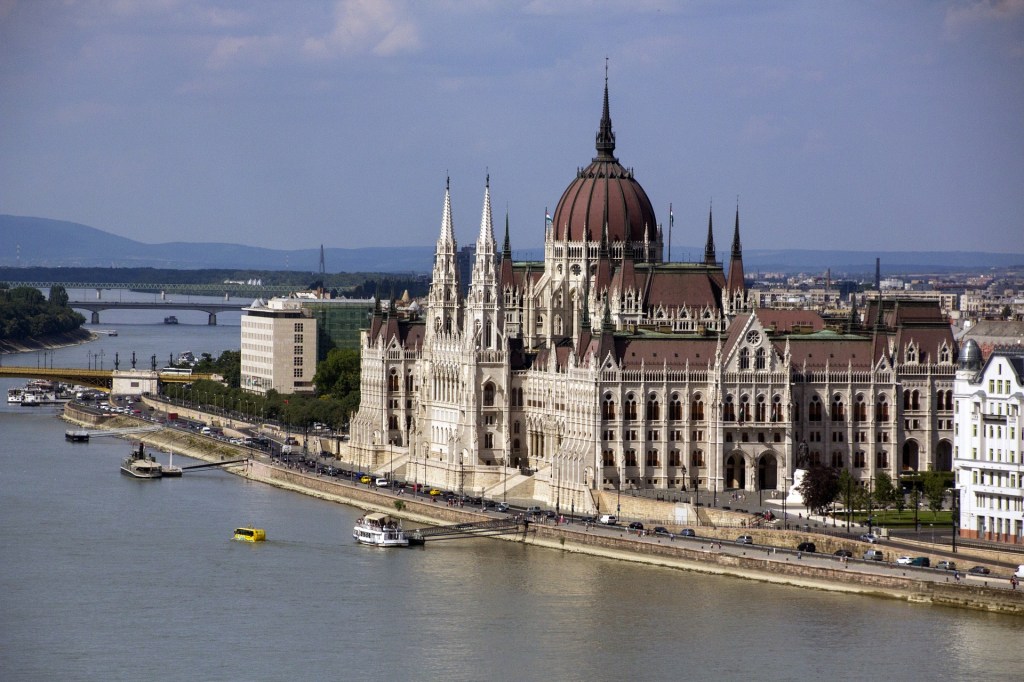
Weimar-on-Danube: on the Hungarian Enabling Act, the European Response, and the Future of the Union

Image by Hans Hansen

Dr. Tom Flynn, Lecturer in Law, University of Essex

The current pandemic is testing political, legal, and social systems in significant ways. Europe has faced, among other things, strains regarding the notion of solidarity within the Union, questions as to the ability of economic and financial systems to co-ordinate responses, and now, in Hungary, challenges to the claimed democratic values of the Union itself.

The Hungarian Fundamental Law of 2011 regularly contemplates its own negation: Articles 48–54 establish a total of six ‘special legal orders’. These are the ‘state of national crisis’, the ‘state of emergency’, the ‘state of preventative defence’, the ‘terror-threat situation’, ‘unexpected attacks’, and the ‘state of danger’. It is through this last provision, defined as ‘a natural disaster or industrial accident endangering life and property’ that Viktor Orbán’s Fidesz party initially channelled its legal response to the Covid-19 pandemic. However, chafing under Article 53 (3)’s imposition of a 15-day limit on decrees under the ‘state of danger’, Orbán last week used his two-thirds parliamentary majority to pass what we can rightly call an Enabling Act, allowing him to rule by decree for an indefinite period. Others have written cogently of the Act as a ‘constitutional moment’of how it fits perfectly with Orbán’s long-established patterns of behaviour; and of the dim prospects of EU law being any use against it, at least in the short- to medium-term. The purpose of this short piece is to accept and adopt these critiques, and to contrast the brilliant opportunism of Orbán’s move with the lumpen foolishness of the European response. What emerges from such a study paints a grim picture: the chancelleries of Europe full of little Neros, fiddling while the Hungarian Rechtsstaat burns.

The response from the Commission and from the Member States has been pathetic. On 31 March, Commission President Ursula von der Leyen tweeted that:

‘[i]t’s of outmost importance that emergency measures are not at the expense of our fundamental principles and values. Democracy cannot work without free and independent media. Respect of freedom of expression and legal certainty are essential in these uncertain times.’

She added that the Commission:

‘will closely monitor, in a spirit of cooperation, the application of emergency measures in all Member States. We all need to work together to master this crisis. On this path, we’ll uphold our European values & human rights. This is who we are & what we stand for.’

Such dishwater platitudes are to be expected from a President who owes her position to the votes of MEPs from Fidesz and from Poland’s ideologically-related ruling PiS party, and who thought it a clever idea to try to appoint a Commissioner for ‘Protecting Our European Way of Life’, (a post later made no less nonsensical and insulting by being changed to one of ‘promoting’ this alleged ‘way of life’).

Only very slightly less disappointing was the following day’s joint statement from Belgium, Bulgaria, Denmark, Estonia, Finland, France, Germany, Greece, Ireland, Italy, Latvia, Lithuania, Luxembourg, the Netherlands, Portugal, Spain and Sweden. These 17 Member States expressed ‘deep concern’ about ‘the risk of violations of the principles of rule of law, democracy and fundamental rights arising from the adoption of certain emergency measures’.

A striking aspect of both these responses was their unwillingness—their seeming inability—to name Hungary, and to specifically state that Orbán’s power grab would be resisted and challenged. The consequences of this diplomatic squeamishness soon became clear: just a day later, on 2 April, in an act of the purest, most distilled chutzpah, the Hungarian government had the gall to join in adopting the statement issued by the ‘deeply concerned’ 17 Member States. Whatever his other flaws, we can credit Viktor Orbán with being a master of comic timing. Of course he joined the statement! Why wouldn’t he? After all, the statement did not identify any particular Member State as being the reason for the ‘deep concerns’ expressed, and by claiming to echo the Member States’ concerns, Orbán can continue to assert that his is an entirely mainstream—just very conservative—political project. This is in keeping with Fidesz’s continuing membership of the European People’s Party, which affords political cover to Orbán’s project of remaking Hungary in his image.

Meanwhile, the decrees are coming in thick and fast. The plan to build a ‘museum quarter’ in Budapest’s City Park, held up by the unexpected victory of the opposition in last year’s mayoral elections, will go ahead. A person’s legal sex will now be fixed at birth, and cannot be legally altered. Municipal theatres—rare islands of intellectual independence and the possibility of artistic and political dissent—will be brought under central government control. Quite what these measures have to do with stopping the spread of the coronavirus and managing the current crisis is not clear. What is clear is the Enabling Act is mere opportunism, seizing on a deadly threat to permit the government to go about its agenda with the very minimum of political, legal, and press scrutiny.

The idea of ‘naming and shaming’ as an enforcement method only works if you actually name offenders, and if the offenders are actually capable of feeling shame. Hungary’s mocking adoption of the joint statement demonstrates the sheer shamelessness of the Orbán government. The refusal of the Commission and the Member States to name Hungary and to specifically condemn Orbán’s behaviour illustrates the extent to which senior figures in Europe are beholden to a kind of comity of idiots, where each is afraid of being undiplomatic to the other, just in case the other might one day be undiplomatic to them.

The apparent reluctance of European heads of state and government to ‘interfere’ in one another’s ‘domestic’ affairs is a relic of a bygone age, a time when we really could draw such bright lines between the ‘national’ and the ‘European’. Our political leaders know this, but they maintain the pretence because it is a useful insulator: it preserves ‘the national’ as a kind of petty fiefdom, which will brook no criticism from outside, despite the fact that domestic action is influenced by, and in turn influences, action at the Union level and in every other Member State. The Enabling Act does not just endanger Hungary and Hungarians, but Europe and Europeans: the rot can spread from the Member States to the Union, from the Union to the Member States, and from one Member State to another. Orbán’s pollution of the Hungarian body politic; PiS’s degradation of Poland; and the murders of Daphne Caruana Galizia and Ján Kuciak are not directly related, but taken together they are all indicative of a Union sliding ever further into the mire, where the appearance of unity is more important than any actual substantive commonality of democratic standards, or those beloved ‘values’ of which we hear so much.

There has recently been at least some movement in terms of legal sanction for Orbán and those like him. AG Kokott last month argued that the CJEU should find Orbán’s ‘lex CEU’, by which the Central European University was hounded out of Budapest, in breach of EU and WTO law. This month, the CJEU held that Poland, Hungary, and Czechia had failed in their obligations under Union law to join in the EU’s relocation programme for the distribution of asylum-seekers across the Union. But these victories are partial, reactive, and belated, and have met with scorn from Fidesz. Union law in general, and the Treaties in particular, are simply not geared towards the rectification of the kind of authoritarian opportunism of which Orbán is the standard-bearer.

In the present state of Union law, the solution must be, and can only be, political. But the Hungarian Enabling Act exposes the idea that European conservatives can curb the excesses of their most obviously authoritarian bedfellows as the delusion it has always been. Nor are the EPP alone in sheltering undesirables: the Social Democrats and the Liberals are both happy to rely on the votes of members with questionable records and intentions.

The tension between ‘capital Europe’ and ‘social Europe’ is as longstanding as the disconnect between ‘economic Europe’ and ‘political Europe’, but the current crisis is bringing these tensions to boiling point. Most notable is the issue of ‘solidarity’, a word frequently on the lips of European leaders but only rarely evident in their actions. The crisis exposes the EU’s historical baggage about what it is, what it does, and what it’s meant to be. From bailouts to borders to non-interference in ‘domestic’ politics, we must stop pretending that the EU can exist as a kind of rarefied space of apolitical technocracy. In this sense, we can learn a valuable lesson from Orbán: opportunities ought not to be wasted. The homeless can be housed. Private healthcare systems can be nationalised. The Union can—and must—take action in defence of its claimed fundamental values.

A young democracy in an old nation at the very heart of Europe is being snuffed out before our eyes, and our leaders are doing nothing.

At least Nero could play the fiddle.

This post first appeared on the DCU Brexit Institute Blog and is reproduced here with permission and thanks.

COVID-19 and its Impact on the Constitutional Relationship Between Government and Parliament

Photo by Heidi Fin

Theodore Konstadinides, Professor of Law, University of Essex and Lee Marsons, Graduate Teaching Assistant in Public Law and a PhD candidate, University of Essex

The Coronavirus Act 2020, the UK’s most substantial legislative response to the Covid-19 pandemic, received Royal Assent yesterday after a fast-tracked procedure through both Houses. Indisputably, the pandemic falls within the range of situations under which it is constitutionally acceptable for Bills to be fast-tracked. While there is no corollary between an expedited piece of legislation and a bad piece of legislation, fast-tracking the Coronavirus Bill carries important implications for the constitutional relationship between Government and Parliament. Not least, parliamentarians had limited time to scrutinise legislation containing measures that have been described by the Bingham Centre for the Rule of Law as ‘the most sweeping powers ever taken by the UK Government outside of wartime’. But, in this context, the implications for the balance between Government and Parliament extend beyond the immediate passage of the Act. Therefore, while Tierney and King stressed the dilemma between safeguarding public health and the protection of individual liberties vis-a-vis fast-tracked legislation, the purpose of this post is to outline a number of concerns provoked by this pandemic on the Government-Parliament relationship more broadly, while also making some comments on the Act itself.

Since the increased power of the executive in relation to Parliament is an inevitable feature of fast-track legislation, the rule of law mandates effective parliamentary scrutiny in respect of both the way the Government will implement the new powers created under the Coronavirus Act as well as the detail in which Parliament will be updated about the reach of these powers across the UK. Two proposed amendments to the Bill tabled by David Anderson and Sarah Ludford in the House of Lords: one on the provision of meaningful information to Parliament would have gone beyond what is now Section 97 of the Act; and a second requiring that powers were exercised in accordance with the Human Rights Act 1998 and the Equality Act 2020, were both endorsed by positive ministerial statements (though not directly or publicly by a Cabinet Minister). With reference to meaningful information, the Minister, Lord Newby, committed the Government to providing an explanation in two-monthly reports laid before Parliament of the Secretary of State’s reasons for continuing to make use (or otherwise) of the provisions in Part 1 of the Act (as opposed to a mere report in accordance with Section 97 about whether the provision is in force and whether any power under subsection 3(b) has been exercised – the ‘switch on – switch off’ analogy made by David Anderson). With regard to compliance with the Human Rights Act 1998, the House of Lords’ proposed amendment included a new clause to be inserted in the Act entitled ‘Powers within the Act: necessity and proportionality’ While such a clause was not inserted in the final Coronavirus Act 2020, the Minister confirmed that the powers created will be exercised in accordance with the principles of necessity, proportionality and non-discrimination and in full compliance with human rights law. These statements provide some assurance as to the right balance being struck between the powers conferred on the Government and Ministers’ accountability to Parliament which are crucial in attaining the objective of constitutional propriety and legality despite the current emergency.

Despite ministerial promises that nothing in the Act contradicts constitutional principles, outside of the Act all the relevant coronavirus delegated legislation that we are aware of has been passed without recourse to Parliament, whether by using the positive or negative resolution procedure. This includes significant measures such as the Health Protection (Coronavirus) Regulations 2020, the Statutory Sick Pay (General) (Coronavirus Amendment) (No 2) Regulations 2020, and the Employment and Support Allowance and Universal Credit (Coronavirus Disease) Regulations 2020. In each case, the Minister stated that for reasons of urgency it was not possible to lay the Regulations before Parliament prior to signature. This is despite the fact that some of this delegated legislation – such as s.3 of the Health Protection (Coronavirus) Regulations 2020 – create summary offences and require whole swathes of otherwise lawful economic activity to cease.

In addition, the current situation is unique in that the practical reality of social distancing and self-isolation measures mean that many MPs and peers cannot attend Parliament to scrutinise government in either chamber. Already on 19 March, the Lord Speaker’s statement on the UK Parliament’s response to the spread of COVID-19 was unequivocal:

[…] no-one should consider it is their duty to be here in present circumstances. As Parliamentarians we have a duty to show leadership and heed the clear advice of the public health experts. I would ask that everyone continues to reflect on their own situation in the light of that advice, for their own good and for the broader public interest.

Furthermore, on the 23 March 20220 the Speaker’s Statement on attendance and distancing accepted that while video conferencing could mitigate any inconvenience posed by social distancing and self-isolation measures, the work of Committees will be affected by a combination of the limited facilities available and staff absences:

We recognise the need to improve our video conferencing facilities to enable those working remotely to engage in Committee proceedings. Regarding evidence sessions, these facilities are currently limited, not least because the management of these sessions requires expert operators to produce audio-visual output of a suitable quality for broadcast use and Hansard transcription purposes. The teams who make such arrangements work are currently under—I do stress—significant strain because of staff absences. Further work in this area will be taken forward as a matter of priority over the Easter recess. Once the current situation has settled, I will commission a review to ensure we can develop systems to ensure we are ready and able to be more agile in the future.

The above social distancing and self-isolation measures and the lack of Parliament’s ability to replace in-person interactions with a virtual environment of online proceedings will no doubt have an important effect on the capacity of Parliament to scrutinise major developments, seek expert advice and hold the Government into account in the coming weeks and months.

Admittedly, some welcome developments have occurred. On 25 March 2020, for instance, the Speaker of the Commons provided a statement explaining that he was to permit Prime Minister’s Questions to run for one hour instead of the ordinary half an hour. This was to:

[…] serve as an effective replacement for separate statements on the situation of coronavirus. I will allow the Leader of the Opposition two sets of questions—he will have a total of 12, which I expect to be taken in two sets of six. Similarly, I will allow the leader of the second largest party four questions, in two sets of two. I will also, exceptionally, call a further question from an Opposition Front-Bench spokesperson.

Similarly, a number of parliamentary committees have initiated inquiries into the Government’s response to Covid-19. The Education Committee launched an inquiry on 26 March into the implications of coronavirus policy on education and children’s services, for instance, and the Joint Committee on Human Rights launched an inquiry previously into the human rights implications of the then Coronavirus Bill.

Nevertheless, these successes are made bittersweet now that Parliament has risen for an early Easter recess until 21 April 2020. While parliamentarians can submit written parliamentary questions during a recess (p. 11) and committee inquiries can continue (or, at least, in the limited way that they can be continued), optimal scrutiny of Government is less likely to be achieved if parliamentarians cannot utilise all of the parliamentary tools at their disposal. Parliamentarians can no longer ask oral ministerial questions during a recess, for instance. This will carry significant implications for parliamentary scrutiny of executive action with regard to the ability to question Ministers about decision-making and policy development, which is naturally changing daily – perhaps more frequently. To provide an important topical example of this, on 25 March 2020, Jesse Norman MP, the Financial Secretary to the Treasury, was asked by Lloyd Russell-Moyle, Labour MP for Brighton Kemptown, how the Government would be scrutinised by Parliament as to its financial support for the self-employed, to be announced after the recess started. The Minister’s response was:

When such a package is brought forward, there will be ample opportunity to debate and discuss it in the House when it returns. Before that, the Government will be held to account in the public square in the usual way, and Ministers are available for direct interrogation by any Member of Parliament who wishes to contact them.

Nevertheless, Russell-Moyle was not satisfied with this response:

It is a shame that the parliamentary authorities have not managed to get their act together to organise an electronic, online continuation of proceedings. During a recess in normal times, in a crisis, we would be recalled, and this is a crisis, so we should be able to continue our work. For Ministers to ask for our work to continue through correspondence is not satisfactory.

Russell-Moyle was perhaps correct in his pessimistic assessment. On one day – 24 March 2020 – there were 181 references to ‘coronavirus’ in written parliamentary questions asked by MPs to Ministers. Given the limited time and resources available to Ministers and their officials, it does not seem likely that written questions will provide a panacea to other lost parliamentary opportunities – whether committees which cannot continue as usual or oral questions which cannot proceed at all.

As regards the duration of the Act’s provisions, Section 88 of the Coronavirus Act 2020 allows a Minister to suspend (repeal) or revive (save to provisions set out in subsection 6), more than once, any provision of the legislation by passing a Regulation. This appears to be a wide power encroaching upon Parliament’s legislative authority and sovereignty and it is further amplified by subsection (5) which provides that the Minister can pass Regulations for different purposes, on different days in different areas; and can make technical transitional, transitory and savings provisions. Last but not least, despite the two-year sunset clause in Section 89 of the Act, Section 90(2) provides that a Minister can extend (for up to six months at a time) or terminate any of the respective Regulations beyond two-years. This seems to be necessary in the face of the pandemic but since emergency powers are meant to give the Government a temporary boost, there is no valid reason why Parliament cannot get back in the game and manage the effects of the Covid-19 pandemic when authorities start easing the current lockdown.

All in all, the nature and scale of the Coronavirus Act 2020 is extraordinary. While the current measures may have some effect in enabling the Government to respond to a public health emergency and manage the effects of the pandemic, they are encroaching upon Parliament’s territory and endanger the principle of the separation of powers. While the delegated powers in the Act are broad and the extent and effectiveness of the new powers under the Coronavirus Act 2020 is unclear, the Government is under a duty to provide clarity about their use across the UK as well as the necessity of the relevant compliance measures that it will adopt in the near future.

This post was originally published on the UKCLA Blog and is reproduced here with permission and thanks.

Coronavirus: Beyond Human Rights

Photo by Markus Spiske

Dr. Koldo Casla, Lecturer in Law, University of Essex

I live and breathe human rights, but what’s at stake is even more important.

I write this in haste, like everything that is being written about Covid19. Most of us outside China only started to take this threat seriously in the last two weeks. Scientists and politicians don’t know enough about the scale of the problem, let alone the solutions. Spain’s Prime Minister confessed that “whoever claims to know what needs to be done in this emergency will learn nothing from it.” In normal circumstances this would be profoundly concerning, yet I find his candour strangely reassuring.

As we brace ourselves against the crisis, valuable contributions have been made to examine its human rights implications. For example, Amnesty International has produced these preliminary observations on States’ international obligations. Independent UN experts have warned that emergency measures should not be used to suppress human rights. And academics have written about how States should respond from the perspective of the right to health and other social rights, and of freedom of movement and other civil rights.

The UN High Commissioner for Human Rights, Michelle Bachelet, issued a press release on March 6 to stress that “human rights need to be front and centre in the response” to Coronavirus. I tick all the boxes of the typical supporter of a statement like this. I joined Amnesty International when I was 15; have been involved in human rights activism for two decades; and teach human rights law at the University of Essex. I should agree with Dr Bachelet. However, I’m not sure I do.

Don’t get me wrong. I know that Coronavirus raises human rights issues. Restrictions on individual freedoms need to be set clearly in the law and must be both necessary and proportionate. It’s essential to ensure that measures don’t discriminate against or stigmatise any national group or and minority. While mobile apps may be helpful in containing the spread of the virus, we must remain vigilant about the potential use of artificial intelligence to gather private data.

Children’s right to food is at risk when free school meals are the only healthy things some might eat. Confinement may be necessary, but home is the unsafest place for survivors of domestic violence. Rough sleepers, refugees and asylum seekers, prisoners and people in care can find themselves in particularly vulnerable situations. The list could go on. States’ actions and omissions can turn global health emergencies into human rights crises.

Human rights are important. They always are. But I still don’t see them at the core of this unique moment in history.

Other things take centre stage in my thoughts these days. My family in Madrid and the Basque Country has been confined for more than a week now, and my partner and I have decided to join them from London. This is one of those rare occasions when the word “resilience” doesn’t sound trite. Every day I receive news and messages via social media with countless expressions of wit and solidarity from Italy and Spain, expressions that are both emotional and encouraging about what we could achieve together.

Supportive neighbours, humour, music, bingo and Zumba lessons from the roof of a block of flats – all of it shows the best of people. Family life is recognised as a right in international law, but it is more than that: it is one of society’s central pillars. What do we truly value when we are confined at home? We all know that over-dependence on technology is dangerous for a number of reasons, but what a difference video-chats and social media are making this month.

Even politics looks different. When 60% to 80% of the population could be infected by a virus for which we have no cure, political priorities gain a new perspective. And what about the irony of seeing Morocco close its border with the Spanish enclaves of Ceuta and Melilla, and Guatemala doing the same with visitors travelling from the USA?

At the time of writing both my partner and I enjoy the comfortable position of being able to work from home. We are reasonably confident that our jobs are not at risk. We are also young and healthy and can provide for ourselves. We are privileged. The prospects are very different for the vast majority of people. Ten years of austerity have made dealing with the Coronavirus exceptionally difficult for low-and middle-income families in the UK.

Covid19 is testing the strength of our social foundations. For several consecutive evenings, Spaniards are leaning out of their windows and balconies to applaud public healthcare workers. I can only hope that some politicians will remember their words whenever we go back to “normal” – for example French President Emmanuel Macron, who said on 12 March that: “There are goods and services that must be out of the laws of the market… This pandemic is showing that free healthcare for all, irrespective of income, background or profession, and our welfare state are not an expense or a cost, but precious goods, indispensable when fate kicks.”

Even the most libertarian of neoliberals are being reminded why the State is so badly needed. This is the first crisis in my living memory where all of us are truly in it together. Privileged people are feeling very vulnerable for the first time. Dealing with the virus effectively needs people staying at home, washing their hands, keeping their physical distance from each other, and covering their cough with their elbow.

But dealing with it effectively and fairly requires, among other things, guaranteeing an income for those who lose their jobs, appropriating privately own facilities like hotels, private transport and private hospitals, suspending evictions, introducing rent and mortgage payment deferment options, and ensuring gas and electricity supplies irrespective of people’s ability to pay.

This crisis begs for a bailout for the most vulnerable, a sort of people’s quantitative easing. This is a human rights principle as well: attention to the most vulnerable individuals must be prioritised in times of financial crises and emergencies. But the issue goes beyond human rights. We are talking about what a country wants to be known for, even what it is. Societies that prioritise fairness will do best out of this crisis.

Putting the economy on hold is unheard of in peacetime, and needs to be accompanied by extraordinary public investment on a scale we’ve never seen. New Zealand has announced a relief package that amounts to 4% of its GDP; the Spanish Government has promised up to 20%. A massive bill will be waiting for us afterwards. The virus is going to test the patriotism of the wealthy, measured not by the size of their flags but by how much they are willing to chip in.

This takes me to a final thought. I have made two choices. The first is to admit that I don’t know what needs to be done regarding public health. The second is to start from the premise that scientists and political leaders, regardless of their colour and ideology, are doing their best to reduce the number of deaths to the minimum.

People who are making these decisions – the most difficult in their lives – may get things wrong. They don’t have all the necessary information. They are unsure about what is likely to work. And in advance I say that I am ready to forgive them if they make mistakes. In terms of the timing of the confinement measures, I’ve decided to trust the leaders of a country that doesn’t even allow me to vote – politicians whose human rights record I have criticised many times before and no doubt many more to come.

I don’t even know if the decisions they are taking are technically the right ones. Scientists who know much more than me are clear that “there are very large uncertainties around the transmission of this virus, the likely effectiveness of different policies and the extent to which the population spontaneously adopts risk reducing behaviours.”

In this context, transparency is “the only real counter to our psychological biases.” As long as leaders are transparent about the evidence, I will meet my civic duty and sacrifice my individual preferences for the general interest of flattening the infection curve. Beyond human rights, this is the time for solidarity, kindness and collective responsibility.

I never thought I would quote three contemporary political leaders in the same piece, but this must be another sign of the exceptional nature of the circumstances: as Italian Prime Minister Giuseppe Conte said on March 11, “Let’s keep the distance now so we can embrace each other warmly and run faster tomorrow.”

This piece was originally published in Open Democracy on 19 March 2020 and is reproduced here with permission and thanks.