If you are an aspiring legal scholar seeking advanced training in law within a dynamic research environment that encourages innovation and interdisciplinary exploration, a Doctoral Training Partnership at Essex Law School could be your gateway to an exciting academic journey.
Essex Campus in the winter, Credit: University of Essex.
What are SENSS and CHASE?
The South and East Network for Social Sciences (SENSS), an ESRC-funded Doctoral Training Partnership (DTP), is dedicated to fostering innovative and inclusive social science research training and collaboration. Among the eight distinguished institutions comprising SENSS, the University of Essex plays a pivotal role as the coordinating institution.
The Consortium for Humanities and the Arts South-East England (CHASE) is an AHRC-funded Doctoral Training Partnership, providing funding and training opportunities to the next generation of world-leading arts and humanities scholars. Essex is one of the 8 world-leading institutions that comprise the membership of the CHASE DTP.
SENSS and CHASE provide fully funded doctoral studentships, mentorship from global experts, and advanced subject-specific and research methods training. These opportunities empower researchers to extend their social scientific skills beyond academia.
Here at the Essex Law School and Human Rights Centre, aspiring PhD students can apply for SENSS and CHASE studentships, unlocking comprehensive support and collaborative excellence in their academic journey.
Why choose the Essex Law School?
Choosing where to pursue your doctoral training is a significant decision. At the Essex Law School, we have meticulously crafted an environment that champions excellence and fuels innovation. Here is why you should join us:
We are a research powerhouse. Our Law School has been ranked 3rd in the UK for research power in law according to the Times Higher Education research power measure (REF2021). Law at Essex is also ranked 47th in the THE World University Rankings, which show the strongest universities across the globe for key subjects (and 9th for UK Universities). This speaks volumes about the calibre of research conducted within our School. Our academic staff collaborates globally, working with the United Nations, the European Union, governments, and non-governmental organisations.
We believe in the power of interdisciplinary research. Our dynamic research clusters foster collaboration across diverse backgrounds, creating a vibrant intellectual space for innovative and stimulating legal exploration.
With expertise spanning diverse legal disciplines, our academics are the driving force behind the Law School’s excellence. Our faculty boasts exceptional scholars, providing intellectual leadership in key areas, including Human Rights Law, led by Professor Carla Ferstman who is Director of the Human Rights Centre; International & Comparative Law led by Professor Yseult Marique, an associate member of the International Academy of Comparative Law; Private and Business Law, led by Professor Christopher Willett who also spearheads the Law, Business and Technology Interdisciplinary Hub; as well as Public Law & Sociolegal Studies, led by Professor Joel I Colón-Ríos, who is also a member of the Constitutional and Administrative Justice Initiative (CAJI). Our academic leads are ready to guide you and link you with the ideal academic mentors.
Our research student community is central to our success. These talented colleagues explore a broad range of exciting topics under expert supervision, forming a vibrant tapestry of ideas.
We asked Boudicca Hawke about her experience as a CHASE-funded doctoral student at Essex Law School.
“CHASE is a great DTP to be a part of. It is a quite a competitive funding source, but the application process itself is accessible. Especially at Essex, there’s a tremendous amount of support throughout the entire process, which really helps. There are a few rounds of revision you’ll need to go through, so it does require consistent work, but really, it’s wonderful to have guidance and support at every step so you can end with the best proposal possible.
I chose to apply primarily because of the holistic way CHASE supports affiliated doctoral researchers and encourage interdisciplinary research. Beyond the funding, CHASE also hosts annual conferences and year-round research network meetings where you can collaborate closely with other doctoral researchers who share interests but come from different universities and backgrounds. CHASE also has an incredible placement scheme, where you can get hands-on experience throughout the PhD process which is quite valuable.”
Boudicca, who is working on the status of fighters in non-international armed conflict, also shared some insights about the preparation of a research proposal: “Try to be as clear in the proposal as possible. Many of the reviewers won’t be experts in your field, so communicating the issue at-hand and value of your work in an easily digestible way is key. It can also be quite helpful to make sure you highlight relevant work experience and show why you are well-suited to do your specific project. If you don’t get it the first time around, don’t be afraid to re-apply!’’
We also talked to Matteo Bassetti, one of our SENSS-funded doctoral students. For Matteo, whose work focuses on the rights of trans people, and the underestimation of harm inflicted by States through institutional pathologisation frameworks, told us that SENSS “has contributed in many ways to my PhD experience, and has allowed me to take part to training that I would have otherwise been unable to attend. I am hoping to go on an Overseas Institutional Visit in the next term to broaden my network and horizon. However, if I have to be honest, I am still looking for more ways to use the opportunities offered by SENSS in the best way.”
He also gave us some tips about the application process: “Start ahead of time. SENSS is looking not only at the quality of the individual applicant’s proposal, but also at the match between student and supervisors. Treat your application as a collaboration between you and your supervisors, where you need to do the heavy lifting. Be prepared to modify your dream proposal to make it fit better with the selection criteria.”
Where can you find out more?
Explore the opportunities offered by the SENSS and CHASE scholarships at the Essex Law School on our informative webpages. Discover eligibility criteria, application processes, and the outstanding benefits that await you by accessing the downloadable documents provided below.
For inquiries about legal research and the SENSS and CHASE schemes, please contact Professor Joel I Colón-Ríos, our Postgraduate Research Director.
Specific questions about academic disciplines? You can also reach out directly to our dedicated Academic Leads (mentioned above) who can put you in touch with suitable supervisors.
Embark on your journey to become a world-leading scholar in law. Do not miss the chance to benefit from these funding opportunities at the Essex Law School, where innovation, excellence, and transformation define the doctoral experience.
Essex Law School made a significant contribution to the ICON•S conference in Madrid in July 2024, with a substantial contingent of faculty and scholars in attendance. ICON•S is an international learned society with a worldwide membership of scholars – at all levels of seniority – working on different areas of public law and cognate disciplines in the humanities and social sciences. The Society was officially launched at its Inaugural Conference in Florence in June 2014, sponsored by the European University Institute and New York University School of Law. Since then, the Society has held annual meetings in New York (2015), Berlin (2016), Copenhagen (2017), Hong Kong (2018), Santiago de Chile (2019), online with ICON•S Mundo (2021), Wrocław (2022), and Wellington (2023). This year’s meeting (8-10 July), hosted by IE University in Madrid, attracted more than 2,000 delegates and was the largest meeting of the Society up to date.
The conference’s plenary programme was organised around the theme of The Future of Public Law: Resilience, Sustainability, and Artificial Intelligence. The theme, as explained in the conference’s Call for Papers, sought to “foster reflection and discussion on the different transformations that public law is going through as a result of the major societal challenges of our time: the quest for sustainability, the AI revolution and, more generally, the need for resilience in a world of exponential change.” Alongside the plenary programme, there were hundreds of parallel panels allowing scholars and the broader community (including practitioners, judges, and policy makers) to present their work and/or take part in thematically organised panels on legal pluralism, global warning, freedom of speech electoral law, democratic theory, human rights, judicial review, and many other areas.
The Essex Constitutional and Administrative Justice Initiative (CAJI) was in an excellent position to showcase the diversity of its interests and strengths both in terms of academic research and partnerships/collaboration across the world. CAJI Co-Director and Public Law Academic Lead, Professor Theodore Konstadinides noted how excellent the conference was to foster new collaborations and rejuvenate older relationships. For instance, he met with Professor Vanessa McDonnell (Associate Professor and Co-Director, uOttawa Public Law Centre) to discuss among else our respective partnership with Ottawa in public law and our newly-launched Canadian Constitutional Law module. He also reconnected with Giuseppe Martinico (Santa Anna in Pisa) in Madrid. Theodore also mentioned how the very stimulating environment of ICON•S kindled interests among our representatives to be more actively involved in the British Chapter of ICON•S in the future.
We have contributed to a number of different themes and panels this year, some specific to sustainability (Etienne Durand), some specific to digitalisation (Dr Giulia Gentile) and some more general (Professor Theodore Konstadinides, Dr Esin Küçuk, Dr Tom Flynn, Professor Yseult Marique). In a nutshell, here some of the main highlights of the conference for our team.
***
Professor Theodore Konstadinides chaired and participated in a panel entitled ‘Assessing the sub-constitutional space of the UK constituent nations in the post-Brexit constitution’. This panel discussed how within the EU multi-level order, governmental and legislative powers can be largely apportioned vertically at three tiers moving from regional to supranational: (i) substate-regional (e.g., Catalonia, Flanders, and Lombardy); (ii) (Member) State-national (e.g., Spain, Belgium, and Italy); and (iii) supranational, i.e., the European Union itself. The UK’s withdrawal from the EU apart from marking the first time that a Member State decided to put an abrupt end to the federalist ’sonderweg’ of ‘an ever closer union’, it meant that a number of powers that were exercised at the supranational level were ‘repatriated’. Four years after Brexit, this panel analysed the effect of such ‘repatriation’ on the sub-constitutional space of the UK constituent nations. It assessed whether this has happened at the expense of the devolved nations.
To do so, the three papers looked at the following areas of the UK’s post-Brexit territorial constitution: (i) foreign affairs (Professor Konstadinides, Essex and Professor Nikos Skoutaris, UEA); ii) the internal market (Ms Eleftheria Asimakopoulou, QMUL); and iii) digital governance (Dr Giulia Gentile, Essex). The picture that emerged from the papers highlighted the extent to which the UK constitutional order has proved its resilience – one of the themes of the 10th Annual conference.
***
For her third participation to an ICON•S conference (after Copenhagen in 2017 and online at the ICON Mundo during the pandemic), Professor Yseult Marique was invited to take part in a panel, part of a twin session on judicial deference following the reversal of Chevron by the US Supreme Court in Loper a few weeks earlier. This twin session was organised by Professor Oren Tamir (Arizona) and Professor Mariolina Eliantionio (Maastricht). This session was devoted to a comparison from European jurisdiction. Professor Marique’s co-presenters were colleagues drawn from past or present members of REALaw : Professor Luca de Lucia, Professor Luis Arroyo Jimenez, Professor Ferdinand Wollenschläger and Dr Pavlina Hubkova. The panel discussed whether their respective jurisdictions (Italy, Spain, Germany, Czech Republic and Belgium) have a similar concept or functional equivalent to deference.
The other session proceeded in a similar manner for Common law jurisdictions (USA – Professor Susan Rose Ackerman; South Africa – Professor Cora Hoexter; New Zealand – Professor Dean Knight; and Canada – represented by a long-standing collaborator of CAJI, Professor Matthew Lewans). A series of blog pieces on this topic is likely to be published on REALaw blog in the upcoming year.
***
Also very familiar with ICON•S, having presented in Wrocław in 2022 and in Wellington in 2023, Dr Tom Flynn was invited to take part in two sessions. One was a roundtable discussion of Radical Constitutional Pluralismin Europe (Routledge 2023) by Orlando Scarcello (KU Leuven). Dr Flynn had previously taken part in the book’s launch event on Zoom, and it was great to meet with Dr Scarcello and others in person to continue their discussion of the book. Dr Flynn’s presentation was entitled ‘Two Cheers for Substantive Pluralism’, and was a partial defence of the kind of substantive constitutional pluralism that Scarcello’s approach, with its specifically radical focus, discounts.
The other was a panel organised by Professor Mikel Díez Sarasola (Universidad del País Vasco/Euskal Herriko Unibertsitatea) on ‘Plurinational States and their Constitutional Shape’. Dr Ewan Smith (UCL) and Dr Flynn presented together on ‘The idea of parity of esteem as a constitutional principle in Northern Ireland and beyond’, which will be the focus of a BA-funded conference they are organising in Belfast in April 2025 with colleagues Prof Katy Hayward and Anurag Deb (both QUB).
After the panel, Professor Díez Sarasola was kind enough to organise a tour of the Congreso de los Diputades in Madrid, during which Tom was able to see the main chamber and the sala constitucional, among other parts of this magnificent building.
***
Also a former participant of the ICON Mundo conference, Dr Giulia Gentilewas involved in three panels as a speaker. The panels concerned (a) AI and good administration, with a presentation covering AI and actions for damages; (b) the future of EU rights in the Brexit era, with a presentation discussing data protection in the UK post-Brexit landscape; (c) AI and courts, with a paper unpacking the interplay between judicial independence and the EU AI Act.
The panel on AI and actions for damages was a spin-off of a collaboration with Melanie Fink and Simona Demkova (both Leiden University) on AI and good administration. Her findings were published on DigiCon. The panel on EU rights after Brexit stems from collaboration and discussions with Essex colleague Theodore Konstadinides, with whom she is applying for a research funding bid on EU Citizens rights after Brexit. The final panel organised by Monika Zalnieriute offered Giulia the chance to discuss her forthcoming chapter on the AI Act and Judicial Independence to appear in the Cambridge Handbook on AI and Courts, edited by Dr Zalnieriute.
***
Dr Esin Küçük was involved in two panels, presenting papers. The first presentation, titled “Resilience of the EU Constitutional Order in Times of Crises”, was part of a panel on EU solidarity during crises. The debate centred on how recent measures to manage crises have reshaped our understanding of solidarity within the EU framework. This paper is now under review for publication.
The second paper Dr Küçük presented, “EU’s Externalised Smart Borders: Türkiye as a Case Study”, explores the externalisation of EU borders in migration management and the implications of emerging technologies in the process from a human rights perspective. This paper, co-authored with Elif Kuşkonmaz, is currently under development, and we aim to evolve this initial research into a broader project.
***
For his first participation to an ICON.S Conference, Dr Etienne Durand chaired the panel entitled ‘The Future of Energy Law: a Consumer-centric Legal Framework’, which featured Marie Beudels, (PhD Student in Law, University of Brussels, Belgium) and Dr Luka Martin Tomaszic (Assistant professeur, Alma Matar European University, Slovenia) as speakers.
The general aim of the discussions was to observe the changing nature of the role of energy consumers in their interaction with EU Law. The discussion was based on current developments in law and technology that enable energy consumers not only to benefit from the energy transition, but also to participate in bringing it about, thus playing an active role in (re)shaping the EU energy law itself. Taking these developments into consideration, the panel sought to identify the transformative power that energy consumers have or could have in shaping the future of European energy law, a hypothesis which we now aim to integrate into a broader research project.
Dr Etienne Durand on the right at the ICON conference. Credit: Dr Etienne Durand.
***
Professor Joel Colón-Ríos first participated a panel titled “Navigating the Paradox: The Doctrine of Unconstitutional Constitutional Amendments”, where he commented on a paper by Sergio Verdugo (IE Madrid). His paper on the concept of a permanent constituent power was also presented in that panel by his co-author, Mariana Velasco Rivera (Maynooth). Later that day, Professor Colon-Rios chaired a roundtable titled “Deliberative Constitutionalism under Debate”, which featured papers by Cristina Lafont (Northwestern), Chiara Valentini (Bologna), Ana Cannilla (Glasgow), Roberto Gargarella (Pompeu Fabra, Torcuato di Tella), Yanina Welp (Albert Hirshman Democracy Centre), and Ignacio Guiffré (Pompeu Fabra).
On Tuesday, Professor Colon-Rios participated in a panel on “Constitutional Identity in Times of Illiberalism”, where some of the papers that will appear in an International Journal of Constitutional Law symposium where presented, including his piece (“Constitutional Identity, Democracy, and Illiberal Change”), co-authored with Svenja Behrendt (Max Planck, Freiburg). Finally, he was one of the speakers in the book roundtable of Guido Smorto’s and Sabrina Ragone’s Comparative Law: A Very Short Introduction. This was Professor Colon-Rios’ fifth ICON’s conference, also having co-organised last year’s annual meeting in Wellington.
***
Overall, the ICON•S provided a fascinating opportunity to learn from the Presidents and former President of the Human Rights Courts in Europe, Africa and South America; to meet up with old acquaintances and to catch up with the representatives of international publishing houses, always ready to provide feedback and chat about current and possible publishing projects. We were much bemused by how much Italians love Spain and very pleased to hear how lively the regional chapters were actively planning together for further activities (such as for instance the Benelux ICON•S Chapter.) The Essex Law team greatly enjoyed the event, and the team’s diverse work in public law contributes to excellent academic exchanges that we bring back to our undergraduate and postgraduate community as we are developing further our education curriculum and expanding our postgraduate research community in public law. We look forward to building stronger academic ties and impact at both in the UK and globally.
ParLaure Sauve, Co-Directrice du Double-Diplôme Droit anglais et français (Université d’Essex)
Le 19 mars dernier, plus de 90 étudiants du double-diplôme ont assisté à la remise de prix d’un concours de droit constitutionnel. L’objectif de cette compétition était de faire réfléchir les étudiants sur la Constitution actuelle : quelle sont les améliorations possibles du texte de 1958?
La toute récente dissolution de l’Assemblée nationale par le Président Emmanuel Macron et les tensions entourant les récentes élections législatives montre la nécessité de révision de la Constitution. Les excellentes propositions de réforme présentées par les douze équipes ayant participé au concours, fidèles à l’esprit républicain, peuvent être vues comme une lueur d’espoir dans ce climat d’incertitude et d’angoisse. Appelés à voter depuis peu, juristes et acteurs politiques de la France et de l’Europe de demain, les étudiants du double-diplôme ont montré que la «valeur n’attend point le nombre des années» (Pierre Corneille, Le Cid).
Concours de la meilleure proposition de réforme constitutionnelle: des étudiants en droit revendiquent plus de Démocratie
Par Maëlle Prugnolle, étudiante en première année de droit au sein du Double diplôme en droit français et droit anglais (Université d’Essex)
En démocratie, la participation des citoyens au pouvoir est en principe centrale. Or, avec l’adoption lors de la Révolution française de 1789 du système représentatif, la participation citoyenne se manifeste essentiellement dans le suffrage, limitant fortement le rôle des citoyens. Il en va ainsi en matière constitutionnelle, les citoyens étant associés soit indirectement (par le biais de représentants élus par les citoyens) soit directement (par le biais de référendums) à l’établissement et à la révision de la Constitution. Alors que la Constitution est le texte fondamental comprenant les règles organisant les pouvoirs publics, le fonctionnement des institutions et les libertés des citoyens, le très faible nombre de révisions constitutionnelles adoptées par référendum sous la Vème République (seulement deux en 1962 et en 2000), ainsi que l’absence d’initiative populaire en matière constitutionnelle restreignent encore davantage la capacité des citoyens à exercer pleinement leur rôle. Face à ce constat, l’expérience du concours de la meilleure proposition de réforme constitutionnelle organisée à l’Université d’Essex est riche d’enseignements:
Elle montre tout d’abord que les étudiants souhaitent proposer des améliorations à notre texte constitutionnel.
Elle montre ensuite que la majorité des propositions, notamment la proposition de l’équipe gagnante, appellent à des formes plus directes et accrues de participation populaire/citoyenne.
Qu’est ce que le concours de la meilleure proposition de réforme constitutionnelle?
Inspirée par des expériences similaires organisées dans plusieurs universités françaises, notamment celle de Caen, Eugénie Duval (Lecturer à l’Université d’Essex), a eu l’idée de créer ce concours à Essex. Ouvert aux étudiants de première et deuxième année du double diplôme de droit français et droit anglais, le concours a eu pour objectif d’offrir à ceux-ci un moyen innovant d’en apprendre davantage sur le droit constitutionnel français et de mettre leurs connaissances en pratique. En effet, comme l’a souligné Etienne Durand (Lecturer à l’Université d’Essex), membre du jury, le droit constitutionnel, avec ses concepts abstraits et ses bases théoriques et politiques complexes, déstabilise souvent les étudiants de première année de droit. En tant que fondement de l’ordre juridique, la maîtrise du texte constitutionnel est perçue comme laborieuse. À Essex, le rythme particulièrement soutenu des cours, exacerbe ces difficultés, pouvant fausser la perception globale du droit. Le concours de la meilleure proposition de réforme constitutionnelle a alors permis de donner vie aux notions de droit constitutionnel étudiées en cours, de mieux comprendre les enjeux qui le parcourent, et ainsi d’avoir l’opportunité de «réfléchir et remettre en question la Constitution et son fonctionnement» (Retour d’étudiantes concourantes: Annaëlle Paul-Dauphin et Margot Giguere).
Pour cette première édition, le concours a rencontré un franc succès avec la participation de 12 équipes, composées d’étudiants de première et de deuxième année (soit 32 participants). Cette collaboration interpromotionnelle a permis de combiner les connaissances en droit constitutionnel des premières années avec la maîtrise plus avancée des méthodologies et des réflexes juridiques des deuxièmes années. Les étudiants ont eu quatre semaines pour réfléchir et proposer l’équivalent d’une proposition de loi constitutionnelle avec un intitulé, un exposé des motifs et un ou plusieurs articles contenant la révision proposée. Il a alors fallu que les participants fassent preuve d’analyse critique et de créativité, se familiarisent avec la recherche et la littérature technique relative au sujet choisi, et établissent des liens entre les aspects théoriques et pratiques de la proposition. Pour les aider, après deux semaines de travail en équipe une rencontre a été organisée par Eugénie Duval, Sophie Duroy, et Etienne Durand, afin que les étudiants aient un retour sur leurs travaux.
Liste des propositions des 12 équipes concourantes:
Proposition de loi constitutionnelle visant au renforcement de la démocratie semi-directe sous la Veme République (Élodie Leatham-Smith, Margaux Mimalé, et Inès Robert-Archambeau)
Proposition de loi constitutionnelle visant à relocaliser la démocratie au profit d’une implication plus direct des citoyens (Annaëlle Paul-Dauphin, Margot Giguere)
Proposition de loi constitutionnelle pour une démocratie plus représentative, respectueuse de la séparation des pouvoirs et une modernisation des institutions de la Ve République (Clarisse Videau, Harrisson Chauve, Maxence Debruyne-Robert)
Proposition de loi constitutionnelle visant à protéger et à garantir les droits fondamentaux des femmes relatif aux violences verbales et physiques et, à l’interruption volontaire de grossesse(Alix Chambariere, Maëlle Daude)
Loi constitutionnelle d’intégration des enjeux contemporains à la Constitution de la Ve République (Romane Houeix, Aurélien Wogue, Étienne Raout)
Proposition de loi constitutionnelle visant à renforcer le contrôle des actions parlementaires et des membres du gouvernement afin de protéger le principe constitutionnel d’égalité (Joséphine De Bazelaire, Cholé Hairie, Naomie Hosdez)
Proposition de loi constitutionnelle pour un renouveau de la participation citoyenne (Clémentine Raveleau-Torres, Manon Cusco)
Proposition de loi constitutionnelle visant à protéger et à garantir les droits et libertés fondamentaux contenus dans la Déclaration Universelle des Droits de l’Homme de 1948 (Axelle Khalfi, Hind Boucceredj)
Proposition de loi constitutionnelle visant à réformer l’élection du Président de la République au suffrage universel direct et encadrer ses pouvoirs pour une lecture parlementaire de la Constitution(Line Simon, Sarah Loron, Aloïs Moliard)
Proposition de loi constitutionnelle relative à la procédure législative et la dénationalisation du Parlement (Yasmin Jemmett, Lou Frere, Fatou Ndiaye)
Proposition de loi constitutionnelle visant à protéger l’usage et l’apprentissage des langues régionales (Loïza Gestin, Sarah Payan, Charlotte Gimenez-Ares)
Proposition de loi constitutionnelle relative à la composition de l’Assemblée Nationale ainsi qu’à la désignation du premier ministre(Inès Piguel, Audrey Trancart, Romain Ballestra)
Les participants au concours ont également dû travailler sur leur capacité à s’exprimer à l’oral et à travailler et collaborer en équipe, afin de préparer leur passage à l’oral lors de la cérémonie de remise de prix. À l’issue des délibérations du jury (composé de quatre membres de l’équipe enseignante du Double diplôme), quatre propositions ont été retenues: la proposition gagnante, mais également trois autres propositions pour le «prix étudiant».
En effet, le corps professoral désirait que soit également décerné un «prix étudiant», qui récompenserait la proposition élue directement par les étudiants du double-diplôme. Lors de la cérémonie du 19 mars 2024, les 3 équipes pré-sélectionnées ont ainsi pu, munies d’un support visuel ou non, présenter leur projet devant les 90 étudiants présents.
Étudiants du double-diplôme présent lors de la cérémonie de remise des prix
Ces derniers ont alors voté à l’issue de ces présentations pour qui leur proposition préférée. La proposition qui a remporté le plus de suffrages fut celle de de Romane Houeix, Aurélien Wogue et Étienne Raout, intitulée l’«intégration des enjeux contemporains à la Constitution de la Vème République».
Étienne Raout, Romane Houeix et Aurélien Wogue: Équipe ayant remporté le prix étudiant
En plus de l’équipe gagnante et du prix étudiant, l’équipe de Line Simon, Sarah Loron, et Aloïs Moliard s’est vu décerner le troisième prix avec leur proposition de réforme constitutionnelle visant à «réformer l’élection du Président de la République au suffrage universel direct et encadrer ses pouvoirs pour une lecture parlementaire de la Constitution».
Line Simon, Aloïs Moliard, et Sarah Loron présentant leur proposition de réforme constitutionnelle, arrivés en 3e place
Les trois équipes arrivées en tête, ont reçu plusieurs prix pour les récompenser. Les gagnantes ont remporté une demi-journée découverte à l’ambassade de France à Londres, mais également, au meme titre que les deux autres équipes, des livres offerts par les Éditions Lefebvre-Dalloz et une visite du cabinet d’Aurore Brunet, ancienne étudiante du double-diplôme aujourd’hui avocate en Corporate Law chez Loyens Loeff.
Qu’est-ce une bonne proposition de révision constitutionnelle?
Les membres du jury du concours, ont lors de leurs délibérations appuyé leur décision sur plusieurs critères essentiels. En premier lieu, la rigueur juridique qui implique une connaissance approfondie de l’état actuel du droit constitutionnel, ainsi que de la hiérarchie des normes et des procédures nécessaires pour mettre en œuvre la réforme proposée. Il était crucial de démontrer pourquoi le changement apporté ne peut pas se contenter d’une simple évolution législative ou réglementaire, mais nécessite une révision constitutionnelle. Les fondements juridiques à l’appui des développements devaient alors systématiquement apparaître pour renforcer la crédibilité de la proposition.
Ensuite, la clarté de la présentation était cruciale. Il était important de bien expliquer pourquoi le changement est nécessaire, en quoi l’état actuel du droit pose problème, et comment la révision constitutionnelle peut corriger ce problème. Il convenait également de détailler les implications concrètes du changement proposé, en expliquant comment il affecterait le quotidien des citoyens. Une présentation claire et bien structurée permettait de bien faire comprendre les enjeux de la réforme, en dépit, le cas échéant de sa forte technicité. De fait, comme l’a souligné Laure Sauvé, membre du jury et directrice du Double diplôme, « il était important que les propositions soient limpides pour être parfaitement compréhensibles par l’ensemble des citoyens. Une présentation claire et accessible permet de s’assurer que tous les citoyens, quel que soit leur niveau de connaissance en droit, soient en mesure de comprendre et évaluer la pertinence et l’impact de la proposition ».
Le style rédactionnel et la qualité formelle ont également joué un rôle déterminant. Que ce soit dans le texte de la proposition ou dans le support de présentation, l’absence de fautes, de formulations peu claires ou d’erreurs de langage était essentielle. Une rédaction soignée et un support de présentation original et bien conçu comme une vidéo (parfois avec une note d’humour), ou même un site internet, ont pu en effet grandement améliorer l’impact de la proposition.
Enfin, l’originalité des propositions a également été prise en compte. Il était d’ailleurs essentiel pour Eugénie Duval que les étudiants choisissent un sujet et une problématique qui les intéressent vraiment, afin d’apporter un regard neuf et une approche originale et unique. Cela s’est reflété dans la qualité de l’argumentation et de la présentation de toutes les propositions, ce qui n’a pas manqué d’impressionner grandement le jury.
L’équipe gagnante: Proposition de loi constitutionnelle visant au renforcement de la démocratie semi-directe sous la Vème République
Elodie Leatham-Smith, Margot Mimalé et Inès Robert-Archambeau: Gagnantes de cette première édition du concours de la meilleure proposition de réforme constitutionnelle
Immédiatement séduites par l’idée d’un concours mettant en pratique une matière «coup de cœur» et leur offrant l’opportunité de défendre leurs idées, Élodie Leatham-Smith, Margaux Mimalé, et Inès Robert-Archambeau, étudiantes de première année, ont fait l’unanimité. Les membres du jury ont salué la grande qualité rédactionnelle de leur proposition de révision constitutionnelle. Par ailleurs l’argumentaire juridique et factuel très établi, porté par une véritable démarche scientifique, le lien systématique entre les propositions et une situation sociale problématique, l’explication constitutionnelle du projet et l’apport que leur révision pourrait avoir, ont séduit le jury.
Néanmoins, leur cheminement de pensée a été long. Après avoir initialement envisagé une réforme similaire à celle de 2008, modifiant la Constitution article par article, elles ont finalement décidé de se concentrer sur l’approfondissement de la démocratie semi-directe. En constatant que les changements de 2008 — qui accordaient plus de pouvoir au législatif et réduisaient celui de l’exécutif — avaient conduit pour elles à une certaine «inefficacité», et, que le référendum d’initiative partagée était resté «inabouti en raison de son manque de réalisme», elles adoptèrent une nouvelle approche. Leur objectif a donc été de proposer un renforcement du pouvoir et de la voix du peuple en approfondissant la démocratie semi-directe et en assurant l’efficacité des réformes de 2008 susvisées.
Elles ont également été inspirées et motivées par l’actualité en France. Elles ont en effet constaté que les citoyens étaient véritablement mis de côté, souvent réduits à de simples spectateurs dans l’attente d’une décision, notamment en ce qui concerne l’inscription de l’Interruption Volontaire de Grossesse dans la Constitution, plutôt que d’être des acteurs directs de cette décision. Elles ont jugé cette situation inacceptable, surtout compte tenu de l’importance de cette proposition.
La proposition de loi constitutionnelle présentée par Élodie Leatham-Smith, Margaux Mimalé, et Inès Robert-Archambeau vise à adapter la Constitution de la Vème République aux réalités contemporaines en matière démocratique. La proposition part d’une illustration concrète d’une crise de la représentation démocratique en France, caractérisée par une abstention électorale croissante (de 22,8% en 1958 à 52,3% en 2022, aux élections législatives) et une perte de confiance des citoyens envers les institutions et la classe politique.
Elles ont alors décidé de renforcer la démocratie semi-directe en France en introduisant plusieurs mesures clés.
Affirmer le caractère participatif de notre régime politique: Tout d’abord, leur proposition de loi prévoit d’ajouter explicitement à l’article 3 de la Constitution que «la République française est une démocratie semi-directe», clarifiant ainsi le caractère participatif du système politique.
Faciliter l’organisation des référendums En modifiant l’article 11 de la Constitution, leur proposition vise à abaisser les seuils nécessaires pour l’initiative des référendums et à introduire des référendums d’initiative partagée, pouvant être lancés par le Parlement ou par le peuple via des pétitions. Cela permettrait alors de pouvoir faire évoluer la Constitution «au rythme de notre société», et de pouvoir enfin faire en sorte que les citoyens soient dotés d’un pouvoir de proposition, suspension et abrogation d’une disposition législative. Selon les étudiantes: «Le référendum d’initiative partagée ne serait alors plus un simple leurre ou illusion démocratique mais le véritable aboutissement d’une volonté vieille de plusieurs siècles».
Institutionnaliser les Conventions Citoyennes: Depuis la réforme de 2021, les conventions citoyennes, composées de membres tirés au sort, assistent le Conseil économique, social et environnemental (CESE). Elles favorisent le débat sociétal, comme la convention sur la fin de vie en 2023, mais leur impact reste limité, dépendant du CESE ou du gouvernement. Pour consolider leur rôle, il est proposé de les institutionnaliser en tant qu’outil parlementaire via l’article 51-3 de la Constitution, renforçant ainsi la participation citoyenne dans le processus législatif.
Faciliter les référendums locaux: Le référendum, bien que prévu en France à l’échelle locale depuis 2003, est limité par des conditions strictes qui entravent sa mise en œuvre. Pour impliquer davantage les citoyens, comme en Suisse ou dans la démocratie athénienne, il est proposé d’assouplir ses conditions d’application en réformant l’article 72-1 de la Constitution. Cela permettrait d’offrir aux citoyens un véritable pouvoir décisionnaire dans leur collectivité, proche de leur vie quotidienne.
La suppression de l’alinéa 3 de l’article 89 de la Constitution: L’alinéa 3 de l’article 89 de la Constitution devrait selon cette équipe être supprimé pour permettre au peuple de décider directement des modifications constitutionnelles. Par exemple, les Citoyens n’auraient pas dû attendre la décision du Parlement réuni en Congrès le 4 mars 2023, et auraient du pouvoir s’exprimer directement par les urnes sur le droit à l’interruption volontaire de grossesse.
Aurore Brunet, ancienne étudiante du double-diplôme et aujourd’hui avocate, qui remet le prix à l’équipe gagnante
Ce concours a offert aux étudiants la possibilité de montrer leur intérêt pour les questions constitutionnelles et d’être force de proposition. À l’image de l’équipe gagnante, les 32 étudiants ayant participé au concours ont témoigné d’une réelle volonté de renouer avec une démocratie plus directe, avec la parole, les envies et les besoins des citoyens. Enfin, il est apparu comme évident que l’intégration des jeunes générations au sein de ces défis démocratiques, qui seront très bientôt les leurs, est pour eux une priorité fondamentale et une source de grande motivation.
Remerciements: L’équipe du double-diplôme tient à remercier vivement Aurore Brunet ainsi que le cabinet Loyens Loeff, les Éditions Lefebvre-Dalloz et l’Ambassade de France au Royaume-Uni. Merci enfin à Maëlle Prugnolle pour son implication dans l’organisation de ce concours.
In October 2022, the Essex Law School launched the Constitutional and Administrative Justice Initiative (CAJI). This builds on and extends the work of the UK Administrative Justice Institute which was established in 2014 with funding from the Nuffield Foundation to kickstart the expansion of empirical research on administrative justice in the UK. Since 2018, the Institute has been funded by Essex Law School to progress the priorities set out in its Research Roadmap.
Establishing CAJI reflects the importance of connecting research and scholarship on administrative justice with Essex Law School’s broader public law scholarship on constitutional justice, judicial review, comparative public law, constitutional theory, social justice and human rights.
CAJI’s core team
Maurice Sunkin KC (Hon), Professor of Public Law and Socio-Legal Studies, is co-director of CAJI and a member of the team that originally established the UK Administrative Justice Institute.
CAJI also has an advisory group comprising of colleagues from the Essex Law School as well as other departments of the University of Essex and external participants from academia and NGOs.
The importance of constitutional and administrative justice
Constitutional justice concerns matters critical to the relationship between the citizen and the state, including adherence to the principles of supremacy of law, accountability before the law and fairness in its application. At its core, it concerns state protection of our constitutional rights such as liberty, equal protection under the law and procedural due process. This requires decision-makers to respect their constitutional responsibilities: that the legislature legislates, and the executive governs according to established constitutional principles and that both branches are politically and legally accountable. Hence, constitutional justice is often discussed in the context of constitutionalism meaning that in serving the people the legislature and the executive are themselves governed by fundamental rules rooted in the consent of the people.
A commitment to the rule of law and avoidance of arbitrary exercise of power by the executive and those acting on its behalf are vital components of constitutional justice and good government. The decisions of independent courts demand respect and play a vital role in providing redress to those adversely affected by state action, constraining the unlawful exercise of state powers, and safeguarding fundamental constitutional values.
The impact of the European Union and the Council of Europe and its advisory bodies such as the Venice Commission have become key in the globalisation of constitutional justice. This development entails the consolidation of constitutional principles common to their signatories and the maintenance of coherent standards of constitutional rights protection. Recent threats to the independence of the judiciary in several European countries show that we cannot assume that appropriate constitutional standards are easily enforced.
At its core, administrative justice is about ensuring that those delivering public services act justly and make correct decisions and about what can be done when things go wrong. It encompasses matters of everyday importance that affect most of us at some point, such as education, health care housing, immigration, land use planning, social security and taxation.
We are interested in how public services are designed and delivered, how legislation is drafted, how people are consulted about laws and policies, how people can challenge decisions by public bodies, how redress bodies consider those challenges, and how learning from such challenges is used to improve delivery and decision-making in the first place. These matters are of vital importance to society.
Professor Theodore Konstadinides, CAJI co-director and Academic Lead for Public Law, stated:
“The CAJI is a research hub within the Essex Law School that builds on the legacy of the UK Administrative Justice Institute and pays tribute to all the amazing research that colleagues like Andrew Le Sueur and Maurice Sunkin have undertaken in public law and socio-legal studies.
CAJI’s research agenda is ambitious in that it draws on many issues pertaining to the exercise of public authority at all levels with the aim of improving the quality of decision making and access to justice in the UK and at international level.
While it is an active research hub of the Law School, CAJI embraces academics from multiple disciplines and acts as a forum to discuss how we conduct research where the doctrinal meets the empirical.
CAJI is also interested in how academic research can contribute on the ground by advising public bodies and NGOs about pertinent issues of public life and commenting about complex topics in a way that is accessible to the wider public. Questions related to institutional independence, just government, states’ international obligations, modern living environments, provide exciting opportunities for interdisciplinary research and postgraduate research study. Our work dovetails neatly with the University’s research priorities in social deprivation, sustainability and health and wellbeing.
We therefore invite prospective visiting researchers and PhD students to contact us in order to discuss their ideas and potential opportunities for future collaboration.”
As part of this change, UKAJI’s website – available here – will be migrated to a dedicated webpage on Essex Law School’s website. All original content will be protected.
UKAJI also has a Twitter account which will be maintained during this process.
In the 1990s, Bruce Ackerman defined ‘constitutional moments’ as historic milestones of intense deliberation and change in a country’s politics, change that reflects in the country’s constitutional settlement.
Since October 2019, Chile is going through its own constitutional moment, a moment that began with popular resistance against rising public transport fees in the capital Santiago.
Social Rights and the Constitutional Moment seizes the opportunity of this unique moment to unpack the context, difficulties, opportunities, and merits to enhance the status of environmental and social rights (health, housing, education, and social security) in a country’s constitution.
Social Rights and the Constitutional Moment (Hart 2022): please see below contents and links to chapter summaries
In 2020-2021, this partnership brought together practitioners and academics from Chile and other countries (Argentina, Brazil, Canada, Colombia, Ireland, Mexico, South Africa, Spain, the United Kingdom and the United States) to share and learn from international and comparative practice with the goal of informing the ongoing process of constitutional reform in Chile.
More than thirty contributions were compiled and submitted to members of the constitutional convention and other public authorities in the country in September 2021. This new book presents an extended version of a selection of those essays.
Still today, with laudable exceptions (such as this, this, this, this and this), the majority of comparative constitutional studies in the English language tend to focus on the United States and Europe, and the analysis of peripheral legal systems, when it exists, can only be found on the sidelines as a more or less blatant afterthought. Unlike common practice in comparative constitutional law, this book is anchored in Latin America, building from Chile.
Drawing on the analysis of both academics and practitioners, the book provides rigorous answers to the fundamental questions raised by the construction of a new constitutional bill of rights that embraces climate and social justice.
With an international and comparative perspective, chapters look at political economy, the judicial enforceability of social rights, implications of the privatisation of public services, and the importance of active participation of most vulnerable groups in a constitutional drafting process.
Ahead of the referendum on a new constitution for Chile in the second half of 2022, this collection is timely and relevant and will have a direct impact on how best to legislate effectively for social rights in Chile and beyond.
The UK government is pursuing multiple legal reforms designed to rebalance “the relationship between the government, parliament and the courts” – a commitment made in the Conservative party’s 2019 election manifesto. Many of these reforms will affect how people can hold the state accountable, potentially undermining independent scrutiny and weakening the role of the courts in holding the government to account.
Among them is a review of the 1998 Human Rights Act – the law that allows people to enforce certain human rights in British courts – and proposed changes to judicial review – a process by which people can ensure that the government obeys the law.
We were given a further insight into the government’s thinking about how it might continue to “rebalance” its relationship with the judges, with details of the proposals emerging in the press. This includes a possible “interpretation bill”, which would be a yearly act of parliament by which the government would ask MPs to overturn court decisions that the government does not like.
Alongside a growing number of voices, we argue that this is a bad idea. Even if this specific policy is not adopted, these arguments are relevant to any proposal that makes overturning court decisions routine.
Problems with the government proposals
Principally, it is difficult to see what problem this is trying to solve. Parliament is sovereign and can already overturn any court decision, from a small claims case all the way to the UK Supreme Court. This proposal, then, will give parliament zero additional powers beyond those which it already has. At most, it would give parliamentarians a regular block of time to legislate about cases the government dislikes. But it is questionable whether such a regular event is necessary and it could descend into a farcical pantomime of “find judgments to disagree with to justify this exercise”, rather than a serious focus on judgments that raise genuine, principled or pragmatic concerns.
Also, while parliament can already overturn cases, doing so is by no means routine. This proposal would make the irregular regular. It would make the non-routine routine. It would remove the political heat from overturning judicial decisions. Given that the idea is apparently rooted in government frustration with losing important judicial reviews, the proposal would mark a significant indicator of the diminishing status of the rule of law in British democracy.
There are also several important pragmatic concerns. If a carefully reasoned decision of a senior court is to be overturned, this should only be after parliament has fully considered the case and its real-world implications, especially for MPs’ constituents. MPs will need to examine how overturning this case could, for example, make it more difficult for them to challenge an unlawful benefit sanction, a discriminatory stop and search or incorrect decisions about a child with special educational needs. These matters deserve careful attention. It is difficult to see how parliament could perform this assessment on multiple cases at once as part of a general annual exercise.
Parliament should also make a careful assessment of whether, for example, the problem is the whole judgment and all its consequences or only part of the judgment and only the consequences in a few instances at this particular time. On thoughtful reflection, reversing the whole judgment forever could be disproportionate.
Being more reflective about individual cases allows time for consultations, so that the government can consider the views of experts in that area of law, and more importantly, people disadvantaged by overturning the decision. This should include impact assessments to consider the consequences for less powerful, underrepresented groups like the disabled, women and racial and religious minorities.
The consequences of overturning the case for the broader constitutional system must also be examined. Would it, for example, promote or undermine government accountability, fair procedures and government obedience to the law?
It is not good law-making to overturn important judgments as part of a generic package when the consequences for ordinary people could be so great.
Retrospective decisions
Further serious problems would arise if the interpretation bill consistently operated retrospectively. This is when the new interpretation would apply not just to future cases but to all past cases as well. People and public bodies plan their budgets, allocate their resources and make their decisions based on the law as it stands. Abolishing the previous understanding of the law all at once could generate legal uncertainty, undermine confidence in the law and damage people’s expectations about what they were entitled to.
Worse, claimants may not even bother to bring some cases for fear that victories would simply be overturned retrospectively. There would be no reason to waste the time, resources and effort. Government accountability could be undermined if people were dissuaded from bringing cases on this basis. Even the apparent support for these proposals at senior ministerial levels may send a message and create a chilling effect. Again, this is legal. But it is not the right course of action. Convenience for the government is not the same thing as the public interest.
At best, the proposal to allow parliament to routinely overturn judicial decisions would be poor legislative practice unconducive to thoughtful law-making. At worst, it would be a significant nudge of the constitution in the government’s favour and away from independent judicial scrutiny. It could threaten government accountability and the rule of law and damage the status of the UK as a model of liberal democracy.
This article was first published on The Conversation and is reproduced here under a Creative Commons Licence.
In that judgment, the GFCC for the first time declared a judgment of the Court of Justice of the European Union (CJEU) to be ultra vires. As the symposium in I•CON demonstrates, this decision has come in for sustained attack from many quarters, and defences of it are partial at best.
Most significantly, critics decry the PSPP judgment of the GFCC for giving succour to the authoritarian governments of particular Member States, most notably Hungary and Poland: if Germany can defy the primacy of EU law, then surely every other Member State can too?
In this context, Dr. Flynn analyses PSPP in the light of previous national court decisions (Italian, Danish, Czech, and Hungarian) that challenged the CJEU’s conception of the primacy of EU law, and argues that it cannot, on its own, be used to justify the imposition or adoption of an absolutist conception of the primacy of EU law.
Instead, we can reconceive national court objection to the CJEU’s conception of primacy as a form of ‘loyal opposition’, analogous to the political concept, where mere opposition to the tendencies and policies of the current government must not be regarded as being somehow disloyal or unspeakable.
The theory of constitutional pluralism, which conceptualises the relationship between EU constitutional law and that of the Member States as being heterarchical rather than hierarchical, must therefore not be regarded as being inherently dangerous, or as an expression of some kind of retrograde ‘sovereigntism’.
Rather, we must pay close attention to the reasoning and justification of any given instance of national disapplication of EU law. This is particularly so in the context of a Union that is showing itself increasingly ill-equipped to handle the rise of authoritarianism in the Member States: just as not all expressions of national constitutional primacy are wicked, not all expressions of Union primacy are good.
Dr. Flynn instead proposes a ‘legitimacy test’, whereby we can learn to distinguish principled, reasoned, ‘loyal’ opposition in the EU constitutional space from unprincipled, unreasoned, ‘disloyal’ constitutional backsliding.
The full citation of Dr. Flynn’s new article is: Tom Flynn, Constitutional pluralism and loyal opposition, International Journal of Constitutional Law, Volume 19, Issue 1, January 2021, Pages 241–268, https://doi.org/10.1093/icon/moab035.
Prof. Theodore Konstadinides and Dr. Anastasia Karatzia acted as the UK national rapporteurs for theFédération Internationale Pour Le Droit Européen (FIDE) Congress 2020, one of the most significant conferences on EU law which brings together academics, advocates, judges and representatives from the EU institutions.
The Congress is an occasion to exchange views and expertise on EU law. Prof. Konstadinides and Dr. Karatzia were selected as the national rapporteurs for one of the three topics of the conference: National Courts and the Enforcement of EU Law: The Pivotal Role of National Courts in the EU Legal Order.
In their report, the authors explore pertinent questions about the interaction between UK national courts and the Court of Justice of the European Union concerning issues such as the preliminary reference procedure, the principle of supremacy, presumption of mutual trust, and the judicial independence of national courts and tribunals.
The Congress Publications, which include Prof. Konstadinides’ and Dr. Karatzia’s report, were published in July 2020 and are available digitally as Open Access resource here.
The 5th of May 2020 will be remembered as a strange day for EU law and German constitutionalism. The German Constitutional Court upheld the constitutional complaints by several groups of individuals against the European Central Bank’s Public Sector Purchase Programme (PSPP). As explained in yesterday’s post by Thomas Horsley, the PSPP set up a framework that enabled the ECB to purchase government bonds or other marketable debt securities issued by the governments of Member States in the eurozone with a view to return to an appropriate level of inflation (below 2 per cent). The Constitutional Court found that the PSPP carried considerable impact on the fiscal framework in the Member States and the banking sector in general. As such, the Court concluded that both the German Government and Parliament violated the complainants’ rights under the Constitution by failing to monitor the European Central Bank’s (ECB) mandate, in particular as regards the adoption and implementation of the PSPP.
Most importantly perhaps, the Constitutional Court held that it was not bound by the preliminary ruling of the CJEU (Article 267 TFEU) on the same issue (in Weiss discussed below). Its reasoning was centred on the Luxembourg Court’s alleged failure to properly apply the proportionality principle under the Treaty (Article 5 (1) and (4) TEU). This failure was due to a lack of assessment of the possible economic policy implications of the purchase program of public debt and lack of consideration of the availability of less restrictive means. Consequently, the Constitutional Court held that the CJEU acted ultra vires.
Two immediate reactions to the judgment
The judgment reaches beyond the practical implications of policing the boundaries between monetary and economic policies. Its impact is twofold.
First, on an institutional level, questioning the monetary mandate of the European Central Bank (ECB) as a sui generis institution operating within the EU institutional system may destabilise the high degree of independence enjoyed by the ECB in the financial crisis related cases heard before the CJEU and national courts. As feared by Maduro, the ripple effect of the judgment may therefore reach beyond the credibility of the PSPP. It may further endanger the coming into fruition of similar ECB ventures such as its recent response to Covid-19 through its new Pandemic Emergency Purchase Programme (PEPP). New cases may emerge in Germany against this and future financial assistance decisions questioning the economic side effects of the ECB’s own programmes.
Second, constitutionally the judgment poses questions of an existential nature in the midst of the Covid-19 crisis concerning the balancing between the authority and primacy of EU law, and national competences and sovereignty beyond budget matters. It also questions the current stability of the preliminary reference procedure under Article 267 TFEU as the main communication channel fostering dialogue between the national and EU legal orders. This post will consider the judgment’s constitutional implications by criticising what the judgment means for the limits of the transfer of sovereign powers to the EU, and for judicial dialogue between national courts and the CJEU, but also between the three branches of government in Germany.
Constitutional confrontations prior to the PSPP judgment
While the judgment has attracted a great deal of attention in the blogosphere, little is mentioned of the fact that the PSPP judgment is not the first instance where the German Constitutional Court has challenged the validity of the decisions of the ECB. A few years back the same Court established that its powers of review may extend outside the context of Treaty revision or secondary law implementation qua an act of an EU institution, such as the ECB, that has its own legal personality and decision-making bodies. In the seminal Gauweiler judgment of 2015 (the first ever preliminary reference from the German Constitutional Court to the CJEU) the German Constitutional Court contested the validity of the Decision of the Governing Council of the ECB on features of the ECB’s government bond buying programme (Outright Monetary Transactions – OMT) arguing that it violates EU rules on monetary policy and the Protocol on the Statute of the European System of Central Banks and of the ECB. Its reasoning was purely constructed on legal grounds – i.e. whether the OMT programme marked an important shift in the delimitation of competence to the Member States’ detriment.
In its OMT judgment, the BVerfG placed the ECB’s Decision under the scrutiny of German constitutional law due to the fact that it operated without any express judicial or parliamentary approval. It was in this regard that its constitutional identity review power kicked in as a means to reinstate the default constitutional position that fiscal policy is only to be exercised according to the principles of representation and of distribution of powers. Equally, the Bundestag was responsible for the overall budgetary responsibility. As such, the Constitutional Court’s reasoning was predicated on the condition that the balance of competence would only be restored once the CJEU provided assurances that the OMT Programme merely consists of a supporting mechanism for the EU economic policies and not one concerning the stability of the EMU. Indeed, the CJEU provided such assurances and, despite its reservations, the Constitutional Court nodded to its satisfaction.
Shortly after Gauweiler, the German Constitutional Court made another request for a preliminary ruling in Weiss, this time on the validity of the ECB’s Decision on PSPP and its subsequent amendments as a means to maintain price stability. The applicants in Weiss asked similar questions to Gauweiler in relation to ECB’s monetary mandate and its potential ultra vires acts by venturing into economic policy reserved by the Member States. The CJEU rejected this claim and ruled in 2018 that the PSPP is a proportionate measure for mitigating the risks to the outlook on price developments and that it falls within the ambit of the ECB’s competences. It is worth mentioning that compared to OMT, the CJEU’s judgment in Weiss received little wider publicity, perhaps because one could almost predict another positive nod from the German Constitutional Court.
The constitutional dimension of the PSPP judgment
This brings us to the current judgment of the Constitutional Court of 5 May 2020 vis-a-vis the refusal of the German Constitutional Court to implement the above judgment of the CJEU. This refusal was based on the grounds that the CJEU manifestly failed to give consideration to the principle of proportionality which applies under the Treaty to the division of competences between the EU and national legal orders (Article 5 (1) and (4) TEU). The judgment is reminiscent of the scenario that the Constitutional Court has been rehearsing for years (since its Maastricht decision in 1993) in its collective mind: that when push comes to shove it will be competent to decide whether an act of EU secondary law is ultra vires. It is a scenario that we have been teaching our students with the caveat that this had never materialised in Germany. As mentioned elsewhere, our syllabi might have to be revised for next year, given that the judgment signals the first time that the BVerfG directly diverges from the ruling of the CJEU in a case that it has initiated through the preliminary reference procedure (Article 267 TFEU).
But the PSPP judgment goes beyond a declaration of ultra vires of EU secondary legislation. The Constitutional Court extends its ultra vires review to the interpretation of proportionality undertaken by the CJEU as exceeding its mandate as conferred by the Treaty (Article 19 (1) TEU). It confronts the CJEU as acting ultra vires because its standard of review is not conducive to restricting the scope of competences conferred by the Treaty upon the ECB. The Constitutional Court declares that it is the final arbiter and thus not bound by the CJEU’s judgment in Weiss because it does not agree with its reasoning which it describes as ‘simply not comprehensible’ (see for instance paras 116 and 153). By holding that the Weiss judgment exceeded the mandate conferred upon the CJEU, the Constitutional Court disregards the principle that rulings of the CJEU are binding on all national courts. The Constitutional Court also seems to take no notice of Article 344 TFEU which provides that ‘Member States undertake not to submit a dispute concerning the interpretation or application of the Treaties to any method of settlement other than those provided therein’. It both hinders any future communication between the two courts on the matter and oversteps the boundaries of its powers by acting ultra vires itself.
Yet, despite its bravado, the PSPP decision does not provide any assurances that the BVerfG has finally adopted a unified and coherent approach when it comes to exercising its power to impose constitutional locks upon EU competence. A careful review of the Constitutional Court’s previous record of decisions reveals that its constitutional review has been purely theoretical and consisted of a means of getting assurances from both the EU and domestic institutions that the balance of competence between the EU and the Member States has not been transgressed. We cannot, however, overlook the possibility that in the present case this may be a gamble too far for the credibility of the German Constitutional Court. If the Court, for instance, accepts the Bundesbank’s stronger justification for why the ECB program, and decisions implementing it, are proportional the PSPP judgment may be remembered as some of the most scathing satire to scrape across the Karlsruhe courtroom since the days of Lisbon Urteil. There, the Constitutional Court took it upon itself to scrutinise the exercise of EU competences through an intra vires identity review (even when the EU is acting within its bounds of competence) in order to preserve the inviolable core content of Germany’s constitutional identity.
Throughout Germany’s history of EU membership, the Constitutional Court’s ultra vires competence review has been constructed on a ‘so-long-as’ presumption of equivalence of constitutional standards which were never deemed to be deficient at the EU level by the judges of the Constitutional Court. The current decision, however, is different because the same judges placed an additional caveat on the judicial interpretation of EU law by the CJEU. They boldly declare that:
As long as the CJEU applies recognised methodological principles and the decision it renders is not objectively arbitrary from an objective perspective, the Federal Constitutional Court must respect the decision of the CJEU even when it adopts a view against which weighty arguments could be made (para. 112)
Hence there are two important dimensions of the case where the Constitutional Court interferes with the current EU rulebook. On the one hand, the Constitutional Court appears unequivocal about imposing external controls upon the ECB’s economic assessment, seeking more transparency and proportionality as to its measures. It throws the ball aggressively into the Bundesbank’s court hoping that it will bounce in the right direction and strike at the ECB’s headquarters. There is a silver lining to this dimension of the judgment given the growth of the ECB’s competence in recent years. However, the Court’s economic analysis is hardly so convincing as to make a bulletproof argument.
On the other hand, the PSPP judgment establishes an ultra vires test that is insensitive to the CJEU’s jurisdiction conferred under the Treaty. There is a surprise element here given that the CJEU has been consistent in its last two preliminary rulings about proportionality. Of course, one can argue that the CJEU’s proportionality control over the acts of the ECB has always been based on the wrong footing. But for the above reasons, unlike the Constitutional Court’s previous theoretical Kompetenz-Kompetenz challenges, the current decision seems to allow little scope for putting the reverse gear in place (unless the Court is prepared to accept any proportionality justification). But even if the judgment is about principle and the Court runs with just about any Bundesbank proportionality justification thrown at it, some damage is too severe to handle on its own without causing further harm to Germany’s EU membership.
By disregarding the CJEU’s exclusive powers of treaty interpretation the Constitutional Court endangers Germany’s duty of sincere cooperation (under Article 4(3) TEU) to the EU against the wishes of the other two branches of government. Even if the judgment is about principle, the price is too high to pay as an ultra vires act is not to be applied in Germany. This means effectively that the German Government is put on the spot and asked to choose between its EU membership obligations and its allegiance to the Constitution as interpreted by the Constitutional Court. At the same time, the judgment raises a question about the extent to which the duty of sincere cooperation under EU law applies in the internal tensions of a Member State.
While, therefore, protecting individual rights under the Constitution, the PSPP judgment questions the principle of separation of powers under the German Constitution and the unity between the three branches of government and people to respond to external pressure from the ECB. The judgment is, however, more than an attempt of the German Constitutional Court to revert to a long-standing statement of intention to review EU law and show its real teeth to the EU Institutions. As such we must be careful in attributing it a veneer of constitutional patriotism. By holding that both the German Government and Parliament violated the Constitution, judges turn in effect against all parties involved in the materialisation of the PSPP, albeit them sitting in Frankfurt, Luxembourg or in Berlin. One can hardly interpret as healthy national dialogue the 3-month ultimatum given by the Constitutional Court to the German Government and Parliament to secure a new evaluation of the PSSP from the Governing Council of the ECB that complies with the proportionality test set by the Court as regards its economic and fiscal policy implications. The ECB needs, in particular, to provide authorisation to the Bundesbank to send to the Constitutional Court all relevant documentation both published and unpublished providing the necessary proof that all possible consequences of the purchase program were considered. Failure to do so means that the Deutsche Bundesbank will have to withdraw from the implementation and enforcement of the PSPP.
Conclusion
While EU Institutions are far from being infallible and Member States can and should confront their counterparts in the EU, the current decision sets a dangerous course because it allows no room for internal dialogue to be fostered between the Constitutional Court, the Government, and Parliament so that a uniform national approach can be adopted against ECB policies, whether this means accepting them or challenging them before the CJEU as a Member State. The Constitutional Court’s judgment shall not therefore be only interpreted as an act of defiance against the EU but also as a decision that jeopardises the Constitutional Court’s own reputation (which, as explained yesterday, has been envied by last instance courts across Europe) and, depending on the EU’s reaction, Germany’s good record of membership in the EU.
The ECB’s and CJEU’s responses to the judgment, as well as the Commission’s issuing of a Press Release warning of the possibility of bringing infringement proceedings against Germany (if the Bundesbank fails to implement its obligations under the Eurosystem) are proof that the judgment is more than a storm in a teacup and that the current mutiny in Karlsruhe may have to be resolved by using formal EU dispute resolution mechanisms. Any fears that the PSPP judgment is emblematic of the wider rule of law crisis (in the form of defiance towards EU membership obligations) that has been brewing for the last half decade at the heart of the EU are indeed legitimate. Responding to such a crisis during an extraordinary period of disruption, ill health and economic hardship is perhaps the biggest challenge that the EU has been confronted with since its very inception. This is tenfold when faced with a founding Member State questioning, through its judiciary, the integrity of EU Institutions. Let us hope that both the EU institutions and the German Constitutional Court will measure the cost of this episode and common sense will prevail.
The author wishes to thank Mike Gordon and his colleagues Anastasia Karatzia and Nikos Vogiatzis for their useful suggestions. This post was originally published on the UKCLA Blog and is reproduced here with permission and thanks.
The current pandemic is testing political, legal, and social systems in significant ways. Europe has faced, among other things, strains regarding the notion of solidarity within the Union, questions as to the ability of economic and financial systems to co-ordinate responses, and now, in Hungary, challenges to the claimed democratic values of the Union itself.
The Hungarian Fundamental Law of 2011 regularly contemplates its own negation: Articles 48–54 establish a total of six ‘special legal orders’. These are the ‘state of national crisis’, the ‘state of emergency’, the ‘state of preventative defence’, the ‘terror-threat situation’, ‘unexpected attacks’, and the ‘state of danger’. It is through this last provision, defined as ‘a natural disaster or industrial accident endangering life and property’ that Viktor Orbán’s Fidesz party initially channelled its legal response to the Covid-19 pandemic. However, chafing under Article 53 (3)’s imposition of a 15-day limit on decrees under the ‘state of danger’, Orbán last week used his two-thirds parliamentary majority to pass what we can rightly call an Enabling Act, allowing him to rule by decree for an indefinite period. Others have written cogently of the Act as a ‘constitutional moment’; of how it fits perfectly with Orbán’s long-established patterns of behaviour; and of the dim prospects of EU law being any use against it, at least in the short- to medium-term. The purpose of this short piece is to accept and adopt these critiques, and to contrast the brilliant opportunism of Orbán’s move with the lumpen foolishness of the European response. What emerges from such a study paints a grim picture: the chancelleries of Europe full of little Neros, fiddling while the Hungarian Rechtsstaat burns.
The response from the Commission and from the Member States has been pathetic. On 31 March, Commission President Ursula von der Leyen tweeted that:
‘[i]t’s of outmost importance that emergency measures are not at the expense of our fundamental principles and values. Democracy cannot work without free and independent media. Respect of freedom of expression and legal certainty are essential in these uncertain times.’
She added that the Commission:
‘will closely monitor, in a spirit of cooperation, the application of emergency measures in all Member States. We all need to work together to master this crisis. On this path, we’ll uphold our European values & human rights. This is who we are & what we stand for.’
Such dishwater platitudes are to be expected from a President who owes her position to the votes of MEPs from Fidesz and from Poland’s ideologically-related ruling PiS party, and who thought it a clever idea to try to appoint a Commissioner for ‘Protecting Our European Way of Life’, (a post later made no less nonsensical and insulting by being changed to one of ‘promoting’ this alleged ‘way of life’).
A striking aspect of both these responses was their unwillingness—their seeming inability—to name Hungary, and to specifically state that Orbán’s power grab would be resisted and challenged. The consequences of this diplomatic squeamishness soon became clear: just a day later, on 2 April, in an act of the purest, most distilled chutzpah, the Hungarian government had the gall to join in adopting the statement issued by the ‘deeply concerned’ 17 Member States. Whatever his other flaws, we can credit Viktor Orbán with being a master of comic timing. Of course he joined the statement! Why wouldn’t he? After all, the statement did not identify any particular Member State as being the reason for the ‘deep concerns’ expressed, and by claiming to echo the Member States’ concerns, Orbán can continue to assert that his is an entirely mainstream—just very conservative—political project. This is in keeping with Fidesz’s continuing membership of the European People’s Party, which affords political cover to Orbán’s project of remaking Hungary in his image.
Meanwhile, the decrees are coming in thick and fast. The plan to build a ‘museum quarter’ in Budapest’s City Park, held up by the unexpected victory of the opposition in last year’s mayoral elections, will go ahead. A person’s legal sex will now be fixed at birth, and cannot be legally altered. Municipal theatres—rare islands of intellectual independence and the possibility of artistic and political dissent—will be brought under central government control. Quite what these measures have to do with stopping the spread of the coronavirus and managing the current crisis is not clear. What is clear is the Enabling Act is mere opportunism, seizing on a deadly threat to permit the government to go about its agenda with the very minimum of political, legal, and press scrutiny.
The idea of ‘naming and shaming’ as an enforcement method only works if you actually name offenders, and if the offenders are actually capable of feeling shame. Hungary’s mocking adoption of the joint statement demonstrates the sheer shamelessness of the Orbán government. The refusal of the Commission and the Member States to name Hungary and to specifically condemn Orbán’s behaviour illustrates the extent to which senior figures in Europe are beholden to a kind of comity of idiots, where each is afraid of being undiplomatic to the other, just in case the other might one day be undiplomatic to them.
The apparent reluctance of European heads of state and government to ‘interfere’ in one another’s ‘domestic’ affairs is a relic of a bygone age, a time when we really could draw such bright lines between the ‘national’ and the ‘European’. Our political leaders know this, but they maintain the pretence because it is a useful insulator: it preserves ‘the national’ as a kind of petty fiefdom, which will brook no criticism from outside, despite the fact that domestic action is influenced by, and in turn influences, action at the Union level and in every other Member State. The Enabling Act does not just endanger Hungary and Hungarians, but Europe and Europeans: the rot can spread from the Member States to the Union, from the Union to the Member States, and from one Member State to another. Orbán’s pollution of the Hungarian body politic; PiS’s degradation of Poland; and the murders of Daphne Caruana Galizia and Ján Kuciak are not directly related, but taken together they are all indicative of a Union sliding ever further into the mire, where the appearance of unity is more important than any actual substantive commonality of democratic standards, or those beloved ‘values’ of which we hear so much.
There has recently been at least some movement in terms of legal sanction for Orbán and those like him. AG Kokott last month argued that the CJEU should find Orbán’s ‘lex CEU’, by which the Central European University was hounded out of Budapest, in breach of EU and WTO law. This month, the CJEU held that Poland, Hungary, and Czechia had failed in their obligations under Union law to join in the EU’s relocation programme for the distribution of asylum-seekers across the Union. But these victories are partial, reactive, and belated, and have met with scorn from Fidesz. Union law in general, and the Treaties in particular, are simply not geared towards the rectification of the kind of authoritarian opportunism of which Orbán is the standard-bearer.
The tension between ‘capital Europe’ and ‘social Europe’ is as longstanding as the disconnect between ‘economic Europe’ and ‘political Europe’, but the current crisis is bringing these tensions to boiling point. Most notable is the issue of ‘solidarity’, a word frequently on the lips of European leaders but only rarely evident in their actions. The crisis exposes the EU’s historical baggage about what it is, what it does, and what it’s meant to be. From bailouts to borders to non-interference in ‘domestic’ politics, we must stop pretending that the EU can exist as a kind of rarefied space of apolitical technocracy. In this sense, we can learn a valuable lesson from Orbán: opportunities ought not to be wasted. The homeless can be housed. Private healthcare systems can be nationalised. The Union can—and must—take action in defence of its claimed fundamental values.
A young democracy in an old nation at the very heart of Europe is being snuffed out before our eyes, and our leaders are doing nothing.
At least Nero could play the fiddle.
This post first appeared on the DCU Brexit Institute Blog and is reproduced here with permission and thanks.











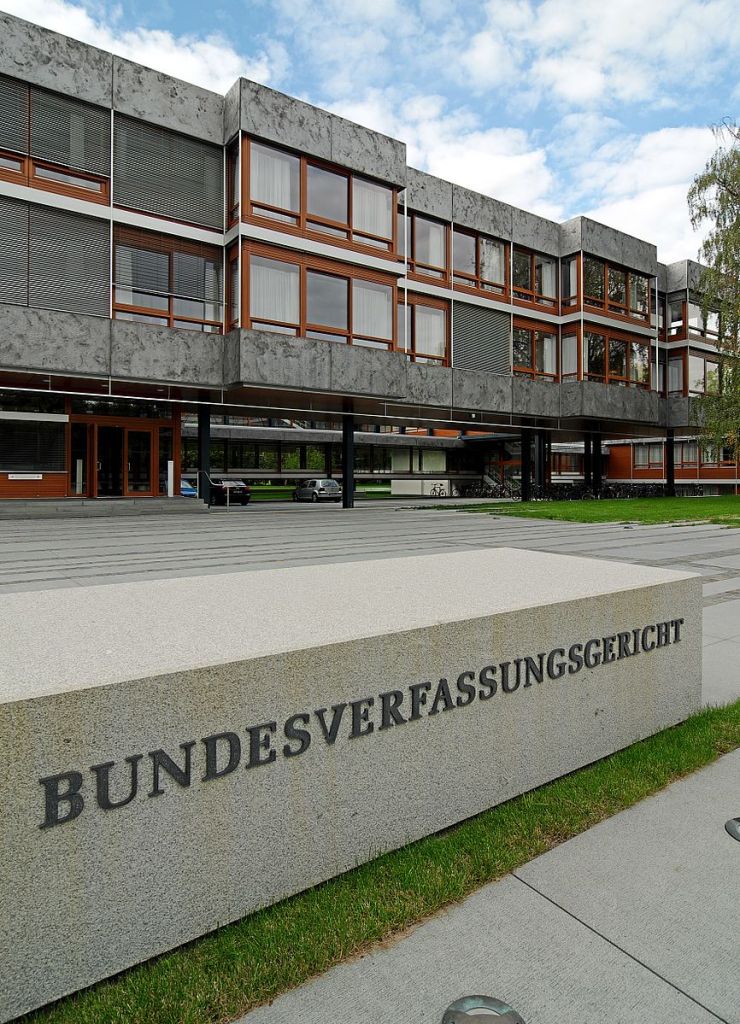

 Essex Law Research Blog