Elevate Your Academic Journey: SENSS, CHASE, and Essex Law School

 By Essex Law School, written by Professor Joel Colón-Ríos

If you are an aspiring legal scholar seeking advanced training in law within a dynamic research environment that encourages innovation and interdisciplinary exploration, a Doctoral Training Partnership at Essex Law School could be your gateway to an exciting academic journey. 

Essex Campus in the winter, Credit: University of Essex.

What are SENSS and CHASE? 

The South and East Network for Social Sciences (SENSS), an ESRC-funded Doctoral Training Partnership (DTP), is dedicated to fostering innovative and inclusive social science research training and collaboration. Among the eight distinguished institutions comprising SENSS, the University of Essex plays a pivotal role as the coordinating institution. 

The Consortium for Humanities and the Arts South-East England (CHASE) is an AHRC-funded Doctoral Training Partnership, providing funding and training opportunities to the next generation of world-leading arts and humanities scholars. Essex is one of the 8 world-leading institutions that comprise the membership of the CHASE DTP. 

SENSS and CHASE provide fully funded doctoral studentships, mentorship from global experts, and advanced subject-specific and research methods training. These opportunities empower researchers to extend their social scientific skills beyond academia. 

Here at the Essex Law School and Human Rights Centre, aspiring PhD students can apply for SENSS and CHASE studentships, unlocking comprehensive support and collaborative excellence in their academic journey. 

Why choose the Essex Law School? 

Choosing where to pursue your doctoral training is a significant decision. At the Essex Law School, we have meticulously crafted an environment that champions excellence and fuels innovation. Here is why you should join us: 

We are a research powerhouse. Our Law School has been ranked 3rd in the UK for research power in law according to the Times Higher Education research power measure (REF2021). Law at Essex is also ranked 47th in the THE World University Rankings, which show the strongest universities across the globe for key subjects (and 9th for UK Universities). This speaks volumes about the calibre of research conducted within our School. Our academic staff collaborates globally, working with the United Nations, the European Union, governments, and non-governmental organisations. 

We believe in the power of interdisciplinary research. Our dynamic research clusters foster collaboration across diverse backgrounds, creating a vibrant intellectual space for innovative and stimulating legal exploration. 

With expertise spanning diverse legal disciplines, our academics are the driving force behind the Law School’s excellence. Our faculty boasts exceptional scholars, providing intellectual leadership in key areas, including Human Rights Law, led by Professor Carla Ferstman who is Director of the Human Rights Centre; International & Comparative Law led by Professor Yseult Marique, an associate member of the International Academy of Comparative Law; Private and Business Law, led by Professor Christopher Willett who also spearheads the Law, Business and Technology Interdisciplinary Hub; as well as Public Law & Sociolegal Studies, led by Professor Joel I Colón-Ríos, who is also a member of the Constitutional and Administrative Justice Initiative (CAJI). Our academic leads are ready to guide you and link you with the ideal academic mentors. 

Our research student community is central to our success. These talented colleagues explore a broad range of exciting topics under expert supervision, forming a vibrant tapestry of ideas. 

We asked Boudicca Hawke about her experience as a CHASE-funded doctoral student at Essex Law School. 

“CHASE is a great DTP to be a part of. It is a quite a competitive funding source, but the application process itself is accessible. Especially at Essex, there’s a tremendous amount of support throughout the entire process, which really helps. There are a few rounds of revision you’ll need to go through, so it does require consistent work, but really, it’s wonderful to have guidance and support at every step so you can end with the best proposal possible. 

I chose to apply primarily because of the holistic way CHASE supports affiliated doctoral researchers and encourage interdisciplinary research. Beyond the funding, CHASE also hosts annual conferences and year-round research network meetings where you can collaborate closely with other doctoral researchers who share interests but come from different universities and backgrounds. CHASE also has an incredible placement scheme, where you can get hands-on experience throughout the PhD process which is quite valuable.” 

Boudicca, who is working on the status of fighters in non-international armed conflict, also shared some insights about the preparation of a research proposal: “Try to be as clear in the proposal as possible. Many of the reviewers won’t be experts in your field, so communicating the issue at-hand and value of your work in an easily digestible way is key. It can also be quite helpful to make sure you highlight relevant work experience and show why you are well-suited to do your specific project. If you don’t get it the first time around, don’t be afraid to re-apply!’’ 

We also talked to Matteo Bassetti, one of our SENSS-funded doctoral students. For Matteo, whose work focuses on the rights of trans people, and the underestimation of harm inflicted by States through institutional pathologisation frameworks, told us that SENSS “has contributed in many ways to my PhD experience, and has allowed me to take part to training that I would have otherwise been unable to attend. I am hoping to go on an Overseas Institutional Visit in the next term to broaden my network and horizon. However, if I have to be honest, I am still looking for more ways to use the opportunities offered by SENSS in the best way.” 

He also gave us some tips about the application process: “Start ahead of time. SENSS is looking not only at the quality of the individual applicant’s proposal, but also at the match between student and supervisors. Treat your application as a collaboration between you and your supervisors, where you need to do the heavy lifting. Be prepared to modify your dream proposal to make it fit better with the selection criteria.” 

Where can you find out more? 

Explore the opportunities offered by the SENSS and CHASE scholarships at the Essex Law School on our informative webpages. Discover eligibility criteria, application processes, and the outstanding benefits that await you by accessing the downloadable documents provided below. 

For inquiries about legal research and the SENSS and CHASE schemes, please contact Professor Joel I Colón-Ríos, our Postgraduate Research Director.  

Specific questions about academic disciplines? You can also reach out directly to our dedicated Academic Leads (mentioned above) who can put you in touch with suitable supervisors. 

Embark on your journey to become a world-leading scholar in law. Do not miss the chance to benefit from these funding opportunities at the Essex Law School, where innovation, excellence, and transformation define the doctoral experience. 
Empowering Healthier Food Choices: A Critical Look at EU Food Information Law 

Dr Nikhil Gokani, Lecturer in Consumer Protection and Public Health Law, University of Essex

One of the main ways the EU tries to improve nutrition is to inform consumers through labelling. The Farm to Fork Strategy states that one of the EU’s objectives is “empowering consumers to make informed, healthy…food choices”. However, the current EU food information law may not be as effective in empowering consumers to make informed, healthier food choices as the EU claims. 

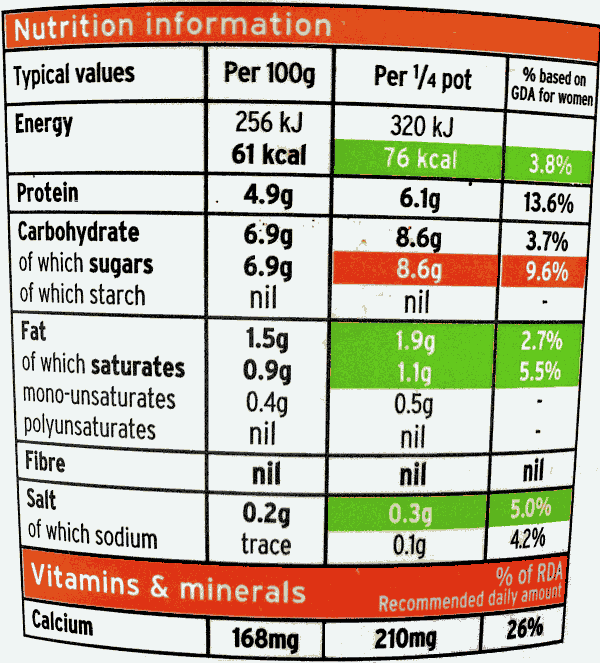
UK-style Nutrition Information label for low fat Yoghurt. Source: Wikipedia.

Well-informed consumers? 

EU food information rules – particularly those in Regulation 1169/2011 on the Provision of Food Information to Consumers (FIC Regulation) – seek to ensure that consumers are well-informed by giving food information that is sufficient, accurate, non-misleading, clear and easy to understand. However, EU food law does not achieve this aim. 

Sufficient food information 

Consumer do not actually have access to sufficient food information: 

  • Nutrient content must be declared per 100g/ml as sold. This helps consumers compare similar products because similar products may have comparable water content or portion sizes. It is less helpful for different product types. Information per portion would help but there is no requirement to provide nutrition information per portion. Indeed, there is also no requirement to provide information on recommended portion sizes, which is concerning because consumers are now eating larger portions. It is also does not give an interpretive guidance, as front-of-pack nutrition labelling would do. 
  • Ingredients are listed but the actual quantity of an ingredient is not required unless the ingredient is emphasised on the labelling. For instance, consumers may be aware that a product contains fruit, but they will not necessarily learn the quantity of fruit. Similarly, health consequences of unhealthy ingredients are not displayed. 
  • Mandatory particulars are only required on packaging and on sales websites. Purchase intentions are, however, also influence by advertising, but information is not required on advertising. 
  • There are many exemptions. Most mandatory particulars are not required for products in smaller packaging. A nutrition declaration is not required for 19 products or product categories. Most inexplicably, alcohol (which is defined as food in EU law) is exempt from nutrition or ingredients labelling. 

Accurate and non-misleading food information 

The FIC Regulation prohibits inaccurate information. However, accurate information can still be misleading. 

Mandatory labelling rules can give be misleading information:  

  • The nutrition declaration may also be expressed as a percentage of consumers’ reference intake. However, percentage of reference intake can be misleading because it is a nominal value based on the needs of an average adult female. It is, therefore, inaccurate for most of the population, including many women. 
  • Where nutrition information is given per consumption unit, this can also be misleading because a single consumption unit (such as one square of a chocolate bar) may not reflect a portion size (such as an entire chocolate bar).  

Food labelling that is given voluntarily by manufacturers can also be misleading: 

  • Nutrition and health claims provide positive information about the nutritional or health effects of a food product. They must be accurate and non-misleading as per Regulation 1924/2006 on Food Claims. However, even accurate food claims may be misleading. For instance, the claim that “iron contributes to the reduction of tiredness and fatigue” may be used without any explicit requirement to mention that this is only true if there is inadequate dietary intake. 
  • Nutrition and health claims can also be misleading. For instance, children’s cereal with significant levels of added sugars can be labelled with promotional claims such as “high in fibre” or “contains calcium”. Consumers over-generalise the positive qualities of claims, which creates a health halo, leading consumers to think that products are healthier than they are. 

The FIC Regulation requires that food information “shall not be misleading” but even this does not prohibit all misleading information: 

  • Whether or not information is misleading is assessed using the benchmark of the “average consumer”. This is a notional, rational consumer who is “reasonably well informed and reasonably observant and circumspect”. One difficulty with this is the inconsistency between the assumed behaviour of the “average consumer” and the actual behaviour of consumers. For instance, behavioural economics shows that consumers prefer stability, form habits, have limited cognitive capacity and often evaluate only the most salient information. Even if consumers do make rational choices, rational choices are not necessarily healthy choices. For example, a single parent working full-time on a low income may rationally choose to purchase food that is locally available, has high energy per unit cost and is quick to prepare, even if this might be less healthy. 

Clear and easy to understand food information 

The FIC Regulation also requires that information shall also be “clear and easy to understand” but this is also rather ineffective: 

  • “Clear” does not mean noticeable. For instance, the mandatory nutrition declaration may appear on the back of packaging, where it is less noticeable. Essential information can also be illegible as the minimum character height of mandatory particulars can be less than 0.9mm 
  • Voluntary information shall “not be displayed to the detriment of the space available for mandatory food information”. However, marketing messages on labelling – such as prominent cartoon characters or bright colours – can be distracting and detrimental to the noticeability of mandatory food information. 
  • Even the requirement that food information is “easy to understand” is not that helpful. For instance, consumers should understand the amount of fat in a product but not whether is a healthy level or not. 

Empowered consumers?  

It is clear that EU food information rules do not inform consumers well. But, if the rules on consumer food information were improved, could such improved rules empower consumers? 

To empower consumers to make healthy decisions the food environment should be conducive to consumers genuinely using health-related information. The EU is well positioned to identify features of the market that not only impede but also facilitate this. In the Consumer Agenda, the Commission stated that “empowering consumers means providing a robust framework of principles and tools” and a “robust framework ensuring their safety, information, education, rights, means of redress and enforcement”. 

Research shows the factors influencing consumer food choice empowerment. These can relate to food-internal factors (eg taste), food-external factors (eg food information and physical environments), personal-state factors (eg physiological needs and habits), cognitive factors (eg skills and attitudes) and sociocultural factors (eg culture and political elements). These broader factors are not acknowledged by the Commission, which instead focusses on safety, information and education, and rights. 

If food choice is a function of both multiple intrinsic consumer qualities and external environmental factors, giving consumers information is not on its own empowering them. Therefore, the EU’s strong emphasis on information regulation to empower consumers to make healthy decisions should be met with scepticism. 

Information regulation as one important part of empowerment 

Even if information regulation cannot, on its own, empower consumers, it is still a significant precursor to empowerment. For information to contribute to empowering consumers to make healthy food decisions, two conditions are needed. 

First, the information rules should be well-designed: 

  • For mandatory labelling, the EU needs to reflect on developing evidence-based and context-sensitive rules on whether consumer information is provided, what is provided, where and when, and how it is provided. For instance, nutrition information should be provided in a way that allows consumers to understand it, such as through mandatory front-of-pack-nutrition labelling. Even though the Commission committed to proposing harmonised front-of-pack nutrition, it continues to miss its 2022 deadline.  
  • Regulating voluntary information more effectively is also essential. Food claims should be prohibited for less healthy products, as should other food marketing designed to or having the effect of increasing the recognition, appeal or consumption of unhealthy food.  

Second, the limitations of information should be recognised:  

  • How consumers make food decisions is multifactorial and complex. In recent decades, it has become clear that unhealthy diets demand tackling the commercial determinants of health that drive poor nutrition. These industry practices are designed to maximise product sales by encouraging individuals to over-consume unhealthy food at the expense of healthy food. This includes creating new, highly palatable products, promoting them aggressively, selling them at lower prices than healthy food, packaging them in large ready-to-eat portions and selling them in widely accessible locations. 

Even though the EU’s strong emphasis on regulating consumer food information to improve diets is misplaced, this is not to suggest that information regulation is unimportant. Rather, it is to say that food information (i) in its current form does not lead to well-informed consumers and (ii) on its own does not empower consumers to make healthy food decisions. 

Better laws that effectively address labelling as well as the other determinants are essential. We continue to call on the Commission to use its power to propose new EU laws for the benefit of consumers and their health. 

This blog post is based on a more comprehensive analysis of EU food information law published in the Journal of Consumer Policy: Gokani, N., (2024). Healthier Food Choices From Consumer Information to Consumer Empowerment in EU Law. Journal of Consumer Policy. 47 (2), 271-296. It is available open access here: https://doi.org/10.1007/s10603-024-09563-0.

Alcohol labelling and warnings: how progress at the Codex Alimentarius Commission can help States overcome challenges at the World Trade Organization

By Nikhil Gokani, Lecturer in Law, Essex Law School, University of Essex

In this post, Nikhil Gokani writes about the work he is involved in on developing international standards, which can help countries navigate challenges under the rules of the World Trade Organization. Nikhil works on food and alcohol labelling regulation in the UK, EU and globally. He is chair of the Alcohol Labelling and Health Warning International Expert Group at the European Alcohol Policy Alliance (Eurocare). He is also a member of the Technical Advisory Group on Alcohol Labelling at WHO.

Alcohol-related harm and consumer protection

Consuming alcohol is a causal factor in more than 200 diseases, injuries and other health conditions. Alcohol consumption affects other people, such as family, friends, colleagues and strangers. Globally, about 3 million deaths each year result from the use of alcohol. Beyond health, there are significant social and economic burdens.

Consumers do not have sufficient knowledge about the content and effects of alcoholic beverages. Most consumers are unaware of the energy and nutrition values (such as amount of carbohydrates) and ingredients. Few consumers are aware of the health risks, such as alcohol causing at least seven cancers.

Alcohol labelling and global progress

Alcohol labelling is an important source of information for consumers. Labelling is unique in providing information at both the point of purchase and consumption. Labelling improves knowledge. It is an effective measure to help ensure consumers are well-informed and not misled. Increasing evidence also shows that health information can empower consumers to make healthier consumption decisions, including drinking less.

Unfortunately, few countries in the world require that consumers are given essential facts on labelling, such as ingredients lists and nutrition declarations. Even fewer countries require beverages to be labelled with information warning consumers about the hazards of drinking alcohol.

The most recent success was in Ireland where new rules will require alcohol packaging to display warnings that “Drinking alcohol causes liver disease”, “There is a direct link between alcohol and fatal cancers” and a pictogram showing that alcohol can harm the unborn child if drunk during pregnancy. Countries like Ireland, unfortunately, face international legal challenges, particularly under international trade law.

International trade law and international standards

International trade law can constrain the regulatory autonomy of States. Significant to alcohol labelling is the World Trade Organization (WTO) Agreement on Technical Barriers to Trade (TBT Agreement). Most significantly, Article 2.2 of the TBT Agreement states that technical regulations, including rules on alcohol labelling, shall not create “unnecessary obstacles to international trade”. Technical regulations shall not be “more trade-restrictive than necessary to fulfil a legitimate objective”. Preventing alcohol-related harm is indeed a legitimate objective. However, many States trying to introduce better alcohol labelling rules have been challenged because other States have argued that labelling rules go beyond what is more trade-restrictive than “necessary”.

When a WTO State’s rule about alcohol labelling is challenged, international standards can either help or hinder them.

On the one hand, Article 2.4 of the TBT Agreement states that where “relevant international standards exist” States “shall use them…as a basis for their technical regulations” except when this would be ineffective or inappropriate Therefore, where international standards are not aligned with public health interests, they can make it harder for States to introduce effective national rules.

On the one hand, Article 2.5 of the TBT Agreement provides a powerful defence mechanism. It states that, when a technical regulation is “in accordance with relevant international standards”, there is a rebuttable presumption that the national rule does not create an unnecessary obstacle to international trade. Simply stated, where the State complies with a relevant international standard, they have a potentially strong defence for their labelling rules. Therefore, good international standards can be very powerful to help countries defend their national labelling policies.

Codex Alimentarius

An international standard is one which is made by a recognised body and compliance is voluntary. For alcohol labelling, there is indeed an international standard: the Codex Alimentarius is a collection of standards, guidelines and codes adopted by the Codex Alimentarius Commission.

Where alcohol labelling is in compliance with relevant Codex standards, States could use this as a defence under WTO rules. This underlines the importance of having good Codex standards that support effective national rules on alcohol labelling.

Significant progress has been made at the Codex Alimentarius Commission. Alcohol labelling was discussed at four Sessions of the Codex Committee on Food Labelling (CCFL). The Report of the 46th Session of CCFL noted “there was common ground on which to proceed with the work” but little further progress has since been made in recent years. At that Session, the Committee agreed that Russia, European Union and India with assistance from WHO and Eurocare would prepare a discussion paper for consideration at the next meeting. In fact, this was the first time this Committee included an NGO in the preparation of a discussion paper, which is a testament to the global leadership by Eurocare in this field.  Unfortunately, however, no discussion paper was submitted by Russia. Therefore, WHO and Eurocare each submitted their own discussion paper to keep the matter moving forward. The WHO representative spoke objectively and convincingly at the 47th meeting of CCFL. These efforts led to alcohol labelling remaining on the Codex agenda – something which several States, no doubt under the influence of the powerful alcohol industry, had resisted.

The Codex Alimentarius Commission has now started a new consultation process. It issued a Circular Letter which asks State members and Observers to comment on how work on developing alcohol standards should proceed.

For this consultation process to work best for public health and consumer protection, we need everyone to contact their governments (emails here) to demand effective progress at Codex. Please join us in these efforts!

Front-of-Pack Nutrition Labelling: Time for the EU to Adopt a Harmonized Scheme 

By Dr Nikhil Gokani (Essex Law School) and Prof Amandine Garde (School of Law and Social Justice, University of Liverpool)

Nutri-Score label as published by Santé Publique France

In its Farm to Fork Strategy, published nearly 3 years ago in May 2020, the European Commission committed to ‘propose harmonised mandatory front-of-pack nutrition labelling’ (‘FoPNL’) to ‘empower consumers to make informed, healthy and sustainable food choices’ by the fourth quarter of 2022. This commitment was repeated in Europe’s Beating Cancer Plan in February 2021. The deadline has now passed and the promised proposals do not seem forthcoming. This is all the more disappointing considering there is strong support for the implementation of an EU-wide harmonized FoPNL scheme, as demonstrated by the results of the EU consultation on ‘Food labelling—revision of rules on information provided to consumers’ published in December 2021.

Such support is not surprising considering the significant advantages that the adoption of a harmonised FoPNL scheme has for consumers, traders, Member States and the EU alike.

  • From the perspective of consumers, an effectively designed FoPNL scheme helps inform them of the nutritional composition of food. Informing consumers lies at the heart of the EU’s consumer protection strategies and reflects its long-held view that regulating food labelling empowers consumers to make healthier choices whilst promoting the objectives of market integration. At present, the EU only mandates a small table of nutrition information on the back of food packaging. This is often hard to see and difficult to understand, whereas effectively designed FoPNL can provide easy-to-see and easy-to-understand information on the front of food packaging thus supporting healthier food choices.
  • From the perspective of traders, harmonized FoPNL will create a level playing field by reducing regulatory fragmentation, which will also increase legal certainty and lower labelling costs. There are currently 7 national FoPNL schemes recommended across 15 EU Member States. Further industry-led schemes are used, although they have not been officially endorsed by any Member State. While some manufacturers have adopted FoPNL, many have not, and others are using multiple different schemes.
  • From the perspective of Member States, a mandatory, EU-wide FoPNL scheme will contribute to improving diets and health outcomes. Current EU rules prohibit the adoption of FoPNL schemes which are interpretive, and do not facilitate the adoption of FoPNL schemes which are easy to use. They also prevent Member States from making FoPNL mandatory.
  • From the perspective of the EU itself, a harmonized FoPNL scheme will promote the proper functioning of the internal market in line with the EU’s mandate to ensure a high level of health and consumer protection in all its policies. Moreover, it will facilitate the compliance of all its Member States with the commitments that they have made at international level to promote healthier food environments.

The choice of any single scheme must be guided by evidence. The Commission’s Joint Research Centre reviews, published in 2020 and 2022, identify what makes FoPNL effective:

  • colour-coded labels draw consumer attention through increased salience, are preferred by consumers, are associated with increased understanding and encourage healthier food purchases;
  • simple labels require less attention to process and are preferred and more easily understood by consumers; and
  • consumers prefer and better understand consistent and simple reference quantities.

In its Inception Impact Assessment of December 2020, the Commission put forward four types of labels as contenders for a harmonized, mandatory EU-wide scheme: graded indicators (e.g. Nutri-Score); endorsement logos (e.g. Keyhole); colour-coded (e.g. Multiple Traffic Lights); and numerical (e.g. NutrInform). It is clear that of the four schemes considered in the Inception Impact Assessment, Nutri-Score is the only one meeting the criteria above, and its effectiveness is strongly established. Not only does it attract consumers’ attention, it is favourably perceived and well understood. It also has a positive impact on the nutritional quality of purchases. Additionally, the nutrient profiling model underpinning Nutri-Score has been extensively validated and shown to be associated with improved health outcomes. Even if no scheme will ever be described as ‘perfect’ by all stakeholders, its developed evidence base and adoption by a growing number of Member States, makes Nutri-Score the only viable option for the timely implementation of a mandatory, harmonised FoPNL scheme in the EU.

Growing rates of obesity and other diet-related diseases increase the urgency for the EU to act. We, therefore, call on the Commission to propose legislation requiring food to be labelled with Nutri-Score on a mandatory basis across the EU, as it has committed to do.


This post was originally published as an invited editorial in the European Journal of Public Health in June 2023. It is available here.

Nikhil Gokani is an expert in the regulation of front-of-pack nutrition labelling in the EU and globally. Please click here for his profile and contact details.

Competition Law in Context: Workshop Retracing the Work of Professor Steve Anderman

Photo by Iñaki del Olmo on unsplash.com

In collaboration with the Oxford Centre for Competition Law and Policy & Journal of Antitrust Enforcement, the Swedish Network for European Legal Studies (SNELS) invites the public to a workshop in honour of emeritus Professor Steven Anderman at Essex Law School.

Björn Lundqvist (SNELS/Stockholm University) and Hedvig Schmidt (Southampton Law School) will host the workshop which seeks to capture the common theme oriented towards the “big ideas” which kept Professor Steven Anderman’s attention throughout his academic career: ‘competition’ as a means to secure the very basis of the EU’s legal order. Steven has an outstanding talent to place legal problems into a broader context and framework. This is what the workshop would like to retrace in his work, and what the workshop will seek to portray.

The workshop will be held on 26 January 2023 in the Harold Lee Room at Pembroke College, Oxford from 1.20pm-7pm GMT.

For registration and any further questions regarding this invitation, please email the network coordinator Palle Söderberg at palle.soderberg@juridicum.su.se.

Incremental Development of a Legal Framework for Arbitration in Emerging Markets: A Case Study of Construction Arbitration in Nigeria

Photo by David Rotimi

Dr. Fikayo Taiwo, Lecturer in Law at the University of Essex, has concluded her Ph.D. thesis titled ‘Incremental Development of a Legal Framework for Arbitration in Emerging Markets: A Case Study of Construction Arbitration in Nigeria’.

The problem the thesis sought to investigate is the continued exportation of Africa-related disputes for arbitration outside of the continent based on a perceived lack of an appropriately attractive seat of international arbitration within the region.

Given the economic impact of arbitration activity on a nation’s gross domestic product (GDP), the issue of capital flight was especially concerning.

To this end, the aim of the thesis was dual: first, to ascertain the viability of existing frameworks for commercial arbitration in African emerging markets for the purposes of promoting their reputation as seats of international arbitration; and second, to extend the literature on the African Union’s economic integration agenda that has recently been brought to the fore again by the Agreement establishing the African Continental Free Trade Area (AfCFTA).

In dealing with the problem, Dr. Taiwo set out to investigate the main research question of the extent to which a sector-specific specialist arbitration framework could enhance the right of access to justice.

Using a hybrid methodology and the single case study design, the central argument was that, to the extent that the necessary political will is present, identifying small spaces for reform (especially through specialist arbitration frameworks) and dealing with these issues in chunks is an effective way of progressively improving the parameters of access to justice, building attractive seats of international arbitration in Africa and consequently, contribute to economic and sustainable development.

One of the original contributions the thesis makes is applying access to justice from human rights law to commercial law as a major conceptual basis for the research to address not only arbitration matters but also other issues that parties take into consideration when choosing a seat of arbitration.

The wider significance of the work lies in its ability to not only reinforce the idea that the law is part of the development and should be part of critical sectors like the construction industry but also to inform law and policy for commercial arbitration in emerging markets and international institutions.

The thesis also expands the knowledge base of access to justice and the role it plays in issues beyond the realm of human rights law and discourse.

Dr. Taiwo plans to publish journal articles from her thesis to further explore the theme of the interplay of commercial dispute resolution and human rights for sustainability, and pathways to effective regionalisation through commercial arbitration in Africa.

Licensing System for 3D Printing in China

Source: PxFuel

James Griffin (Associate Professor, University of Exeter), Onyeka Osuji (Professor, University of Essex), and Hing Kai Chan (Professor, Nottingham University Business School China) have developed a digital watermarking technology that enables the tracking and tracing of 3D Printing (3DP) content, from its creation through to its destruction.

A watermark is embedded into creative content; the team’s research made the technology easier to implement and difficult to remove, thus enabling new forms of 3DP works.

The technology was successfully demonstrated operating at a conference in China in 2017 and received widespread and acclaimed international press and television coverage. It has been granted a patent in China in August 2020.  

The research team’s next task, with James Griffin as principal investigator in the impact follow on research, is to develop the technology further for implementation into licensing systems. They will do this with two China-based companies. The AHRC awarded Griffin, Osuji, and Kai Chan £65,774 for the project.

Professor Osuji’s role is mainly to apply contract law to 3D printed watermarks, provide training sessions concerning contracts and lead the development of the best practice code.  

Attaching the technology to an existing licensing platform will allow for the use of 3DP content in new creative ways, leading to new artistic forms. For example, the technology could be attached to 3DP materials themselves, resolving an ongoing problem in ensuring the quality of materials that are used for printing. This could allow for more complex artistic works; it could even lead to organic works involving 3DP biological material.

The technology would open up new markets, even overcoming existing regulatory hurdles. This is because the technology would enable right holders to guarantee sources of materials and can be used to check if the structure of a 3DP object has changed internally. 

More details about the project can be found here.

The Essex Law School represents the UK at the 2022 IACL General Congress

Photo by Mikel Parera

Dr Anna – Mari Antoniou, Lecturer in Maritime and Commercial Law, has been appointed as the UK’s special national rapporteur at the International Academy of Comparative Law’s (IACL) General Congress, which will take take place in Asunción, Paraguay in 2022.

Dr Antoniou will be representing the United Kingdom for Trade Finance and her report deals with Topic IV of the Congress: ‘The Effectiveness of International Legal Harmonisation through Soft Law – UCP600’. It discusses the UK’s approach to several trade finance issues, including how courts, arbitral tribunals and financial institutions solve recurring problems in documentary credit contracts.

The report’s most significant contribution is an investigation and analysis of two current problems: first, how the COVID-19 pandemic has affected the industry and supply chains; and second, the way the pandemic has forced the issue of digitisation of trade finance.

It discusses the Law Commission’s Electronic Trade Documents project, which is in the consultation phase, and if the proposed draft Bill is adopted by Parliament, electronic transport documents will become a reality.

Dr Antoniou’s report looks at the issue both from a practical perspective and a legal perspective; international trade is worth £1.153 trillion to the UK so an incredibly significant amount is reflected in this report.

Moreover, the legal issues discussed are an excellent example of how the law needs to be updated to reflect the commercial reality. COVID-19 has highlighted other failings in the trade system, but has also emphasised the need for electronic alternatives for an industry deeply rooted in paper-only transactions.

Dr Antoniou’s preliminary report was submitted on 31 August 2021 with final reports due November 2021.

Success at the SLS ‘Make the News’ Competition

On 30 June 2021, the Society of Legal Scholars (SLS) announced that Dr. Eden Sarid, Lecturer in Law at the University of Essex, was one of the winners in its Make the News competition for his project Freeing Our Cultural Treasures from a Copyright Limbo.

The SLS’ competition presents early career researchers with a unique experience to learn more about getting your research noticed by a wider audience. A meeting will now be scheduled for all four of the winners to make their pitches to the judging panel of Catherine Baksi (The Times and The Guardian), Joshua Rozenberg QC (BBC, Law Society Gazette) and Thom Brooks, the SLS President.

In a statement to our Research Blog, Dr. Sarid explained that his project:

‘aims to propose a novel solution to a major copyright challenge, of orphan works. Orphan works are items – such as photos, music, or books – which are subject to copyright, but whose copyright owners cannot be located and therefore permission to use the works cannot be granted. Currently in the UK, a limited licensing scheme results in millions of orphan works remaining unavailable to the public. Based on a theoretical examination of copyright justifications, the project advances a framework that will allow public access to these works.’

Look out for Dr. Sarid making the news in coming weeks and months!

Non-State Rules in International Commercial Law: Contracts, Legal Authority and Application

Photo by Pat Whelen

Dr Johanna Hoekstra, Lecturer in Law at the University of Essex, published a monograph titled Non-State Rules in International Commercial Law: Contracts, Legal Authority and Application (Routledge 2021).

The book examines the different ways non-state rules are applied in international commercial contracts with the aim to understand the legal authority of non-state rules. To do so, the book analyses:

  • The rule of non-state rules in international commercia law;
  • The role of non-state rules in international commercial contracts;
  • The application and interpretation of non-state rules.

Non-state rules can be defined as those rules which come from a source other than the state. This includes uncodified rules (trade usages and general principles of law) and codified rules (restatements of law, model laws, model contract clauses and guidelines). They are, in principle, not binding and they either need to be contracted into or can be contracted out of. The concept of non-state rules is wider than the lex mercatoria which consists of trade usages and practices by merchants and general principles of law, but would not include rules codified by international organisations and trade associations.

The contracting parties in an international contract might be faced with uncertainty and unpredictability as to the applicable law and its content. For at least one of the parties’ choice of law often means the application of a foreign law with sometimes unforeseen consequences. To escape the unpredictability of a foreign law, to create a level playing field between the contracting partners if they cannot agree on the applicable law, or because they prefer a neutral law, the parties might choose non-state rules as the governing law of the contract. Whilst such a choice is usually permitted in arbitration, it is only rarely permitted in litigation. Private international law in most jurisdictions allows the parties to include non-state rules as contractual terms or by reference, but limits choice of governing law to state laws.

Examining the role of non-state rules, beyond being the governing law of the contract, shows that they are frequently used by courts and arbitral tribunals to interpret either the contract or the applicable law. Interestingly, this is frequently done even when the parties have not included a reference to non-state rules in the contract. This can be done to either fill gaps in the contract, to show the compatibility of the applicable law with transnational commercial practice, or to interpret the contract in light of the principles of transnational commercial law. Courts and arbitral tribunals are thus taking a leading role in shaping how non-state rules are used.

This book examines these different ways in which non-state rules are applied in order to understand how this affects their legal authority. By studying the application of non-state rules, it can be understood what role they play in domestic law, what support they have from the international business community, and the position they have in courts and arbitral tribunals.

Published on 16 Mar. 2021 by Routledge

This book demonstrates how non-state rules have legal authority as the applicable law to the contract, as sources of (domestic) law, as legal doctrine/scholarship, and as terms of the contract. They can be considered as law, rules of law, contractual rules, and/or normative practices depending on the situation.

Dr. Hoekstra’s book thus gives a practical overview of different types of non-state rules and their role in international commercial law, and contributes to the theoretical discussion by analysing several key issues related to the legal authority of non-state rules.