Elevate Your Academic Journey: SENSS, CHASE, and Essex Law School

 By Essex Law School, written by Professor Joel Colón-Ríos

If you are an aspiring legal scholar seeking advanced training in law within a dynamic research environment that encourages innovation and interdisciplinary exploration, a Doctoral Training Partnership at Essex Law School could be your gateway to an exciting academic journey. 

Essex Campus in the winter, Credit: University of Essex.

What are SENSS and CHASE? 

The South and East Network for Social Sciences (SENSS), an ESRC-funded Doctoral Training Partnership (DTP), is dedicated to fostering innovative and inclusive social science research training and collaboration. Among the eight distinguished institutions comprising SENSS, the University of Essex plays a pivotal role as the coordinating institution. 

The Consortium for Humanities and the Arts South-East England (CHASE) is an AHRC-funded Doctoral Training Partnership, providing funding and training opportunities to the next generation of world-leading arts and humanities scholars. Essex is one of the 8 world-leading institutions that comprise the membership of the CHASE DTP. 

SENSS and CHASE provide fully funded doctoral studentships, mentorship from global experts, and advanced subject-specific and research methods training. These opportunities empower researchers to extend their social scientific skills beyond academia. 

Here at the Essex Law School and Human Rights Centre, aspiring PhD students can apply for SENSS and CHASE studentships, unlocking comprehensive support and collaborative excellence in their academic journey. 

Why choose the Essex Law School? 

Choosing where to pursue your doctoral training is a significant decision. At the Essex Law School, we have meticulously crafted an environment that champions excellence and fuels innovation. Here is why you should join us: 

We are a research powerhouse. Our Law School has been ranked 3rd in the UK for research power in law according to the Times Higher Education research power measure (REF2021). Law at Essex is also ranked 47th in the THE World University Rankings, which show the strongest universities across the globe for key subjects (and 9th for UK Universities). This speaks volumes about the calibre of research conducted within our School. Our academic staff collaborates globally, working with the United Nations, the European Union, governments, and non-governmental organisations. 

We believe in the power of interdisciplinary research. Our dynamic research clusters foster collaboration across diverse backgrounds, creating a vibrant intellectual space for innovative and stimulating legal exploration. 

With expertise spanning diverse legal disciplines, our academics are the driving force behind the Law School’s excellence. Our faculty boasts exceptional scholars, providing intellectual leadership in key areas, including Human Rights Law, led by Professor Carla Ferstman who is Director of the Human Rights Centre; International & Comparative Law led by Professor Yseult Marique, an associate member of the International Academy of Comparative Law; Private and Business Law, led by Professor Christopher Willett who also spearheads the Law, Business and Technology Interdisciplinary Hub; as well as Public Law & Sociolegal Studies, led by Professor Joel I Colón-Ríos, who is also a member of the Constitutional and Administrative Justice Initiative (CAJI). Our academic leads are ready to guide you and link you with the ideal academic mentors. 

Our research student community is central to our success. These talented colleagues explore a broad range of exciting topics under expert supervision, forming a vibrant tapestry of ideas. 

We asked Boudicca Hawke about her experience as a CHASE-funded doctoral student at Essex Law School. 

“CHASE is a great DTP to be a part of. It is a quite a competitive funding source, but the application process itself is accessible. Especially at Essex, there’s a tremendous amount of support throughout the entire process, which really helps. There are a few rounds of revision you’ll need to go through, so it does require consistent work, but really, it’s wonderful to have guidance and support at every step so you can end with the best proposal possible. 

I chose to apply primarily because of the holistic way CHASE supports affiliated doctoral researchers and encourage interdisciplinary research. Beyond the funding, CHASE also hosts annual conferences and year-round research network meetings where you can collaborate closely with other doctoral researchers who share interests but come from different universities and backgrounds. CHASE also has an incredible placement scheme, where you can get hands-on experience throughout the PhD process which is quite valuable.” 

Boudicca, who is working on the status of fighters in non-international armed conflict, also shared some insights about the preparation of a research proposal: “Try to be as clear in the proposal as possible. Many of the reviewers won’t be experts in your field, so communicating the issue at-hand and value of your work in an easily digestible way is key. It can also be quite helpful to make sure you highlight relevant work experience and show why you are well-suited to do your specific project. If you don’t get it the first time around, don’t be afraid to re-apply!’’ 

We also talked to Matteo Bassetti, one of our SENSS-funded doctoral students. For Matteo, whose work focuses on the rights of trans people, and the underestimation of harm inflicted by States through institutional pathologisation frameworks, told us that SENSS “has contributed in many ways to my PhD experience, and has allowed me to take part to training that I would have otherwise been unable to attend. I am hoping to go on an Overseas Institutional Visit in the next term to broaden my network and horizon. However, if I have to be honest, I am still looking for more ways to use the opportunities offered by SENSS in the best way.” 

He also gave us some tips about the application process: “Start ahead of time. SENSS is looking not only at the quality of the individual applicant’s proposal, but also at the match between student and supervisors. Treat your application as a collaboration between you and your supervisors, where you need to do the heavy lifting. Be prepared to modify your dream proposal to make it fit better with the selection criteria.” 

Where can you find out more? 

Explore the opportunities offered by the SENSS and CHASE scholarships at the Essex Law School on our informative webpages. Discover eligibility criteria, application processes, and the outstanding benefits that await you by accessing the downloadable documents provided below. 

For inquiries about legal research and the SENSS and CHASE schemes, please contact Professor Joel I Colón-Ríos, our Postgraduate Research Director.  

Specific questions about academic disciplines? You can also reach out directly to our dedicated Academic Leads (mentioned above) who can put you in touch with suitable supervisors. 

Embark on your journey to become a world-leading scholar in law. Do not miss the chance to benefit from these funding opportunities at the Essex Law School, where innovation, excellence, and transformation define the doctoral experience. 

Alcohol labelling and warnings: how progress at the Codex Alimentarius Commission can help States overcome challenges at the World Trade Organization

By Nikhil Gokani, Lecturer in Law, Essex Law School, University of Essex

In this post, Nikhil Gokani writes about the work he is involved in on developing international standards, which can help countries navigate challenges under the rules of the World Trade Organization. Nikhil works on food and alcohol labelling regulation in the UK, EU and globally. He is chair of the Alcohol Labelling and Health Warning International Expert Group at the European Alcohol Policy Alliance (Eurocare). He is also a member of the Technical Advisory Group on Alcohol Labelling at WHO.

Alcohol-related harm and consumer protection

Consuming alcohol is a causal factor in more than 200 diseases, injuries and other health conditions. Alcohol consumption affects other people, such as family, friends, colleagues and strangers. Globally, about 3 million deaths each year result from the use of alcohol. Beyond health, there are significant social and economic burdens.

Consumers do not have sufficient knowledge about the content and effects of alcoholic beverages. Most consumers are unaware of the energy and nutrition values (such as amount of carbohydrates) and ingredients. Few consumers are aware of the health risks, such as alcohol causing at least seven cancers.

Alcohol labelling and global progress

Alcohol labelling is an important source of information for consumers. Labelling is unique in providing information at both the point of purchase and consumption. Labelling improves knowledge. It is an effective measure to help ensure consumers are well-informed and not misled. Increasing evidence also shows that health information can empower consumers to make healthier consumption decisions, including drinking less.

Unfortunately, few countries in the world require that consumers are given essential facts on labelling, such as ingredients lists and nutrition declarations. Even fewer countries require beverages to be labelled with information warning consumers about the hazards of drinking alcohol.

The most recent success was in Ireland where new rules will require alcohol packaging to display warnings that “Drinking alcohol causes liver disease”, “There is a direct link between alcohol and fatal cancers” and a pictogram showing that alcohol can harm the unborn child if drunk during pregnancy. Countries like Ireland, unfortunately, face international legal challenges, particularly under international trade law.

International trade law and international standards

International trade law can constrain the regulatory autonomy of States. Significant to alcohol labelling is the World Trade Organization (WTO) Agreement on Technical Barriers to Trade (TBT Agreement). Most significantly, Article 2.2 of the TBT Agreement states that technical regulations, including rules on alcohol labelling, shall not create “unnecessary obstacles to international trade”. Technical regulations shall not be “more trade-restrictive than necessary to fulfil a legitimate objective”. Preventing alcohol-related harm is indeed a legitimate objective. However, many States trying to introduce better alcohol labelling rules have been challenged because other States have argued that labelling rules go beyond what is more trade-restrictive than “necessary”.

When a WTO State’s rule about alcohol labelling is challenged, international standards can either help or hinder them.

On the one hand, Article 2.4 of the TBT Agreement states that where “relevant international standards exist” States “shall use them…as a basis for their technical regulations” except when this would be ineffective or inappropriate Therefore, where international standards are not aligned with public health interests, they can make it harder for States to introduce effective national rules.

On the one hand, Article 2.5 of the TBT Agreement provides a powerful defence mechanism. It states that, when a technical regulation is “in accordance with relevant international standards”, there is a rebuttable presumption that the national rule does not create an unnecessary obstacle to international trade. Simply stated, where the State complies with a relevant international standard, they have a potentially strong defence for their labelling rules. Therefore, good international standards can be very powerful to help countries defend their national labelling policies.

Codex Alimentarius

An international standard is one which is made by a recognised body and compliance is voluntary. For alcohol labelling, there is indeed an international standard: the Codex Alimentarius is a collection of standards, guidelines and codes adopted by the Codex Alimentarius Commission.

Where alcohol labelling is in compliance with relevant Codex standards, States could use this as a defence under WTO rules. This underlines the importance of having good Codex standards that support effective national rules on alcohol labelling.

Significant progress has been made at the Codex Alimentarius Commission. Alcohol labelling was discussed at four Sessions of the Codex Committee on Food Labelling (CCFL). The Report of the 46th Session of CCFL noted “there was common ground on which to proceed with the work” but little further progress has since been made in recent years. At that Session, the Committee agreed that Russia, European Union and India with assistance from WHO and Eurocare would prepare a discussion paper for consideration at the next meeting. In fact, this was the first time this Committee included an NGO in the preparation of a discussion paper, which is a testament to the global leadership by Eurocare in this field.  Unfortunately, however, no discussion paper was submitted by Russia. Therefore, WHO and Eurocare each submitted their own discussion paper to keep the matter moving forward. The WHO representative spoke objectively and convincingly at the 47th meeting of CCFL. These efforts led to alcohol labelling remaining on the Codex agenda – something which several States, no doubt under the influence of the powerful alcohol industry, had resisted.

The Codex Alimentarius Commission has now started a new consultation process. It issued a Circular Letter which asks State members and Observers to comment on how work on developing alcohol standards should proceed.

For this consultation process to work best for public health and consumer protection, we need everyone to contact their governments (emails here) to demand effective progress at Codex. Please join us in these efforts!

Essex Law Scholars Tackle Corporate Accountability and Human Rights at the U.N. Forum on Business and Human Rights

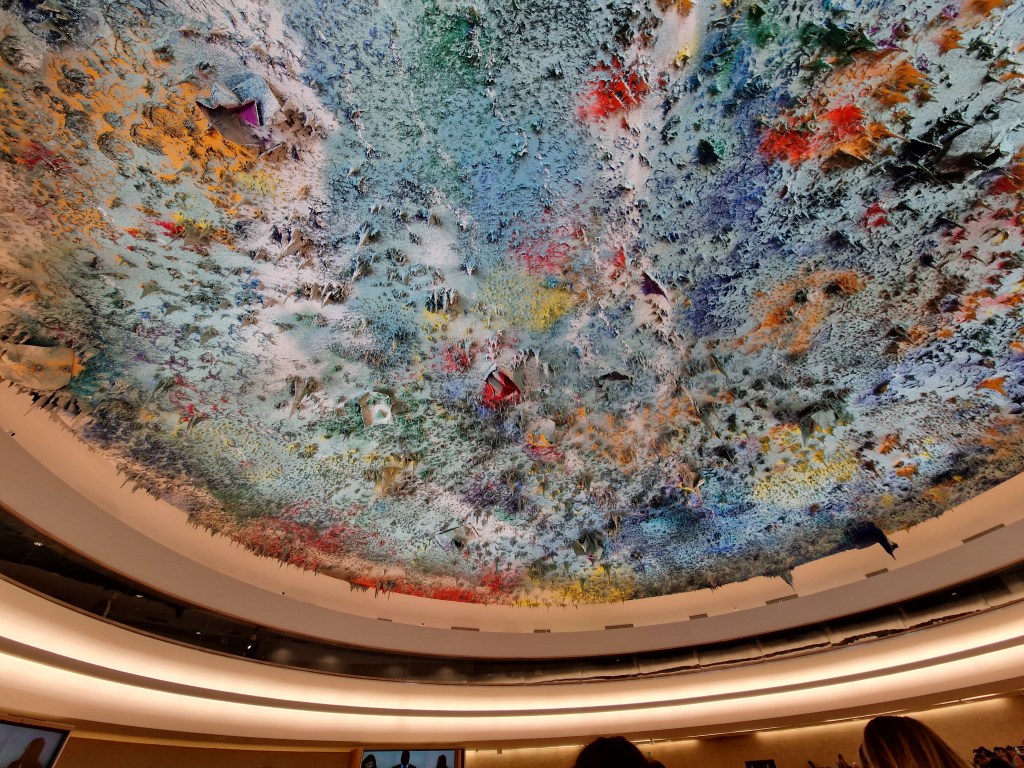
The UN Human Rights Council room ceiling in Geneva

From 27-29 November, the United Nations in Geneva will host its 12th annual U.N. Forum on Business and Human Rights. Essex Law School scholars Drs Jessica Lawrence and Tara Van Ho and Professors Sabine Michalowski and Clara Sandoval will attend to share their work and insights in the field.

In addition to hosting an event for our Alumni, Professors Michalowski and Sandoval and Dr Van Ho will speak at side events, focusing on issues arising from business operations in conflict-affected areas.

Professors Michalowski and Sandoval will address a side event organised by the Colombian Mission on the potential of securing accountability for business actors by that state’s Special Jurisdiction for Peace (JEP). They will join Roberto Vidal, a member of the JEP. This event, titled “Accountability of economic actors for grave human rights violations as part of transitional justice processes” will be delivered in English on Monday, 27 November from 11-12.30pm in Room VII at the Palais des Nations.

This year, Dr Van Ho will speak at a side event organised by Pax for Peace and Swedwatch on the controversial corporate merger and acquisition of Swedish company Lundin with Norwegian company Aker BP. The event is taking place on Tuesday, 28 November from 10:45-12:00 GMT (11.45-13.00 CET).

The remainder of this post will address the controversy of the Lundin-Aker case and information about our alumni gathering in Geneva.

Allegations of war crimes by Swedish company Lundin 

Non-governmental organisations and victims have long alleged that Lundin was complicit in war crimes committed in Sudan between 1998-2002 (the location is now located in South Sudan following the state’s 2011 independence). Allegedly, Lundin asked the Sudanese military to ensure the security of their oil field with either knowledge or indifference that this would result in the commission of war crimes.  

In 2010, Swedish prosecutors opened an investigation into the allegations. Under international law, statutes of limitations should not apply to war crimes. On 11 November 2021, Swedish prosecutors charged the company’s then-Chief Executive, Ian Lundin and its former vice president, Alex Schneiter, with complicity in those crimes. Both the company and the two men deny the allegations. After a challenge from Schneiter was denied by the Swedish Supreme Court, the case was scheduled for trial, which began earlier this year. 

As Dr. Van Ho has previously discussed on the prominent international justice podcast Asymmetrical Haircuts, transnational criminal prosecutions of corporate executives for war crimes remain rare, despite a large number of significant and well-substantiated allegations against multinational corporations. 

In 2014, Dr. Van Ho published her chapter on the rarity of successful corporate criminal prosecutions for human rights and humanitarian law violations in conflict-affected areas and oppressive regimes. Since then, the landscape of corporate criminal prosecutions has not significantly changed, making the Lundin case the most significant prosecution of corporate executives since the Nuremberg trials.  

The 2014 piece was only one in a series by Dr. Van Ho exploring the responsibility of corporations for terminating and remedying human rights violations committed in the context of conflicts. She now has a grant from Open Society Foundations for a study into the business responsibility to remediate international crimes, including war crimes, and the standards businesses should apply when exiting a conflict-affected area.   

The controversial acquisition by Aker 

On 21 December 2021—approximately five weeks after the Swedish prosecutors announced its charges—Aker announced its acquisition of Lundin, to be carried out in three stages starting in July 2022. The merger allegedly leaves just enough assets to cover any criminal fines levied as a result of the prosecutions but would deny remedies to Sudanese and South Sudanese victims.

Those victims were expected to make civil claims against the company following a successful criminal prosecution, a common practice in civil law states that both reduces the potential of conflict civil and criminal judgements as well as the costs and risks victims must otherwise undertake themselves when litigating a civil claim against a large multinational company. The arrangements for the merger and acquisitions also appear to include a clause indemnifying Aker from any further claims brought against Lundin as a result of its actions in Sudan.  

In other words: the acquisition appears to deny the South Sudanese victims of war crimes an opportunity to pursue their right to an effective remedy. 

A Panel Discussing the Effort to Secure Justice 

In response to the merger and acquisition, 8 South Sudanese and European NGOs have filed a complaint before the OECD National Contact Point in Norway alleging Aker BP failed to adequately conduct the human rights due diligence expected of the company under the OECD’s 2011 Guidelines for Multinational Enterprises.  

Dr. Van Ho has a forthcoming book chapter, co-authored with Dr Eugenio Vaccari of Royal Holloway, on the need for human rights due diligence during corporate insolvency proceedings, a topic intimately related to the denial of remedies through corporate mergers and acquisitions. She has spoken with Dr Vaccari and others about the issue of remedies in corporate insolvency proceedings as part of the INSOL International podcast

In Geneva, Dr. Van Ho will discuss the intricacies of this case, focusing on how the right to an effective remedy should factor into mergers and acquisitions and what both the prosecution and the OECD complaint should tell us about the state of corporate accountability in the context of conflict.  

While in-person capacity in Geneva is limited, the event will also be live-streamed and you can register to attend the event here.

Unlock Your Potential: Join the CHASE Doctoral Training Partnership at Essex Law School

Are you an aspiring legal scholar with a hunger for advanced training in law and a thirst for a vibrant research environment that fosters innovation and interdisciplinary exploration?

If the answer is a resounding ‘yes,’ then the CHASE Doctoral Training Partnership at Essex Law School could be your ticket to an exciting and transformative journey in the world of academia.

What is CHASE?

The Consortium for Humanities and the Arts South-East England (CHASE) is not just any doctoral training partnership; it is an AHRC-funded initiative that is carving out a path for the next generation of world-leading arts and humanities scholars.

Comprising nine prestigious institutions engaged in collaborative research activities, including an AHRC doctoral training partnership, CHASE is a gateway to an intellectually stimulating and supportive academic community. And we are proud to announce that the University of Essex is one of the esteemed members of this exceptional consortium.

Here at the Essex Law School and Human Rights Centre, our students and applicants to our PhD programme are eligible to apply for CHASE studentships and take advantage of the unparalleled training opportunities offered by this partnership.

CHASE is dedicated to supporting discipline-based projects, but what sets it apart is its specialisation in interdisciplinary research and emerging fields of study and creative practice. If you are looking to pioneer new methodologies, CHASE provides a great platform for your academic aspirations.

Moreover, CHASE does not just stop at academic prowess; it extends its reach to powerful partnerships with leading organizations in the creative and public sectors. This collaboration is a goldmine of opportunities for future CHASE scholars, providing a network of connections that few other programmes can match.

Why choose the Essex Law School?

The choice of where to embark on your doctoral training is not one to be taken lightly. At the Essex Law School, we have worked hard to create an environment that nurtures excellence, fosters innovation, and empowers our students to become leaders in their chosen fields.

Here is why you should consider joining us:

We are a research powerhouse. Our Law School has been ranked 3rd in the UK for research power in law according to the Times Higher Education research power measure (REF2021). This speaks volumes about the calibre of research conducted within our institution. Our academic staff collaborates with the United Nations, governments, human rights organizations, and corporations worldwide.

We believe that the best research happens at the intersection of various disciplines. This is why we encourage innovative and interdisciplinary approaches to legal research. Our research clusters bring together colleagues from different backgrounds to work on collaborative projects, creating a stimulating and diverse intellectual environment.

Our academics are the heart and soul of the Essex Law School. They bring a wealth of expertise across a wide range of legal disciplines. We are proud to have some remarkable scholars in the field, with particular strengths in areas of intellectual leadership, including Human Rights Law, led by Dr. Andrew Fagan who is Director of the Human Rights Centre; International & Comparative Law led by Professor Yseult Marique, an associate member of the International Academy of Comparative Law; Private and Business Law, led by Professor Christopher Willett who also spearheads the Law, Business and Technology Interdisciplinary Hub; as well as Public Law & Sociolegal Studies, led by Professor Theodore Konstadinides, who is also a founder member of the Constitutional and Administrative Justice Initiative (CAJI).

Our academic leads are more than willing to provide guidance and connect you with the right members of our academic staff.

Our thriving community of research students is at the heart of our success. These talented individuals investigate a broad range of exciting topics under the supervision of our academics, creating a rich tapestry of ideas and insights.

Image via Shutterstock

Where can you find out more?

Are you intrigued to explore what the CHASE Doctoral Training Partnership at the Essex Law School can offer you? Join us for an information session on the CHASE student-led studentship scheme on 18 October 2023, from 12:30-1:30 pm (UK Time), via Zoom. This is the perfect opportunity to learn more about eligibility, application processes, and the incredible benefits that await you.

For further details, eligibility criteria, and application procedures, please visit our web pages here. For questions relating to legal research and the CHASE scheme, please contact our Postgraduate Research Director, Dr. Anil Yilmaz Vastardis. If you have other specific questions about academic disciplines, do not hesitate to reach out to our academic leads (mentioned above) who are here to guide and inspire you on your academic journey.

Your journey to becoming a world-leading scholar in the field of law begins here. Do not miss this chance to be part of the CHASE Doctoral Training Partnership at Essex Law School, where innovation, excellence, and transformation are the name of the game. Your future awaits – seize it with both hands!

Giving Nature A Voice

Image via Shutterstock

Faith In Nature has become the world’s first company to officially appoint Nature to its Board of Directors. The precedent-setting move gives Nature a vote on key business decisions with Essex Law School academic and Co-Founder of Lawyers for Nature Brontie Ansell joining the Board as the first representative for Nature.

In a fundamental change to their corporate governance structure and in a first for the business world, the decision from the natural hair care and soap company gives the natural world a voice and a vote on the future of the business.

The company has formally amended its constitution, with the result that Nature is now represented on the Board by an individual who is legally bound to speak on behalf of the natural world. The nominated proxy will speak and vote on behalf of Nature, much as a guardian acts on behalf of a child in the courts of law.

This decision extends a growing legal precedent around environmental personhood – the attribution of legal rights to non-human entities – and presents a fresh opportunity for businesses wanting to reduce their environmental impact.

Simeon Rose, Faith In Nature’s Creative Director and driver of the initiative, said: “We’re delighted to be the first to do this but we don’t want to be the last. Our hope is that other businesses who take their responsibility to the natural world seriously will follow suit – and we’re really happy to share details of how and why we did this. We’ve always wanted Nature to be at the heart of what we do and this felt like this is the next serious step we could take to make that a reality. This is much more than spin: by changing our governance structure we are making sure we’re legally accountable and that what’s good for Nature informs our strategy.”

Rose’s vision has been realised by lawyers that helped pioneer the concept of environmental personhood, Paul Powlesland and Brontie from Lawyers for Nature, and Grant Wilson from Earth Law Centre. Earlier this year, the Earth Law Centre assisted with the high profile legal case to attribute legal rights to Nature in Panama. The legal process with Faith In Nature also received significant support and expertise from a pro bono team of corporate experts at international law firm Shearman & Sterling LLP.

In what will be a rotating position, Brontie will be the first board representative for Nature. Brontie is Director and Co-Founder of Lawyers for Nature and is also a Senior Lecturer in Essex Law School at the University of Essex.

Brontie said: “This will hopefully spark a big change in how the business world perceives and acts on its responsibility to the natural world. For too long Nature has been seen purely as an expendable resource: this kind of thinking has led us to the brink of ecological collapse. It can and must change.”

Grant Wilson at the Earth Law Centre, added: “The movement for the Rights of Nature is picking up momentum across the world, but businesses have been slow to recognise that they are a crucial part of this story. Making Nature a Director is a tangible step that businesses can take to ensure that their operations take into account the rights and needs of the natural world.”

The board representative will work in concert with a committee of environmental experts, to make Nature’s case on all major board decisions. Faith In Nature has decided to open-source the legal process to allow other companies to follow its lead.


This story was first published on the University of Essex’s news webpages and is reproduced on the ELR Blog with permission and thanks.

Advertising Watchdog Publishes Report on Tackling Harmful Racial and Ethnic Stereotyping in Ads

Photo by Yasin Yusuf

By Dr. Alexandros Antoniou, Lecturer in Media Law, University of Essex

On 3 February 2022, the UK’s regulator of advertising across all media, the Advertising Standards Authority (ASA), published its research in harmful racial and ethnic stereotyping in UK advertising. The survey highlighted a number of important issues that participant consumers raised about the depiction of people from different racial and ethnic backgrounds.

Ads that are likely to cause serious or widespread offence and/or harm owing to particular portrayals of race and ethnicity have long been regulated under the UK Code of Non-broadcast Advertising (CAP Code) and the Code of Broadcast Advertising (BCAP). Rule 4.1 of the CAP Code states that ‘Marketing communications must not contain anything that is likely to cause serious or widespread offence. Particular care must be taken to avoid causing offence on the grounds of age; disability; gender; gender reassignment; marriage and civil partnership; pregnancy and maternity; race; religion or belief; sex; and sexual orientation’. Equivalent provisions are found in Rule 4.2 of the BCAP Code. Marketers are urged to consider public sensitivities before using potentially offensive material and compliance is typically assessed with reference to several factors, including the context, medium, audience, type of product and generally accepted standards.

Advertising can play a role in legitimising stereotypes. Certain types of racial and ethnic stereotypes can, in particular, cause harm by creating a set of limiting beliefs about a person that might negatively affect how they perceive themselves, and how others see them. In the aftermath of the death of George Floyd (whose murder by a police officer in the US city of Minneapolis in 2020 sparked a global movement for racial justice and led to pressure for change across the world), the ASA has been reflecting on what further efforts could be made to address factors that contribute to Black, Asian and other minority racial or ethnic groups experiencing disproportionately adverse outcomes in different aspects of their lives.

As a first step, the regulator commissioned public opinion research in order to establish whether stereotypes associated with race and ethnicity can, when featured in ads, give rise to widespread or serious offence and/or contribute to real-world harm, such as unequal outcomes for different racial and ethnic groups. The research, which was conducted between March and June 2021, comprised two stages: a qualitative study that covered different interest groups, and a quantitative study that was designed to identify the extent to which attitudes and beliefs were held across individual communities and the UK as a whole. The research indicated that: ‘over half of Black, Asian and Minority Ethnic respondents felt that, when they were represented in ads, they are not accurately portrayed, and of those, just over a half felt people from their ethnic group are negatively stereotyped’.

Five categories of racial and ethnic stereotypes were identified by the research (some of which are interrelated):

  1. Roles and characteristics: overt or subtle stereotypical portrayals pertaining to appearance, behaviour, employment status, mannerisms, accent and preferences. Such portrayals may contribute to the homogenisation of vastly diverse groups and can be seen to reinforce or promote outdated views of a particular race or ethnic group.
  2. Culture: the exaggeration and mocking of accents, ‘lazy’ references to culture, cultural appropriation, and the use of imagery suggestive of colonialism.
  3. Religious beliefs and practices: repeated depictions of Muslim or Asian women wearing the hijab were seen by participants as ‘an easy stereotype that lacked authenticity’. There was, however, support for portrayals that did not draw specific attention to a person’s racial or ethnic background.
  4. Objectification and sexualisation: concerns were expressed about depictions of sexualised and/or objectified Black men and women as well as depictions that ‘fetishised and exoticised’ Asian women. However, positive portrayals of the diversity of body shapes and sizes were generally welcomed.
  5. Use of humour at the expense of other ethnic groups: making fun of a group or their appearance, culture or tastes, e.g., the use of different accents can be seen as mocking or ‘othering’ by reinforcing the idea that people from racial or ethnic minorities who speak with an accent are different from White or Western people.

Moreover, the research highlighted three potential types of harm that could develop from adverse portrayals of race and ethnicity:

  1. reinforcement of existing stereotypes through the repeated use of certain portrayals (often described as ‘always showing us the same way’, e.g., the casting of Asian men as shop keepers, waiters and taxi drivers or subtle reinforcements of a servile role). The perceived harm in relation to this was seen in making it easier for others to see people from racial or ethnic minorities as different to the mainstream (‘othering’);
  2. the emergence of new tropes which continue creating a one-dimensional picture of Black, Asian and other minority racial or ethnic groups; and
  3. perpetuating or implicitly reinforcing racist attitudes by depicting racist behaviour: such depictions were felt to pose a risk of evoking past trauma and reinforcing prejudice (even where it was understood that the advertiser’s intention was to challenge negative stereotypes within the messaging of the ad).

The research did not give the ASA reason to believe that its interpretation and application of the Codes’ rules were generally out of step with consumers’ and stakeholders’ opinions. The findings can, however, bring more clarity and valuable insights on the types of ads that pose a risk of causing harm and/or offence. At the end of 2022, the regulator will conduct a review of its rulings in this area to identify newly emerging areas of concern and ensure that it is ‘drawing the line in the right place’.

At this stage, it is not anticipated that a new targeted rule will be introduced into the Advertising Codes to ban the kinds of portrayals identified in the report. Nevertheless, the Committee of Advertising Practice (CAP) and the Broadcast Committee of Advertising Practice (BCAP), which are responsible for writing and updating the UK Advertising Codes, will consider whether specific guidance on racial and ethnic stereotypes is necessary to encourage creative treatments that challenge or reject problematic stereotypes and diminish issues arising from the repeated presentation of a specific race or ethnicity in a particular way. Finally, the research findings will be presented to industry stakeholders and training will be offered to support advertisers where necessary.


This article was first published on the IRIS Merlin legal database and is reproduced on the ELR Blog with permission and thanks. The original piece can be viewed here.

The Case of the Caterpillar Cakes: Why Legal Protection for a Shape is So Hard to Come By

A very hungry caterpillar (image via Flickr)

By Prof. Stavroula Karapapa and Dr. Alexandros Antoniou, School of Law, University of Essex

UK retailers Marks and Spencer (M&S) and Aldi have finally called a truce to the trademark-based legal spat pitting their caterpillar cakes, Colin and Cuthbert, against each other. While details of the settlement have not been made public, Aldi’s Cuthbert will not reportedly return in quite the same form. As Aldi tweeted, upon announcing that an agreement had been reached:

Colin the Caterpillar, a roll sponge cake decorated with milk and white chocolate icing and sprinkles, has been an M&S stalwart for more than 30 years. The retailer claims to have sold more than 15 million to date. Since 2011, rival products with similarly alliterative names have appeared: Asda’s Clyde, Tesco’s Curly, Waitrose’s Cecil, Co-op’s Curious and Cuthbert.

In April 2021, presumably because it was thought that, of all the caterpillar cakes, Cuthbert most closely resembled Colin, M&S launched legal proceedings to protect its intellectual property and get Aldi to remove the product from its shelves. The retailer claimed that the similarity between the two cakes would lead consumers to think that they were of the same standard, thereby allowing Cuthbert to ride on Colin’s coattails.

Companies often seek to protect, as trademarks, certain signs that help them distinguish their products and services from those of their competitors, such as brand names, logos and slogans. Along with patents (which protect innovative technical solutions) and copyright (which protects creative or intellectual works such as books and music), they are a form of intellectual property.

The Colin v Cuthbert dispute hinges specifically on trademarks, because it related to the distinctive characteristics of commercial assets. M&S has held trademarks in the UK in relation to Colin’s name and green packaging since 2009 and 2020 respectively, but these have not been infringed.

The problem for M&S is that its trademark would probably not extend to the underlying idea of a chocolate roll with a smiley face on it. Securing protection for the shape of a product is actually quite difficult in trademark law – not to mention proving that a competitor has presented his goods as those of somebody else.

The four-finger-shaped KitKat chocolate bar and the shape of the London taxi are two examples of iconic shapes that have not succeeded. One key reason behind this is that the average consumer doesn’t usually make assumptions about the origin of products on the basis of their shape, or that of their packaging, when other graphic or word elements are absent.

Caterpillar cakes have seen decades of children grow up (image via Flickr)

Passing Off

There have been cases in the UK where shapes and packaging have attracted protection under what jurists refer to as the law of passing off. Passing off offers legal protection against harm to what is termed the “goodwill” of a business. And it can be used to protect unregistered trademarks.

Goodwill here is a legal concept, which refers to a business’s means of attracting people’s custom. It is harmed when a trader suggests – through misdescription on packaging or parasitic copying of a well-known product – that their product or service has some association or connection with another trader, when this is not the case.

In 2015, pop-star Rihanna famously won her battle to stop fashion brand Topshop using an unlicensed image of her on a T-shirt. She did so by convincing a judge that customers buying the top would think she had endorsed it. The Court of Appeal ruled that the unauthorised use of her photograph amounted to passing off.

Passing-off claims are notoriously difficult to establish. If someone promotes their bottled drinking water business as “the De Beers of still water”, they may be infringing the De Beers trademark but it is unlikely that a judge would find that they were passing themselves off as connected to De Beers in any commercial sense.

To win a passing-off claim against Aldi, M&S would have essentially had to prove that Colin had built up such a reputation as a signature product – in the same way that Rihanna had done as a music artist and style icon – that customers would be able to recognise it without difficulty. The retailer would also have had to prove that Cuthbert was so similar to Colin that consumers, after opening the packaging, would be misled into thinking that the two were somehow associated.

What is more, the fact that so many supermarket chains now have their own version of a caterpillar cake – coming in a variety of sizes and decorative features – would not have helped in establishing that Colin is unique. M&S would have had to prove that in the minds of cake buyers in the UK, the caterpillar has not become a generic shape for cakes.

Further, Aldi’s excellent Twitter campaign – and the widespread publicity the lawsuit has attracted – will have also contributed to dispersing any consumer confusion.

Lastly, it would have been difficult for M&S to argue that Aldi’s caterpillar cake had damaged or had the potential to damage the goodwill in Colin – that is, its power to attract and retain buyers of the cake. The market for caterpillar cakes is saturated: there are just so many to choose from.

The agreed settlement between the two parties means there was no court judgement on the facts. The terms of the settlement remain confidential. It is unknown whether liability – that is, blame – was admitted by Aldi for the wrong allegedly suffered by M&S.

Rarely does a party in a settlement walk away thinking, I have won. Typically, there is no winner and no loser in a negotiated resolution. This case will nonetheless have seen both M&S and Aldi benefit from the kind of marketing exposure that money cannot readily buy.


This article was first published on The Conversation and is reproduced on the ELR Blog under a Creative Commons Licence. View the original article here.

The Essex Law School represents the UK at the 2022 IACL General Congress

Photo by Mikel Parera

Dr Anna – Mari Antoniou, Lecturer in Maritime and Commercial Law, has been appointed as the UK’s special national rapporteur at the International Academy of Comparative Law’s (IACL) General Congress, which will take take place in Asunción, Paraguay in 2022.

Dr Antoniou will be representing the United Kingdom for Trade Finance and her report deals with Topic IV of the Congress: ‘The Effectiveness of International Legal Harmonisation through Soft Law – UCP600’. It discusses the UK’s approach to several trade finance issues, including how courts, arbitral tribunals and financial institutions solve recurring problems in documentary credit contracts.

The report’s most significant contribution is an investigation and analysis of two current problems: first, how the COVID-19 pandemic has affected the industry and supply chains; and second, the way the pandemic has forced the issue of digitisation of trade finance.

It discusses the Law Commission’s Electronic Trade Documents project, which is in the consultation phase, and if the proposed draft Bill is adopted by Parliament, electronic transport documents will become a reality.

Dr Antoniou’s report looks at the issue both from a practical perspective and a legal perspective; international trade is worth £1.153 trillion to the UK so an incredibly significant amount is reflected in this report.

Moreover, the legal issues discussed are an excellent example of how the law needs to be updated to reflect the commercial reality. COVID-19 has highlighted other failings in the trade system, but has also emphasised the need for electronic alternatives for an industry deeply rooted in paper-only transactions.

Dr Antoniou’s preliminary report was submitted on 31 August 2021 with final reports due November 2021.

Towards Consolidating Synergies Between Business and Human Rights and Transitional Justice

By Hobeth Martínez CarrilloSabine Michalowski and Michael Cruz Rodríguez

Last October, the UN Working Group on Business and Human Rights launched its report ‘Business, human rights and conflict-affected regions: towards heightened action’. From a transitional justice perspective, the report is hugely important, not only for addressing the lack of attention paid to how businesses contribute to or are linked to human rights violations in conflict settings, but also for dedicating a whole section to reparation and transitional justice. Stressing the importance of engaging with transitional justice as part of business and human rights and considering synergies between the two fields is essential to improve the accountability of businesses and other economic actors for their role in conflict-related human rights violations, provide victims with reparation and prevent recurrence of these violations. Although the report makes a significant step in the right direction, a lot remains to be done to fully integrate lessons from transitional justice into business and human rights frameworks.

Transitional justice is the full range of processes and mechanisms associated with a society’s attempt to come to terms with a legacy of large-scale past abuses, in order to ensure accountability, serve justice and achieve reconciliation. Unlike the field of business and human rights that focuses much of its attention on corporate actors, in transitional justice processes, victims occupy centre stage. This is so because transitional justice deals with the aftermath of massive violations of human rights where a substantial number of people suffered abuses. It addresses victims’ quest for justice, finding out the truth of what happened and why, and redresses the harm they suffered. Giving attention to victims is a moral duty to dignify them as part of a democratic society, a prerequisite to the kind of social reconciliation needed in societies torn apart by violence and, more substantially, a right and a correlative state obligation. As a consequence, victims must be at the forefront of any intervention in post-conflict societies, whether they aim to provide redress for so-called blood crimes or address more structural violations to transform the social contexts that were conducive to conflict.

In transitional justice contexts, businesses and States’ heightened due diligence to prevent human rights violations makes sense precisely because it would help to avoid the victimisation of civilian communities and contribute to achieving guarantees of non-recurrence, transitional justice’s forward-looking pillar. But where violations have already taken place, as is always the case in transitional justice contexts, a consequence of heightened due diligence must be to engage with transitional justice processes, guided by victims’ demands.

Additionally, current transitional justice theory and practice is moving towards a holistic model of transitional justice that is built on the four pillars of truth, justice/accountability, reparation and guarantees of non-recurrence, which operate side-by-side and complement one another to address as best as possible, central demands of victims and societies trying to overcome civil wars. We are pleased that the UN Working Group’s report adopted our suggestion to embrace the holistic approach to transitional justice  as part of the application of the UN Guiding Principles on Business and Human Rights by embedding the four pillars of transitional justice, all of which contribute to the reparation of victims, into the Guiding Principles’ remedy pillar. Nevertheless, we believe that there is still more room for businesses to meaningfully engage with transitional justice processes.

Ideally, all actors in societies should contribute to transitional justice mechanisms. However, the expectation is even greater for powerful economic actors who could have benefited from past contexts of violence and that can also find more business opportunities or get access to natural resources as a result of pacification. It is also important to bear in mind that post-conflict reconstruction and transitional justice processes often exist side-by-side and that businesses cannot forego their responsibility to engage with transitional justice processes through contributing to post-conflict reconstruction, but rather have an important role to play in both. While post conflict reconstruction is a complex process aiming at rebuilding a country’s social, economic and political institutions, transitional justice primarily addresses injustices committed during the conflict period and victims’ demands in that respect.

Finally, transitional justice practice has taught us that neither conflicts nor transitions can be easily confined within temporal limits. It is not only difficult to determine the precise moment when a conflict starts or finishes, but the end of a transition period is also often unclear. Armed confrontations might persist despite the formal end of a conflict by a ceasefire or a peace accord, and relapsing into conflict remains a common feature of countries that have endured a civil war. Successive waves of armed confrontations in the Colombian conflict might be a good example of such a ‘conflict trap’, as it has been coined, while legal cases open before Argentinian courts against the former military involved in crimes committed during the 1976-1983 dictatorship might also exemplify the long duration of transitional justice efforts.

What, exactly, this implies for business and human rights of course depends on the particular context, but a couple of insights are worth considering. On the one hand, businesses’heightened duty of due diligence persists despite the formal end of a conflict because confrontations, and therefore the risks of human rights abuses might continue. On the other hand, early engagement with transitional justice mechanisms might benefit businesses by preventing future social or legal demands for justice, truth or reparations that were unaddressed at early stages of the transition. The Apartheid Litigation in US courts is a good example here, as it shows that multinational businesses’ lack of-engagement with reparations as part of the South African transitional justice process led victims to seek other routes to achieve accountability and reparation.

Consolidating synergies between business and human rights and transitional justice, which until recently have been two separate fields of practice with little exchange, requires more conversations between practitioners working in both fields. Inspired by advances in business and human rights and the growing recognition of the role of business in human rights violations, transitional justice has been broadening its scope to include businesses in its remit, still facing many challenges in the process, as the Colombian example shows. At the same time, the willingness of business and human rights to engage with transitional justice is exemplified by the Working Group’s report. These are steps in the right direction but continued efforts to bring the two disciplines together are crucial in strengthening the efforts of both areas to improve business accountability.

About the authors:

Hobeth Martínez Carrillo is senior research officer at the University of Essex and Senior Atlantic Fellow for Social and Economic Equity (AFSEE), Sabine Michalowski is Professor of Law and Co-director of the Essex Transitional Justice Network (ETJN), University of Essex and Michael Cruz Rodríguez is senior research officer at the University of Essex. Michael holds a PhD in Law from the Universidad Nacional de Colombia.

This post was first published on the Business and Human Rights Journal Blog and is reproduced on our blog with permission and thanks. The original post can be accessed here.

Non-State Rules in International Commercial Law: Contracts, Legal Authority and Application

Photo by Pat Whelen

Dr Johanna Hoekstra, Lecturer in Law at the University of Essex, published a monograph titled Non-State Rules in International Commercial Law: Contracts, Legal Authority and Application (Routledge 2021).

The book examines the different ways non-state rules are applied in international commercial contracts with the aim to understand the legal authority of non-state rules. To do so, the book analyses:

  • The rule of non-state rules in international commercia law;
  • The role of non-state rules in international commercial contracts;
  • The application and interpretation of non-state rules.

Non-state rules can be defined as those rules which come from a source other than the state. This includes uncodified rules (trade usages and general principles of law) and codified rules (restatements of law, model laws, model contract clauses and guidelines). They are, in principle, not binding and they either need to be contracted into or can be contracted out of. The concept of non-state rules is wider than the lex mercatoria which consists of trade usages and practices by merchants and general principles of law, but would not include rules codified by international organisations and trade associations.

The contracting parties in an international contract might be faced with uncertainty and unpredictability as to the applicable law and its content. For at least one of the parties’ choice of law often means the application of a foreign law with sometimes unforeseen consequences. To escape the unpredictability of a foreign law, to create a level playing field between the contracting partners if they cannot agree on the applicable law, or because they prefer a neutral law, the parties might choose non-state rules as the governing law of the contract. Whilst such a choice is usually permitted in arbitration, it is only rarely permitted in litigation. Private international law in most jurisdictions allows the parties to include non-state rules as contractual terms or by reference, but limits choice of governing law to state laws.

Examining the role of non-state rules, beyond being the governing law of the contract, shows that they are frequently used by courts and arbitral tribunals to interpret either the contract or the applicable law. Interestingly, this is frequently done even when the parties have not included a reference to non-state rules in the contract. This can be done to either fill gaps in the contract, to show the compatibility of the applicable law with transnational commercial practice, or to interpret the contract in light of the principles of transnational commercial law. Courts and arbitral tribunals are thus taking a leading role in shaping how non-state rules are used.

This book examines these different ways in which non-state rules are applied in order to understand how this affects their legal authority. By studying the application of non-state rules, it can be understood what role they play in domestic law, what support they have from the international business community, and the position they have in courts and arbitral tribunals.

Published on 16 Mar. 2021 by Routledge

This book demonstrates how non-state rules have legal authority as the applicable law to the contract, as sources of (domestic) law, as legal doctrine/scholarship, and as terms of the contract. They can be considered as law, rules of law, contractual rules, and/or normative practices depending on the situation.

Dr. Hoekstra’s book thus gives a practical overview of different types of non-state rules and their role in international commercial law, and contributes to the theoretical discussion by analysing several key issues related to the legal authority of non-state rules.