Marie Skłodowska-Curie Actions (MSCA) European Postdoctoral Fellowships: Call for Expression of Interest

The University of Essex is a public research university in Essex, England. Ranked 51st in the law subject section in the 2019 Times Higher Education World University Rankings, the Essex Law School is committed to excellence in research and excellence in teaching.

We have a global reputation for our research: more than two-thirds of our publications were rated as ‘world leading’ or ‘internationally excellent’ in the last national Research Excellence Framework, placing us in the top 20 for UK law schools (REF 2014).

Research and early career research development are supported through our research clusters, which provide a rich and engaging forum for discussion. We also provide supportive mentoring and research feedback to early-career academics, provided by our pathway to permanency system, as well as practical support through our research support fund and research funding application mentorship.

We host several successful research centres, networks, institutes and hubs, including the:

Further information about the School of Law can be found here. You can also find out more about the School’s research activities through our Essex Law Research blog.

MSCA European Postdoctoral Fellowships

We are looking to support a limited number of high-quality applications under the 2022 round of MSCA European Postdoctoral Fellowships and would welcome expressions of interest (see below) from interested researchers, particularly, but not exclusively, in the following areas aligning with our research clusters:

  • Administrative justice, including key areas identified in UKAJI’s research roadmap;
  • Criminal justice: contemporary issues;
  • EU Constitutional law including: the constitutional structure of the Economic and Monetary Union; social rights protection; rule of law and transnational solidarity in the EU context.
  • Human Rights theory and practice including: technology and human rights, international criminal law, gender and human rights, social and economic rights, law of armed conflict, regional systems, refugee law;
  • Environmental law including: human rights and the environment, the rights of nature, global environmental governance, international environmental law, the law of the sea, energy law;
  • Climate change law including: international climate governance, climate justice and climate litigation;
  • Commercial law, especially intellectual property;
  • Digitalisation, technology and the law;
  • Transitional justice

This year’s call for the MSCA European Postdoctoral Fellowship applications will open on 13 April 2022, with a closing date of 14 September 2022.

The Fellowships are highly flexible funding schemes offered to experienced researchers. Fellows are based at a host institution, where they will work with their supervisors to deliver a specific project involving research, innovation, training, and networking activities. The funding guarantees mobility and financial independence with a generous set of allowances.

The Fellowships:

  • are open to researchers moving within Europe or coming to Europe from another part of the world to pursue their research careers. These fellowships take place in an EU Member State or Horizon Europe Associated Country (e.g., the UK);
  • can last between 1 and 2 years and researchers of any nationality can apply.
  • a short-term secondment to anywhere in the world can be included during the fellowship.

Additional support to carry out a placement of up to 6 months in a non-academic organisation based in an EU Member State or Horizon Europe Associated Country at the end of the Fellowship is available.

Eligibility criteria

  • Applicants should have a PhD degree at the time of the deadline for applications. Applicants who have successfully defended their doctoral thesis but who have not yet formally been awarded the doctoral degree will also be considered eligible to apply.
  • Applicants must have a maximum of eight years’ experience in research, from the date of the award of their PhD degree, years of experience outside research and career breaks will not count towards the above maximum, nor will years of experience in research in third countries, for nationals or long-term residents of EU Member States or Horizon Europe Associated Countries who wish to reintegrate to Europe.
  • Applicants should comply with mobility rules: they must not have resided or carried out their main activity (work, studies, etc.) in the country of the beneficiary for more than 12 months in the 36 months immediately before the call deadline.

UK and EU

The UK Government has stated it is ready to formalise association to EU programmes at the earliest opportunity and that is its preferred outcome. As this aspect may be subject to new announcements by the UK Government, we encourage applicants to look for the most up-to-date official information here.

We will support applications only as far as they are in line with these announcements, which may mean that we might eventually not be able to support any applications in this round if UK Higher Education Institutions are not eligible to apply to Horizon Europe.

Questions

If you have any questions regarding this application, please contact Professor Theodore Konstadinides, Director of Research in the School of Law at this email address: t.konstadinides@essex.ac.uk.

Application Process

  • Read the Guidance for Applicants on the funder’s website.
  • Make sure you meet all eligibility criteria. Complete the Expression of Interest (EoI – outlined below) and send it to Ms. Kate Davis at kdavis@essex.ac.uk by 5:00 p.m. (London time) on 1 April 2022.
  • The review of expressions of interest will start shortly thereafter. Proposals will be evaluated based on research quality, the applicant’s future career prospects and the availability of appropriate supervision.
  • This will ensure sufficient time for matching the prospective applicant to a supervisor and the development of a strong application before the call for MSCA applications.
  • Applicants will be informed of the outcome of the evaluation by 15 April 2022.
  • The successful applicant[s] will be supported in completing their application by the selected supervisor. Successful candidates will also have the support of the University of Essex pre-award team in the Research and Enterprise Office, which will provide costings and will take the application through our institutional authorisation process.

Marie Curie Postdoctoral Fellowships 2022: Expression of Interest Application to the School of Law

  • Give your full name
  • Explain your eligibility for this Fellowship (e.g., nationality/long-term residence, confirm no more than 12 of the last 36 months spent in the UK for European Fellowships).
  • Provide the name of a proposed mentor within the School of Law, noting whether you have already discussed this with them, and why you consider them an appropriate fit to your proposed project. Another mentor may be suggested to you following our internal evaluation process.
  • Give details of any research projects you have worked on independent of your PhD supervisor (up to 200 words)
  • Explain why you would like to undertake a Marie Curie Fellowship, with reference to the scheme’s focus on international, interdisciplinary and inter-sectoral mobility (up to 300 words).
  • Provide a summary (up to 500 words) of your proposed research project. This should include the rationale for the project as well as research questions or hypotheses and the methods to be used to address them.
  • Explain why you have chosen the School of Law at the University of Essex as the host institution for your Fellowship application (up to 500 words).

Antonio Cassese: The Stubborn Sparrow

Photo by C D-X

Ιn collaboration with the Cassese InitiativeDr. Antonio Coco (Lecturer in Law at the University of Essex) recently launched ‘Antonio Cassese: The Stubborn Sparrow’, a podcast series on the work and legacy of the late Professor Antonio Cassese, pioneering international lawyer, on the occasion of the 10th anniversary of his passing.

The series is exploring Prof. Cassese’s impact on international law and institutions on five selected issues:

  • genocide;
  • terrorism;
  • torture;
  • human rights in the European Union; and
  • war crimes.

Two episodes are already available.

Episode 1 ‘Genocide and the Commission of Inquiry on Darfur’ discusses the findings on genocide and working methods of the UN Commission of Inquiry in Darfur, which Antonio Cassese chaired in 2004-2005. The two co-hosts, Paola Gaeta and Salvatore Zappalà, interview Fannie Lafontaine, who worked with Cassese as his legal assistant at the time.

Episode 2 ‘The crime of terrorism and the Special Tribunal for Lebanon’ recalls that Cassese was the first President of the Special Tribunal for Lebanon, a hybrid court established in 2007 to try those responsible for the attack that killed the former Lebanese Prime Minister Rafic Hariri and others. In February 2011, under Cassese’s presidency, the Tribunal rendered a controversial decision on the definition of the international crime of terrorism. The co-hosts Antonio Coco and Giulia Pinzauti discuss the decision and Cassese’s contribution to it with guest Guido Acquaviva, the Tribunal’s Chef de Cabinet at the time.

New episodes are released monthly on SimplecastApple PodcastSpotifyGoogle PodcastsAmazon Music, and everywhere you get your podcasts.

Prescripted Living: Gender Stereotypes and Data-Based Surveillance in the UK Welfare State

Photo by cottonbro from Pexels

From the post-war welfare state that inherently assumed married women would be supported by their husbands, to the 21st-century introduction of Universal Credit which financially disincentivises some women in cohabiting relations from working: the welfare benefits system in the UK has historically favoured individuals who conform to gender stereotypes.

At the same time, the welfare benefits system also uses more and more surveillance of claimants to determine who is ‘deserving’ of support, using increasingly sophisticated data analysis tools to impose conditions on welfare claimants and punish those who do not comply.

Laura Carter, PhD candidate in the Human Rights, Big Data and Technology Project at the University of Essex’s Human Rights Centre, published a new article in Internet Policy Review, which argues that both stereotyping and surveillance reinforce structures of categorisation – in which individuals are treated according to group membership (whether or not it is accurate) and control, through normalising some behaviours while punishing others.

The article argues that the combination of gender stereotyping and surveillance in the UK welfare state risks creating a vicious cycle, in which the categorisation and control dimensions of both stereotyping and surveillance reinforce each other.

This increases the likelihood of the system coercing welfare claimants—by definition, people living on low incomes—into certain ‘accepted’ behaviours, and discriminating against those who do not conform.

The increased conditionality of welfare benefits has already caused demonstrative harm to those who cannot or struggle to access Universal Credit. The article further argues that the coercive, surveillant nature of the welfare state risks cementing hierarchies of power that continue to stereotype and discriminate against low-income people.

This is the case particularly for low-income women who are expected to balance the demands of their disproportionate unpaid caring responsibilities as well as increasing requirements for job search activities.

Carter’s article applies a human rights analysis—including recognition of the harms of gender stereotyping, as recognised by the Committee on the Elimination of Discrimination against Women (CEDAW Committee) —to this system of coercion and conditionality, in order to make visible analysis the specifically gendered nature of the harm caused by surveillance and conditionality to welfare benefits claimants.

Applying analysis of gender stereotyping can further identify—and combat—harms that are inherent in the current structure of the welfare benefits system in the UK, with the aim of ensuring that benefits are accessible for all who need them.


Article full citation: Carter, L. (2021). Prescripted living: gender stereotypes and data-based surveillance in the UK welfare state. Internet Policy Review, 10(4). https://doi.org/10.14763/2021.4.1593

Event: Posthuman International Law and the Rights of Nature

Photo by Elissa Garcia

Both posthuman theory and the rights of nature (RoN) movement have the potential to challenge the anthropocentrism of international environmental law (IEL).

Scholars have begun to document the transformative shifts that could occur through the application of posthuman legal theory to IEL, but these theories have yet to be applied to law in practice.

On the other hand, the RoN have been applied in domestic law but hardly in international law, while the question of what RoN includes and excludes remains contested.

Dr, Emily Jones, Senior Lecturer in Law at the University of Essex, brings posthuman theory and RoN together, reflecting on how posthuman legal theory can contribute to the framing of RoN, with a focus on challenging the anthropocentrism of IEL.

She is presenting her work on the rights of nature and posthumanism at a special seminar hosted by Law and Global Justice at Durham (LGJD) on Friday 4 February 2022 15:00-17:00 GMT.

You can attend this event either online or in-person (Durham University, Room PCL152, Moot Court). To register, please email roman.f.chuffart@durham.ac.uk.

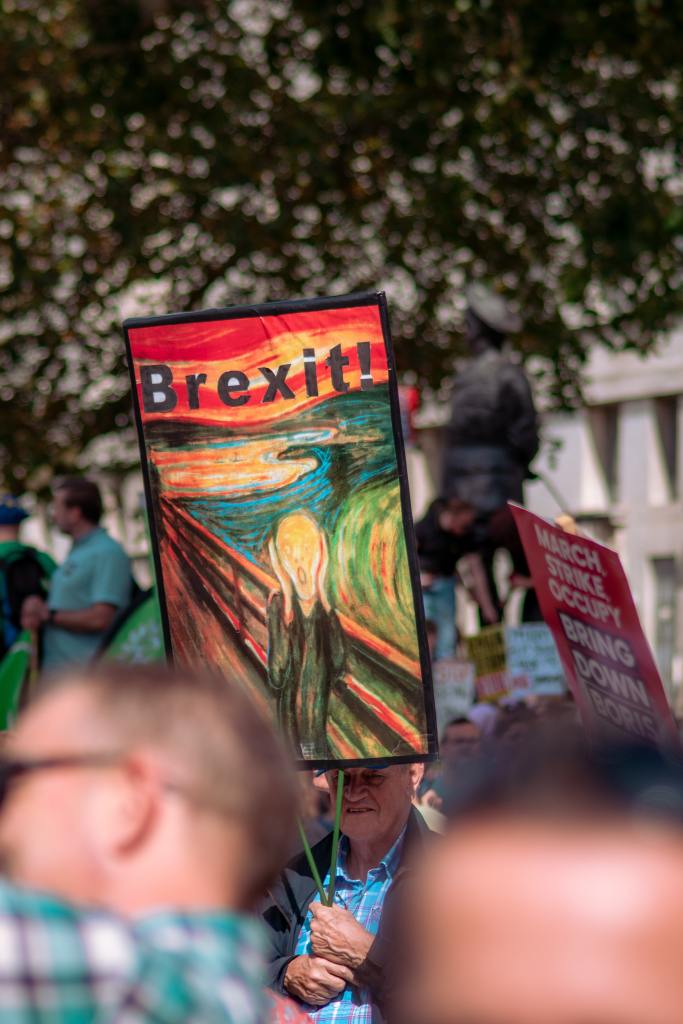
Trade War Looms Over Article 16: The Northern Ireland Protocol Safeguard, Explained

Photo by Fred Moon

By Dr. Carlo Petrucci, Lecturer in Law, University of Essex

David Frost, the UK Brexit minister, has expressed discontent with the implementation of the Northern Ireland Brexit protocol. This is the trade arrangement at the heart of controversies over trade between the EU, Great Britain and Northern Ireland. Frost has threatened to trigger an emergency brake known as article 16, or even to completely renege on the protocol. But triggering it would have wide-reaching consequences.

Since the beginning of Brexit negotiations, both the EU and UK recognised the need to avoid a hard border between Ireland and Northern Ireland. This was to preserve the 1998 Good Friday Agreement.

The Protocol on Ireland and Northern Ireland was signed precisely for this purpose. Its rules ensure a smooth movement of goods between Ireland and Northern Ireland. But it also introduces checks and controls on goods entering Northern Ireland from the rest of the UK or any other third country. This way, goods entering Northern Ireland comply with EU regulatory standards and can be exported to Ireland (part of the EU) and then to other EU countries.

The EU and UK were aware that the implementation of the protocol could lead to difficulties and problems. This is why they set up a system of joint committees (UK and EU) to discuss issues arising from the protocol and to provide an opportunity for compromise.

The protocol provides that both the EU and UK can unilaterally take “safeguard measures” if its implementation leads to durable and serious economic, societal or environmental difficulties or to diversion of trade. This safeguard is known today as article 16.

Article 16 does not specify what such safeguard measures are. In international trade, they can refer to temporary tariffs, quotas or other measures designed to avoid a country suffering serious harm. Some considerations are helpful to understand article 16 of the protocol.

First, while the EU or the UK can unilaterally take safeguard measures, the other party can respond with proportionate measures to remedy any imbalance between rights and obligations created by the safeguard. Effectively, this could lead to a trade war where the other party would also take measures, such as imposing quotas and tariffs.

In any case, it must be stressed that such safeguard measures do not include tearing up the protocol and replacing it, as has been suggested in the press. In this respect, the protocol makes it clear that the people of Northern Ireland, through a democratic vote, will decide whether the protocol should remain in force in the future.

Secondly, before taking such measures, the EU and UK must attempt to find a common solution. In this case, there is a one month waiting period, starting from the date on which either the EU or the UK advises the other that it intends to take such measures. The protocol also says that any measures taken shall be discussed every three months.

Finally, the protocol is silent on the meaning of “serious economic, societal or environmental difficulties” or “diversion of trade” – the conditions under which the UK or the EU can legitimately adopt safeguard measures. The protocol does not offer any quantitative or qualitative criteria to define these difficulties.

Why the protocol is different

Safeguard measures are not unknown in international trade, for example, within the General Agreement on Tariffs and Trade/World Trade Organization (GATT/WTO) regime. These may be adopted when unforeseeable developments and circumstances connected with trade liberalisation result in an increase of an imported product, causing (or risking) serious injury to domestic producers.

It would be tempting to rely on GATT/WTO case law to define “serious economic, societal or environmental difficulties” as mentioned in article 16. After all, they both refer to “safeguard measures”. However, this would be a mistake for two reasons.

First, the problems arising from the protocol are not unforeseeable, as they were widely predicted when it was signed. Secondly, unlike GATT/WTO safeguards, article 16 measures do not refer to an injury to domestic producers resulting from an increase of imports.

The reality is that the underpinning goal of the protocol is radically different from an international trade agreement, and lies in the need to preserve the Good Friday Agreement and EU regulatory standards on goods. To be legitimate, any safeguard measure taken under article 16 must take this into account.

The article 16 safeguard measures are new and therefore there are no precedents to rely on to understand how they would work. While there may be different interpretations on the appropriate conditions to take such measures, there is little doubt that they will result in tariffs and quotas.

Invoking article 16 should be done responsibly. An unjustified triggering of article 16 from the EU or UK will bear serious economic consequences, and will be detrimental in terms of international credibility.


This article was first published on The Conversation and is reproduced on the ELR Blog under a Creative Commons Licence.

‘Cyber Due Diligence’: A Patchwork of Protective Obligations in International Law

Photo by Kevin Ku

With a long history in international law, the concept of due diligence has recently gained traction in the cyber context, as a promising avenue to hold states accountable for harmful cyber operations originating from, or transiting through, their territory, in the absence of attribution.

Nonetheless, confusion surrounds the nature, content, and scope of due diligence. It remains unclear whether it is a general principle of international law, a self-standing obligation, or a standard of conduct, and whether there is a specific rule requiring diligent behaviour in cyberspace.

This has created an ‘all-or-nothing’ discourse: either states have agreed to a rule or principle of ‘cyber due diligence’, or no obligation to behave diligently would exist in cyberspace.

In their new article in the European Journal of International Law, Dr. Antonio Coco, Lecturer in Law at the University of Essex, and Dr. Talita de Souza Dias, Postdoctoral Research Fellow at the Oxford Institute for Ethics, Law and Armed Conflict (ELAC), propose to shift the debate from label to substance, asking whether states have duties to protect other states and individuals from cyber harms.

By revisiting traditional cases, as well as surveying recent state practice, the authors contend that – whether or not there is consensus on ‘cyber due diligence’ – a patchwork of different protective obligations already applies, by default, in cyberspace.

At their core is a flexible standard of diligent behaviour requiring states to take reasonable steps to prevent, halt and/or redress a range of online harms.

A copy of the authors’ article can be accessed here.


This is an Open Access article distributed under the terms of the Creative Commons Attribution License, which permits unrestricted reuse, distribution, and reproduction in any medium provided the original work is properly cited.

Article full citation: Antonio Coco, Talita de Souza Dias, ‘Cyber Due Diligence’: A Patchwork of Protective Obligations in International Law, European Journal of International Law, Volume 32, Issue 3, August 2021, Pages 771–806, https://doi.org/10.1093/ejil/chab056.

Reparations Before The International Criminal Court: Who Are The Victims of Cultural Heritage Destructions and How Should Their Harm Be Addressed?

Source: Wikimedia Commons

Ahmad al-Faqi al-Mahdi (Mr. Al Mahdi) was brought to the International Criminal Court to stand trial for his involvement in the destruction of several historical and religious sites in Timbuktu (Mali) during an armed conflict in 2012. This was the first time in the history of international criminal justice that an individual was prosecuted for the destruction of cultural heritage alone.

Following his guilty plea and conviction in 2016, the case moved on to the reparations phase where the focus was that of redressing the harm caused to victims. Therein, the unprecedented nature of the Al Mahdi case led to an equally unprecedented question: who are the victims of cultural heritage destruction?

Drawing upon her personal involvement in the case as a Court-appointed expert, Dr. Marina Lostal, Senior Lecturer at the University of Essex, has published an article explaining how this question was resolved and the practical challenges it posed during the implementation phase.

The challenges encountered are labeled as ‘monumental’ because they had one thing in common: the amount of theoretical thinking and reflection that they deserved was inversely proportionate to the urgency with which they had to be addressed and the precedent they would establish. To surmount this, drawing from the author’s background, the Trust Fund for Victims turned to academia and consulted with scholars.

The article focuses on three of such challenges:

(i) whether ‘unborn children’ should be included in the pool of victims given that cultural heritage is meant to be preserved for the benefit of future generations;

(ii) what place women ought to occupy in the implementation of reparations, despite the customary practices of side-lining them; and

(iii) the decision of whether to memorialize events surrounding the crime.

On the latter point, the article introduces the concept of ‘restorative agency’, a working principle that was adopted in the context of memorialization measures to ensure that victims are given a platform to decide, not a decision.

Lastly, Dr. Lostal’s article provides a framework to demonstrate the level of complexity involved in the implementation of any Court-ordered reparations and reveals some of the work of the Trust Fund for Victims, one of the Court’s least comprehended creations.


Article full citation: Marina Lostal, Implementing Reparations in the Al Mahdi Case: A Story of Monumental Challenges in Timbuktu, Journal of International Criminal Justice, Volume 19, Issue 4, September 2021, pp. 831–853, https://doi.org/10.1093/jicj/mqab064

Whose Perception of Justice? Real and Perceived Challenges to Military Investigations in Armed Conflict

Image by iStock

States must investigate possible violations of international humanitarian law in armed conflict, and many of them use military procedures for all or part of the investigation process.

Particular tensions can arise with regard to the perception of justice in the context of military judicial procedures, especially surrounding questions of independence and impartiality.

In her new article, Claire Simmons, Senior Research Officer at the University of Essex School of Law and Human Rights Centre lays out the international legal framework which should be used to solve these challenges.

The article argues that a State must address both the specificities of military institutions and the need for a perception of justice by the affected communities in considering the proper administration of justice in armed conflict.

Here is a 30-second video summary of Claire’s article:

The article is published in a special edition of the International Review of the Red Cross on Emerging Voices of International Humanitarian Law, Policy and Action, and can be accessed here for free.

Posthuman International Law and The Rights of Nature

Photo by David Marcu

Both posthuman theory and the rights of nature (RoN) movement have the potential to challenge the anthropocentrism of international environmental law (IEL).

Scholars have begun to document the transformative shifts that could occur through the application of posthuman legal theory to IEL, but these theories have yet to be applied to law in practice.

On the other hand, RoN have been applied in domestic law but hardly in international law, while the question of what RoN includes and excludes remains contested.

Dr. Emily Jones, Senior Lecturer in Law at the University of Essex, published a new article in the Journal of Human Rights and the Environment which brings posthuman theory and RoN together, reflecting on how posthuman legal theory can contribute to the framing of RoN, with a focus on challenging the anthropocentrism of IEL.

The article argues, first, that the next step for posthuman legal theory will be its application to existing law.

Noting convergences between posthuman legal theory and the rights of nature (RoN), the article contends that those seeking to apply posthuman legal theory might find some interesting alliances by turning to RoN.

Second, the article argues that using posthuman theory to frame RoN could help to ensure that RoN live up to their transformative potential.


Article full citation: Jones, E. (2021). Posthuman international law and the rights of nature, Journal of Human Rights and the Environment, 12(0), 76-101. DOI: https://doi.org/10.4337/jhre.2021.00.04. A copy can be accessed through the publisher’s website here or requested through the University’s research repository here.

Addressing the Implications of Sport Sponsorship by Food Businesses

Image sourced from Flickr

By Dr. Nikhil Gokani, Lecturer in Law, University of Essex

It is estimated that there are 1.9 billion adults and 379 million children living with overweight or obesity globally. This includes about 63% of the UK adult population and a third of children in England aged 2–15 years.

Obesity imposes a substantial burden on health services, societies and sustainable development. It is a significant risk factor for non-communicable diseases such as cardiovascular diseases, musculoskeletal disorders and some cancers.

Obesity in childhood is associated with a higher chance of obesity, premature death and disability in adulthood. Children with obesity also experience increased breathing difficulties, risk of fractures, hypertension, dental caries and insulin resistance with reduced levels of mental wellbeing. Moreover, there are large socio-economic, gender and ethnic inequalities in the prevalence of obesity.

We live in an obesogenic environment that encourages weight gain. A population-wide energy imbalance has resulted from systemic changes in the type, availability, affordability and marketing of food in recent decades together with a decline in physical activity. Increased energy intake due to greater consumption of energy-dense food or non-alcoholic beverages high in fat, saturated fat, sugar or salt (‘HFSS food’) is the main explanation for population weight gain.

The principal drivers underlying this consumption are the commercial determinants of health – defined as the strategies and approaches used by the private sector to promote products and choices that are detrimental to health – in the food chain, particularly the marketing of HFSS food. With children in particular, a substantial body of evidence shows that HFSS food advertising via broadcast and digital media negatively affects children’s food attitudes, preferences and consumption.

Given the core involvement of business actors, regulating their activities is an important part of a multi-faceted approach to reducing obesity. Nevertheless, regulation has been fiercely contested by these powerful economic operators. In the UK, some rules do regulate certain forms of HFSS food marketing (such as television and online advertising to children) and the government is considering strengthening these.

However, although sports sponsorship by HFSS food businesses (defined as a business preparing, cooking, storing, handling, distributing, supplying or selling food and whose products are primarily HFSS) is increasingly recognised as linked to HFSS food consumption, it has received little attention. This is all the more concerning in light of the recent proliferation of HFSS food businesses and HFSS products partnering with professional and amateur sports organisations. Prominent examples in the UK include McDonald’s sponsoring all national Football Associations, Coca-Cola sponsoring the Premier League, and KP Snacks sponsoring England and Wales Cricket Board’s new ‘The Hundred’ competition.

As these examples illustrate, sponsorship relationships between sporting organisations and food brands largely promote the consumption of HFSS products and associate these with elite sport. This close interrelationship between HFSS food sponsorship and sports undermines official nutrition advice and raises important questions regarding the impact on preferences and purchase requests of HFSS food, dietary behaviour and public health.

Against this background, in May 2021, a workshop was hosted to focus on the relationship between health, nutrition and the sponsorship of sport and related marketing by HFSS food businesses and to consider the implications for obesity prevention strategies in the UK and beyond.

This workshop brought together a new and diverse group of experts and participants who are engaged with the issue of sports sponsorship and dietary health. Its aims included: to stimulate collaboration; identify research gaps through an interdisciplinary lens; generate a novel research agenda; and raise the awareness and profile of the issue.

The workshop was organised by principal investigator Dr. Emma Boyland (University of Liverpool) and co-principal investigator Dr. Nikhil Gokani (University of Essex) with Professor Amandine Garde (University of Liverpool) and Dr. Matthew Philpott (Healthy Stadia). The organisers are grateful for funding from the UK Nutrition Research Partnership.

In an article published this month, “UK Nutrition Research Partnership ‘Hot Topic’ workshop report: A ‘game changer’ for dietary health – addressing the implications of sport sponsorship by food businesses through an innovative interdisciplinary collaboration” by Nikhil Gokani et al., in the Nutrition Bulletin, the organisers summarise the structure, participants and discussions from the workshop; the existing evidence base on sports sponsorship by HFSS food businesses; and the future research and policy opportunities they plan to pursue.