COVID-19 and its Impact on the Constitutional Relationship Between Government and Parliament

Photo by Heidi Fin

Theodore Konstadinides, Professor of Law, University of Essex and Lee Marsons, Graduate Teaching Assistant in Public Law and a PhD candidate, University of Essex

The Coronavirus Act 2020, the UK’s most substantial legislative response to the Covid-19 pandemic, received Royal Assent yesterday after a fast-tracked procedure through both Houses. Indisputably, the pandemic falls within the range of situations under which it is constitutionally acceptable for Bills to be fast-tracked. While there is no corollary between an expedited piece of legislation and a bad piece of legislation, fast-tracking the Coronavirus Bill carries important implications for the constitutional relationship between Government and Parliament. Not least, parliamentarians had limited time to scrutinise legislation containing measures that have been described by the Bingham Centre for the Rule of Law as ‘the most sweeping powers ever taken by the UK Government outside of wartime’. But, in this context, the implications for the balance between Government and Parliament extend beyond the immediate passage of the Act. Therefore, while Tierney and King stressed the dilemma between safeguarding public health and the protection of individual liberties vis-a-vis fast-tracked legislation, the purpose of this post is to outline a number of concerns provoked by this pandemic on the Government-Parliament relationship more broadly, while also making some comments on the Act itself.

Since the increased power of the executive in relation to Parliament is an inevitable feature of fast-track legislation, the rule of law mandates effective parliamentary scrutiny in respect of both the way the Government will implement the new powers created under the Coronavirus Act as well as the detail in which Parliament will be updated about the reach of these powers across the UK. Two proposed amendments to the Bill tabled by David Anderson and Sarah Ludford in the House of Lords: one on the provision of meaningful information to Parliament would have gone beyond what is now Section 97 of the Act; and a second requiring that powers were exercised in accordance with the Human Rights Act 1998 and the Equality Act 2020, were both endorsed by positive ministerial statements (though not directly or publicly by a Cabinet Minister). With reference to meaningful information, the Minister, Lord Newby, committed the Government to providing an explanation in two-monthly reports laid before Parliament of the Secretary of State’s reasons for continuing to make use (or otherwise) of the provisions in Part 1 of the Act (as opposed to a mere report in accordance with Section 97 about whether the provision is in force and whether any power under subsection 3(b) has been exercised – the ‘switch on – switch off’ analogy made by David Anderson). With regard to compliance with the Human Rights Act 1998, the House of Lords’ proposed amendment included a new clause to be inserted in the Act entitled ‘Powers within the Act: necessity and proportionality’ While such a clause was not inserted in the final Coronavirus Act 2020, the Minister confirmed that the powers created will be exercised in accordance with the principles of necessity, proportionality and non-discrimination and in full compliance with human rights law. These statements provide some assurance as to the right balance being struck between the powers conferred on the Government and Ministers’ accountability to Parliament which are crucial in attaining the objective of constitutional propriety and legality despite the current emergency.

Despite ministerial promises that nothing in the Act contradicts constitutional principles, outside of the Act all the relevant coronavirus delegated legislation that we are aware of has been passed without recourse to Parliament, whether by using the positive or negative resolution procedure. This includes significant measures such as the Health Protection (Coronavirus) Regulations 2020, the Statutory Sick Pay (General) (Coronavirus Amendment) (No 2) Regulations 2020, and the Employment and Support Allowance and Universal Credit (Coronavirus Disease) Regulations 2020. In each case, the Minister stated that for reasons of urgency it was not possible to lay the Regulations before Parliament prior to signature. This is despite the fact that some of this delegated legislation – such as s.3 of the Health Protection (Coronavirus) Regulations 2020 – create summary offences and require whole swathes of otherwise lawful economic activity to cease.

In addition, the current situation is unique in that the practical reality of social distancing and self-isolation measures mean that many MPs and peers cannot attend Parliament to scrutinise government in either chamber. Already on 19 March, the Lord Speaker’s statement on the UK Parliament’s response to the spread of COVID-19 was unequivocal:

[…] no-one should consider it is their duty to be here in present circumstances. As Parliamentarians we have a duty to show leadership and heed the clear advice of the public health experts. I would ask that everyone continues to reflect on their own situation in the light of that advice, for their own good and for the broader public interest.

Furthermore, on the 23 March 20220 the Speaker’s Statement on attendance and distancing accepted that while video conferencing could mitigate any inconvenience posed by social distancing and self-isolation measures, the work of Committees will be affected by a combination of the limited facilities available and staff absences:

We recognise the need to improve our video conferencing facilities to enable those working remotely to engage in Committee proceedings. Regarding evidence sessions, these facilities are currently limited, not least because the management of these sessions requires expert operators to produce audio-visual output of a suitable quality for broadcast use and Hansard transcription purposes. The teams who make such arrangements work are currently under—I do stress—significant strain because of staff absences. Further work in this area will be taken forward as a matter of priority over the Easter recess. Once the current situation has settled, I will commission a review to ensure we can develop systems to ensure we are ready and able to be more agile in the future.

The above social distancing and self-isolation measures and the lack of Parliament’s ability to replace in-person interactions with a virtual environment of online proceedings will no doubt have an important effect on the capacity of Parliament to scrutinise major developments, seek expert advice and hold the Government into account in the coming weeks and months.

Admittedly, some welcome developments have occurred. On 25 March 2020, for instance, the Speaker of the Commons provided a statement explaining that he was to permit Prime Minister’s Questions to run for one hour instead of the ordinary half an hour. This was to:

[…] serve as an effective replacement for separate statements on the situation of coronavirus. I will allow the Leader of the Opposition two sets of questions—he will have a total of 12, which I expect to be taken in two sets of six. Similarly, I will allow the leader of the second largest party four questions, in two sets of two. I will also, exceptionally, call a further question from an Opposition Front-Bench spokesperson.

Similarly, a number of parliamentary committees have initiated inquiries into the Government’s response to Covid-19. The Education Committee launched an inquiry on 26 March into the implications of coronavirus policy on education and children’s services, for instance, and the Joint Committee on Human Rights launched an inquiry previously into the human rights implications of the then Coronavirus Bill.

Nevertheless, these successes are made bittersweet now that Parliament has risen for an early Easter recess until 21 April 2020. While parliamentarians can submit written parliamentary questions during a recess (p. 11) and committee inquiries can continue (or, at least, in the limited way that they can be continued), optimal scrutiny of Government is less likely to be achieved if parliamentarians cannot utilise all of the parliamentary tools at their disposal. Parliamentarians can no longer ask oral ministerial questions during a recess, for instance. This will carry significant implications for parliamentary scrutiny of executive action with regard to the ability to question Ministers about decision-making and policy development, which is naturally changing daily – perhaps more frequently. To provide an important topical example of this, on 25 March 2020, Jesse Norman MP, the Financial Secretary to the Treasury, was asked by Lloyd Russell-Moyle, Labour MP for Brighton Kemptown, how the Government would be scrutinised by Parliament as to its financial support for the self-employed, to be announced after the recess started. The Minister’s response was:

When such a package is brought forward, there will be ample opportunity to debate and discuss it in the House when it returns. Before that, the Government will be held to account in the public square in the usual way, and Ministers are available for direct interrogation by any Member of Parliament who wishes to contact them.

Nevertheless, Russell-Moyle was not satisfied with this response:

It is a shame that the parliamentary authorities have not managed to get their act together to organise an electronic, online continuation of proceedings. During a recess in normal times, in a crisis, we would be recalled, and this is a crisis, so we should be able to continue our work. For Ministers to ask for our work to continue through correspondence is not satisfactory.

Russell-Moyle was perhaps correct in his pessimistic assessment. On one day – 24 March 2020 – there were 181 references to ‘coronavirus’ in written parliamentary questions asked by MPs to Ministers. Given the limited time and resources available to Ministers and their officials, it does not seem likely that written questions will provide a panacea to other lost parliamentary opportunities – whether committees which cannot continue as usual or oral questions which cannot proceed at all.

As regards the duration of the Act’s provisions, Section 88 of the Coronavirus Act 2020 allows a Minister to suspend (repeal) or revive (save to provisions set out in subsection 6), more than once, any provision of the legislation by passing a Regulation. This appears to be a wide power encroaching upon Parliament’s legislative authority and sovereignty and it is further amplified by subsection (5) which provides that the Minister can pass Regulations for different purposes, on different days in different areas; and can make technical transitional, transitory and savings provisions. Last but not least, despite the two-year sunset clause in Section 89 of the Act, Section 90(2) provides that a Minister can extend (for up to six months at a time) or terminate any of the respective Regulations beyond two-years. This seems to be necessary in the face of the pandemic but since emergency powers are meant to give the Government a temporary boost, there is no valid reason why Parliament cannot get back in the game and manage the effects of the Covid-19 pandemic when authorities start easing the current lockdown.

All in all, the nature and scale of the Coronavirus Act 2020 is extraordinary. While the current measures may have some effect in enabling the Government to respond to a public health emergency and manage the effects of the pandemic, they are encroaching upon Parliament’s territory and endanger the principle of the separation of powers. While the delegated powers in the Act are broad and the extent and effectiveness of the new powers under the Coronavirus Act 2020 is unclear, the Government is under a duty to provide clarity about their use across the UK as well as the necessity of the relevant compliance measures that it will adopt in the near future.

This post was originally published on the UKCLA Blog and is reproduced here with permission and thanks.

Coronavirus: Beyond Human Rights

Photo by Markus Spiske

Dr. Koldo Casla, Lecturer in Law, University of Essex

I live and breathe human rights, but what’s at stake is even more important.

I write this in haste, like everything that is being written about Covid19. Most of us outside China only started to take this threat seriously in the last two weeks. Scientists and politicians don’t know enough about the scale of the problem, let alone the solutions. Spain’s Prime Minister confessed that “whoever claims to know what needs to be done in this emergency will learn nothing from it.” In normal circumstances this would be profoundly concerning, yet I find his candour strangely reassuring.

As we brace ourselves against the crisis, valuable contributions have been made to examine its human rights implications. For example, Amnesty International has produced these preliminary observations on States’ international obligations. Independent UN experts have warned that emergency measures should not be used to suppress human rights. And academics have written about how States should respond from the perspective of the right to health and other social rights, and of freedom of movement and other civil rights.

The UN High Commissioner for Human Rights, Michelle Bachelet, issued a press release on March 6 to stress that “human rights need to be front and centre in the response” to Coronavirus. I tick all the boxes of the typical supporter of a statement like this. I joined Amnesty International when I was 15; have been involved in human rights activism for two decades; and teach human rights law at the University of Essex. I should agree with Dr Bachelet. However, I’m not sure I do.

Don’t get me wrong. I know that Coronavirus raises human rights issues. Restrictions on individual freedoms need to be set clearly in the law and must be both necessary and proportionate. It’s essential to ensure that measures don’t discriminate against or stigmatise any national group or and minority. While mobile apps may be helpful in containing the spread of the virus, we must remain vigilant about the potential use of artificial intelligence to gather private data.

Children’s right to food is at risk when free school meals are the only healthy things some might eat. Confinement may be necessary, but home is the unsafest place for survivors of domestic violence. Rough sleepers, refugees and asylum seekers, prisoners and people in care can find themselves in particularly vulnerable situations. The list could go on. States’ actions and omissions can turn global health emergencies into human rights crises.

Human rights are important. They always are. But I still don’t see them at the core of this unique moment in history.

Other things take centre stage in my thoughts these days. My family in Madrid and the Basque Country has been confined for more than a week now, and my partner and I have decided to join them from London. This is one of those rare occasions when the word “resilience” doesn’t sound trite. Every day I receive news and messages via social media with countless expressions of wit and solidarity from Italy and Spain, expressions that are both emotional and encouraging about what we could achieve together.

Supportive neighbours, humour, music, bingo and Zumba lessons from the roof of a block of flats – all of it shows the best of people. Family life is recognised as a right in international law, but it is more than that: it is one of society’s central pillars. What do we truly value when we are confined at home? We all know that over-dependence on technology is dangerous for a number of reasons, but what a difference video-chats and social media are making this month.

Even politics looks different. When 60% to 80% of the population could be infected by a virus for which we have no cure, political priorities gain a new perspective. And what about the irony of seeing Morocco close its border with the Spanish enclaves of Ceuta and Melilla, and Guatemala doing the same with visitors travelling from the USA?

At the time of writing both my partner and I enjoy the comfortable position of being able to work from home. We are reasonably confident that our jobs are not at risk. We are also young and healthy and can provide for ourselves. We are privileged. The prospects are very different for the vast majority of people. Ten years of austerity have made dealing with the Coronavirus exceptionally difficult for low-and middle-income families in the UK.

Covid19 is testing the strength of our social foundations. For several consecutive evenings, Spaniards are leaning out of their windows and balconies to applaud public healthcare workers. I can only hope that some politicians will remember their words whenever we go back to “normal” – for example French President Emmanuel Macron, who said on 12 March that: “There are goods and services that must be out of the laws of the market… This pandemic is showing that free healthcare for all, irrespective of income, background or profession, and our welfare state are not an expense or a cost, but precious goods, indispensable when fate kicks.”

Even the most libertarian of neoliberals are being reminded why the State is so badly needed. This is the first crisis in my living memory where all of us are truly in it together. Privileged people are feeling very vulnerable for the first time. Dealing with the virus effectively needs people staying at home, washing their hands, keeping their physical distance from each other, and covering their cough with their elbow.

But dealing with it effectively and fairly requires, among other things, guaranteeing an income for those who lose their jobs, appropriating privately own facilities like hotels, private transport and private hospitals, suspending evictions, introducing rent and mortgage payment deferment options, and ensuring gas and electricity supplies irrespective of people’s ability to pay.

This crisis begs for a bailout for the most vulnerable, a sort of people’s quantitative easing. This is a human rights principle as well: attention to the most vulnerable individuals must be prioritised in times of financial crises and emergencies. But the issue goes beyond human rights. We are talking about what a country wants to be known for, even what it is. Societies that prioritise fairness will do best out of this crisis.

Putting the economy on hold is unheard of in peacetime, and needs to be accompanied by extraordinary public investment on a scale we’ve never seen. New Zealand has announced a relief package that amounts to 4% of its GDP; the Spanish Government has promised up to 20%. A massive bill will be waiting for us afterwards. The virus is going to test the patriotism of the wealthy, measured not by the size of their flags but by how much they are willing to chip in.

This takes me to a final thought. I have made two choices. The first is to admit that I don’t know what needs to be done regarding public health. The second is to start from the premise that scientists and political leaders, regardless of their colour and ideology, are doing their best to reduce the number of deaths to the minimum.

People who are making these decisions – the most difficult in their lives – may get things wrong. They don’t have all the necessary information. They are unsure about what is likely to work. And in advance I say that I am ready to forgive them if they make mistakes. In terms of the timing of the confinement measures, I’ve decided to trust the leaders of a country that doesn’t even allow me to vote – politicians whose human rights record I have criticised many times before and no doubt many more to come.

I don’t even know if the decisions they are taking are technically the right ones. Scientists who know much more than me are clear that “there are very large uncertainties around the transmission of this virus, the likely effectiveness of different policies and the extent to which the population spontaneously adopts risk reducing behaviours.”

In this context, transparency is “the only real counter to our psychological biases.” As long as leaders are transparent about the evidence, I will meet my civic duty and sacrifice my individual preferences for the general interest of flattening the infection curve. Beyond human rights, this is the time for solidarity, kindness and collective responsibility.

I never thought I would quote three contemporary political leaders in the same piece, but this must be another sign of the exceptional nature of the circumstances: as Italian Prime Minister Giuseppe Conte said on March 11, “Let’s keep the distance now so we can embrace each other warmly and run faster tomorrow.”

This piece was originally published in Open Democracy on 19 March 2020 and is reproduced here with permission and thanks.

Achieving Justice for Victims of Gross Human Rights Violations in Sudan

Dr. Thoko Kaime, Senior Lecturer in Law, University of Essex and Lena Scheibinger

Omar al-Bashir

Significant step in the al-Bashir indictment

In February 2020, the Sudanese government indicated its intention to hand over Omar al-Bashir, the country’s former strongman to the International Criminal Court in The Hague to face charges of war crimes and crimes against humanity. Arrest warrants against al-Bashir had been issued by the ICC in 2009 and 2010 making him the first sitting head of state to be indicted by the ICC. However, al-Bashir refused to recognize the authority of the court and Sudan declined to hand him over. For ten years since the first warrant, al-Bashir continued to represent Sudan as head of state and a significant number of African Union members, who are also members of the ICC, flatly refused to execute the warrant. However, al-Bashir’s removal from power in April 2019 following mass protests and a military coup against his government changed the political pendulum in Sudan. The willingness of the transitional authorities to surrender the former strongman to the ICC should be rightly regarded as a major development in finally holding al-Bashir accountable for his crimes. It is further evidence that crimes against humanity and massive violations of human rights will not stay without any consequences.

Achieving justice for victims

Even though the details on how and when the handing over will take place are still unclear, the news of the possible transfer to the ICC is a big step forward to towards ending impunity in Sudan. However, this is only the beginning and more needs to be done. The trial of those who are responsible for the atrocities committed in Darfur constitutes an indispensable prerequisite for achieving justice and peace for the victims of that conflict. In this regard, it is not sufficient to bring only the former president to court but also to ensure that everyone involved in the massacres in Darfur is prosecuted either by the country‘s own judiciary or, in case that the national institutions are unable to fulfil this mandate, to make ready plans for trial by an international court or a special tribunal following the model of the reconciliation process in Rwanda after the 1994 genocide or the Special Court for Sierra Leone after the civil war.

The ICC and transitional politics in Africa

If al-Bashir is indeed eventually handed over to ICC by the Sudanese government, it will not be the first time that the ICC process has been used to get rid of difficult political problems by a governing regime. In Ivory Coast, the government quickly transported Laurent Gbagbo to the ICC to face a longstanding warrant that had been on ice whilst in power. The same modus befell Charles Taylor of Liberia and Jean Pierre Bemba of the Democratic Republic of Congo. Whilst this type of approach lends itself to uneven results as far as ending impunity is concerned, human rights defenders must ensure that they take full advantage of political changes in countries where perpetrators of mass human violations have hitherto been protected by the state apparatus. Meticulous documentation of crimes and the safe recording of victims and potential witnesses and other evidence will be key in any eventual prosecution as the al-Bashir case will likely demonstrate.

Lessons from the Campaign to Bring the Socio-Economic Duty to Life in England

Dr. Koldo Casla, Lecturer in Law, University of Essex

The UK government proudly affirms that the country has some of the strongest equalities legislation in the world, particularly the Equality Act 2010. For it to be true, however, the government should implement the legislation in its entirety, including the socio-economic duty, proclaimed in Section 1 of the Act.

The socio-economic duty would require public authorities to actively consider how their decisions and policies of the highest strategic importance can increase or decrease inequalities of outcome. Regrettably, successive governments have failed to commence the duty, and therefore it is not technically binding on public authorities. It is encouraging that the duty was brought to life in Scotland in 2018 and the Welsh Government has announced they will follow suit in 2020.

The socio-economic duty can be a useful lever to understand and address the structural causes of material inequalities and their negative effects on human rights and well-being.

This article presents and draws conclusions from the strategic choices made by the people running a national campaign to bring the socio-economic duty to life. The article introduces four key factors that contributed to making progress between 2017 and 2019, despite the limited resources available: a) the added value of merging advocacy and epistemic communities working on equality and on human rights; b) the engagement with political actors at key stages of the process; c) the combination of ‘naming and shaming’ and best practice; and d) the celebration of smaller victories along the way.

You can read more in: Koldo Casla, ‘#1forEquality: The Story of an Unlikely Victorious Campaign in the Making’ (2019) 11(3) Journal of Human Rights Practice 554. 

The socio-economic duty, and this article in particular, are cited in an Amicus in front of the Supreme Court of Mexico on the State’s duty to include informal settlements in the census and other appropriate data collection. The Amicus is presented by Dr Koldo Casla and nine national and international organisations that are part of the International Network of NGOs for Economic, Social and Cultural Rights (ESCR-Net).

You can also read ‘Time to listen to people with lived experience of poverty and bring the socio-economic duty to life’, a chapter written by Koldo Casla together with colleagues from Just Fair, Joseph Rowntree Foundation, the University of York and Thrive Teesside, in UNISON’s recent publication (pp. 83-90) on the commemoration of the pledge made two decades ago to end child poverty in the UK this year. (Spoiler alert: It didn’t happen, and in fact, the country moved in the opposite direction in recent years).

‘Unchartered’ Waters: Fundamental Rights, Brexit and the (Re)constitution of the Employment Law Hierarchy of Norms

Dr Niall O’Connor, Lecturer in Law at the University of Essex, has authored an article exploring the consequences of Brexit for the constitutional status of the employment rights found in the EU Charter of Fundamental Rights (the Charter).

The decision of the British people to leave the European Union (EU) raises foundational questions for many legal fields. The effects are especially likely to be felt within domestic employment law, which now has a strong basis in EU law. Of particular concern is the removal of the nascent EU fundamental employment rights influence over domestic legislation. Employment lawyers have long relied on fundamental rights as a means of preserving the autonomy of their subject from general private law. One manifestation of this turn to fundamental rights concepts has been the ‘constitutionalisation’ of employment rights. EU law, notably the Charter of Fundamental Rights, has become a key underpinning of this constitutionalisation process.

This article considers the effects of the constitutionalisation in the United Kingdom employment sphere of some of the rights found in the Charter’s Solidarity Title, through its role in the emergence of a hierarchy of sources or ‘norms’ in the employment field. In order to address the question of the Charter’s influence on the hierarchy of sources in the employment context, three interrelated processes are examined.

The article begins by exploring the ‘constitutionalisation’ process, by setting out the nature of the Charter and the effects of its employment rights on the hierarchy of sources. This is followed by a consideration of the ‘deconstitutionalisation’ process brought about by Brexit, before finally examining whether a potential ‘reconstitutionalisation’ process might be underway by looking at key terms of the EU (Withdrawal) Act 2018 and the potential to replicate the Charter in domestic law.

The article was published as Online First Article on 17 March 2020 in the European Labour Law Journal and is available here.

Money Market Funds Reforms in the US and the EU

Dr Mohammed Alshaleel, Lecturer in Law at the University of Essex, published an article titled ‘Money Market Funds Reforms in the US and the EU: The Quest for Financial Stability’.

The article considers the impact of money market funds (MMFs) reforms in the US and the EU on the money market fund industry and global financial stability. The 2008 financial crisis proved that MMFs are a source of considerable instability to the global financial system, and highlighted their susceptibility to runs. The shareholders’ incentive to redeem their shares before others do when there is a perception that the MMFs might suffer a loss makes MMFs vulnerable to runs. Given this reality, the article argues that the emphasis of the financial regulators on achieving the stability of the entire financial system after the 2008 financial crisis necessitates the strictness of the new reforms.

Divided into six parts, the article outlines the attributes and classification of MMFs, the definition of financial stability, and the run and systemic risk posed by MMFs during the financial crisis, before assessing the MMFs’ reforms in the US and the EU and the impacts of these reforms on the MMFs industry and global financial stability system. The major component of the US reform is the introduction of the floating net asset value (FNAV), where an MMF’s share price will fluctuate to reflect the daily market value of the fund assets. In the EU the new regulation provides investors with a high degree of optionality for investing by introducing Low Volatility Net Asset Value (LVNAV) MMFs.

The article concludes that despite that, the reforms are likely to jeopardise the viability of some categories of MMFs, they enhance global financial stability, and the complexity of the reforms has made MMFs more appropriate products to financial institutions’ investors than retail investors.

The article is published in Volume 31, Issue 2, pp. 303-335 of the European Business Law Review and can be accessed here.

The Restrictive Approach to Legal Representation in Arbitration Proceedings and its Unintended Consequences in Nigeria

Arbitration by Nick Youngson CC BY-SA 3.0 Alpha Stock Images

Fikayo Taiwo, PhD candidate at the University of Essex, published in the Journal of International Arbitration an article titled ‘The Restrictive Approach to Legal Representation in Arbitration Proceedings and Its Unintended Consequences in Nigeria’.

The issue of legal representation in arbitration proceedings accounts for one of the sub-factors of ‘formal legal structure’ and ‘national arbitration law’ that disputing parties consider before choosing a seat of arbitration. Indeed, the ability of disputing parties in arbitration to freely select their desired representatives is embedded in the foundational principle of party autonomy, which continues to act as an incentive to settle cross-border disputes through international arbitration. However, while this may be the norm, a few countries take a different approach.

In Nigeria, a literal interpretation of the national arbitration rules prevents parties from selecting persons not admitted to the Nigerian bar as their representatives in arbitration proceedings. Upon being approached, courts of coordinate jurisdiction have interpreted the provisions in different ways. Therefore, this article examines the probable impact of this position on parties’ non-selection of the jurisdiction and its law in international arbitration proceedings. The article identifies scope for reform in the law and makes suggestions for creating a more liberal legislative and judicial framework in order to promote Nigeria as a seat of international arbitration.

The full article is published in Issue 2, Volume 37 of the Journal of International Arbitration and can be accessed here.

Divorcing Fault: Time to Stop Blaming and Shaming?

Breaking up is hard to do and current laws in the UK and Wales can make it a lot harder. Dr. Samantha Davey, Lecturer in Law at the University of Essex, explains why divorce law is ready for reform.

Divorce law in England and Wales has been discussed, dissected and been the subject of dismay for decades. Many practitioners and academics alike take issue with a fault-based approach to divorce because it is seen as out of date and unnecessarily cumbersome. Under the Matrimonial Causes Act 1973, there is one ground for divorce, namely that the couple’s marriage has irretrievably broken down. In order to establish this, there is a need to demonstrate that one of the following reasons exists: adultery; unreasonable behaviour; two years separation with consent; two years separation with no consent (desertion); or five years separation.

Aside from encouraging divorcing couples to play the blame game in divorce papers, which only serves to encourage conflict, there are two other main difficulties with these reasons for divorce. Couples’ relationships may break down for reasons other than adultery and unreasonable behaviour. Couples may grow apart or may decide that they wish to go their separate ways. Such couples may prefer to do so without assigning blame to one party but may not wish to wait two years before they divorce. The current procedure requires one party to seek to divorce another and demonstrate some type of fault on the part of the other party.

As a consequence, couples who may have ended their relationship amicably, sometimes feel forced to strain the ground of ‘unreasonable behaviour’ (e.g. domestic abuse, social isolation or debt) to find a reason for a speedy divorce or, as an alternative, wait two years before divorcing. Meanwhile, the spouses may form new relationships and may wish to move on with their lives.

Another issue is that if one party contests the divorce, this may delay the divorce unnecessarily. In practice, this is rare, but it happened in the case of Owens v Owens [2018] UKSC 41 which highlighted how out-of-date and potentially absurd the existing law on divorce is. In this case, Mrs Owens sought a divorce on the basis of her husband’s unreasonable behaviour.  Mr Owens contested the divorce and the judge who assessed the divorce application determined that her evidence of the alleged unreasonable behaviour of Mr Owens was insufficient and refused to permit the divorce. This led to a protracted court battle which led to an important decision on divorce by the UK Supreme Court. Lord Wilson affirmed the decisions of the initial judge and the Court of Appeal but stated that: ‘Parliament may wish to consider whether to replace law which denies to Mrs Owens any present entitlement to a divorce…’.

For many years, despite repeated expressions of dismay about the state of the law on divorce, this area of family law has not been a priority for reform by the government. The Law Commission proposed reform in 1990 and expressed a number of concerns with the divorce law. It was seen as unfair and unjust, as undermining the potential to save marriages and as likely to exacerbate conflict. The Owens case, however, gave the government a powerful judicial nudge to consider reform seriously.

Consequently, in April 2019, the Justice Secretary announced that divorce legislation would be reformed to help reduce family conflict. The ground ‘irretrievable breakdown’ would remain but the five facts would be replaced with a requirement to provide a statement about irretrievable breakdown. It would also provide for a joint divorce application to be made by both parties and remove the potential for one party to contest the divorce.

In essence, the proposed legal reform via the Divorce, Dissolution and Separation Bill ends the use of fault based divorce and provides well-needed modernisation to the law on divorce by reducing conflict and by preventing a scenario like Owens v Owens from occurring again. Currently, the Bill is passing through the House of Lords where it will reach the report stage on the 17th of March 2020. It will be a welcome change which will bring divorce law into the 21st century.

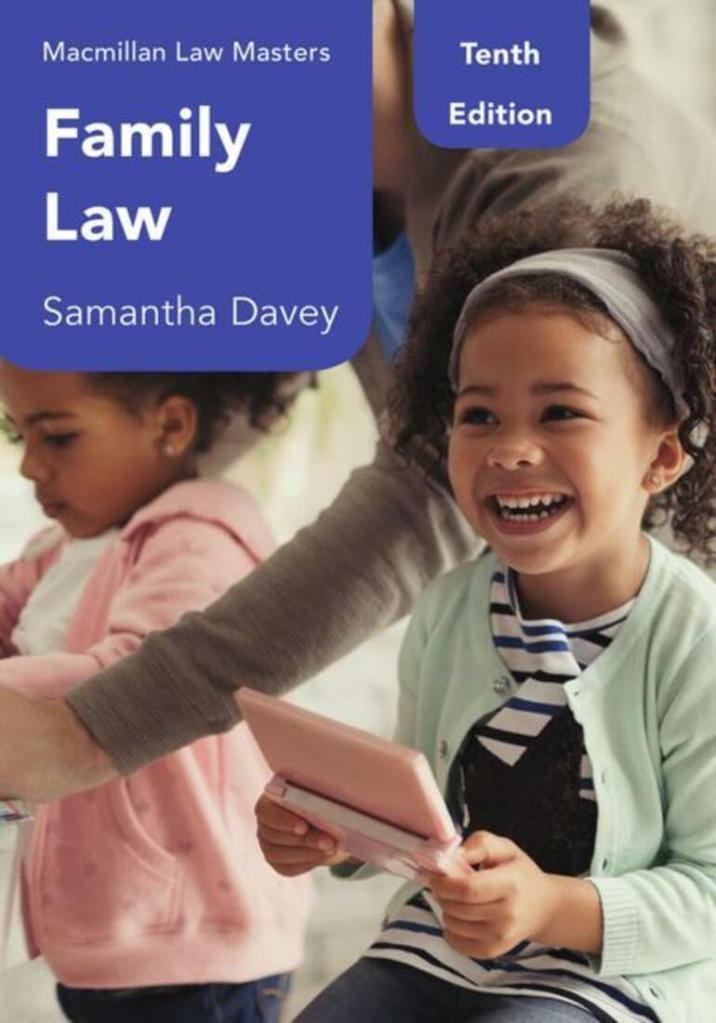
For further discussion of the Owens case and an overview of the proposed changes to the law on divorce, see: Samantha Davey, Family Law (10th edn, Palgrave Macmillan 2020).

This article first published on the MIHE Blog and is reproduced on the Essex Law Research Blog with permission and thanks. The original post can be accessed here.

Energy Law and Policy in Nigeria with Reflection on the International Energy Charter and Domestication of the African Charter

Godswill Agbaitoro, PhD candidate at the University of Essex, and Dr Eghosa Osa Ekhator, Senior Lecturer in Law at the University of Derby, have published a book chapter titled ‘Energy Law and Policy in Nigeria with Reflection on the International Energy Charter and Domestication of the African Charter’.

Since the 1960s, energy resources, in particular oil and gas, have maintained a dominant position in the Nigerian economy. In fact, due to the availability of vast abundance of energy resources (conventional and unconventional), Nigeria remains one of the top nations both in Africa and to the rest of the world at least in terms of energy resources development. Over the years, this position prompted the central government of Nigeria to become signatories to a number of international documents mainly to explore avenues that would assist the country to remain relevant at the international level. In this book chapter, Dr Eghosa Osa Ekhator and Godswill Agbaitoro examine the benefits of one of these international documents – the International Energy Charter (IEC) – to signatory countries, such as Nigeria, with a view to illustrating its future relevance and influence in respect of domestic energy laws and policies.

The main outcome of the chapter is to point out some critical roles of the IEC in respect of energy governance and, more importantly, its impact on Nigeria in terms of maintaining its place in the global energy landscape. With this in mind, the authors examine possible contributions of the IEC to the ability of signatory countries to enhance international cooperation aimed at addressing contemporary energy challenges, while enabling these countries to harness their full energy resource potential.

Part of the analysis provided in the chapter flows from the authors’ quest to answer the main research question: whether the IEC possesses the requisite elements to transform Nigeria’s energy laws and policies so as to bring about positive outcomes in the country’s energy sector? To answer this, the authors argue for possible domestication of the IEC, in the same way as the African Charter on Human and Peoples’ Rights (African Charter) has been domesticated in Nigeria; and concludes that lessons can be gleaned from its successful domestication. Of course, this was not suggested without considering some barriers that may hinder the successful implementation of the IEC in Nigeria.

The chapter appears in Romola Adeola and Ademola Oluborode Jegede (eds), Governance in Nigeria post-1999: Revisiting the democratic ‘new dawn’ of the Fourth Republic (Pretoria University Law Press 2019). To read more, download the book for free here and see chapter 8.

Haim Abraham’s paper on Parenting, Surrogacy and the State cited by the Supreme Court of Israel

The Israel Supreme Court recently cited a paper written by Haim Abraham, Lecturer in Law at the University of Essex.

The paper titled ‘Parenting, Surrogacy, and the State’ demonstrates that Israel’s legislation, and regulation of assisted reproduction treatments, systematically discriminates individuals and same-sex couples based on sexual orientation, family status, or gender.

By surveying the legislative and social developments in Israel in relation to surrogacy and the conceptualisation of the family unit, Haim shows that the right to parenthood is a fundamental negative constitutional right which extends to the use of surrogacy treatments. Furthermore, Haim establishes that the prohibition on same-sex couples and single individuals to engage in surrogacy arrangements fails to adhere to the principle of proportionality, as other less discriminatory practices are available and the harm to same-sex couples and single individuals in the current legislation outweighs its benefits.

On 27 February 2020, the Supreme Court reached the same conclusion. It held that the current Surrogacy Act of 1996 discriminates against same-sex couples and single men, and that the infringement on the rights to equality and parenthood is disproportionate.

Haim Abraham’s full paper in Hebrew is available here.