EU-CIEMBLY: First project workshop takes place in Madrid

By Dr Anastasia Karatzia

Photo from the workshop, credit: Dr Anastasia Karatzia

The EU-CIEMBLY project organized an internal staff training workshop from November 4th to 6th at the Universidad Complutense de Madrid, Spain. The primary goal of the workshop was to advance and harmonize the partners’ understanding of the theoretical and analytical framework, essential for designing and implementing an inclusive and intersectional European Citizens’ Assembly (CA). The event aimed to equip the project team with both normative tools and empirical insights essential for creating an inclusive deliberative process throughout the project. Dr Anastasia Karatzia, Dr Niall O’Connor, and Dr. Sam Woodward represented at the workshop the University of Essex team, which also includes Dr. Rebecca Warren and Prof. Ileana Steccolini from Essex Business School.

The workshop’s agenda included various presentations and structured discussions designed to engage participants deeply with key project objectives. The first segment of the event provided an introduction to intersectionality, a conceptual framework that examines the interconnected nature of social categories such as gender, nationality, ability, age and more, and how they combine to affect individuals’ experiences of inequality and exclusion. Participants engaged with this concept to explore how intersectional equality, inclusion, and deliberation could be effectively applied in the design and implementation of a CA.
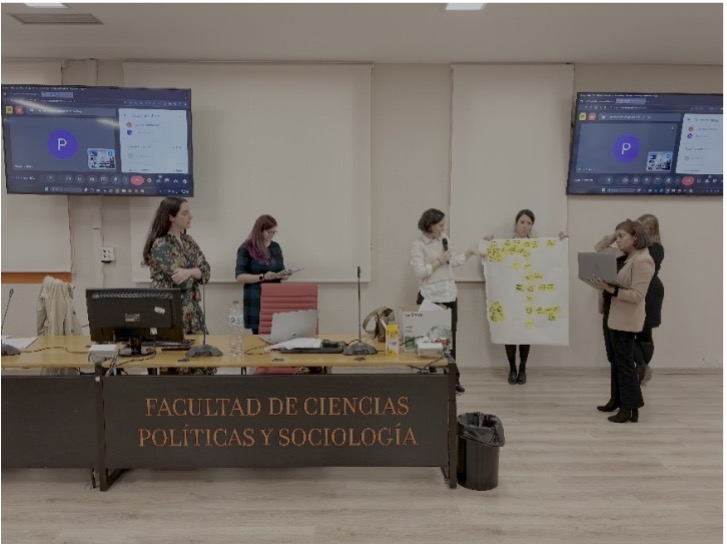
Credit: Dr Anastasia Karatzia

Following this, the participants explored the three key components of a CA which are governance and organization, sampling and recruitment, and deliberation and facilitation. Break-out group discussions were featured, where participants were divided into smaller groups to brainstorm ways to enhance intersectional equality and inclusion across the various stages of the CA. Facilitators documented the insights shared during these discussions and later presented the findings to the broader group for collective reflection.

On the second day of the workshop, four theoretical models for an intersectional CA were discussed in detail, with the understanding that these could evolve based on ongoing feedback and the evolving needs of the project. The workshop concluded with discussions on the development of the glossary with complicated terms along with a presentation of the project’s language policy to guarantee that all materials and discussions are accessible and inclusive. 

A few words about the project:

The EU-CIEMBLY project started on January 1, 2024, with the main goal of creating an innovative and inclusive EU CA that addresses issues of intersectionality, inclusiveness, and equality in European Union political life. The project seeks to improve the landscape of participatory and deliberative democratic mechanisms firstly by providing an analytical framework and prototype for establishing the Assembly at the European Union level, with potential for adaptation at national and local levels of European Union Member States. The project draws on an academic and theoretical understanding of intersectionality, equality, and power relations. Furthermore, EU-CIEMBLY emphasizes open research practices, including open access, optimal research data management, early open sharing, and the involvement of knowledge actors.

The project will develop several activities, with one of its biggest milestones being the three upcoming pilot CAs: a local pilot, a national pilot, and a transnational pilot involving citizens from up to six countries across diverse regions of the European Union. EU-CIEMBLY has a duration of four years and is funded by the European Union under the Horizon Europe research and innovation program. The consortium consists of eleven partner organizations, bringing a wide range of expertise and knowledge related to the project’s scope and objectives.

The project deliverables so far:

Since the project’s launch, the team has produced:

  1. Extensive Literature Review: An in-depth literature review in the form of a bibliographic map was conducted to develop the analytical framework for the EU Citizens’ Assembly.
  2. The Analytical and Normative Framework of the project, which clearly integrates intersectionality into the inclusivity, equality, and deliberation dimensions of Citizens’ Assemblies. 
  3. An exploration of several Theoretical Models for Inclusive Citizens’ Assemblies: The Theoretical Models for an Intersectional and Inclusive Citizens’ Assembly were developed and reviewed during the session in Madrid.

For further information, you may visit the project’s website at www.eu-ciembly.eu and its social networks on Facebook , Instagram and Twitter. For more information on the University of Essex involvement in the project please visit https://www.essex.ac.uk/research-projects/eu-ciembly

Our project embraces multilingualism! Should an accurate translation for specific sections of this Press Release, please contact us at eu-ciembly@ij.uc.pt

This project has received funding from the European Union’s Horizon Europe research and innovation program under grant agreement number 101132694. This press release reflects only the author’s view. The Commission is not responsible for its content or any use that may be made of the information it contains.
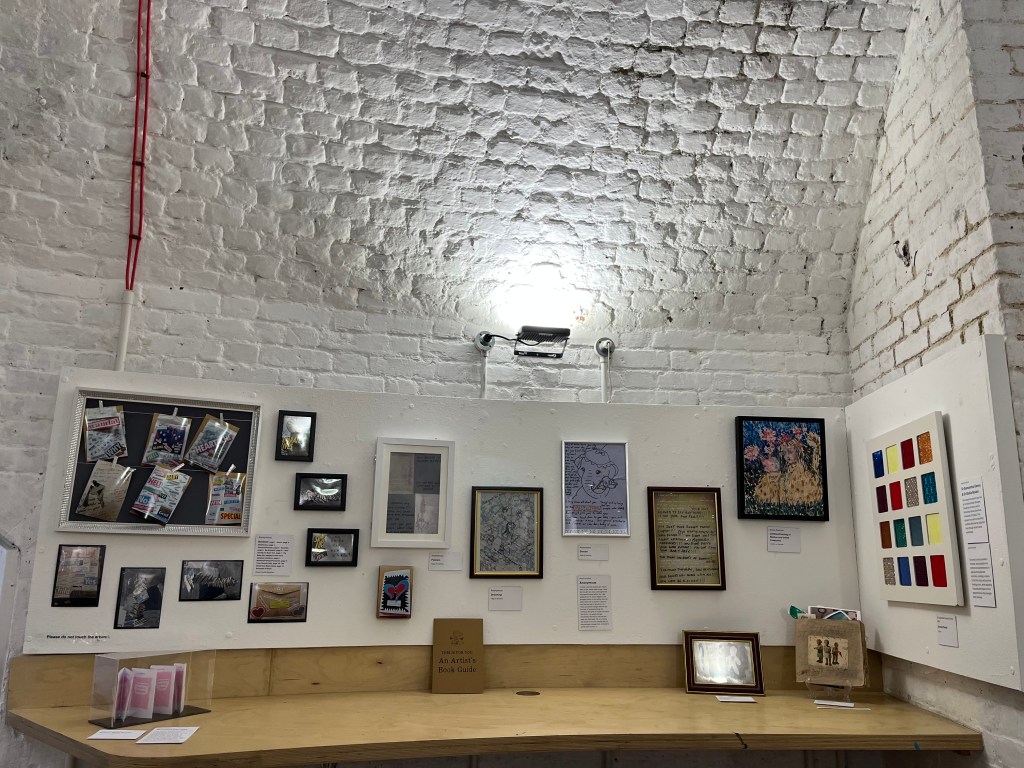

Essex Law School contributes to new Jaywick art exhibit exploring mothers’ trauma

By Dr Samantha Davey

Credit: Dr Samantha Davey

Following on from the success of last year’s Expressions of Trauma Exhibition led by Essex Healthwatch and held at The Minories, Colchester, the Essex Law School is contributing towards another exhibition, this time at the Martello Tower, Jaywick. The 2025 Expressions of Trauma provides those who missed last year’s Exhibition an opportunity to see the exhibits again – along with some new exhibits. 

This thought-provoking Exhibition features diverse exhibits exploring trauma narratives. There is a dedicated installation which is based on the research of Dr Samantha Davey (University of Essex) and Dr Stella Bolaki  (University of Kent), who ran a series of artist’s books workshops for mothers, which was funded by both institutions. This research highlights the experiences of mothers who have lost children through adoption, providing a powerful outlet for emotional expression. By sharing their stories through artist’s books, pictures and poetry, this exhibit encourages public awareness and empathy for mothers who suffer grief and loss, in the aftermath of adoption. 

Credit: Dr Samantha Davey

Dr Davey and Dr Bolaki would like to thank Healthwatch Essex and their research champions Chloe Sparrow, Amanda Swan and Diana Defries for their participation and ongoing support with this project and the exhibitions. There are more exhibitions planned so please do keep an eye on our blog page, the Essex communications page (you can see our press release here).  

For further information about this Exhibition please contact the organiser, Sharon Westfield de Cortez, Healthwatch Essex at Sharon.westfield-de-cortez@healthwatchessex.org.uk . If you are a mother who has experienced loss through adoption and would like to know more, or to participate in future exhibitions running later this year, please contact Dr Samantha Davey at smdave@essex.ac.uk.

From the University of Essex to the United Nations: Evidence about social security, healthcare, and protection and assistance to the family in the UK

By Dr Koldo Casla

Dr Koldo Casla, project lead of Human Rights Local, has submitted evidence to the UN Committee on Economic, Social and Cultural Rights for their inquiry into the state of socio-economic rights in the UK. Socio-economic rights include, among others, the right to housing, food, education, social security, health, access to work and good working conditions, all of which are recognised in the 1966 International Covenant on Economic, Social and Cultural Rights (ICESCR).

Launched in 2020, Human Rights Local is a project of Essex Human Rights Centre to make human rights locally relevant in the UK.

Every few years, the 170+ states that have ratified ICESCR ought to report to the UN Committee on Economic, Social and Cultural Rights (CESCR) on the policies they are implementing to respect, protect and fulfil socio-economic rights. For the UK, the last review was completed in 2016. The current one began in 2022 and will end with a UN report, known as ‘concluding observations’, that will probably be published around mid-2025. This report will be based on information provided by the UK government and devolved administrations, as well as evidence from three National Human Rights Institutions (the Equality and Human Rights Commission, the Scottish Human Rights Commission and the Northern Ireland Human Rights Commission), and evidence from NGOs and academics. On 13-14 February, the UN Committee will meet with civil society groups and NHRIs in Geneva, and it will also hold a ‘constructive dialogue’ with UK government representatives.

As part of Human Rights Local, Dr Koldo Casla has provided support to community groups and people with lived experience of poverty so they could provide their own evidence to the UN and their recommendations to bring about the necessary changes to improve their lives. This is part of GRIPP (Growing Rights Instead of Poverty Partnership), of which Essex Human Rights Centre is a founding member.

In addition, Dr Casla has also conducted research for Amnesty International about the extent to which the UK’s social security system (Article 9 ICESCR) meets international standards in relation to the right to social security. The study will be published later this year, but beforehand Amnesty International will rely on the evidence and the recommendations in their advocacy with the UN Committee on Economic, Social and Cultural Rights.

Dr Casla has also co-authored two submissions for the UN Committee. One of them identifies a series of concerns about the level of enjoyment of the right to health (Article 12 ICESCR) among Gypsy, Roma and Travelling communities in the East of England. It is based on qualitative evidence in the form of testimonies gathered in 37 peer-to-peer interviews conducted by four partner organisations – COMPAS, GATE Essex, Oblique Arts, and One Voice 4 Travellers – between June and August 2023. The evidence was part of the project “Building a community of practice to identify strengths, barriers and prioritise solutions to the right of access to healthcare for Travelling Communities”, led by colleagues in the School of Health and Social Care, and funded by the National Institute for Health and Care Research, between February 2023 and August 2024. The qualitative evidence compiled in the document is the unreserved confirmation that the UN’s concerns persist in relation to stigma, prejudice, discrimination, lack of informational accessibility and lack of cultural acceptability of healthcare for Gypsy, Roma and Traveller communities. This is reflected in the lack of cultural awareness in availability of suitable health professionals, lack of non-English language provision, problems of trust due to lack of cultural competence, lack of understanding of issues around literacy, and ongoing social exclusion, particularly digital exclusion.

The second submission goes hand in hand with the anti-poverty human rights NGO ATD Fourth World. It examines the impact of child protection services on families in poverty. Creating a social security system that guarantees the essentials in life, regulating for-profit children’s homes, and extending peer-parent support are among a list of recommendations to preserve the right to protection and assistance to the family (Article 10 ICESCR) for households living in poverty. 

As argued by Dr Casla and Lyle Barker in a paper published in the Journal of Human Rights Practice in 2024, lived experience brings both epistemic and instrumental value to human rights research. In relation to the former value, in a peer-led process, people with lived experience of poverty do not simply provide evidence, data and information. Instead, they rank their concerns, frame their grievances in their own terms and decide about their priorities and the research methodology. This approach intends to address the epistemic injustice that silences people in poverty and dismisses their knowledge. In relation to the second value, the instrumental one, lived experience can help detect the real impact of the distinguishing features of specific human rights. For example, in relation to child protection services, a peer-led and participatory action research with families showed that one of the instrumental values of putting lived experience first is that it can reveal the true nature, prevalence and damage of povertyism – the negative stereotyping of people in poverty – on people in poverty.

For more information lease contact Dr Koldo Casla @ Koldo.casla@essex.ac.uk