Elevate Your Academic Journey: SENSS, CHASE, and Essex Law School

 By Essex Law School, written by Professor Joel Colón-Ríos

If you are an aspiring legal scholar seeking advanced training in law within a dynamic research environment that encourages innovation and interdisciplinary exploration, a Doctoral Training Partnership at Essex Law School could be your gateway to an exciting academic journey. 

Essex Campus in the winter, Credit: University of Essex.

What are SENSS and CHASE? 

The South and East Network for Social Sciences (SENSS), an ESRC-funded Doctoral Training Partnership (DTP), is dedicated to fostering innovative and inclusive social science research training and collaboration. Among the eight distinguished institutions comprising SENSS, the University of Essex plays a pivotal role as the coordinating institution. 

The Consortium for Humanities and the Arts South-East England (CHASE) is an AHRC-funded Doctoral Training Partnership, providing funding and training opportunities to the next generation of world-leading arts and humanities scholars. Essex is one of the 8 world-leading institutions that comprise the membership of the CHASE DTP. 

SENSS and CHASE provide fully funded doctoral studentships, mentorship from global experts, and advanced subject-specific and research methods training. These opportunities empower researchers to extend their social scientific skills beyond academia. 

Here at the Essex Law School and Human Rights Centre, aspiring PhD students can apply for SENSS and CHASE studentships, unlocking comprehensive support and collaborative excellence in their academic journey. 

Why choose the Essex Law School? 

Choosing where to pursue your doctoral training is a significant decision. At the Essex Law School, we have meticulously crafted an environment that champions excellence and fuels innovation. Here is why you should join us: 

We are a research powerhouse. Our Law School has been ranked 3rd in the UK for research power in law according to the Times Higher Education research power measure (REF2021). Law at Essex is also ranked 47th in the THE World University Rankings, which show the strongest universities across the globe for key subjects (and 9th for UK Universities). This speaks volumes about the calibre of research conducted within our School. Our academic staff collaborates globally, working with the United Nations, the European Union, governments, and non-governmental organisations. 

We believe in the power of interdisciplinary research. Our dynamic research clusters foster collaboration across diverse backgrounds, creating a vibrant intellectual space for innovative and stimulating legal exploration. 

With expertise spanning diverse legal disciplines, our academics are the driving force behind the Law School’s excellence. Our faculty boasts exceptional scholars, providing intellectual leadership in key areas, including Human Rights Law, led by Professor Carla Ferstman who is Director of the Human Rights Centre; International & Comparative Law led by Professor Yseult Marique, an associate member of the International Academy of Comparative Law; Private and Business Law, led by Professor Christopher Willett who also spearheads the Law, Business and Technology Interdisciplinary Hub; as well as Public Law & Sociolegal Studies, led by Professor Joel I Colón-Ríos, who is also a member of the Constitutional and Administrative Justice Initiative (CAJI). Our academic leads are ready to guide you and link you with the ideal academic mentors. 

Our research student community is central to our success. These talented colleagues explore a broad range of exciting topics under expert supervision, forming a vibrant tapestry of ideas. 

We asked Boudicca Hawke about her experience as a CHASE-funded doctoral student at Essex Law School. 

“CHASE is a great DTP to be a part of. It is a quite a competitive funding source, but the application process itself is accessible. Especially at Essex, there’s a tremendous amount of support throughout the entire process, which really helps. There are a few rounds of revision you’ll need to go through, so it does require consistent work, but really, it’s wonderful to have guidance and support at every step so you can end with the best proposal possible. 

I chose to apply primarily because of the holistic way CHASE supports affiliated doctoral researchers and encourage interdisciplinary research. Beyond the funding, CHASE also hosts annual conferences and year-round research network meetings where you can collaborate closely with other doctoral researchers who share interests but come from different universities and backgrounds. CHASE also has an incredible placement scheme, where you can get hands-on experience throughout the PhD process which is quite valuable.” 

Boudicca, who is working on the status of fighters in non-international armed conflict, also shared some insights about the preparation of a research proposal: “Try to be as clear in the proposal as possible. Many of the reviewers won’t be experts in your field, so communicating the issue at-hand and value of your work in an easily digestible way is key. It can also be quite helpful to make sure you highlight relevant work experience and show why you are well-suited to do your specific project. If you don’t get it the first time around, don’t be afraid to re-apply!’’ 

We also talked to Matteo Bassetti, one of our SENSS-funded doctoral students. For Matteo, whose work focuses on the rights of trans people, and the underestimation of harm inflicted by States through institutional pathologisation frameworks, told us that SENSS “has contributed in many ways to my PhD experience, and has allowed me to take part to training that I would have otherwise been unable to attend. I am hoping to go on an Overseas Institutional Visit in the next term to broaden my network and horizon. However, if I have to be honest, I am still looking for more ways to use the opportunities offered by SENSS in the best way.” 

He also gave us some tips about the application process: “Start ahead of time. SENSS is looking not only at the quality of the individual applicant’s proposal, but also at the match between student and supervisors. Treat your application as a collaboration between you and your supervisors, where you need to do the heavy lifting. Be prepared to modify your dream proposal to make it fit better with the selection criteria.” 

Where can you find out more? 

Explore the opportunities offered by the SENSS and CHASE scholarships at the Essex Law School on our informative webpages. Discover eligibility criteria, application processes, and the outstanding benefits that await you by accessing the downloadable documents provided below. 

For inquiries about legal research and the SENSS and CHASE schemes, please contact Professor Joel I Colón-Ríos, our Postgraduate Research Director.  

Specific questions about academic disciplines? You can also reach out directly to our dedicated Academic Leads (mentioned above) who can put you in touch with suitable supervisors. 

Embark on your journey to become a world-leading scholar in law. Do not miss the chance to benefit from these funding opportunities at the Essex Law School, where innovation, excellence, and transformation define the doctoral experience. 
Empowering Healthier Food Choices: A Critical Look at EU Food Information Law 

Dr Nikhil Gokani, Lecturer in Consumer Protection and Public Health Law, University of Essex

One of the main ways the EU tries to improve nutrition is to inform consumers through labelling. The Farm to Fork Strategy states that one of the EU’s objectives is “empowering consumers to make informed, healthy…food choices”. However, the current EU food information law may not be as effective in empowering consumers to make informed, healthier food choices as the EU claims. 

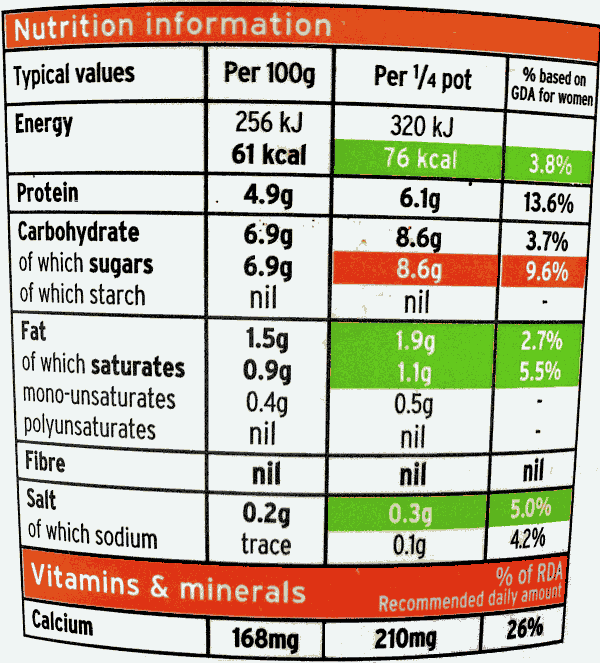
UK-style Nutrition Information label for low fat Yoghurt. Source: Wikipedia.

Well-informed consumers? 

EU food information rules – particularly those in Regulation 1169/2011 on the Provision of Food Information to Consumers (FIC Regulation) – seek to ensure that consumers are well-informed by giving food information that is sufficient, accurate, non-misleading, clear and easy to understand. However, EU food law does not achieve this aim. 

Sufficient food information 

Consumer do not actually have access to sufficient food information: 

  • Nutrient content must be declared per 100g/ml as sold. This helps consumers compare similar products because similar products may have comparable water content or portion sizes. It is less helpful for different product types. Information per portion would help but there is no requirement to provide nutrition information per portion. Indeed, there is also no requirement to provide information on recommended portion sizes, which is concerning because consumers are now eating larger portions. It is also does not give an interpretive guidance, as front-of-pack nutrition labelling would do. 
  • Ingredients are listed but the actual quantity of an ingredient is not required unless the ingredient is emphasised on the labelling. For instance, consumers may be aware that a product contains fruit, but they will not necessarily learn the quantity of fruit. Similarly, health consequences of unhealthy ingredients are not displayed. 
  • Mandatory particulars are only required on packaging and on sales websites. Purchase intentions are, however, also influence by advertising, but information is not required on advertising. 
  • There are many exemptions. Most mandatory particulars are not required for products in smaller packaging. A nutrition declaration is not required for 19 products or product categories. Most inexplicably, alcohol (which is defined as food in EU law) is exempt from nutrition or ingredients labelling. 

Accurate and non-misleading food information 

The FIC Regulation prohibits inaccurate information. However, accurate information can still be misleading. 

Mandatory labelling rules can give be misleading information:  

  • The nutrition declaration may also be expressed as a percentage of consumers’ reference intake. However, percentage of reference intake can be misleading because it is a nominal value based on the needs of an average adult female. It is, therefore, inaccurate for most of the population, including many women. 
  • Where nutrition information is given per consumption unit, this can also be misleading because a single consumption unit (such as one square of a chocolate bar) may not reflect a portion size (such as an entire chocolate bar).  

Food labelling that is given voluntarily by manufacturers can also be misleading: 

  • Nutrition and health claims provide positive information about the nutritional or health effects of a food product. They must be accurate and non-misleading as per Regulation 1924/2006 on Food Claims. However, even accurate food claims may be misleading. For instance, the claim that “iron contributes to the reduction of tiredness and fatigue” may be used without any explicit requirement to mention that this is only true if there is inadequate dietary intake. 
  • Nutrition and health claims can also be misleading. For instance, children’s cereal with significant levels of added sugars can be labelled with promotional claims such as “high in fibre” or “contains calcium”. Consumers over-generalise the positive qualities of claims, which creates a health halo, leading consumers to think that products are healthier than they are. 

The FIC Regulation requires that food information “shall not be misleading” but even this does not prohibit all misleading information: 

  • Whether or not information is misleading is assessed using the benchmark of the “average consumer”. This is a notional, rational consumer who is “reasonably well informed and reasonably observant and circumspect”. One difficulty with this is the inconsistency between the assumed behaviour of the “average consumer” and the actual behaviour of consumers. For instance, behavioural economics shows that consumers prefer stability, form habits, have limited cognitive capacity and often evaluate only the most salient information. Even if consumers do make rational choices, rational choices are not necessarily healthy choices. For example, a single parent working full-time on a low income may rationally choose to purchase food that is locally available, has high energy per unit cost and is quick to prepare, even if this might be less healthy. 

Clear and easy to understand food information 

The FIC Regulation also requires that information shall also be “clear and easy to understand” but this is also rather ineffective: 

  • “Clear” does not mean noticeable. For instance, the mandatory nutrition declaration may appear on the back of packaging, where it is less noticeable. Essential information can also be illegible as the minimum character height of mandatory particulars can be less than 0.9mm 
  • Voluntary information shall “not be displayed to the detriment of the space available for mandatory food information”. However, marketing messages on labelling – such as prominent cartoon characters or bright colours – can be distracting and detrimental to the noticeability of mandatory food information. 
  • Even the requirement that food information is “easy to understand” is not that helpful. For instance, consumers should understand the amount of fat in a product but not whether is a healthy level or not. 

Empowered consumers?  

It is clear that EU food information rules do not inform consumers well. But, if the rules on consumer food information were improved, could such improved rules empower consumers? 

To empower consumers to make healthy decisions the food environment should be conducive to consumers genuinely using health-related information. The EU is well positioned to identify features of the market that not only impede but also facilitate this. In the Consumer Agenda, the Commission stated that “empowering consumers means providing a robust framework of principles and tools” and a “robust framework ensuring their safety, information, education, rights, means of redress and enforcement”. 

Research shows the factors influencing consumer food choice empowerment. These can relate to food-internal factors (eg taste), food-external factors (eg food information and physical environments), personal-state factors (eg physiological needs and habits), cognitive factors (eg skills and attitudes) and sociocultural factors (eg culture and political elements). These broader factors are not acknowledged by the Commission, which instead focusses on safety, information and education, and rights. 

If food choice is a function of both multiple intrinsic consumer qualities and external environmental factors, giving consumers information is not on its own empowering them. Therefore, the EU’s strong emphasis on information regulation to empower consumers to make healthy decisions should be met with scepticism. 

Information regulation as one important part of empowerment 

Even if information regulation cannot, on its own, empower consumers, it is still a significant precursor to empowerment. For information to contribute to empowering consumers to make healthy food decisions, two conditions are needed. 

First, the information rules should be well-designed: 

  • For mandatory labelling, the EU needs to reflect on developing evidence-based and context-sensitive rules on whether consumer information is provided, what is provided, where and when, and how it is provided. For instance, nutrition information should be provided in a way that allows consumers to understand it, such as through mandatory front-of-pack-nutrition labelling. Even though the Commission committed to proposing harmonised front-of-pack nutrition, it continues to miss its 2022 deadline.  
  • Regulating voluntary information more effectively is also essential. Food claims should be prohibited for less healthy products, as should other food marketing designed to or having the effect of increasing the recognition, appeal or consumption of unhealthy food.  

Second, the limitations of information should be recognised:  

  • How consumers make food decisions is multifactorial and complex. In recent decades, it has become clear that unhealthy diets demand tackling the commercial determinants of health that drive poor nutrition. These industry practices are designed to maximise product sales by encouraging individuals to over-consume unhealthy food at the expense of healthy food. This includes creating new, highly palatable products, promoting them aggressively, selling them at lower prices than healthy food, packaging them in large ready-to-eat portions and selling them in widely accessible locations. 

Even though the EU’s strong emphasis on regulating consumer food information to improve diets is misplaced, this is not to suggest that information regulation is unimportant. Rather, it is to say that food information (i) in its current form does not lead to well-informed consumers and (ii) on its own does not empower consumers to make healthy food decisions. 

Better laws that effectively address labelling as well as the other determinants are essential. We continue to call on the Commission to use its power to propose new EU laws for the benefit of consumers and their health. 

This blog post is based on a more comprehensive analysis of EU food information law published in the Journal of Consumer Policy: Gokani, N., (2024). Healthier Food Choices From Consumer Information to Consumer Empowerment in EU Law. Journal of Consumer Policy. 47 (2), 271-296. It is available open access here: https://doi.org/10.1007/s10603-024-09563-0.