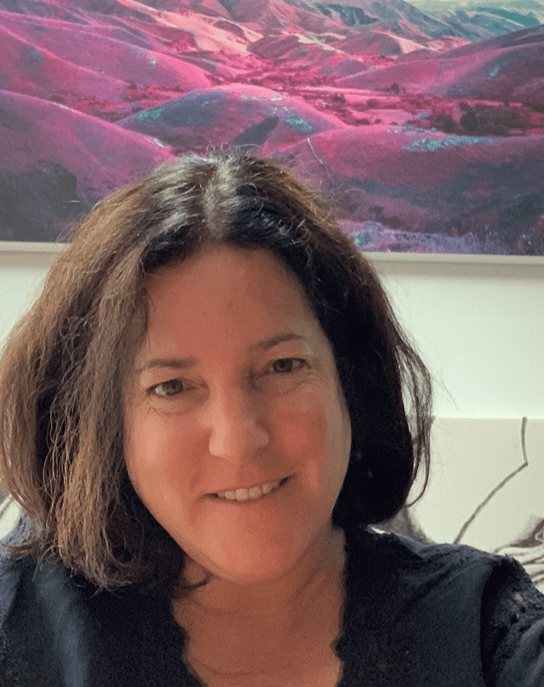
Meet the book author: Conceptualising Arbitrary Detention: Power, Punishment and Control

By Professor Carla Ferstman

Professor Carla Ferstman

This post was first published on the blog of the Journal of Law and Society: https://journaloflawandsociety.co.uk/blog/meet-the-book-author-conceptualising-arbitrary-detention-power-punishment-and-control/

Conceptualising Arbitrary Detention: Power, Punishment and Control was published by Bristol University Press in May 2024.

What is the book about?

The book is about arbitrary detention, but it is also a reflection on the shifting meaning of arbitrariness as a concept. I consider how forms of marginalisation and other arbitrary factors influence who will be detained, when, for how long and in what conditions. Policies of securitisation, regimes of exception, and criminalisation have exacerbated these arbitrary distinctions given their propensity to target “otherness,” even though there is nothing exceptional about “otherness.” How these policies are applied, and their impact on individuals and communities, depends on the underlying political values and goals at stake, which differ between countries and over time.

The book also explores how arbitrary detention has become normalised. It is used purposively by governments to foster divisions and to enforce hostility against socially marginalised groups who I classify in this book as: the “unseen” (those marginalised on account of their destitution and/or extreme social needs); the “reviled and resented” (the recipients of racist, xenophobic and discriminatory attacks); and the “undeserving” (refugees and other migrants).  When arbitrary detention is normalised, it becomes impossible for courts to only countenance detention that is exceptional – the logic no longer works. So, this conundrum is analysed from different angles and factual contexts.

Why did I write it?

The idea for the book crept up on me in a non-linear way. It was always the book I wanted to write but it took some internal prodding and mental gymnastics for me to figure out how to articulate the urgency that I was feeling about the subject matter in a way that made sense on the page. So, framing the ideas, and the ideas within the ideas took time. In many ways the book is a homage to all the survivors of arbitrary detention I have been privileged to know and support, and to all the courageous human rights defenders, lawyers and psychologists who continue to work in this space.

How did I go about doing this research?

The methodology question is never straight-forward and the sociolegal purists may want to turn away now!

My ideas about the subject matter stem from about two decades of legal practice and advocacy working with victims of torture and seeing up close the suffering people undergo while in detention. So, there was a significant evidence base from where I derived my thinking, but it was quite diffuse, deeply personal and of course, subjective.

The purpose it served in the research process was mainly to guide me with the crucial task of figuring out what themes I needed to foreground. A good example of this is the decision I took to delve into the relationship between arbitrariness and torture. I claim that the disorientation, despair, uncertainty, lack of agency that arbitrariness produces (also considering the extensive psychological literature) is so harmful psychologically that it can rise to the level of torture (all other elements of torture being present). My decision to tackle this theme stems from years of speaking with clients about how arbitrariness in and of itself, made them feel. It also helped me to work out where I wanted to situate my thinking critically on the side of key debates. An example of this is how I critically examined the caselaw on socially excluded and marginalised groups and began to confront the failure of some courts to confront the phenomenon of industrial-scale arbitrary detention.

Then, I would say there are different layers to the book, and some of these layers are more pronounced or prominent, depending on the chapter. There is a layer which is in the classic style of human rights rapportage; going through reams of testimonials and reports to locate patterns and derive meanings and using individual narratives to give context. Another layer is the analysis of how regional and international courts have addressed the phenomenon of arbitrary detention. So, there is a deep doctrinal analysis of the caselaw and how certain findings came to be. But, because much of the caselaw lacks an obvious internal coherence I also use a variety of critical legal theories, social theory, and political philosophy to help me with the task of making sense of what has little obvious internal logic.

I enjoyed the process of pulling the text together; here’s to hoping readers will find it just as enjoyable to read!

Prohibited Force: A Symposium on Rethinking the Prohibition of ‘Use of Force’ in International Law

By Essex Law Research Team

Credit: Dr Erin Pobjie

In Prohibited Force: The Meaning of ‘Use of Force’ in International Law (Cambridge University Press, 2024), Dr. Erin Pobjie addresses the ambiguities surrounding the prohibition of ‘use of force’ under article 2(4) of the UN Charter, a foundational rule of international law designed to prevent war and maintain international peace and security. Article 2(4) prohibits States from using force against each other, except in cases of self-defence or UN Security Council authorisation, yet its interpretation is often unclear in complex, real-world situations. Recognizing these challenges, Dr Pobjie introduces her ‘type theory’ framework, which suggests that determining a prohibited use of force should involve a set of contextual requirements and a flexible set of ‘non-essential’ elements – including physical force, effects, gravity, and hostile or coercive intent – that are weighed together, rather than applied rigidly. With this framework, Pobjie brings analytical depth to ambiguous cases, refining our understanding of this cornerstone of international law. Adil Haque describes Prohibited Force as ‘an extraordinary book’ with a ‘striking and rare’ combination of theoretical sophistication and empirical rigour. 

Opinio Juris, a leading blog on international law, recently hosted a symposium to engage critically with Prohibited Force. The discussion opened with Dr Alonso Gurmendi’s introduction, followed by Professor Claus Kreß, who highlighted the book’s potential to strengthen the international legal order. Professor Adil Haque explored its implications for self-determination units, while Ambassador Tomohiro Mikanagi considered its relevance to cases of territorial acquisition. Professor Andrew Clapham underscored the framework’s real-world impact, noting that its insights could affect thousands of lives by shaping legal responses to blockades impacting food and humanitarian supplies in conflict zones like Yemen and Gaza. Professor James Green reflected on the strengths and potential limitations of type theory when applied to complex, borderline cases, and Professor Alejandro Chehtman highlighted the need to balance analytical sophistication with accessibility in practical settings. In her response, Dr Pobjie engaged with each contributor’s insights and critiques, underscoring her framework’s potential to foster richer discourse on the prohibition of force and its role in advancing international peace and security. 

The full symposium can be read here: Symposium on Erin Pobjie’s Prohibited Force: The Meaning of ‘Use of Force’ in International Law – Introduction – Opinio Juris  

Prohibited Force is available open access for all readers thanks to the University of Essex’s Open Access Fund: https://doi.org/10.1017/9781009022897  

Exploring the ‘Expressions of Trauma’ Exhibition at The Minories, Colchester

By Dr Samantha Davey

Credit: Healthwatch Essex

The Minories, an art gallery based on the High Street in Colchester, hosted an evocative exhibition on ‘expressions of trauma’ run by Healthwatch Essex and led by Sharon Westfield de Cortez and Kate Mahoney. This exhibition delved deep into the complex layers of trauma, with a range of exhibits exploring themes such as pain, illness, abuse, grief and loss, with art being used as a medium to empower and shared the voices of those who chose to participate in the exhibition in October and November 2024.  

One of the exhibits is the result of innovative research collaboration between Dr Stella Bolaki from the University of Kent and Dr Samantha Davey from the University of Essex.  This research project was kindly funded and supported by both researchers’ institutions via awards designed for knowledge exchange, impact activities and public engagement.  

The works included in the ‘Expressions of Trauma’ exhibition from this project are artists’ books created during specialised workshops led by Dr Bolaki. These workshops provided a safe, creative space for mothers who have suffered the painful experience of child loss via adoption proceedings. Many participants shared their personal narratives, crafting their stories into tangible art forms that speak to their emotional journeys through care and/or adoption proceedings and in the aftermath of those legal processes. 

Credit: Chloe Sparrow

The artists’ books featured are a powerful reflection of each of these mothers’ experiences. Each page contains raw emotions and displays feelings of love, grief, sadness, anger, frustration and, ultimately, resilience. Through art, these mothers have found a way to express pain and connect with others facing similar struggles. This powerful element of storytelling through art is what made the ‘Expressions of Trauma’ exhibition not just an art display but a shared space for dialogue between mothers, professionals and the wider public – as well as a space for reflection, healing and social justice. One of the books included showed an image from the Disney film, Dumbo, the elephant who was separated from his mother. This image is accompanied by the haunting lyrics of ‘Baby Mine’, highlighting the raw grief and loss experienced because of the separation of mother and child. Diana Defries, spokesperson at Movement for an Adoption Apology, has a book titled ‘An Ocean Between Us’, poignantly representing the gulf between a mother and child over many years.  

This exhibit also highlights the importance of the roles played by professionals who support these mothers. Barrister Sneha Shrestha, local art therapist Chloe Sparrow, and Kent-based counsellor Amanda Swan contributed their insights and expertise, showing how the artist’s book can assist professionals as well, as a tool in processing trauma. Chloe Sparrow’s emotive painting of a mother and child features prominently in the exhibition, capturing the essence of the bond that endures even in loss. 

This exhibit demonstrates acutely that healing is not a solitary journey; it is often facilitated by the connections we make with others personally and professionally. The inclusion of professionals in this dialogue makes the narrative of the exhibit more powerful, adding layers of understanding and compassion, showing how professionals themselves connect with the raw grief experienced by mothers.  

Visitors are encouraged to engage with the stories behind the books. Each artist’s book is a book of emotion, inviting reflection and empathy from anyone who encounters it. The exhibition encouraged a sense of community and shared experience, helping attendees to understand and empathise with those who have experienced loss in a range of contexts – loss of love, loss of one’s autonomy and loss of identity. 

‘Expressions of Trauma’ was not just an artistic endeavour; it was a compelling invitation to explore the landscape of human emotion. Through this exhibition, Sharon Westfield de Cortez and Kate Mahoney created an important ongoing conversation around trauma, loss, and the healing power of art. 

Credit: Chloe Sparrow

In a world where discussions about mental health and trauma are becoming increasingly prominent, ‘Expressions of Trauma’ boldly speaks to the power of storytelling through art. The exhibition challenged visitors to confront difficult emotions and inspires them to engage with the narratives of others from different walks of life with a vast range of life experiences.  

For any questions about ‘Expressions of Trauma’, please contact Sharon at sharon.westfield-de-cortez@healthwatchessex.org.uk and Kate at kate.mahoney@healthwatchessex.org.uk

For individuals who have been affected by issues explored within the artist’s book exhibit or have any questions about the research project out of which it emerged, please contact Dr Stella Bolaki at s.bolaki@kent.ac.uk and Dr Samantha Davey at smdave@essex.ac.uk .