As of Tuesday 26th March 2024, the Essex Law Research Blog will be on a short hiatus for the next four weeks.
We will publish intermittently over the next weeks and will return to regular full service on 23rd April 2024 to share more research ideas and news from the Essex Law School.
Consuming alcohol is a causal factor in more than 200 diseases, injuries and other health conditions. Alcohol consumption affects other people, such as family, friends, colleagues and strangers. Globally, about 3 million deaths each year result from the use of alcohol. Beyond health, there are significant social and economic burdens.
Consumers do not have sufficient knowledge about the content and effects of alcoholic beverages. Most consumers are unaware of the energy and nutrition values (such as amount of carbohydrates) and ingredients. Few consumers are aware of the health risks, such as alcohol causing at least seven cancers.
Alcohol labelling and global progress
Alcohol labelling is an important source of information for consumers. Labelling is unique in providing information at both the point of purchase and consumption. Labelling improves knowledge. It is an effective measure to help ensure consumers are well-informed and not misled. Increasing evidence also shows that health information can empower consumers to make healthier consumption decisions, including drinking less.
Unfortunately, few countries in the world require that consumers are given essential facts on labelling, such as ingredients lists and nutrition declarations. Even fewer countries require beverages to be labelled with information warning consumers about the hazards of drinking alcohol.
The most recent success was in Ireland where new rules will require alcohol packaging to display warnings that “Drinking alcohol causes liver disease”, “There is a direct link between alcohol and fatal cancers” and a pictogram showing that alcohol can harm the unborn child if drunk during pregnancy. Countries like Ireland, unfortunately, face international legal challenges, particularly under international trade law.
International trade law and international standards
International trade law can constrain the regulatory autonomy of States. Significant to alcohol labelling is the World Trade Organization (WTO) Agreement on Technical Barriers to Trade (TBT Agreement). Most significantly, Article 2.2 of the TBT Agreement states that technical regulations, including rules on alcohol labelling, shall not create “unnecessary obstacles to international trade”. Technical regulations shall not be “more trade-restrictive than necessary to fulfil a legitimate objective”. Preventing alcohol-related harm is indeed a legitimate objective. However, many States trying to introduce better alcohol labelling rules have been challenged because other States have argued that labelling rules go beyond what is more trade-restrictive than “necessary”.
When a WTO State’s rule about alcohol labelling is challenged, international standards can either help or hinder them.
On the one hand, Article 2.4 of the TBT Agreement states that where “relevant international standards exist” States “shall use them…as a basis for their technical regulations” except when this would be ineffective or inappropriate Therefore, where international standards are not aligned with public health interests, they can make it harder for States to introduce effective national rules.
On the one hand, Article 2.5 of the TBT Agreement provides a powerful defence mechanism. It states that, when a technical regulation is “in accordance with relevant international standards”, there is a rebuttable presumption that the national rule does not create an unnecessary obstacle to international trade. Simply stated, where the State complies with a relevant international standard, they have a potentially strong defence for their labelling rules. Therefore, good international standards can be very powerful to help countries defend their national labelling policies.
Codex Alimentarius
An international standard is one which is made by a recognised body and compliance is voluntary. For alcohol labelling, there is indeed an international standard: the Codex Alimentarius is a collection of standards, guidelines and codes adopted by the Codex Alimentarius Commission.
Where alcohol labelling is in compliance with relevant Codex standards, States could use this as a defence under WTO rules. This underlines the importance of having good Codex standards that support effective national rules on alcohol labelling.
Significant progress has been made at the Codex Alimentarius Commission. Alcohol labelling was discussed at four Sessions of the Codex Committee on Food Labelling (CCFL). The Report of the 46th Session of CCFL noted “there was common ground on which to proceed with the work” but little further progress has since been made in recent years. At that Session, the Committee agreed that Russia, European Union and India with assistance from WHO and Eurocare would prepare a discussion paper for consideration at the next meeting. In fact, this was the first time this Committee included an NGO in the preparation of a discussion paper, which is a testament to the global leadership by Eurocare in this field. Unfortunately, however, no discussion paper was submitted by Russia. Therefore, WHO and Eurocare each submitted their own discussion paper to keep the matter moving forward. The WHO representative spoke objectively and convincingly at the 47th meeting of CCFL. These efforts led to alcohol labelling remaining on the Codex agenda – something which several States, no doubt under the influence of the powerful alcohol industry, had resisted.
The Codex Alimentarius Commission has now started a new consultation process. It issued a Circular Letter which asks State members and Observers to comment on how work on developing alcohol standards should proceed.
For this consultation process to work best for public health and consumer protection, we need everyone to contact their governments (emails here) to demand effective progress at Codex. Please join us in these efforts!
Influencer marketing has emerged as a formidable force in the realm of advertising, wielding substantial power to sway consumer behaviour and shape brand perceptions. Leveraging the credibility and reach of social media personalities, brands can effectively tap into niche audiences and foster authentic connections.
Despite its undeniable impact, there remains a notable lack of comprehensive research and regulatory oversight surrounding influencer marketing practices. As the landscape continues to evolve rapidly, it becomes increasingly imperative for regulators to delve deeper into this field in order to safeguard followers’ interests and maintain the integrity of digital advertising ecosystems in which influencers operate.
My new research looks at the rapidly evolving landscape of influencer marketing and its profound effects on the dynamics between social media users, advertisers, and brands. In my new article, I demonstrate that influencers have transcended the dichotomy of self-publishers vs traditional advertisers, shaping distinct career trajectories.
With the burgeoning influencer industry in mind, I critically examine the regulatory landscape, particularly the responsiveness of the Advertising Standards Authority (ASA) and the Competition and Markets Authority (CMA) to influencers’ professionalisation.
Despite the industry’s growth, regulatory gaps persist, leaving consumers vulnerable to lightly-overseen influencers. I caution that regulators rely on antiquated tools, allowing newcomers in the industry to fly beneath their radar.
For instance, the established advertising rule to make clear that ads are ads predominantly applies to those influencers who have forged brand partnerships. However, I argue that early career influencers who may not monetise their content, still wield significant influence. They have a remarkable knack of cultivating genuine connections that bestow hidden promotional content with an unmatched aura of trustworthiness.
I conclude that, from a regulatory standpoint, we are not seeing influencers’ increasing professionalisation. I advocate for a transformative shift in regulatory perspective to encompass influencers throughout their career journey, challenging the prevailing notion that only high-reach influencers warrant scrutiny.
Therefore, I emphasise the need for a recalibrated regulatory threshold that accounts for emerging influencers, endorsing a more comprehensive definition and a holistic approach that recognises the multifaceted nature of IM practices.
My article, published in the Journal of Computer, Media and Telecommunications Law (Vol. 29, Issue 1, pp. 8-21) urges regulators to adapt to the nuanced and evolving nature of influencer marketing to ensure a more robust oversight and integrity in this emerging profession.
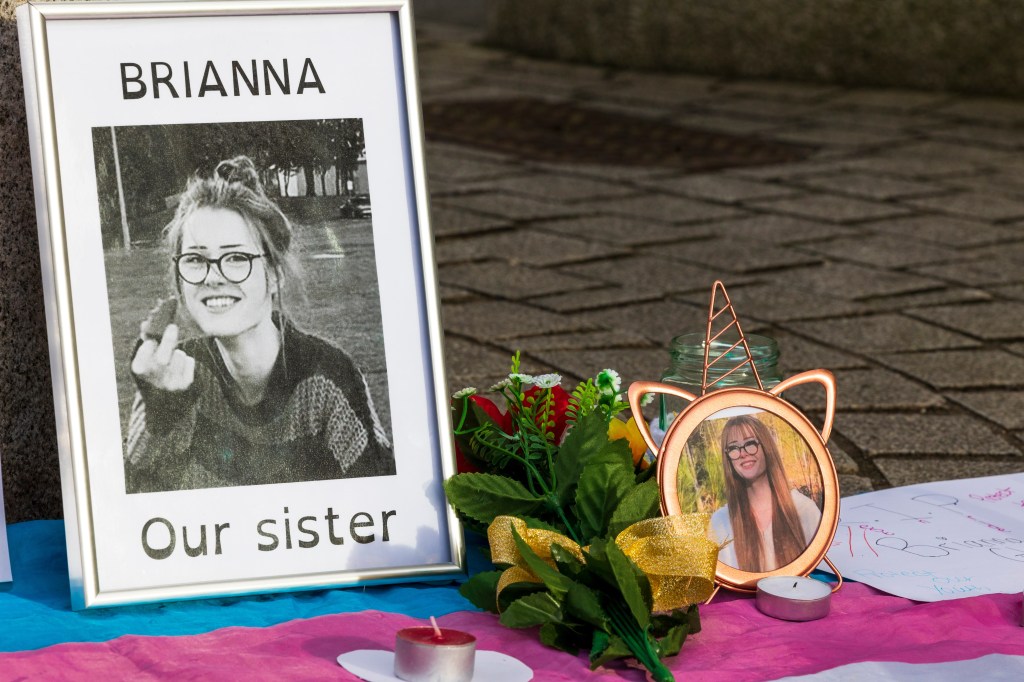
The death of 16-year-old Brianna Ghey at Culcheth Linear Park in February 2023 sent shockwaves across the United Kingdom. On 20 December 2023, Scarlett Jenkinson and Eddie Ratcliffe were found guilty of Brianna’s murder, subsequently receiving life imprisonment sentences on 2 February 2024.
From the brutality of the crime to the debate over whether the perpetrators’ names should have been published and the speculation about the potential influence of violent media on their actions as to whether their acts had been influenced by violent media, this case is reminiscent of James Bulger’s murder over three decades ago. A notable difference, however, is that the victim in this case was a transgender girl.
Brianna’s murder against the backdrop of the trans rights debate
Official figures reveal a concerning surge in police-recorded transphobic hate crimes in England and Wales in recent years (11% up from the year before in 2022/23 and a staggering 186% rise over the last five years). The latest Home Office report acknowledges that comments made by politicians and incendiary media discussions on trans issues might have contributed to this trend. In the current socio-political climate, where the polarisation between trans and women’s rights groups over gender self-identification can reach ‘toxic’ levels, there is a serious risk that victims like Brianna Ghey will – as the domestic abuse commissioner Nicole Jacobs warned – be ‘denied their dignity’.
Recognising the role transphobia has played in this violent crime is vital to tackling that risk. Yet, The Times were quick to ‘deadname’ Brianna, i.e. report the news of her murder using the victim’s pre-transition (male) name, triggering a strong backlash by trans advocates. Similarly, BBC News and Sky News also faced criticisms for initially failing to mention the victim was trans. Meanwhile, Fair Play for Women, a gender-critical campaign group which views sex as immutable, argued that the victim’s transgender identity was not relevant to stories about her murder and should have been omitted from them. Notably, Cheshire police did not consider the murder to have been motivated by hatred against Brianna’s transgender identity. DCS Mike Evans explained that Jenkinson and Ratcliffe had previously discussed killing other children, suggesting that, had they not been able to kill Brianna, they would have found another victim.
Why did Brianna’s murderers not remain anonymous?
Due to the defendants’ age, restrictions were in place throughout the trial to prevent the publication of any information likely to reveal the identities of the two perpetrators as the defendants in these proceedings. However, some controversy arose when the decision was made to publicly name the two teenagers at their sentencing. Mrs Justice Yip took the unusual step to revoke anonymity orders shielding the assailants’ identities, following an application by press representatives.
As there has been some misunderstanding around this issue, it is worth explaining how the anonymity orders worked in Brianna’s case. It will be recalled that the two perpetrators were tried before the Manchester Crown court, which is an adult criminal court – not a youth court (of note, a young person charged with murder cannot be tried or sentenced by a youth court because of the seriousness of the charge). While there is no automatic ban on identifying individuals under 18 as being concerned in the proceedings of adult criminal courts, section 45 of the Youth Justice and Criminal Evidence Act 1999 empowers criminal courts to grant anonymity to a juvenile defendant, victim or witness in adult criminal proceedings while they remain under the age of 18. This power is not available to youth courts. The intention of Parliament in enacting this provision was to widen the scope of protection available to under-18s.
Section 45 allows an adult criminal court to impose a discretionary reporting restriction. If the court so wishes, it can choose to impose no restrictions at all. The law draws, therefore, a distinction between young people appearing in youth courts, who are automatically entitled to anonymity, and those appearing in adult criminal courts, who must seek a discretionary reporting restriction.
This is critical. It means that in a youth court, there must be a good reason for lifting the anonymity order which applies by default, whereas under section 45 of the 1999 Act, there must be a good reason for imposing – or continuing with the imposition of – the anonymity order. So, in the case of section 45, there is a strong presumption in favour of open justice, placing the burden of justifying reporting restrictions on the party seeking to derogate from this fundamental principle.
The defendants in Brianna Ghey’s case, both 16 at the time of their conviction, would lose the anonymity protection upon reaching adulthood in 2025 by operation of the law. In the meantime, however, a court may consider lifting or relaxing restrictions in two circumstances: either when the court is satisfied that doing so is ‘necessary in the interests of justice’ (section 45(4)); or when it is satisfied that the reporting restriction unduly limits the coverage of the proceedings and it is ‘in the public interest’ to remove or modify the restriction (section 45(5)). A list of factors to be considered in an assessment of where the public interest lies in such situations is provided in section 52 of the Act.
No judge takes such decisions lightly. As the Court of Appeal has previously emphasised, judges are tasked with meticulously weighing the competing public interest factors at play on the particular circumstances before them. So, neither the open justice principle nor a young person’s best interests automatically dictate the conclusion in a given case. Pre-conviction and during the trial, a defendant’s welfare is likely to take precedence over the public interest in disclosure. However, post-conviction and sentencing, factors such as the offenders’ age and the severity of the crime acquire particular relevance in determining whether publication is warranted.
As Mrs Justice Yip observed in Brianna’s case, ‘the shock generated by [her] murder and the circumstances of it has spread well beyond the local community, across the nation and indeed internationally. The public will naturally wish to know the identities of the young people responsible as they seek to understand how children could do something so dreadful. Continuing restrictions inhibits full and informed debate and restricts the full reporting’ of an ‘exceptional’ case.
But the lifting of the discretionary reporting restrictions under section 45 was driven not only by the sustained public interest in knowing the identity of Brianna’s murderers, but also because of the likelihood of continued media attention regardless of the timing of disclosure as well as the defendants’ extended custody and rehabilitation process into adulthood. While acknowledging the distress to the defendants’ families, Mrs Justice Yip underlined that the powers under section 45 were not designed for convicted defendants’ family members, and the risk of harassment to the defendants’ families was deemed likely regardless of the timing of identification. It was the combination of all these considerations that favoured publication.
Sentencing in Brianna’s murder as a catalyst for confronting transphobia
Brianna’s murderers were named the day they were sentenced for her murder. Even though Cheshire police had dismissed transphobia as a motivating factor, Mrs Justice Yip expressly recognised in her sentencing remarks that the crime had been, at least partly, driven by hostility towards Brianna’s trans identity. Distinguishing between the young offenders’ motivations, the judge determined that Jenkinson was primarily seeking to act out her ‘sadistic’ fantasies and had a ‘deep desire to kill’ while Ratcliffe was, in part, driven by transphobic sentiments. This hostility towards trans people had, according to the judge, been ‘undoubtedly displayed’ in the dehumanising language Ratcliffe used in the WhatsApp messages he had sent to Jenkinson, in which he described Brianna as a ‘femboy thing’ or ‘it’, revealing that he wanted to ‘see if it will scream like a man or a girl’.
Such messages make for a harrowing read and it is easy or even convenient for our society to brush off the transphobia reflected in them as merely the hateful words of one ‘bad apple’. The truth is, however, that Brianna Ghey’s murder has shed light on a harsh reality: abuse often becomes a distressing aspect of vulnerable trans individuals’ lives, even if this does not always escalate to extreme violence. The Conservative Government’s and the UK mainstream media’s trans-othering rhetoric has been repeatedly criticised by several international human rights organisations. Indicatively, the Council of Europe’s Commissioner for Human Rights, Dunja Mijatović, warned of the risks deriving from an ‘increasingly toxic’ anti-trans political and media discourse built upon ‘deeply discriminatory stereotypes […] based on ideas of predatory determinism.’ This ‘culture war’ against trans people has also been cited by the International Lesbian, Gay, Bisexual, Trans and Intersex Association as one of the reasons behind the UK’s continuous drop in its annual rankings for LGBT rights across Europe.
During PM Questions on 7 February 2024, Rishi Sunak faced a backlash after his remark about Labour leader Keir Starmer’s purported difficulty in ‘defining a woman’ while Brianna’s mother was in the public gallery during the exchange. Trans allies, including Brianna’s father Peter Spooner, expressed ‘shock’ and ‘disgust’ towards the PM’s ‘degrading comments’, calling for an apology which Sunak has refused to offer. Amid the increasing tensions between the two main political parties, it is vital that trans people’s lives are not reduced to a bargaining chip in their bid to win the upcoming general election. Despite the tragic circumstances surrounding Brianna’s murder, her story has the potential to catalyse a wider and more constructive dialogue on the consequences of ‘othering’ an already marginalised community. There are undoubtedly valuable lessons to be gleaned from this landmark case. The pertinent question remains: are our leaders prepared to heed them?
Dr Erin Pobjie has just published Prohibited Force: The Meaning of ‘Use of Force’ in International Law (CUP, 2024). Dr Pobjie made use of the University’s dedicated open access (OA) fund to ensure that her book is freely available to students, scholars, and readers everywhere. You can download your copy here.
Dr Pobjie has kindly answered some questions about her work, her choice to go open access and future projects.
Congratulations on the publication of your new book! How does it feel to have it published and freely available?
Thank you! The book is the culmination of a long process, starting with my PhD at the University of Cologne and continuing through my post-doc at the Max Planck Institute in Heidelberg and then as a new lecturer at Essex University. There were many highs and lows over that period and I learnt so much along the way, so it feels emotional and very satisfying to see it finally out.
You chose to make use of the University’s open access fund. Why is open access important to you and how do you think it will benefit your work?
I believe in the principles of open science so it was important to me to publish my book OA. Publishing OA allows me to share my ideas more broadly and without financial barriers, so that my book can hopefully contribute to scholarship, policy and practice on this important topic. Having poured so much into the project, I’m happy that it’s freely available open access thanks to the University’s OA fund.
How did you find the open access process?
It was fairly straight forward once the funding became available. The Open Access team at the University liaised with my editor at Cambridge University Press and were very helpful and responsive in supporting me throughout the process.
What advice about open access, or publishing in general, would you offer to colleagues?
My advice would be to seek feedback early and often, to be proactive throughout the publication process and to advocate for the ideas in your book so that they can contribute to the conversation. These are things I would try to do better next time. It continues to be a learning process now that I’m in the next phase of post-publication, so it’s been very helpful to speak to other colleagues who have recently published books for advice.
Now, about your book, which feels incredibly timely: how did the idea come up and could you explain the key ideas of the book?
The seed for the idea was planted during my LLM at Essex, where I was inspired by the module ‘International Law of Armed Conflict’ taught by Professor Noam Lubell. The first class was about jus ad bellum – the prohibition of the use of force between States. I was captivated by the topic and thought it could be a way to contribute to a cause I feel passionate about (the prevention of war) by exploring and clarifying fundamental legal concepts. Noam introduced me to my future doctoral supervisor, Professor Claus Kreß at the University of Cologne, who encouraged me to focus on the meaning of prohibited force.
The prohibition of the use of force between States is a cornerstone of the modern international legal system and key to international peace and security, but its meaning is unclear. This is especially problematic for uses of force in newer domains like cyber and outer space, or that use emerging technologies. My book therefore seeks to clarify the meaning of prohibited force and proposes a definitional framework that can be applied in practice to identify illegal uses of force. To do this, I analyse the sources of the prohibition (article 2(4) of the UN Charter and customary international law) and their relationship, identify the elements of a prohibited use of force and set out a framework to define a prohibited use of force.
In a nutshell, my argument is that a ‘use of force’ under article 2(4) of the UN Charter describes a type rather than a concept. This means that rather than consisting of a checklist of necessary and sufficient elements (a concept), it consists of a basket of elements which must be weighed and balanced to determine whether the threshold of the definition is met (a type). According to this framework, not all elements must be present for an act to constitute prohibited force if they are compensated by other elements. For example, a hostile or coercive intent may turn a forcible act into a use of force even if other elements are relatively weak, such as a low gravity or if the harm is only potential but unrealised. The final part of my book applies this framework to illustrative case studies, including the use of force in outer space.
What’s next for you? Do you have new projects lined up?
I was recently appointed as co-Rapporteur of the International Law Association’s Committee on the Use of Force, a committee of global experts on the law on the use of force to draft a new report to bring normative clarity to the area of ‘military assistance upon request’ (a.k.a. intervention by invitation). The Committee has a mandate until 2026 to produce the report, so together with my co-Rapporteur Professor James Green I am taking the lead in carrying out the work of the Committee and drafting our report on this topic, with conclusions and commentaries to provide guidance for States.
I’m also excited to have the opportunity to apply the framework I developed in my book to outer space security at the United Nations. I’m currently undertaking a residential fellowship at the United Nations Institute for Disarmament Research in Geneva in their Space Security Programme, where I’m producing a policy report on the use of force in outer space. Humans globally depend on the preservation of safe, secure and sustainable uses of outer space, including for communications, global navigation systems (which underpin banking, financial markets and energy grids), disaster emergency response and humanitarian relief, food production and climate science. These are all placed at risk by military uses of outer space. The policy report will raise awareness of legal restraints on space threats under international law, which must be considered when negotiating and developing new norms for the prevention of an arms race in outer space.
I’m enjoying the mix of doctrinal research and policy engagement and am grateful to have the opportunity to further develop and apply the ideas from my book following its publication.
Prohibited Force: The Meaning of ‘Use of Force’ in International Law is available online and open access through Cambridge University Press. In case you would also like to purchase a hardcopy of the book, you can use the code POBJIE23 on the publisher’s website for a 20% discount until 31 December 2024. DOI: https://doi.org/10.1017/9781009022897.
Do you want to publish your work Open Access? Just complete this brief form and the Open Access team will soon be in touch. More information about making your research available open access can be found on the Open Access Publishing webpage, and you can also get in touch with the OA team via oapublish@essex.ac.uk.



 Essex Law Research Blog