
By Dr Koldo Casla, Senior Lecturer in Law and Director of the Human Rights Centre Clinic
In the first week of November, I participated in a workshop on advancing the implementation of positive rulings on economic, social, cultural and environmental rights. The event took place in Johannesburg, South Africa, and it was jointly convened by Amnesty International and the International Network for Economic, Social and Cultural Rights (ESCR-Net). Taking stock of the discussion, some of us also held a meeting of the steering committee of the working group on strategic litigation of ESCR-Net.
The event gave us the opportunity to talk about specific examples of what is working and what not in strategic litigation around the world, with a particular focus on cases from Africa (South Africa, Kenya, Gambia and Malawi), but also from India (workers’ rights and the right to food), Canada (right to health of undocumented migrants), Ecuador (land rights of Sarayaku indigenous people) and Spain (evictions in the private rental sector).
The team deliberated on strategic approaches to address the challenges posed by the uncertainties associated with litigation and its enduring consequences. Emphasis was placed on the critical role of civil society in spearheading the identification of concerns and the implementation of judicial decisions.
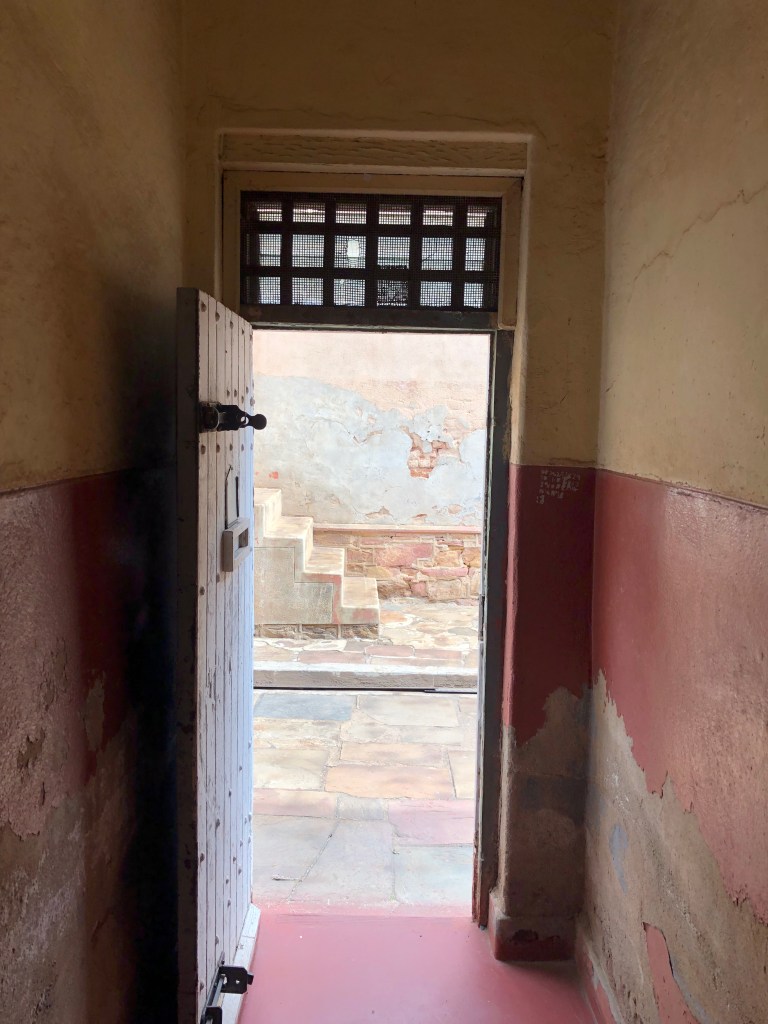
We had the privilege of visiting the South African Constitutional Court, possibly the most important national court as regards the justiciability of socio-economic rights globally. The building is full of symbolism appealing to values of transparency, culture and accessibility of justice. It is built on top of the remains of a brutal prison of the apartheid regime. Gandhi and Mandela spent time there. The location is a powerful message about learning from the past to build a more promising future founded on the principles of the rule of law and human rights.
The occasion was also an opportunity to express solidarity with the Ogiek indigenous people in Kenya. Some of the community leaders were present at the workshop. Despite several rulings from the African Commission on Human and Peoples’ Rights, the Ogiek have suffered repeatedly violations of their human rights, including further evictions from their ancestral land.

At the event, I talked about the UN Committee on Economic, Social and Cultural Rights (CESCR) as a venue for strategic litigation on housing rights in Spain. The Optional Protocol on Economic, Social and Cultural Rights was adopted in 2008 and entered into force in 2013. It allows individuals to lodge complaints in front of the CESCR against States Parties for violations of socio-economic rights. To this day, 26 countries have ratified this treaty. Spain was the third country to do so, the first one in Europe.
More than 90% of CESCR decisions concern Spain, and the vast majority of them are about the right to adequate housing. One of the most significant cases is Ben Djazia and Bellili v Spain (2017), where the CESCR made two big contributions to international human rights law: firstly, it established that the proportionality test applies to the private rental sector as well as the public one; and secondly, it ruled that the State had breached the principle of non-retrogression because in the background of the eviction there had been a large-scale sale of some 4,000 social housing units by regional authorities in Madrid to transnational real estate investment trusts.

Since 2019, Spain’s legislation has been amended several times, and some of those amendments have brought to life some of the recommendations of the CESCR. Not all recommendations have been taken onboard yet; in particular, the issues of progressive realisation and the adoption of a national plan have not been given due consideration.
However, judges are now given the opportunity to look at personal circumstances (while not obliged to do so), and there is an expectation of coordination between the judiciary and social services before an eviction is executed (but not a specific timeframe or duties on public authorities). Housing laws at regional as well as central/national levels have created additional duties for large landlords over small landlords, which the CESCR considers part of the proportionality test (López Albán v Spain, 2019).
The experience of strategic litigation on housing rights in Spain has taught us some valuable lessons.
Firstly, sometimes human rights progress comes from non-human rights litigation. In the case of Spain, the first major court victory was the Aziz case (2013), where the Court of Justice of the European Union ruled that foreclosure procedures must give judges the chance to look for potential unfair terms in the contract, opening the door to a kind of proportionality test. This ruling was based on consumer law (EU 1993 Directive), not human rights law.
Secondly, recent legal developments in Spain are a reminder that parliaments can play a central role in the implementation of international human rights rulings. After all, hardly anything can beat securing a majority in parliament for human rights-friendly legislation.
Thirdly, recent developments also show that in federal or quasi-federal countries, regions can indeed learn from each other in a sort of laboratory for democracy. As I show in Chapter 5 of Spain and Its Achilles Heels, I would argue that this is precisely what happened between several of Spain’s regional legislative chambers between 2013 and 2017.
Finally, we must not make perfect the enemy of the good. Not all of the CESCR recommendations have been implemented in Spain. The situation is far from perfect. Even those that have been implemented have been implemented only to some extent. However, in the spirit of joyful advocacy, it is important to celebrate victories when they occur, including partial victories, even if we do not achieve everything we may hope for.
 Essex Law Research Blog