
Despite being rarely used, the Infanticide Act of England and Wales has generated much attention, scrutiny, and debate. This unique and contentious legislation, passed a century ago and re-enacted in 1938, has shaped the way society views and responds to a deeply complex issue – infanticide.
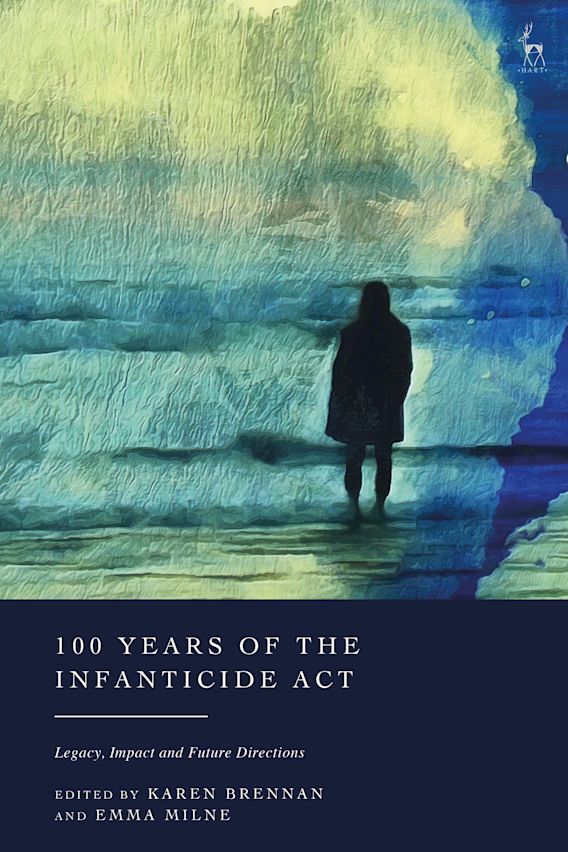
Now, in a milestone year marking a century of its existence, a thought-provoking book, “100 Years of the Infanticide Act: Legacy, Impact, and Future Directions,” edited by Dr. Karen Brennan (Associate Professor in Criminal Law and Evidence at the University of Essex) and Dr. Emma Milne (Associate Professor in Criminal Law and Criminal Justice at Durham University), offers a comprehensive analysis of this law and its far-reaching implications.
“100 Years of the Infanticide Act” presents the first-ever comprehensive and detailed analysis of this historic legislation, shedding light on its historical context, contemporary application, and its enduring influence.
The book explores critical themes surrounding the legislation, from its practical implications in England and Wales to the ways it has been portrayed in the British media. It examines the justifications for, and criticisms of, the special mitigation afforded to women who kill their biological infants within the first year of life.
Many countries around the world drew on the 1922/1938 models of infanticide law and enacted similar legislation. In addition to its focus on England and Wales, the book extends its scope to international jurisdictions, such as Australia, Ireland, Sweden and the United States of America.
The Research Visibility Team had the privilege of interviewing Dr. Karen Brennan, one of the co-editors of the book and we are excited to share our exclusive insights into her book and how it reverberates around the globe. We found out more about her inspiration behind this collection, what struck her most while working on the project and some of key takeaways readers can expect from this significant publication.
Can you share with us the inspiration and motivation behind the book on the Infanticide Act and its impact in England and Wales? What drove you (and your co-editor) to explore this unique and controversial legislation?
The Infanticide Act 1922 was the first statute to specifically create an offence/defence of “infanticide” in the common law world. Prior to its enactment, women who killed their babies were subject to the law on murder which carried a mandatory death penalty. However, sympathy for infanticidal women – due to the circumstances in which they committed the offence – resulted in widespread reluctance to subject them to the capital penalty.
The infanticide statute was enacted to address the problems that arose from this by formalising popular feelings of mercy towards women who killed their newborn babies. The law was re-enacted in 1938 and extended to cover victims up to the age of 12 months. The basis on which mercy was granted was that the balance of the mother’s mind had been disturbed by reason of the effect of giving birth or the effect of lactation consequent upon birth. Although infanticide is punishable by life imprisonment, women convicted of this crime are rarely imprisoned.
I have been researching the topic of infanticide laws for over 20 years now and it still continues to fascinate me! A century on from the enactment of the first infanticide statute, there is much to reflect on – especially given the significantly changed social and legal landscape. The infanticide law is unique – it creates both an offence/defence, and it is the only sex-specific homicide offence/defence in our criminal law.
When it was first introduced, the infanticide law, which pre-dated the enactment of the partial defence of diminished responsibility in this jurisdiction, sought to do something that had never before been done by parliament. It created an exception to the law on murder by allowing for lenient treatment of a specific category of killer – the biological mother of an infant.
Academic scholarship over the last few decades has produced much criticism of the law. For example, the medical basis of the law has been challenged; feminists criticise the law for being paternalistic and bio-determinist; and the law is also critiqued for undermining the right to life of infants. One of the core issues in the law today is whether it is appropriate to provide for mercy for the biological mother of the victim, but not other parents. It is often suggested that the defence of diminished responsibility would be the more appropriate way to show leniency in cases where mothers kill their infants today.
Since the crime is thankfully not common, the Infanticide Act is rarely used. However, some recent cases reported in the media indicate that the law isn’t being used in situations where the facts would traditionally have fit the typical infanticide scenario and where the infanticide statute would in the past have been employed. This raises questions about the meaning of the law and whether it has value today in cases where women kill their babies.
Both Emma Milne (who co-edited the book) and I have come at this subject from a particular perspective – drawing on socio-historical and feminist approaches – and we favour retention of this law. We argue in one of our chapters that the unique hardships that women experience as a consequence of pregnancy/childbirth and mothering justify the Infanticide Act 1938.
One of the purposes of the book, however, was to bring together different voices and perspectives on this law – including from scholars who do not agree/agree fully with our position! We wanted to stimulate discussion and generate new insights into this law from other scholars who have written about this law in the past, and also to bring newer voices into the debate.
We also wanted to include an international dimension by including research from other jurisdictions which have similar infanticide statutes (e.g., in Australia) and those which do not (e.g., the USA).
As the book delves into the history, impact, and legacy of the Infanticide Act, could you tell us about any surprising findings or moments during your research or writing process that particularly stood out to you? Did this project change your perspective on the subject matter and if so, how?
One of the things that struck me working on this project was the fact that the Infanticide Act continues to generate debate, and that there is still so much more academic work to be done! I was also struck by how views on this law are very much informed by the approach taken to the issue – for example, those who look at the history, or at the social context of this crime, often have different views of this law compared to scholars who come at it from a doctrinal or theoretical perspective.
This project didn’t change my perspective on infanticide. I have always strongly supported this law (despite recognising its flaws!) because it can provide justice for very vulnerable women who kill their babies at times of intense mental/emotional anguish or mental ill-health.
However, I did realise through working on this project that much more work needs to be done in terms of exploring the meaning of the law as it stands today and the sorts of cases where it should be used.
Linked to this, I also realised that there is a need to explore how we can continue to justify the Infanticide Act’s existence in the 21st century – given how much has changed in law and society over the last 100 years.
The 1938 Act covers two quite different kinds of infanticide, neonaticide (the killing of a baby within 24 hours of birth) and the killing of older babies. I have no doubt that we need this law to cover situations where women kill their babies at birth following a concealed pregnancy. This sort of case would struggle to fit within the requirements of diminished responsibility and without the infanticide statute women who kill their babies at birth (women who are incredibly vulnerable but who are usually not mentally ill) face the prospect of a murder conviction and life sentence.
My involvement in this edited collection, however, did prompt me to think about whether we do need a special law to cover the killing of older babies by women who are mentally unwell, especially when the diminished responsibility law is available. My inclination based on my previous research is that we do need the Infanticide Act for this category of infanticide too, despite the availability of diminished responsibility.
However, more research is needed around exploring why this is so, and especially what contemporary justifications could be put forward for retaining this sex-specific law – particularly on the issue of whether it is appropriate to have a law that applies only to the biological mother. This is our next planned project!
The book features insights from leading experts in the field and touches on infanticide laws around the world. Could you tell us a bit more about the global implications of the Infanticide Act and how you see the future of such legislation evolving in different jurisdictions? What are some of the key takeaways readers can expect from your book in this regard?
Several jurisdictions introduced infanticide statutes based on the 1922/1938 Acts – Canada, a number of Australian jurisdictions, the Republic of Ireland, Hong Kong, to name but a few. Law commissions in several jurisdictions have considered infanticide laws in recent decades, with some suggesting it be abolished, while others have sought to amend the law to address criticisms of it.
Legislatures in some jurisdictions have amended the law to address concerns with it – for example, with regard to ensuring the medical basis reflects contemporary medical understandings of mental illness after birth (such as in Victoria, Australia, and in the Republic of Ireland). Western Australia recently abolished its infanticide law.
There is no special infanticide law in the USA, and many scholars have written on this issue and the problems that arise from the lack of special legislation to deal with these unique cases – but also the difficulty of framing and justifying different treatment of this offender. Often the Infanticide Act 1938 is drawn on in these discussions as an example of a better way to respond to this crime.
I think one of the key takeaways from the book is the fact that there is still so much about this law that we have yet to understand, and, related to this, how little this law has been tested in the courts in England and Wales.
We need more awareness of and discussion on this law – the fact that it is so rarely used means that many law students and legal practitioners know very little about it, and this may lead to assumptions and misunderstandings about the law.
So, more needs to be done in terms of academic research, but also to engage with legal practitioners to share our findings and hopefully have an impact on how the law is used and interpreted.
Looking Ahead
As society evolves and legal systems adapt, the future of infanticide laws remains a subject of debate and contemplation. This book provides a platform for scholars, practitioners, and policymakers to explore the possibilities for reform and development in the context of infanticide legislation.
The legacy, impact, and future directions of the Infanticide Act continue to evolve, and this book will undoubtedly be a touchstone for those seeking clarity and insight into a legal landscape fraught with complexity. For a more in-depth exploration of this topic, “100 Years of the Infanticide Act” is available now, providing a thought-provoking journey through a century of legal history and societal change.
 Essex Law Research Blog