As of Tuesday 1 August 2023, the Essex Law Research Blog will be on a short hiatus.
We will be publishing intermittently over the next couple of months but the full normal service will not resume until October, when we will return to share more research ideas and news from our School.
We send all our readers our best wishes for a refreshing summer!
Sarah Zarmsky, PhD Candidate and Assistant Lecturer at the Human Rights Centre, is a recipient of the 2023-2024 Modern Law Review Scholarship for her PhD thesis ‘Accountability for Digital Harm Under International Criminal Law’, supervised by Professor Carla Ferstman (University of Essex) and Dr Daragh Murray (Queen Mary University of London).
Sarah was awarded the Mike Redmayne Scholarship, instituted in memory of past MLR Committee Member Professor Mike Redmayne, which is presented to the best applicant in the fields of Criminal Law and the Law of Evidence (and related fields).
Modern Law Review Scholarships are prestigious awards provided to doctoral researchers in the United Kingdom and are funded by the Modern Law Review. Sarah is the first candidate from the University of Essex to receive the scholarship!
The research visibility team talked to Sarah about her success and took the opportunity to find out more about her plans:
This is an impressive achievement. How does it feel to bring this award to the University of Essex for the first time?
Thank you! It feels great, I’m very proud of it and to be part of such an impressive group of recipients. It’s very rewarding to have your research, that you invest so much hard work in, be recognised by others, especially by a journal as reputable as the Modern Law Review.
Could you tell us a bit more about your research? What gaps or shortcomings have you identified when it comes to addressing digital harm in the context of international criminal law?
My research examines how digital harm with relevance to the perpetration of international crimes may or may not be accommodated within existing international criminal law frameworks. Where criminalization may not be appropriate or feasible, it identifies possible alternatives for obtaining justice for victims of digital harms, such as through corporate criminal liability or regulatory frameworks.
I think the main takeaway so far is that the law has not yet ‘caught up’ with new ways of inflicting harm through technology, and depending on the type of harm, international criminalisation may or may not be the answer. There are some digital harms where we can see a clear link to existing international crimes, such as online hate speech and incitement to genocide, or sharing footage of crimes as an outrage upon personal dignity. It will be harder to accommodate more ‘novel’ types of harms, such as algorithmic harms or digital mass surveillance with ICL as it stands, so I am entering the stage of my research where I explore complementary strategies for achieving justice for victims of those harms.
In a single sentence, how would you summarise the importance of your research when describing it to an undergraduate student?
New technologies are important for advancing accountability for international crimes, but they also create new ways to perpetrate existing crimes or entirely new crimes, so this research is important in laying the foundation for future discussions as to how international criminal law can best accommodate digital harms.
With the evolving nature of digital threats and the global nature of the internet, how can international cooperation and collaboration be fostered to ensure effective accountability mechanisms for digital harm? Are there any notable examples or initiatives you could share that illustrate promising efforts in this area?
This is a complex question, but to answer it briefly, I would stress that as an international community, we need to be recognizing how harmful new technologies can be if used maliciously and that these harms are grave enough to be international crimes. I think sometimes the technology aspect can be roped in with other more ‘traditional’ offences and not treated as crimes on their own, which can result in less tailored justice for victims.
There are some promising developments in domestic war crimes trials, such as in The Netherlands, Germany, and Sweden, where individuals have been convicted and sentenced for war crimes for sharing degrading footage of executions on social media. I think these are positive developments because they serve the expressive function of recognizing how humiliating and degrading it can be to share footage of people in their most vulnerable states, and send a message that this is a serious crime.
This has not yet happened at an international criminal court or tribunal, but with the rise of open-source evidence initiatives at the ICC for example, I think it could definitely be a possibility going forward.
Do you anticipate your research will influence policy and if so, how?
I hope that my research can provide guidance for how ICL lawmakers and practitioners can ensure that the law keeps up with the times to fully address new ways of inflicting harm through technological means. My goal is to bring these issues to light and hopefully spark discussions within the ICL community about how we can account for digital harms moving forward.
Which direction do you see your research going in the future and why?
I’m now entering the third year of my PhD, during which I plan to apply my research thus far to one or two case examples and be able to highlight how the theory might work in practice, which I think will be really valuable. After the PhD, I would like to continue in this realm of ICL, human rights, and new technologies, perhaps delving deeper into one of the specific digital harms with a nexus to international criminal law that I have identified in the thesis.
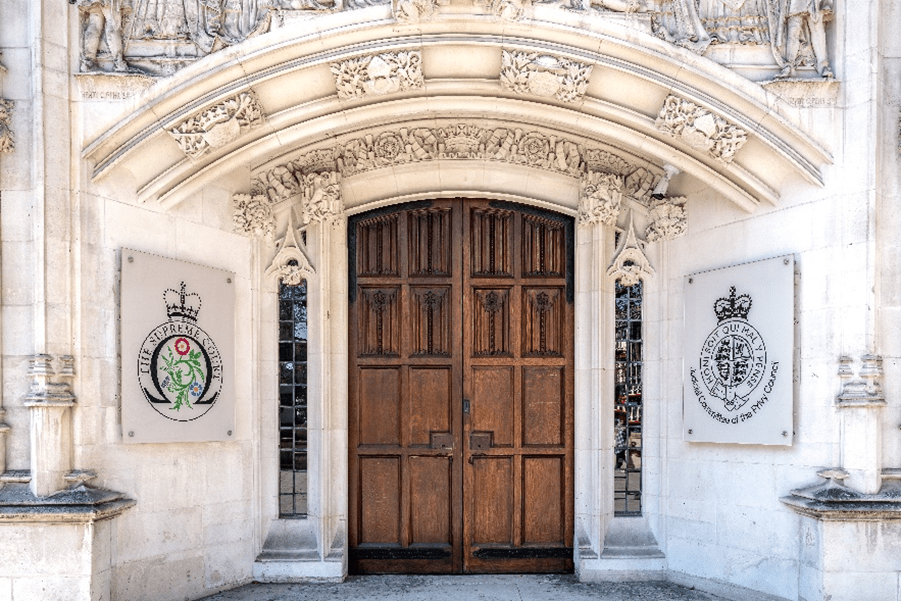
Image via Shutterstock: The entrance to The Supreme Court, Parliament Square, London
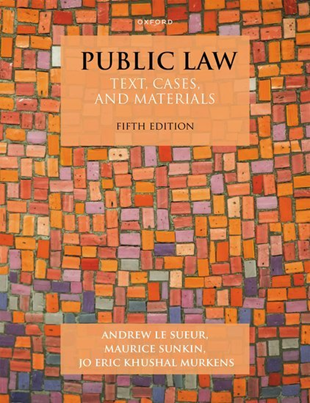
Public Law: Text, Cases, and Materials, the definitive guide to understanding the practical workings of UK Public Law, has just released its eagerly awaited 5th edition. Authored by renowned legal scholars Prof. Andrew Le Sueur, Prof. Maurice Sunkin KC (Hon), and Prof. Jo Eric Khushal Murkens, this latest edition brings to life the key institutions, legal principles, and conventions that underpin Public Law in the UK.
Recognising the need for an accessible and comprehensive resource, the authors have meticulously curated extracts from key sources, providing clear explanations and insightful critiques to facilitate a deeper understanding of this legal field. By examining case law and its political context, this book encourages students to explore the core issues in public law with a critical mindset.
The 5th edition of Public Law: Text, Cases and Materials is now available by OUP
One of the standout features of Public Law: Text, Cases, and Materials is the inclusion of clear commentary and analysis, expertly complemented by a diverse range of extracts from various sources. By incorporating academic writing, reports from parliamentary committees, and key judicial decisions, students are provided with an enriching array of information. This enables them to develop vital analytical skills, essential for success in the field.
This latest edition offers important additions and updates to enhance the learning experience. Notable highlights include reorganisation of the book’s structure, incorporating a new chapter on devolution. Additionally, the coverage of judicial review has been significantly expanded to reflect the growing political and constitutional significance of this area.
Readers will also benefit from the inclusion of the latest developments, such as the withdrawn Bill of Rights Bill (2022), the Independent Review Human Rights Act Review (2021), the United Kingdom Internal Market Act (2020), the Scottish Continuity Bill Reference and the Protocol on Northern Ireland/Ireland and more.
Public Law: Text, Cases, and Materials aims to bridge the gap between theory and practice, providing an indispensable resource for law students, practitioners, and anyone interested in understanding the complex landscape of public law. With its clear commentary, engaging analysis, and thought-provoking learning features, this edition empowers readers to explore and interpret legal concepts with confidence.
The authors’ collective expertise and experience bring unparalleled value to the latest edition of Public Law: Text, Cases, and Materials. The research visibility team had the chance to speak with Professor Sunkin, who delves deeper into the latest updates and insights featured in this highly anticipated publication:
In light of recent legal developments in the UK, could you identify one or two key updates you have made to the new edition of the book? How do these changes reflect the evolving landscape of public law?
“This has been a fast-moving area of law especially in the post-Brexit era. But, Brexit has been only part of the picture. Since the previous edition debates around devolution, and around the place of judicial review and human rights in our system have intensified. In this edition, we have been able to consider the importance of these and other developments to provide an updated account of UK public law.”
Can you identify one or two seminal cases or legislative developments that have had a significant impact on our understanding and interpretation of public law since the previous edition of your textbook? How have these cases shaped the field?
“We have always sought to use case studies to help readers understand the interplay between law and government. In this edition we have, for example, included a case study on the Windrush scandal that highlights some of the worst elements of administrative injustice within the UK system. Important cases on the power of government, including to seek to prorogue Parliament, also give valuable insights into how judges seek to ensure that the executive respects the rule of law.“
Public law is deeply intertwined with democratic governance and the exercise of state power. Could you elaborate on any new chapters or expanded sections in the latest edition that explore the relationship between public law and democratic institutions? How do these additions enhance the readers’ understanding of the complex interplay between law and democratic processes?
“We hope that the additional space devoted to judicial review, along with the revised and updated chapters on administrative justice and human rights will help readers understand how law and democratic governance are deeply intertwined.”
To learn more about the contents of the latest edition of Public Law: Text, Cases, and Materials, please visit the publisher’s website here.
In the vast and interconnected realm of the digital age, our lives have become intrinsically linked to the virtual world. From online banking to social media interactions, our personal and professional activities have found a new home in cyberspace. However, as we embrace the convenience and opportunities offered by the digital revolution, we must also acknowledge the shadows of cyber threats that pose a constant risk to our security.
We live in an era where sophisticated hackers and malicious actors continuously exploit vulnerabilities, seeking to breach our defences and gain unauthorized access to our sensitive information. We have all heard of viruses, ransomwares, phishing attacks, scams… but it’s not always easy to keep on top of best cybersecurity practices in our daily, busy, lives.
Who has never delayed updating their operating systems (OS) for a few days because of the sheer inconvenience of having to stop working and using the digital device for a solid 20 mins?
And what about these annoying passwords? Who never got frustrated when not remembering an obscure combination of letters, numbers and special characters in no logical order? Even the author who recommended this form of password management back in 2003 has regretted his initial advice!
And, how about the apparently preposterous advice of not re-using passwords when one has to remember about 70 to 100 passwords?
The consequences of a successful cyber-attack can be devastating, leading to financial losses, identity theft, and irreparable damage to our digital lives. So, what is a good starting point for good cybersecurity practices? None is, on its own, fail-proof. It’s their combination that will often delay the attacker who, discouraged, will turn towards easier targets/victims. It’s also about minimising the impact our mistakes may have.
Start with an audit of your practices, so that you know where to begin. The easiest is to answer the questionnaire on the UK National Cybersecurity Centre (NCSC) website: its Cyber Action Plan. It is a truly 1 or 2 min questionnaire; the questions may seem basic but they cut at the heart of the top best practices we can put in place. And follow their detailed advice on what you need to do, advice based on your answers.
Pay particular attention to your passwords. The question to ask oneself is always: if somebody has access to this password, what can they retrieve and find out? Will the password give them access to my bank account? Or to a work account? Or to social media? Or to the three of them?
You can notably check here whether the password has been compromised: or whether the same has happened to your email address here.
You may want to consider a password manager but be aware: your password manager tends to store your data online, so your password data is not immune to hacking, as it happened to the leading company of LastPass in 2022, which won’t be the last.
So, the question is: do you really need this password to be stored online?
For example, if you only do your tax return from home, do you need to save online your password and ID number for HMRC? Because you know that whoever has your HMRC details may well be able to access lots of government services and impersonate you. And ID theft is no fun!
For iPhone users, disable access to the control centre when your phone is locked; otherwise, even with your screen locked, you are giving control of your phone. To do so, go to your Settings, then Face ID (or Touch ID) and passcode, then scroll down to ‘allow access when locked’ (under the voice dial feature) and disable ‘control centre’, ‘accessories’, ‘wallet’.
We all make mistakes; we are humans after all! But the cost of weak cybersecurity practices is ID theft and lost data, for ourselves and for those we correspond with. So, do not delay your NCSC security audit and follow it up! By adopting some proactive strategies, we can take decisive steps towards protecting ourselves and preserving the sanctity of our digital identities.



 Essex Law Research Blog